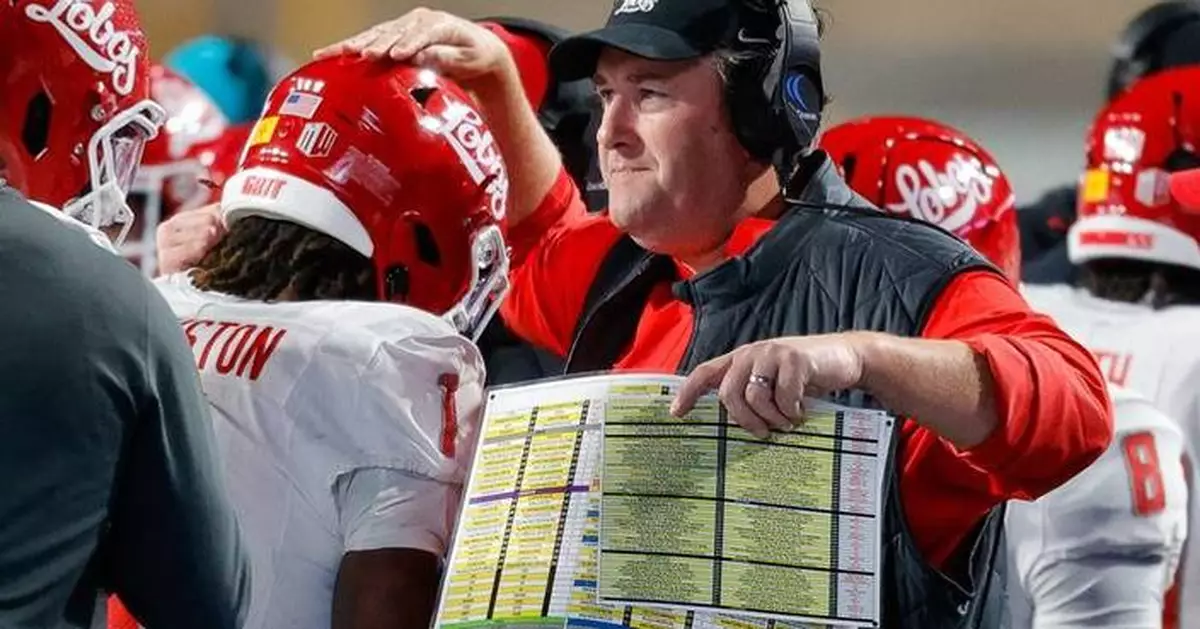
Establishing team chemistry in college football is tougher than ever with so many players not staying at the same school for four years.
But it’s still doable.
New Mexico provides perhaps the clearest example. With 75 newcomers last year — the second-most of any Football Bowl Subdivision team – New Mexico went 9-4 for its first winning season since 2016.
Succeeding in this transfer portal era requires altering offseason objectives. Players aren’t just getting to know the playbook. They're getting to know one another.
“The spirit of the team and the connection of the team, I think that kind of trumps X’s and O’s,” New Mexico coach Jason Eck said.
That prioritizing is evident from the offseason approach at New Mexico and other programs adapting to annual roster overhauls.
The Lobos hold what they label “non-football meetings” every week. In these meetings, players break into small groups and discuss various questions.
Some are lighthearted: What actor would play you in a movie?
Others are thought-provoking: Where do you see yourself in 10 years?
The idea is to make sure all the players know each other well once the season starts.
“When you really care about each other, you don’t want to let each other down,” Eck said.
San Diego State conducts similar meetings, and coach Sean Lewis believes that helped the Aztecs improve from 3-9 in 2024 to 9-4 in 2025. This year the Aztecs are borrowing a strategy the New England Patriots used during their Super Bowl run by focusing on the “Four H’s,” with each player telling teammates about his personal history, heroes, heartbreaks and hopes.
Lewis said he asks parents to supply family photos that are displayed as each player talks about himself.
“It’s an honor to hear these guys’ stories — a lot of incredible warriors who’ve gone through a lot to come here,” San Diego State edge rusher Brady Nassar said.
These types of offseason exercises have been going on for years, but they’re more critical in the transfer portal era. Players often don’t even know everyone in their own position groups when the offseason begins.
“In order to be unified, you have to care about each other, and in order to care about each other, you have to know each other,” Tennessee cornerbacks coach Derek Jones said. “My first week here, my very first meeting, those kids in the room didn’t even have each other’s phone numbers, so we had a long way to go in that regard.”
Building these relationships is particularly critical at programs often raided by Power Four teams during the portal window.
“We’re going to be constantly changing over at least a third of our roster, easily, every single year,” Kennesaw State coach Jerry Mack said. “I signed almost 40 new players. That’s almost half the roster. We signed 50-60 last year. That’s the new norm at this level.”
Miami (Ohio) coach Chuck Martin has noticed one benefit to this new norm.
Martin enjoys when a transfer newcomer with multiple years of experience elsewhere starts working alongside an underclassman entering his second year. Each can learn from the other.
“We’re in the weight room, and the older kid — the transfer — is the leader,” Martin said. “Then five minutes later, we’re on the field doing football stuff, and the young kid’s the leader. Even though he’s newer to the weight room, he isn’t newer to our offense.”
Coaches say the elimination of a second transfer portal window makes it easier to spend the offseason building chemistry because the roster they have in February will pretty much be what they have in the fall.
That wasn’t the case before this year when players could enter the transfer portal after spring practice.
“They’re confident those young men are going to be with them and be their teammates,” Old Dominion coach Ricky Rahne said.
The players aren’t the only ones adapting.
Coaches often compare recruiting the transfer portal to speed dating because they have little time to introduce themselves, in contrast to the high school prospects they’d pursued for years. Those coaches must get to know their new players.
Wisconsin coach Luke Fickell says he’s benefited from one-on-one conversations he’s conducted on camera with newcomers, which the Badgers are posting on social media.
“I find out a lot just doing some of those little interviews with them,” Fickell said. “You see personalities in a different way because that’s not something I get a chance to see on an everyday basis.”
Lewis says it isn’t just the sheer number of transfers that makes it more important to have these offseason bonding activities.
“This generation has been brought up with a supercomputer in their hand and limitless entertainment,” the San Diego State coach said. “If they’re really left to their own devices, they’re just going to go inward, and they’re not going to put themselves out there. They’re just not wired that way.
“So you have to create these environments to get guys to open up and to talk and to share their stories and to share what’s important to them and why they’re doing all these things.”
Lewis’ players say that approach pays off. Nassar believes the togetherness San Diego State showed last season resulted from the stories they shared in the offseason.
“When you see us as a unit, as a defense, as an offense coming through in the clutch and going through hard moments during those games, it all starts in those meetings, getting to know each other,” Nassar said.
AP College Football Writer Eric Olson and AP Sports Writer Teresa M. Walker contributed to this report.
AP college football: https://apnews.com/hub/ap-top-25-college-football-poll and https://apnews.com/hub/college-football
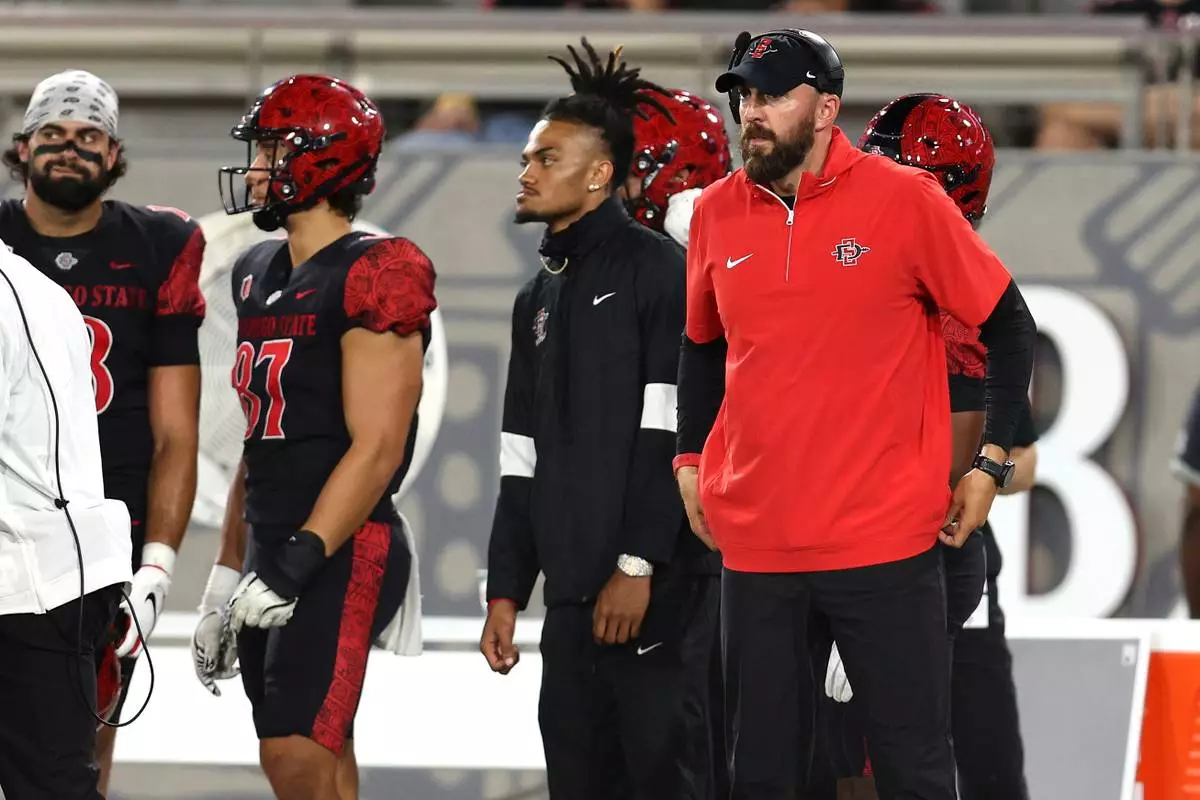
FILE - San Diego State head coach Sean Lewis, right, looks on during the first half of an NCAA college football game against Oregon State, Sept. 7, 2024, in San Diego. (AP Photo/Raul Romero Jr., File)
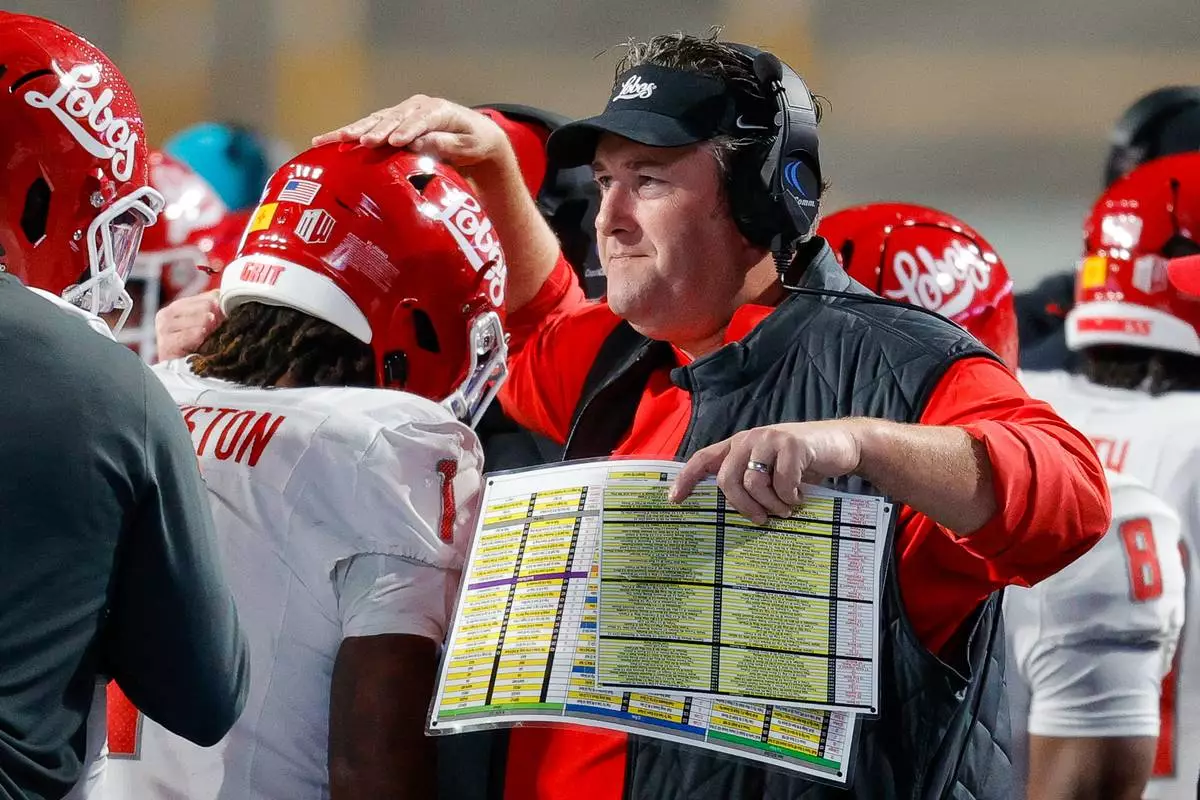
FILE - New Mexico head coach Jason Eck taps running back Damon Bankston (1) on the head after his long kickoff return for a touchdown in the first half of an NCAA college football game, Oct. 11, 2025, in Boise, Idaho. (AP Photo/Steve Conner, File)