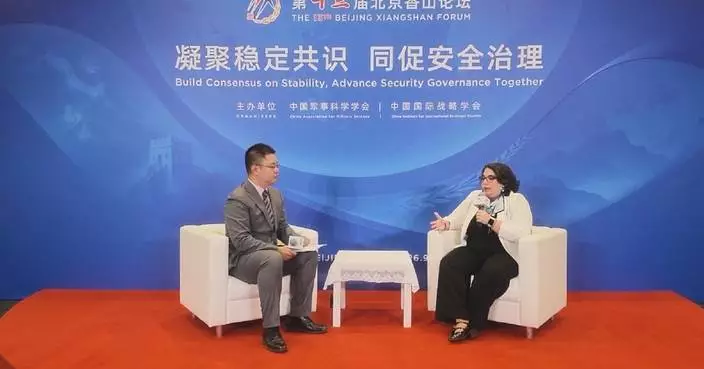
African nations aim to push forward industrialization, agricultural transformation and trade growth in the future development, said African Union (AU) Commission Chairperson Mahmoud Ali Youssouf in an interview with the China Media Group released on Friday.
These three areas are very important focus for the AU to achieve the Agenda 2063, Africa's development blueprint to achieve inclusive and sustainable socio-economic development over a 50-year period, said Youssouf.
"We are working on the transformation of the continent through industrialization. And industrialization has prerequisites. One of them is energy. So we are developing on the continent energy pools everywhere in the regions relying on renewables, developing our own resources of energies. So this is also where we are making progress," he said.
As 80 percent of African people live in rural areas, transforming agriculture is very important, Youssouf said.
"[We'll have] reliance on smart grains, smart irrigation and developing the capacity of the African continent to increase the production. So transformation is very important. If you have a value chain which helps the Africans to get the best value of their product instead of exporting raw materials, raw crops without transformation, tea, coffee, cacao, etc. African countries are really developing their capacity to transform these agricultural projects," he said.
Noting that trade between nations brings wealth, as well as peace and stability, Youssouf said the AU is working to intensify the trade relations within the continent.
"We are working on how best we can increase the intra-Africa trade figures. We're doing it through mechanism and strategies that we have put into place. One of the mechanisms is the African Continental Free Trade Area. This treaty has been signed and implemented since 2017 and then it has mechanisms inside it, [including] the certificate of origin, the compensation and payment mechanism, etc," he said.

African nations aim for industrialization, agricultural transformation, trade growth in future development: AU Commission chief
China has continued to push forward the rural construction initiative this year, bringing steady improvements to rural production and day to day living conditions.
So far, the total mileage of rural roads across the country has reached 4.7 million kilometers.
In Songhui Village, Zanhuang County of north China's Hebei Province, local authorities have invested over 40 million yuan (about 5.96 million U.S. dollars) this year to upgrade 287,000 square meters of roads and install streetlights. A new road is currently under construction in the village.
"Once completed, the road will connect three nearby townships and 16 administrative villages, fundamentally improving travel for local farmers, the transport of agricultural produce, and the development of tourism," said Hao Longhai, a local construction official.
Villages in China have also focused on the needs of local specialty industries, targeting shortcomings in production-related infrastructure.
In Taihu County of east China's Anhui Province, where cattle farming is a major driver of villagers' incomes, local authorities have coordinated roughly 30 million yuan in rural development funds this year to advance a provincial-level breed conservation center and an organic fertilizer processing plant.
"Conditions have been improved significantly. What matters most is that my cattle pen can now connect to the province-wide remote monitoring system for livestock and poultry genetic resources, enabling work such as breed conservation, breeding, scientific research and disease prevention to be managed through an online platform," said Zhu Yong, head of a local breed conservation center.
Infrastructure for day to day living is also a key priority in rural development efforts this year.
As of the end of August, over 130 billion yuan in project funding had been secured for rural construction, and steady improvements have been made to village roads, water supply and drainage systems, sanitary toilet upgrades, household waste and sewage treatment and elderly care facilities.
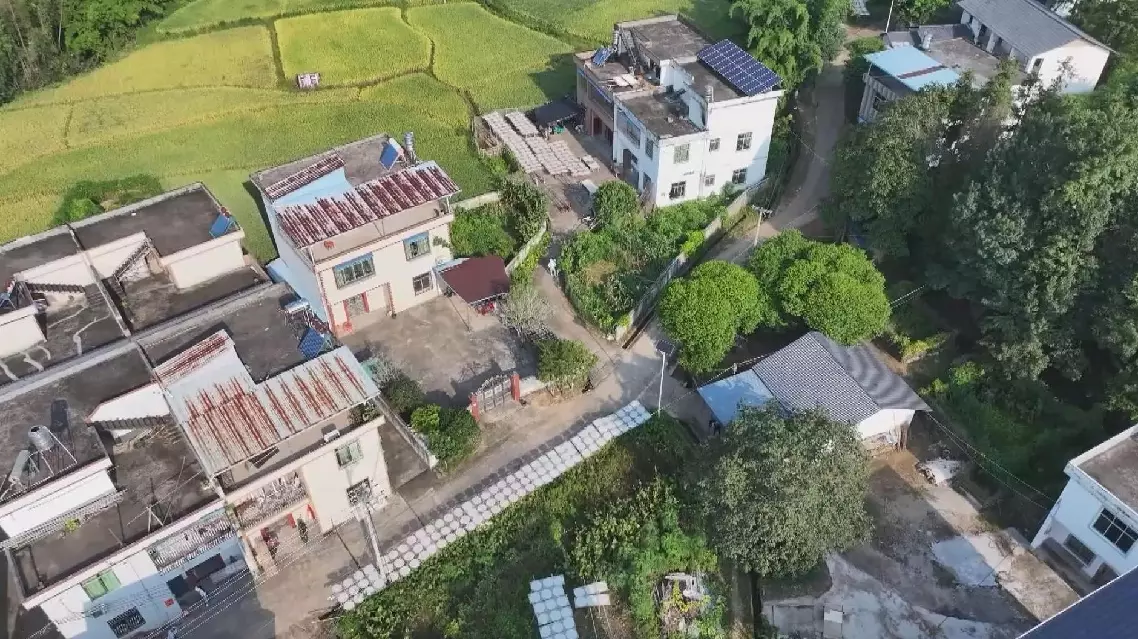
Living, production conditions in China's rural areas continuously improved