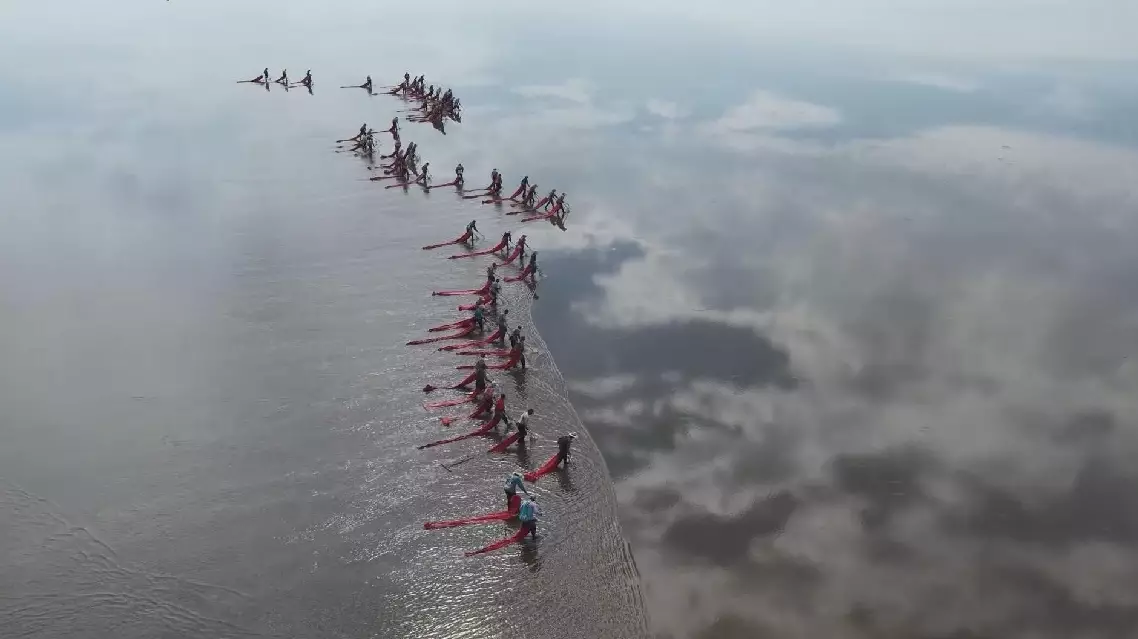
In a vivid blend of human labor and natural beauty, aerial footage has captured the annual mudsnail harvest season at the mouth of the Yellow River.
From July to October each year, the tidal flats of Dongying City in east China's Shandong Province come alive with the bustle of mudsnail harvesting. Fishers line the flats, using handheld nets to collect the snails into colorful bags.
Against a backdrop of clear waters reflecting blue sky and white clouds, the harvesters form a striking sight that has become a signature scene at the Yellow River estuary.
The harvest follows the rhythm of the tides. Villagers adjust their schedules to work during low tide, moving flexibly across the mudflats. The seasonal work provides temporary employment and extra income for nearly 100 villagers.
After harvesting, the mudsnails are sorted and processed before being sold to markets in east China's Jiangsu, Zhejiang provinces and other regions.
Mudsnail harvest season creates vivid scene at Yellow River estuary
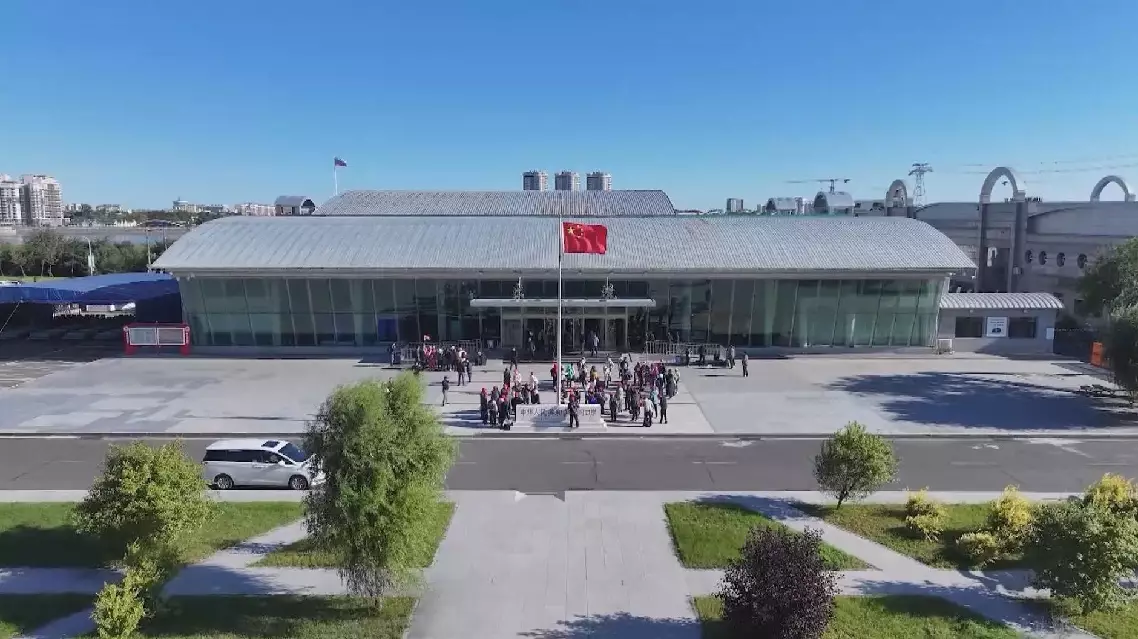
Border crossings at Heihe Port in northeast China's Heilongjiang Province are continuing to rise a year after China introduced its visa-free policy for Russian citizens.
The number of inbound and outbound passenger trips through the port since the beginning of 2026 has hit a record high of 1 million as of Monday, an increase of 56 percent year on year.
The visa-free policy has encouraged Russian visitors to extend one-day trips to several days to experience more of local life in Chinese border cities.
"This is my fourth trip to Suifenhe since the visa-free policy took effect. Border clearance is much faster now. In the past, I could only come here for some simple shopping. Now I can travel here with my friends," said Ilina, a Russian tourist.
Bilingual service desks, smart translation terminals, self-service clearance facilities and advance online completion of entry cards have been introduced at the port, speeding up border checks.
"We have set up a Chinese-Russian bilingual service team at the inspection site, equipped it with multilingual smart translation devices, and displayed Russian-language instructions for filling out entry forms on screens outside the joint inspection hall. These measures have helped shorten waiting time and improve the border clearance experience," said Miao Lei, Deputy Head of Duty Team One at Heihe Entry-Exit Border Inspection Station.
The surge in cross-border travel has boosted local consumption and tourism, with catering and service industries in border cities witnessing tangible growth.
"All our employees can speak Russian, and our menus are bilingual. Communication is smoother, so our customers have a better experience. Russian customers now stay for four or five days, and we have more repeat customers," said Zhang Wei, Manager of Lena Restaurant in Heihe, Heilongjiang Province.
Cross-border passenger trips through Russia-China port hit 1 mln since beginning of 2026