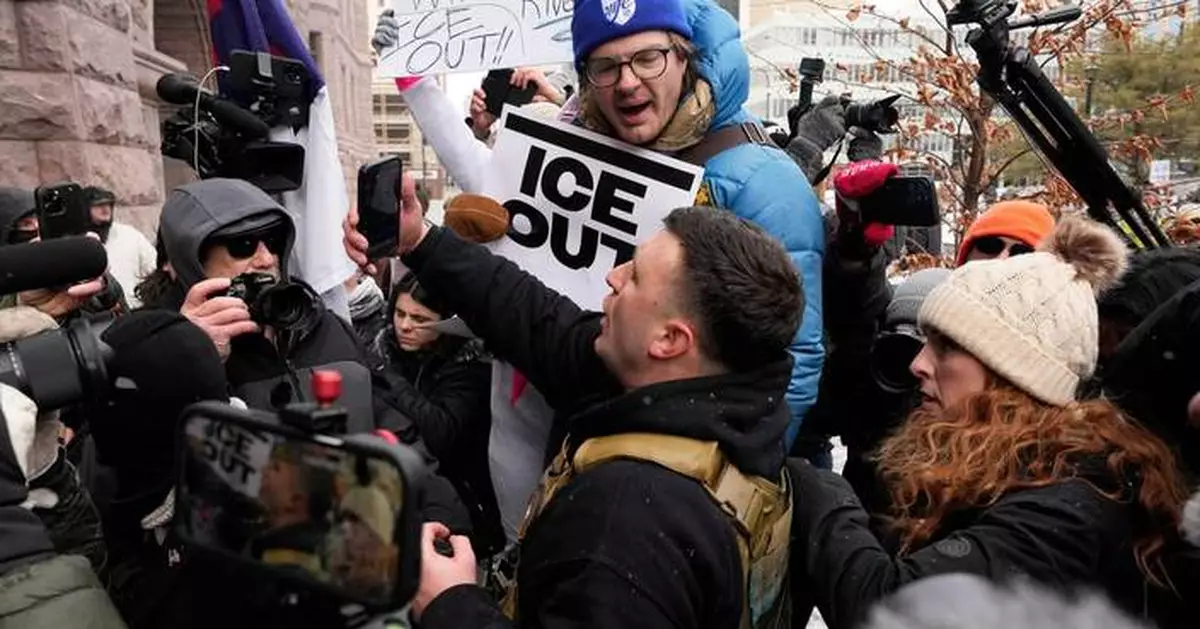
MINNEAPOLIS (AP) — A large group of protesters turned out in downtown Minneapolis on Saturday and confronted a much smaller group of people organized by conservative influencer Jack Lang to demonstrate in support of Immigration and Customs Enforcement. Anti-Ice protesters chased the pro-ICE group away and forced Lang, who appeared to be injured, to leave the scene with visible bruises and scrapes on his head.
This is a photo gallery curated by AP photo editors.
Click to Gallery
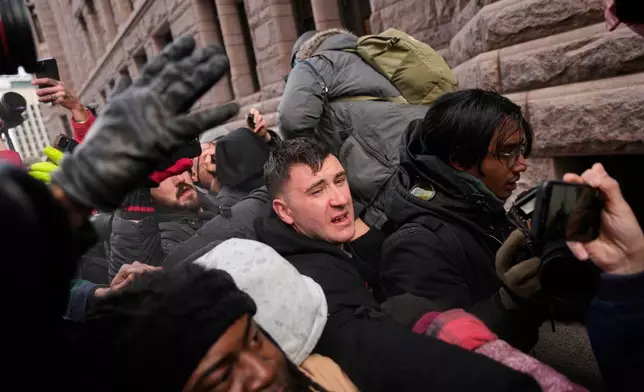
Jake Lang, center, who organized the protest March Against Minnesota Fraud, clashes with pro-immigration counterprotesters near Minneapolis City Hall, Saturday, Jan. 17, 2026, in Minneapolis. (AP Photo/Yuki Iwamura)
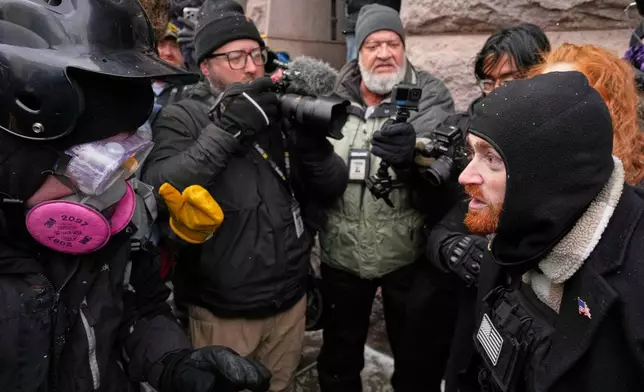
A pro-immigration protester, left, clashes with a man attending the March Against Minnesota Fraud, right, in front of Minneapolis City Hall, Saturday, Jan. 17, 2026, in Minneapolis. (AP Photo/Yuki Iwamura)
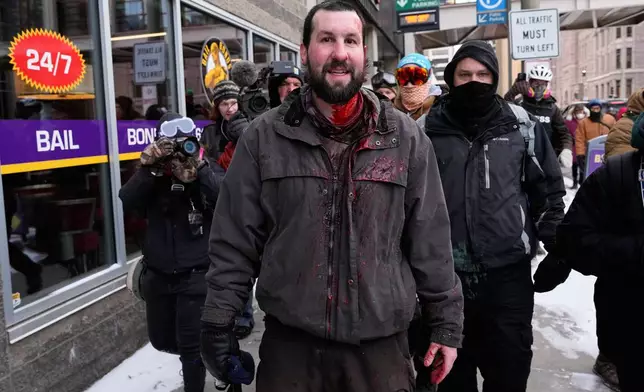
A Jake Lang supporter bleeds from his head as he is chased away by pro-immigration protesters Saturday, Jan. 17, 2026, in Minneapolis. (AP Photo/Yuki Iwamura)
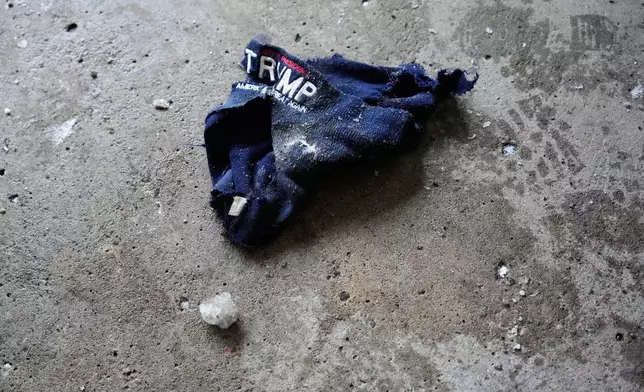
A ripped Trump hat lies on the ground of a parking garage Saturday, Jan. 17, 2026, in Minneapolis. (AP Photo/Yuki Iwamura)
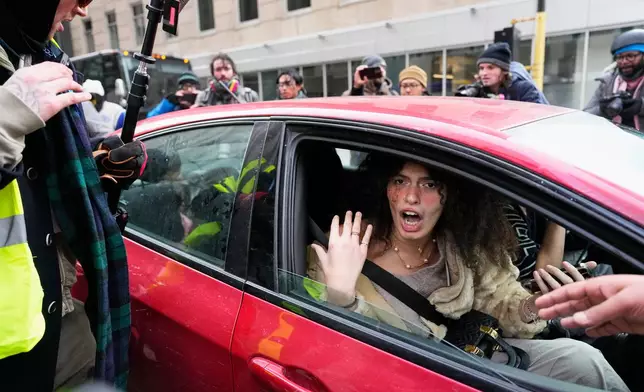
Jake Lang, who organized the protest March Against Minnesota Fraud, leaves the rally by getting into a car near Minneapolis City Hall, Saturday, Jan. 17, 2026, in Minneapolis. (AP Photo/Yuki Iwamura)
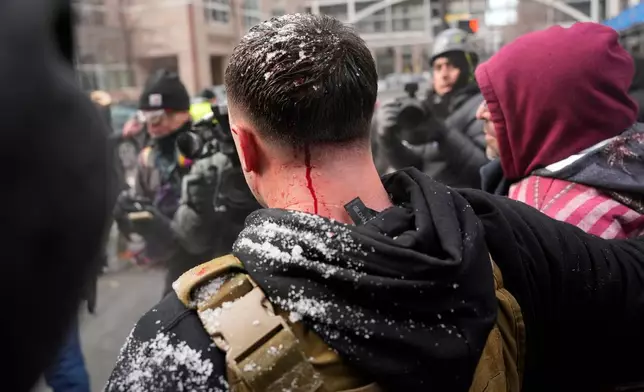
Jake Lang, center, who organized the protest March Against Minnesota Fraud, appears to bleed from the back of his head after clashing with pro-immigration counterprotesters near Minneapolis City Hall, Saturday, Jan. 17, 2026, in Minneapolis. (AP Photo/Yuki Iwamura)
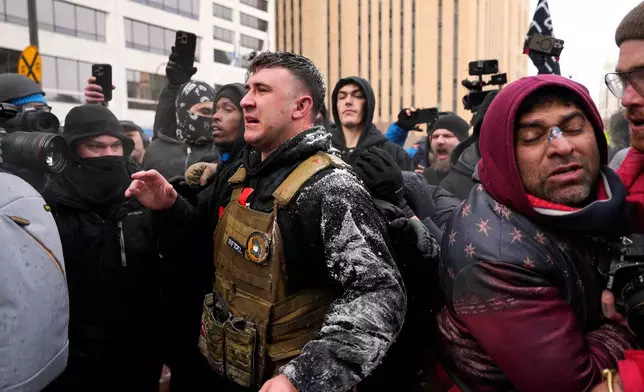
Jake Lang, center, who organized the March Against Minnesota Fraud, clashes with pro-immigration counterprotesters near Minneapolis City Hall, Saturday, Jan. 17, 2026, in Minneapolis. (AP Photo/Yuki Iwamura)
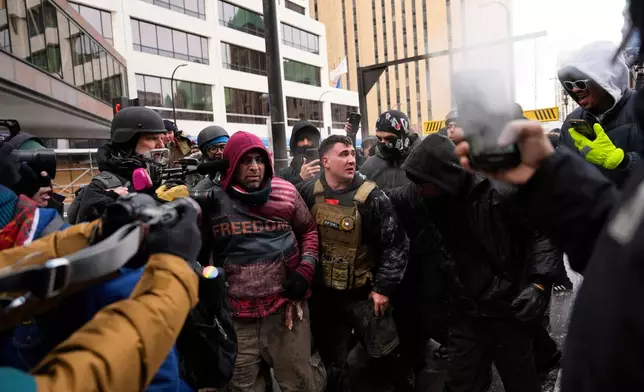
Jake Lang, center in the vest, who organized the March Against Minnesota Fraud, clashes with pro-immigration counterprotesters near Minneapolis City Hall, Saturday, Jan. 17, 2026, in Minneapolis. (AP Photo/Yuki Iwamura)
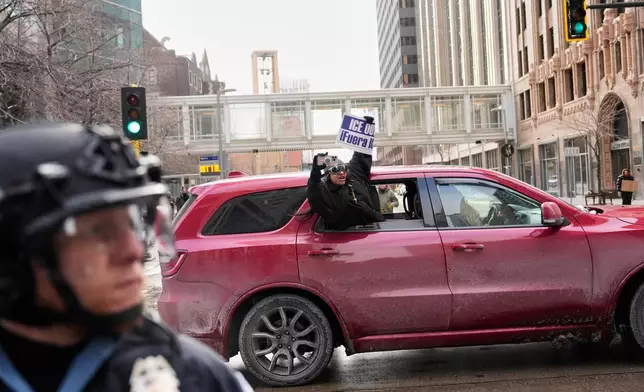
A protester holds a sign reading, "ICE Out," out of a car as she drives by Saturday, Jan. 17, 2026, in Minneapolis. (AP Photo/Yuki Iwamura)
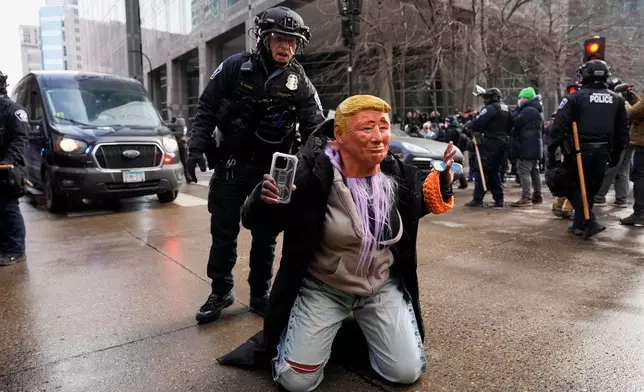
A person wearing a Trump mask is told to get up by a Minneapolis Police officer Saturday, Jan. 17, 2026, in Minneapolis. (AP Photo/Yuki Iwamura)
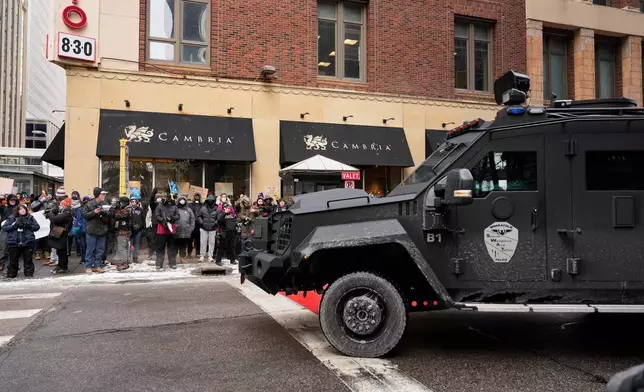
Minneapolis Police officers respond to immigration protests Saturday, Jan. 17, 2026, in Minneapolis. (AP Photo/Yuki Iwamura)
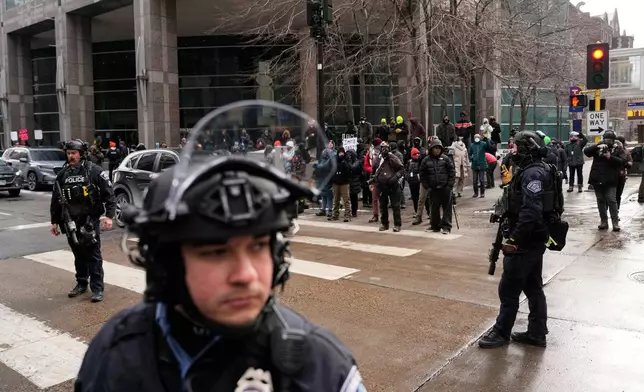
Minneapolis Police officers secure the intersection where protesters are gathered Saturday, Jan. 17, 2026, in Minneapolis. (AP Photo/Yuki Iwamura)
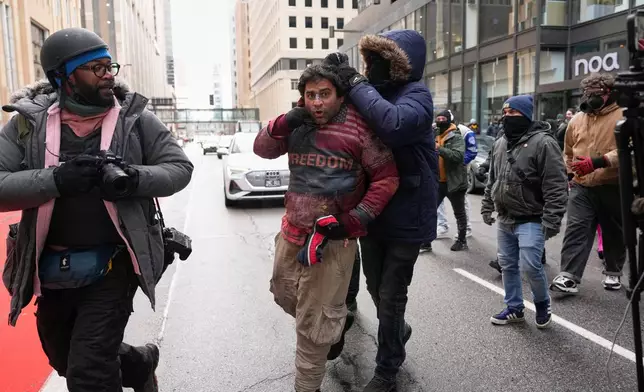
A person tries to forcibly remove a Jake Lang’s supporter’s sweatshirt during an altercation at the March Against Minnesota Fraud rally near Minneapolis City Hall, Saturday, Jan. 17, 2026, in Minneapolis. (AP Photo/Yuki Iwamura)
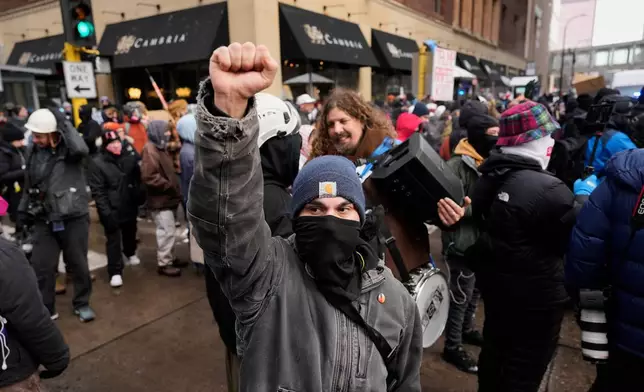
An immigration supporter raises his fist during a protest Saturday, Jan. 17, 2026, in Minneapolis. (AP Photo/Yuki Iwamura)
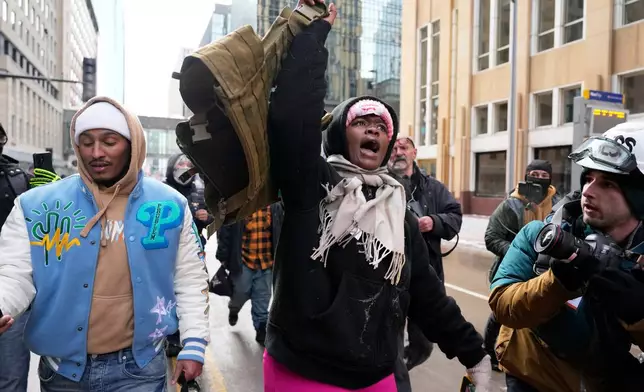
A pro-immigration protester lifts up Jake Lang's vest after an altercation at the March Against Minnesota Fraud rally near Minneapolis City Hall, Saturday, Jan. 17, 2026, in Minneapolis. (AP Photo/Yuki Iwamura)
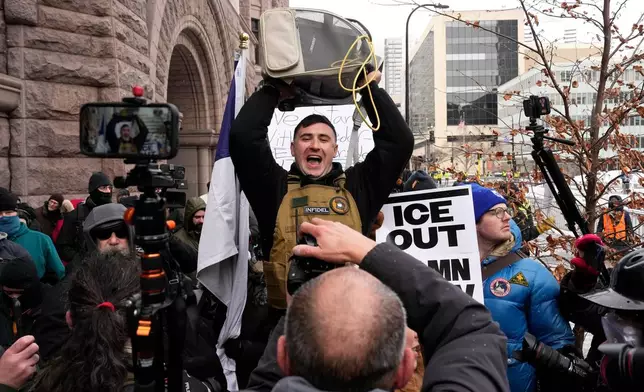
Jake Lang, who organized the protest March Against Minnesota Fraud, attends the rally in front of Minneapolis City Hall, Saturday, Jan. 17, 2026, in Minneapolis. (AP Photo/Yuki Iwamura)
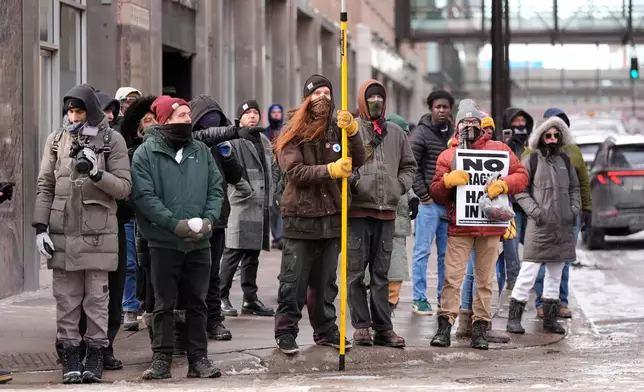
Pro-immigration protesters stand on the sideway Saturday, Jan. 17, 2026, in Minneapolis. (AP Photo/Yuki Iwamura)
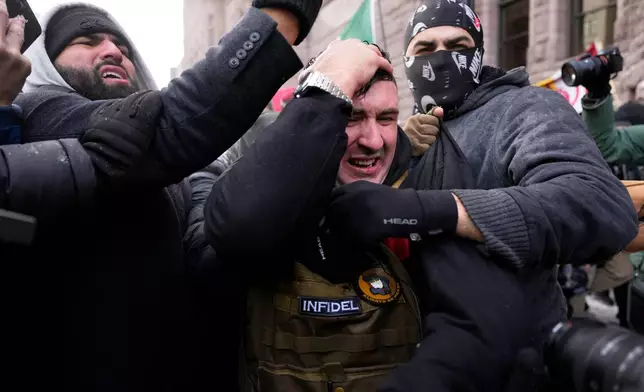
Jake Lang, center, who organized the protest March Against Minnesota Fraud, clutches his head as he leaves the rally near Minneapolis City Hall, Saturday, Jan. 17, 2026, in Minneapolis. (AP Photo/Yuki Iwamura)
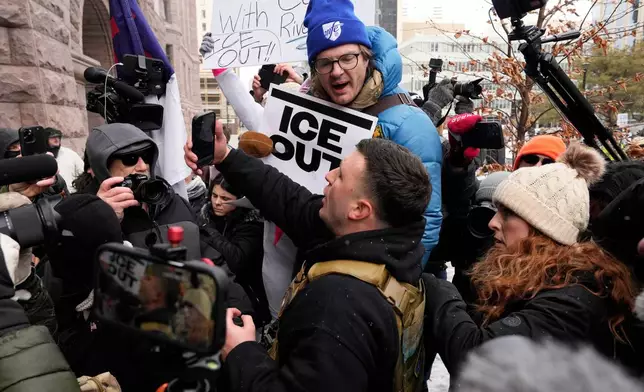
Pro-immigration protesters confront Jake Lang, center, who organized the protest March Against Minnesota Fraud, in front of Minneapolis City Hall, Saturday, Jan. 17, 2026, in Minneapolis. (AP Photo/Yuki Iwamura)
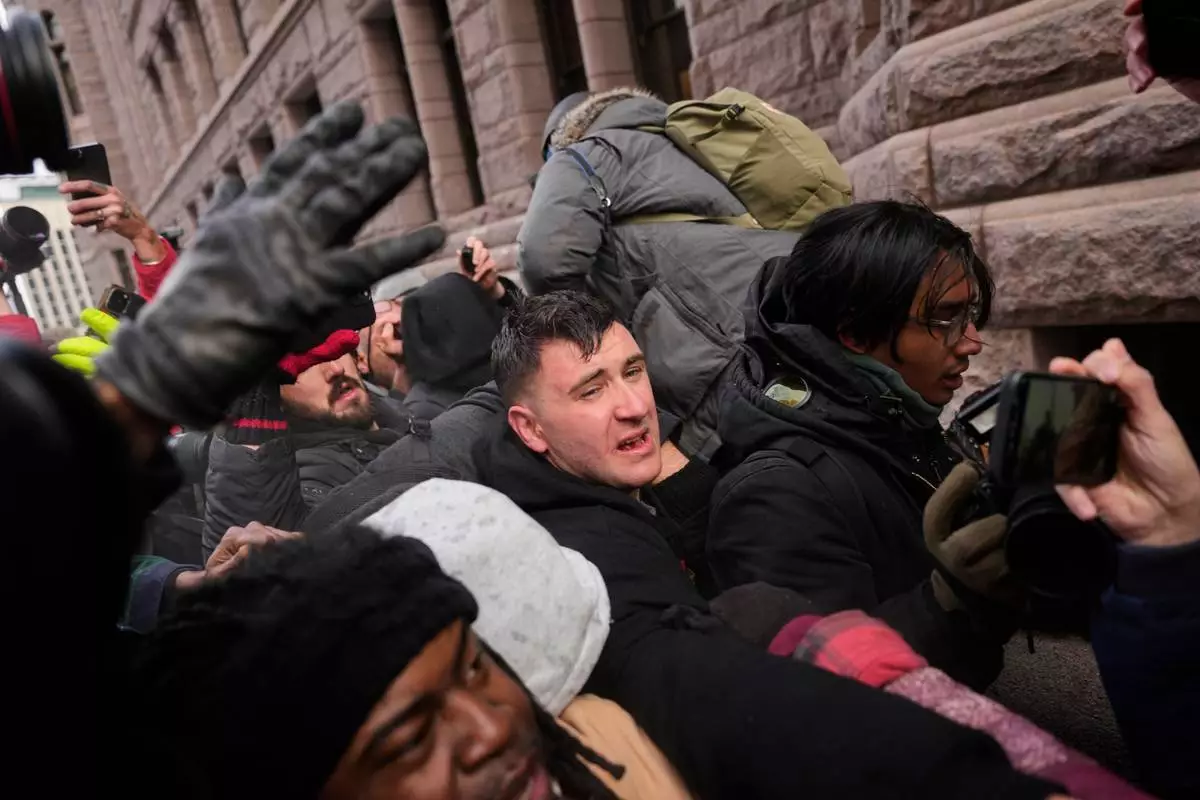
Jake Lang, center, who organized the protest March Against Minnesota Fraud, clashes with pro-immigration counterprotesters near Minneapolis City Hall, Saturday, Jan. 17, 2026, in Minneapolis. (AP Photo/Yuki Iwamura)
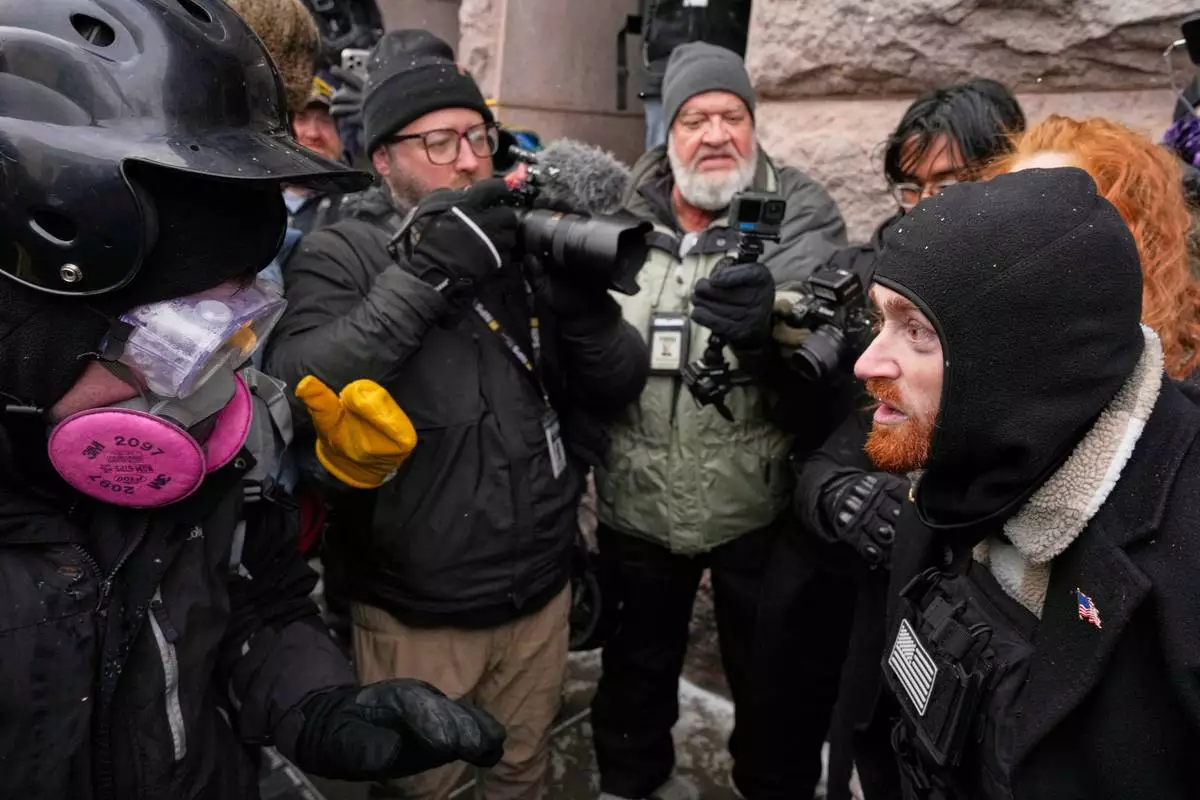
A pro-immigration protester, left, clashes with a man attending the March Against Minnesota Fraud, right, in front of Minneapolis City Hall, Saturday, Jan. 17, 2026, in Minneapolis. (AP Photo/Yuki Iwamura)
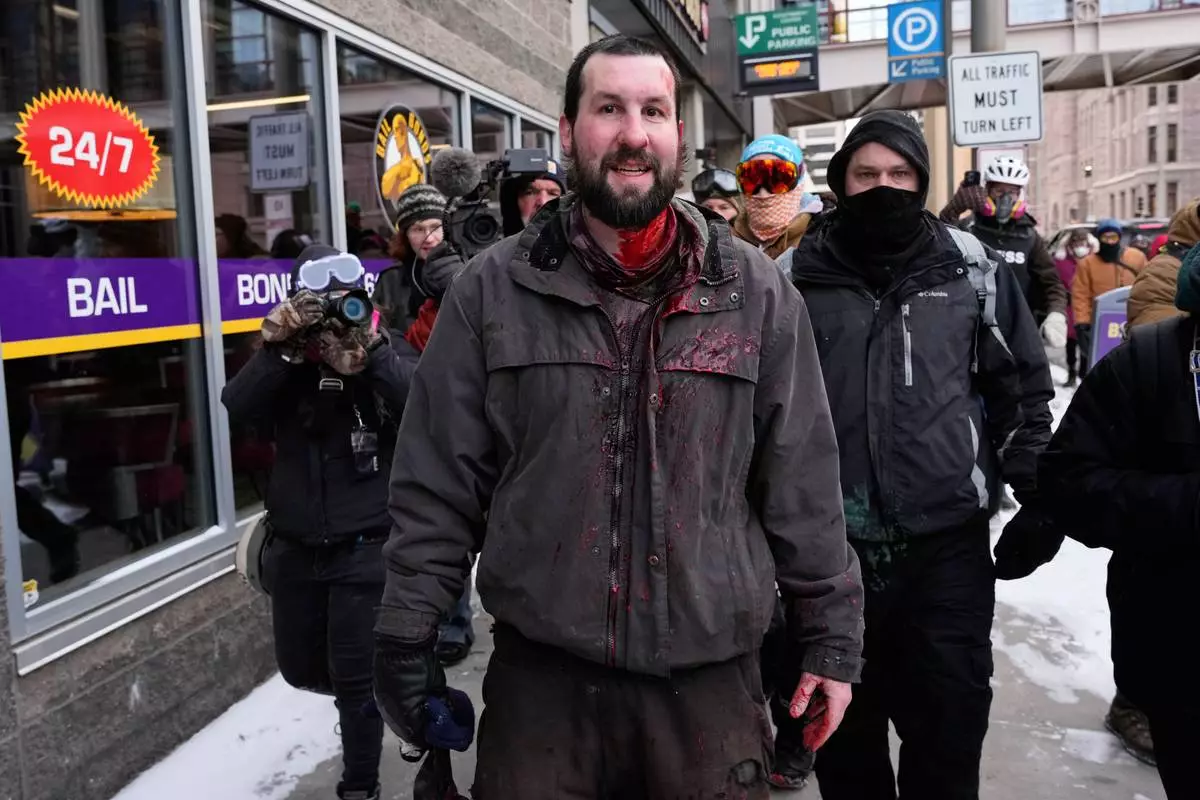
A Jake Lang supporter bleeds from his head as he is chased away by pro-immigration protesters Saturday, Jan. 17, 2026, in Minneapolis. (AP Photo/Yuki Iwamura)
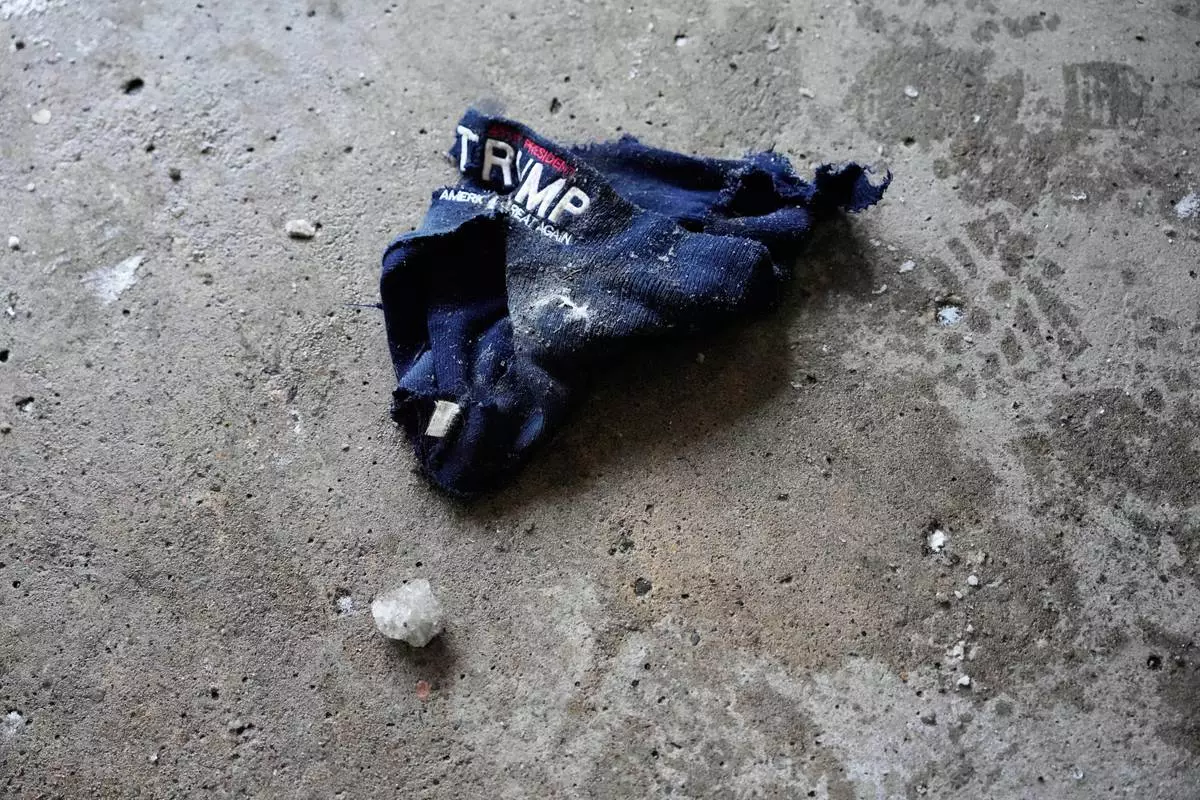
A ripped Trump hat lies on the ground of a parking garage Saturday, Jan. 17, 2026, in Minneapolis. (AP Photo/Yuki Iwamura)
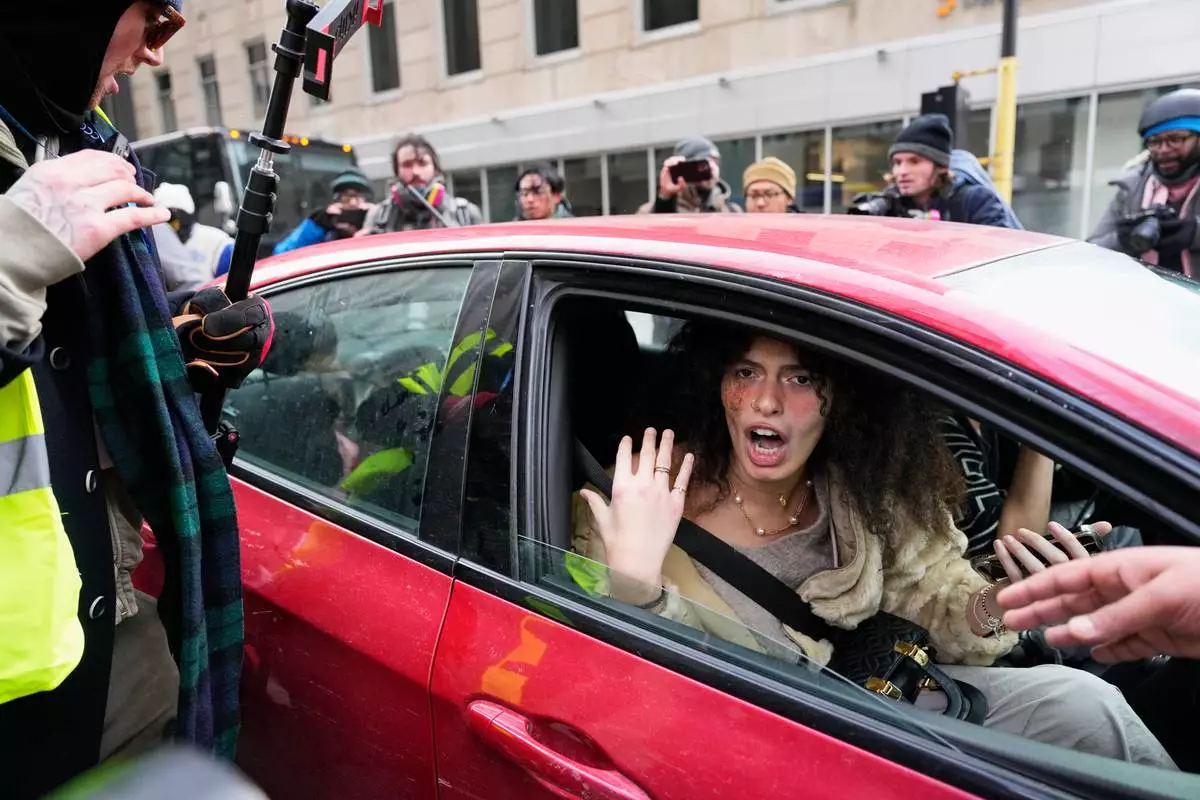
Jake Lang, who organized the protest March Against Minnesota Fraud, leaves the rally by getting into a car near Minneapolis City Hall, Saturday, Jan. 17, 2026, in Minneapolis. (AP Photo/Yuki Iwamura)

Jake Lang, center, who organized the protest March Against Minnesota Fraud, appears to bleed from the back of his head after clashing with pro-immigration counterprotesters near Minneapolis City Hall, Saturday, Jan. 17, 2026, in Minneapolis. (AP Photo/Yuki Iwamura)
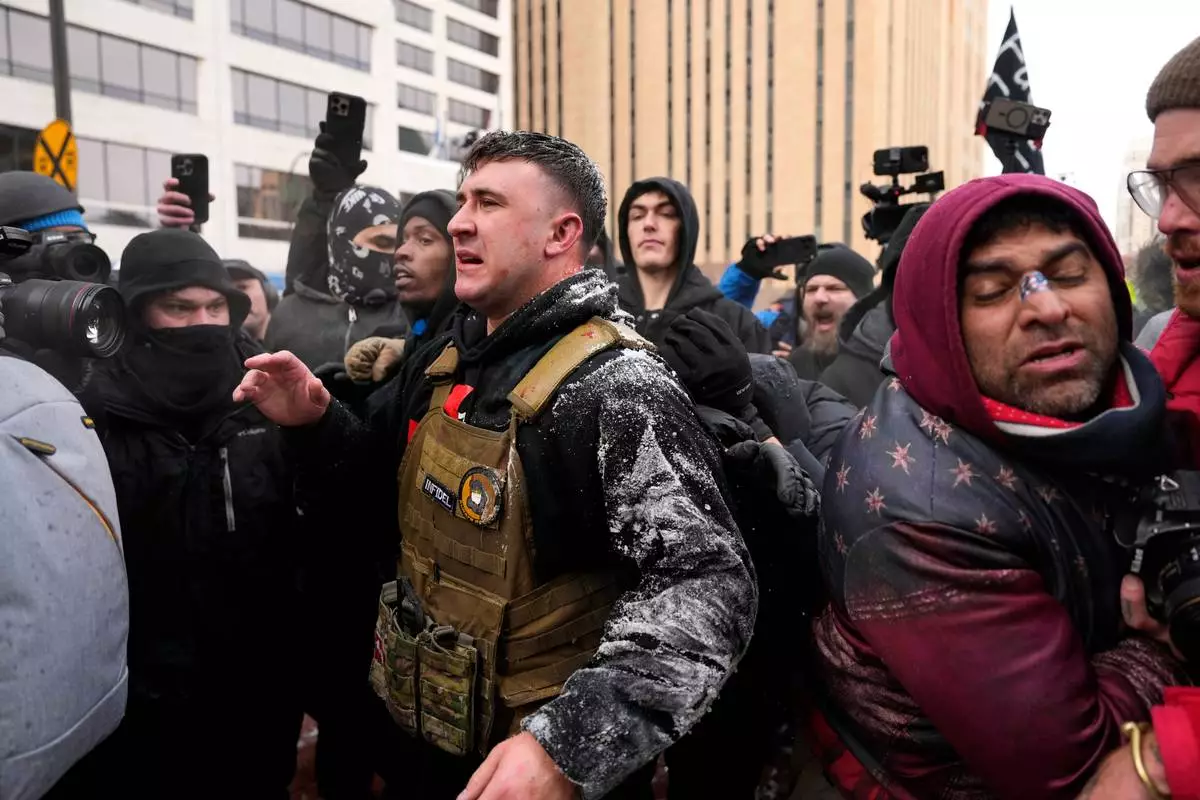
Jake Lang, center, who organized the March Against Minnesota Fraud, clashes with pro-immigration counterprotesters near Minneapolis City Hall, Saturday, Jan. 17, 2026, in Minneapolis. (AP Photo/Yuki Iwamura)
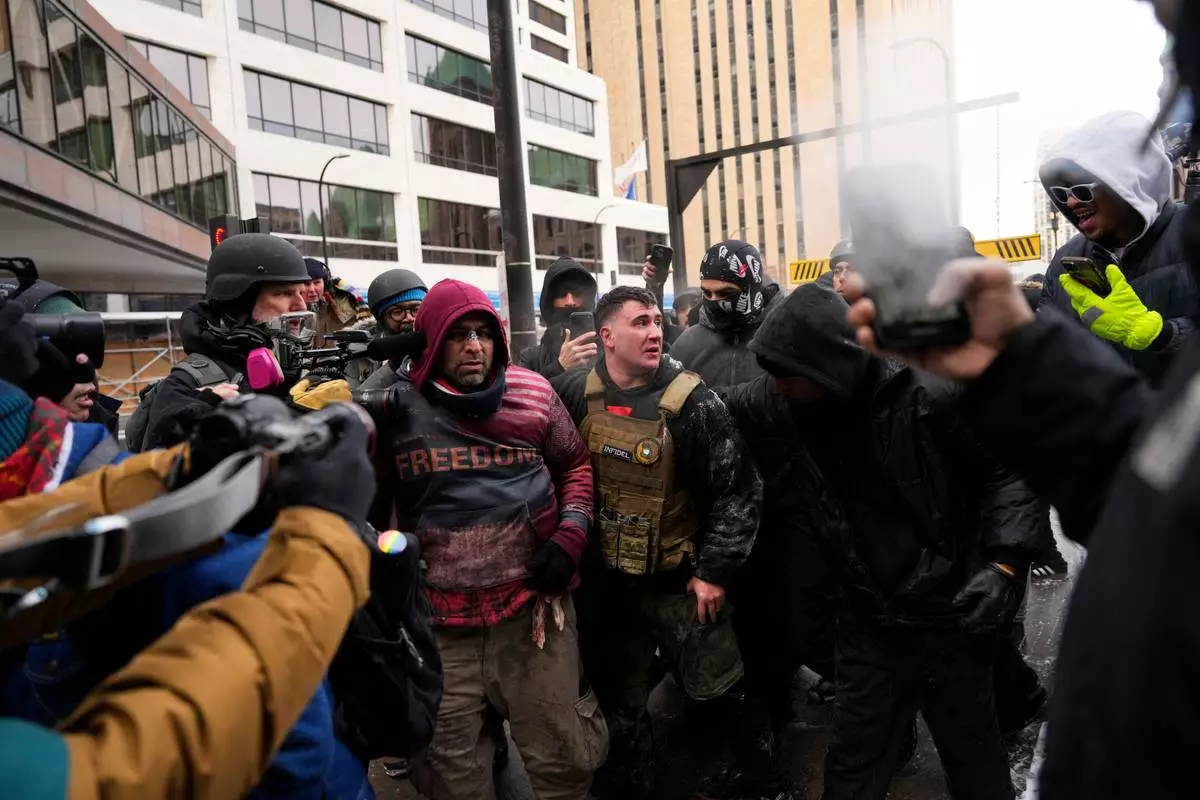
Jake Lang, center in the vest, who organized the March Against Minnesota Fraud, clashes with pro-immigration counterprotesters near Minneapolis City Hall, Saturday, Jan. 17, 2026, in Minneapolis. (AP Photo/Yuki Iwamura)
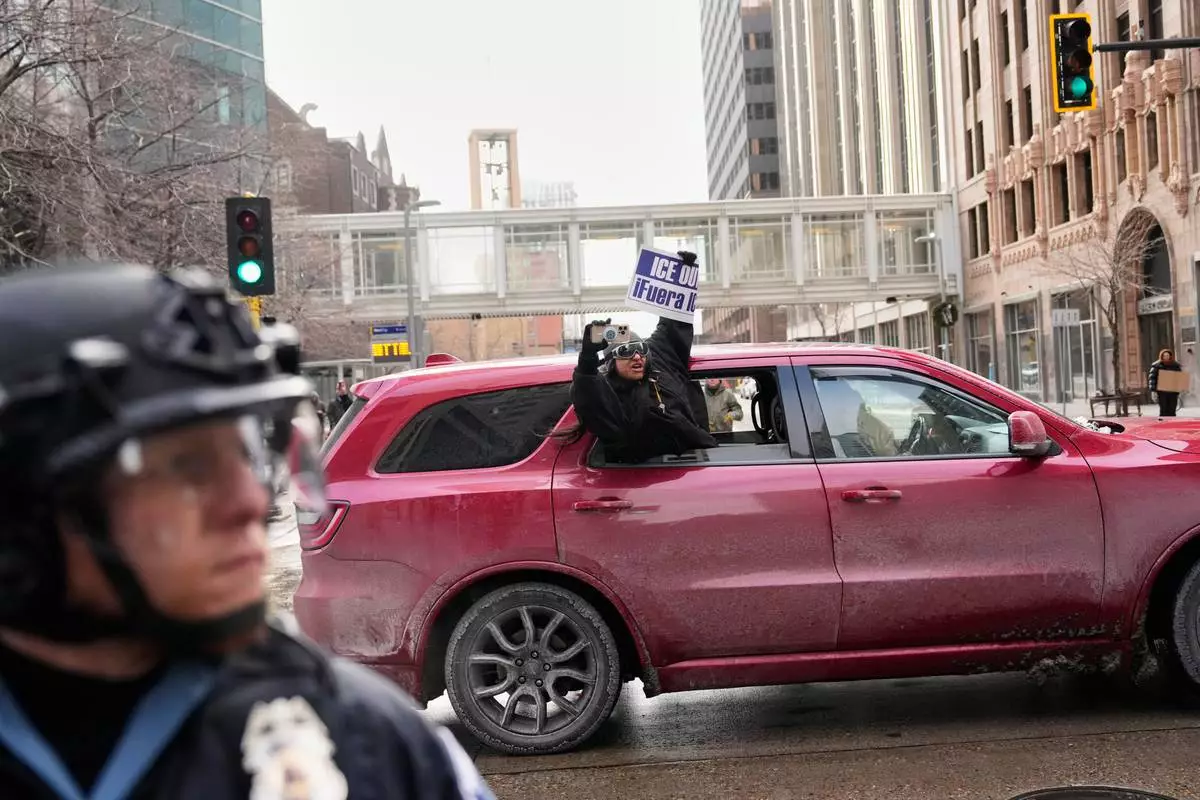
A protester holds a sign reading, "ICE Out," out of a car as she drives by Saturday, Jan. 17, 2026, in Minneapolis. (AP Photo/Yuki Iwamura)
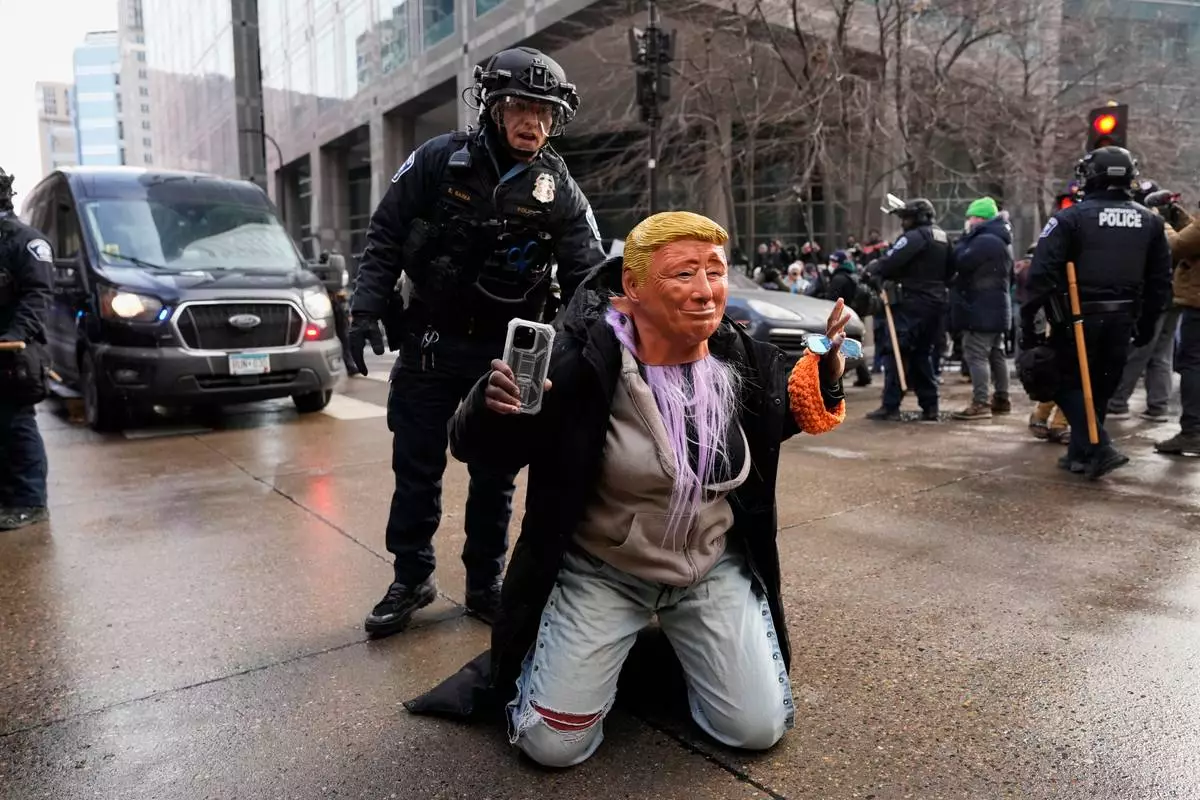
A person wearing a Trump mask is told to get up by a Minneapolis Police officer Saturday, Jan. 17, 2026, in Minneapolis. (AP Photo/Yuki Iwamura)
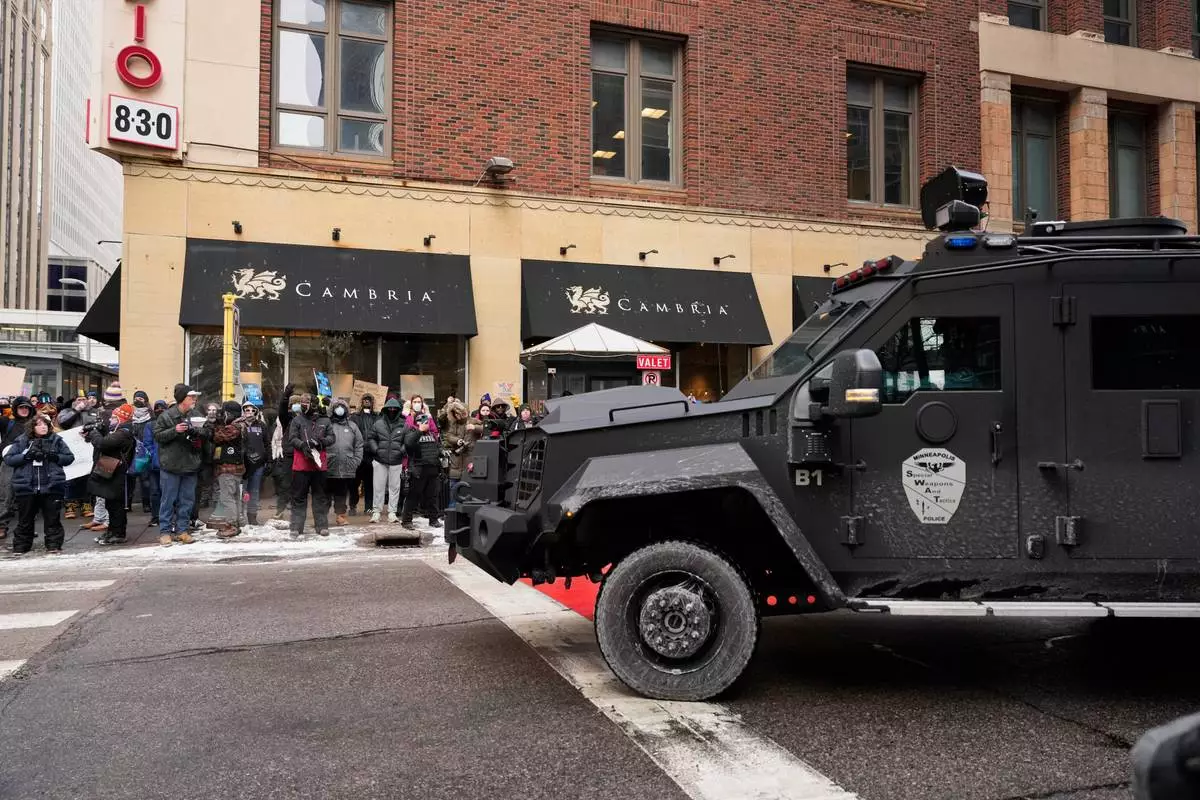
Minneapolis Police officers respond to immigration protests Saturday, Jan. 17, 2026, in Minneapolis. (AP Photo/Yuki Iwamura)
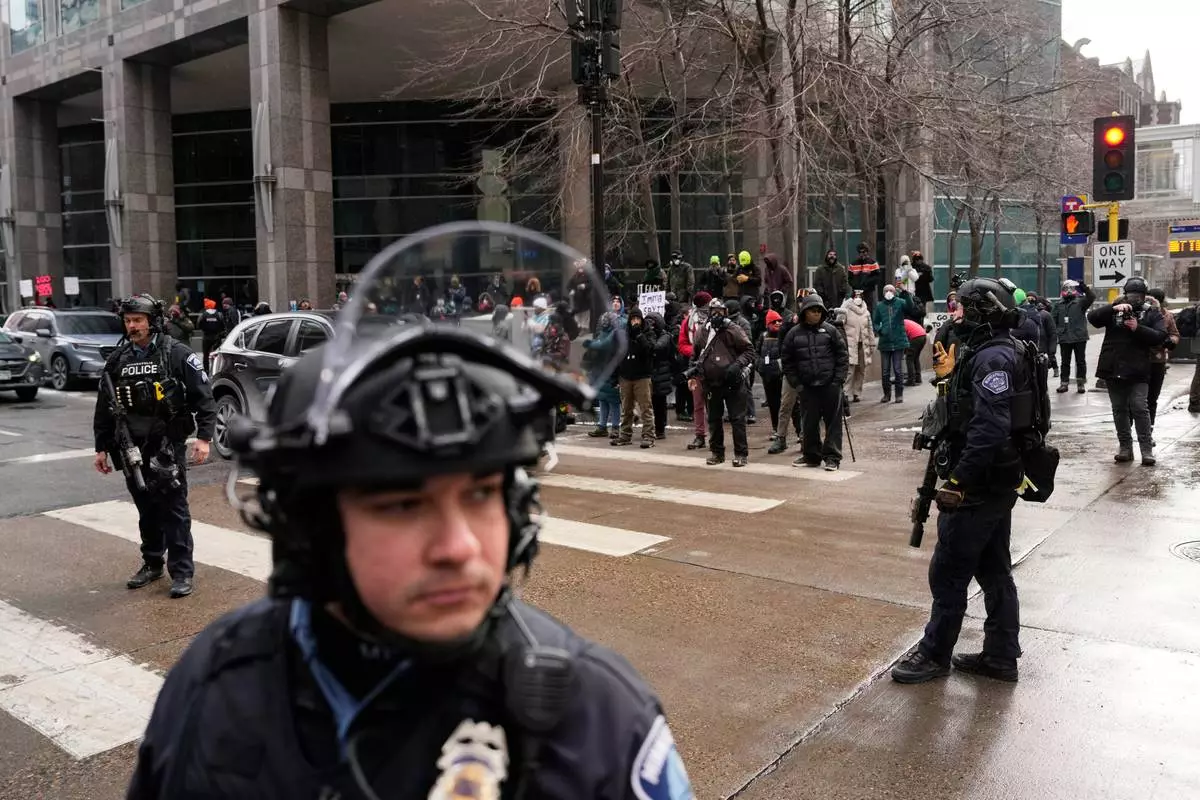
Minneapolis Police officers secure the intersection where protesters are gathered Saturday, Jan. 17, 2026, in Minneapolis. (AP Photo/Yuki Iwamura)
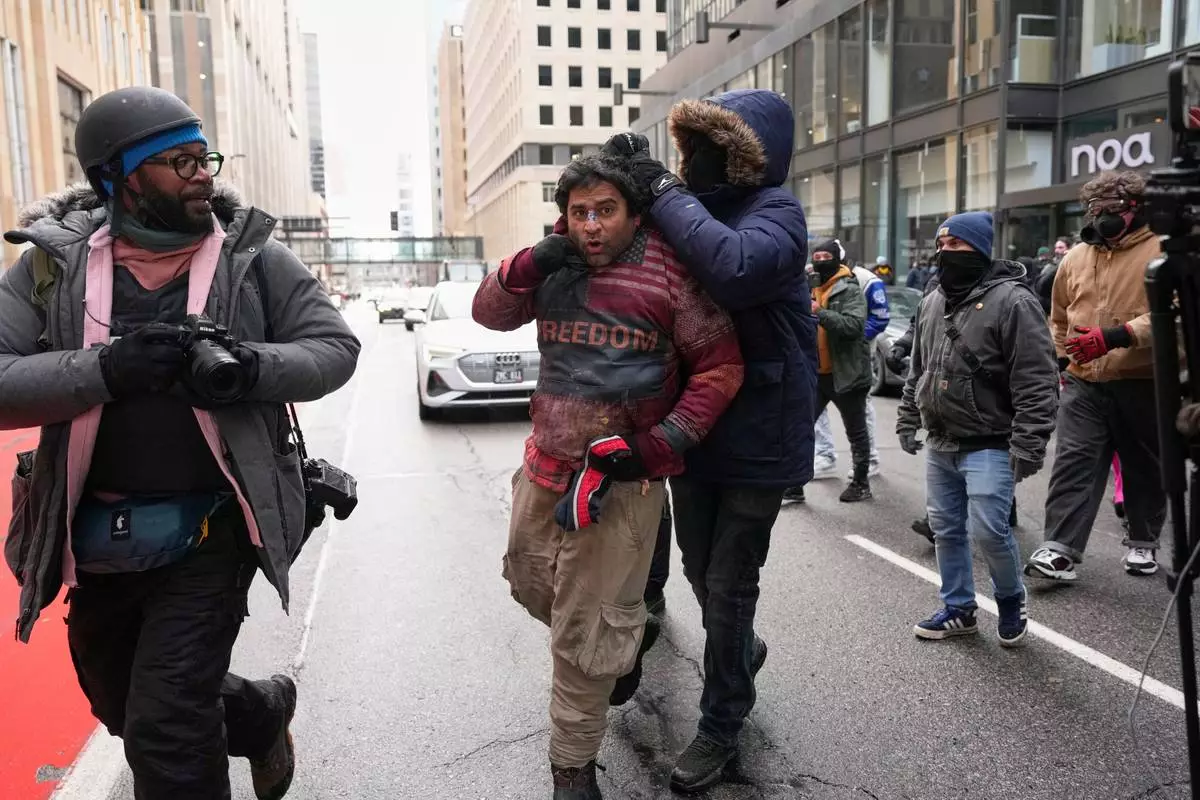
A person tries to forcibly remove a Jake Lang’s supporter’s sweatshirt during an altercation at the March Against Minnesota Fraud rally near Minneapolis City Hall, Saturday, Jan. 17, 2026, in Minneapolis. (AP Photo/Yuki Iwamura)
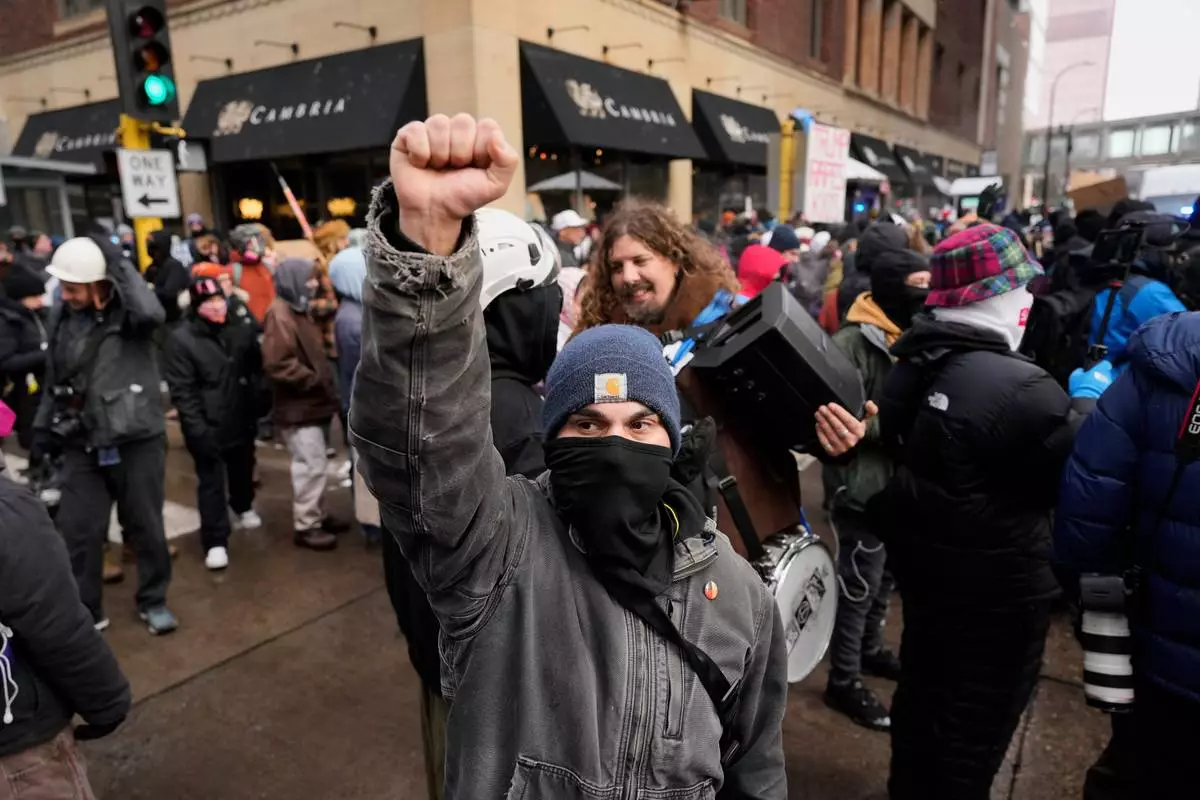
An immigration supporter raises his fist during a protest Saturday, Jan. 17, 2026, in Minneapolis. (AP Photo/Yuki Iwamura)
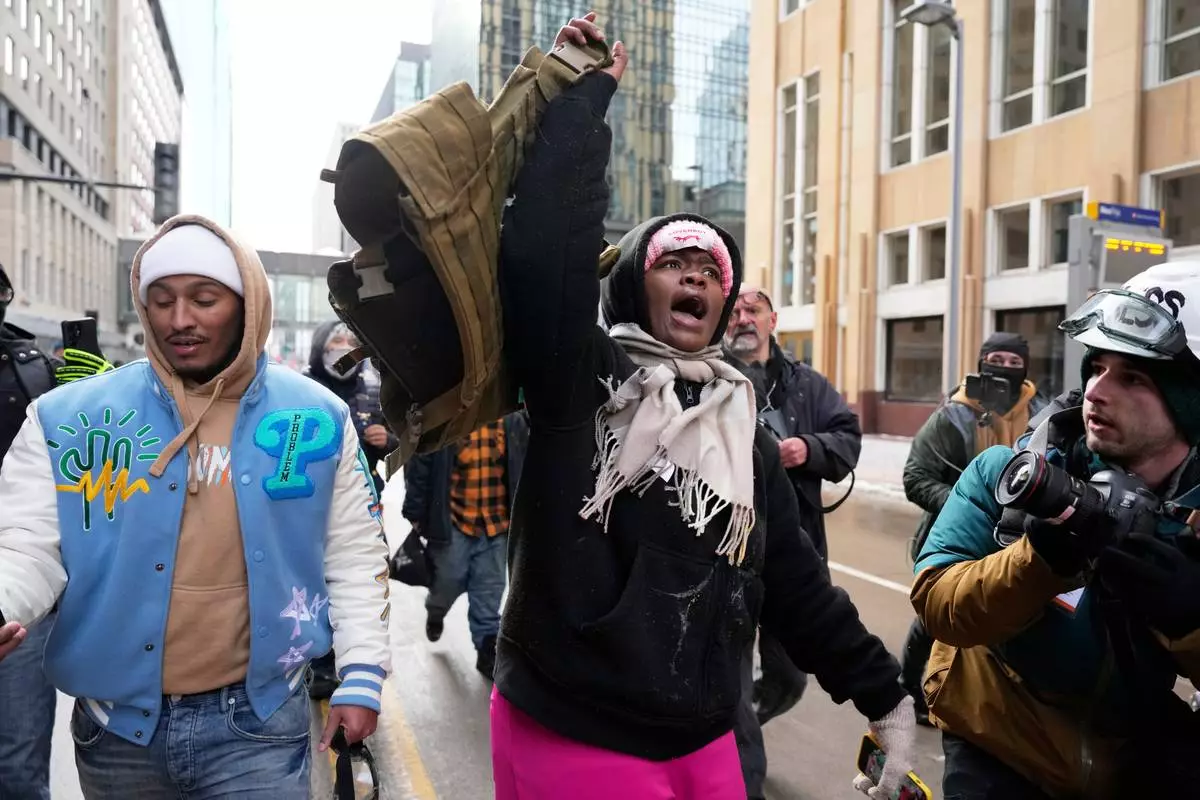
A pro-immigration protester lifts up Jake Lang's vest after an altercation at the March Against Minnesota Fraud rally near Minneapolis City Hall, Saturday, Jan. 17, 2026, in Minneapolis. (AP Photo/Yuki Iwamura)
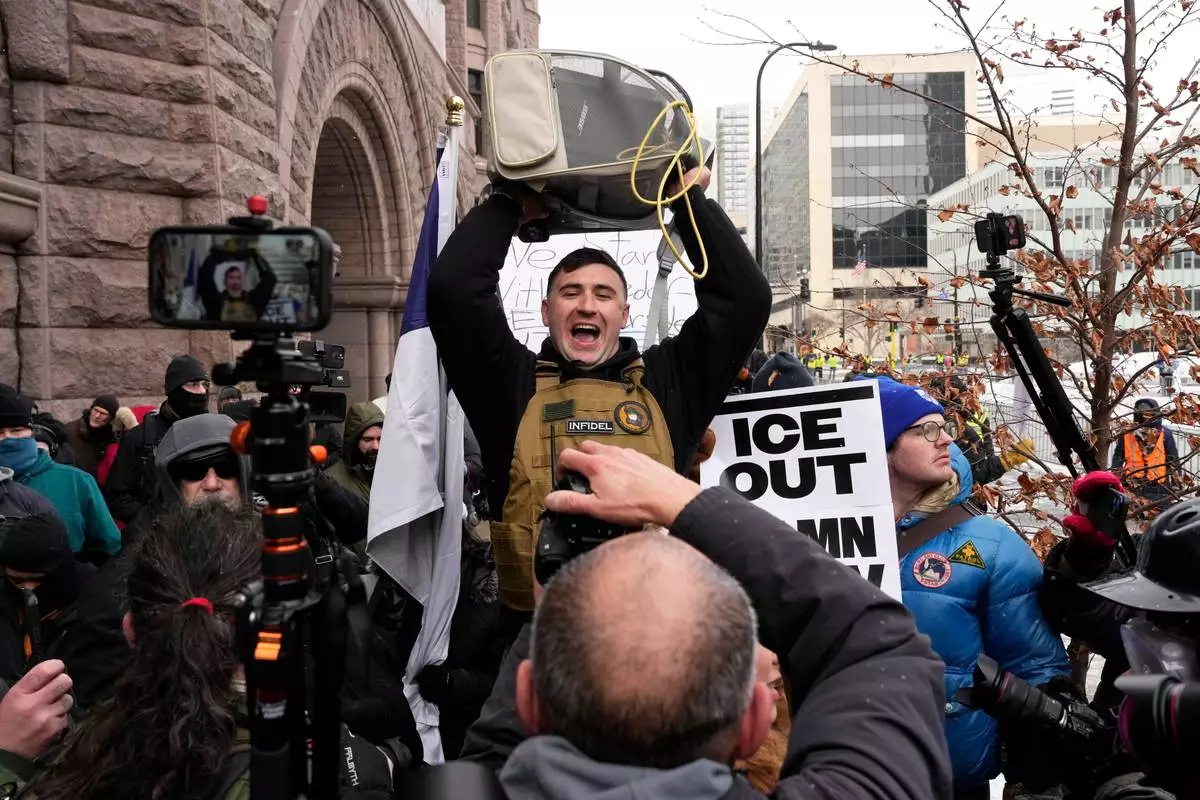
Jake Lang, who organized the protest March Against Minnesota Fraud, attends the rally in front of Minneapolis City Hall, Saturday, Jan. 17, 2026, in Minneapolis. (AP Photo/Yuki Iwamura)
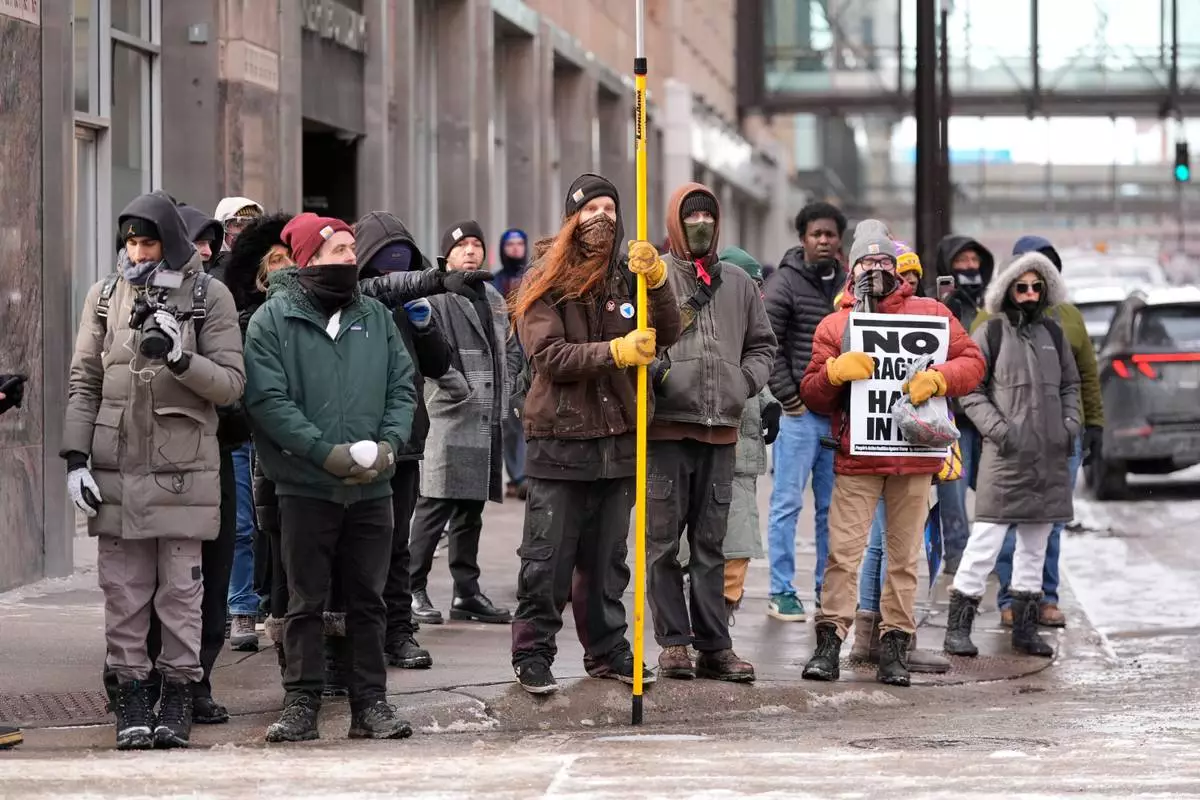
Pro-immigration protesters stand on the sideway Saturday, Jan. 17, 2026, in Minneapolis. (AP Photo/Yuki Iwamura)
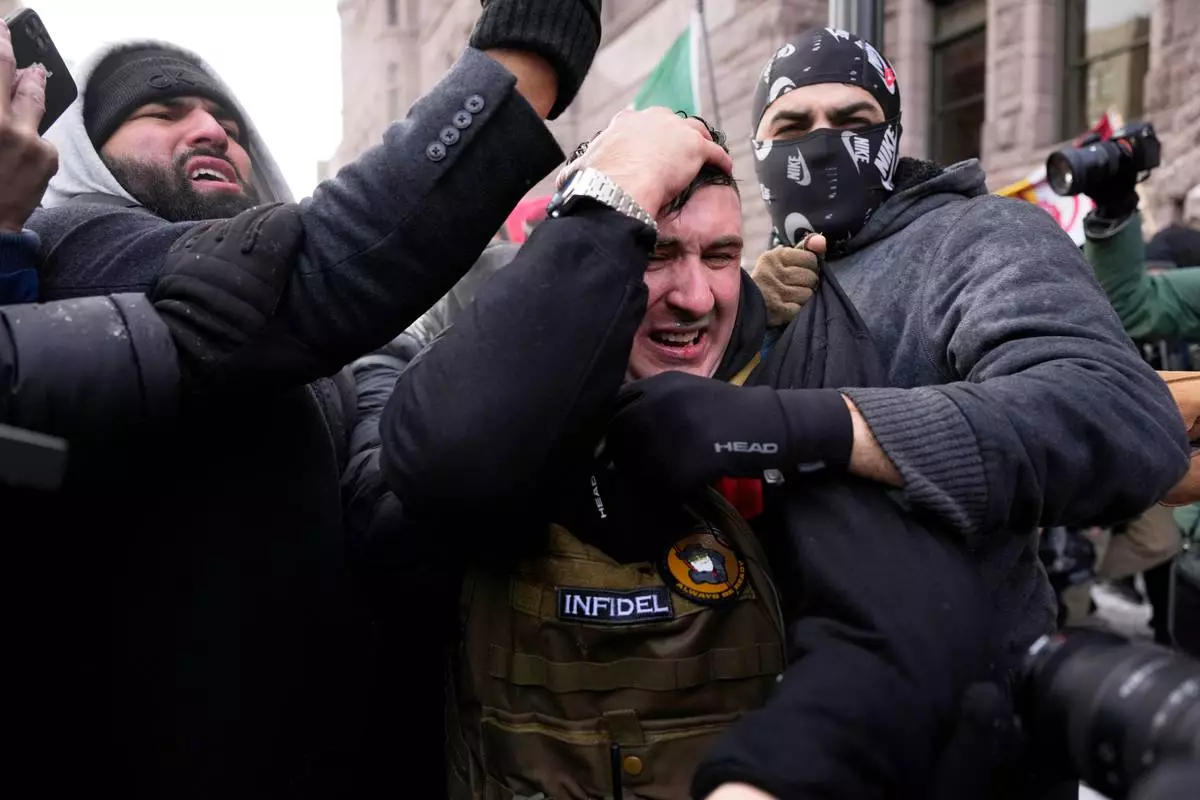
Jake Lang, center, who organized the protest March Against Minnesota Fraud, clutches his head as he leaves the rally near Minneapolis City Hall, Saturday, Jan. 17, 2026, in Minneapolis. (AP Photo/Yuki Iwamura)
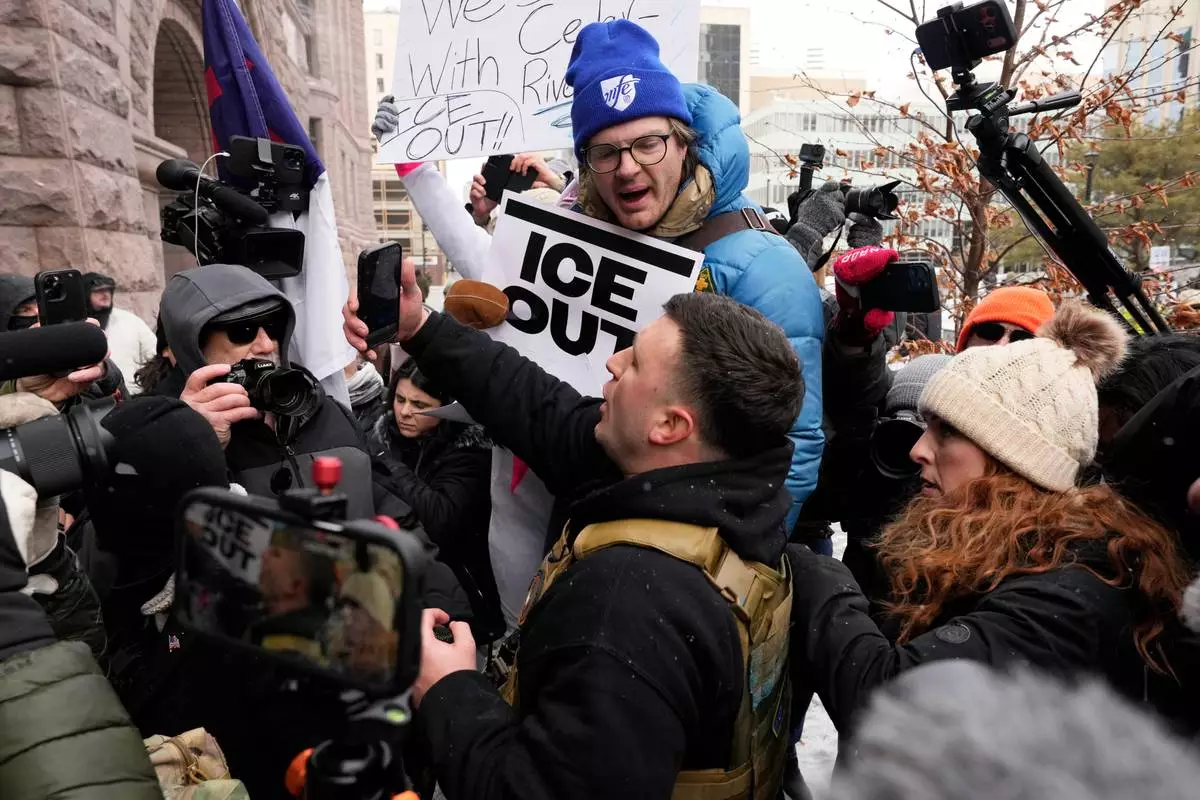
Pro-immigration protesters confront Jake Lang, center, who organized the protest March Against Minnesota Fraud, in front of Minneapolis City Hall, Saturday, Jan. 17, 2026, in Minneapolis. (AP Photo/Yuki Iwamura)