PESCADERO, Calif. (AP) — Every winter about 10,000 elephant seals make their way to California's Año Nuevo State Park to fight, mate and give birth. The spectacle runs from mid-December through March, drawing wildlife watchers eager for a glimpse of the largest seals on the planet.
During what park docent Laura Stern called “pupping season,” bull seals — some reaching up to 16 feet (4.9 meters) in length and weighing up to 2.5 tons — engage in bloody battles for breeding access to the females.
Click to Gallery
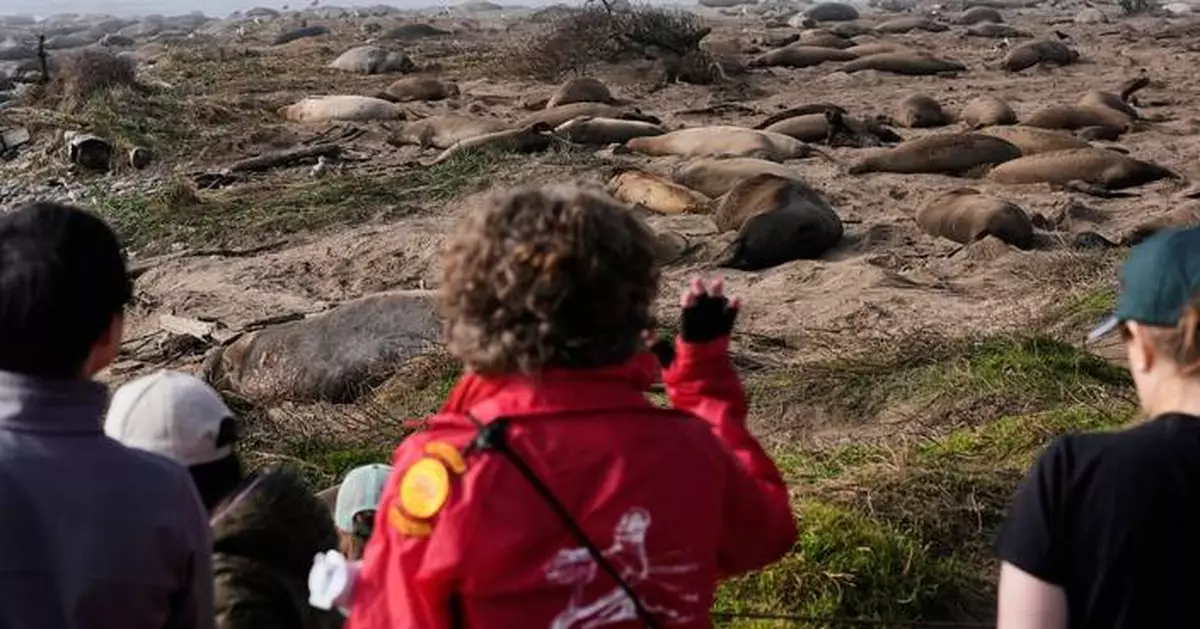
Laura Stern, right, talks about elephant seals during a tour of Año Nuevo State Park, Friday, Jan. 16, 2026, in Pescadero, Calif. (AP Photo/Godofredo A. Vásquez)
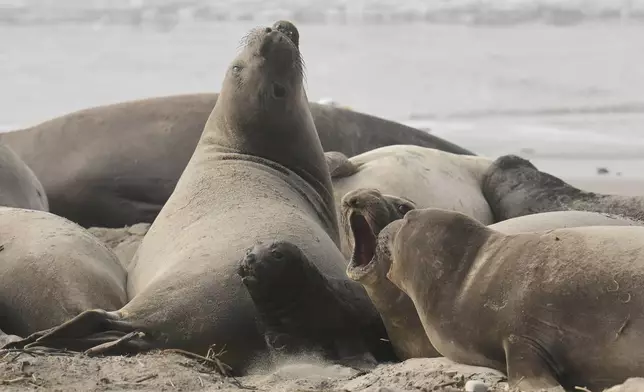
An elephant seal pup, center, makes its way through female elephant seals on a beach at Año Nuevo State Park, Friday, Jan. 16, 2026, in Pescadero, Calif. (AP Photo/Godofredo A. Vásquez)
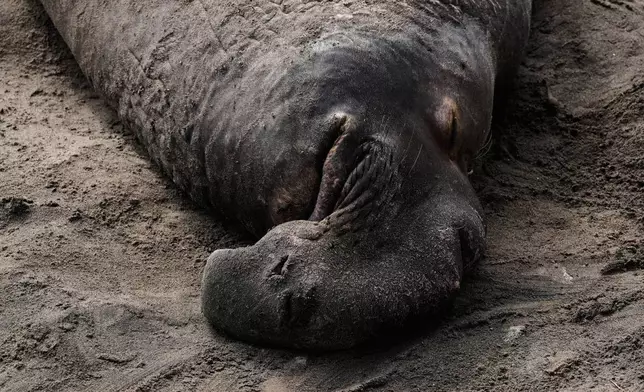
A bull elephant seal rests on a beach at Año Nuevo State Park, Friday, Jan. 16, 2026, in Pescadero, Calif. (AP Photo/Godofredo A. Vásquez)
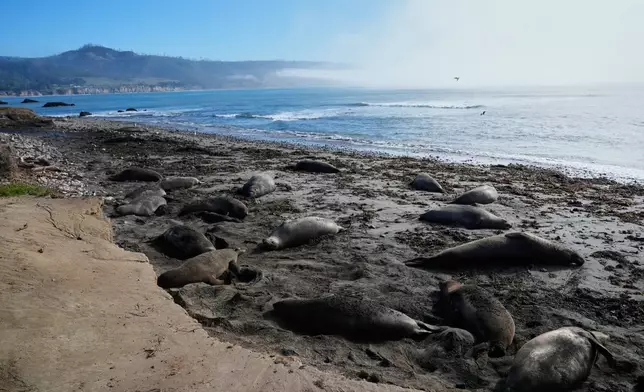
Elephant seals rest on a beach at Año Nuevo State Park, Friday, Jan. 16, 2026, in Pescadero, Calif. (AP Photo/Godofredo A. Vásquez)
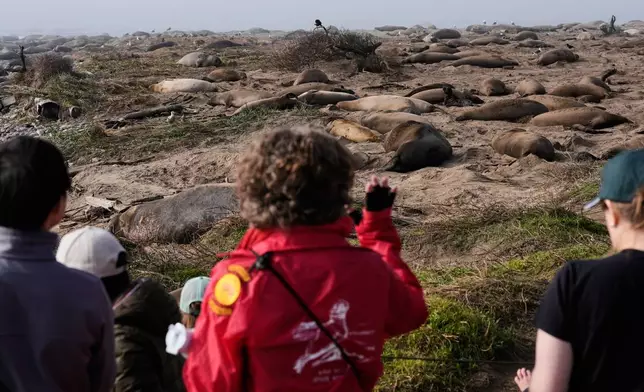
People watch as elephant seals rest on a beach at Año Nuevo State Park, Friday, Jan. 16, 2026, in Pescadero, Calif. (AP Photo/Godofredo A. Vásquez)
“So most elephant seals come back to the same beach where they were born. They don't all, but most of them do,” Stern said. “And we have about 10,000 elephant seals that come to Año Nuevo.”
Elephant seals were hunted nearly to extinction in the 1800s, sought out for their blubber, which was used to make oil. In 1892, fewer than 100 of the animals remained on a small island off the coast of Baja California.
Recognizing the crisis, the Mexican government extended legal protection to the species in 1922, followed shortly by protection in the United States. Today the population has grown to an estimated 250,000 seals living in the Pacific.
“There is a genetic bottleneck because they're all coming from that same 30 to 60. But so far they're doing really well, and we haven't had any problems,” Stern said.
Año Nuevo State Park, about 90 minutes south of San Francisco, is one of the largest mainland breeding rookeries on the West Coast. During pupping season, visitors come in droves to book docent-led guided walks so they can watch the long-nosed bull seals clash on the shore, hear the barks and bellows filling the seaside air and see the mothers nurse sleek, 75-pound (34-kilogram) pups on the sand dunes.
“It’s awe-inspiring," said Carrie Kahn, a visitor to the park from Berkeley, California. "And you just wonder, how do they move from point A to point B? They look like they’d be so slow. But they’re quick and big, and they’re honking and making noises.”
Male elephant seals have the highest level of testosterone of any mammal, Stern said. “So they want to mate, fight, eat, press repeat,” she said.
“You're not at a museum. You're not in an aquarium. You are right here watching them live doing what they do,” Stern said.
Between April and November, no tours are needed to visit the seals at Año Nuevo State Park. During pupping season, visitors must reserve a spot on a docent-guided walk to see the seals. Reservations can be made at www.reservecalifornia.com.
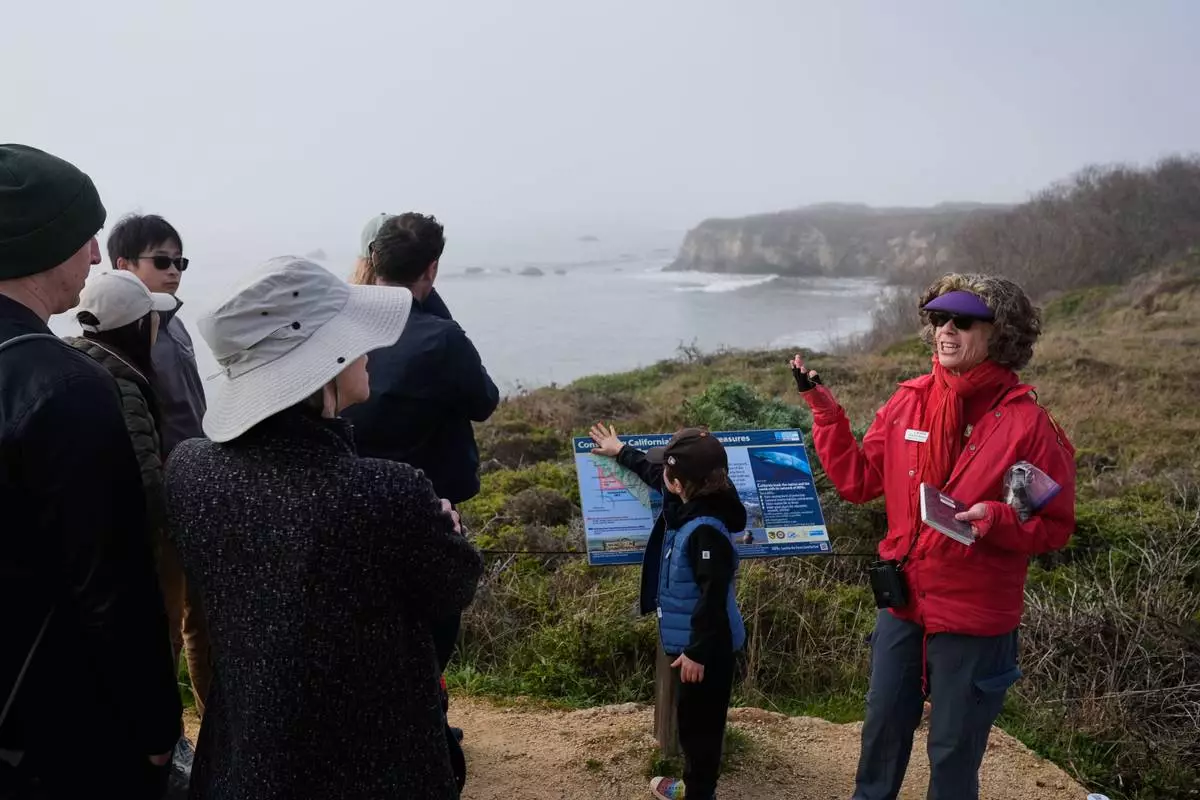
Laura Stern, right, talks about elephant seals during a tour of Año Nuevo State Park, Friday, Jan. 16, 2026, in Pescadero, Calif. (AP Photo/Godofredo A. Vásquez)
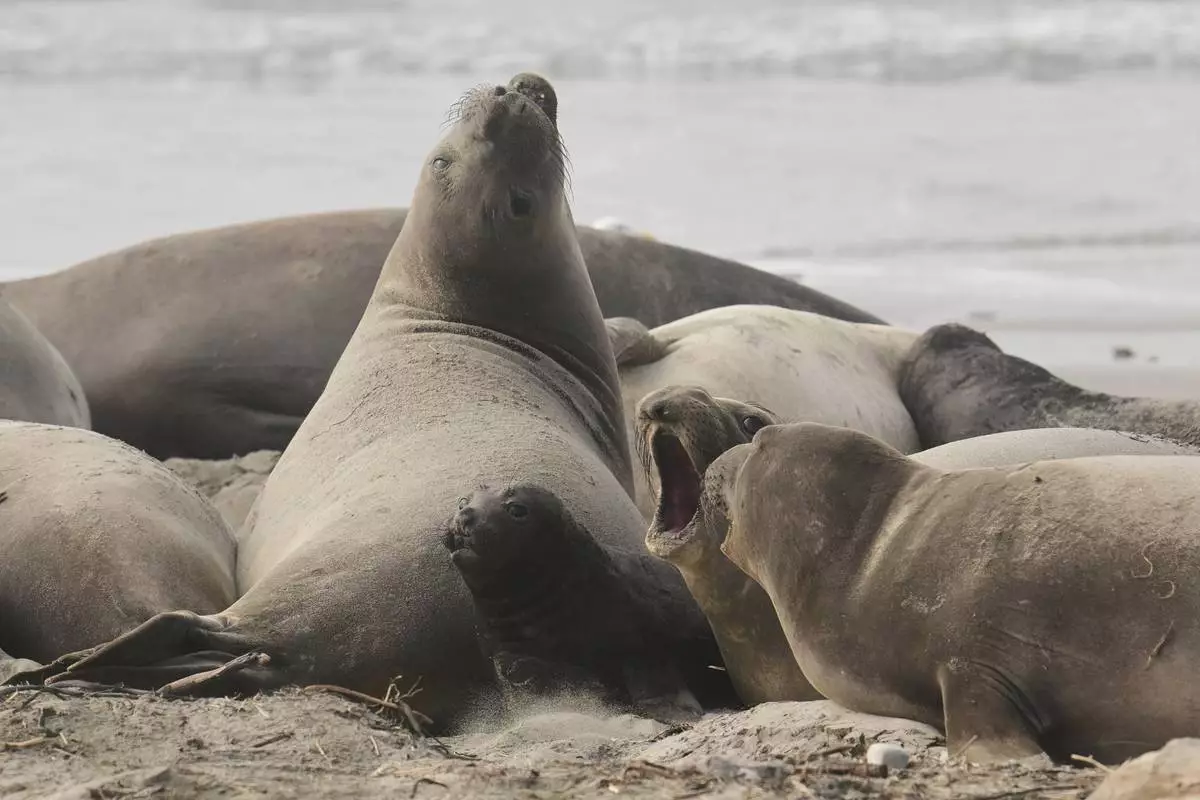
An elephant seal pup, center, makes its way through female elephant seals on a beach at Año Nuevo State Park, Friday, Jan. 16, 2026, in Pescadero, Calif. (AP Photo/Godofredo A. Vásquez)
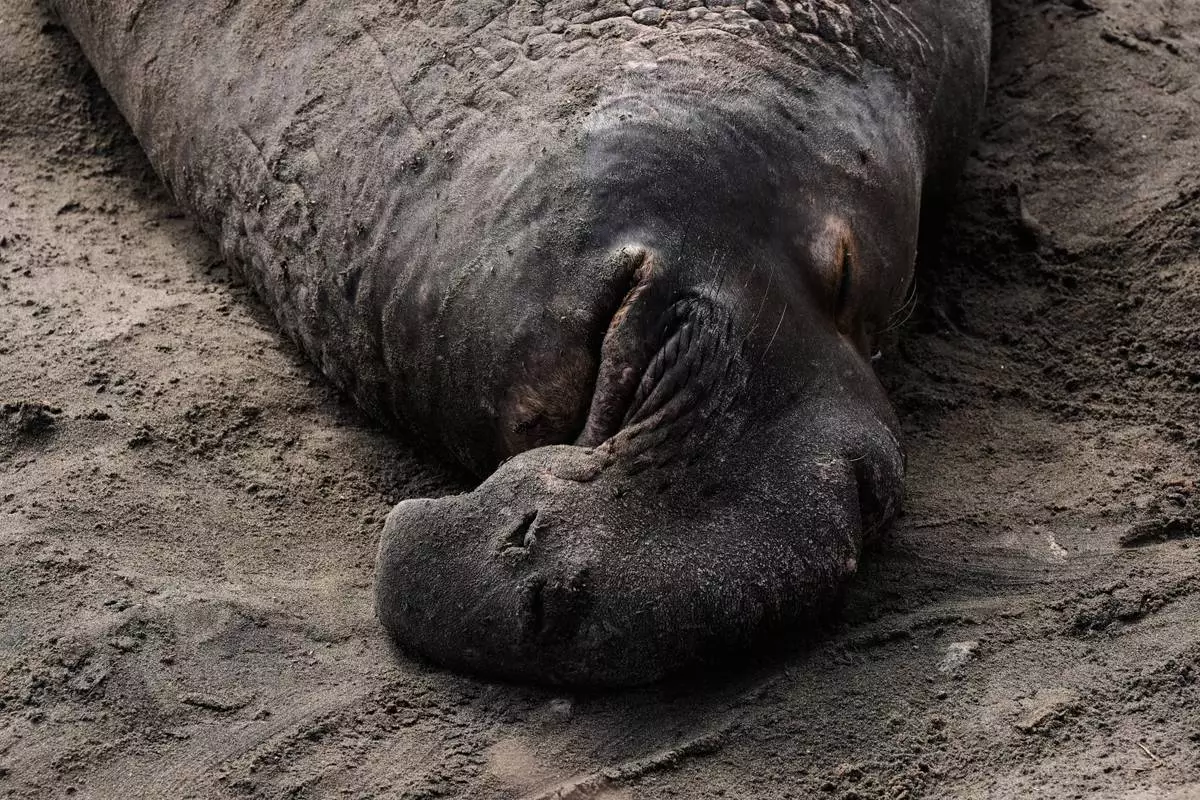
A bull elephant seal rests on a beach at Año Nuevo State Park, Friday, Jan. 16, 2026, in Pescadero, Calif. (AP Photo/Godofredo A. Vásquez)
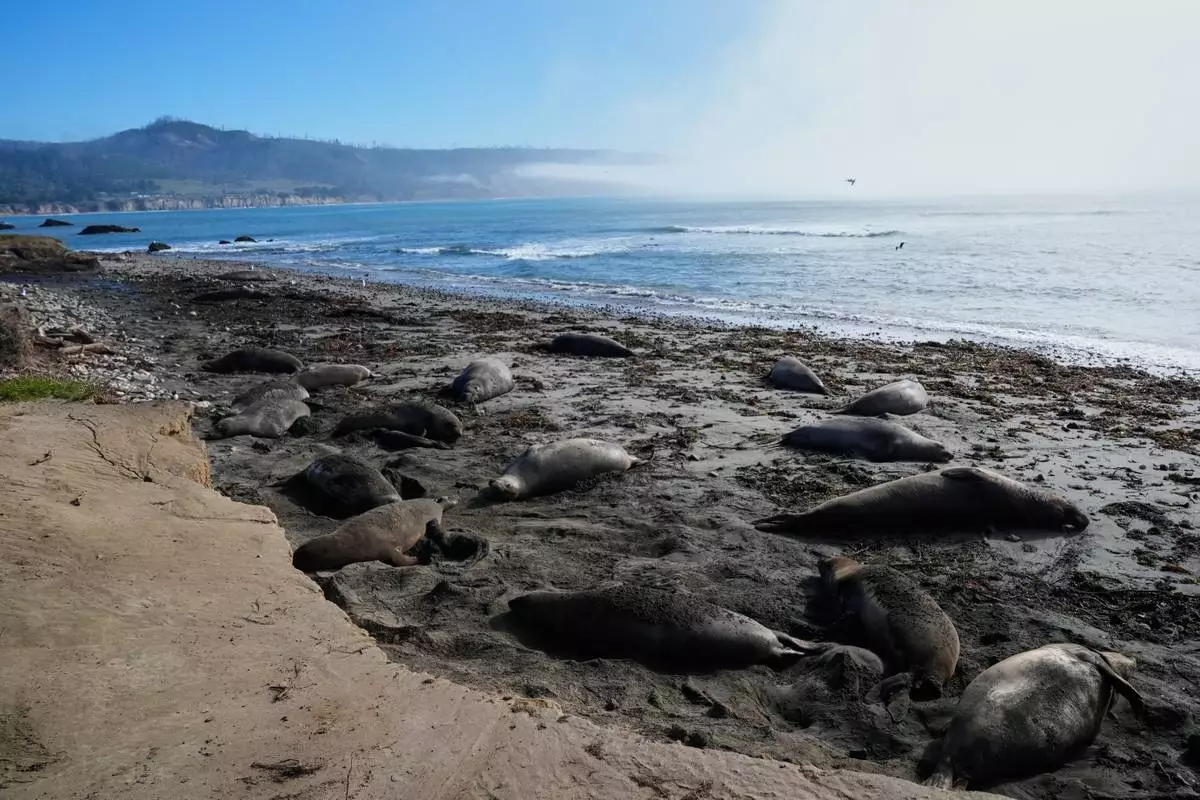
Elephant seals rest on a beach at Año Nuevo State Park, Friday, Jan. 16, 2026, in Pescadero, Calif. (AP Photo/Godofredo A. Vásquez)
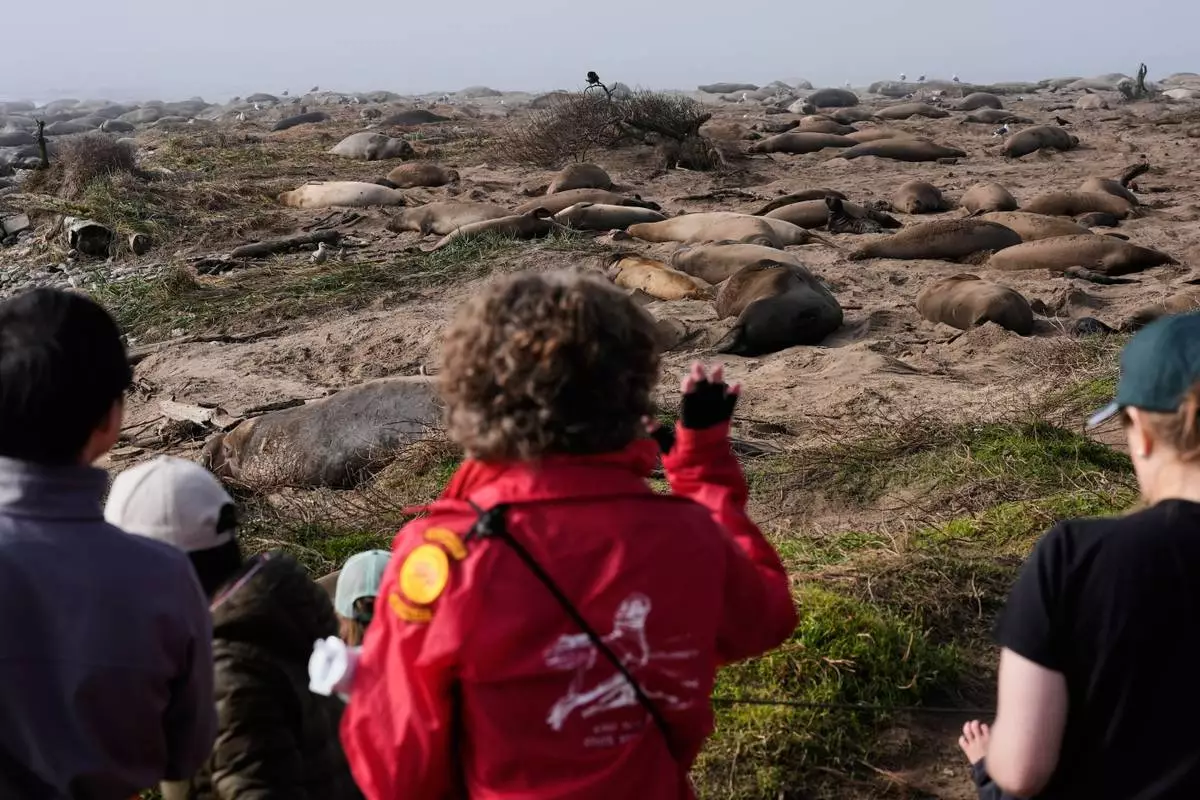
People watch as elephant seals rest on a beach at Año Nuevo State Park, Friday, Jan. 16, 2026, in Pescadero, Calif. (AP Photo/Godofredo A. Vásquez)

CAIRO (AP) — A dividing line, at times invisible, can mean life or death for Palestinians in Gaza.
Those sheltering near the territory's “yellow line” that the Israeli military withdrew to as part of the October ceasefire say they live in fear as Israeli soldiers direct near-daily fire at anyone who crosses or even lingers near it.
Of the 447 Palestinians killed between the ceasefire taking effect and Tuesday, at least 77 were killed by Israeli gunfire near the line, including 62 who crossed it, according to the Gaza Health Ministry. Among them were teenagers and young children, The Associated Press found.
And although the military has placed some yellow barrels and concrete barriers delineating the limits of the Palestinian zone, the line is still unmarked in certain places and in others was laid nearly half a kilometer (0.3 miles) deeper than what was agreed to in the ceasefire deal, expanding the part of Gaza that Israel controls, according to Palestinians and mapping experts.
“We stay away from the barrels. No one dares to get close” said Gaza City resident Ahmed Abu Jahal, noting that the markers are less than 100 meters (110 yards) from his house — instead of the roughly 500 meters (546 yards) outlined in a map put out by the Israeli military.
As of Tuesday, the military had acknowledged killing 57 people around the yellow line, saying most were militants. It said its troops are complying with the rules of engagement in order to counter militant groups, and are informing Palestinians of the line’s location and marking it on the ground to “reduce friction and prevent misunderstandings.”
Under the ceasefire, Israel withdrew its troops to a buffer zone that is up to 7 kilometers (4 miles) deep and includes most of Gaza's arable land, its elevated points and all of its border crossings. That hems more than 2 million Palestinians into a strip along the coastline and central Gaza.
People of all ages, some already dead, have been showing up almost daily at the emergency room of Gaza City's Al-Ahli hospital with bullet wounds from straying near the line, said hospital director Fadel Naeem.
Amid the vast destruction in Gaza, the demarcation line often isn't easy to detect, Naeem said. He recounted picking his way through undamaged paths during a recent visit to the southern city of Khan Younis. He didn't notice he was almost across the line until locals shouted at him to turn back, he said.
The Israeli military said most of the people it has killed crossing the line posed a threat to its troops. According to a military official who spoke on the condition of anonymity in line with military rules, troops issue audible warnings and then fire warning shots whenever someone crosses the line. Many civilians retreat when warning shots are fired, though some have been killed, the official acknowledged.
Zaher Shamia, 17, lived with his grandfather in a tent 300 meters (330 yards) from the line in northern Gaza’s Jabaliya refugee camp. On Dec. 10, he was playing with his cousin and some friends near the line, according to video he took before his death.
Suddenly, shots rang out and the video stopped. Soldiers approaching the line with an armored bulldozer had fired on the teens, hitting Zaher, said a witness.
A neighbor eventually found Zaher’s body, which had been crushed by the bulldozer, said Zaher's grandfather, Kamal al-Beih: “We only recognized him from his head."
Two doctors, Mohamed Abu Selmiya and Rami Mhanna, confirmed that the teen had been killed by gunshots and then run over by a bulldozer. The military official said he was aware that Shamia was a civilian and that the military was looking into it.
Maram Atta said that on Dec. 7, her 3-year-old daughter, Ahed al-Bayouk, was playing with siblings outside of their tent, which was near the yellow line along Gaza's southern coast. Atta was preparing lentils when she heard aircraft overhead, then shots.
A stray projectile whizzed close to her and struck Ahed, who was dead before they reached the clinic.
“I lost my daughter to what they keep calling a ‘ceasefire’” said Atta, crying. “What ceasefire are they talking about?”
A military official denied the killing.
The line's exact location is ambiguous, differing on maps put out by the Israeli military and the White House.
Neither matches the line troops appear to be marking on the ground, according to Palestinians and geolocation specialists.
Chris Osiek, an open source intelligence analyst and consultant, has geolocated a number of yellow blocks based on social media videos. He found at least four urban areas where troops set the blocks several hundred meters deeper into Gaza than the military map-specified yellow line.
“This is basically what you get when you simply let Trump make an image and post it on Truth Social and let the IDF make their own,” he said, using the acronym for the military. “If it’s not a proper system, with coordinates that make it easy for people to navigate where it is, then you leave the ambiguity free for the IDF to interpret the yellow line how they basically want.”
The military official dismissed such criticism, saying any deviations from the map amount to just a few meters. But to Palestinians hemmed in by widespread destruction and displacement, every few meters lost is another house that can't be sheltered in — another they doubt will ever be returned.
Under the ceasefire, Israeli forces are only supposed to remain at the yellow line until a fuller withdrawal, though the agreement doesn't give a timeline for that. With the next steps in the deal lagging and troops digging into positions on the Israeli side, though, Palestinians wonder if they are witnessing a permanent land takeover.
In December, Israel’s defense minister described the yellow line as “a new border line — serving as a forward defensive line for our communities and a line of operational activity.”
The military has continued leveling buildings inside the Israeli-held zone, turning already damaged neighborhoods to moonscapes. Almost all of the city of Rafah, on Gaza's border with Egypt, has been razed over the past year. The army says this is necessary to destroy tunnels and prepare the area for reconstruction.
In some places, demolitions since the ceasefire have encroached beyond the official yellow line. Since November, troops have leveled a swath of Gaza City’s Tuffah neighborhood extending some 300 meters (330 yards) outside the Israeli-held zone, according to Oct. 14 and Dec. 18 satellite photos provided by Planet Labs.
Abu Jahal moved back to his damaged house in Tuffah at the ceasefire's start. He said he frequently saw new yellow barrels appear and the military forcing out anyone living on its side of the markers.
On Jan. 7, Israeli fire hit a house near him, and the residents had to evacuate, he said. Abu Jahal said his family — including his wife, their child, and seven other relatives — may also have to leave soon.
“The line is getting very close,” he said.
FILE - The body of 11-year-old Palestinian girl Hamsa Hosou, killed by Israeli fire in Jabalia, is brought to Shifa Hospital in Gaza City Thursday, Jan. 8, 2026. (AP Photo/Jehad Alshrafi, File)
A yellow block demarcating the "Yellow Line," which has separated the Gaza Strip's Israeli-held and Palestinian zones since the October ceasefire, is visible in Jabalia, northern Gaza Strip during searching for the remains of hostages, Monday, Dec. 1, 2025. (AP Photo/Jehad Alshrafi)
A yellow block demarcating the "Yellow Line," which has separated the Gaza Strip's Israeli-held and Palestinian zones since the October ceasefire, is visible in Jabalia, northern Gaza Strip. where Hamas militants are searching for the remains of hostages, Monday, Dec. 1, 2025. (AP Photo/Jehad Alshrafi)