PENCO, Chile (AP) — Wildfires raging across central and southern Chile on Sunday left at least 18 people dead, scorched thousands of acres of forest and destroyed hundreds of homes, authorities said, as the South American country swelters under a heat wave.
Chilean President Gabriel Boric declared a state of catastrophe in the country’s central Biobio region and the neighboring Ñuble region, around 500 kilometers (300 miles) south of Santiago, the capital.
Click to Gallery
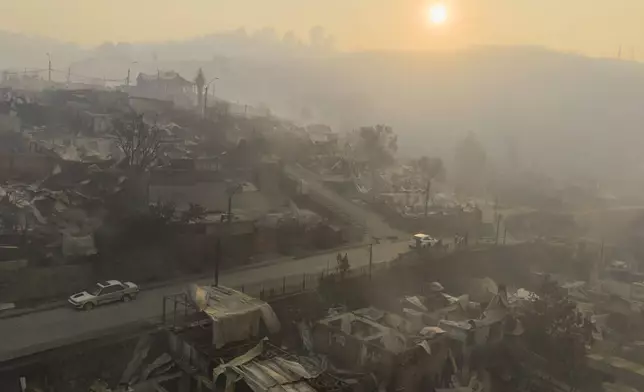
The sun rises over homes damaged by wildfires in Lirquen, Chile, Sunday, Jan. 18, 2026. (AP Photo/Javier Torres)
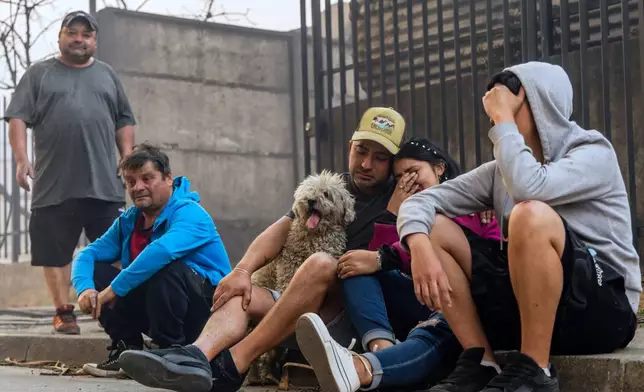
Members of the Gonzalez family sit on a sidewalk after their home caught fire during wildfires in Lirquen, Chile, Sunday, Jan. 18, 2026. (AP Photo/Javier Torres)
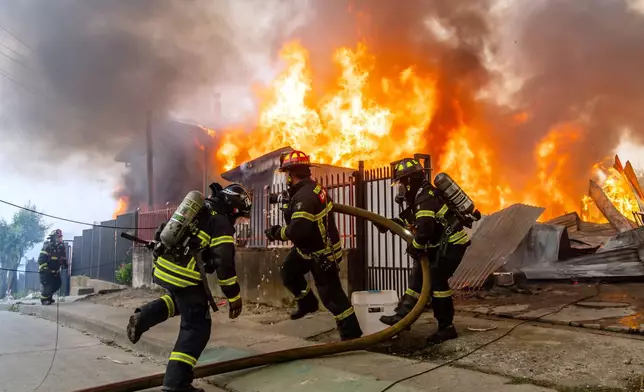
Firefighters battle a blaze at a house as wildfires burn in Lirquen, Chile, Sunday, Jan. 18, 2026. (AP Photo/Javier Torres)
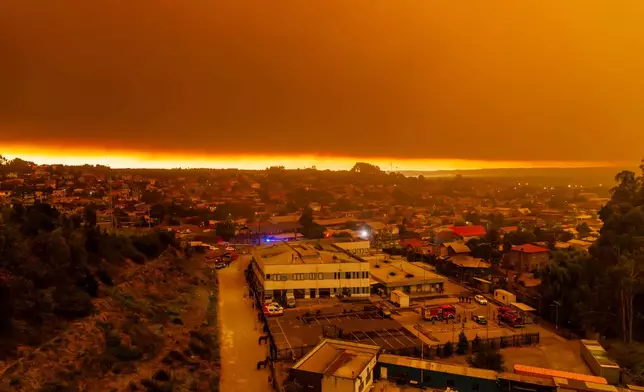
Wildfires burn at sunrise near Lirquen, Chile, Sunday, Jan. 18, 2026. (AP Photo/Javier Torres)
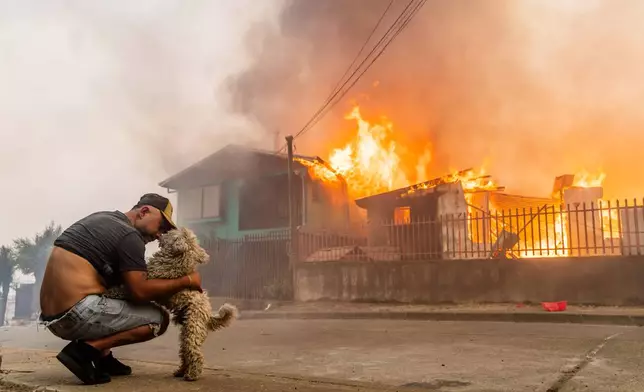
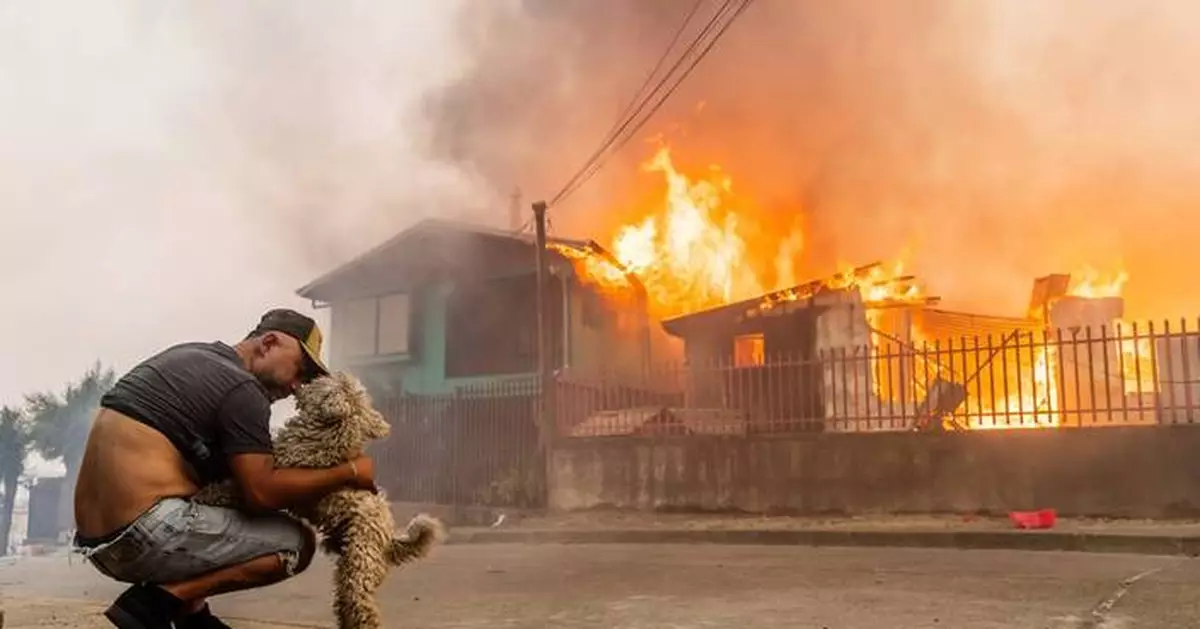
A member of the Gonzalez family pets his dog after the family's home caught fire during wildfires in Lirquen, Chile, Sunday, Jan. 18, 2026. (AP Photo/Javier Torres)
The emergency designation allows greater coordination with the military to rein in over two dozen active wildfires that have so far blazed through 8,500 hectares (21,000 acres), according to the national forestry agency.
In a press conference from the hard-hit city of Concepción in the Biobio region, Boric expressed his support and condolences to the victims and warned that the government's initial reports of 18 people killed and 300 houses destroyed were expected to rise as the extent of the losses came into focus.
He estimated the total number of affected homes in the Biobio region alone to be “certainly more than a thousand, just so far.” Already the fires ravaging the hillsides forced 50,000 people to evacuate.
“The first priority, as you know, in these emergencies is always to fight and extinguish the fire. But we cannot forget, at any time, that there are human tragedies here, families who are suffering,” he said. “These are difficult times.”
His address followed complaints from local authorities that for hours, destruction was everywhere and help was nowhere.
“Dear President Boric, from the bottom of my heart, I have been here for four hours, a community is burning and there is no (government) presence,” Rodrigo Vera, the mayor of the small coastal town of Penco in the Biobio region, said on a local radio station earlier Sunday. “How can a minister do nothing but call me to tell me that the military is going to arrive at some point?”
Firefighters struggled to extinguish the flames, with the heat and strong winds hampering their efforts. Temperatures topped 38 C (100 F) on Sunday, and the scorching weather was expected to persist through Monday.
“Weather conditions for coming hours are not good and indicate extreme temperatures,” said Interior Minister Álvaro Elizalde.
Residents said the fires took them by surprise after midnight, trapping them in their homes.
“Many people didn’t evacuate. They stayed in their houses because they thought the fire would stop at the edge of the forest,” said John Guzmán, 55, surveying the scene in Penco, where smoke blanketed the sky in an orange haze. “It was completely out of control. No one expected it."
The fire engulfed most of Penco, burning cars, a school and a church. Thousands of people scrambled to take refuge in makeshift emergency shelters.
"We fled running, with the kids, in the dark,” said Juan Lagos, 52.
The government imposed a nighttime curfew in the area.Charred bodies were found across fields, homes, along roads and in cars.
“From what we can see, there are people who died ... and we knew them well," said Víctor Burboa, 54. "Everyone here knew them.”
Wildfires afflict central and southern Chile every summer, typically reaching a peak in February as temperatures surge and the country continues to reel from a yearslong drought. In 2024, massive fires ripping across Chile's central coastline killed at least 130 people, becoming the nation's deadliest natural disaster since a devastating 2010 earthquake.
Neighboring Argentina has also struggled to contain wildfires consuming thousands of acres of forest in recent weeks as the country’s southern Patagonia area experiences a spell of hot, dry weather.
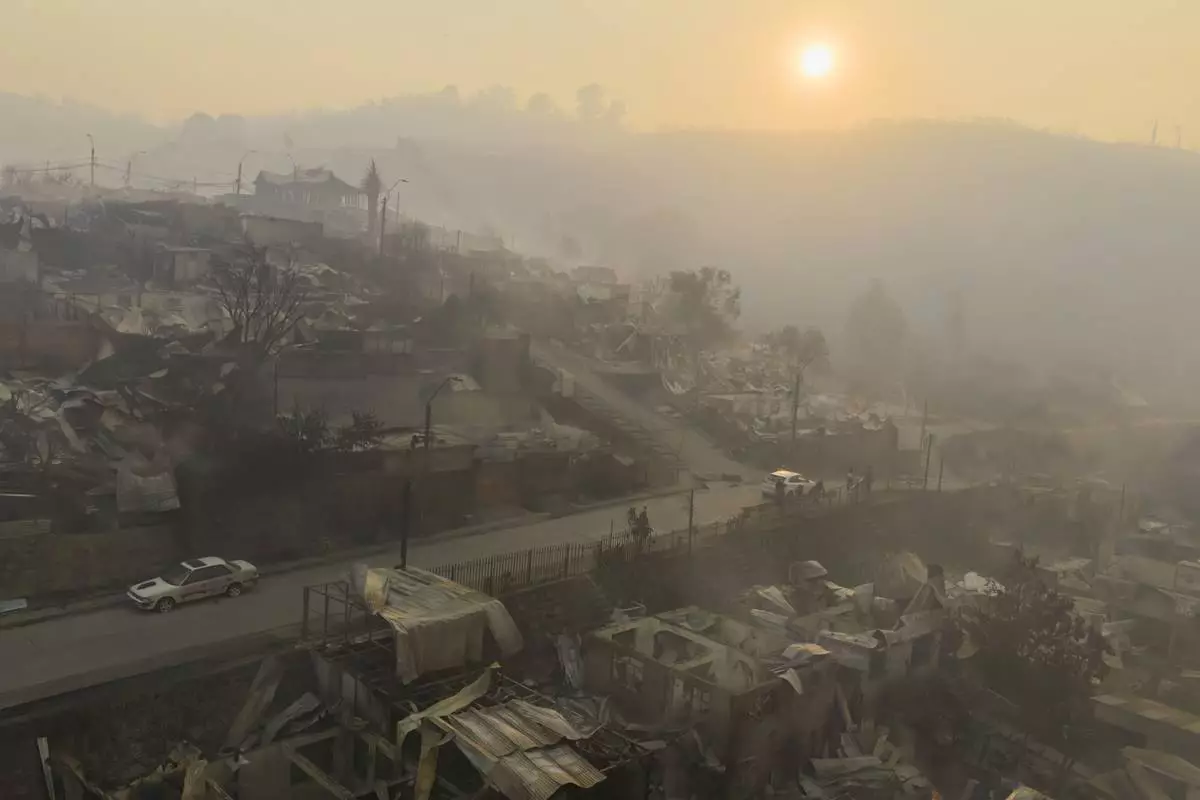
The sun rises over homes damaged by wildfires in Lirquen, Chile, Sunday, Jan. 18, 2026. (AP Photo/Javier Torres)
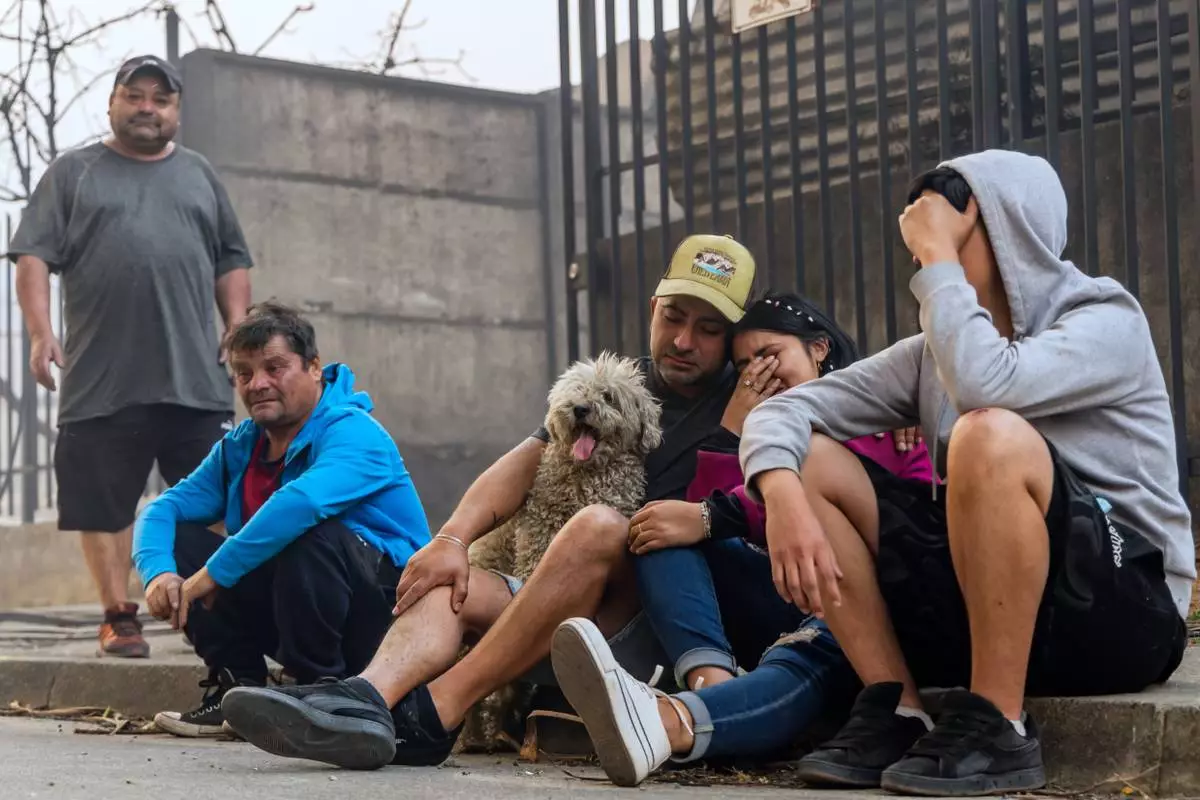
Members of the Gonzalez family sit on a sidewalk after their home caught fire during wildfires in Lirquen, Chile, Sunday, Jan. 18, 2026. (AP Photo/Javier Torres)
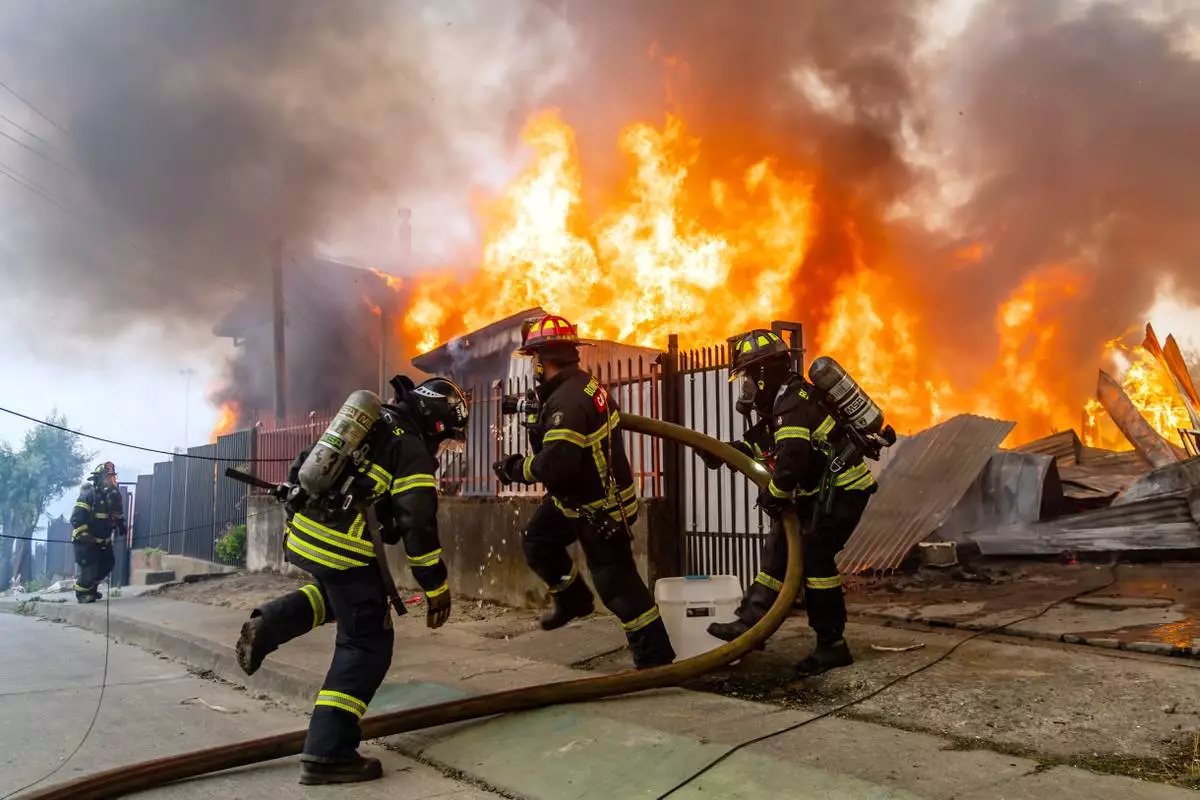
Firefighters battle a blaze at a house as wildfires burn in Lirquen, Chile, Sunday, Jan. 18, 2026. (AP Photo/Javier Torres)
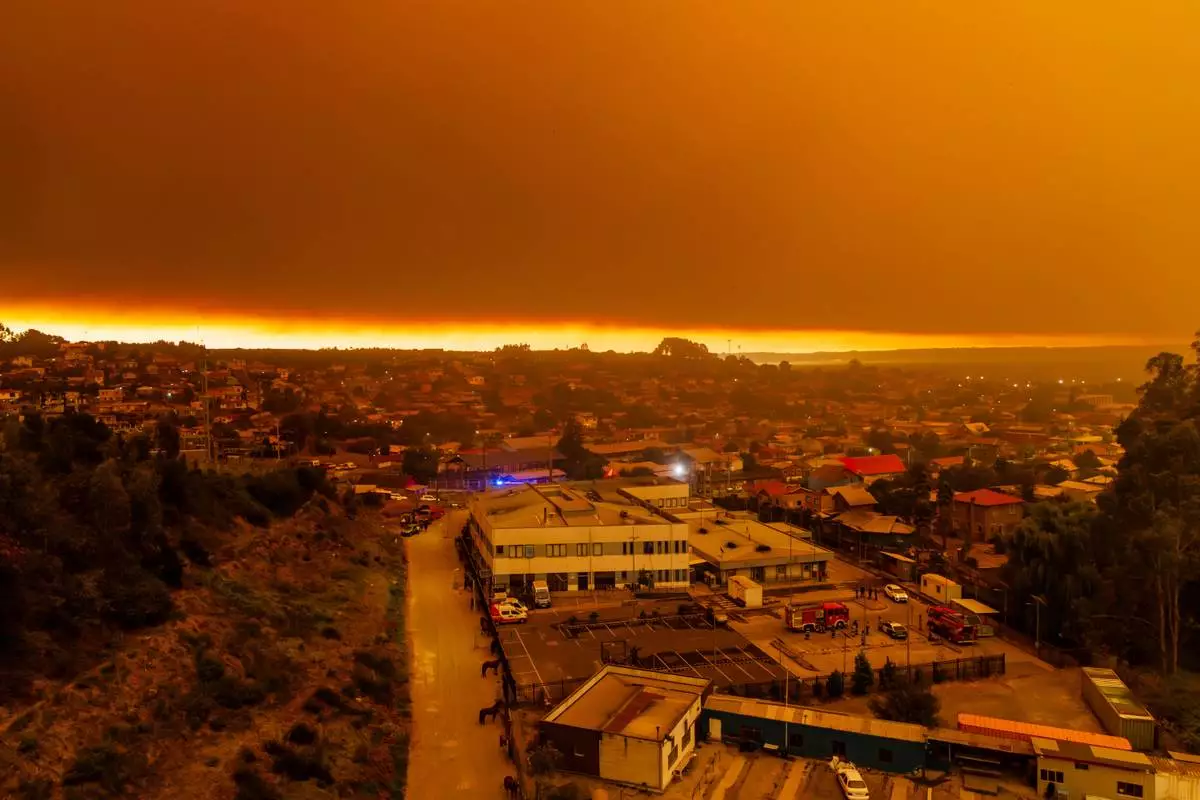
Wildfires burn at sunrise near Lirquen, Chile, Sunday, Jan. 18, 2026. (AP Photo/Javier Torres)
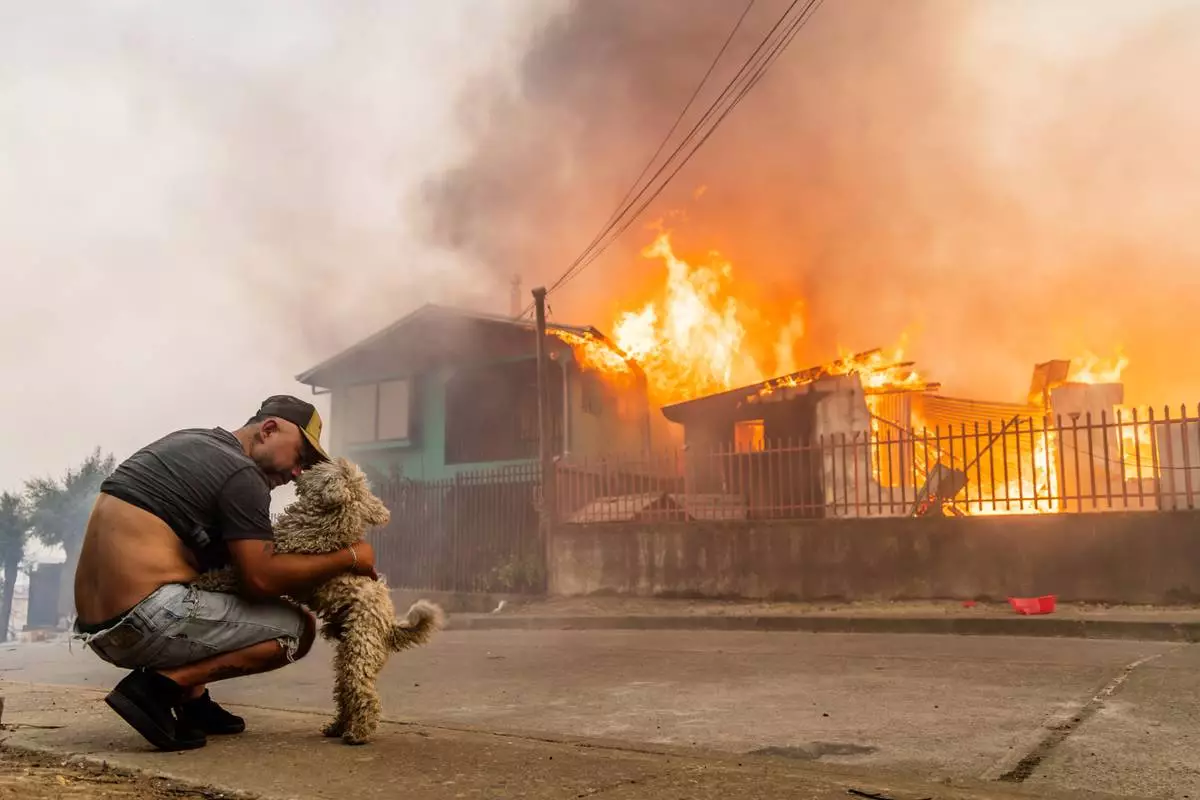
A member of the Gonzalez family pets his dog after the family's home caught fire during wildfires in Lirquen, Chile, Sunday, Jan. 18, 2026. (AP Photo/Javier Torres)