China launched a Long March-12 carrier rocket on Monday in the southern island province of Hainan, sending a group of internet satellites into space.
The rocket lifted off at 15:48 from the Hainan commercial spacecraft launch site. The payloads, the 19th group of low-orbit internet satellites carrying multiple core technologies, entered into preset orbit successfully.
The satellite group launched on Monday was developed by GalaxySpace, which is a commercial firm based in Beijing and one of several Chinese aerospace firms to contribute to the construction of Starlink-style satellite networks over recent years. It was the second time the company has undertaken such space infrastructure development.
"We have achieved a fully digitalized workflow for the first time. By targeting the specific needs of mass production, we have gone through automated testing, intelligent assembly and inspection, and optimized launch site processes, which significantly improved overall efficiency," said Cheng Ming, head of the GalaxySpace's smart satellite factory.
The Long March-12 rocket used in this mission is China's first 4-meter single-core launch vehicle. It has a payload capacity of no less than 12 tons to low-Earth orbit and no less than 6 tons to a 700-kilometer sun-synchronous orbit. The rocket can support both single and multiple satellite launches to different orbits.

China launches new internet satellite group in Hainan
China's ambitious "fitness for all" nationwide public health campaign and its determined drive to become a leading sporting nation are unlocking vast opportunities for sportswear businesses in the country's massive consumer market, said Adidas CEO Bjorn Gulden.
Speaking in an interview with China Global Television Network (CGTN) in Shanghai, Gulden said the German sportswear giant's localized approach to the Chinese market is a direct response to competition from stronger-than-ever local brands.
Under its "In China, For China" strategy, the company has delegated full product and creative control to its China team, which now designs and develops roughly half of Adidas products locally to match regional fashion trends and consumer preferences, with a shorter supply chain made possible by producing on the ground.
"Competition forces you to be better. And I'm sure that the reason why we have chosen to do 'In China, For China' model is because of competition. The old days when Adidas and all the brands were just exporting, I would say, concepts into China that were the same as in Europe and in America is over. That's why we have designers and creatives that work in China on a supply chain that is shorter because you can produce here. And that is of course to compete also against the local brands by making sure that we are better," he said.
Noting the evolution of sportswear from functional attire to everyday fashion, Gulden welcomed China's policies encouraging people to get active, saying they are bringing more consumers into the sportswear industry.
"Most sports products today are not being used for sports. They're being used as a comfort shoe or as a lifestyle item, and it's part of our life. It's very, very good that China is pushing sports more. The more people that do sports, the more importance sports get both from selling products, but also to widen the audience for sports culture products," Gulden said.
China's "fitness for all" strategy aims to get around 40 percent of the population exercising regularly by the end of the decade, backed by thousands of new and upgraded community sports facilities, expanded venue space and "15-minute fitness circles" designed to put public exercise areas within a short walk of every urban and rural resident.
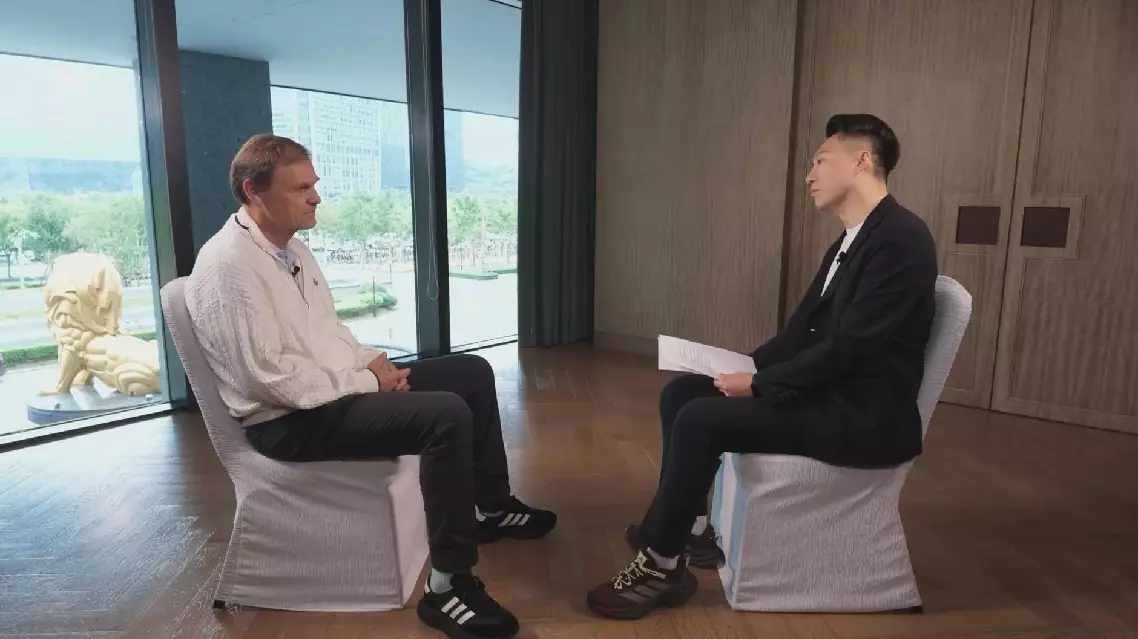
China's push to become leading sports nation benefits sportswear businesses: Adidas CEO