Skip to Content Facebook Feature Image

Trump threats and Bukele model on crime back Latin American progressives into corner

News

Trump threats and Bukele model on crime back Latin American progressives into corner
News

News

Trump threats and Bukele model on crime back Latin American progressives into corner

2026-01-20 13:40 Last Updated At:13:50

MEXICO CITY (AP) — Latin American progressive leaders are increasingly being backed into a corner on organized crime by pressure from the Trump administration and from their own voters, who point to the results from El Salvador president’s war on gangs.

The hunger for a more heavy-handed response to endemic problems has been mounting for years in Latin America. El Salvador President Nayib Bukele's punitive tactics launched against his country’s gangs in 2022, resulted in a sharp decline in homicides and soaring approval by Salvadorans.

More Images
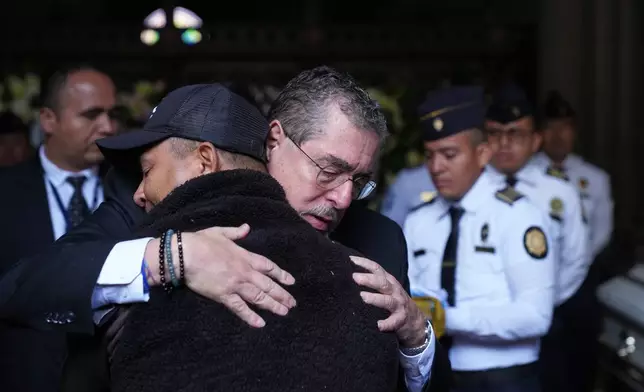
Guatemalan President Bernardo Arevalo comforts the relative of one of the police officers killed while retaking control of three prisons, during the wake for the officers at the Interior Ministry in Guatemala City, Monday, Jan. 19, 2026. (AP Photo/Moises Castillo)
Guatemalan President Bernardo Arevalo comforts the relative of one of the police officers killed while retaking control of three prisons, during the wake for the officers at the Interior Ministry in Guatemala City, Monday, Jan. 19, 2026. (AP Photo/Moises Castillo)

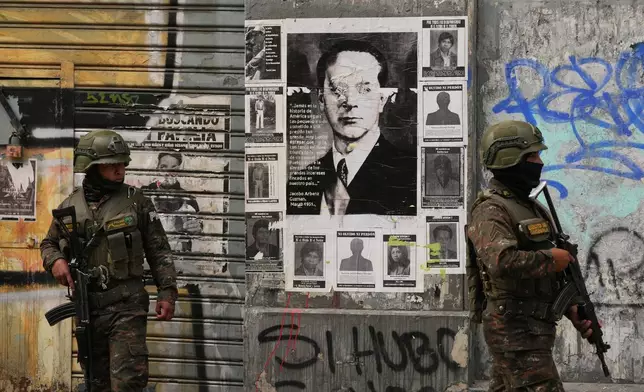
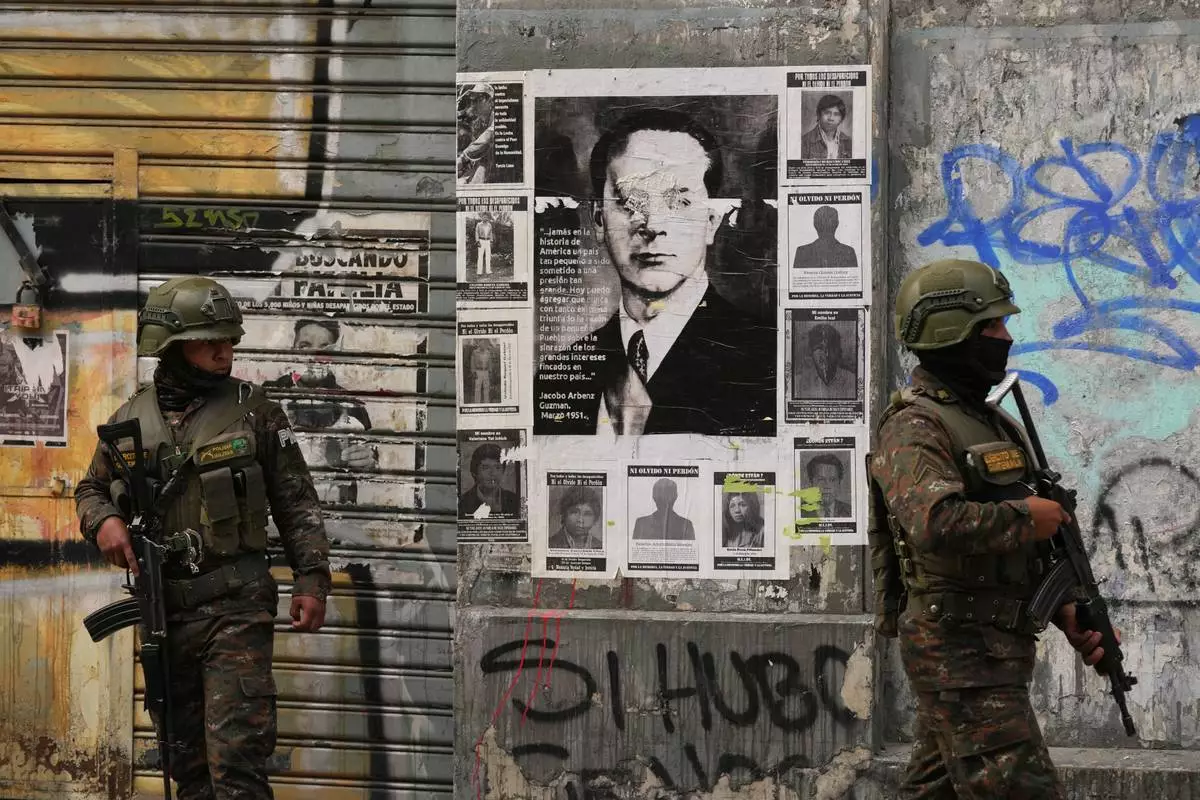
Soldiers stand guard in front of a poster of former President Jacobo Arbenz who was overthrown in a 1954 coup, near Congress in Guatemala City, Monday, Jan. 19, 2026, after President Bernardo Arévalo declared a state of emergency. (AP Photo/Moises Castillo)
Soldiers stand guard in front of a poster of former President Jacobo Arbenz who was overthrown in a 1954 coup, near Congress in Guatemala City, Monday, Jan. 19, 2026, after President Bernardo Arévalo declared a state of emergency. (AP Photo/Moises Castillo)

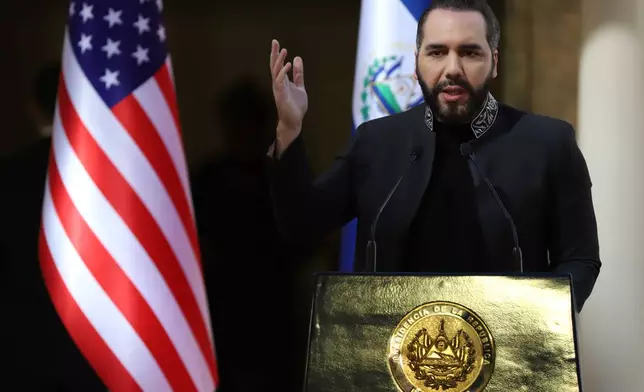
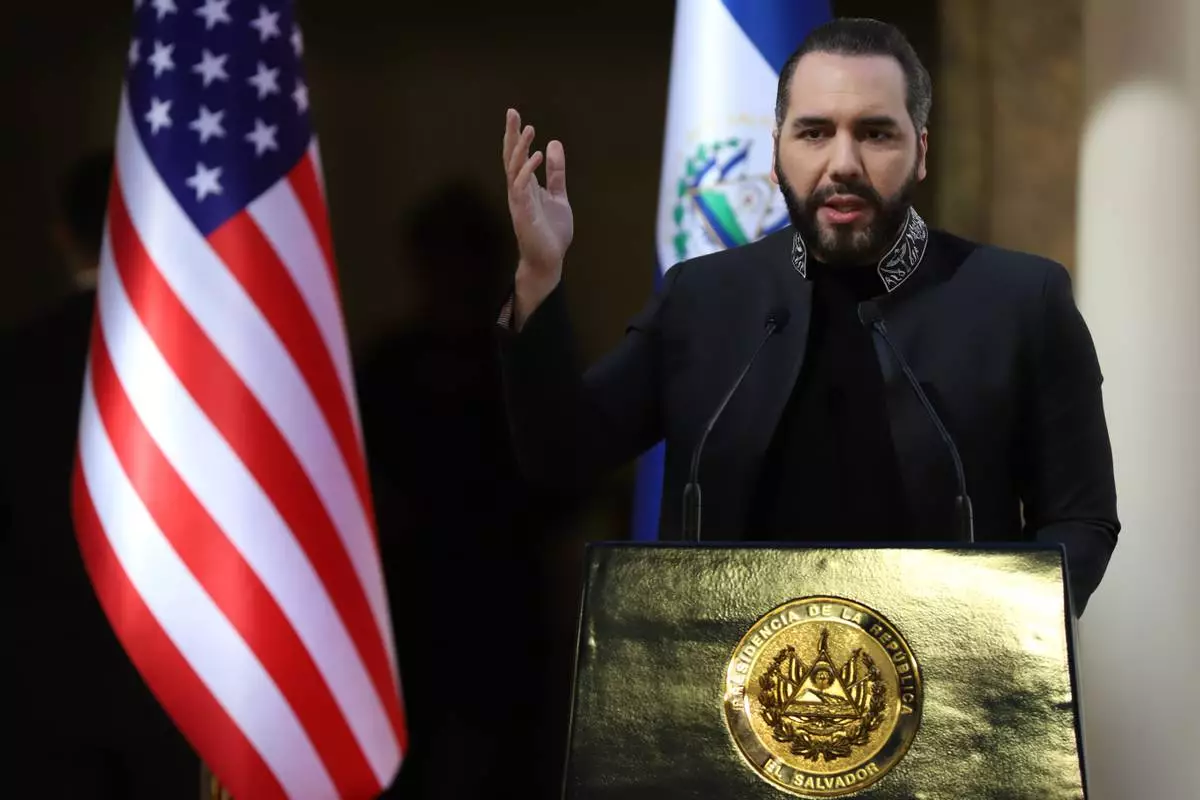
El Salvador's President Nayib Bukele speaks at the National Palace as he hosts a meeting with U.S. congresspeople in San Salvador, El Salvador, Monday, Jan. 19, 2026. (AP Photo/Salvador Melendez)
El Salvador's President Nayib Bukele speaks at the National Palace as he hosts a meeting with U.S. congresspeople in San Salvador, El Salvador, Monday, Jan. 19, 2026. (AP Photo/Salvador Melendez)

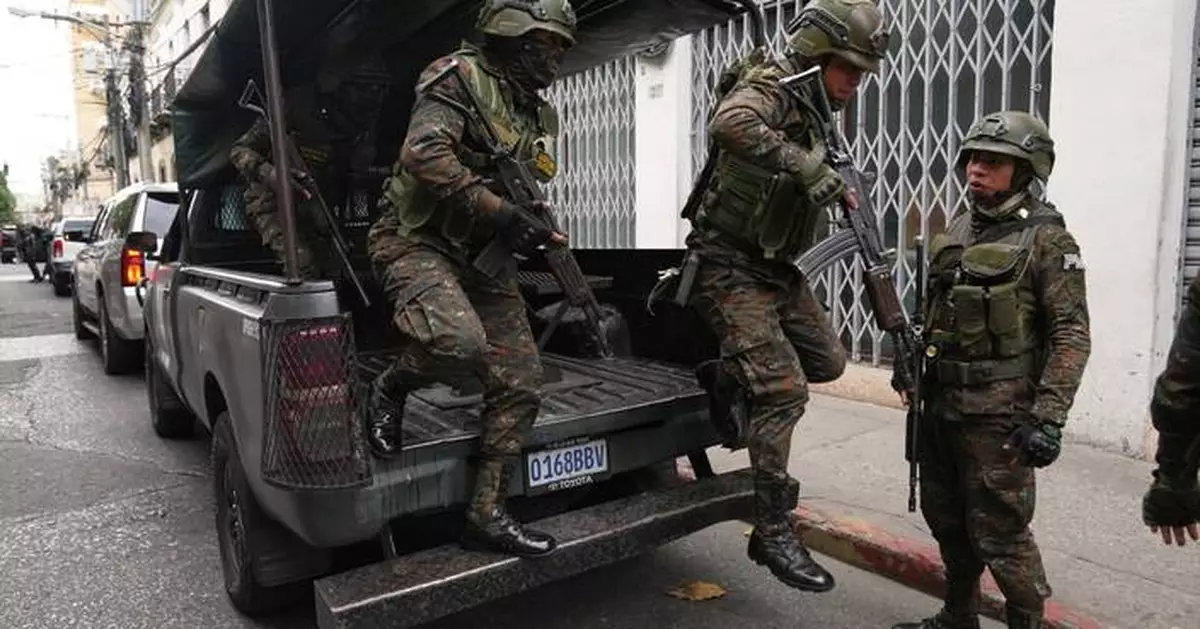
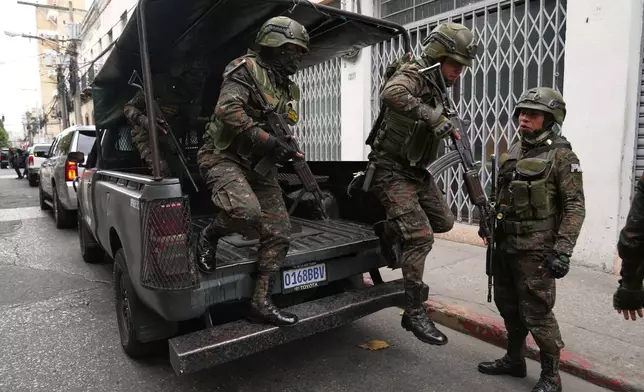
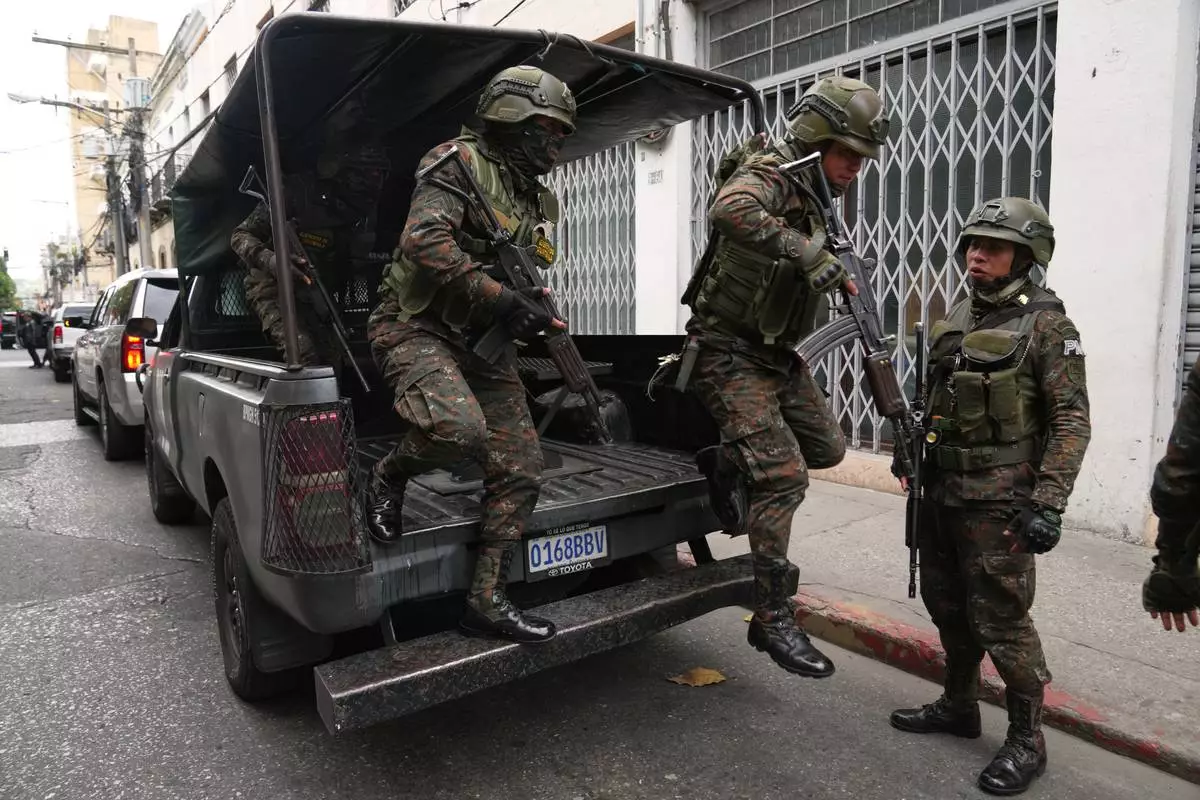
Deployed soldiers exit a vehicle around Congress in Guatemala City, Monday, Jan. 19, 2026, after President Bernardo Arévalo declared a state of emergency. (AP Photo/Moises Castillo)

Deployed soldiers exit a vehicle around Congress in Guatemala City, Monday, Jan. 19, 2026, after President Bernardo Arévalo declared a state of emergency. (AP Photo/Moises Castillo)

Bukele not only touts the success at home, but has also looked to export his approach, winning fans among voters and conservative populists across the hemisphere, including U.S. President Donald Trump.

Over the past year, Trump has taken a more confrontational approach toward Latin America than any U.S. president in recent history. He's declared a slew of Latin American criminal groups foreign terrorist organizations, deposed former Venezuela President Nicolás Maduro for trial on drug-trafficking charges, threatened military action on an array of countries and pointed to Bukele as an example of what he wants to see for the rest of the region.

That ratcheted up pressure on more progressive administrations in Mexico, Colombia and Guatemala that had pitched more holistic solutions to endemic problems, like rooting out corruption and offering youth economic opportunities.

Guatemala President Bernardo Arévalo was the latest to feel that pressure when suspected gang members killed 10 police officers in apparent retaliation for the government denying privileges to imprisoned gang leaders. On Sunday evening, he declared a state of emergency curtailing some constitutional rights.

“The mix of growing U.S. pressure and the rightward reference of Bukele that gives an answer to security issues has ... forced governments to pragmatically balance their own principles with the growing requests for a crackdown,” said Tiziano Breda, a senior analyst for Latin America and the Caribbean for the conflict analysis group, ACLED.

Things came to a head in an eruption of violence in Guatemala over the weekend when inmates in prisons notoriously controlled by gangs rioted and took guards hostage. When authorities retook one prison, suspected gang members in the capital slayed 10 police officers.

Arévalo said the emergency would stay in place for 30 days to combat the gangs, which he described as “violent criminals who commit acts of terrorism.” The declaration can limit some constitutional rights like the freedoms of movement, gathering and protest, and was approved by Guatemala’s congress Monday night.

“We will spare no resources to punish, to pursue, to find those responsible for these crimes,” Arévalo said in a speech Monday at the funeral of the officers.

Arévalo’s move echoed actions taken by his neighbor Bukele in 2022. El Salvador's state of emergency remains in place nearly four years later and more than 90,000 Salvadorans have been arrested under it, fueling accusations of human rights abuses. But the country recorded just 82 homicides in 2025, compared to 6,656 in 2015.

Arévalo is just the latest leader in Latin America to take a page out of Bukele’s book, following in the footsteps of Ecuador, Honduras and Costa Rica, which just last week broke ground on a prison modeled after El Salvador's infamous prison for alleged gang members.

But efforts to piggyback on Bukele’s political success have largely fallen flat even as the region experiences a rightward political shift. That is in part because many leaders are hesitant to go as far as Bukele, who has detained more than 1% of his country’s population and is regularly criticized for what civil society groups describe as authoritarian tendencies.

When Arévalo was elected in 2023, the son of a former progressive president said bolstering legal institutions, including legislative reforms and rooting out corruption, was a solution to endemic gang violence, straying from competitors who called for a more Bukele-esque approach.

The Guatemalan president also proposed boosting security and building a maximum security prison, but the state of emergency marks an escalation. Arévalo said in a Jan. 15 interview with the Associated Press that combating drug trafficking and organized crime is a shared interest with the U.S.

“A lot of it is political theater and taking strong measures, but from there to actually being effective and actually delivering is the challenge,” said Michael Shifter, a senior fellow at the Washington-based Inter-American Dialogue. “Projecting toughness is a political winner.”

Breda, the ACLED analyst, attributed the shift both to Trump's pressure and upcoming judicial elections in Guatemala, a decisive moment for Arévalo’s anti-corruption agenda.

In Mexico, under mounting threats by Trump, President Claudia Sheinbaum has gone after cartels far more aggressively than her predecessor, who instead pushed a policy known as “hugs, not bullets," which sought to address poverty and the lack of opportunities as "root causes" of violence instead of directly confronting cartels.

In Colombia, President Gustavo Petro is facing a similar dilemma.

Petro, an ex-rebel, became Colombia’s first leftist leader in 2022 on a promise that he would consolidate “total peace” and unravel decades of conflict in the Andean nation. Namely, he aimed to reach peace agreements with a range of illegal armed groups and provide opportunities to youth.

But as peace talks have stalled with guerrillas from the National Liberation Army, known as the ELN, and other armed groups, Petro has failed to follow through on his bold agenda. Frustration toward Colombia’s left has simmered in much of the country in the months leading up to Colombia's presidential elections.

At the same time, Trump has threatened military intervention in Colombia and accused Petro of being a drug trafficker, most recently days after a U.S. military operation in Venezuela that ousted Maduro. Trump had accused Maduro too of being a drug trafficker and now he awaits trial in U.S. federal court.

Under pressure from Trump and fed up Colombians, Petro has turned to the same entity he once sharply criticized: the Colombian military, said Elizabeth Dickinson, a Colombia analyst at the International Crisis Group.

Last week, in a forceful pivot from his hopeful campaign discourse, the leftist threatened a joint military action with Venezuela if the ELN did not enter a peace process with his government.

“It takes a very long time to mobilize action on these holistic ideas, and even longer for those holistic ideas to yield results,” Dickinson said. “What Bukele did, the reason it’s attractive across the region is that it appears to provide a fast and simple, straightforward solution to a very complex problem.”

Guatemalan President Bernardo Arevalo comforts the relative of one of the police officers killed while retaking control of three prisons, during the wake for the officers at the Interior Ministry in Guatemala City, Monday, Jan. 19, 2026. (AP Photo/Moises Castillo)
Guatemalan President Bernardo Arevalo comforts the relative of one of the police officers killed while retaking control of three prisons, during the wake for the officers at the Interior Ministry in Guatemala City, Monday, Jan. 19, 2026. (AP Photo/Moises Castillo)

Soldiers stand guard in front of a poster of former President Jacobo Arbenz who was overthrown in a 1954 coup, near Congress in Guatemala City, Monday, Jan. 19, 2026, after President Bernardo Arévalo declared a state of emergency. (AP Photo/Moises Castillo)
Soldiers stand guard in front of a poster of former President Jacobo Arbenz who was overthrown in a 1954 coup, near Congress in Guatemala City, Monday, Jan. 19, 2026, after President Bernardo Arévalo declared a state of emergency. (AP Photo/Moises Castillo)

El Salvador's President Nayib Bukele speaks at the National Palace as he hosts a meeting with U.S. congresspeople in San Salvador, El Salvador, Monday, Jan. 19, 2026. (AP Photo/Salvador Melendez)
El Salvador's President Nayib Bukele speaks at the National Palace as he hosts a meeting with U.S. congresspeople in San Salvador, El Salvador, Monday, Jan. 19, 2026. (AP Photo/Salvador Melendez)

Deployed soldiers exit a vehicle around Congress in Guatemala City, Monday, Jan. 19, 2026, after President Bernardo Arévalo declared a state of emergency. (AP Photo/Moises Castillo)
Deployed soldiers exit a vehicle around Congress in Guatemala City, Monday, Jan. 19, 2026, after President Bernardo Arévalo declared a state of emergency. (AP Photo/Moises Castillo)
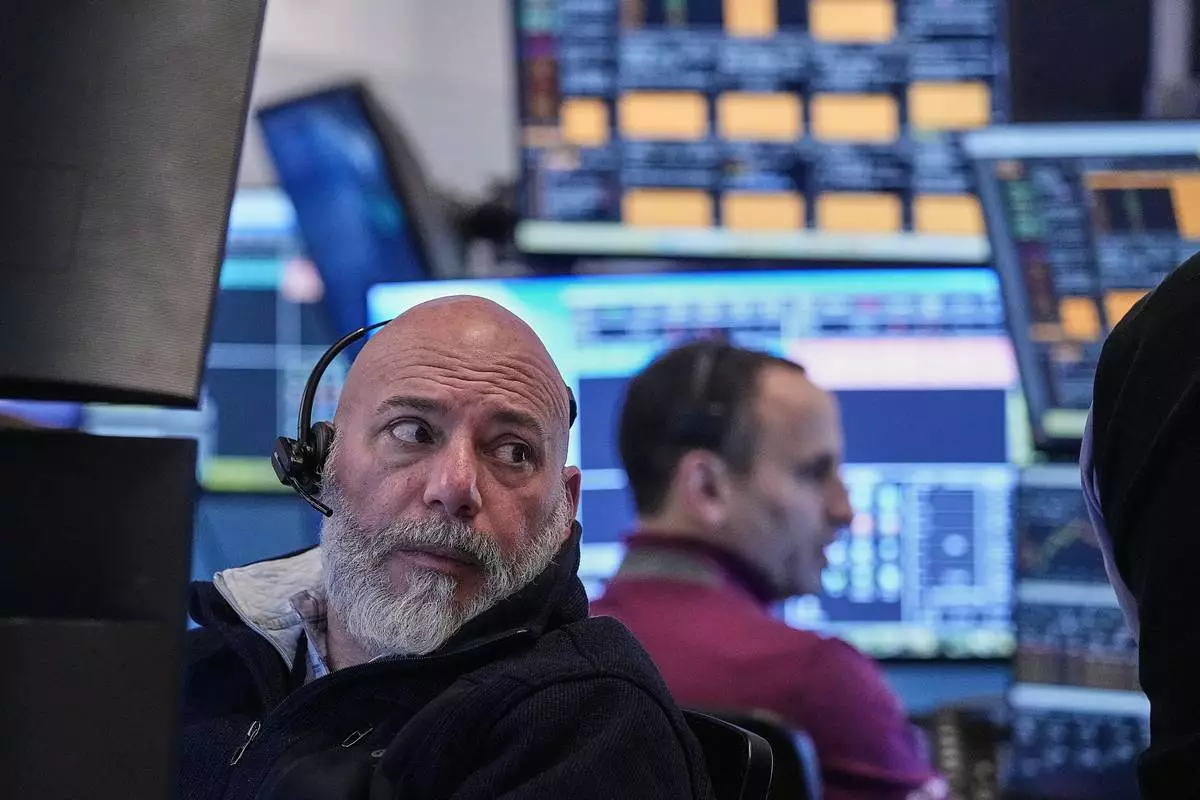
NEW YORK (AP) — Stocks sank on Wall Street after President Donald Trump threatened to hit eight European countries with new tariffs as tensions escalate over his attempts to assert American control over Greenland. The S&P 500 fell 2.1% Tuesday, its biggest drop since October. Technology stocks were the biggest weights. The Dow Jones Industrial Average dropped 1.8%. The Nasdaq composite slumped 2.4%. Trump said Saturday that he would charge a 10% import tax starting in February on goods from the eight European nations. European markets also fell, while gold prices surged. Long-term Treasury yields rose in the bond market.

THIS IS A BREAKING NEWS UPDATE. AP’s earlier story follows below.

NEW YORK (AP) — Stocks slumped in afternoon trading on Wall Street Tuesday after President Donald Trump threatened to hit eight NATO members with new tariffs as tensions escalate over his attempts to assert American control over Greenland.

The S&P 500 fell 2%, pulling back further from the record it set early last week. It was the first time U.S. markets could react to the escalation from Trump, as they were closed on Monday for Martin Luther King Jr. Day.

The Dow Jones Industrial Average fell 877 points, or 1.8%, as of 2:46 p.m. Eastern. The Nasdaq composite slumped 2.3%.

The losses were widespread and led by technology stocks, many of which already have more influence over the direction of the market because of outsized values. Retailers, banks and industrial companies also fell sharply.

Nvidia, one of the most valuable companies in the world, plunged 3.6%. Amazon fell 3.7%, JPMorgan Chase fell 2.9%, and Caterpillar lost 3%.

Companies that focus on consumer staples held up better than most of the market. Colgate-Palmolive rose 1.5% and Campbell's rose 1.7%.

The price of U.S. crude oil rose 1.5% to $60.34 per barrel. The price of Brent crude, the international standard, rose 1.3% to $64.76.

European markets and markets in Asia fell.

Trump said Saturday that he would charge a 10% import tax starting in February on goods from Denmark, Norway, Sweden, France, Germany, the United Kingdom, the Netherlands and Finland. The annual combined imports from European Union nations are greater than those from the top two biggest individual importers into the U.S., Mexico and China.

Gold prices surged 3.7% and silver prices soared 6.9%. Both reached for records. Such assets are often considered safe havens in times of geopolitical turmoil.

The trade tensions apparently short-circuited a recent rally in bitcoin. The cryptocurrency rose above $96,000 late last week but has dropped back to around $89,300.

Treasury yields were mixed in the bond market. The yield on the 10-year Treasury rose to 4.29% from 4.23% late Friday. The yield on the two-year Treasury slipped to 3.59% from 3.60% late Friday.

Trump linked his aggressive stance on Greenland to last year’s decision not to award him the Nobel Peace Prize, telling Norway’s prime minister that he no longer felt “an obligation to think purely of Peace,” in a text message released Monday.

Trump’s message to Jonas Gahr Støre appeared to ratchet up a standoff between Washington and its closest allies over his threats to take over Greenland, a self-governing territory of NATO member Denmark.

Trump's threats have sparked outrage and a flurry of diplomatic activity across Europe, as leaders consider possible countermeasures, including retaliatory tariffs and the first-ever use of the European Union’s anti-coercion instrument.

The trade and political conflict with Europe is heating up just as world leaders meet at the World Economic Forum annual meeting in Davos, Switzerland this week. Wedbush Securities analyst Dan Ives said the new tariff threat “is clearly an overhang on the conference,” but that it would likely simmer over time.

“Our view is just like over the last year the bark will be worse than the bite on this issue and tariff threats as negotiations take place and tensions ultimately calm down between Trump and EU leaders,” Ives wrote in a note to clients.

Tariffs have been looming over the U.S. and global economies since 2024. Trump's tariff policy has been confusing and uncertain, involving the threat or implementation of tariffs and then often followed by delays or cancellations. Existing tariffs have added more pressure to already high prices on goods and the threat of more to come makes it difficult for businesses to plan ahead.

The threat of tariffs reigniting already high inflation could further complicate the Federal Reserve's job. The central bank cut its benchmark interest rate three times late in 2025 to help bolster the economy as the job market weakened. But, it has taken a more cautious view because of the risk of rising inflation, which remains above the Fed's target of 2%.

Lower interest rates on loans can help bolster economic activity, but they could also fuel inflation, which could counter any benefit from lower interest rates.

The Fed, and Wall Street, will get another update on inflation on Thursday, when the government releases the personal consumption expenditures price index, or PCE. It is the Fed’s preferred measure for inflation.

The Fed will meet next week for its policy meeting on interest rates and Wall Street is betting that the central bank will hold its benchmark interest rate steady.

Wall Street is also in the midst of the latest round of corporate earnings, which could help provide more insight into how companies are handling uncertainty from tariffs, geopolitics and cautious consumers.

Industrial and consumer conglomerate 3M slumped 6.9% after reporting mixed results for its most recent quarter. United Airlines and Netflix will report their results after the market closes on Tuesday. Companies from a wide range of industries will report their results this week, including Johnson & Johnson, Halliburton and Intel.

AP Business Writers By Yuri Kageyama and Matt Ott contributed to this report.

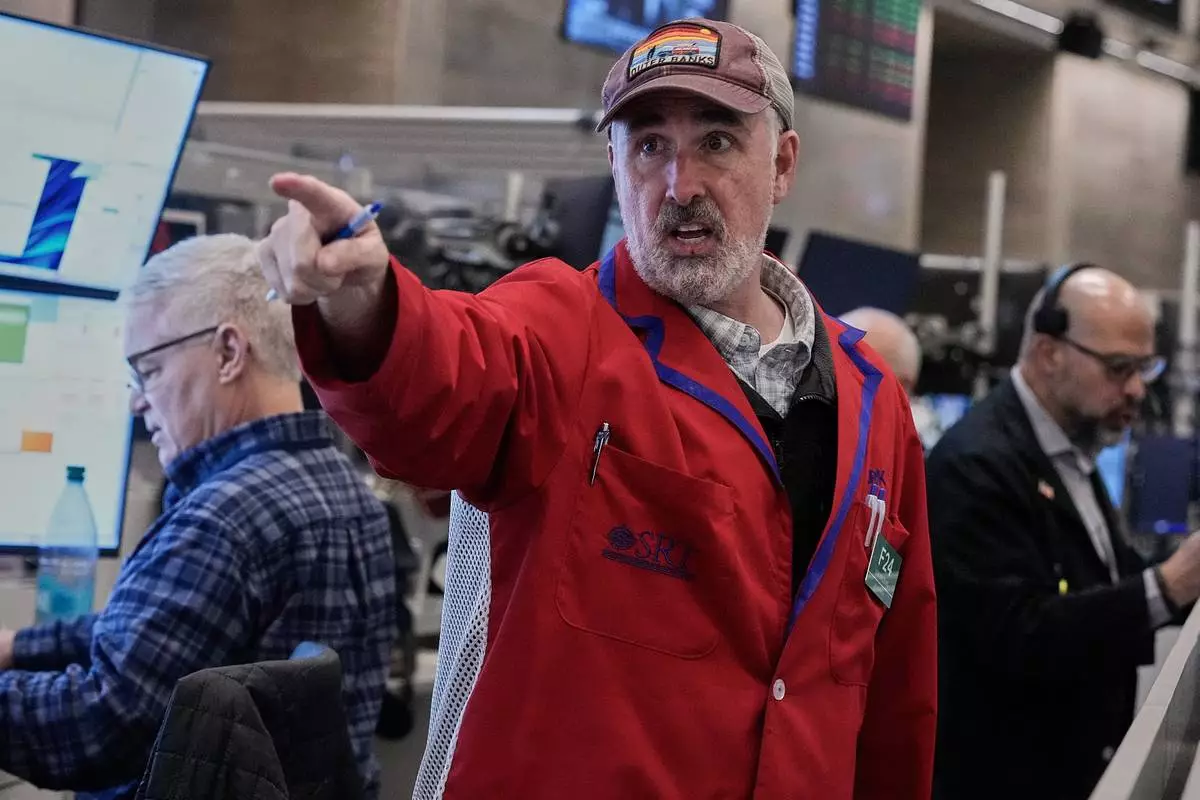
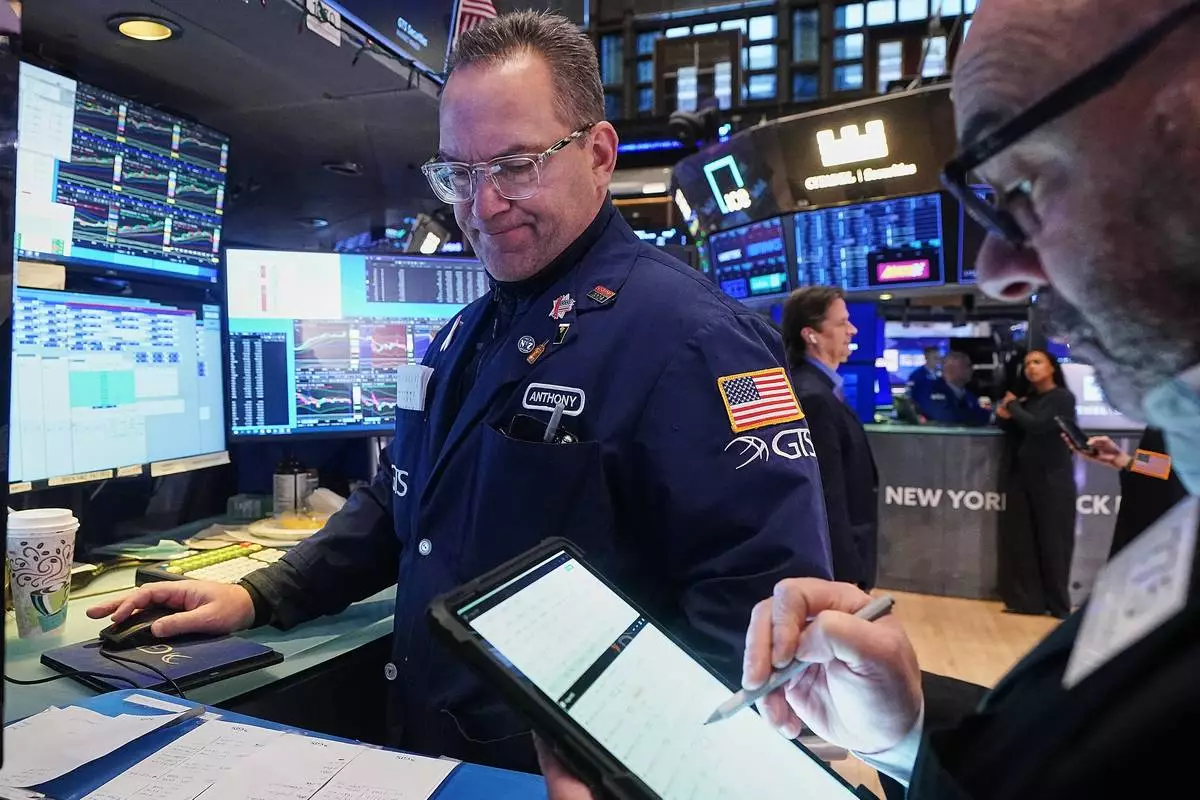
Specialist Anthony Matesic, left, and trader Fred Demarco work on the floor of the New York Stock Exchange, Tuesday, Jan. 20, 2026. (AP Photo/Richard Drew)

Specialist Anthony Matesic, left, and trader Fred Demarco work on the floor of the New York Stock Exchange, Tuesday, Jan. 20, 2026. (AP Photo/Richard Drew)

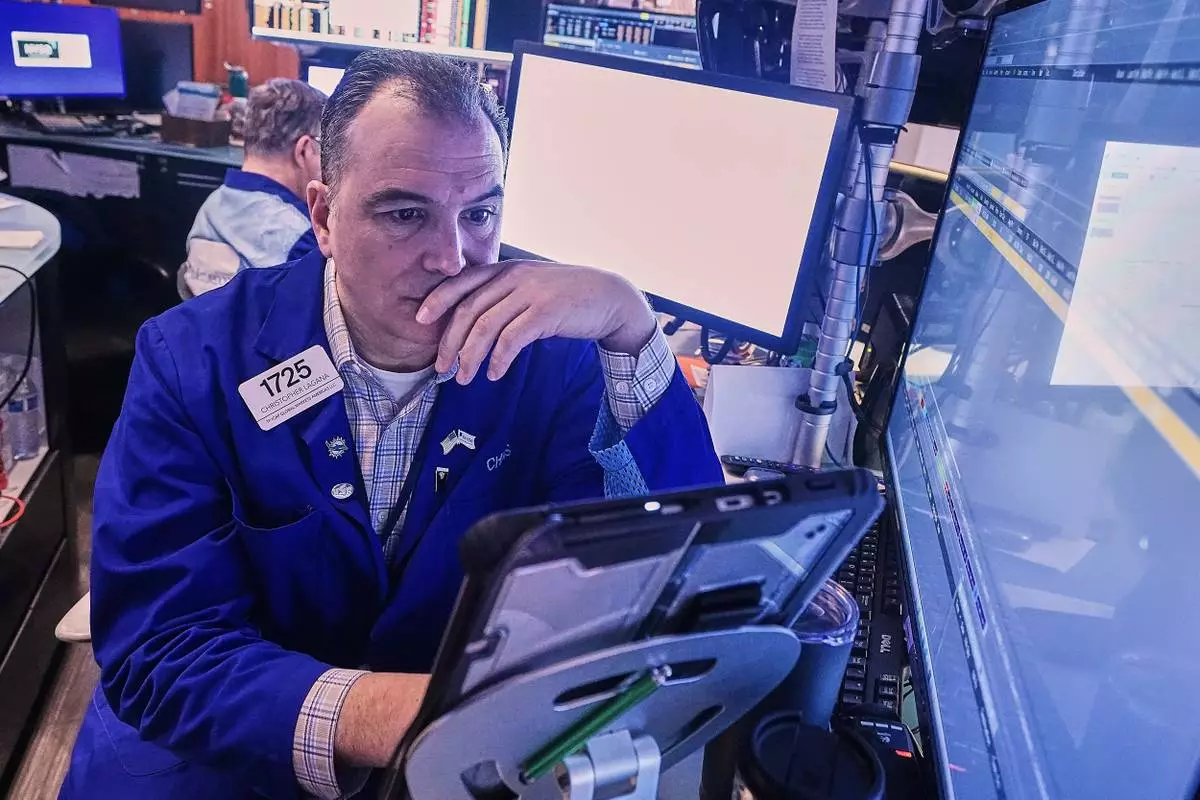
Trader Chris Lagana works on the floor of the New York Stock Exchange, Tuesday, Jan. 20, 2026. (AP Photo/Richard Drew)

Trader Chris Lagana works on the floor of the New York Stock Exchange, Tuesday, Jan. 20, 2026. (AP Photo/Richard Drew)

Trader Vincent Napolitano, left, on the floor of the New York Stock Exchange, Tuesday, Jan. 20, 2026. (AP Photo/Richard Drew)

Trader Vincent Napolitano, left, on the floor of the New York Stock Exchange, Tuesday, Jan. 20, 2026. (AP Photo/Richard Drew)

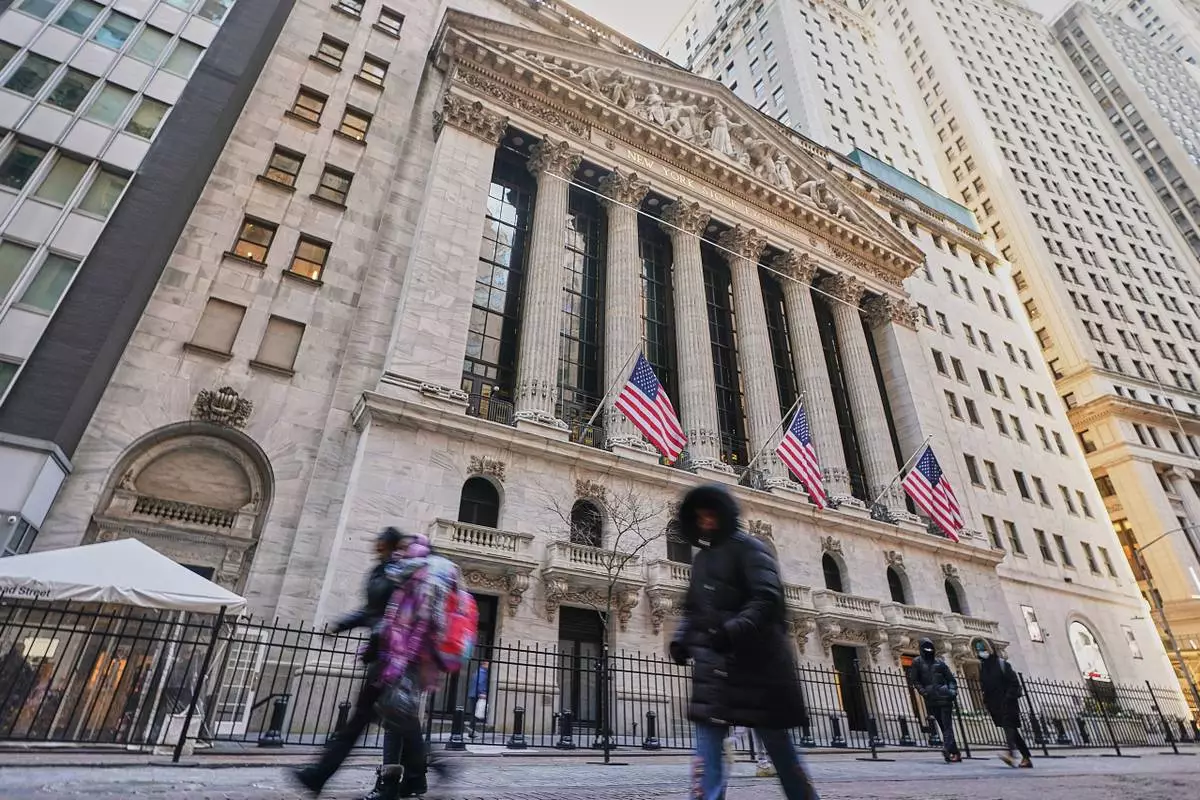
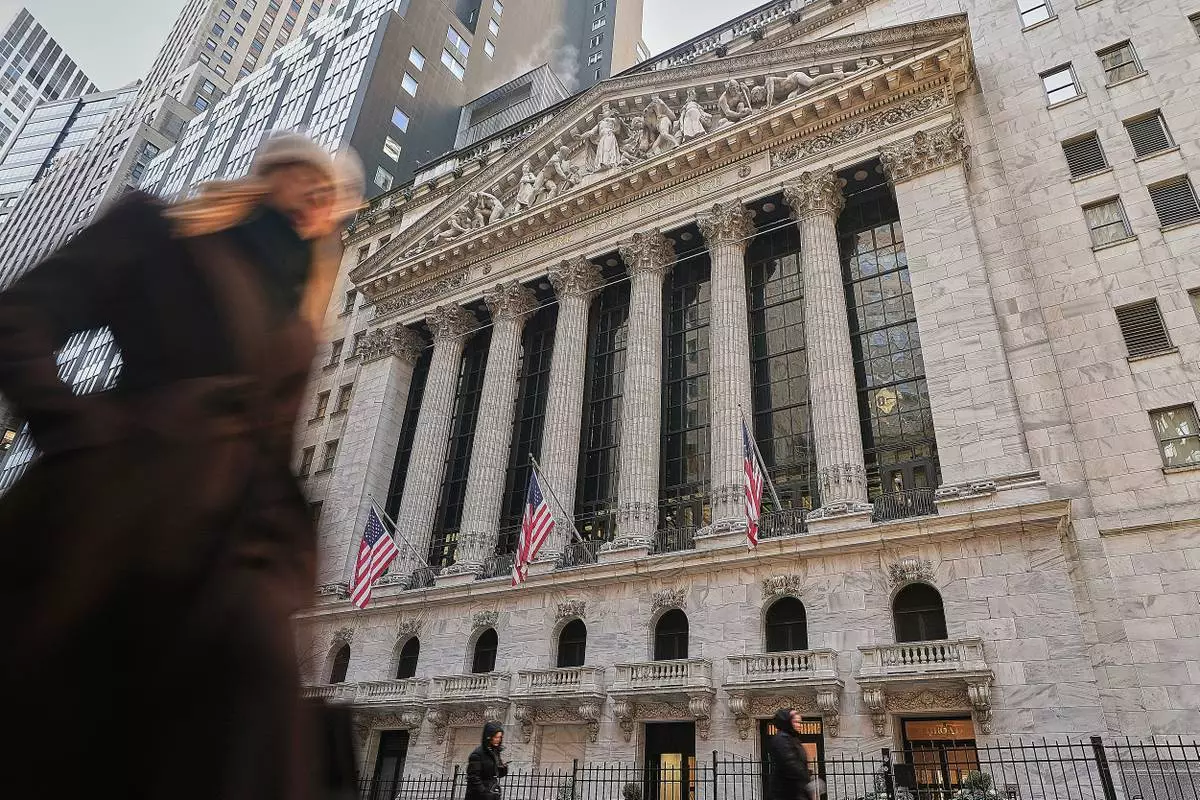
Morning commuters pass the New York Stock Exchange, Tuesday, Jan. 20, 2026. (AP Photo/Richard Drew)

Morning commuters pass the New York Stock Exchange, Tuesday, Jan. 20, 2026. (AP Photo/Richard Drew)

Morning commuters pass the New York Stock Exchange, Tuesday, Jan. 20, 2026. (AP Photo/Richard Drew)

Morning commuters pass the New York Stock Exchange, Tuesday, Jan. 20, 2026. (AP Photo/Richard Drew)

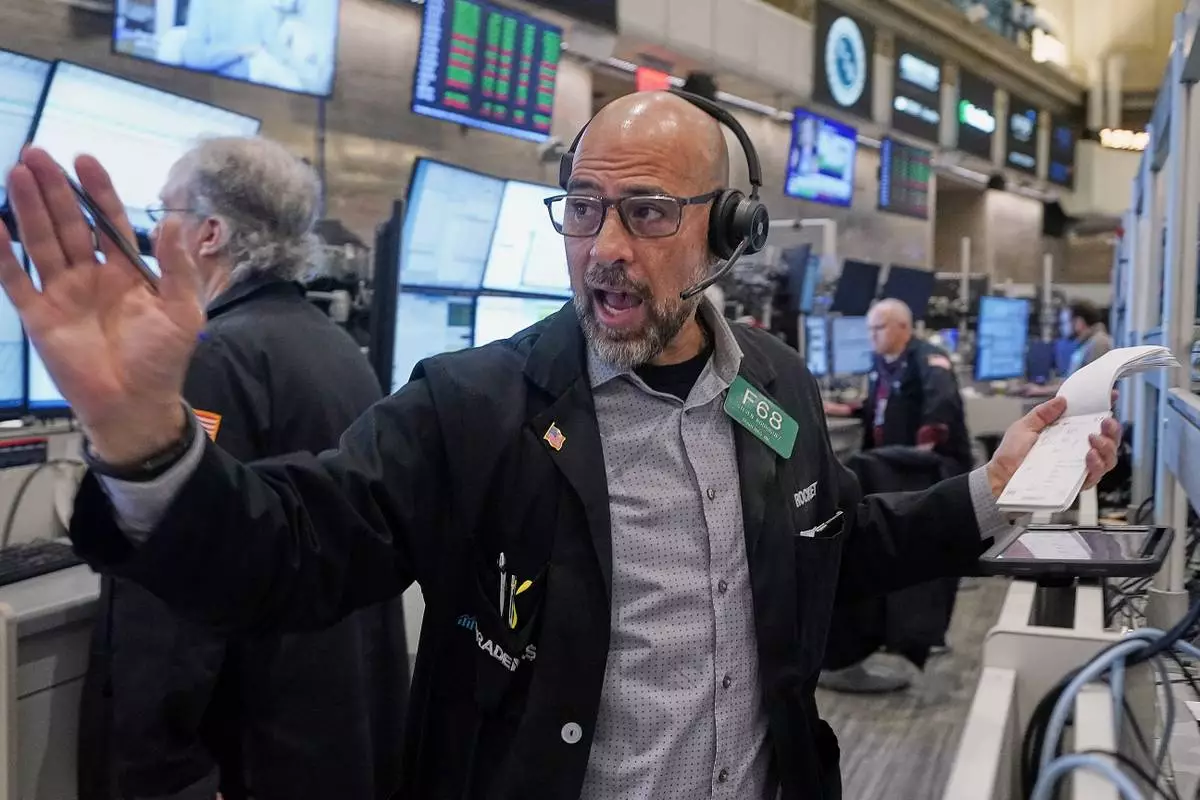
Options trader Steven Rodriguez works on the floor of the New York Stock Exchange, Friday, Jan. 16, 2026. (AP Photo/Richard Drew)

Options trader Steven Rodriguez works on the floor of the New York Stock Exchange, Friday, Jan. 16, 2026. (AP Photo/Richard Drew)

Options trader Kirk Katzburg, center, works on the floor of the New York Stock Exchange, Friday, Jan. 16, 2026. (AP Photo/Richard Drew)

Options trader Kirk Katzburg, center, works on the floor of the New York Stock Exchange, Friday, Jan. 16, 2026. (AP Photo/Richard Drew)

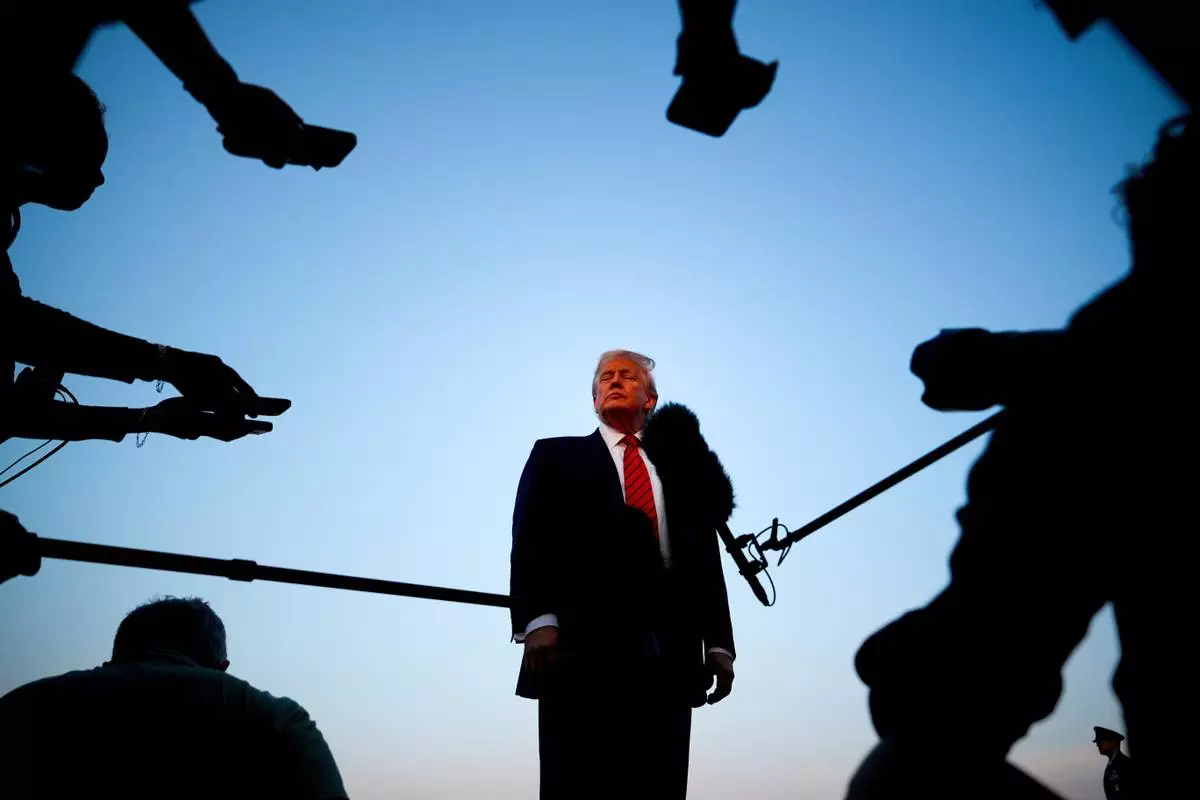
FILE - President Donald Trump speaks with reporters before boarding Air Force One at Lehigh Valley International Airport in Allentown, Pa., Aug. 3, 2025. (AP Photo/Julia Demaree Nikhinson, File)

FILE - President Donald Trump speaks with reporters before boarding Air Force One at Lehigh Valley International Airport in Allentown, Pa., Aug. 3, 2025. (AP Photo/Julia Demaree Nikhinson, File)

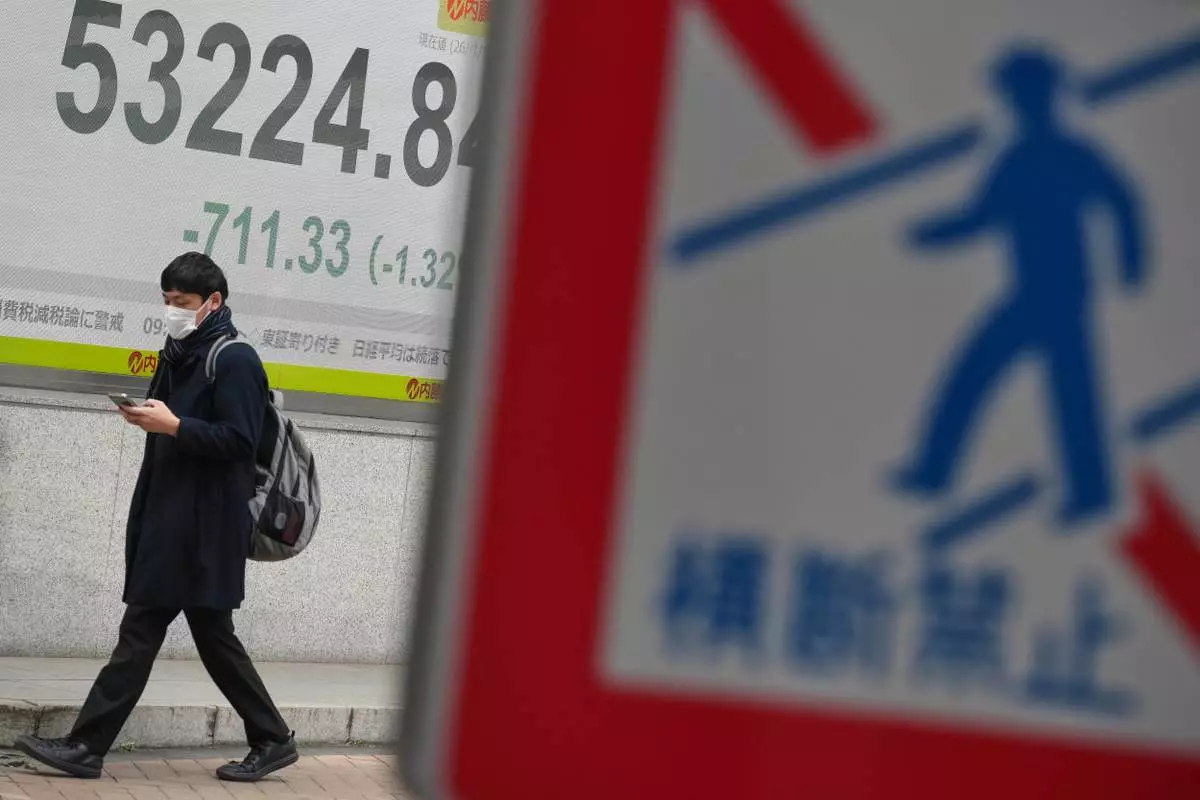
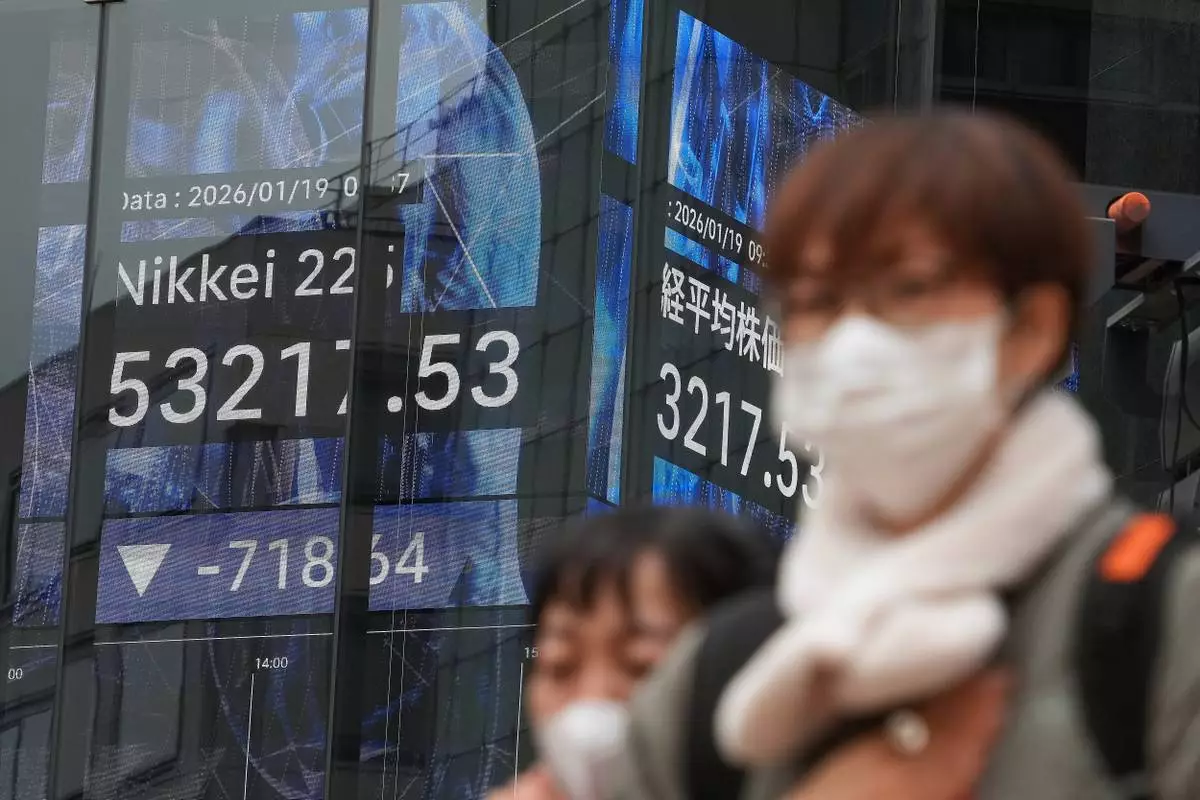
A person walks in front of an electronic stock board showing Japan's Nikkei index at a securities firm Monday, Jan. 19, 2026, in Tokyo. (AP Photo/Eugene Hoshiko)

A person walks in front of an electronic stock board showing Japan's Nikkei index at a securities firm Monday, Jan. 19, 2026, in Tokyo. (AP Photo/Eugene Hoshiko)

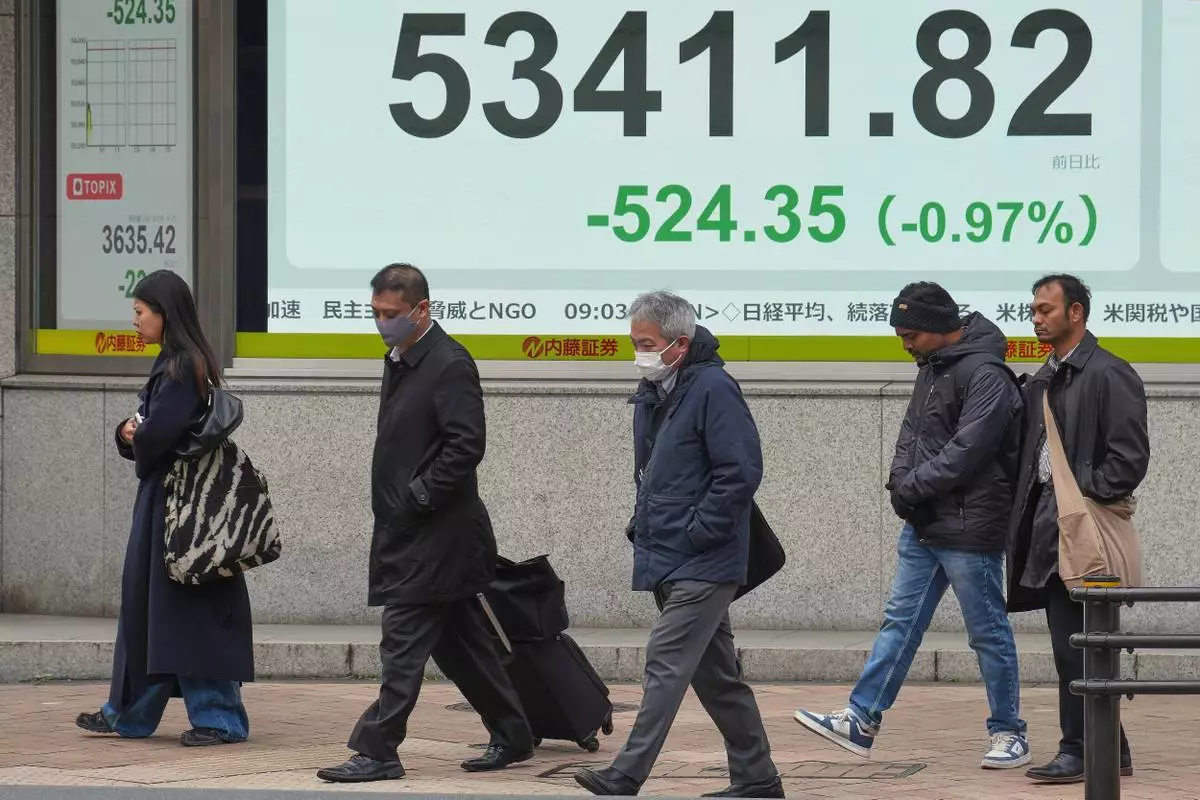
People walk in front of an electronic stock board showing Japan's Nikkei index at a securities firm Monday, Jan. 19, 2026, in Tokyo. (AP Photo/Eugene Hoshiko)

People walk in front of an electronic stock board showing Japan's Nikkei index at a securities firm Monday, Jan. 19, 2026, in Tokyo. (AP Photo/Eugene Hoshiko)

Currency traders work near a screen showing the Korea Composite Stock Price Index (KOSPI), right, and the foreign exchange rate between U.S. dollar and South Korean won at the foreign exchange dealing room of the Hana Bank headquarters in Seoul, South Korea, Tuesday, Jan. 20, 2026. (AP Photo/Ahn Young-joon)

Currency traders work near a screen showing the Korea Composite Stock Price Index (KOSPI), right, and the foreign exchange rate between U.S. dollar and South Korean won at the foreign exchange dealing room of the Hana Bank headquarters in Seoul, South Korea, Tuesday, Jan. 20, 2026. (AP Photo/Ahn Young-joon)

People walk in front of an electronic stock board showing Japan's Nikkei index at a securities firm Monday, Jan. 19, 2026, in Tokyo. (AP Photo/Eugene Hoshiko)

People walk in front of an electronic stock board showing Japan's Nikkei index at a securities firm Monday, Jan. 19, 2026, in Tokyo. (AP Photo/Eugene Hoshiko)

A currency trader reacts near a screen showing the Korea Composite Stock Price Index (KOSPI) and the foreign exchange rate between U.S. dollar and South Korean won, left, at the foreign exchange dealing room of the Hana Bank headquarters in Seoul, South Korea, Tuesday, Jan. 20, 2026. (AP Photo/Ahn Young-joon)

A currency trader reacts near a screen showing the Korea Composite Stock Price Index (KOSPI) and the foreign exchange rate between U.S. dollar and South Korean won, left, at the foreign exchange dealing room of the Hana Bank headquarters in Seoul, South Korea, Tuesday, Jan. 20, 2026. (AP Photo/Ahn Young-joon)

Recommended Articles