Skip to Content Facebook Feature Image

Donald Trump thanks you for your attention to these matters in his second term

News

Donald Trump thanks you for your attention to these matters in his second term
News

News

Donald Trump thanks you for your attention to these matters in his second term

2026-01-20 22:51 Last Updated At:23:00

WASHINGTON (AP) — A stunning military intervention in Venezuela. Telling the New York Giants which coach to hire. Threats against Iran, Denmark, Greenland and Colombia. Posing with someone else's Nobel Peace Prize. Dangling the potential of deploying U.S. troops in Minneapolis. Flipping off a critic. Announcing an aggressive round of tariffs. Threatening political enemies.

For President Donald Trump, this blizzard was just the first half of January.

If a president's most valuable currency is time, Trump operates as if he has an almost limitless supply, ever willing to share no matter the day, the hour or the circumstance.

He's rewritten the role of the presidency in a divided country, commanding constant attention with little regard for consequences. For all his talk about strength, his approach leans more toward virality than virility with social media as his primary accelerant.

“The president exists loudly,” said Sen. John Kennedy, R-La. “The president will play with fire. I haven't seen him yet play with live hand grenades, but I've seen him come damn close. That's just the way he is, and it's not going to change.”

At least Trump thanks you in the process.

During his second term, the Republican president has signed off of his social media post with the catchphrase “thank you for your attention to this matter” 242 times, according to data compiled by Roll Call Factba.se. For good measure, he often uses all capital letters and a few exclamation points.

He has spent decades seeking attention, first in the New York tabloids and later as a reality television star. Attention, positive or negative, is its own reward. In the attention economy, Trump is what Wall Street might call a market maker.

The gambits often have a tenuous relationship with truth and sometimes involve misogyny or racism. They can step on the administration's other priorities and don't always bend political realities in Trump's favor (see affordability concerns and the Epstein files ).

But they're hard to ignore.

“He’s saying hello to you in the morning, and he says good night to you at the end of the day,” Republican strategist Ron Bonjean said. “You’re never not going to hear from him.”

In his second term, he observed even fewer constraints on where to assert his presence, with a fondness for sports. During September alone, Trump attended three major sporting events around New York City. His visit to the U.S. Open final forced long security lines and delayed the start of the match. The crowd — dominated by New York's elite — booed him, but that didn't matter. He was still on the stadium's big screen and all over social media.

That's where some of the biggest changes during Trump's second term have unfolded.

During his first administration, many Silicon Valley leaders were cold — or outright hostile — to Trump. He was banned from platforms including Twitter and Facebook after the Jan. 6, 2021, attack on the U.S. Capitol.

The leaders of those companies are now openly allied with Trump or at least friendly with him. Twitter is now named X and owned by Elon Musk, who led the Department of Government Efficiency during the first months of the second term and has returned to the president's orbit after a brief falling-out. Musk and Meta CEO Mark Zuckerberg were among the technology executives who attended Trump's inauguration last year.

Trump, who's not known to use a computer, this time has his own social media platform, where his team relies on fresh artificial intelligence technology to quickly produce memes and videos that keep the president at the forefront of the online conversation. Those posts often veer into crude territory, such as one in October that showed him wearing a crown, flying a plane, dumping excrement on his opponents.

“The social media we’re talking about in Trump’s second term is not the social media of Trump’s first term," said Nolan Higdon, a lecturer at the University of California, Santa Cruz, where he focuses on critical media literacy.

For now, there are few brakes on Trump's impulses.

House Speaker Mike Johnson brushed off the excrement post as “satire.” Vice President JD Vance, a devout Catholic, has defended Trump's posts, including one depicting him as the pope. In an interview with Vanity Fair, White House chief of staff Susie Wiles described Trump, who doesn't drink, as possessing an “alcoholic's personality,” meaning he "operates (with) a view that there’s nothing he can’t do."

Indeed, his approach has been remarkably successful in achieving the disruption he seeks to impose in the U.S. and abroad. He uses social media as a weapon, warning of aid that will be cut off to states that resist him. His posts regarding Greenland and Denmark sparked a genuine diplomatic crisis and raised questions about the long-term sustainability of NATO.

The two nagging exceptions revolve around Epstein and affordability.

After telling his supporters to “not waste Time and Energy on Jeffrey Epstein," he eventually gave in to congressional pressure and signed a bill that earned overwhelming support on Capitol Hill calling for the files to be made public. The Justice Department has already missed deadlines for the release, and Democrats including Rep. Alexandria Ocasio-Cortez of New York and Gov. JB Pritzker of Illinois have said the flurry of news this month has amounted to a distraction from the Epstein issue.

Trump has similarly struggled to convince the public that he understands and is responding to their concerns about high prices. After calling affordability challenges a “Democratic hoax,” he has tried to take action, including delivering a prime-time address last month. But that speech and more recent efforts, including the mortgage rate push, were quickly drowned by the deluge of more jarring news.

Indeed, a Michigan visit last week to talk about affordability may ultimately be best remembered for images of Trump delivering an obscene gesture at someone who was yelling at him from afar.

That underscores Trump's central challenge heading into an election year that will test his grip on power. While his hard-line approach may delight supporters, it does less to convince a broader swath of Americans that he's an effective president.

Approval of Trump's handling of most issues is low, but health care stands out as a particular weakness for him. Only about 3 in 10 U.S. adults approved of the way he was handling health care, according to a December AP-NORC poll. That was slightly lower than his overall approval. He’s also slipped on immigration since the start of his second term, when this stood out as a relative strength. According to a January AP-NORC poll, about 4 in 10 U.S. adults approve of his performance on immigration, down from about half of Americans toward the beginning of his first term.

Meanwhile, Democrats are taking stronger steps toward winning American attention spans. California Gov. Gavin Newsom, a potential 2028 presidential candidate, hosts a podcast and taunts Trump by mocking him on social media.

New York City Mayor Zohran Mamdani is perhaps the most successful Democrat to translate a digital media machine into political success. Over the course of about a year, the 34-year-old went from a relatively unknown state lawmaker to the leader of the nation's largest city by introducing himself to voters with videos that showed him in unscripted environments, like the course of the New York City marathon.

“They're learning not to impose an old framework on a new paradigm,” said Basil Smikle, a former executive director of the New York State Democratic Party and a professor at Columbia University.

The long-term question is whether Trump has fundamentally changed the presidency. Ari Fleischer, the White House press secretary under then-President George W. Bush, said Trump “is the definition of unique” and predicted that the next president — regardless of party — will communicate differently.

“Whoever succeeds him," Fleischer said, “the velocity of the presidency will slow down.”

Associated Press writer Amelia Thomson-DeVeaux contributed to this report.
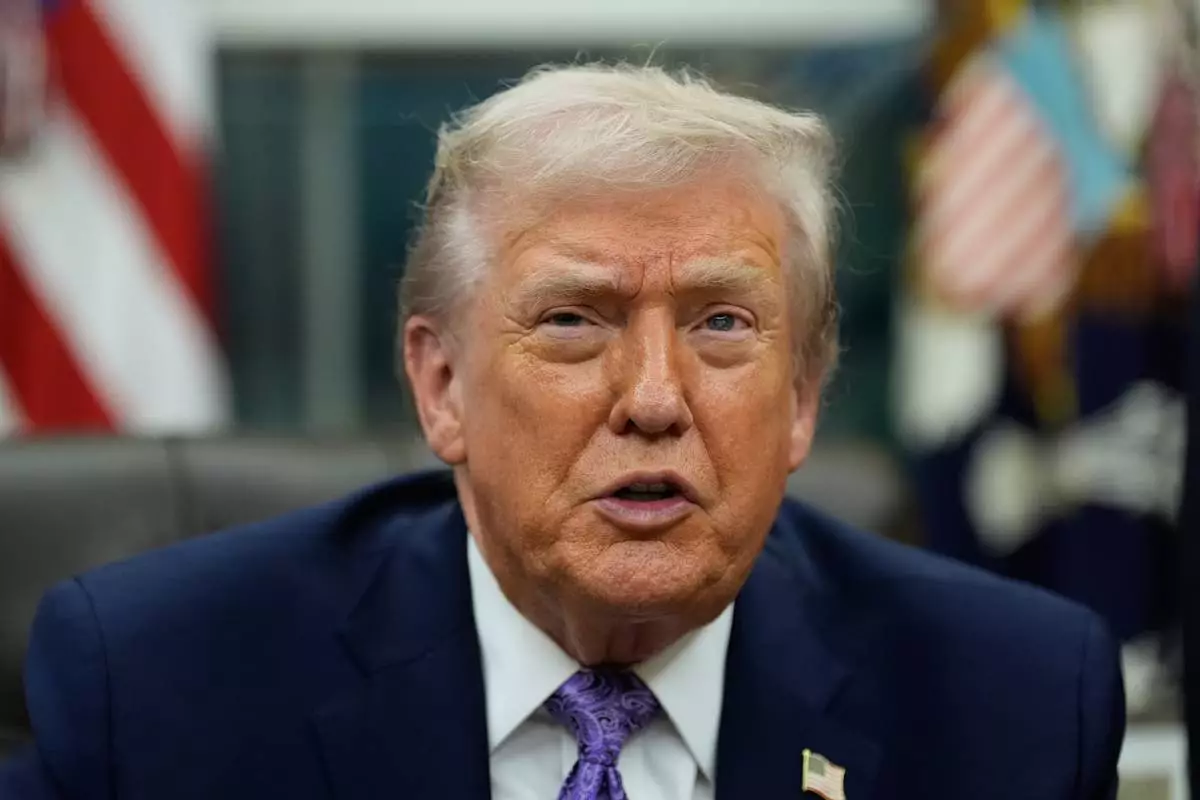
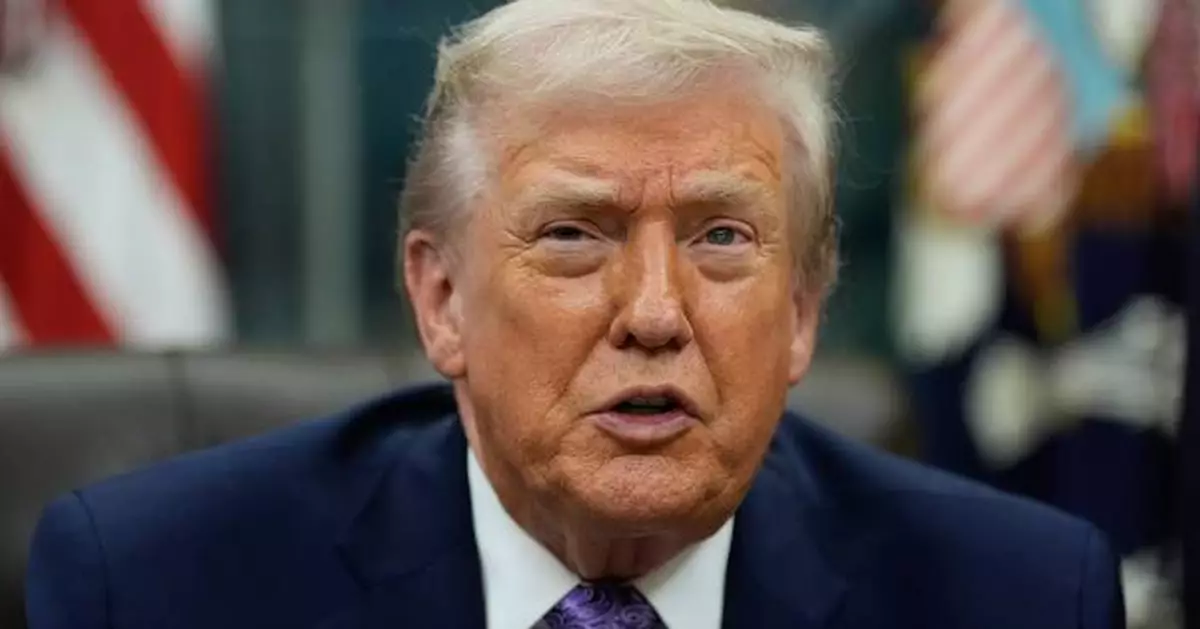
FILE - President Donald Trump speaks during a signing ceremony in the Oval Office of the White House, Dec. 11, 2025, in Washington. (AP Photo/Alex Brandon, File)

FILE - President Donald Trump speaks during a signing ceremony in the Oval Office of the White House, Dec. 11, 2025, in Washington. (AP Photo/Alex Brandon, File)
DAVOS, Switzerland (AP) — The European Union’s top official on Tuesday described U.S. President Donald Trump’s planned new tariffs over Greenland as a “mistake” between long-standing allies and called into question Trump's trustworthiness, while French President Emmanuel Macron said the situation could push the EU to deploy one of the its most powerful tools of retaliation.

While the furor over Trump's desire for control of the vast Arctic island was a focus of an elite annual meeting in Switzerland, Greenland's leader insisted on respect for its territorial integrity and said that respect for international law is “not a game.”

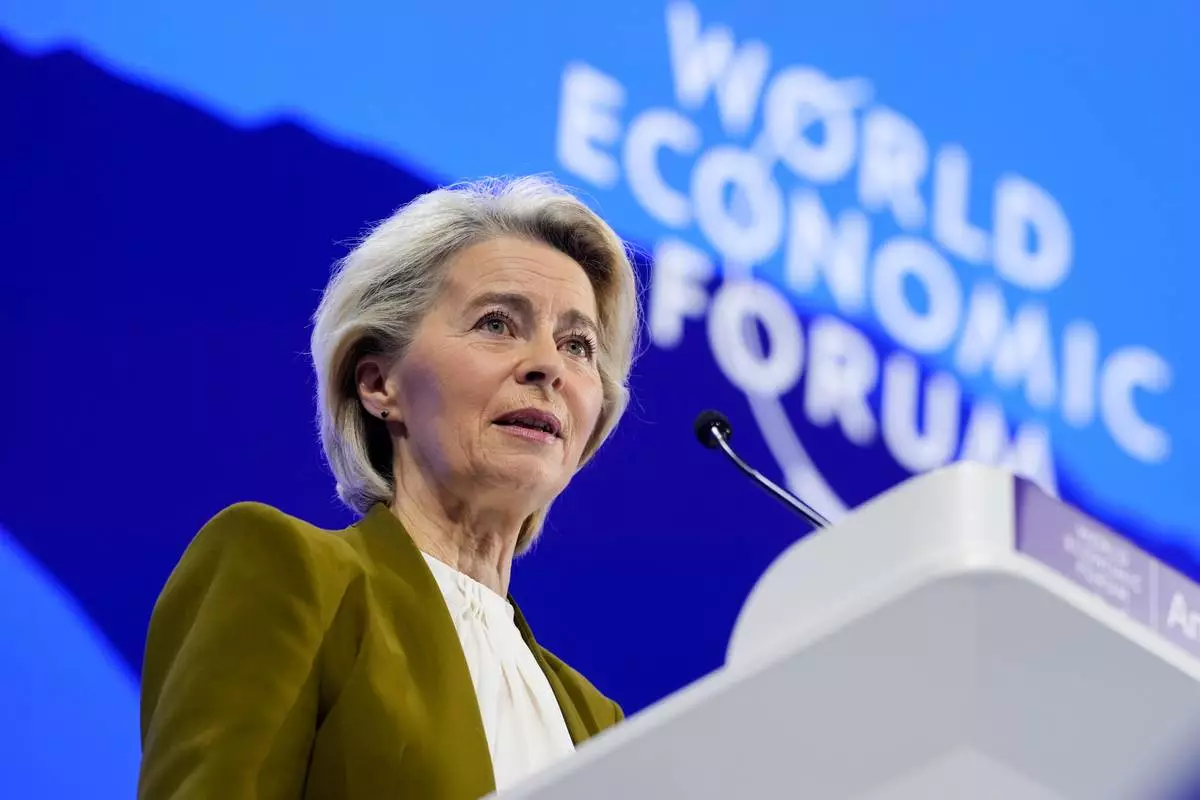
European Commission President Ursula von der Leyen pushed back against Trump's announcement that starting February, a 10% import tax will be imposed on goods from eight European nations that have rallied around Denmark in the wake of his escalating calls for the United States to take over Greenland. The Arctic island is a semiautonomous territory of NATO ally Denmark.

“The European Union and the United States have agreed to a trade deal last July,” von der Leyen said at the World Economic Forum in Davos, Switzerland. “And in politics as in business – a deal is a deal. And when friends shake hands, it must mean something.”

“We consider the people of the United States not just our allies, but our friends. And plunging us into a downward spiral would only aid the very adversaries we are both so committed to keeping out of the strategic landscape,” she added.

She vowed that the EU’s response “will be unflinching, united and proportional.”

Trump, who will speak in Davos on Wednesday and said on social media that he had agreed to “a meeting of the various parties” there, has insisted the U.S. needs the territory for security reasons against possible threats from China and Russia.

Earlier Tuesday, U.S. Treasury Secretary Scott Bessent said America’s relations with Europe remain strong and urged trading partners to “take a deep breath” and let tensions driven the new tariff threats over Greenland “play out.”

“I think our relations have never been closer,” he said.

But Danish Prime Minister Mette Frederiksen, speaking in the Danish parliament, said that “the worst may still be ahead of us.” She said that “we have never sought conflict. We have consistently sought cooperation.”

Greenland's Prime Minister Jens-Frederik Nielsen insisted at a news conference in the island's capital, Nuuk, that “we need to have respect for international law and territorial integrity.” He said those principles should unite Western democratic countries, and said he was grateful for support from EU allies.

“International law, it's not a game,” he said. “We have been a close and loyal ally to the United States, to NATO, through many, many, many years. We can do lots more in that framework. We are willing to cooperate much more, but of course in mutual respect, and if we cannot see that, it will be very difficult to have a good and reliable partnership.”

The American leader’s threats have sparked outrage and a flurry of diplomatic activity across Europe, as leaders consider possible countermeasures, including retaliatory tariffs and the first-ever use of the European Union’s anti-coercion instrument.

Unofficially known as the “trade bazooka,” the anti-coercion instrument could sanction individuals or institutions found to be putting undue pressure on the EU. In addition, the EU has two other major economic tools it could use to pressure Washington: new tariffs, or a suspension of the U.S.-EU trade deal.

Macron warned in Davos that the additional tariffs could force the EU to use its anti-coercion mechanism “for the very first time” against the United States.

“Can you imagine that?” he said, arguing that allied countries should be focusing on bringing peace to Ukraine. “This is crazy.”

In general, he said, the mechanism “is a powerful instrument and we should not hesitate to deploy it in today’s tough environment.”

Trump earlier posted a text message from Macron in which the French president suggested a meeting of members of the Group of Seven industrialized democracies in Paris after the Davos gathering. An official close to Macron, who spoke anonymously in line with the French presidency's customary practices, confirmed the message shared by Trump is genuine.

In his latest threat of tariffs, Trump indicated that the import taxes would be retaliation for last week’s deployment of symbolic numbers of troops from the European countries to Greenland — though he also suggested that he was using the tariffs as leverage to negotiate with Denmark.

Speaking on the sidelines of Davos, California Gov. Gavin Newsom slammed Europe’s response to Trump's tariff threats as “pathetic” and “embarrassing,” and urged European leaders to unite and stand up to the United States.

“It is time to get serious, and stop being complicit,” Newsom told reporters. “It’s time to stand tall and firm, have a backbone.”

On Monday night, Greenland’s European backers looked at establishing a more permanent military presence in the High North to help guarantee security in the Arctic region, a key demand of the United States, Swedish Defense Minister Pål Jonson said.

Jonson said after talks with his counterparts from Denmark, Greenland and Norway that European members of NATO are currently “doing what’s called a reconnaissance tour in order to identify what kind of needs there are when it comes to infrastructure and exercises and so forth.”

In Moscow, Russian Foreign Minister Sergey Lavrov strongly denied any intention by Russia and China to threaten Greenland, while also describing Greenland as a “colonial gain” for Denmark. At a news conference, he said that “in principle, Greenland isn’t a natural part of Denmark.”

In another sign of tension between allies, the British government on Tuesday defended its decision to hand sovereignty of the Chagos Islands to Mauritius after Trump attacked the plan, which his administration previously supported.

Trump said that relinquishing the remote Indian Ocean archipelago, home to a strategically important American naval and bomber base, was an act of stupidity that shows why he needs to take over Greenland.

In a speech to lawmakers at Britain's Parliament on Tuesday, U.S. House of Representatives Speaker Mike Johnson said he hoped to “calm the waters” as Trump roils the trans-Atlantic relationship with his desire to take over Greenland.

Johnson said the U.S. and the U.K. “have always been able to work through our differences calmly, as friends. We will continue to do that.”

Emma Burrows reported from Nuuk, Greenland. AP writers Sylvie Corbet in Paris, Jill Lawless in London and Lorne Cook in Brussels contributed to this report.

Danish soldiers land at Nuuk airport, Monday, Jan. 19, 2026. (Mads Claus Rasmussen/Ritzau Scanpix via AP)

Danish soldiers land at Nuuk airport, Monday, Jan. 19, 2026. (Mads Claus Rasmussen/Ritzau Scanpix via AP)

President of the European Commission Ursula von der Leyen talks during the Annual Meeting of the World Economic Forum in Davos, Switzerland, Tuesday, Jan. 20, 2026. (AP Photo/Markus Schreiber)

President of the European Commission Ursula von der Leyen talks during the Annual Meeting of the World Economic Forum in Davos, Switzerland, Tuesday, Jan. 20, 2026. (AP Photo/Markus Schreiber)

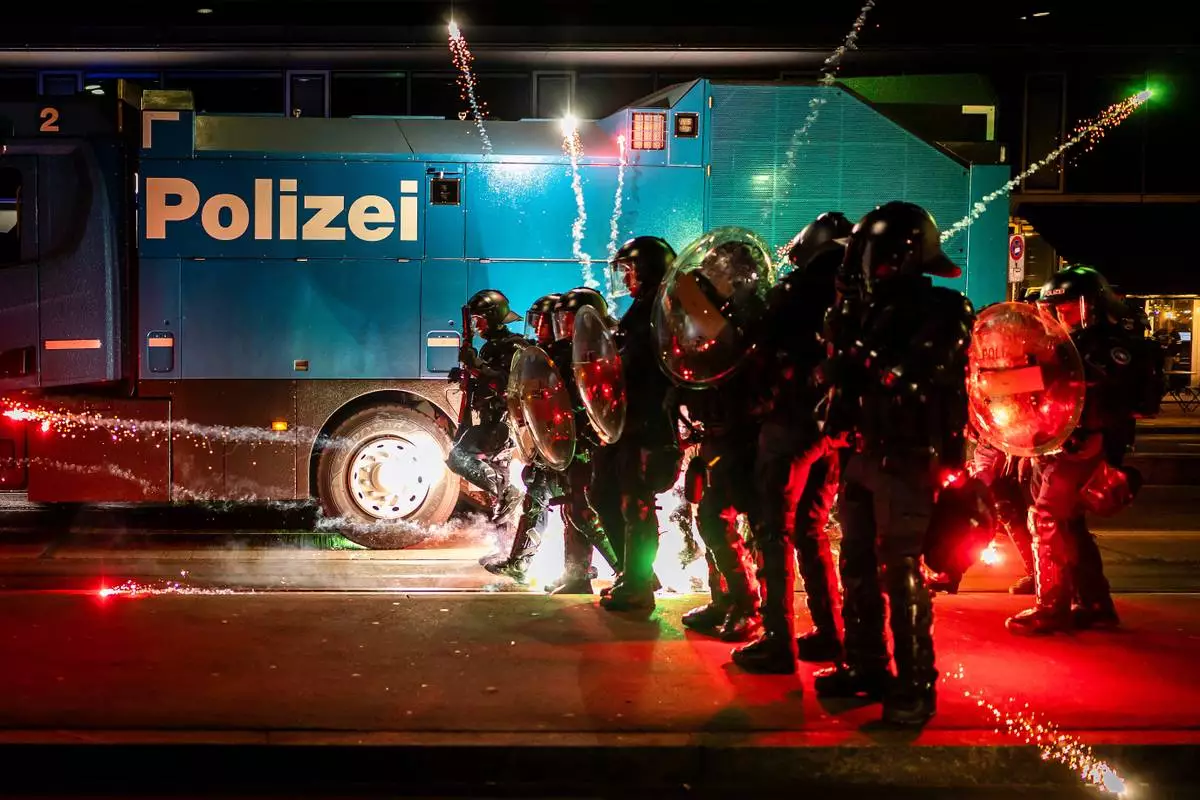
Riot police clash with protesters after a rally against the World Economic Forum in Davos and the visit of US President Donald Trump, on Monday, in Zurich, Switzerland, Jan. 19, 2026. (Michael Buholzer/Keystone via AP)

Riot police clash with protesters after a rally against the World Economic Forum in Davos and the visit of US President Donald Trump, on Monday, in Zurich, Switzerland, Jan. 19, 2026. (Michael Buholzer/Keystone via AP)

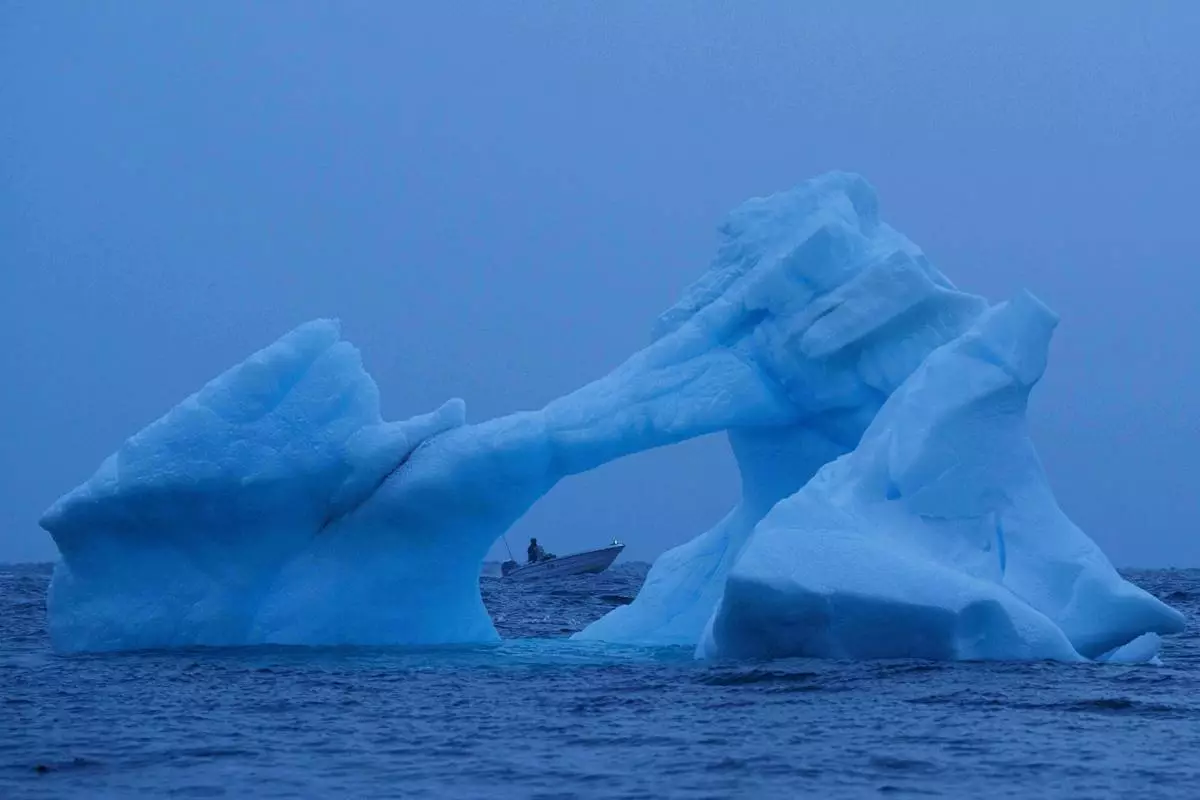
A fisherman navigates past ice in the sea off the coast of Nuuk, Greenland, Monday, Jan. 19, 2026. (AP Photo/Evgeniy Maloletka)

A fisherman navigates past ice in the sea off the coast of Nuuk, Greenland, Monday, Jan. 19, 2026. (AP Photo/Evgeniy Maloletka)

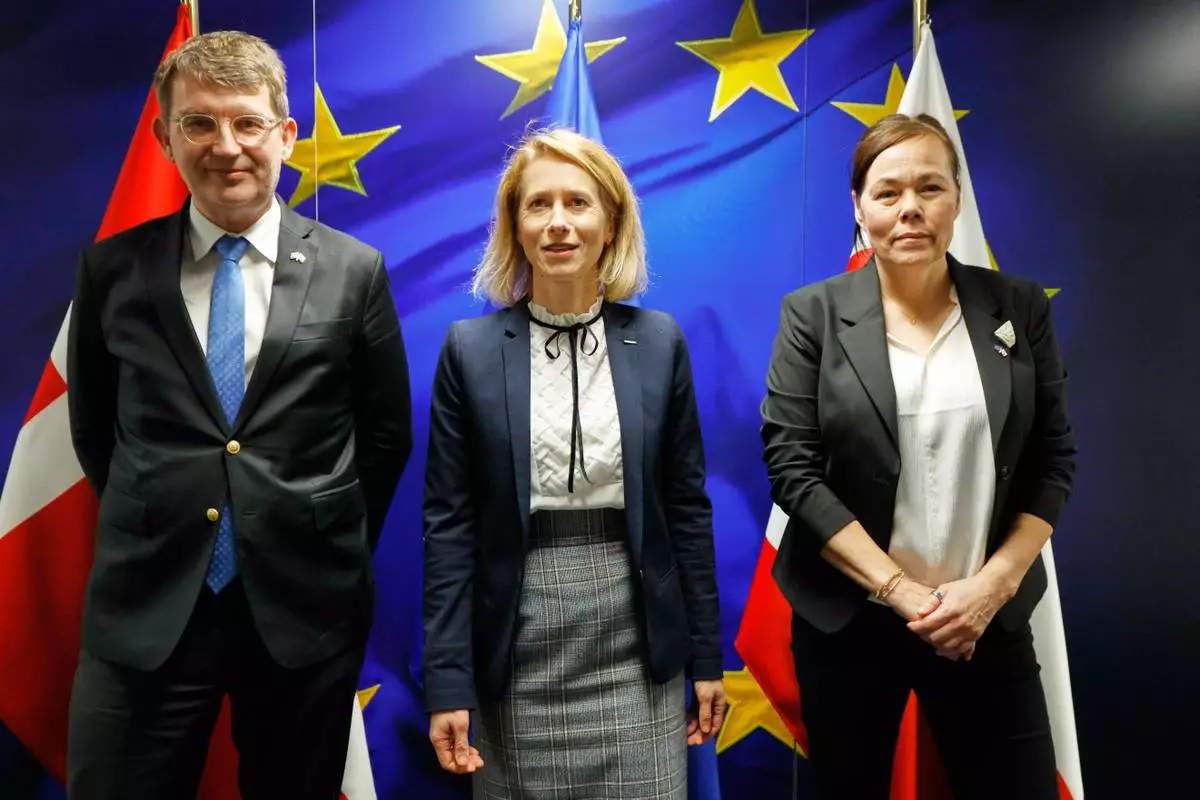
European Union foreign policy chief Kaja Kallas, center, greets Minister for Foreign Affairs and Research of Greenland Vivian Motzfeldt, right, and Denmark's Defense Minister Troels Lund Poulsen, left, prior to a meeting at EU headquarters in Brussels, Monday, Jan. 19, 2026. (AP Photo/Geert Vanden Wijngaert)

European Union foreign policy chief Kaja Kallas, center, greets Minister for Foreign Affairs and Research of Greenland Vivian Motzfeldt, right, and Denmark's Defense Minister Troels Lund Poulsen, left, prior to a meeting at EU headquarters in Brussels, Monday, Jan. 19, 2026. (AP Photo/Geert Vanden Wijngaert)

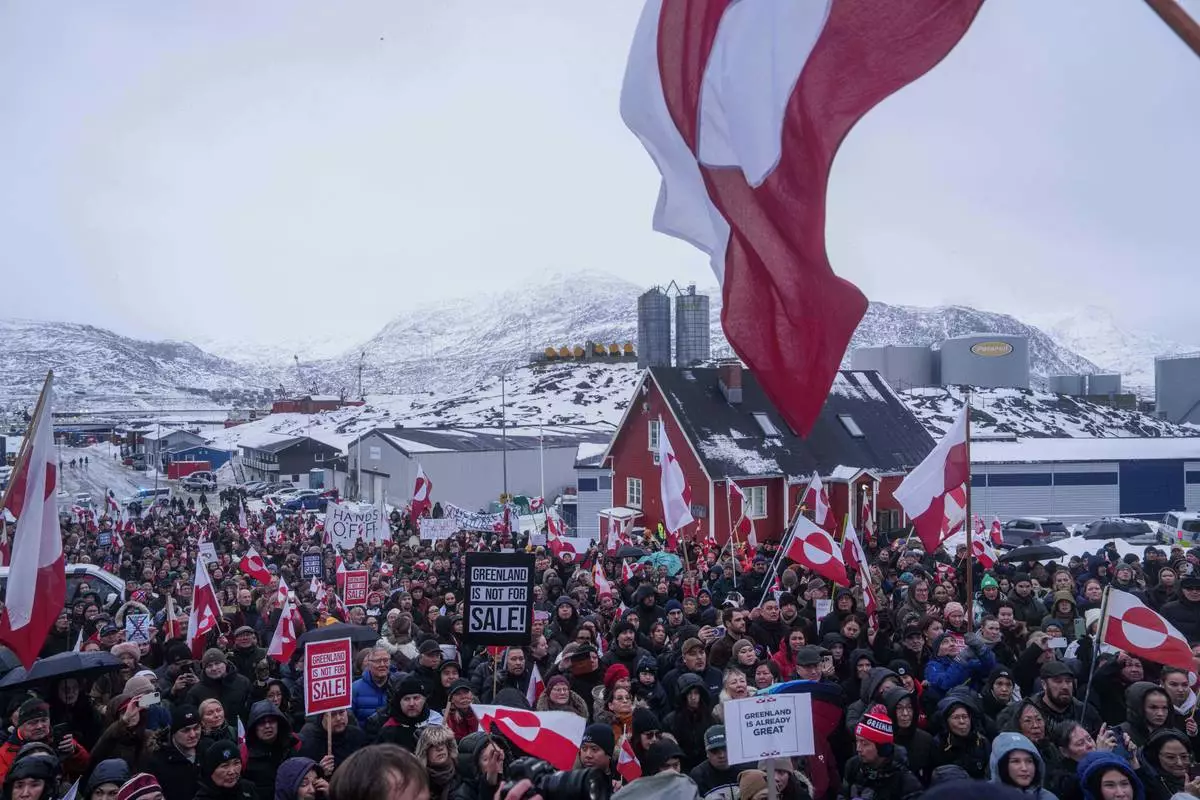
People protest against Trump's policy towards Greenland in front of the US consulate in Nuuk, Greenland, Saturday, Jan. 17, 2026. (AP Photo/Evgeniy Maloletka)

People protest against Trump's policy towards Greenland in front of the US consulate in Nuuk, Greenland, Saturday, Jan. 17, 2026. (AP Photo/Evgeniy Maloletka)

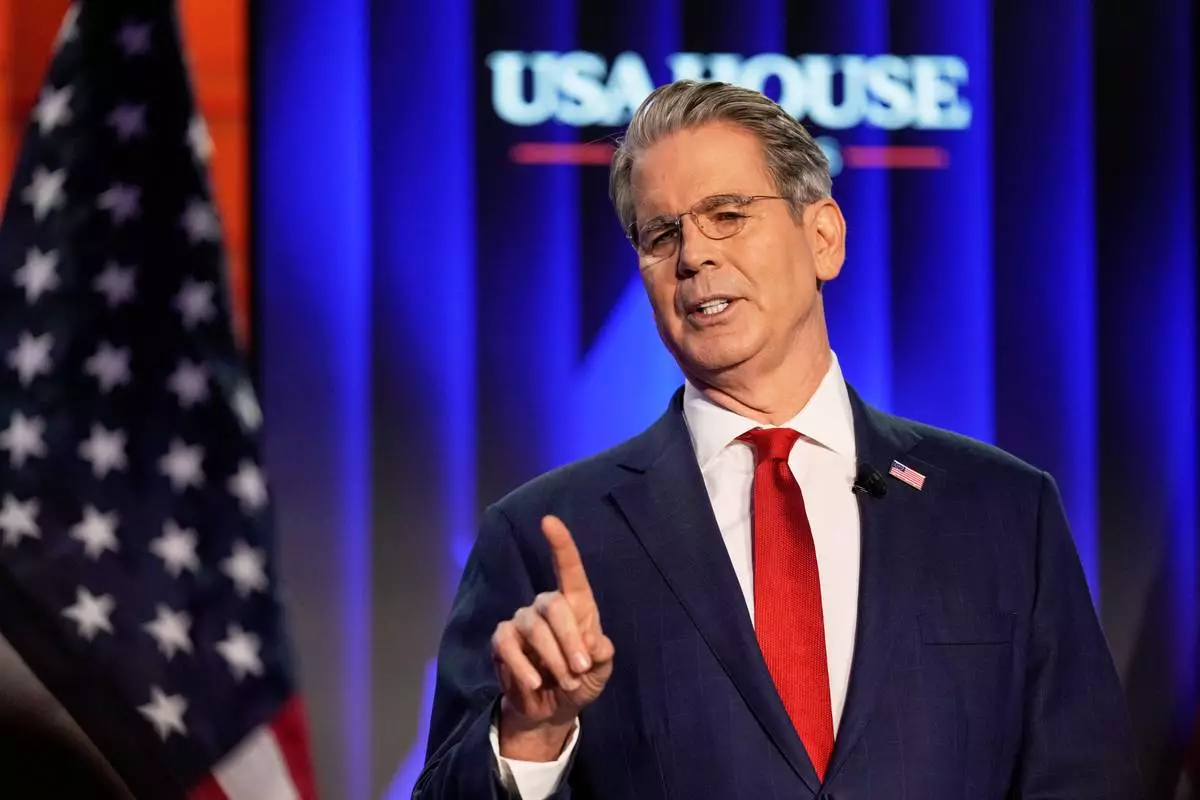
Scott Bessent, US Secretary of the Treasury, holds a speech at the USA House during the Annual Meeting of the World Economic Forum in Davos, Switzerland, Tuesday, Jan. 20, 2026. (AP Photo/Markus Schreiber)

Scott Bessent, US Secretary of the Treasury, holds a speech at the USA House during the Annual Meeting of the World Economic Forum in Davos, Switzerland, Tuesday, Jan. 20, 2026. (AP Photo/Markus Schreiber)

Recommended Articles