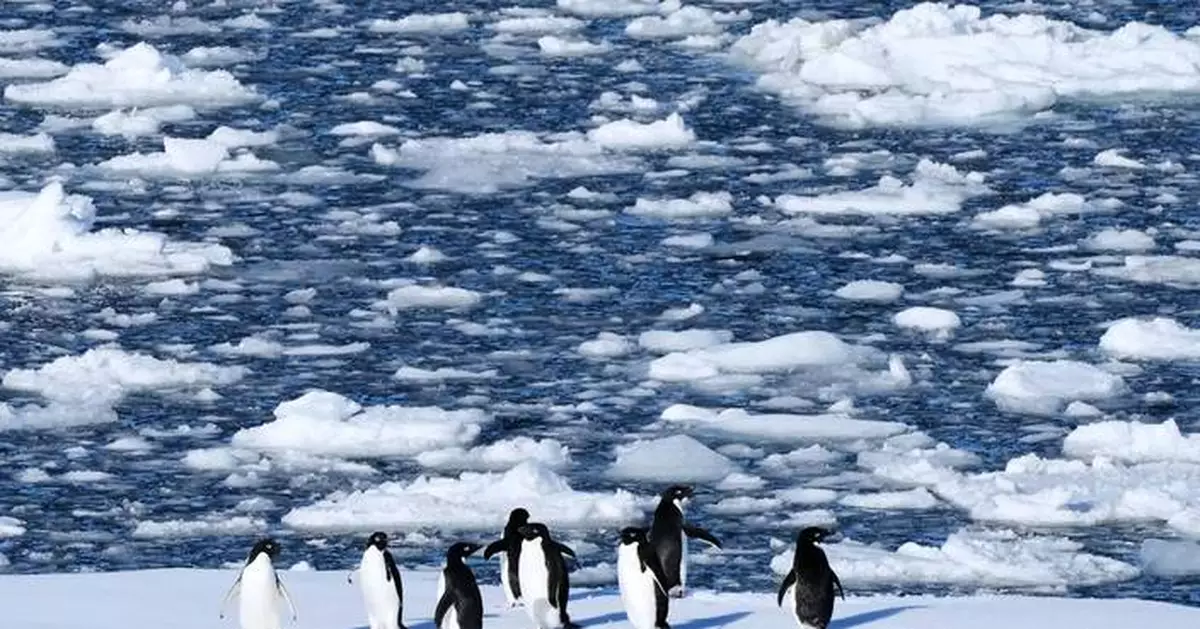
WASHINGTON (AP) — Warming temperatures are forcing Antarctic penguins to breed earlier and that's a big problem for two of the cute tuxedoed species that face extinction by the end of the century, a study said.
With temperatures in the breeding ground increasing 5.4 degrees Fahrenheit (3 degrees Celsius) from 2012 to 2022, three different penguin species are beginning their reproductive process about two weeks earlier than the decade before, according to a study in Tuesday's Journal of Animal Ecology. And that sets up potential food problems for young chicks.
“Penguins are changing the time at which they’re breeding at a record speed, faster than any other vertebrate,” said lead author Ignacio Juarez Martinez, a biologist at Oxford University in the United Kingdom. "And this is important because the time at which you breed needs to coincide with the time with most resources in the environment and this is mostly food for your chicks so they have enough to grow.''
For some perspective, scientists have studied changes in the life cycle of great tits, a European bird. They found a similar two-week change, but that took 75 years as opposed to just 10 years for these three penguin species, said study co-author Fiona Suttle, another Oxford biologist.
Researchers used remote control cameras to photograph penguins breeding in dozens of colonies from 2011 to 2021. They say it was the fastest shift in timing of life cycles for any backboned animals that they have seen. The three species are all brush-tailed, so named because their tails drag on the ice: the cartoon-eye Adelie, the black-striped chinstrap and the fast-swimming gentoo.
Suttle said climate change is creating winners and losers among these three penguin species and it happens at a time in the penguin life cycle where food and the competition for it are critical in survival.
The Adelie and chinstrap penguins are specialists, eating mainly krill. The gentoo have a more varied diet. They used to breed at different times, so there were no overlaps and no competition. But the gentoos' breeding has moved earlier faster than the other two species and now there's overlap. That's a problem because gentoos, which don't migrate as far as the other two species, are more aggressive in finding food and establishing nesting areas, Martinez and Suttle said.
Suttle said she has gone back in October and November to the same colony areas where she used to see Adelies in previous years only to find their nests replaced by gentoos. And the data backs up the changes her eyes saw, she said.
“Chinstraps are declining globally,” Martinez said. “Models show that they might get extinct before the end of the century at this rate. Adelies are doing very poorly in the Antarctic Peninsula and it’s very likely that they go extinct from the Antarctic Peninsula before the end of the century.”
Martinez theorized that the warming western Antarctic — the second-fasting heating place on Earth behind only the Arctic North Atlantic — means less sea ice. Less sea ice means more spores coming out earlier in the Antarctic spring and then “you have this incredible bloom of phytoplankton,” which is the basis of the food chain that eventually leads to penguins, he said. And it's happening earlier each year.
Not only do the chinstraps and Adelies have more competition for food from gentoos because of the warming and changes in plankton and krill, but the changes have brought more commercial fishing that comes earlier and that further shortens the supply for the penguins, Suttle said.
This shift in breeding timing “is an interesting signal of change and now it’s important to continuing observing these penguin populations to see if these changes have negative impacts on their populations,” said Michelle LaRue, a professor of Antarctic marine science at the University of Canterbury in New Zealand. She was not part of the Oxford study.
With millions of photos — taken every hour by 77 cameras for 10 years — scientists enlisted everyday people to help tag breeding activity using the Penguin Watch website.
“We’ve had over 9 million of our images annotated via Penguin Watch,” Suttle said. “A lot of that does come down to the fact that people just love penguins so much. They’re very cute. They’re on all the Christmas cards. People say, ‘Oh, they look like little waiters in tuxedos.’”
“The Adelies, I think their personality goes along with it as well,” Suttle said, saying there's “perhaps a kind of cheekiness about them — and this very cartoon-like eye that does look like it’s just been drawn on.”
The Associated Press’ climate and environmental coverage receives financial support from multiple private foundations. AP is solely responsible for all content. Find AP’s standards for working with philanthropies, a list of supporters and funded coverage areas at AP.org.
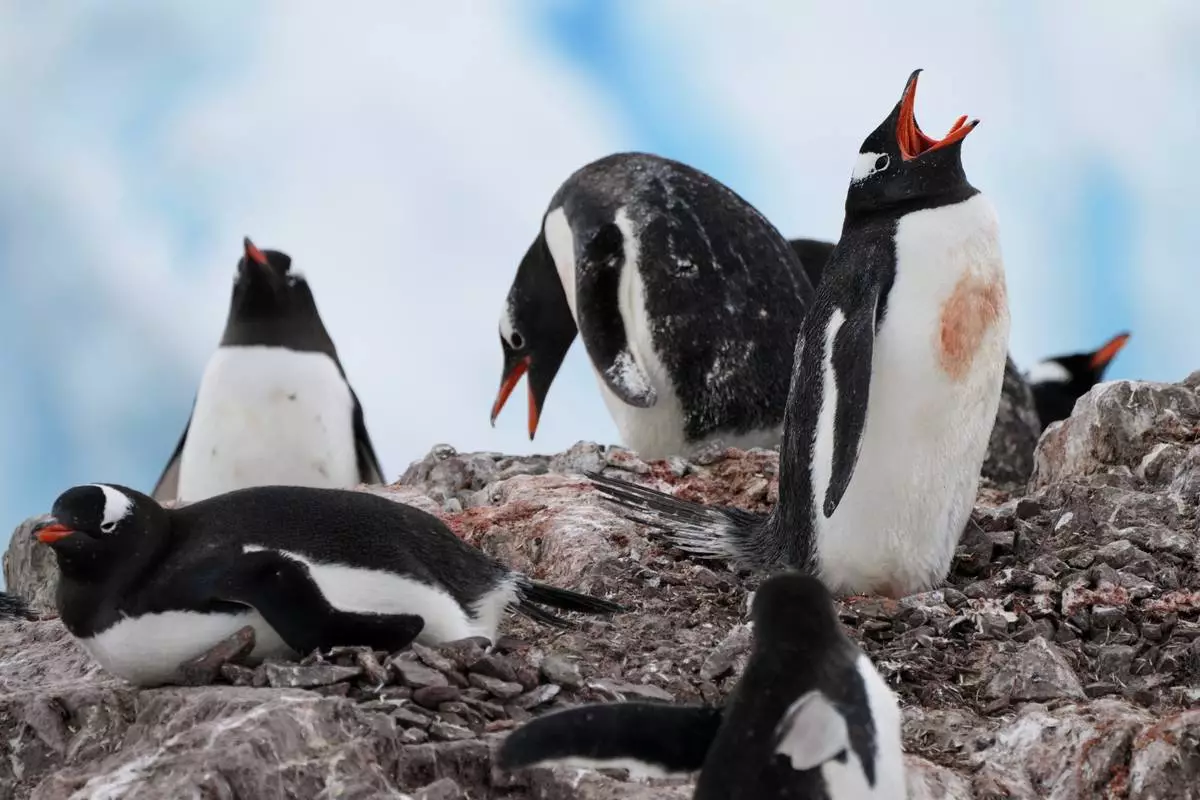
FILE - Gentoo penguins nest at Neko Harbour in Antarctica, Nov. 22, 2025. (AP Photo/Mark Baker, File)
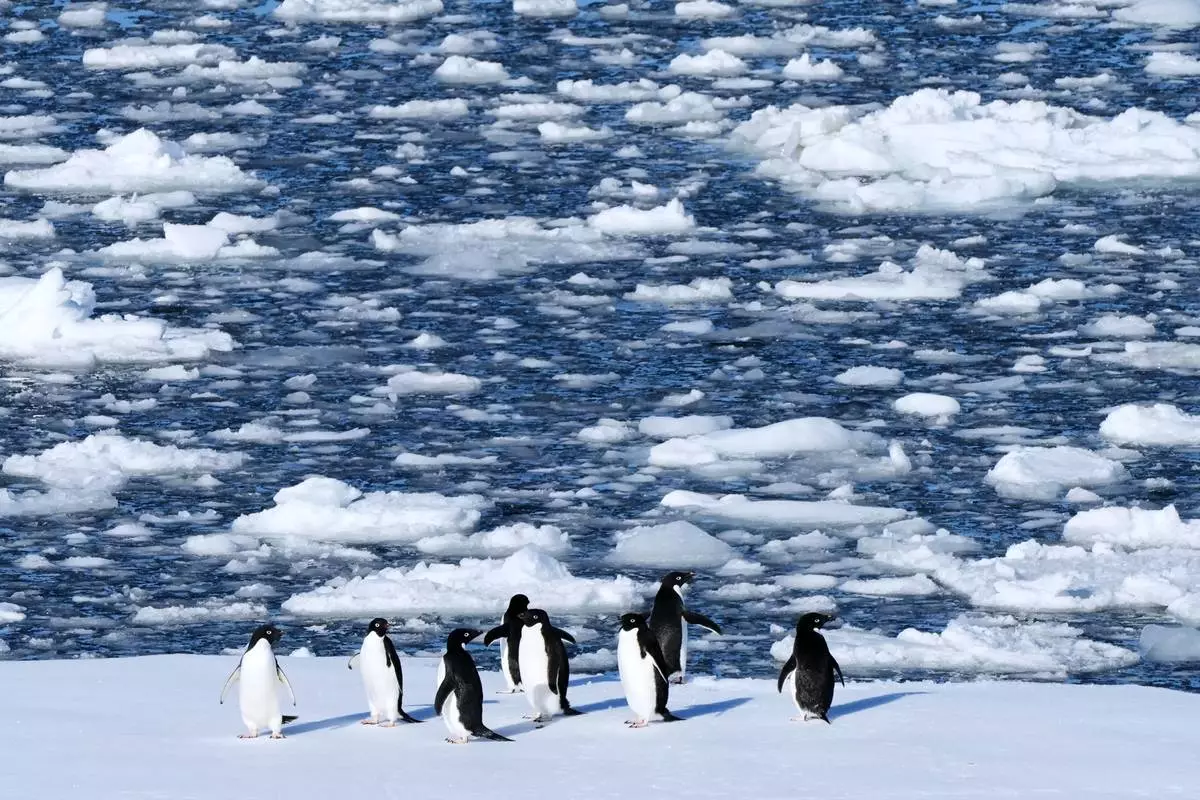
FILE - Adelie penguins stand on a block of floating ice at Yalour Islands in Antarctica, Nov. 24, 2025. (AP Photo/Mark Baker, File)
DUBAI, United Arab Emirates (AP) — Iran lashed out following the killing of one of its top leaders in an airstrike with attacks on its Gulf neighbors and Israel on Wednesday, using some of its latest missiles to evade air defenses and killing two near Tel Aviv as the war in the Middle East showed no signs of slowing.
Israel kept up intense pressure on Lebanon with strikes it said targeted Iran-backed Hezbollah militants, hitting multiple apartment buildings in Beirut and killing at least six people.
In Iran, the Bushehr nuclear power plant complex was hit by a projectile but there were no injuries and the plant suffered no damage, the International Atomic Energy Agency said after receiving a report from Tehran. The IAEA’s leader, Rafael Grossi, reiterated his call “for maximum restraint during the conflict to prevent risk of a nuclear accident.”
The price of Brent crude oil, the international standard, remained stubbornly over $100 per barrel in early trading on Wednesday, up more than 40% from the start of the war.
Since the United States and Israel attacked Iran to start the war on Feb. 28, Iran has been targeting the energy infrastructure of its Gulf Arab neighbors, as well as military bases, as part of a strategy to drive up oil prices and put pressure on Washington to back down.
Iran’s judiciary announced a man had been executed on charges that he spied for Israel’s Mossad intelligence agency. The judiciary’s Mizan news agency identified the man as Kourosh Keyvani and alleged that he “provided images and information on sensitive locations” to Israel.
Activists and rights groups have warned since Iran’s nationwide protests in January that the Islamic Republic could begin conducting mass executions. Iran violently suppressed the protests through violence that killed thousands and saw tens of thousands detained.
New attacks were reported in multiple Gulf countries early Wednesday, including on Saudi Arabia's vast Eastern Province, which is home to many of its oil fields, Kuwait, Bahrain, Qatar and the United Arab Emirates.
Australia’s Prime Minister Anthony Albanese said a projectile caused a small fire at its base in the UAE near Dubai but caused no injuries. His comments appeared to correspond with explosions heard near Al Minhad Air Base, used by Western nations as a transit hub for the wider Mideast.
Saudi Arabia shot down a ballistic missile targeting the area of the Prince Sultan Air Base, which hosts American forces and aircraft.
Iran has also shown no sign of relenting in its stranglehold on the Strait of Hormuz, the shipping lane through which a fifth of the world's oil transits, giving rise to growing concerns of a global energy crisis.
U.S. Central Command said the U.S. military fired multiple 5,000-pound deep penetrator bombs Tuesday on Iranian missile sites along Iran’s coastline near the strait.
Responding to Israel's killing of Ali Larijani, secretary of Iran’s Supreme National Security Council and one of the country’s most powerful figures, the Republican Guard said Wednesday it had targeted central Israel with multiple-warhead missiles, which have an increased chance of evading missile defense systems and can overwhelm radar tracking systems.
Israel reported at least two salvoes of incoming fire and the country's medical service said two people were killed in Ramat Gan, east of Tel Aviv.
Iran's paramilitary Revolutionary Guard said the force launched the Khorramshahr-4 and Qadr multiple-warhead missiles to avenge Larijani’s killing. Footage filmed by The Associated Press showed at least one missile releasing cluster munitions over Israel.
Larijani, a former parliamentary speaker, was a senior policy adviser to the late Supreme Leader Ali Khamenei on strategy in nuclear talks with the Trump administration. He was sanctioned by the U.S. Treasury in January for his role “coordinating” Iran’s violent suppression of nationwide protests.
Gen. Gholam Reza Soleimani, the head of the Revolutionary Guard’s Basij militia, was also killed in an Israeli strike on Tuesday. Soleimani was sanctioned by the U.S., the European Union and other nations, over his role in suppressing dissent for years through the Basij.
The U.S. Embassy in Baghdad also came under fire for the second day in a row early Wednesday, two Iraqi security officials said, speaking on condition of anonymity because they were not authorized to comment.
Further details were not immediately available, but pro-Iran militia groups have been regularly attacking American targets in Iraq since the start of the war. On Tuesday a drone cashed inside the Baghdad embassy compound.
Israel flattened an apartment building in central Beirut about an hour after issuing an evacuation notice. It was the fourth time the building has been targeted, but three strikes last week failed to bring it down.
Israel's military claimed the building was being used by Hezbollah to store “millions of dollars intended to finance its activities,” without providing evidence.
There were no immediate reports of casualties, but other attacks on apartment buildings in central Beirut have killed at least six people and wounded 24 others, according to Lebanon's Health Ministry.
The Israeli army also said it had begun a wave of strikes targeting Hezbollah in southern Lebanon “in response to firing into Israeli territory.”
Israel’s strikes have displaced more than 1 million Lebanese — roughly 20% of the population — according to the Lebanese government, which says more than 900 people have been killed. In Israel, 14 people have been killed by Iranian missile fire. At least 13 U.S. military members have been killed.
More than 1,300 people have been killed in Iran since the conflict started Feb. 28, according to the Iranian Red Crescent.
Rising reported from Bangkok, AlJoud from Beirut. Associated Press writer Qassim Abdul-Zahra in Baghdad contributed to this story.

Smoke and flame rise from a residential building following an Israeli airstrike in central Beirut, Lebanon, Wednesday, March 18, 2026. (AP Photo/Bilal Hussein)

FILE - Iranian Intelligence Minister Esmail Khatib attends the inauguration ceremony of the 6th term of the Assembly of Experts in Tehran, Iran, May 21, 2024. (AP Photo/Vahid Salemi, File)

Smoke and flame rise from a residential building following an Israeli airstrike in central Beirut, Lebanon, Wednesday, March 18, 2026. (AP Photo/Bilal Hussein)

Israeli authorities hang Israeli and U.S. flags at the site struck by an Iranian missile that killed two people, in Ramat Gan, Israel, Wednesday, March 18, 2026. (AP Photo/Oded Balilty)
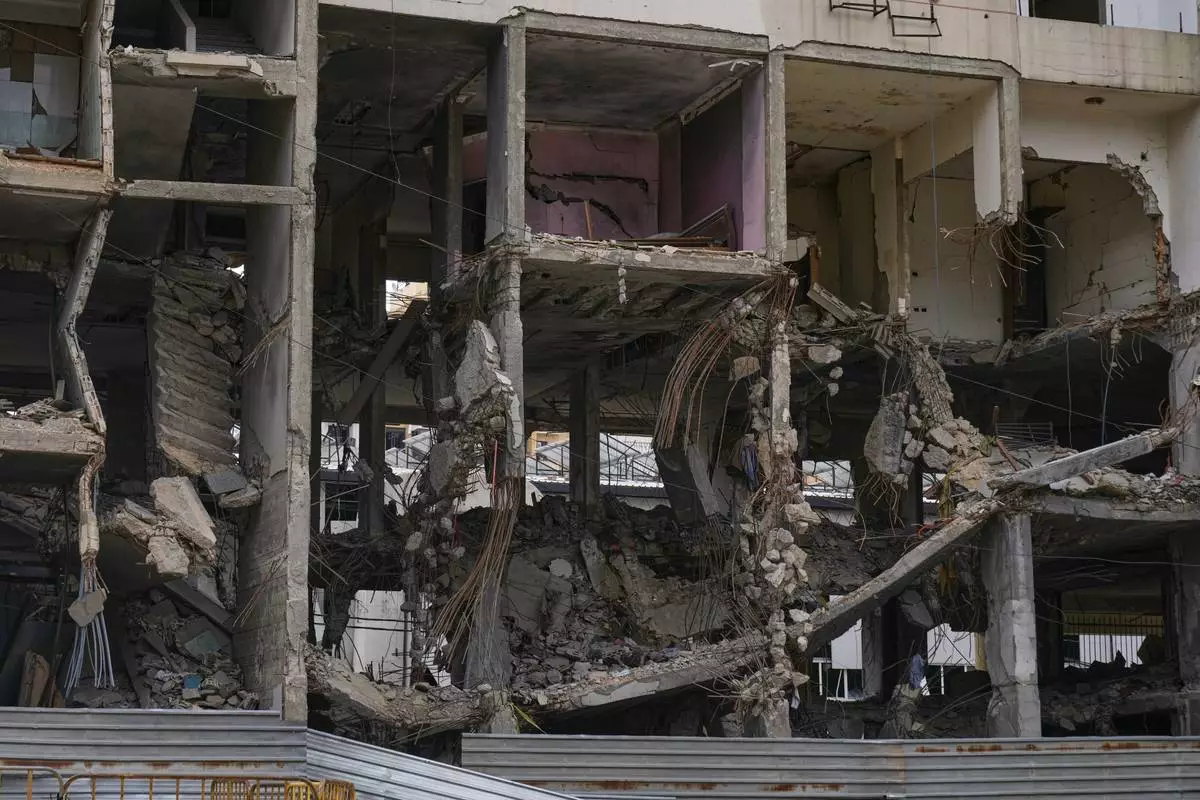
A view of a building damaged in an Israeli airstrike, in Dahiyeh, Beirut's southern suburbs, Beirut's southern suburbs, Lebanon, Monday, March 16, 2026. (AP Photo/Bilal Hussein)
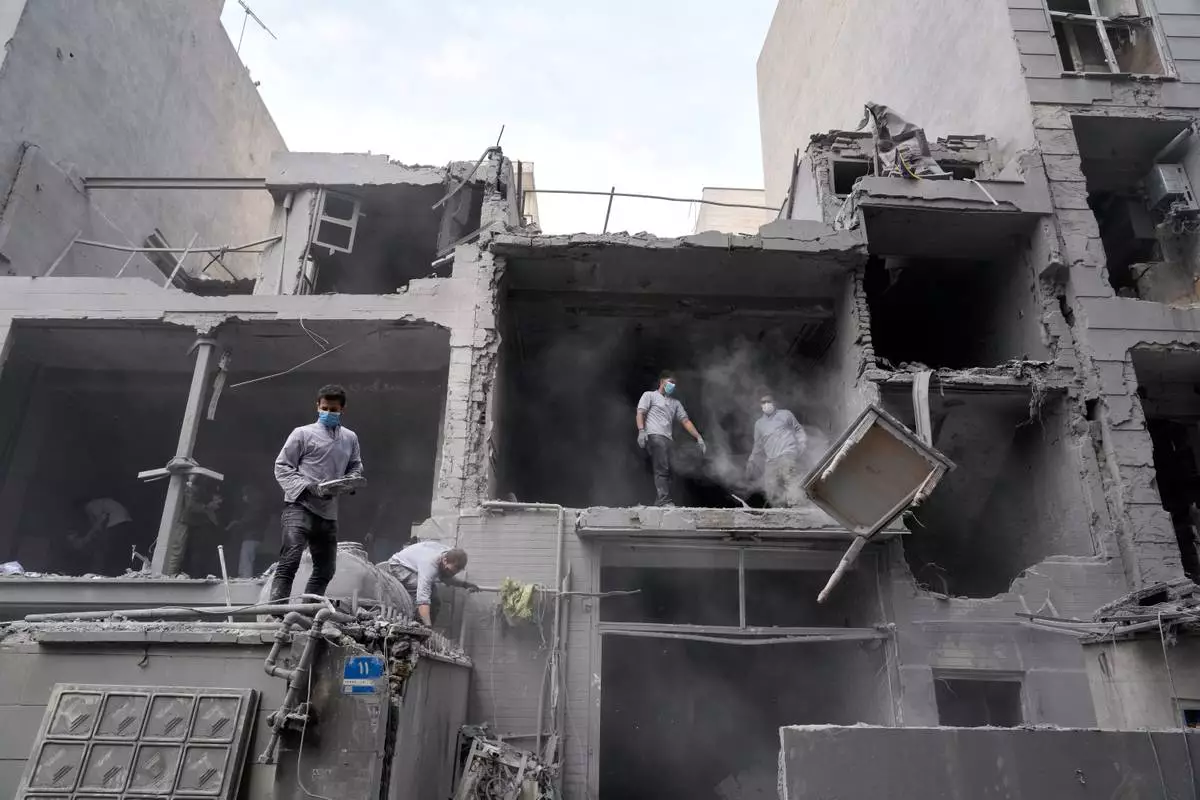
Volunteers clean debris from a residential building damaged when a nearby police station was hit Friday in a U.S.-Israeli strike in Tehran, Iran, Sunday, March 15, 2026. (AP Photo/Vahid Salemi)
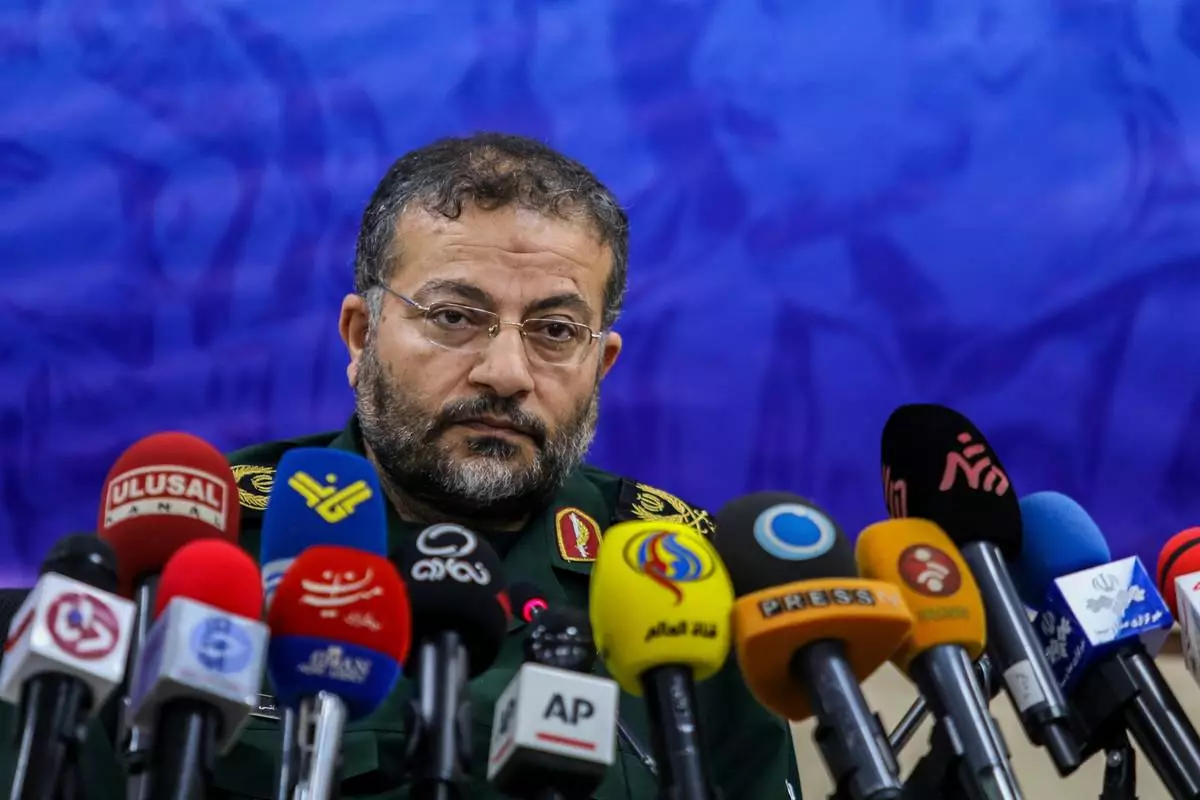
FILE - Commander of Iran's Basij paramilitary force, Gen. Gholam Reza Soleimani, gives a press conference in Tehran, Iran, Nov. 18, 2019. (AP Photo/Ebrahim Noroozi, File)
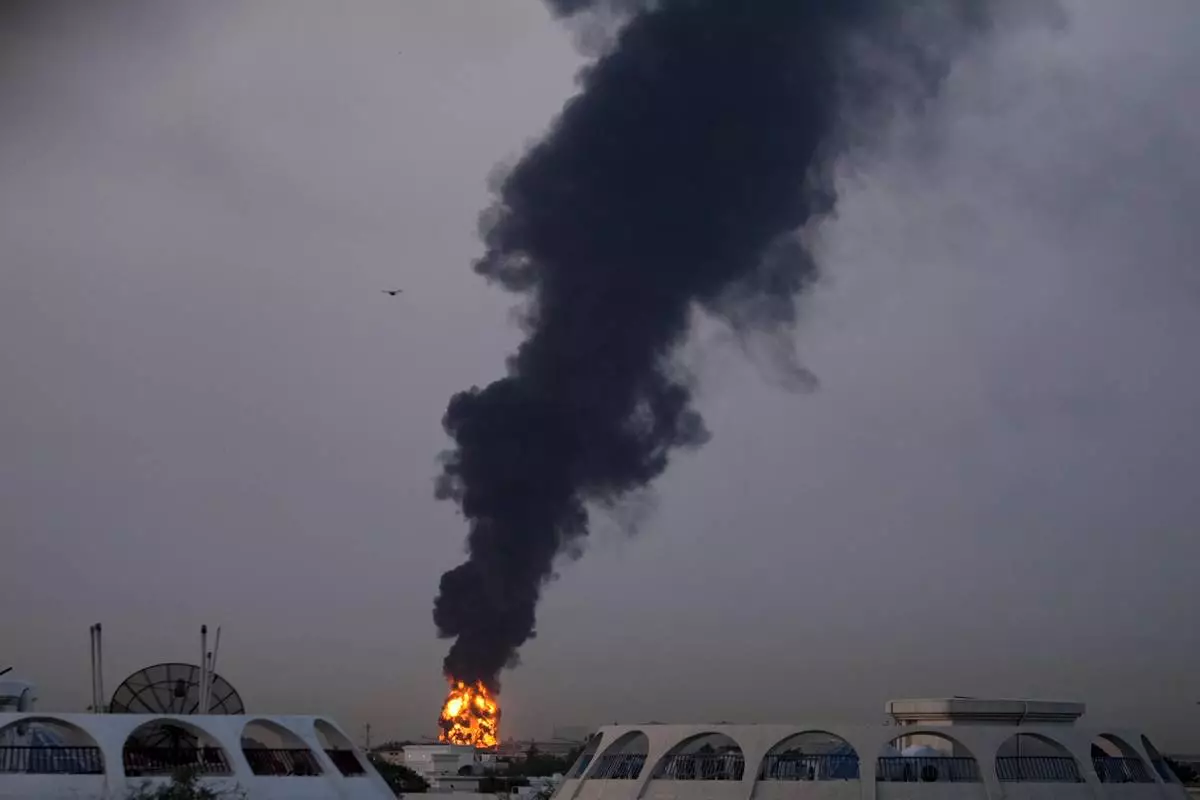
Fire and plumes of smoke rise after a drone struck a fuel tank forcing the temporary suspension of flights. near Dubai International Airport, in United Arab Emirates, early Monday, March 16, 2026. (AP Photo)

FILE - Ali Larijani, center, head of Iran's National Security Council, gestures as Hezbollah supporters throw rice to welcome him outside Rafik Hariri International Airport in Beirut, Lebanon, Wednesday, Aug. 13, 2025. (AP Photo/Bilal Hussein, File)