Skip to Content Facebook Feature Image

Macy's posts strong Q4 results but a reserved outlook reflects uncertainty around tariffs, Iran war

Business

Macy's posts strong Q4 results but a reserved outlook reflects uncertainty around tariffs, Iran war
Business

Business

Macy's posts strong Q4 results but a reserved outlook reflects uncertainty around tariffs, Iran war

2026-03-18 22:39 Last Updated At:22:40

NEW YORK (AP) — Macy’s reported stronger-than-expected profits in the crucial fourth-quarter and comparable sales rose again. The department store said an overhaul of its merchandise and improved customer service led to more spending by shoppers.

The company, which also operates upscale Bloomingdale's and the beauty chain Bluemercury, offered a mixed outlook for the year — projecting sales above Wall Street expectations, but a conservative outlook on profits.

Macy's CEO Tony Spring said the reserved outlook reflects the "tension" between Macy's relatively healthy business and external economic volatility, namely uncertainty from President Donald Trump's tariffs and the war in Iran that has sent energy prices soaring.

“Sitting here today, there’s more unknown than there is known,” Spring told The Associated Press in an interview Wednesday.

Shares rose around 3.9% in morning trading.

Spring, entering his third year leading Macy's and attempting to recharge the storied retailer, said Wednesday that Bloomingdale’s booked its highest holiday sales performance on record. Some of that outsized performance has been attributed by industry analysts to the Chapter 11 bankruptcy of the company that runs Saks Fifth Avenue and Neiman Marcus.

Yet Macy's is contending with the same hurdles that have pummeled its rivals and the retailer sector as a whole.

The U.S. has upended global trade with tariffs that have driven prices higher, and many Americans have reprioritized where their paychecks go.

The Iran war that began late last month has added to those pressures, driving sharp increases in the price of gasoline and even more so, diesel, used predominantly in shipping. The newest cost increases have hit consumers directly at the pump, and may soon be felt at the retail counter.

Some additional costs, namely from tariffs, have made for some difficult decisions for retailers, ranging from what they can put on shelves, to how much of their increased costs will passed on to their customers, which are already being more careful with spending.

The Supreme Court struck down the largest of President Donald Trump’s tariffs – though the administration is seeking to replace them with new ones. And while a federal judge ruled companies are entitled to refunds from tariffs overturned by the Supreme Court, retailers are not sure when — or even if — they will get them.

Against this background, consumer spending has been uneven with higher income households continuing to spend more freely, while lower income families pull back in what is often referred to a “K-shaped economy.”

“I just don’t know how long this war is going to last," Spring told the AP. "I don’t know how long the (Strait of Hormuz) is going to be disrupted. I don’t know whether the Supreme Court ruling and the tax refunds are going to happen. I think we have to lean into what we can control, and then I think that we have to respond accordingly as we learn more.”

Macy's has yet to see costs for shipping increase but if the Iran war drags on, Spring said it may be a different story. The company can absorb some of the costs, he said, but eventually must pass on some of those costs to shoppers.

Under Spring, who took over the top job at Macy’s in early 2024, Macy’s has closed unprofitable stores and spent millions modernize others. The company has beefed up customer service. It’s also been trying to differentiate its luxury business from its rivals with exclusive merchandise.

The company posted net income of $507 million, or $1.84 per share, for the three-month period ended Jan. 31. That compares with $342 million, or $1.21 per share, in the year-ago period. Adjusted per share results were $1.67 for the latest quarter.

Net sales slipped to $7.64 billion from $7.68 billion in the year-ago period, reflecting Macy’s move to close more stores.

Comparable sales — sales at established online channels and physical stores— rose 1.8%. That was below the 3.2% increase for the fiscal third quarter, following a 1.9% increase during the second quarter. Those sales includes licensed businesses like cosmetics.

Analysts were looking for $1.57 per share on sales of $7.51 billion for the latest quarter, according to analysts polled by FactSet.

Macy’s overall comparable sales increased 0.4% for the quarter. But comparable sales for the 125 locations that have been revamped rose 0.9%, an encouraging sign after the sizable investment. The company began revamping another 75 Macy's locations starting early this year.

Bloomingdale’s comparable sales rose 9.9% in the latest quarter, while Bluemercury’s comparable sales rose 1.3%. The company said that at Bloomingdale's it's added brands like Totême, Christian Louboutin, Victoria Beckham Beauty, and Skims. These labels have increased spending from existing shoppers and attracted new ones.

For the current year, Macy’s expects net sales to be in the range of $21.4 billion to $21.65 billion It expects comparable sales to be anywhere from down 0.5% to up 0.5%. It projects earnings per share to be in the range of $1.90 to $2.10.

Analysts are expecting $2.20 per share on sales of $20.97 billion, according to FactSet.
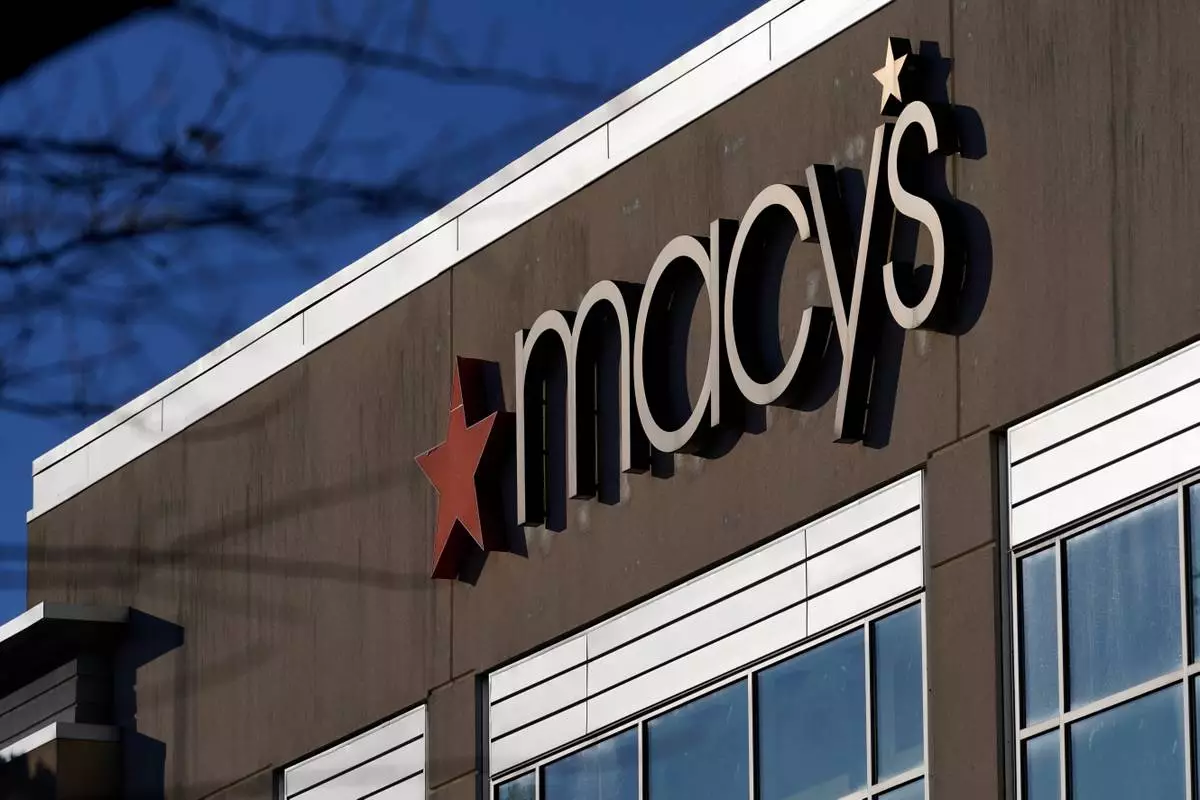
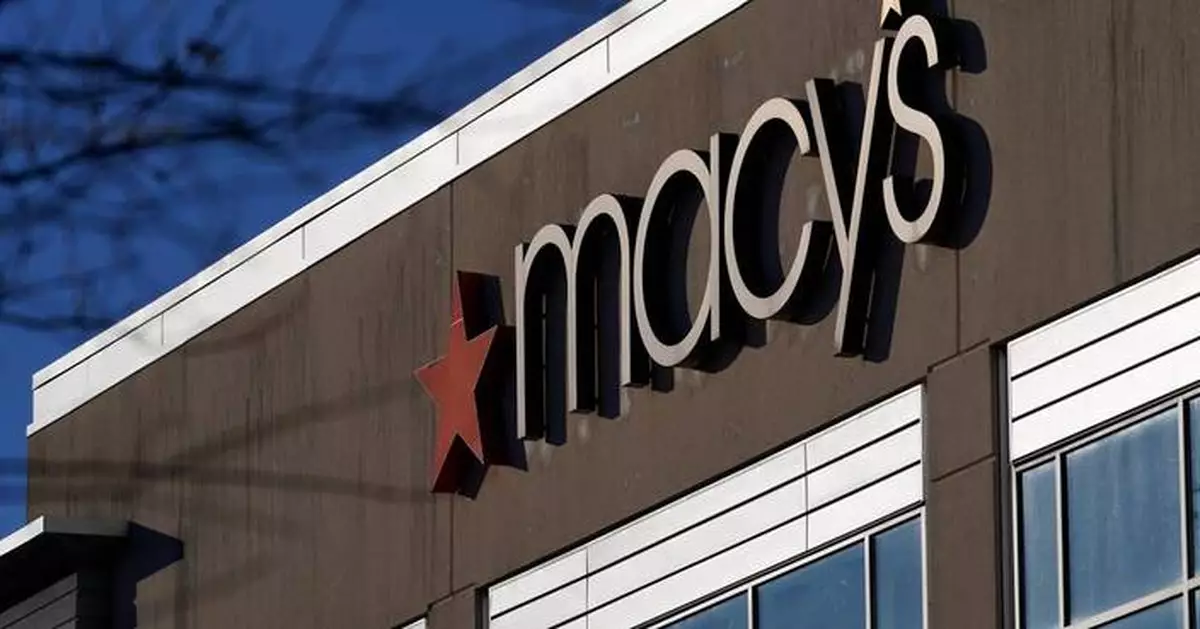
The Macy's logo is seen Feb. 22, 2021, in Charlotte, N.C. (AP Photo/Chris Carlson)
The Macy's logo is seen Feb. 22, 2021, in Charlotte, N.C. (AP Photo/Chris Carlson)
WASHINGTON (AP) — U.S. wholesale prices came in hotter than expected in February, driven partly by a sharp increase in food costs.

The Labor Department reported Wednesday that its producer price index — which measures inflation before it hits consumers — rose 0.7% from January, and 3.4% from February 2025. The year-over-year increase was the most since February 2025.

The price gains were bigger than economists had forecast, and they occurred before the U.S. and Israel attack on Iran pushed energy prices sharply higher.

“These are some mighty big increases, adding fuel to the political conversation about affordability,” wrote Carl B. Weinberg, the chief economist at High Frequency Economics. “And of course, energy prices will spike higher in the March report, thanks to the war in Iran and the blockade of the Strait of Hormuz.”

Oil prices have surged nearly 50% since the Iran war began, and gasoline prices are following close behind.

The average price for a gallon of gasoline in the U.S. spiked again overnight, reaching $3.84. A gallon of gas last month, before the U.S. and Israel attacked Iran, was well under $3. Diesel prices, used heavily in transportation, are rising even faster.

Excluding volatile food and energy prices, so-called core wholesale prices rose 0.5% from January, down from a 0.8% gain the month before but more than twice what economists had expected. Compared with a year earlier, core prices rose 3.9%, the biggest jump since January 2025.

Food prices rose 2.4% from January, led by a 49% surge in vegetable prices and a 10% increase in fruit prices.

Food prices are still down compared with a year ago, but some economists see problematic trends developing on the inflation front, starting with the higher prices that producers are now paying.

Wholesale inflation also rose unexpectedly in January.

The January numbers could be written off as a blip, said Stephen Stanley, the chief U.S. economist at Santander. In commentary Wednesday, he called the surge in wholesale prices in February a “sign of trouble.”

Stanley said companies have largely been absorbing higher costs that have arrived following tariffs implemented by the Trump administration.

“The problem is the (producer price index) is signaling that this is not a one-off wave of costs that would necessitate a single set of consumer price adjustments,” Stanley wrote. “Instead, the pipeline pressures continue to build.”

The newest economic indicator arrived on the same day that policymakers at the Federal Reserve are meeting in Washington to decide what to do about the nation's benchmark interest rate. The rate was cut three times last year with inflation seemingly slowing, but the Fed has since stopped cutting — and it's expected to announce Wednesday that it's done so again.

The Fed is waiting to see whether inflationary pressures ease and whether the slumping U.S. job market needs help from lower borrowing costs. The war with Iran has clouded the inflation picture by driving up energy prices, and investors took note of the newest figures on inflation early Wednesday.

The S&P 500, the Dow and the Nasdaq composite all reversed course and went negative at the opening bell after the producer price report and a resumption of the upward climb in oil prices.

Last week, the government issued two reports showing that inflation at the consumer level remained above the Fed’s 2% target before the U.S. and Israel attacked on Iran.

The Labor Department reported a week ago that consumer prices rose 2.4% last month compared to February 2025. And the Commerce Department said Friday that the Fed’s favored inflation measure — the personal consumption expenditures (PCE) price index — was up 2.8% in January from a year earlier. Core PCE prices rose 3.1%, biggest increase in nearly two years.

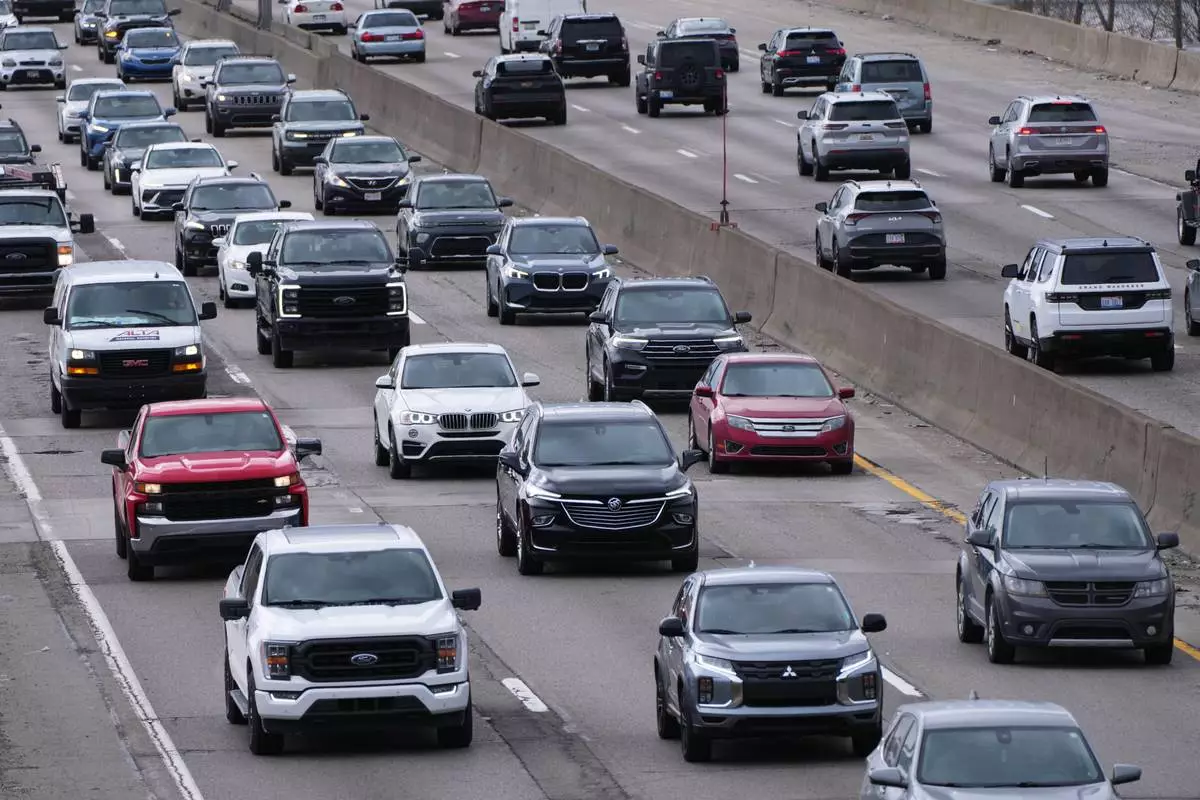
FILE - Traffic moves on Interstate 94 in Detroit, March 17, 2026. (AP Photo/Paul Sancya, File)

FILE - Traffic moves on Interstate 94 in Detroit, March 17, 2026. (AP Photo/Paul Sancya, File)

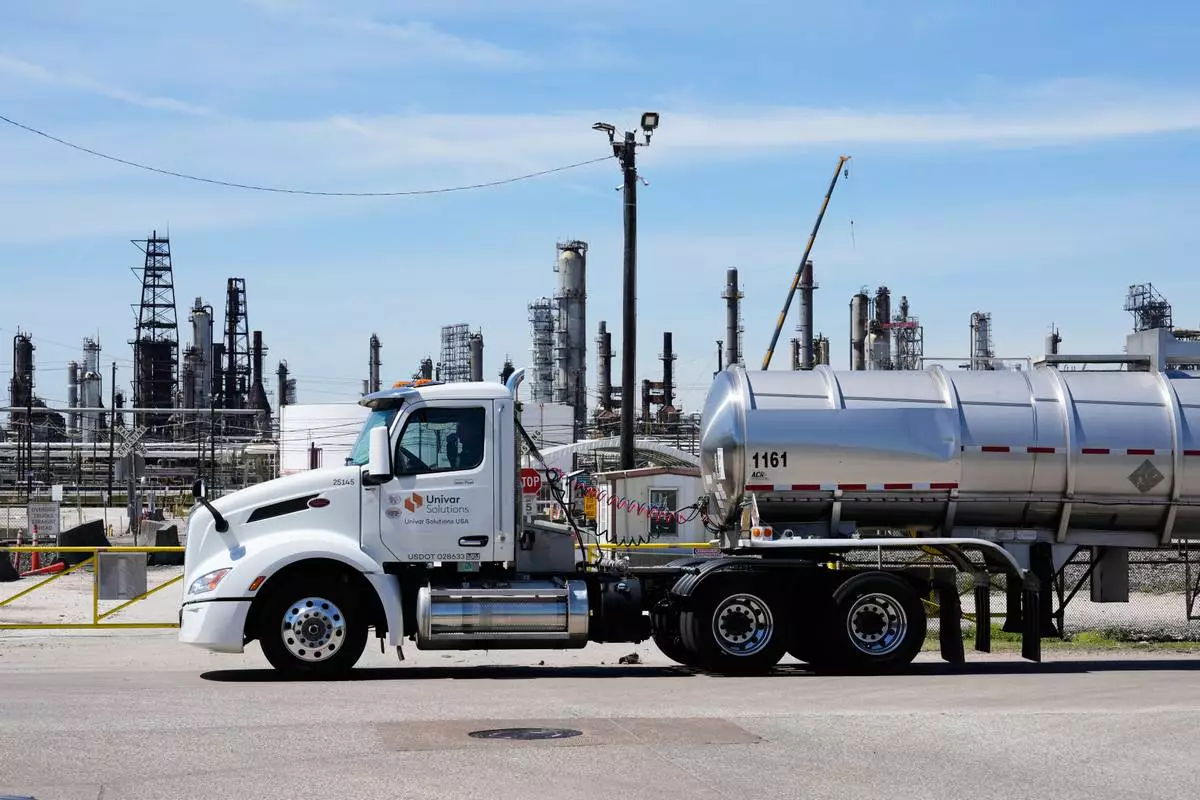
FILE - A truck passes LyondellBasell Houston Refinery on March 17, 2026, in Houston. (AP Photo/Ashley Landis, File)

FILE - A truck passes LyondellBasell Houston Refinery on March 17, 2026, in Houston. (AP Photo/Ashley Landis, File)

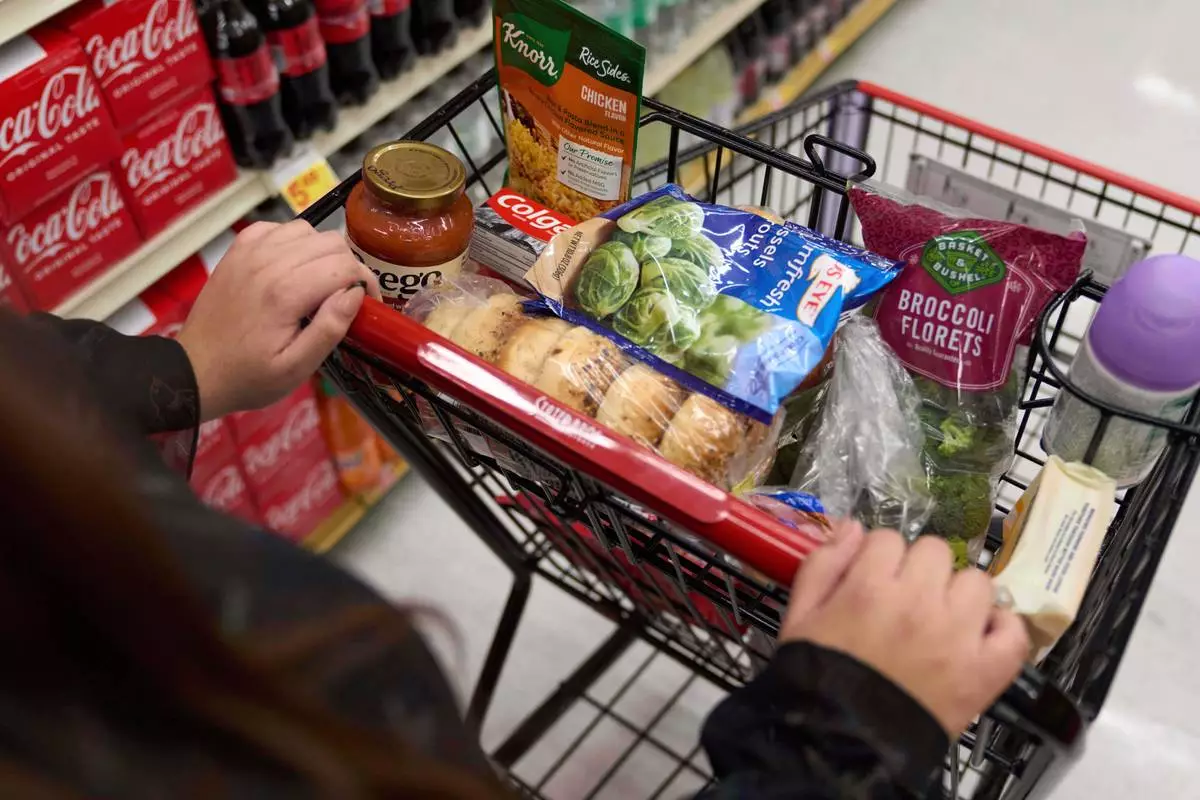
FILE - A California's SNAP benefits shopper pushes a cart through a supermarket in Bellflower, Calif., Feb. 13, 2023. (AP Photo/Allison Dinner, File)

FILE - A California's SNAP benefits shopper pushes a cart through a supermarket in Bellflower, Calif., Feb. 13, 2023. (AP Photo/Allison Dinner, File)

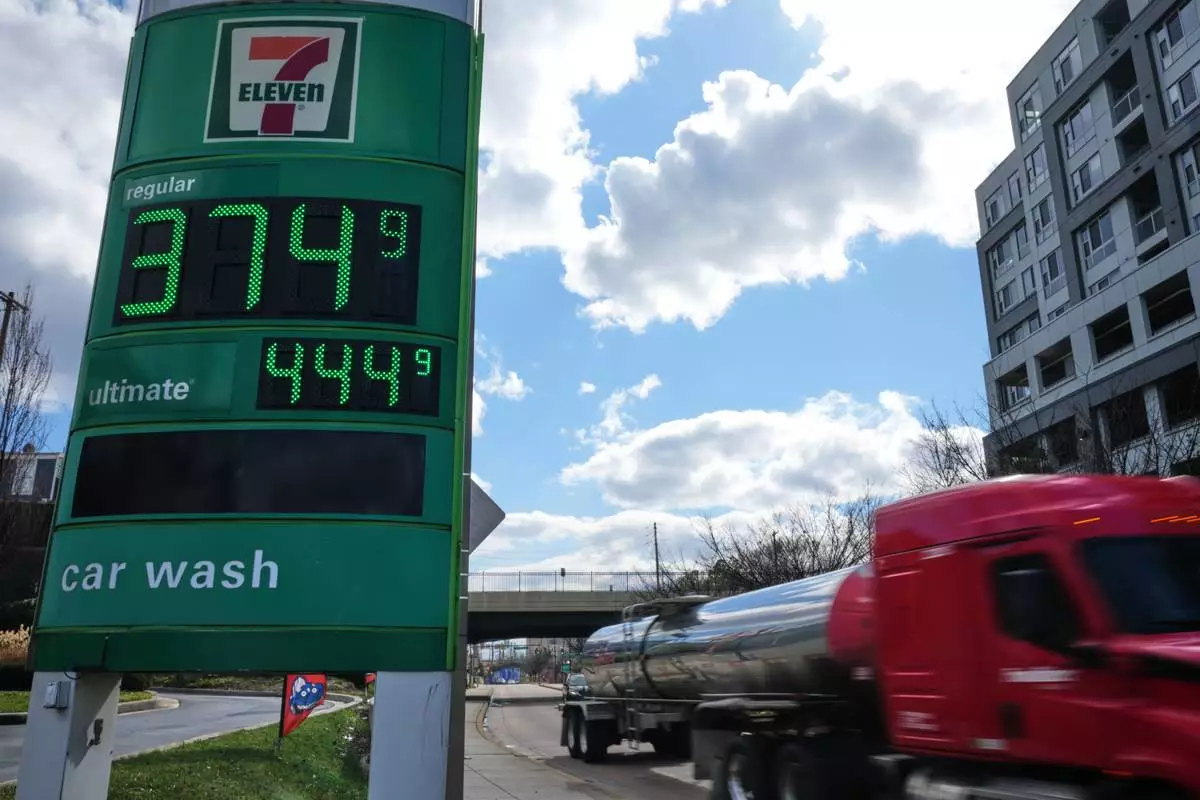
FILE - Fuel prices are displayed on a sign at a gas station as a fuel truck drives by, March 17, 2026, in Baltimore. (AP Photo/Stephanie Scarbrough, File)

FILE - Fuel prices are displayed on a sign at a gas station as a fuel truck drives by, March 17, 2026, in Baltimore. (AP Photo/Stephanie Scarbrough, File)

Recommended Articles