NEW YORK (AP) — The Iran war has rattled the global flow of oil, with steeper fuel costs already straining households worldwide. And in the U.S., drivers are now facing the highest prices they've seen at the pump in nearly two and a half years.
According to motor club AAA, the national average for a gallon of regular gasoline jumped to $3.79 on Tuesday, up from $2.98 consumers were paying before the U.S. and Israel launched the war with joint attacks against Iran on Feb. 28. The last time gas prices were as expensive as they are now was in October 2023.
“It’s pretty hard. I mean, times are tough for everybody right now," Amanda Acosta, a Louisiana resident, told The Associated Press while filling up her car's tank this week. “I’m getting way less gas and paying way more money.”
She isn't alone. Pain at the pump has been one of the most immediate economic impacts of the conflict, because the price of crude oil — the main ingredient in gasoline — has soared and swung rapidly in recent weeks, due to supply chain disruptions and cuts from major producers across the Middle East. Brent crude, the international standard, settled at over $103 a barrel on Tuesday, up from roughly $70 just weeks ago. And benchmark U.S. crude topped $96 a barrel.
Many eyes are on the White House. Before the war, President Donald Trump once bragged about keeping gas prices low. But he's since pivoted to try and paint high oil prices as a positive outcome for the U.S. Last week, Trump said that because the U.S. is now largest crude producer in the world, “when oil prices go up, we make a lot of money.”
Companies that supply oil benefit from higher prices. But steeper costs always pinch consumers' wallets — and today's rising prices arrive as many households continue to face wider cost of living strains. It could also push up already stubborn inflation, at least in the short run, and potentially hammer the economy more significantly if steep costs drag on. Experts say that that could apply more pressure on the Trump administration, particularly as affordability continues to stay at the top of voters' minds.
"I just want all of it to end. I just want to get out of there, out of Iran," said Meghan Adamoli, a New Jersey resident who was among customers filling up at a Multani station on Tuesday. While Adamoli said she can personally “roll with the punches” when it comes to gas prices, she knows that a lot of others can't.
Dan Bradley, a flatbed truck driver from Pennsylvania, said he's felt the rising prices for both his work and personal vehicles. Beyond regular gasoline, the U.S. average for diesel topped $5 a gallon on Tuesday, per AAA, up from about $3.76 before the conflict started.
“It sucks when you’re filling up,” said Bradley. “What are you going to do, not get gas?”
Meanwhile, Texas resident Clay Plant said that rising oil costs is good for the economy of his town, Lubbock. He noted that he sees more people work as drilling picks up.
“It’s kind of a good sign for us in west Texas,” Plant said. “I look at it as my friends and family get to eat and they get to go to work.”
The U.S. is now a net exporter of oil — and other parts of the world that rely more heavily of fuel imports from the Middle East, notably Asia, have seen more stark energy shocks amid the war. But that doesn’t mean America is immune to price spikes.
Oil is a globally-traded commodity. And most of what the U.S. produces is light, sweet crude — but refineries on the East and West coasts are primarily designed to process heavier, sour product. As a result, the country also needs imports.
The road ahead is uncertain, and prices could worsen if the war drags on. Iran has effectively halted nearly all tanker movement in the key Strait of Hormuz, where roughly one-fifth of the world’s oil once sailed through on a typical day. That’s led to cuts from some major producers in the region, because their crude has nowhere to go. Trump has demanded that other countries send warships to reopen the waterway, but has yet to garner sign-ons as many ask for more clarity about America’s next steps for the war. Meanwhile, Iran, Israel and the U.S. have all struck oil and gas facilities.
All of this has left countries scrambling for other supply. Last week, the International Energy Agency pledged to release 400 million barrels of oil available from its member nations’ stockpiles. Trump, who previously downplayed the need to tap into reserve oil, later confirmed that the U.S. would pull 172 million barrels from the Strategic Petroleum Reserve as part of the IEA’s effort. The administration also announced it will temporarily free up Russian oil from U.S. sanctions for its war on Ukraine.
Still, analysts say these efforts will be a short-term bridge. Refineries buy crude oil in advance, and it takes time for new supply to trickle down to consumers. And while steep crude costs is the top driver of gas prices today, a handful of other factors are also on the table. U.S. gas prices typically tick up a bit at this time of year, as more drivers hit the road and the warming weather brings a shift to “summer blend” fuel, which is more expensive to make than winter blend.
As always, some states also have pricier averages than others, due to factors ranging from nearby supply to differing tax rates. On Tuesday, California had the highest average of over $5.54 per gallon, while Kansas had the lowest of about $3.21.
Experts warn all of this could eat into wider spending. As consumers pay more to cover necessities like gas, many households — particularly those that are middle or low income — will be forced to cut their budgets in other places, explains Francesco D’Acunto, a finance professor at Georgetown University. More expensive fuel also impacts other sectors, from transporting groceries to household utility bills.
These combined inflation shocks, and overall high uncertainty during times of war, also “makes many houses and consumers freeze,” D’Acunto added. He said that could cause some to hold off on bigger financial decisions — like buying a car or house — farther down the road. “So potentially even that will have such an effect on the overall economy.”
AP Journalists Stephen Smith in Madisonville, Louisiana, Geoff Mulvihill in Cherry Hill, New Jersey, and Mingson Lau in Claymont, Delaware, contributed.
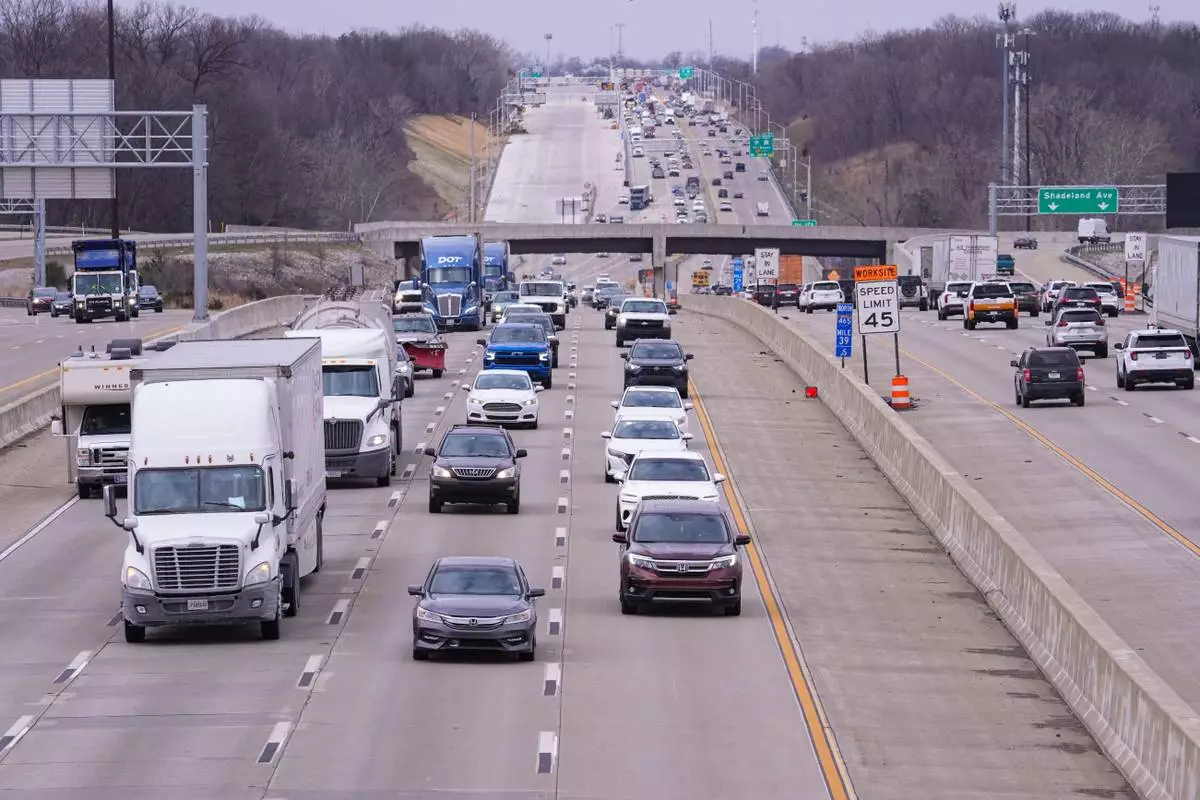
Traffic flows on I465 in Indianapolis, Tuesday, March 17, 2026. (AP Photo/Michael Conroy)
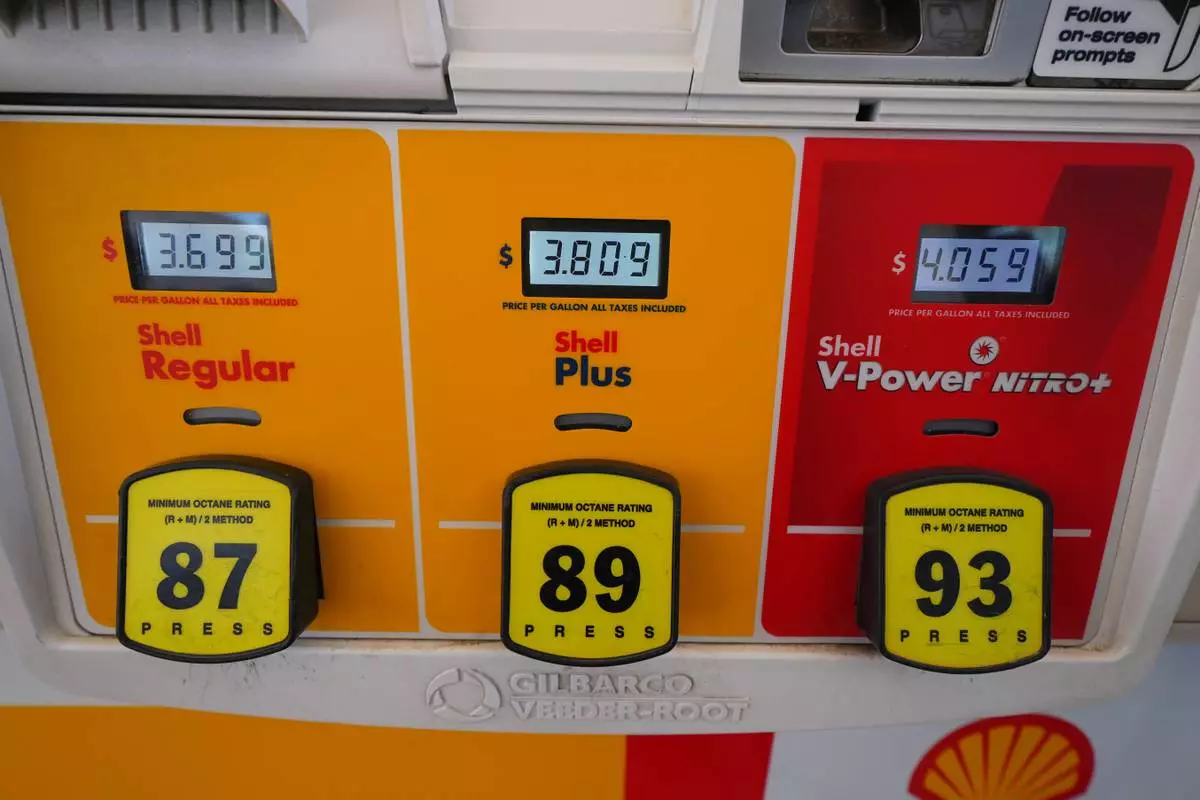
A fuel pump displays prices at a Shell gas station Tuesday, March 17, 2026, in Arlington, Texas. (AP Photo/Julio Cortez)
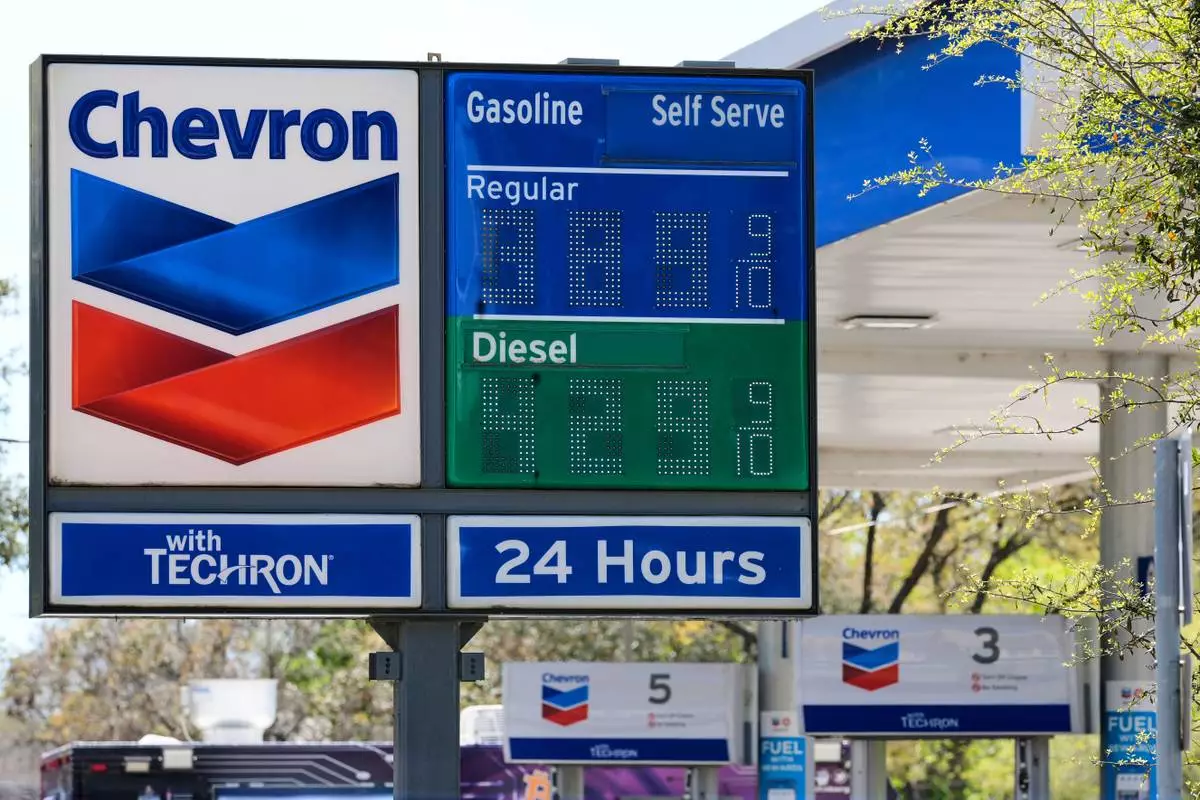
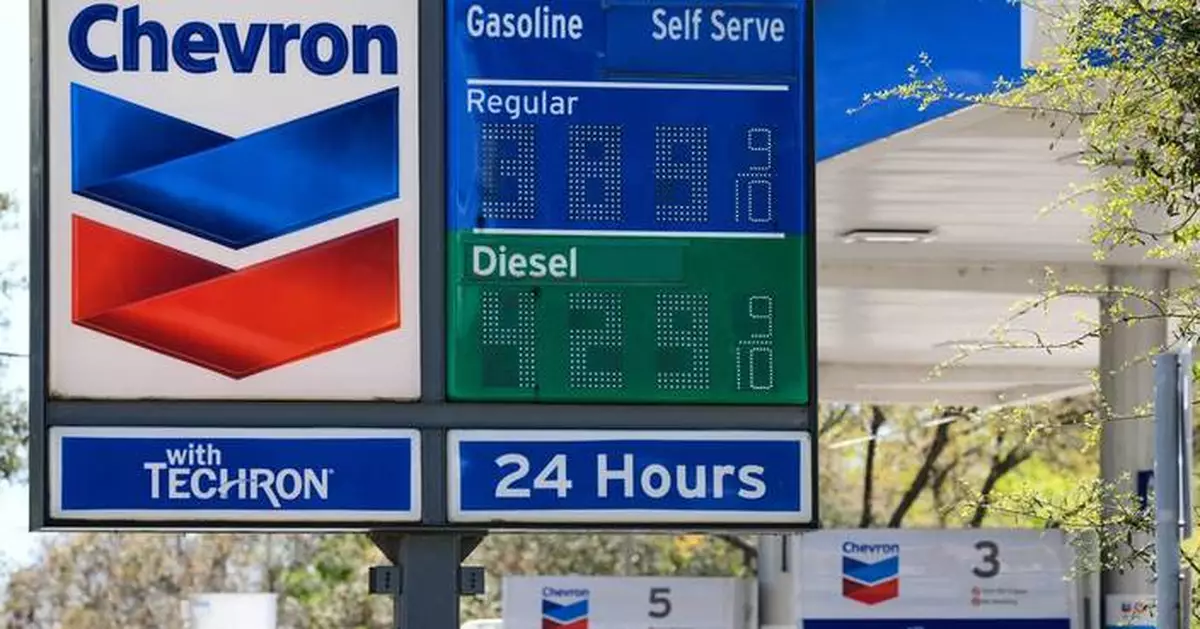
Prices are displayed on a Chevron gas station sign in Houston, Tuesday, March 17, 2026. (AP Photo/Ashley Landis)
CHICAGO (AP) — Illinois voters are deciding primaries Tuesday for six open U.S. House and Senate seats that will spur a new generation of leadership in the state’s heavily Democratic congressional delegation.
The retirement of longtime Sen. Dick Durbin, a Democrat, has triggered a competitive campaign, drawing as candidates two sitting House members and the lieutenant governor, among others. Sharp elbows and furious fundraising have marked the race, which also is a test of the influence of Democratic Gov. JB Pritzker, a billionaire whose name is floated as a 2028 presidential contender.
A spate of House retirements has led to open seats with crowded contests across the Chicago area. The stakes are high, with most primary winners in the Democratic stronghold expected to win in November.
The American Israel Public Affairs Committee and PACs supporting the cryptocurrency and AI industries also have spent big on several of the contests.
Ten Democrats and six Republicans are running after Durbin, the Senate’s No. 2 Democrat, announced his retirement after five terms.
Three top Democrats have emerged: Chicago-area U.S. Reps. Raja Krishnamoorthi and Robin Kelly and Lt. Gov. Juliana Stratton.
Krishnamoorthi has dominated fundraising and the airwaves, and was the first on television with ads in July. He started 2026 with over $15 million on hand after spending more than $6 million and raising more than $3.5 million in the final three months of last year, according to campaign finance records.
By comparison, Stratton started the year with $1 million after raising about the same amount and spending just under $1 million in the last three months of 2025. But last month Pritzker put $5 million in a super PAC largely aimed at helping get her elected.
She campaigned on Pritzker's endorsement and lit into Krishnamoorthi at debates, particularly on the five-term Democrat's voting record and donations from a contractor tied to U.S. Immigration and Customs Enforcement.
“That is not the example of somebody who’s going to stand up to Donald Trump and fight for all of our communities,” Stratton said during a debate in January. “I want to abolish ICE.”
Rochelle Brockenborough, 64, said she voted for Stratton at the Dr. Martin Luther King Community Service Center in Chicago.
“I wanted to make sure there was no AIPAC money. That’s important to me,” she said, adding that U.S. tax dollars shouldn't be used to support Israel.
Krishnamoorthi, who has called to dismantle ICE, said he donated the money to immigrant rights groups. He argued that Stratton zeroed in on him because she “didn’t have any policy ideas. She had to attack.”
Meanwhile Kelly has taken issue with Pritzker’s involvement, arguing that a sitting governor should not interfere.
Shana Sumers, 36, said she voted for Kelly to support marginalized communities, such as transgender people. She also described the Iran war as “a big distraction.”
“We really need to be able to afford housing, afford health care, afford to go to the grocery store,” Sumers said.
Candidates have touted ties to iconic Chicagoans including President Barack Obama and the late Rev. Jesse Jackson, who died last month. However, an endorsement touted posthumously by Stratton caused a snag as Jackson's family withdrew it Monday, saying the draft wasn't meant for public release.
Election officials hope to see busy polls after statewide turnout in the 2024 primary was 19%, the lowest in more than five decades.
Among issues reported Tuesday were complaints that poll workers in Madison County asked voters to show ID, drawing attention from the local elections office and the state attorney general. Officials in the southern Illinois county said the issue in one precinct was resolved. Showing an ID at a polling place is not required in Illinois.
Roosevelt Jones, 67, said his Social Security and public safety were at the forefront as he cast an early ballot for Stratton in Chicago recently.
“She seems to be the one to take care of things,” he said.
In the Republican primary, six candidates are on the ballot including Don Tracy, former Illinois Republican Party chairman, and attorney Jeannie Evans. Illinois last had a Republican in the Senate a decade ago, when Mark Kirk was defeated by current Democratic Sen. Tammy Duckworth.
Dozens of candidates are running for five open seats in the Chicago area, where funding from groups supporting Israel and the cryptocurrency industry have played an outsize role.
Ten Democrats and one Republican are running in Kelly’s district, the 2nd, which spans parts of the South Side and suburbs and dips into the central Illinois farmlands. Among the Democrats are former U.S. Rep. Jesse Jackson Jr., son of the late civil rights leader, Cook County Commissioner Donna Miller and state Sen. Robert Peters.
The open seat in Krishnamoorthi's suburban 8th District has attracted eight Democratic candidates, including former U.S. Rep. Melissa Bean and Cook County Commissioner Kevin Morrison.
Two other House members are retiring after long careers.
The 7th District of Rep. Danny Davis, who was first elected in 1996, covers parts of downtown, the West Side and suburbs. Democratic front-runners to replace him include state Rep. La Shawn Ford, City Treasurer Melissa Conyears-Ervin, developer Jason Friedman and Kina Collins, a community organizer. Two Republicans are running.
Rep. Jan Schakowsky is also retiring, after 14 terms, and the primary field for her 9th District seat is the most crowded. Among the 15 Democratic candidates are Evanston Mayor Daniel Biss, digital creator Kat Abughazaleh and state Sen. Laura Fine. Four Republicans are running.
Another open seat is that of Rep. Jesus “Chuy” Garcia, who announced he would not seek reelection citing health reasons. The primary is uncontested after Garcia quietly schemed to place his chief of staff, Patty Garcia, who is not related to the congressman, on the ballot before a critical deadline. The move assured that no other Democrat would have time to circulate petitions. Then he withdrew.
Pritzker, an heir to the Hyatt Hotel fortune who is unopposed in his primary, is the first governor to seek a third term since the 1980s.
One of President Donald Trump’s most vocal critics, Pritzker used a campaign ad this month to highlight efforts to oppose the aggressive federal immigration crackdown in Chicago last year.
“I will always stand up for the law and the Constitution,” he said. “Because that’s what we do in the state of Illinois.”
Pritzker has also made digs at Republican candidate Darren Bailey, a former state senator whom he handily defeated in 2022.
Bailey, among four Republicans vying for the nomination, says he is doing things differently. For one, he focused more on Chicago voters by choosing running mate Aaron Del Mar, who leads the Republican Party in Cook County.
Bailey has criticized Pritzker’s leadership, including blaming him for rising costs.
“He’s just another billionaire who has never once felt the pain he’s inflicted,” he said.
Also in the Republican primary are Ted Dabrowski, a real estate developer; Rick Heidner, a video gambling magnate; and DuPage County Sheriff James Mendrick.
Associated Press journalists Mike Householder in Chicago and Hannah Fingerhut in Des Moines, Iowa, contributed.
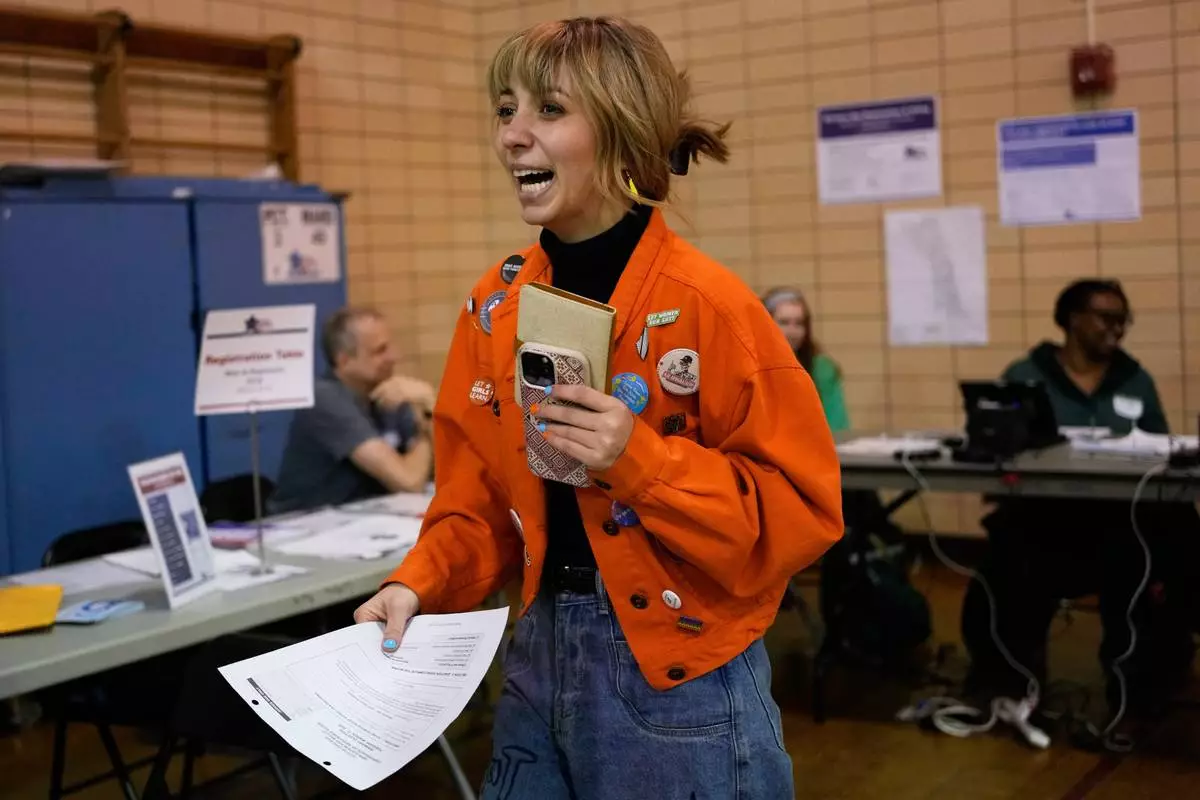
Democratic candidate for Congress, Kat Abughazaleh smiles as she walks to vote on Election Day at Chicago Park District Loyola field house in Chicago, Tuesday, March 17, 2026. (AP Photo/Nam Y. Huh)
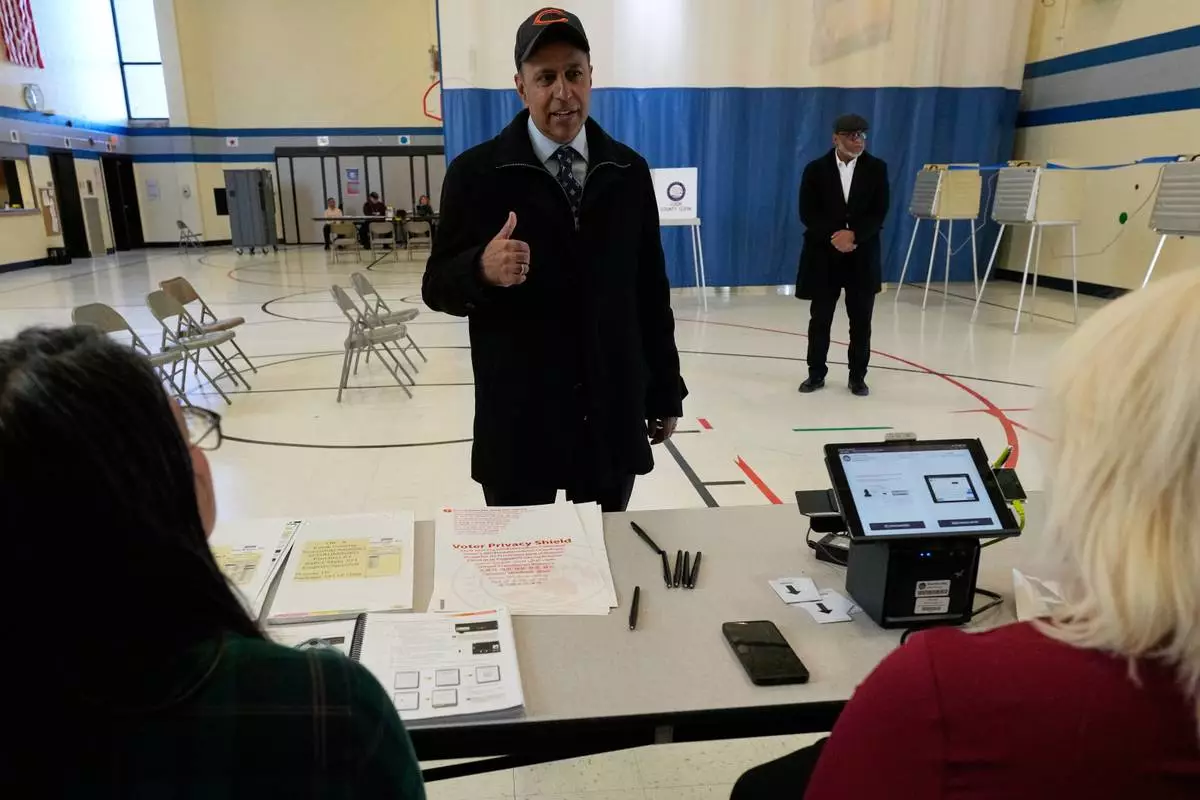
U.S. Rep. Raja Krishnamoorthi (D-Ill.), who is running in the Senate Democratic Primary Election, talks with election judges at Nerge Elementary School polling place in Schaumburg, Ill., Tuesday, March 17, 2026. (AP Photo/Nam Y. Huh)
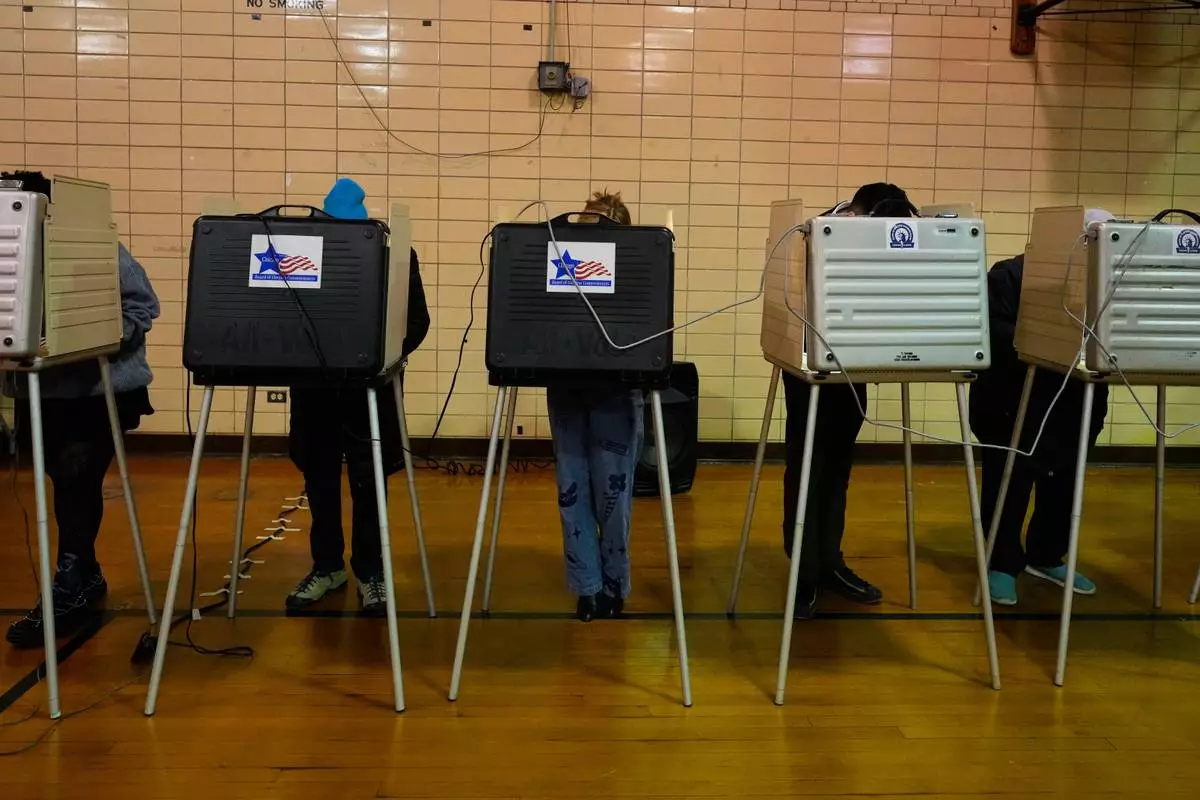
Democratic candidate for Congress, Kat Abughazaleh, center, casts her vote in a primary election for the upcoming midterms, in Chicago, Tuesday, March 17, 2026. (AP Photo/Nam Y. Huh)
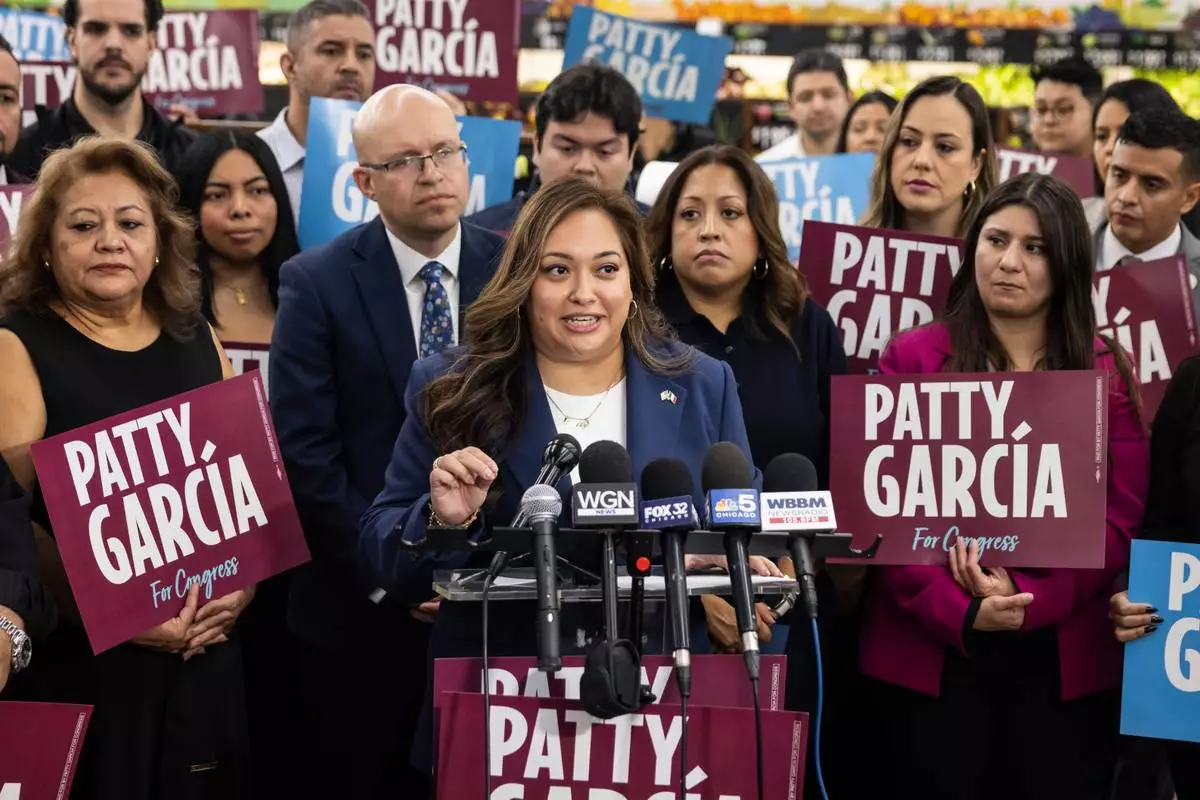
Patty García speaks during a news conference to announce her candidacy for the fourth district congressional race, Nov. 12, 2025, in Cicero, Ill. (Ashlee Rezin/Chicago Sun-Times via AP)