It’s pretty common for new-car shoppers to look at what they can afford and go from there. Typically, that means focusing on vehicles from mainstream brands, even though owning a luxury vehicle is something many people aspire to. But there’s a right-now alternative that could be intriguing: For about the same price of a new mainstream car, you could get a used luxury car instead.
Imagine you have about $35,000 to spend on a 2026 Honda CR-V. That’s a perfectly sensible choice. But for about the same price, you could get a 3-year-old BMW X3. The X3 is certainly more prestigious and desirable. But is buying a used luxury vehicle a smart choice? The car experts at Edmunds have broken down the key attributes for you to consider.
Buying new guarantees a pristine vehicle, first ownership and the full new-car smell experience. It also provides the security of a full manufacturer’s warranty, which typically covers the first three years for a bumper-to-bumper warranty, plus an additional two years for the powertrain.
The new car aura will have long faded from a used luxury car, which will likely have minor cosmetic wear and tens of thousands of miles on its odometer. Luxury brands do commonly offer a four-year bumper-to-bumper warranty, and it’s common for luxury dealerships to sell used vehicles as certified pre-owned, which includes an inspection and an extended warranty. Still, buying new guarantees that you’re getting the freshest vehicle possible.
Winner: new car
Luxury cars are meant to be aspirational, and as such, they typically have nicer interior materials, more elegant designs, and sportier handling than non-luxury models. Unique wheels and enhanced appearance set luxury cars apart on the road, and more powerful engines deliver livelier performance. There’s no question that a 2023 BMW X3 that offers up to 382 horsepower is a lot more fun and engaging to drive than a CR-V.
Performance can come at the cost of fuel efficiency. The best a 2023 X3 can get is an EPA-estimated 25 mpg combined, while the CR-V with its available hybrid powertrain gets up to 40 mpg combined. Many luxury engines also require expensive premium fuel, further increasing ownership costs. But style and performance are what many people desire, and a luxury vehicle won’t disappoint in this regard.
Winner: used luxury
Newer cars offer the latest tech, such as large touchscreens and advanced driver aids that help make driving easier. But these types of features typically debut earlier on luxury models before trickling down to mainstream lineups. A used BMW X3 and a new Honda CR-V, for example, both offer wireless connectivity for Apple CarPlay and Android Auto, wireless phone charging and adaptive cruise control.
There can be some upside to buying a used luxury car if you want the fancy stuff. On a used X3, for example, you can get front seats with additional power adjustments, ventilated front seats, a premium 16-speaker audio system and a head-up windshield display. Honda doesn’t offer any of these on the CR-V. Choosing a relatively recent used luxury car means you won’t miss out on advanced tech and comfort, and you’ll often gain some nice amenities unavailable in newer cars.
Winner: used luxury
Buying a new car means buying convenience. Most new cars are inexpensive to maintain for the first several years, often needing little more than oil changes and tire rotations. Any needed repairs will be free if they are covered under warranty.
In contrast, used luxury cars often require costly maintenance for components such as brakes and fluids. Parts and labor rates are also more expensive for luxury cars. Edmunds estimates that a BMW X3, for example, will cost approximately twice as much to maintain on average as a Honda CR-V.
Buying a used luxury car does help you avoid the worst timeframe for depreciation. When you sell a new vehicle after three years of ownership, it’s common for it to be worth only 60% to 80% of its original value. The depreciation rate typically slows after the initial three years. Still, it’s likely that a used luxury car will cost you more every year to own and operate.
Winner: new car
Buying a new vehicle is the sensible choice. You get to enjoy the full length of the manufacturer’s warranty and know that nobody drove it before you did. But car buying is driven by emotion as much as logic. If the thrill of fine leather and a powerful engine is what you dream about, buying a used luxury vehicle is a perfectly viable option.
This story was provided to The Associated Press by the automotive website Edmunds.
Dan Frio is a contributor at Edmunds.
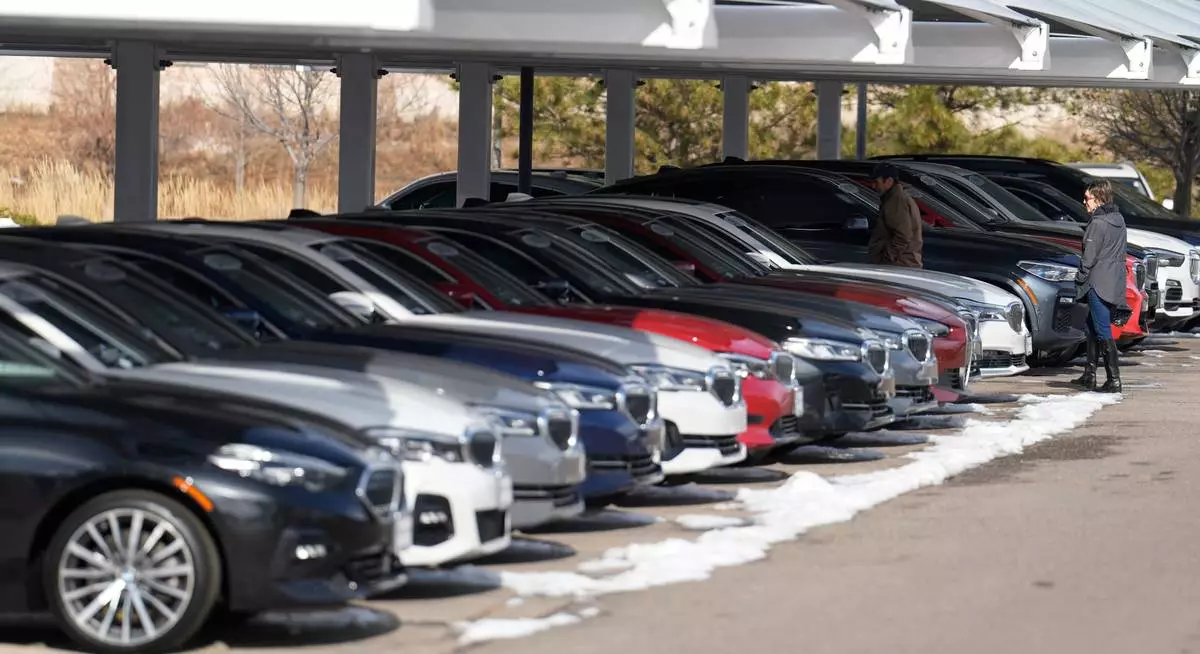
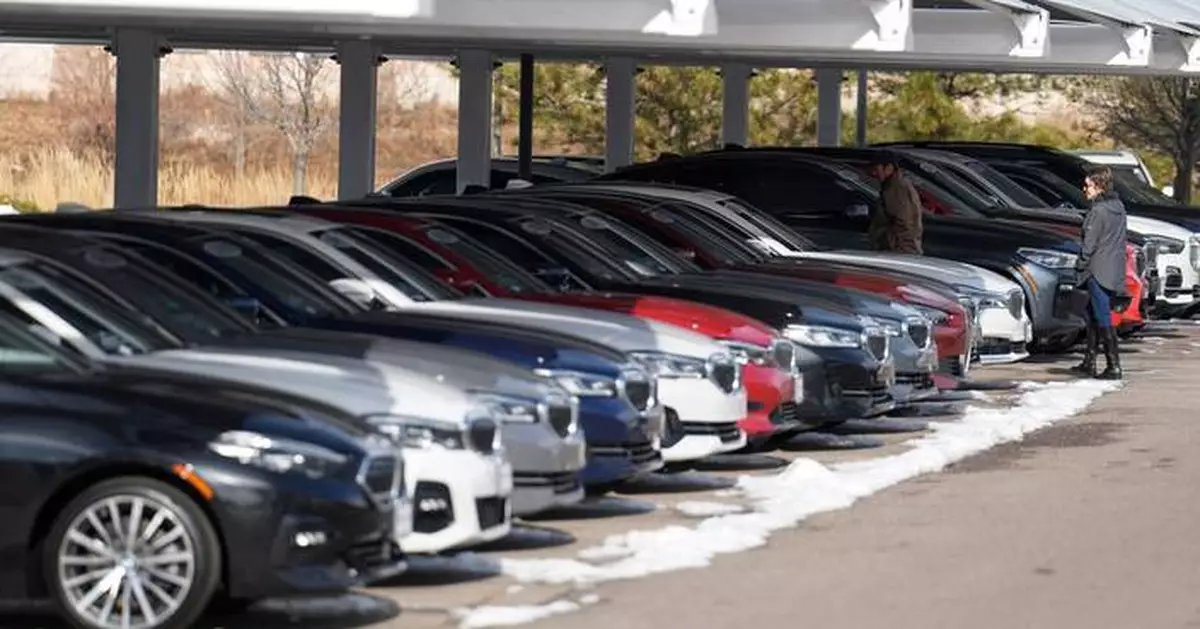
FILE - Unsold 2023 and 2024 models sit on display outside a BMW dealership on Thursday, Nov. 30, 2023, in Loveland, Colo. (AP Photo/David Zalubowski, File)
NEW YORK (AP) — U.S. stocks are drifting lower Wednesday after another rise in oil prices raised worries about inflation, which may have been primed to worsen even before the war with Iran began.
The S&P 500 slipped 0.2% and was on track for its first loss this week. The Dow Jones Industrial Average was down 179 points, or 0.4%, as of 10 a.m. Eastern time, and the Nasdaq composite was 0.2% lower.
Stocks fell under the pressure of a 2.6% climb for the price of a barrel of benchmark U.S. crude to $98.00. Brent crude, the international standard, rose 5.4% to $108.99 per barrel.
Oil and natural gas prices have been spiking since the war began because of disruptions to the production and transportation of energy in the Persian Gulf. Iran’s state television said Wednesday that the Islamic Republic would be attacking oil and gas infrastructure in Qatar, Saudi Arabia and the United Arab Emirates after an attack on facilities associated with its offshore South Pars natural gas field.
If the disruptions keep oil and gas prices high for long, they could send a debilitating wave of inflation crashing into the global economy.
A report released Wednesday morning showed that inflation pressures were already worsening before the war began. It said inflation at the U.S. wholesale level unexpectedly accelerated last month to 3.4%, and those cost increases could hit U.S. households if producers pass them all along.
Such numbers strengthened Wall Street’s virtual consensus that the Federal Reserve will announce that it’s keeping interest rates steady this afternoon following its latest meeting, instead of resuming its cuts.
Cuts would give the job market and investment prices a boost, and President Donald Trump has been angrily calling for them. But lower interest rates would also worsen inflation.
More important for Wall Street is whether Fed officials will say they still think one cut to rates may be possible over the course of 2026. That’s what the median member said in December, the last time Fed officials published such expectations.
The Iran war has made it difficult for anyone to make economic forecasts. Gasoline prices are soaring and will push up inflation for at least the next month or two. The average price for a gallon of gasoline spiked again overnight, reaching $3.84. It was well under $3 last month.
Global oil flows remain largely constrained, ING Bank analysts Warren Patterson and Ewa Manthey wrote in a research note on Wednesday, even as hopes were growing that Iran might be allowing more vessels through the Strait of Hormuz, a key waterway for global oil and gas transport.
Roughly a fifth of the world’s crude oil passes through the strait, which has been largely closed as Iran blocks ships linked to the U.S., Israel and their allies.
On Wall Street, mixed profit reports helped keep the market in check.
Macy’s jumped 8.2% after reporting stronger profit and revenue for the latest quarter than analysts expected. The retailer behind Bloomingdale’s and Bluemercury is in the midst of a turnaround plan to drive growth under CEO Tony Spring.
But General Mills slipped 1% after the company behind the Pillsbury, Progresso and Wheaties brands reported a weaker profit for the latest quarter than analysts expected. CEO Jeff Harmening is investing in its brands in hopes of driving growth, and it’s sticking with its forecast for profit over the full fiscal year.
In the bond market, Treasury yields ticked higher following the higher-than-expected update on inflation at the wholesale level. The yield on the 10-year Treasury rose to 4.22% from 4.20% late Tuesday and from just 3.97% before the war with Iran started.
In stock markets abroad, indexes were mixed in Europe following a stronger finish in Asia. They reacted to the rise in the price of crude, which accelerated as trading headed westward around the world.
Tokyo’s Nikkei 225 rallied 2.9% after the government reported exports in February were higher than expected. South Korea’s Kospi leaped 5%.
AP Business Writers Chan Ho-him and Matt Ott contributed.

Traders work on the floor at the New York Stock Exchange in New York, Tuesday, March 10, 2026. (AP Photo/Seth Wenig)
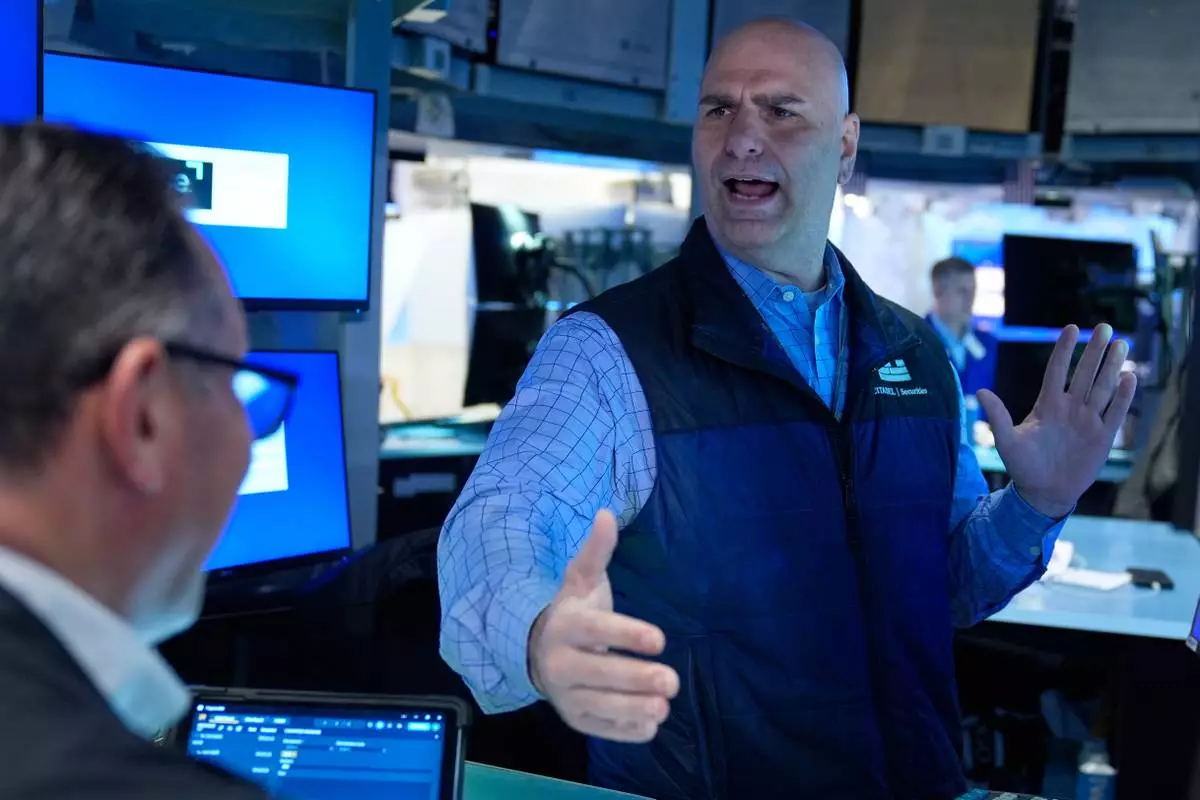
Philip Finale works on the floor at the New York Stock Exchange in New York, Tuesday, March 10, 2026. (AP Photo/Seth Wenig)

Traders work on the floor at the New York Stock Exchange in New York, Tuesday, March 10, 2026. (AP Photo/Seth Wenig)
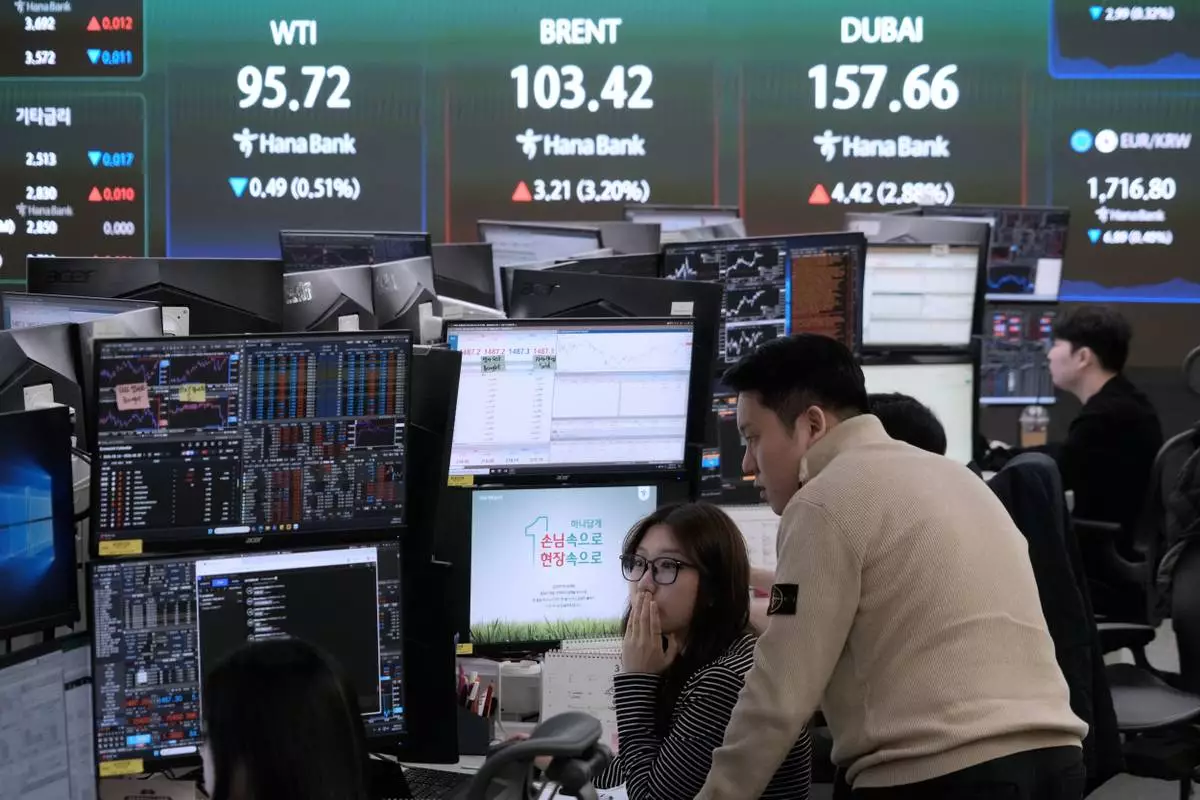
Currency traders watch monitors near a screen showing international oil prices at the foreign exchange dealing room of the Hana Bank headquarters in Seoul, South Korea, Wednesday, March 18, 2026. (AP Photo/Ahn Young-joon)
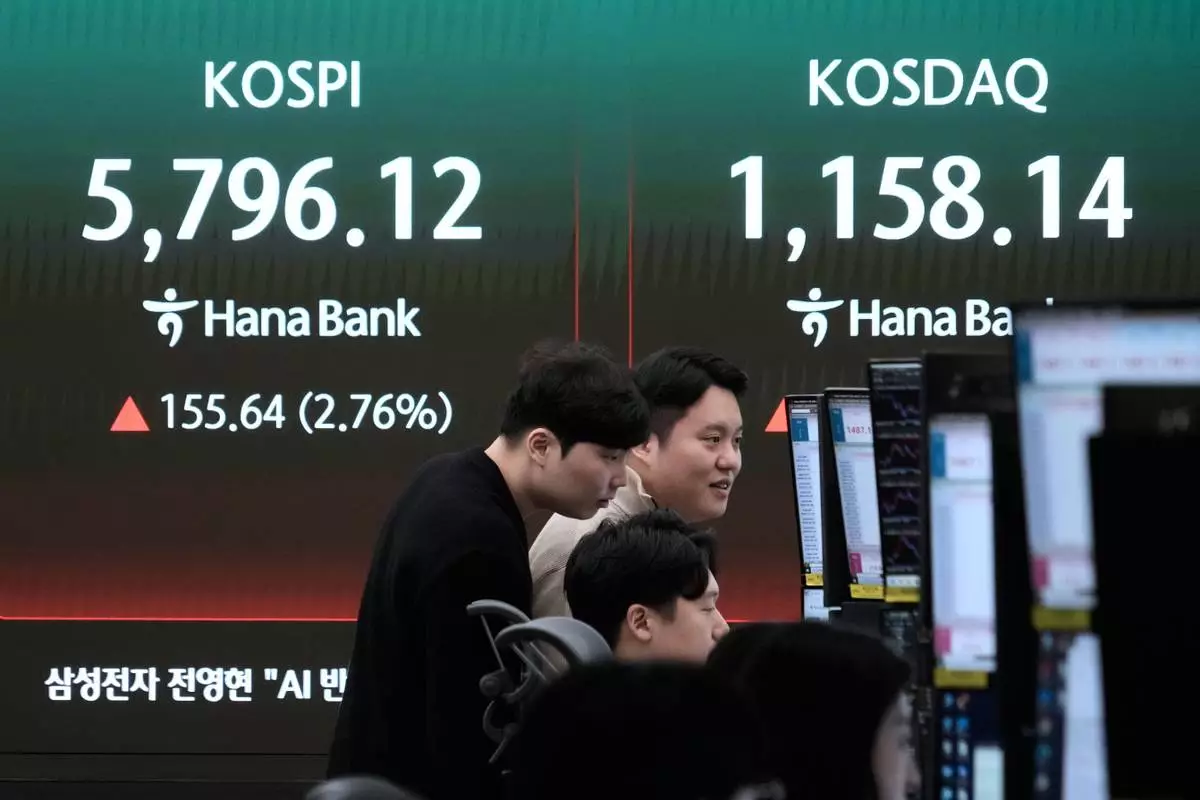
Currency traders watch monitors near a screen showing the Korea Composite Stock Price Index (KOSPI), left, at the foreign exchange dealing room of the Hana Bank headquarters in Seoul, South Korea, Wednesday, March 18, 2026. (AP Photo/Ahn Young-joon)
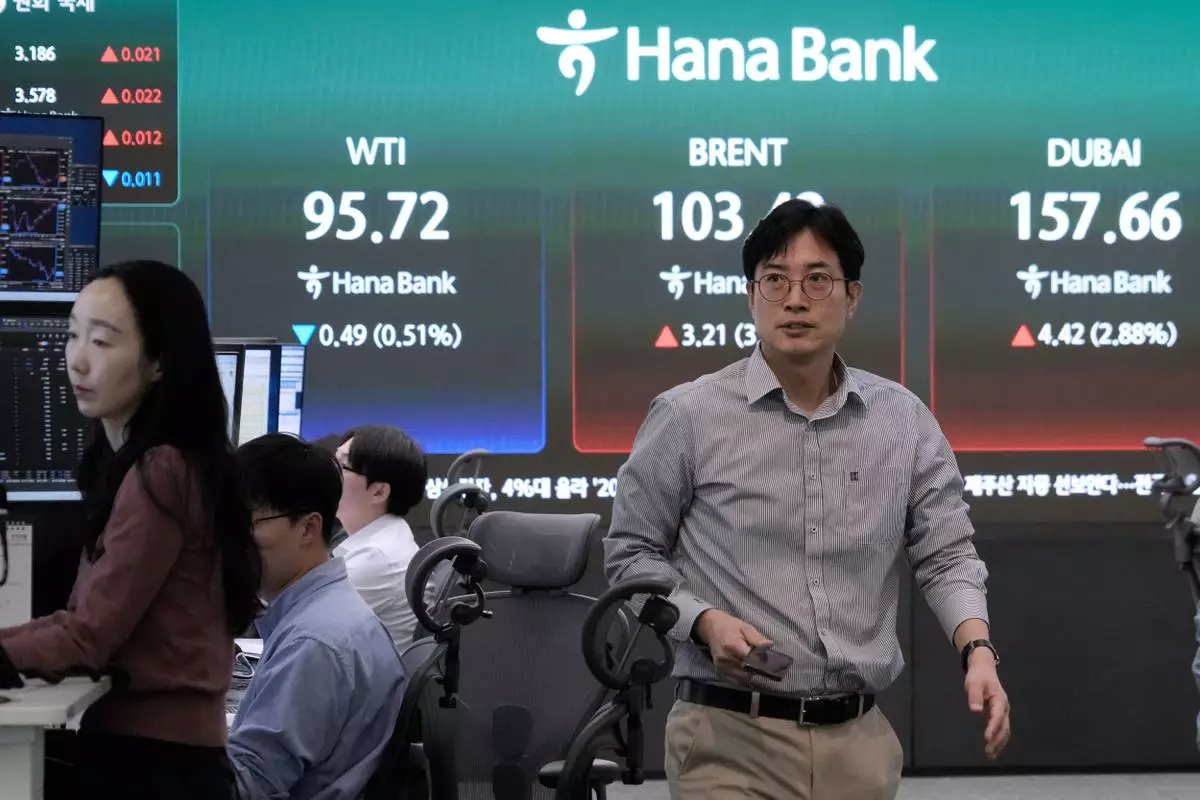
A currency trader passes by a screen showing international oil prices at the foreign exchange dealing room of the Hana Bank headquarters in Seoul, South Korea, Wednesday, March 18, 2026. (AP Photo/Ahn Young-joon)
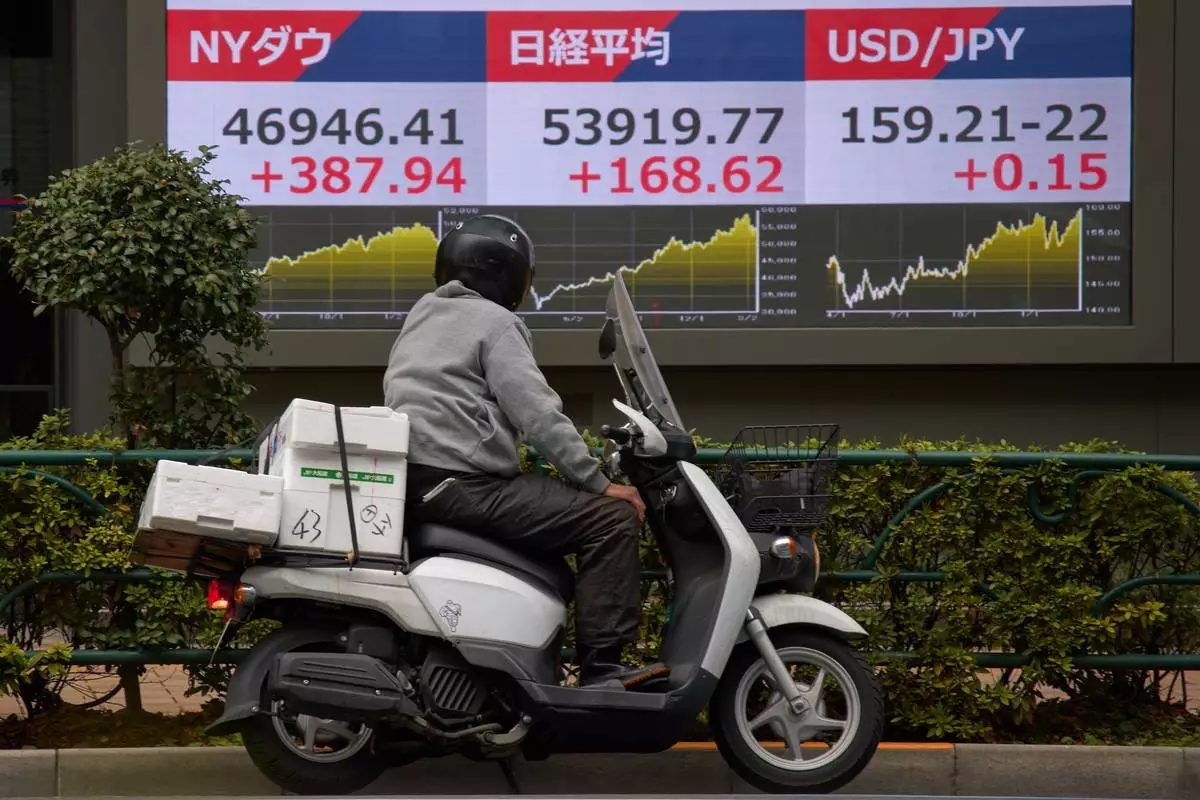
A person looks at a stock price monitor showing New York Dow and Nikkei indexes also US dollar Japanese yen exchange rate at a security company Tuesday, March 17, 2026, in Tokyo. (AP Photo/Eugene Hoshiko)
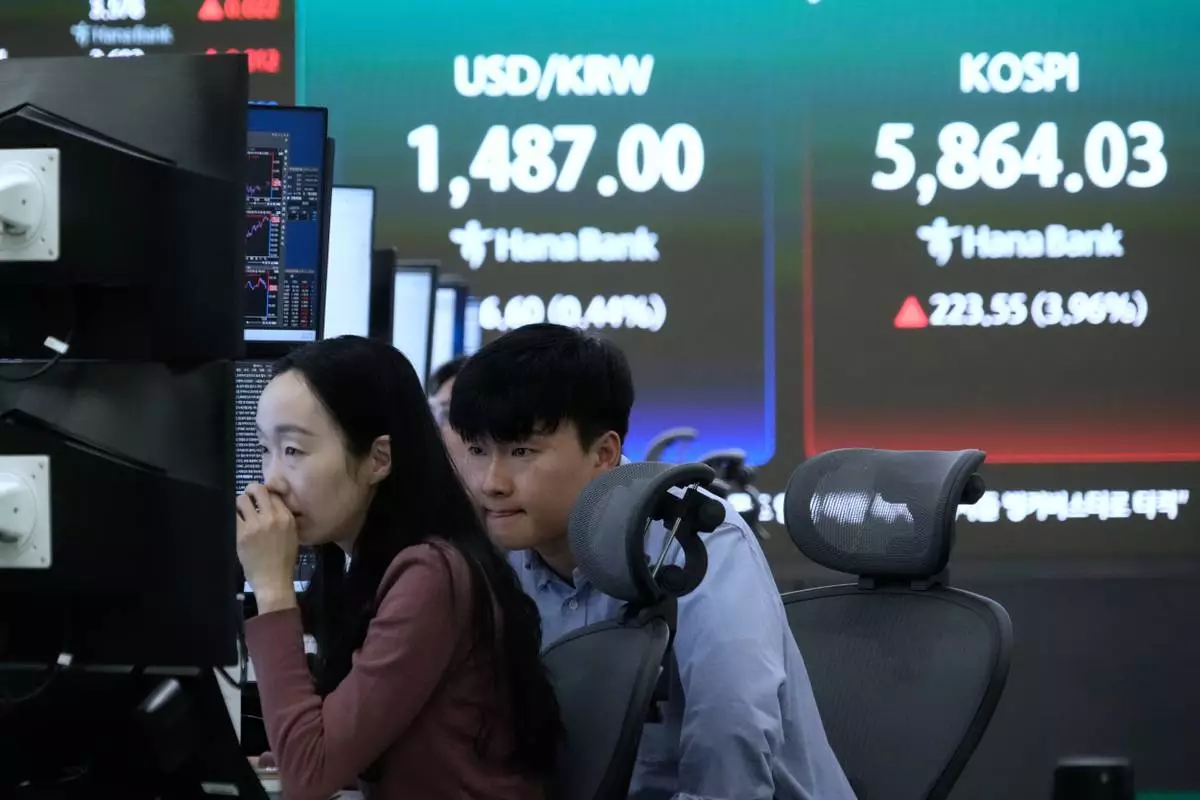
Currency traders watch monitors near a screen showing the Korea Composite Stock Price Index (KOSPI), top right, at the foreign exchange dealing room of the Hana Bank headquarters in Seoul, South Korea, Wednesday, March 18, 2026. (AP Photo/Ahn Young-joon)