China-made consumer electronics are gaining increasingly popularity worldwide, with their versatile, creative features and competitive prices making them top choices among global gadget fans.
Amid China's push for innovation and high-tech development, a whole new range of consumer electronics items are emerging from the country, many of which are equipped with smart, AI-powered features that highly appeal to global consumers.
The southern tech hub of Shenzhen is at the forefront of this new wave, with a number of firms producing cutting-edge products which are gaining greater traction on the international markets.
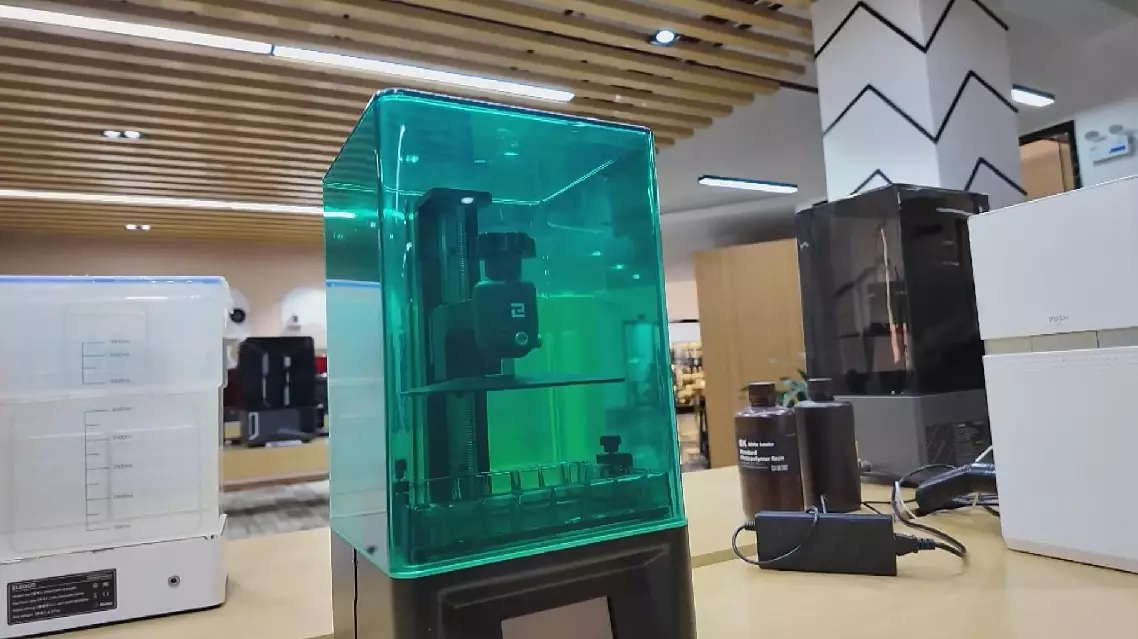
Among the companies making waves globally is ELEGOO, a Shenzhen-based start-up which specializes in 3D printers. The firm's co-founder Chen Bo said that more than 90 percent of their products go for sale on foreign markets.
He added that in order to attract more overseas consumers, the firm has created an extensive 3D model library, where a huge number of options are accessible for global users.
"Currently, our model library has over 100,000 models. For an individual user who buys a device and uses it at home, until the device is scrapped, the user possibly doesn't even use one tenth of the models. We earned 2.3 to 2.5 billion yuan (about 330 million to 359 million U.S. dollars) in revenue in 2025. Our user base has expanded to over 150 countries and regions," said Chen.
According to industry insiders, nearly 90 percent of the upstream suppliers for consumer-grade 3D printers are located in the Pearl River Delta region in south China's Guangdong Province, an area once known as a traditional manufacturing center that is now shifting into a high-tech production hub.
The efficient nature of interconnected businesses in the Pearl River Delta creates what insiders call a "two-hour supply chain", which reduces logistics costs, shortens transportation time, and enhances the products' overall global competitiveness.
"For the same product in the U.S., from procurement to production, the final product will possibly be priced at 2,000 to 3,000 U.S. dollars. In China, it could only sell at just a few hundred U.S. dollars. The price is much lower. If the product is creative enough, it will definitely become more and more popular," said Chen Zhixing, the marketing director of Anycubic, another 3D printing company in Shenzhen.
In addition, China-made digital cameras and other related products are also winning over global consumers, with their advanced features proving especially eye-catching to younger, tech-savvy customers.
At the showroom of Shenzhen-based camera maker 'Insta360', visitors can wear goggles and enjoy a 360-degree panoramic view, while a motion-sensing remote control allows users to capture immersive panoramic pictures.
Since the beginning of 2025, Insta360 has updated its main product line on multiple occasions with a range of exciting new items, and its overseas market share has continued to expand, exemplifying Chinese enterprises' accelerating global expansion.
Representatives of Insta360 say the company recently launched a panoramic drone overseas, which has also literally 'taken off' amongst international consumers.
"Our shipments in the first month [since its launch] exceeded 30,000 units, which is indeed well beyond our expectations. We think it's a good result for our first-generation drone," said Yuan Yue, the firm's marketing director.
Chinese customs officers have observed the notable increase in exports of high-end goods, which they say highlights how more private Chinese companies are meeting the market demands around the world with their sharp innovations.
"In 2025, 80 percent of exports of digital cameras, 3D printers, and other products that were popular in the global market were made by independent brands, which can accurately meet the diverse needs of international markets," said Cao Pengfei, deputy director of the statistics and analysis division at Shenzhen Customs.
According to data released by the General Administration of Customs, China's exports grew 6.1 percent year on year to hit nearly 27 trillion yuan in 2025. The export value of high-tech products increased by 13.2 percent year on year, contributing 2.4 percentage points to the country's export growth.
In addition to the significant increase in exports of high-tech products such as industrial robots, high-end machine tools, and aerospace parts, exports of goods mainly consisting of computer, communication, and consumer electronic products, home furnishings, fashion accessories, and small appliances also became key drivers behind China's foreign trade, according to data.
Chinese-made electronic gadgets go global, driving up exports