A strong cold wave swept across parts of northern and eastern China this week, bringing heavy snowfall, icy roads, and plunging temperatures that prompted urgent response measures in multiple provinces.
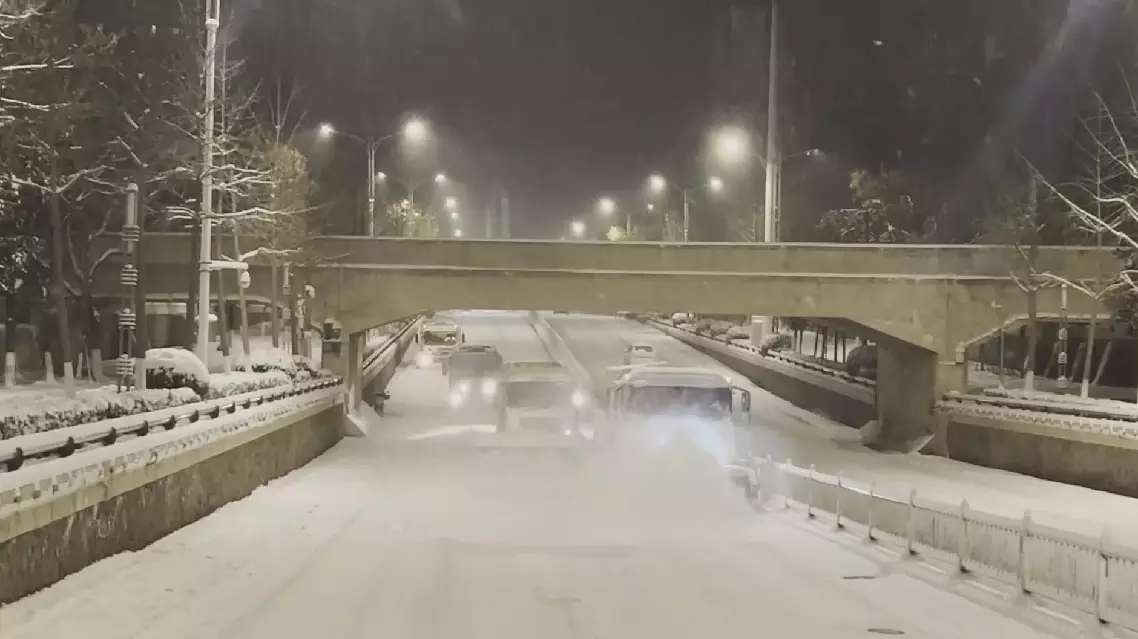
In north China's Shanxi Province, snowfall began on Monday afternoon in the central district of Yuncheng City. Snow quickly accumulated on road surfaces, creating dangerous icy conditions, especially on bridges and slopes. Sanitation crews responded swiftly, deploying both mechanical snow-removal and manual-clearing teams. By Tuesday morning, the snowfall had eased, and with overnight efforts, major urban roads had remained accessible.
In northwest China's Shaanxi Province, snow and freezing rain began on Sunday. In Zhenping County, the cold wave caused temperatures to plummet more than ten degrees Celsius. Mountain areas experienced road icing and freezing rain. Local authorities launched immediate de-icing and snow-clearing operations to ensure road safety.
Similar conditions were reported in Ningshan County, nestled in the heart of the Qinling Mountains, where ice and snow accumulation made driving treacherous. Traffic police mobilized rapidly to keep roads safe and passable.
In the provincial capital Xi'an, the government began distributing vegetables from state reserves across 98 designated locations starting Monday, to ensure steady supplies and price stability amid the cold weather. Around 10,000 tonnes of vegetables, including cabbage, radishes, onions, and potatoes, are being released during the weather emergency.
Further east in Anhui Province, the city of Huaibei sustained continuous snowfall through Monday. By early Tuesday, snow had stopped. The maximum recorded snow depth reached 15 cm, with 12.1 mm of snowfall measured. In response to the severe weather, all primary and secondary schools, as well as kindergartens, have been temporarily closed.
Over 70 snowplows and other machines were dispatched overnight, along with some 2,000 personnel deployed for snow removal. Priority was given to high-risk areas, such as overpasses and underpasses, which are prone to black ice. Efforts to clear and de-ice roads are ongoing to keep the main urban traffic arteries open.
Northern, eastern China battles snow, ice from cold snap