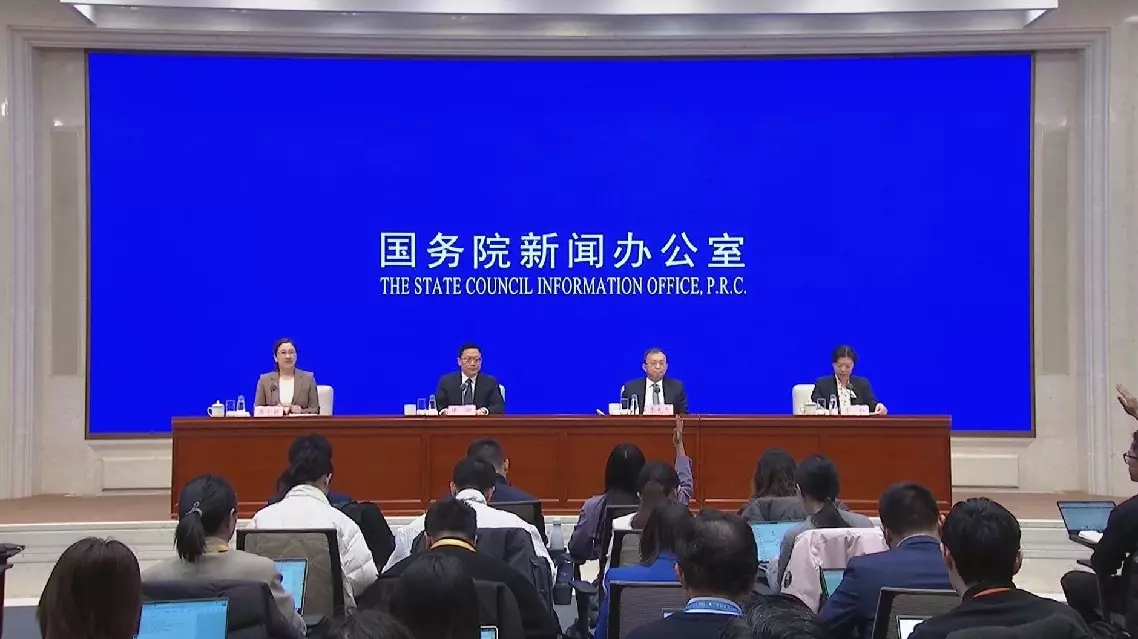
China anticipates a fiscal balance for 2025 based on preliminary data, according to an official from China's Ministry of Finance (MOF) at a press conference in Beijing on Tuesday.
Li Xianzhong, head of the ministry's Comprehensive Department, introduced China's fiscal performance for 2025 in three key points at the press conference held by the State Council Information Office.
"Revenue in the national general public budget saw a decrease of 1.1 percent in the first quarter. In the second quarter, there was a shift toward growth, with a 0.6 percent increase. The third quarter showed a significant improvement, growing by 2.5 percent. By the fourth quarter, revenue increased 3.2 percent in October, while November remained stable compared to the same period in 2024. Notably, tax revenue has consistently grown year on year since April, becoming a key driver for fiscal revenue growth and reflecting the ongoing steady and progressive development of the economy," said Li.
"The goal of balancing fiscal revenue and expenditure is expected to be achieved. On the revenue side, as mentioned earlier, the national general public budget revenue maintained a restorative growth trend and was generally stable. On the expenditure side, the national public budget spending has maintained strong, providing necessary financial backing for economic and social development. It is anticipated that a balance between revenue and expenditure will be achieved for the year," said Li.
Li also highlights strong support for key expenditure areas. In 2025, fiscal authorities continued to optimize spending structures, ensuring robust funding for essential sectors such as social security, employment, technology, education, and healthcare.
China anticipates balanced fiscal revenue, expenditure for 2025: official
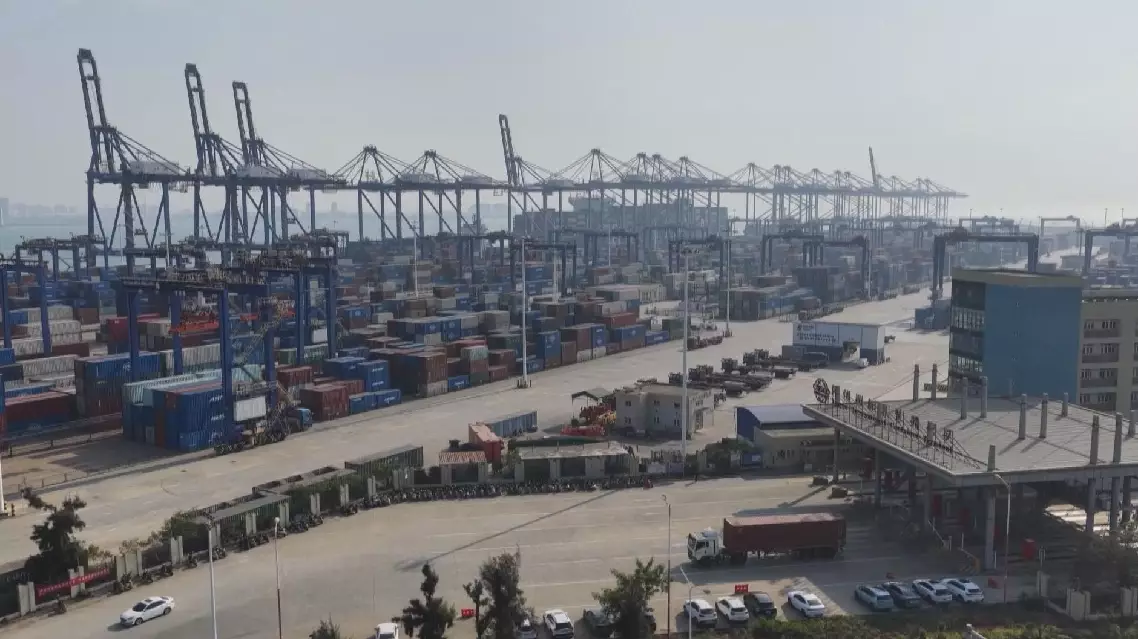
One month since the launch of special customs operations in south China's entire Hainan Free Trade Port (FTP), local customs have introduced smart regulatory models to streamline customs clearance procedures and attract more global businesses.
Customs officials from the Yangpu Port, a key regulatory area within the FTP covering the whole southern island, shared their efforts.
"The Yangpu Port has fully implemented contactless clearance and integrated document services across all terminals, significantly expediting procedures for vessels and crews. Overall customs processing time has been reduced by 30 percent. Low-risk vessels can begin operations immediately upon docking, with inspection for one vessel completed within 30 minutes. Bonded fuel refueling ships enjoy a 'refuel-and-go' policy, saving an average of six hours and around 60,000 yuan (about 8,610 U.S. dollars) per vessel, enabling efficient 'work-upon-arrival, depart-without-delay' operations. Officers provide 24-hours/seven on-site support, allowing crews to complete formalities right after disembarking. The port also promotes paperless online processing and offers prioritized clearance for bulk carriers, further cutting time and costs for businesses while advancing the use of smart border inspection technologies," said Xie Feng, director of the Border Inspection Department under the Yangpu Entry-Exit Border Inspection Station.
In addition, the Yangpu Customs has also introduced smart systems for higher efficiency, and reduced the number of declaration items to less than one-third.
"Our Smart Customs Supervision Platform officially commenced operations in March 2025. The platform enables a closed-loop customs supervision process, covering everything from cargo retrieval in terminal operating systems and loading onto vehicles to the verification of outbound shipment information. Following the implementation [launch] of the island-wide special customs operations in the Hainan Free Trade Port, we will also implement a direct release policy for imported zero-tariff goods and bonded goods that are not subject to inspection, quarantine, or licensing controls. The number of declaration items has been streamlined from 105 to 33, to help foreign trade enterprises lower costs and enhance efficiency," said Xu Yiheng, chief of the Third Comprehensive Business Section of the Comprehensive Business Department, the Yangpu Customs.
The measures, alongside governmental favorable policies, has yield solid results, with the Yangpu Port seeing a 35.6 percent year-on-year increase in the number of inbound and outbound vessels and a 28 percent rise in personnel flow between Dec 18, 2025 and Jan 17, 2026.
On a larger scale, the Haikou Customs in Hainan reported that in the past month, the value of zero-tariff goods imported through the "first line" reached 750 million yuan (about 107 million U.S. dollars), while processed and value-added goods sold domestically through the "second line" totaled about 85.9 million yuan.
The "first line" denotes Hainan's connection to overseas markets, while the "second line" represents the customs boundary between the tropical island province and China's mainland.
This two-tiered special customs system features "freer access at the first line", facilitating trade between Hainan and areas beyond China's customs borders, and "regulated access at the second line", which involves standard customs controls for the Chinese mainland.
The island also attracted over 5,000 new foreign trade enterprises to register in the month, bringing the total to more than 100,000.
Streamlined customs clearance in south China's Hainan FTP lowers cost for global trade