Skip to Content Facebook Feature Image

Turkey's pro-Kurdish party warns Syria violence threatens peace efforts

News

Turkey's pro-Kurdish party warns Syria violence threatens peace efforts
News

News

Turkey's pro-Kurdish party warns Syria violence threatens peace efforts

2026-01-20 23:52 Last Updated At:01-21 00:00

ANKARA, Turkey (AP) — Turkey’s pro-Kurdish political party suggested on Tuesday that violence against Kurdish groups in Syria risks undermining fragile reconciliation efforts with Kurdish militants, who have fought a decadeslong insurgency inside Turkey.

The warning from Tulay Hatimogullari, co-chair of the Peoples’ Equality and Democracy Party, or DEM, followed new clashes in Syria on Monday, which appeared to have shattered a ceasefire and integration deal that was reached only a day earlier between interim Syrian President Ahmad al‑Sharaa and the Kurdish‑led Syrian Democratic Forces, or SDF.

More Images
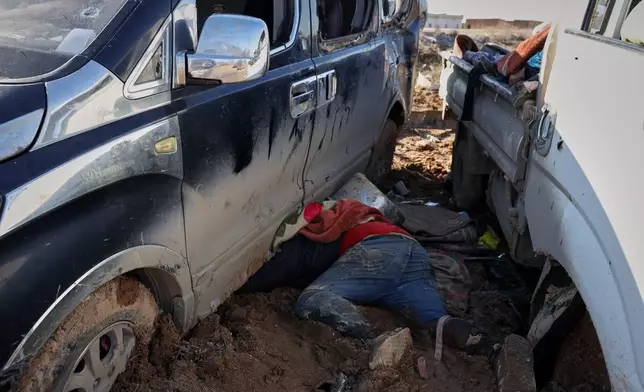
The body of a civilian lies in between two trucks along a road between government-controlled Raqqa and SDF-controlled Hassakeh in northeastern Syria, Tuesday, Jan. 20, 2026. (AP Photo/Omar Albam)
The body of a civilian lies in between two trucks along a road between government-controlled Raqqa and SDF-controlled Hassakeh in northeastern Syria, Tuesday, Jan. 20, 2026. (AP Photo/Omar Albam)
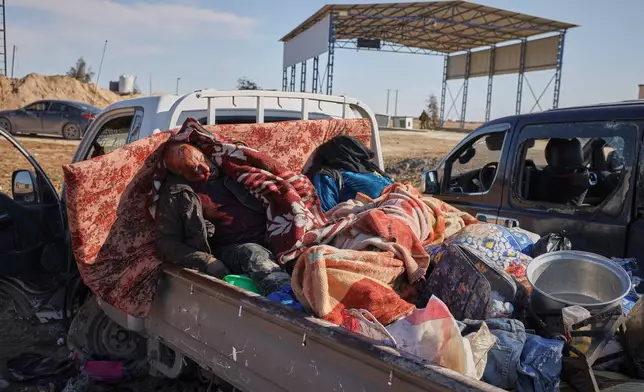
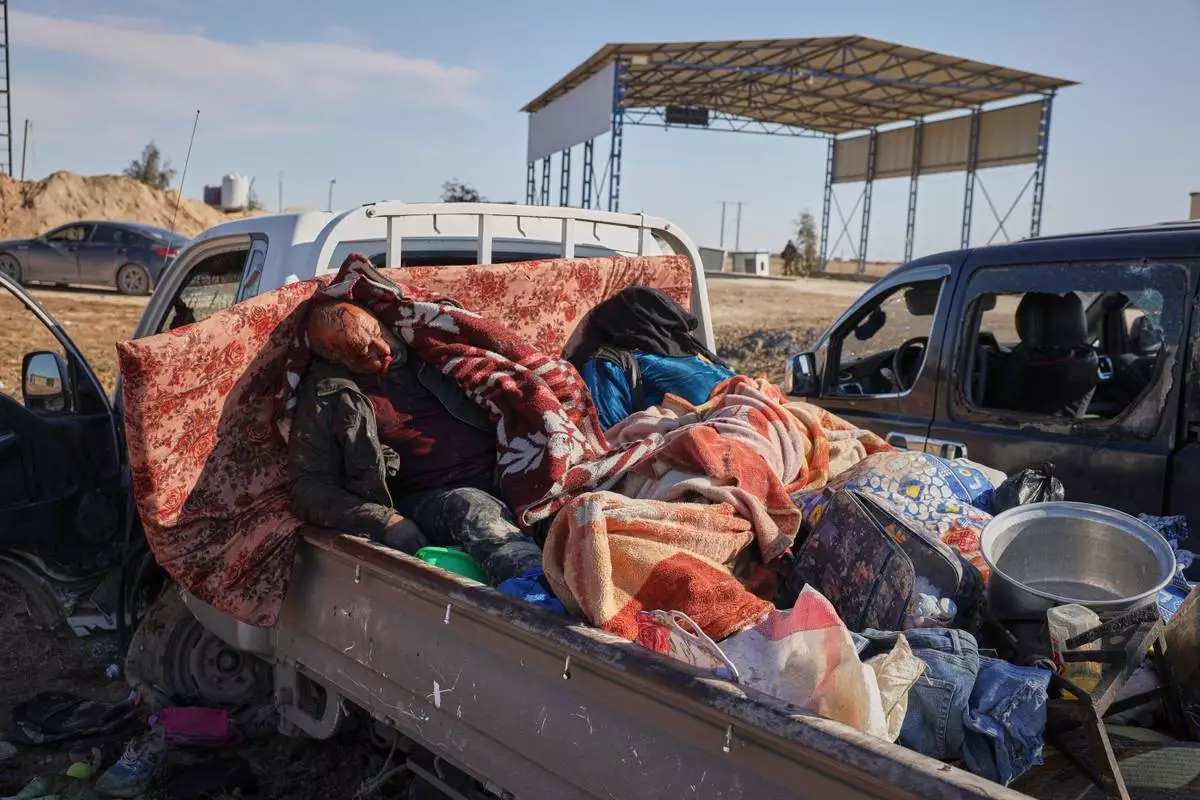
The bodies of civilians, believed to have been caught in crossfire between Syrian government forces and retreating Syrian Democratic Forces (SDF) troops, lies in the back of a pickup truck along a road between government-controlled Raqqa and SDF-controlled Hassakeh in northeastern Syria, Tuesday, Jan. 20, 2026. (AP Photo/Omar Albam)

The bodies of civilians, believed to have been caught in crossfire between Syrian government forces and retreating Syrian Democratic Forces (SDF) troops, lies in the back of a pickup truck along a road between government-controlled Raqqa and SDF-controlled Hassakeh in northeastern Syria, Tuesday, Jan. 20, 2026. (AP Photo/Omar Albam)

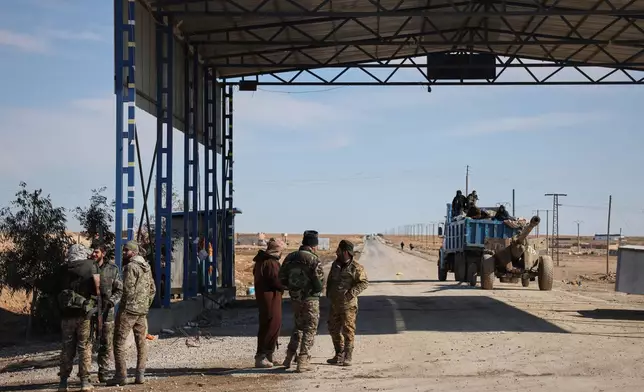
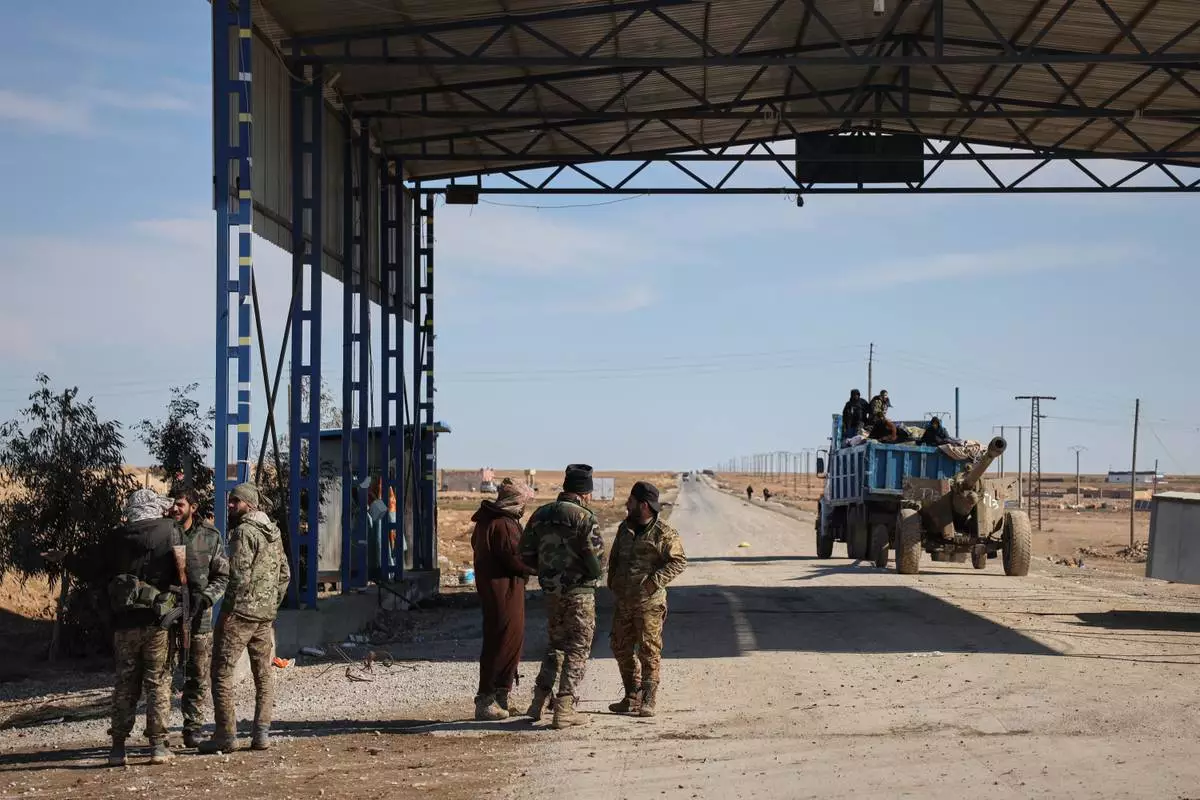
Syrian government troops are seen at an abandoned checkpoint between government-controlled Raqqa and Hassakeh, controlled by the Syrian Democratic Forces (SDF), in northeastern Syria, Jan. 20, 2026. (AP Photo/Omar Albam)
Syrian government troops are seen at an abandoned checkpoint between government-controlled Raqqa and Hassakeh, controlled by the Syrian Democratic Forces (SDF), in northeastern Syria, Jan. 20, 2026. (AP Photo/Omar Albam)

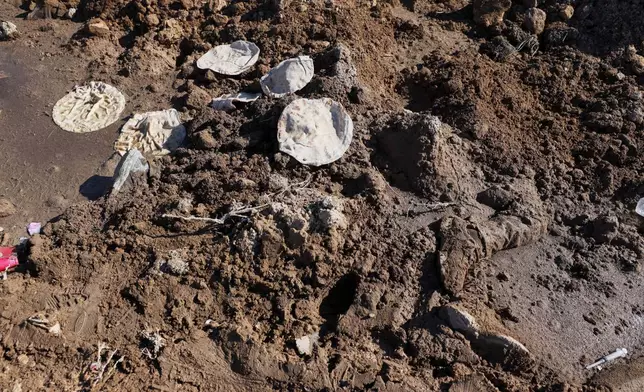
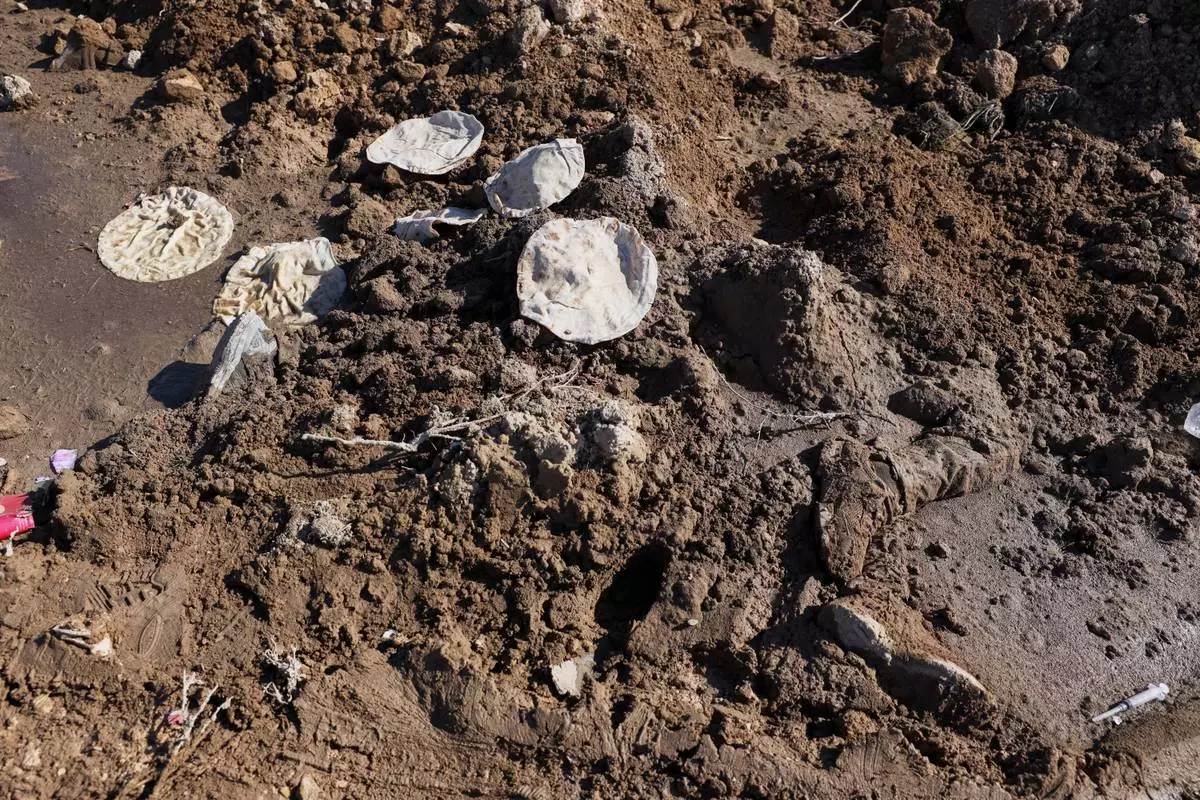
A body lies covered by dirt on the side of the road between government-controlled Raqqa and SDF-controlled Hassakeh in northeastern Syria, Tuesday Jan. 20, 2026. (AP Photo/Omar Albam)
A body lies covered by dirt on the side of the road between government-controlled Raqqa and SDF-controlled Hassakeh in northeastern Syria, Tuesday Jan. 20, 2026. (AP Photo/Omar Albam)

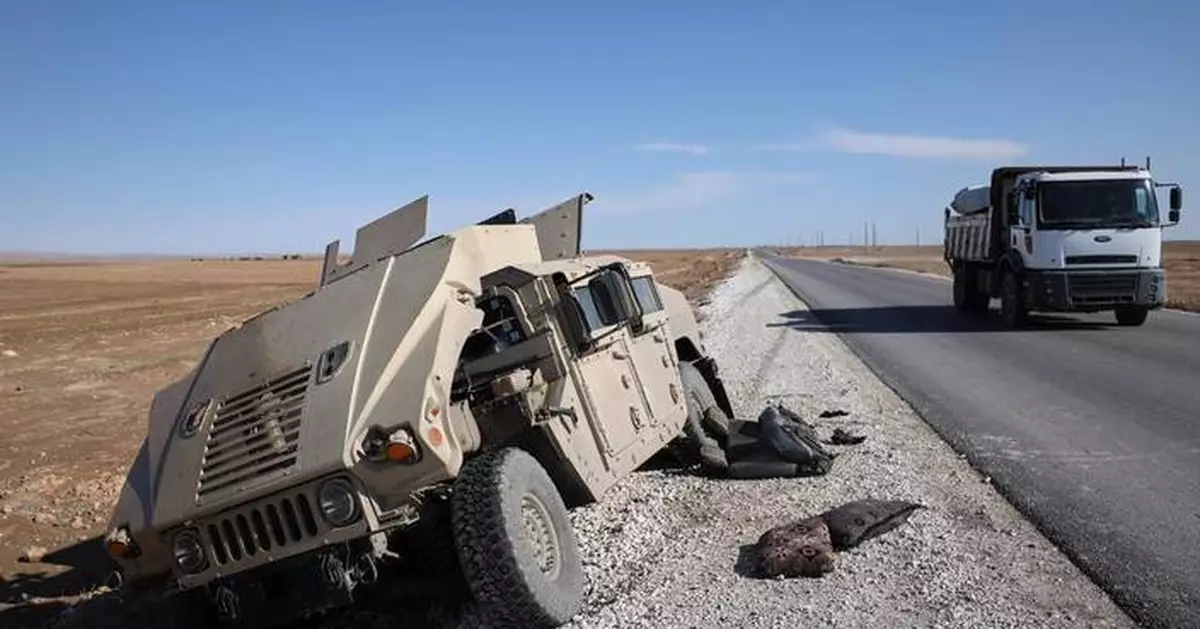
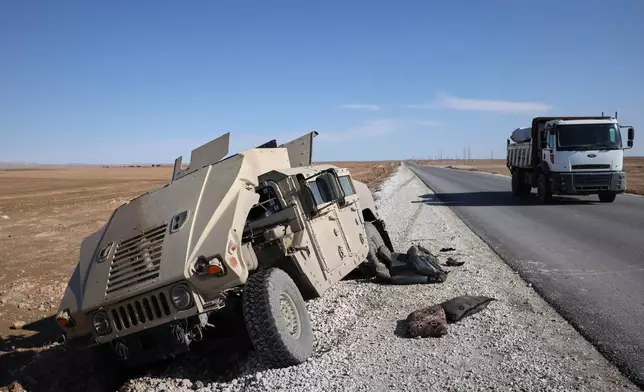
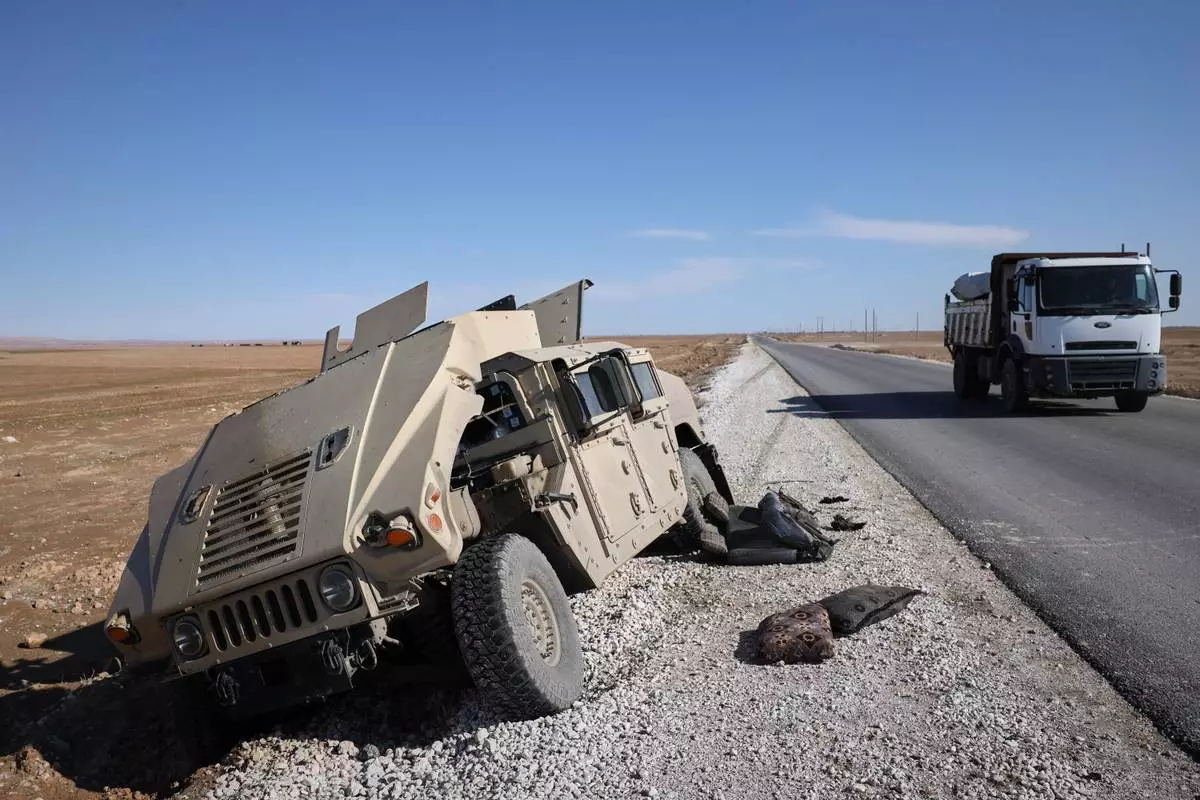
A truck drives past a damaged Humvee abandoned by retreating Syrian Democratic Forces (SDF) along a road between government-controlled Raqqa and SDF-controlled Hassakeh in northeastern Syria, Tuesday, Jan. 20, 2026. (AP Photo/Omar Albam)

A truck drives past a damaged Humvee abandoned by retreating Syrian Democratic Forces (SDF) along a road between government-controlled Raqqa and SDF-controlled Hassakeh in northeastern Syria, Tuesday, Jan. 20, 2026. (AP Photo/Omar Albam)

“At a time when we are talking about internal peace and calm, can there really be peace if Kurds are being massacred in Syria and the feelings of Kurds in Turkey are ignored?” she said during a party meeting held in Nusaybin, a town near the border from Syria’s mainly Kurdish town of Qamishli.

The deal, signed on Sunday, had called for the SDF to give up most of the territory in northeastern Syria that it previously controled and for the dismantling of its military structures, with its fighters to be integrated into Syria’s national army and security forces on a case-by-case basis. Despite the agreement, renewed fighting broke out on Monday, prompting the SDF to call for resistance.

Dozens of DEM party supporters marched in Nusaybin denouncing what they described as a “massacre” against Kurds in Syria, and Turkish President Recep Tayyip Erdogan’s support to the Syrian government.

A group of protesters later tried to cross into Syria and lowered a Turkish flag from a military observation post, sparking clashes with police and condemnation from Turkish officials who called the act a provocation intended to sabotage the ongoing peace initiative.

Justice Minister Yilmaz Tunc announced on X that authorities have launched investigations into 356 people involved in the incident, with at least 35 arrested, 45 released with judicial restrictions, and 77 still held in custody.

Turkish officials had hailed Sunday’s deal — struck after days of heavy clashes in Syria — as a historic turning point. Feti Yıldız, a member of parliament serving on a committee drafting proposals to advance peace efforts launched last year with the Kurdistan Workers’ Party, or the PKK, said that the accord could carry positive repercussions for Turkey’s own reconciliation process.

Turkey views the SDF as inseparable from the PKK, a Kurdish separatist group that has waged an insurgency inside Turkey for four decades.

In May, the PKK announced that it would disarm and disband as part of the new peace effort with Turkey, following a call by its imprisoned leader, Abdullah Ocalan.

The PKK staged a symbolic disarmament ceremony in northern Iraq, and later announced that it was withdrawing its remaining fighters from Turkey to Iraq.

The SDF, however, rejected pressure to follow suit, insisting that Ocalan’s directive applied only to the PKK and not to militants in Syria.

In a televised address on Monday, Erdogan warned the SDF against stalling or obstructing the agreement that was reached with Syria’s government.

“Procrastination, resistance, and playing for time by hiding behind various excuses will benefit no one,” Erdogan said. “The era of terrorism in our region has come to an end. The requirements of the ceasefire and full integration agreement must be fulfilled without delay, and no one should miscalculate again.”

Previous peace efforts between Turkey and the PKK collapsed — most recently in 2015 — leaving deep skepticism about whether the latest process can succeed.
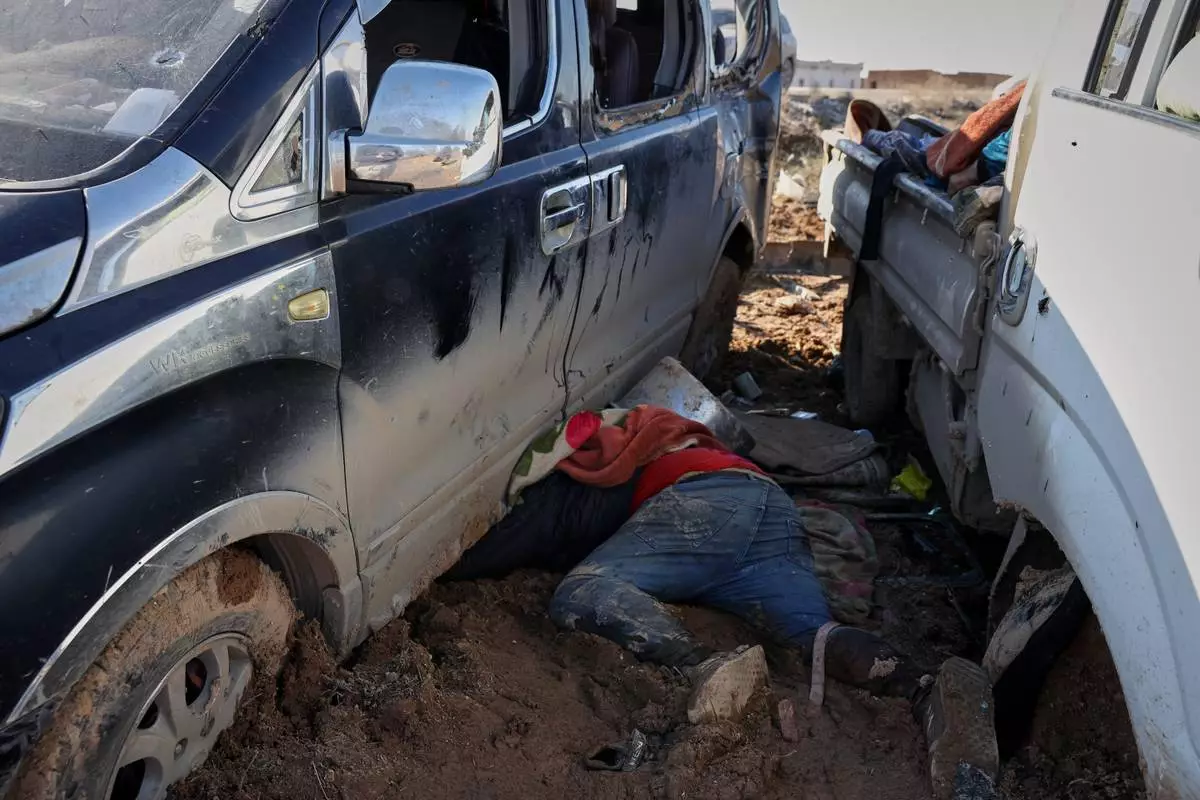
The body of a civilian lies in between two trucks along a road between government-controlled Raqqa and SDF-controlled Hassakeh in northeastern Syria, Tuesday, Jan. 20, 2026. (AP Photo/Omar Albam)
The body of a civilian lies in between two trucks along a road between government-controlled Raqqa and SDF-controlled Hassakeh in northeastern Syria, Tuesday, Jan. 20, 2026. (AP Photo/Omar Albam)
The bodies of civilians, believed to have been caught in crossfire between Syrian government forces and retreating Syrian Democratic Forces (SDF) troops, lies in the back of a pickup truck along a road between government-controlled Raqqa and SDF-controlled Hassakeh in northeastern Syria, Tuesday, Jan. 20, 2026. (AP Photo/Omar Albam)

The bodies of civilians, believed to have been caught in crossfire between Syrian government forces and retreating Syrian Democratic Forces (SDF) troops, lies in the back of a pickup truck along a road between government-controlled Raqqa and SDF-controlled Hassakeh in northeastern Syria, Tuesday, Jan. 20, 2026. (AP Photo/Omar Albam)

Syrian government troops are seen at an abandoned checkpoint between government-controlled Raqqa and Hassakeh, controlled by the Syrian Democratic Forces (SDF), in northeastern Syria, Jan. 20, 2026. (AP Photo/Omar Albam)
Syrian government troops are seen at an abandoned checkpoint between government-controlled Raqqa and Hassakeh, controlled by the Syrian Democratic Forces (SDF), in northeastern Syria, Jan. 20, 2026. (AP Photo/Omar Albam)

A body lies covered by dirt on the side of the road between government-controlled Raqqa and SDF-controlled Hassakeh in northeastern Syria, Tuesday Jan. 20, 2026. (AP Photo/Omar Albam)
A body lies covered by dirt on the side of the road between government-controlled Raqqa and SDF-controlled Hassakeh in northeastern Syria, Tuesday Jan. 20, 2026. (AP Photo/Omar Albam)

A truck drives past a damaged Humvee abandoned by retreating Syrian Democratic Forces (SDF) along a road between government-controlled Raqqa and SDF-controlled Hassakeh in northeastern Syria, Tuesday, Jan. 20, 2026. (AP Photo/Omar Albam)

A truck drives past a damaged Humvee abandoned by retreating Syrian Democratic Forces (SDF) along a road between government-controlled Raqqa and SDF-controlled Hassakeh in northeastern Syria, Tuesday, Jan. 20, 2026. (AP Photo/Omar Albam)
PARIS (AP) — While Europe is pushing back publicly against U.S. President Donald Trump over Greenland, the language appears softer behind the scenes.

Trump published a text message on Tuesday that he received from French President Emmanuel Macron, confirmed as genuine by Macron's office.

Starting with “My friend,” Macron’s tone was more deferential than the criticism that France and some of its European partner nations are openly voicing against Trump’s push to wrest Greenland from NATO ally Denmark.

Before broaching the Greenland dispute, Macron opted in his message to first talk about other issues where he and Trump seem roughly on the same page.

“We are totally in line on Syria. We can do great things on Iran,” the French leader wrote in English.

Then, he added: “I do not understand what you are doing on Greenland,” immediately followed by: “Let us try to build great things.”

That was the only mention that Macron made of the semi-autonomous Danish territory in the two sections of message that Trump published. It wasn't immediately clear from Trump's post when he received the message.

World leaders’ private messages to each other rarely make it verbatim into the public domain — enabling them to project one face publicly and another to each other.

But Trump — as is his wont across multiple domains — is casting traditions and diplomatic niceties to the wind and, in the process, lifting back the curtain on goings-on that usually aren't seen.

This week, a text message that Trump sent to Norway’s prime minister also became public, released by the Norwegian government and confirmed by the White House.

In it, Trump linked his aggressive stance on Greenland to last year’s decision not to award him the Nobel Peace Prize.

“Considering your Country decided not to give me the Nobel Peace Prize for having stopped 8 Wars PLUS, I no longer feel an obligation to think purely of Peace," the message read.

It concluded, “The World is not secure unless we have Complete and Total Control of Greenland.”

On Tuesday, Trump also published a flattering message from Mark Rutte, secretary general of NATO, which the alliance also confirmed as authentic.

“I am committed to finding a way forward on Greenland,” Rutte wrote. “Can't wait to see you. Yours, Mark.”

Rutte has declined to speak publicly about Greenland despite growing concern about Trump’s threats to “acquire” the island and what that would mean for the territorial integrity of NATO ally Denmark. Pressed last week about Trump’s designs on Greenland and warnings from Denmark that any U.S. military action might mean the end of NATO, Rutte said: “I can never comment on that. That’s impossible in public.”

Macron likes to say that he can get Trump on the phone any time he wants. He proved it last September by making a show of calling up the president from a street in New York, to tell Trump that police officers were blocking him to let a VIP motorcade pass.

“Guess what? I’m waiting in the street because everything is frozen for you!” Macron said as cameras filmed the scene.

It's a safe bet that Macron must know by now — a year into Trump's second spell in office — that there's always a risk that a private message to Trump could be made public.

Macron said Tuesday that he had “no particular reaction” to the message's publication when a journalist asked him about it.

“I take responsibility for everything that I do. It's my habit to be coherent between what I say on the outside and what I do in a private manner. That's all."

Still, the difference between Macron’s public and private personas was striking.

Most remarkably, the French leader told Trump in his message that he would be willing to invite representatives from both Ukraine and Russia to a meeting later this week in Paris — an idea that Macron has not voiced publicly.

The Russians could be hosted “in the margins,” Macron suggested, hinting at the potential awkwardness of inviting Moscow representatives while France is also backing Ukraine with military and other support against Russian President Vladimir Putin's invasion.

Macron wrote that the meeting could also include “the danish, the syrians” and the G7 nations — which include the United States.

The French president added: “let us have a dinner together in Paris together on thursday before you go back to the us."

He then signed off simply with “Emmanuel.”

Despite Macron's persistent efforts, in both of Trump's terms, not to ruffle his feathers, any payback has been mixed, at best.

Trump bristled on Monday, threatening punitive tariffs, when told that Macron has no plans to join Trump’s new Board of Peace that will supervise the next phase of the Gaza peace plan, despite receiving an invitation.

“Well, nobody wants him because he’s going to be out of office very soon," Trump told reporters, even through the French leader has more than a year left in office before the end of his second and last term in 2027.

"I’ll put a 200% tariff on his wines and champagnes and he’ll join,” Trump said.

Lorne Cook in Brussels, Sylvie Corbet in Paris and Kostya Manenkov in Davos contributed.

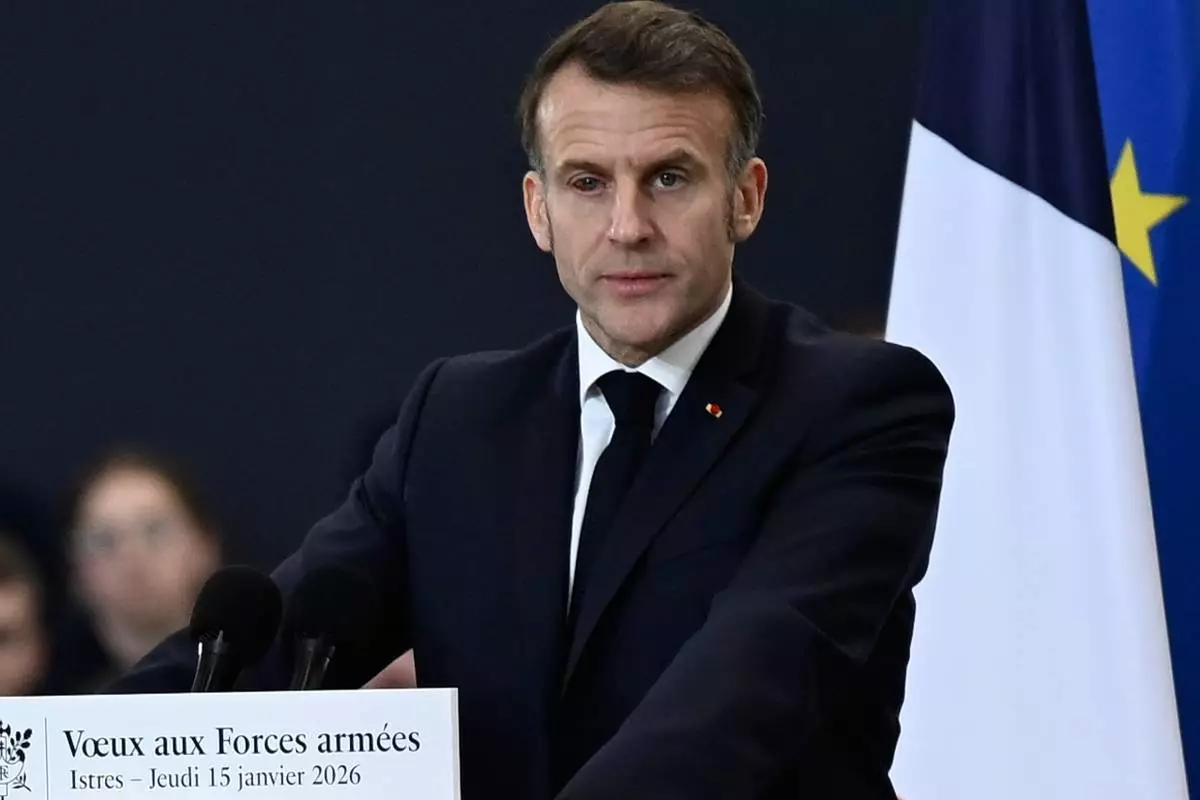
French President Emmanuel Macron delivers a speech as he visits the Istres military air force base, southern France, Thursday, Jan. 15, 2026. (AP Photo/Philippe Magoni, Pool)

French President Emmanuel Macron delivers a speech as he visits the Istres military air force base, southern France, Thursday, Jan. 15, 2026. (AP Photo/Philippe Magoni, Pool)

FILE - President Donald Trump boards Air Force One at Joint Base Andrews, Md., Aug. 15, 2025. (AP Photo/Julia Demaree Nikhinson, File)

FILE - President Donald Trump boards Air Force One at Joint Base Andrews, Md., Aug. 15, 2025. (AP Photo/Julia Demaree Nikhinson, File)

Recommended Articles