Skip to Content Facebook Feature Image

US show its nature as "enemy to international law": Iranian expert

China

China

China

US show its nature as "enemy to international law": Iranian expert

2026-01-21 09:09 Last Updated At:09:37

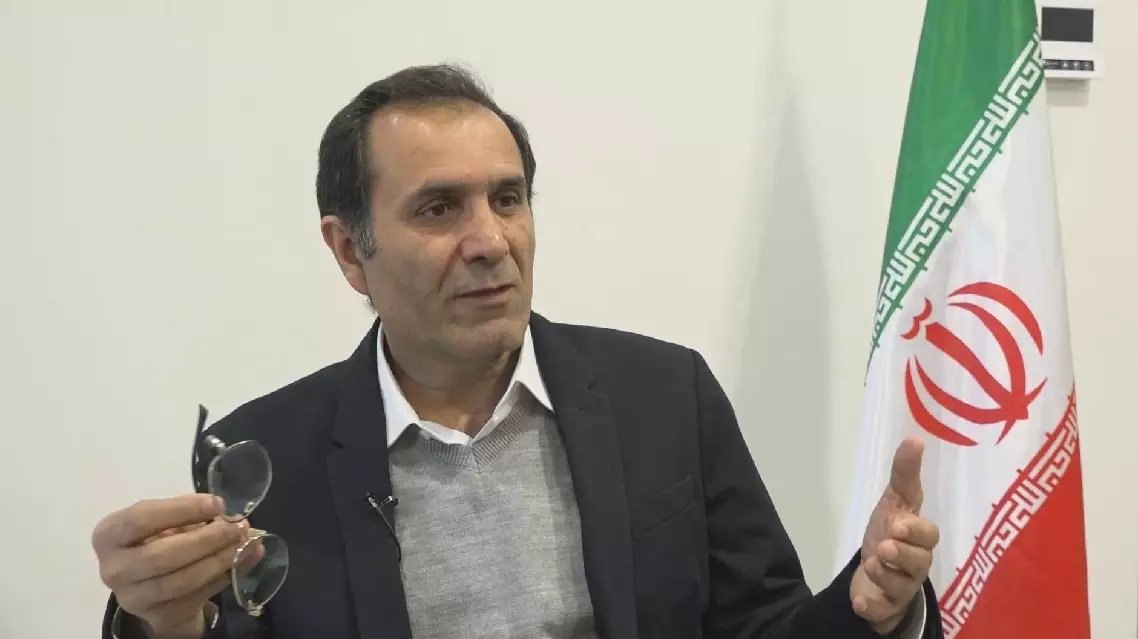
The United States has unveiled its nature as an "enemy to international law," according to an Iranian scholar, who accused the U.S. of undermining the rules-based international order and devastating the basic human rights of civilians in Iran through its unilateral sanctions and military actions.

In an interview with the China Global Television Network (CGTN), Heybatollah Nazhandimanesh, an associate professor at the Allameh Tabataba'i University in Tehran, criticized the hegemonic U.S. sanctions as destructive for international law.

Iran was hit by a wave of protests which started in late December as initially peaceful before escalating into violence, resulting in casualties and damage to public property and buildings. Iranian authorities have attributed the unrest to interference by the United States and Israel.

Tensions between Iran and the United States had already worsened after a series of strikes last June, when U.S. forces bombed Iran's nuclear facilities at Natanz, Fordow and Isfahan. The U.S. also recently moved impose sanctions on numerous more entities and individuals allegedly linked to Iran.

Given the recent U.S. attacks on Venezuela and the Trump administration's stated aims to take control of Greenland as well as its intervention on Iran, Nazhandimanesh said the U.S. is trying to impose its will on other nations, which goes against international law and the principles set out in the United Nations Charter.

"International law is agreed rules by nations, by states. And the United States is trying to dictate, to impose the unilateral will of one state against another state or other nations," he said.

"International law is protecting some common values for all nations: international peace and security; human rights; self-determination; and justice. In addition to attacking states or attacking international principles, and particularly those embodied in the UN Charter, the U.S. is attacking international judicial institutions," he continued.

Nazhandimanesh also believes the U.S. sanctions not only violate international law, but also endanger the lives of ordinary people living in Iran, infringing on their right to life.

"About the unilateral sanctions by the U.S. against the Iranian people, first, they are against international law. They are a violation of public international law, because one state is imposing its will against another nation, because the imposing state is going to force the targeted nation to change its policies and attitudes and do what the U.S. is looking for," he said.

"Another aspect is international human rights law. These sanctions affect the Iranian people and different basic rights of the Iranian people, including the right to life and the right to medicine. We have lots of people who have no access to medicine, and because of this, their lives are in danger. That is a gross violation of human rights law," he said.

Nazhandimanesh was also clear in his view that the U.S. has proven it is not interested in following the global rules-based order.

"Beyond the sanctions against the Iranian people are the sanctions against international criminal law. In this way, the U.S., in my opinion, clearly shows its nature as an enemy to international law," he said.
US show its nature as "enemy to international law": Iranian expert

US show its nature as "enemy to international law": Iranian expert
Türkiye's introduction of visa-free entry for eligible Chinese citizens has ignited interest among holidaymakers in planning a visit to the Eurasian country, while Turkish airports and businesses are actively preparing to welcome more visitors from China.

Under the policy launched on January 2, Chinese citizens holding ordinary passports can enter Türkiye visa-free for tourism or transit for up to 90 days within a 180-day period.

In Shanghai, a travel agency has intensified efforts to advertise Türkiye tours to visitors.

Many consumers who are planning a trip have shown increasing interest in Türkiye visit largely due to the visa-free scheme, and the tour operator reported a surge in business.

"I recently learned that Türkiye has granted visa-free travel (to eligible Chinese tourists), so I'd like to take my parents on a visit to Türkiye during holidays," said a consumer.

"Since Türkiye began granting visa-free travel (to eligible Chinese tourists), it has become very popular, with both inquiries and bookings increasing several times over. Bookings for the Spring Festival holiday season alone have tripled. Bookings are basically full during February," said Zhou Weihong, deputy general manager of Spring Tour.

Similarly, another travel agency in Shanghai said that inquiries about Turkish tour have more than doubled compared to the previous period, and group tours are basically fully booked for the upcoming Spring Festival holiday.

"Since I run my own business, I'm usually quite busy. Visa-free countries are more appealing to me because they're generally more welcoming, and Türkiye, in particular, means romance and relaxation to me," said a consumer.

"Türkiye's visa-free policy has boosted sales on many surrounding tourism routes, such as those from Greece to Türkiye or from Egypt to Türkiye," said Wang Xiuyun, head of Tongcheng Travel's Changning Road branch.

Expecting a surging number of travelers from China, Turkish businesspeople and airports have stepped up efforts to improve their Chinese language skills and services.

Grand Bazaar, one of Istanbul's most famous tourist attractions, is home to thousands of stores.

Many shop owners said they are busy learning the Chinese language as they predict that the easier entry will lead to an influx of tourists from China.

"Since more Chinese visitors are expected, we are in a hurry to study the Chinese language. We will strive to improve our Chinese proficiency to better serve travelers from China," said Salih Budak, a candy shop owner.

In addition to learning to communicating with tourists in their native language, many shop owners have considered enabling payments using a mobile device, which is more familiar to Chinese consumers.

Airports are also making preparations.

The Istanbul Airport has worked to include Chinese signs across its facilities under the "China Friendly Airport" project since 2022.

With the implementation of the visa-free policy, the airport plans to increase the number of Chinese-speaking staff to assist at key procedures such as customs clearance and baggage claim, ensuring a smooth entry process for tourists from China.

Interest in Türkiye soars among Chinese tourists after introduction of visa-free policy

Interest in Türkiye soars among Chinese tourists after introduction of visa-free policy

Recommended Articles