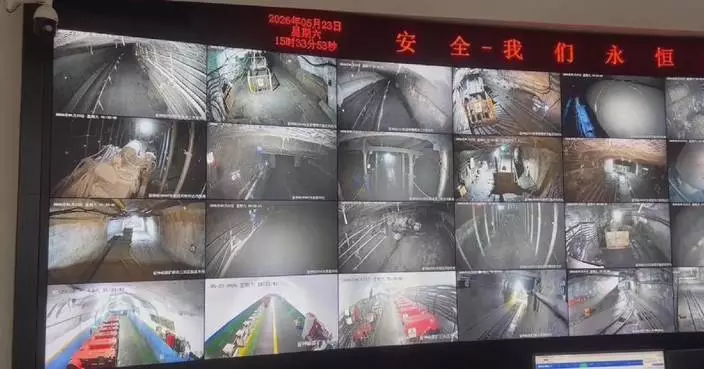
China's independently-developed 35,000-ton heavy-haul train group completed the world's first automated platooning test for heavy-haul trains on Wednesday in Inner Mongolia Autonomous Region, a major coal production hub.
The test was carried out on the Baotou-Shenmu Railway, which connects Baotou City of north China's Inner Mongolia Autonomous Region and Shenmu City of northwest China's Shaanxi Province.
During the test, seven individual 5,000-ton heavy-haul freight trains formed a platoon by wireless signals rather than traditional mechanical hooks, which makes freight transportation safer, smoother and more flexible, and causes less wear on tracks and wheels.
The main control center coordinated and planned the routes for all trains in the group in real time, issuing commands for train formation and decoupling, while train dispatchers organized transport of shipments based on needs.
The method boosts coal transportation volume by more than 50 percent, helping increase power supply to more households and businesses. Moreover, it can help save a significant amount of resources and lower costs.
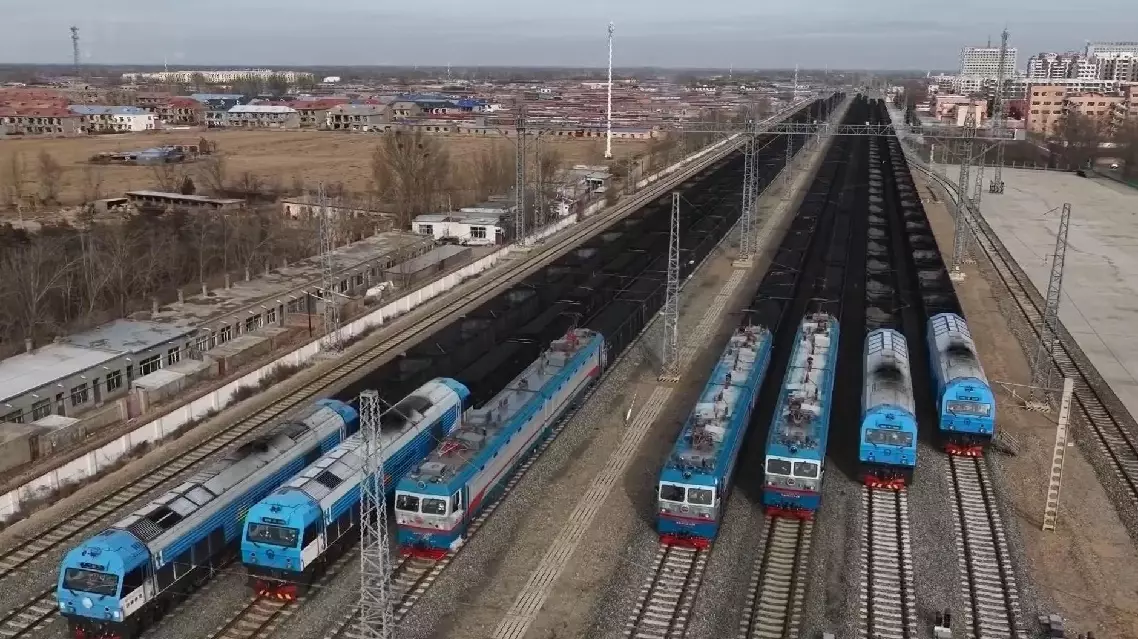
China tests automated platooning of 35,000-ton heavy-haul train group
The 32nd Asia-Pacific Economic Cooperation (APEC) Ministers Responsible for Trade Meeting concluded in east China's Suzhou on Saturday, yielding fruitful results and laying significant groundwork for the APEC Economic Leaders' Meeting in November.
The trade ministers' meeting focused on "building an open and predictable regional and multilateral economic and trade order" and "fostering new engines of innovative and dynamic trade and investment cooperation."
Chinese Commerce Minister Wang Wentao briefed the media on the meeting's outcomes at a press conference.
Wang said the meeting issued a joint statement titled the Suzhou Statement, and approved the latest edition of the APEC Roadmap for Innovative, Competitive and Resilient Services.
All parties agreed to advance policy innovation and reform in services trade, build an open and predictable investment environment, improve regional trade facilitation and supply chain resilience, strengthen standards coordination, and enhance intellectual property protection, Wang told the media.
He also said that substantial progress was made on a framework document for regional digital trade cooperation and the ministers emphasized promoting inclusive AI development, strengthening AI-related trade, and bridging the digital divide to ensure shared benefits from digital transformation.
The minister noted that the outcomes of the meeting demonstrated strong cooperation willingness, highlighted an innovation-oriented approach, and reflected inclusiveness and shared benefits. "The fact that Asia-Pacific economies can come together, uphold the original aspiration of promoting trade and investment liberalization and facilitation while supporting economic growth and prosperity, and engage in in-depth discussions on the important issue of 'where multilateral and regional economic and trade cooperation is headed,' fully demonstrates that open regionalism and true multilateralism enjoy broad support, and that mutual success and shared development serve the fundamental interests of all economies," Wang said.
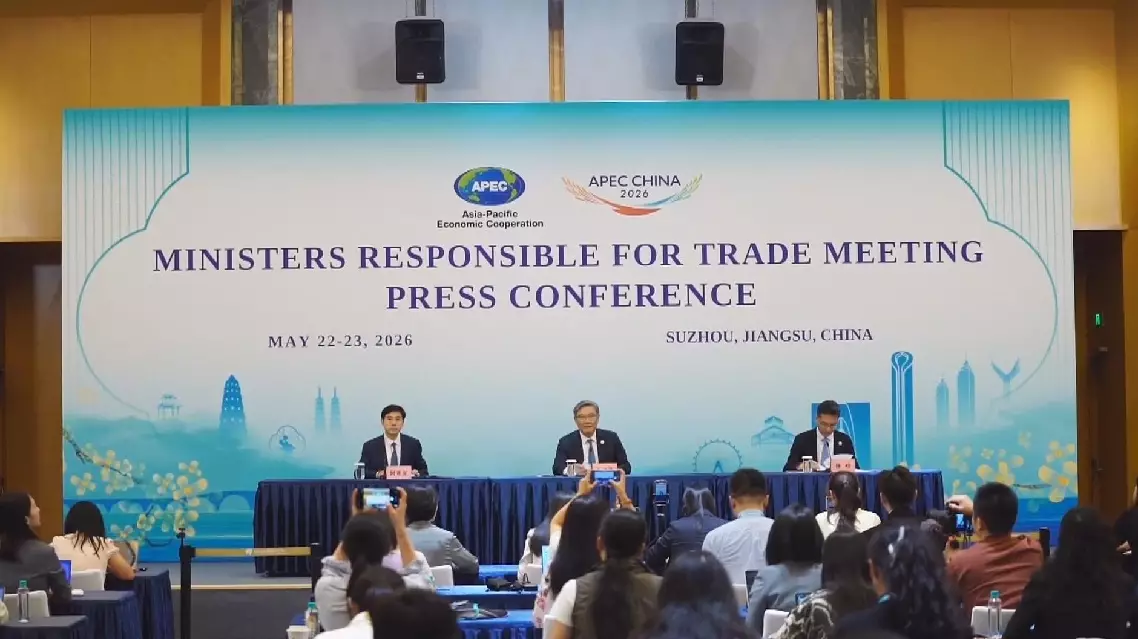
2026 APEC trade ministers' meeting concludes with fruitful results