Skip to Content Facebook Feature Image

Trump's threats challenge Europe's security and prosperity, EU chief says ahead of summit

News

Trump's threats challenge Europe's security and prosperity, EU chief says ahead of summit
News

News

Trump's threats challenge Europe's security and prosperity, EU chief says ahead of summit

2026-01-22 02:43 Last Updated At:02:50

BRUSSELS (AP) — U.S. President Donald Trump’s threats to annex Greenland and impose tariffs on its backers pose a challenge to Europe’s security, principles and prosperity, European Council President António Costa said on Wednesday.

“All these three dimensions are being tested in the current moment of transatlantic relations,” said Costa, who has convened an emergency summit of the leaders of all 27 European Union member states on Thursday.

More Images
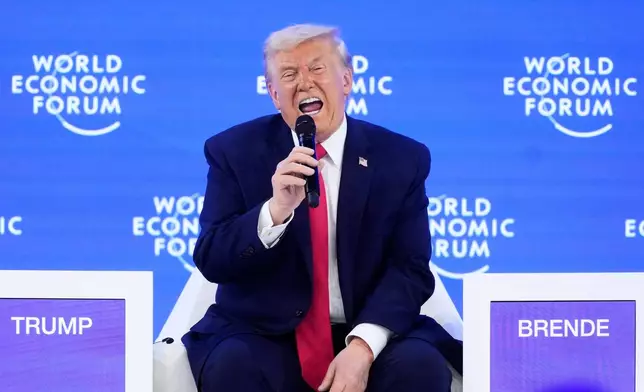
President Donald Trump speaks during the Annual Meeting of the World Economic Forum in Davos, Switzerland, Wednesday, Jan. 21, 2026. (AP Photo/Markus Schreiber)
President Donald Trump speaks during the Annual Meeting of the World Economic Forum in Davos, Switzerland, Wednesday, Jan. 21, 2026. (AP Photo/Markus Schreiber)

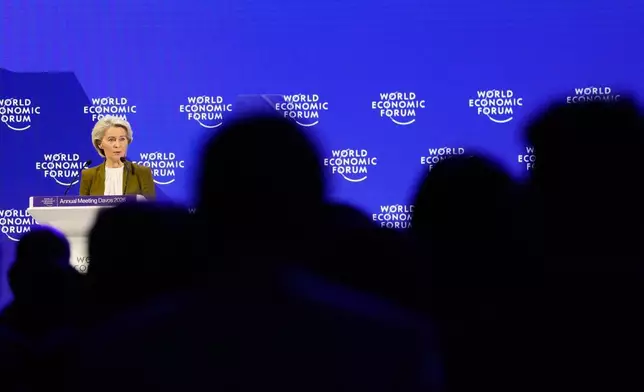
President of the European Commission Ursula von der Leyen talks during the Annual Meeting of the World Economic Forum in Davos, Switzerland, Tuesday, Jan. 20, 2026. (AP Photo/Markus Schreiber)
President of the European Commission Ursula von der Leyen talks during the Annual Meeting of the World Economic Forum in Davos, Switzerland, Tuesday, Jan. 20, 2026. (AP Photo/Markus Schreiber)

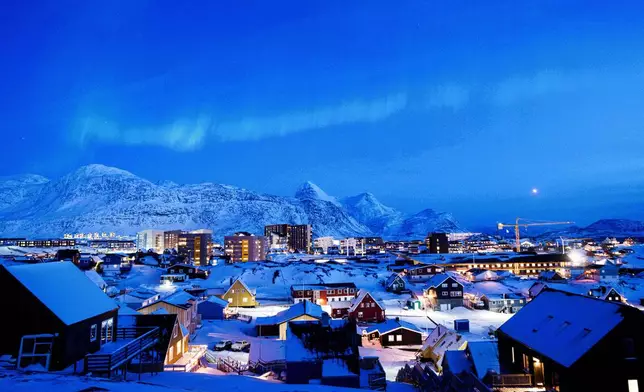
An Aurora Borealis is seen in the sky above Nuuk, Greenland, on Tuesday, Jan. 20, 2026. (AP Photo/Evgeniy Maloletka)
An Aurora Borealis is seen in the sky above Nuuk, Greenland, on Tuesday, Jan. 20, 2026. (AP Photo/Evgeniy Maloletka)

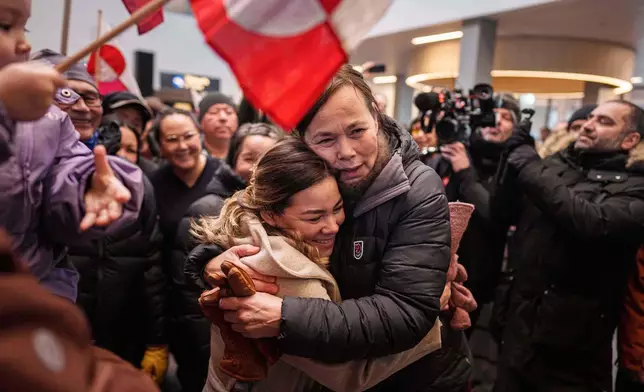
Greenland Minister for Foreign Affairs and Research Vivian Motzfeldt, center right, hugs a woman after arriving at the airport in Nuuk, Greenland, Tuesday, Jan. 20, 2026. (AP Photo/Evgeniy Maloletka)
Greenland Minister for Foreign Affairs and Research Vivian Motzfeldt, center right, hugs a woman after arriving at the airport in Nuuk, Greenland, Tuesday, Jan. 20, 2026. (AP Photo/Evgeniy Maloletka)

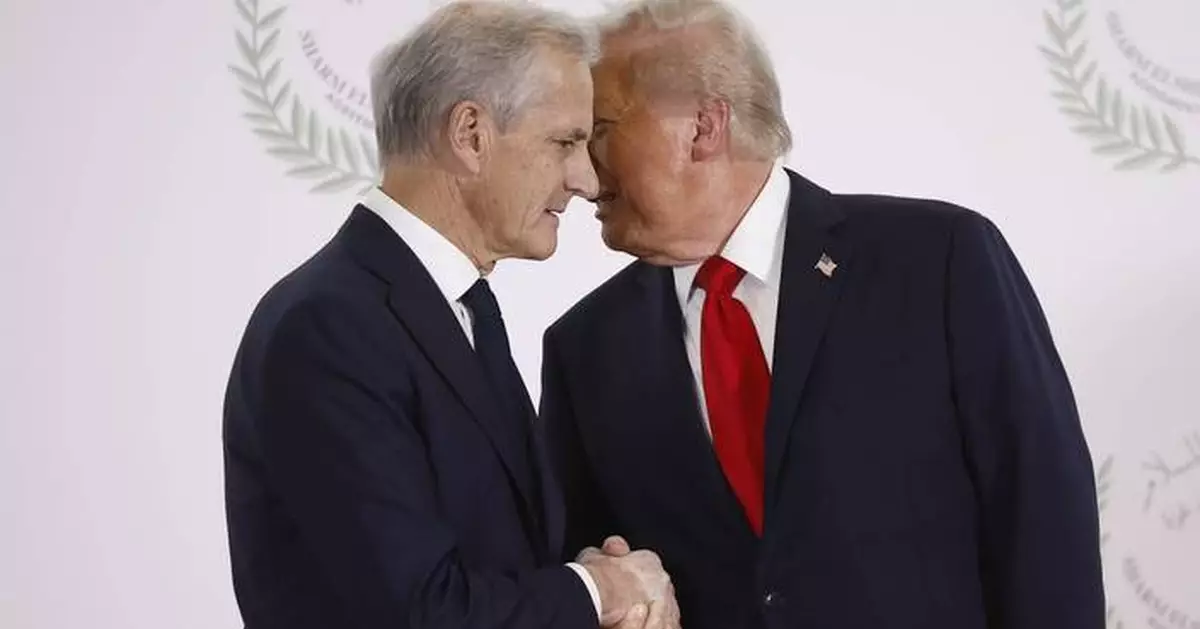
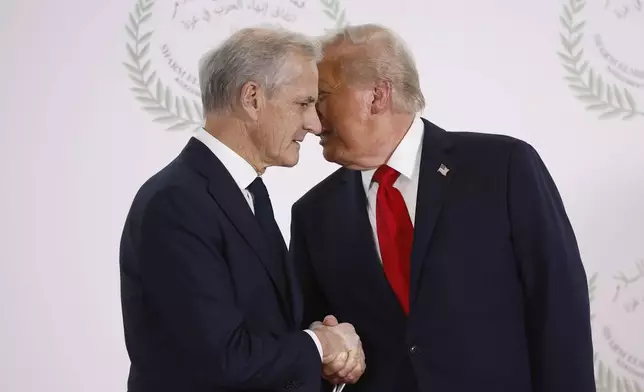
FILE - President Donald Trump and Norway's Prime Minister Jonas Gahr Store shake hands during the group photo at the Gaza International Peace Summit in Sharm el-Sheikh, Egypt, Oct.13 2025. (Yoan Valat, Pool photo via AP, File)

FILE - President Donald Trump and Norway's Prime Minister Jonas Gahr Store shake hands during the group photo at the Gaza International Peace Summit in Sharm el-Sheikh, Egypt, Oct.13 2025. (Yoan Valat, Pool photo via AP, File)

Trump’s determination to “ acquire ” Greenland — a mineral-rich, semiautonomous Danish territory in the Arctic region — for what he claims are security reasons, has undermined trust in the United States among allies in Europe and Canada.

Speaking at the World Economic Forum later on Wednesday, Trump might have eased some concerns when he made clear for the first time that he would not use force to seize Greenland, saying: “I won’t do that. Okay?”

Denmark angered Trump after sending a military “reconnaissance” force to Greenland. A small numbers of troops from several European nations joined, and Denmark is weighing a longer-term military presence there.

Costa said EU leaders are united on “the principles of international law, territorial integrity and national sovereignty,” something the bloc has underlined in defending Ukraine against invasion by Russia, and which is now threatened in Greenland.

In a speech to EU lawmakers in Strasbourg, France, he also stressed that only “Denmark and Greenland can decide their future.”

Costa said that “we stand ready to defend ourselves, our member states, our citizens, our companies, against any form of coercion. And the European Union has the power and the tools to do so.”

He also insisted that “further tariffs would undermine transatlantic relations and are incompatible with the EU-US trade agreement.” The lawmakers must endorse that deal made last July, but it's now been put on hold.

Bernd Lange, chair of the European Parliament’s International Trade Committee, said Trump is still “using tariffs as a coercive instrument.”

“Until the threats are over, there will be no possibility for compromise,” Lange said, describing tariffs as “an attack against the economic and territorial sovereignty and integrity of the European Union.”

EU leaders have been galvanized by Trump’s threats over Greenland, and are rethinking their relations with America, their longtime ally and the most powerful member of NATO.

“Appeasement is always a sign of weakness. Europe cannot afford to be weak — neither against its enemies, nor ally,” Polish Prime Minister Donald Tusk, long a staunch supporter of strong transatlantic ties, posted on social media on Tuesday.

“Appeasement means no results, only humiliation. European assertiveness and self-confidence have become the need of the moment,” Tusk wrote.

European Commission President Ursula von der Leyen, who manages trade on behalf of the EU, warned that the bloc is “at a crossroads.”

Should tariffs come, she said, “we are fully prepared to act, if necessary, with unity, urgency and determination.”

In Strasbourg, she told the lawmakers that the commission is working on “a massive European investment surge in Greenland” to beef up its economy and infrastructure, as well as a new European security strategy.

Security around the island itself should be boosted with partners like the U.K., Canada, Norway and Iceland, among others, von der Leyen said.

Despite Trump apparently backing off from military threats, Greenland’s government Wednesday told its citizens to be prepared as it published a handbook on what to do in a crisis.

The guide -- in Greenlandic and Danish -- does not reference any threat from the U.S. and directs Greenlanders to ensure they have sufficient supplies at home to be able to survive for five days. The guide is similar to one published by Nordic nations Finland, Norway and Sweden and recommends people have three liters (0.8 gallons) of water per person per day, canned food and fuel as well as hunting and medical supplies.

“We just went to the grocery store and bought the supplies,” Tony Jakobsen in Greenland’s capital Nuuk said, showing AP the contents of bags which included candles, snacks and toilet roll. Jakobsen said he thought Trump’s rhetoric toward Greenland was “just threats... but it’s better to be ready than not ready.”

Speaking in Davos, Trump described Greenland as a strategic piece of ice which is largely uninhabited.

It’s “insulting” that Trump “talks about the Greenlandic people and the Greenlandic nation as just an ice cube,” Johnny Hedemann told AP.

Hedemann spoke as he was on the way to the shops to buy a camping stove and mashed potatoes which “you can just add water to.” A few years ago, he said, Nuuk had no power for several days and that was “a taster” of what could happen.

“Living in this nature, you have to be prepared for almost anything. And now there’s another threat -- and that’s Trump,” he added.

Hedemann also said he thought it unlikely that Trump would take Greenland by force but agreed it is best to be prepared because “with this lunatic, you don’t know what’s going to happen tomorrow. He can make things very bad for everyone.”

—-

Burrows reported from Nuuk, Greenland
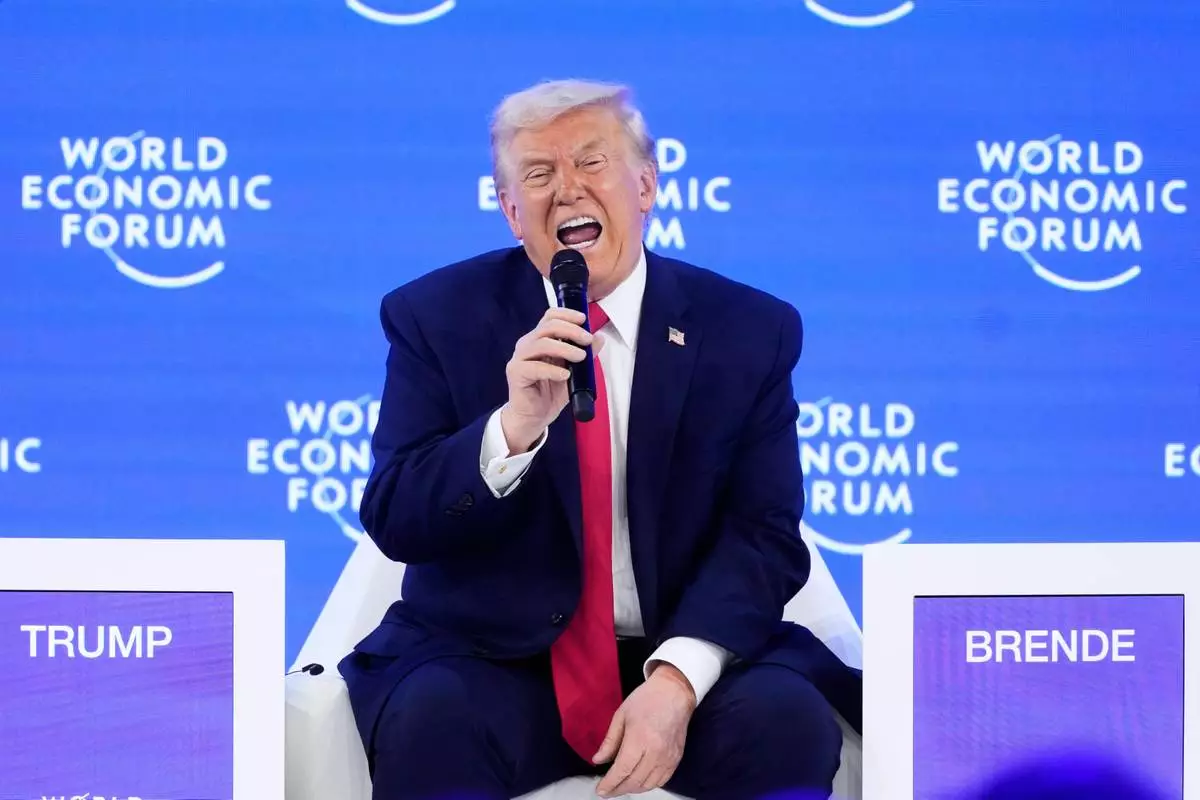
President Donald Trump speaks during the Annual Meeting of the World Economic Forum in Davos, Switzerland, Wednesday, Jan. 21, 2026. (AP Photo/Markus Schreiber)
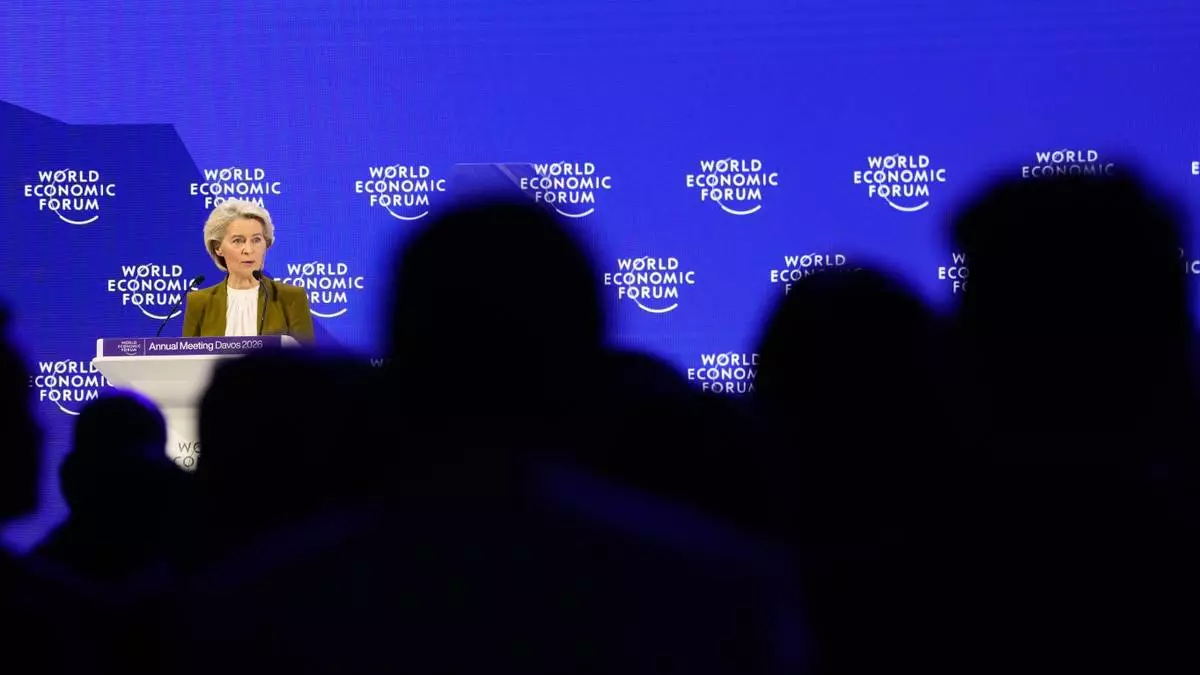
President Donald Trump speaks during the Annual Meeting of the World Economic Forum in Davos, Switzerland, Wednesday, Jan. 21, 2026. (AP Photo/Markus Schreiber)

President of the European Commission Ursula von der Leyen talks during the Annual Meeting of the World Economic Forum in Davos, Switzerland, Tuesday, Jan. 20, 2026. (AP Photo/Markus Schreiber)
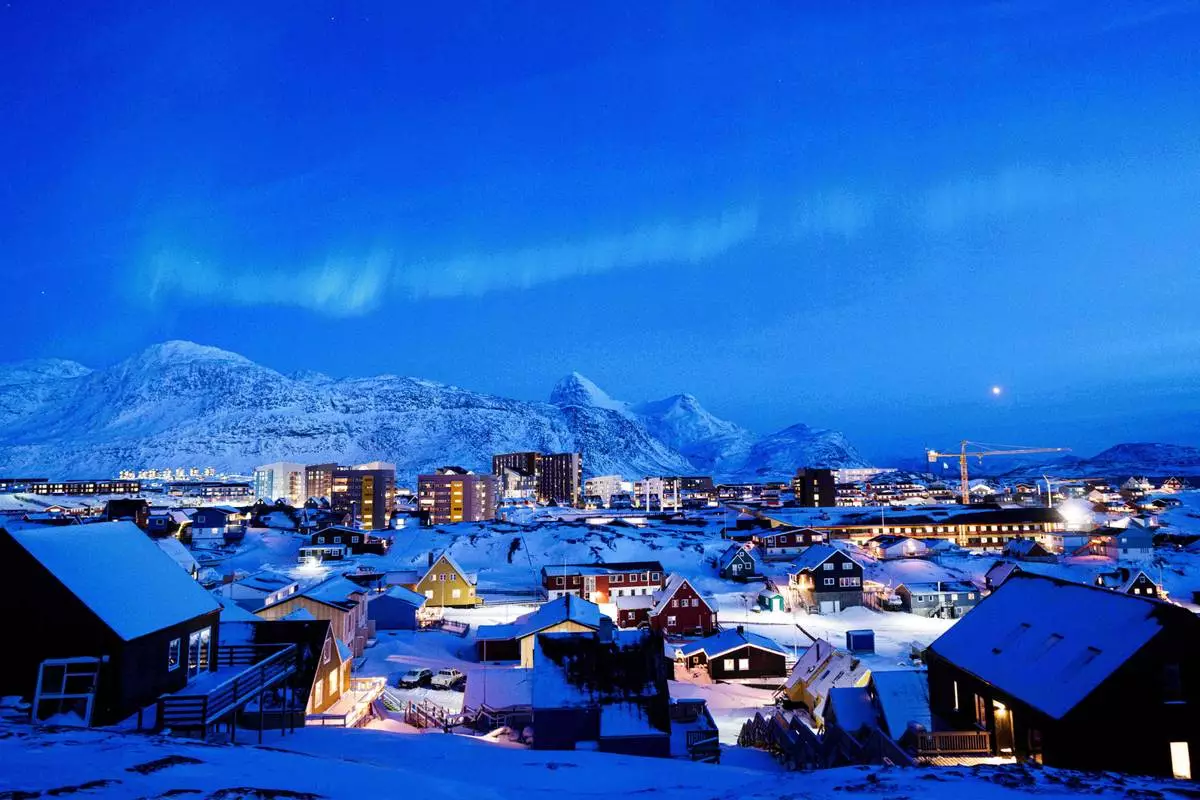
President of the European Commission Ursula von der Leyen talks during the Annual Meeting of the World Economic Forum in Davos, Switzerland, Tuesday, Jan. 20, 2026. (AP Photo/Markus Schreiber)

An Aurora Borealis is seen in the sky above Nuuk, Greenland, on Tuesday, Jan. 20, 2026. (AP Photo/Evgeniy Maloletka)
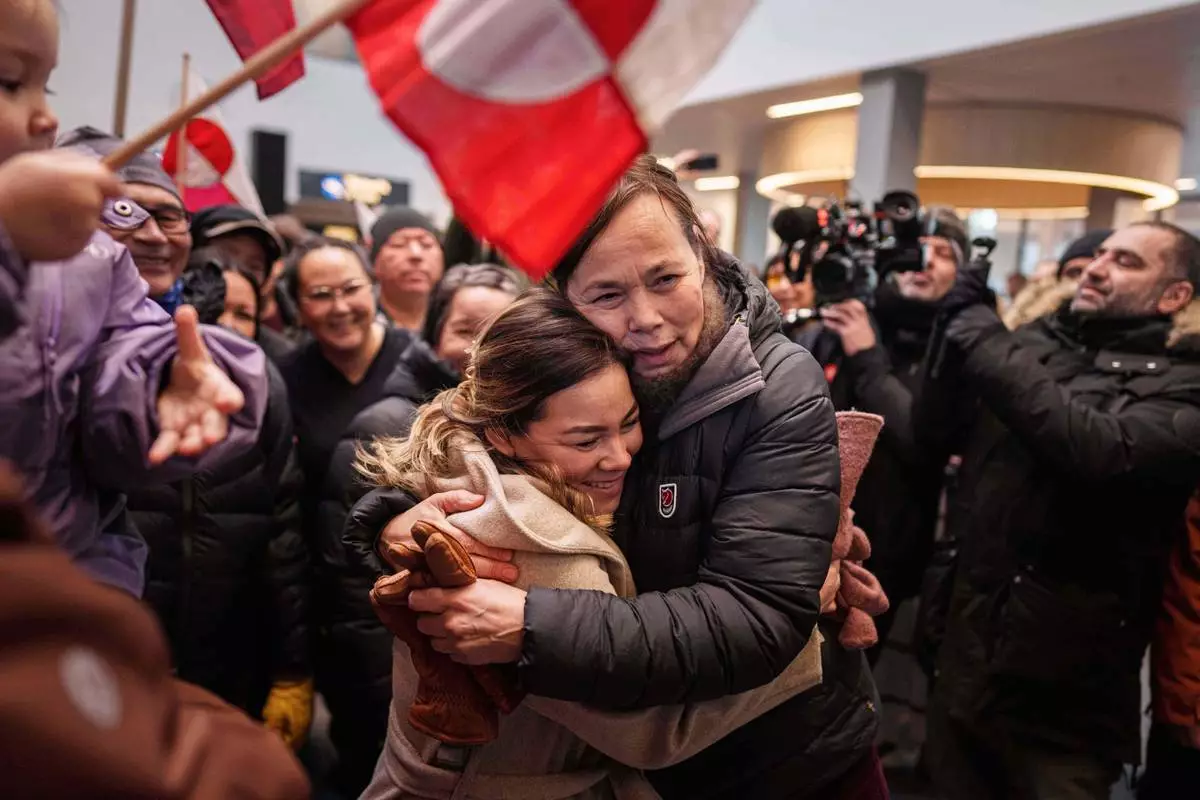
An Aurora Borealis is seen in the sky above Nuuk, Greenland, on Tuesday, Jan. 20, 2026. (AP Photo/Evgeniy Maloletka)

Greenland Minister for Foreign Affairs and Research Vivian Motzfeldt, center right, hugs a woman after arriving at the airport in Nuuk, Greenland, Tuesday, Jan. 20, 2026. (AP Photo/Evgeniy Maloletka)
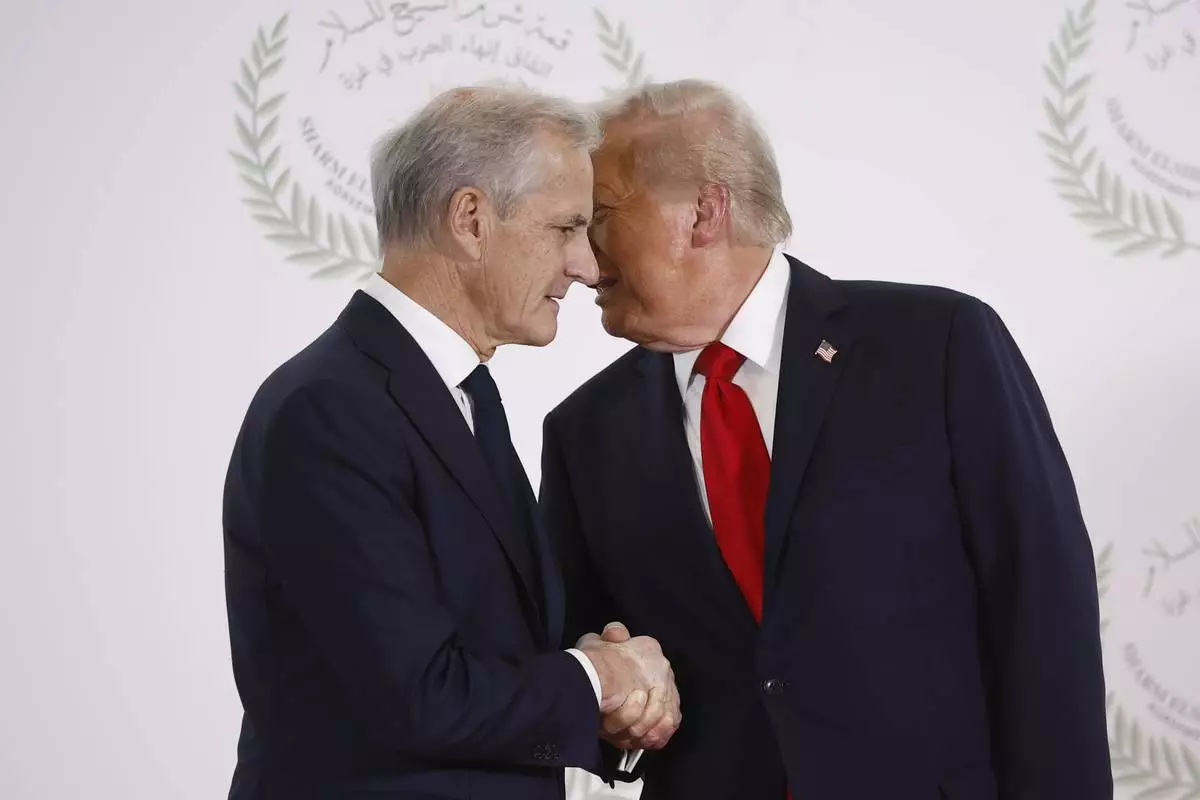
Greenland Minister for Foreign Affairs and Research Vivian Motzfeldt, center right, hugs a woman after arriving at the airport in Nuuk, Greenland, Tuesday, Jan. 20, 2026. (AP Photo/Evgeniy Maloletka)

FILE - President Donald Trump and Norway's Prime Minister Jonas Gahr Store shake hands during the group photo at the Gaza International Peace Summit in Sharm el-Sheikh, Egypt, Oct.13 2025. (Yoan Valat, Pool photo via AP, File)


FILE - President Donald Trump and Norway's Prime Minister Jonas Gahr Store shake hands during the group photo at the Gaza International Peace Summit in Sharm el-Sheikh, Egypt, Oct.13 2025. (Yoan Valat, Pool photo via AP, File)

DUBAI, United Arab Emirates (AP) — Iranian state TV on Wednesday issued the first official death toll from recent protests, saying 3,117 people were killed, while the foreign minister issued the most direct threat yet against the United States after Tehran’s bloody crackdown, warning the Islamic Republic will be “firing back with everything we have if we come under renewed attack.”

State television carried statements by the Interior Ministry and the Martyrs Foundation, an official body providing services to families of those killed in wars, stating the toll and saying 2,427 of the dead in the demonstrations that began Dec. 28 were civilians and security forces. It did not elaborate on the rest.

The U.S.-based Human Rights Activists News Agency said the death toll was at least 4,560. The agency has been accurate throughout the years on demonstrations and unrest in Iran, relying on a network of activists inside the country that confirms all reported fatalities. The Associated Press has been unable to independently assess the death toll.

The comments by Foreign Minister Abbas Araghchi, who saw his invitation to the World Economic Forum in Davos rescinded over the killings, came as a U.S. aircraft carrier group moved west toward the Middle East from Asia. U.S. fighter jets and other equipment appeared to be moving in the Mideast after a major U.S. military deployment in the Caribbean saw troops seize Venezuela's Nicolás Maduro.

Araghchi made the threat in an opinion article published by The Wall Street Journal. The foreign minister contended “the violent phase of the unrest lasted less than 72 hours” and sought again to blame armed demonstrators for the violence. Videos that made it out of Iran despite an internet shutdown appear to show security forces repeatedly using live fire to target apparently unarmed protesters, something unaddressed by Araghchi.

“Unlike the restraint Iran showed in June 2025, our powerful armed forces have no qualms about firing back with everything we have if we come under renewed attack,” Araghchi wrote, referring to the 12-day war launched by Israel on Iran in June. “This isn’t a threat, but a reality I feel I need to convey explicitly, because as a diplomat and a veteran, I abhor war.”

He added: “An all-out confrontation will certainly be ferocious and drag on far, far longer than the fantasy timelines that Israel and its proxies are trying to peddle to the White House. It will certainly engulf the wider region and have an impact on ordinary people around the globe.”

Araghchi's comments likely refer to Iran's short- and medium-range missiles. The Islamic Republic relied on ballistic missiles to target Israel in the war and left its stockpile of the shorter-range missiles unused, something that could be fired to target U.S. bases and interests in the Persian Gulf. Already, there have been some restrictions on U.S. diplomats traveling to bases in Kuwait and Qatar.

Mideast nations, particularly diplomats from Gulf Arab countries, had lobbied U.S. President Donald Trump not to attack Iran after he threatened to act in response to the killing of demonstrators. Last week, Iran shut its airspace, likely in anticipation of a strike.

The USS Abraham Lincoln, which had been in the South China Sea in recent days, had passed through the Strait of Malacca, a key waterway connecting the sea and Indian Ocean, by Tuesday, ship-tracking data showed.

A U.S. Navy official, speaking on condition of anonymity, said the aircraft carrier and three accompanying destroyers were heading west.

While naval and other defense officials stopped short of saying the carrier strike group was headed to the Middle East, its current heading and location in the Indian Ocean means it is only days away from moving into the region. Meanwhile, U.S. military images released in recent days showed F-15E Strike Eagles arriving in the Mideast and forces in the region moving a HIMARS missile system, the type used with great success by Ukraine after Russia's full-scale invasion in the country in 2022.

The death toll exceeds that of any other round of protest or unrest in Iran in decades, and recalls the chaos surrounding the 1979 revolution that brought the Islamic Republic into being. Although there have been no protests for days, there are fears the toll could increase significantly as information gradually emerges from a country still under a government-imposed shutdown of the internet since Jan. 8.

The first indication from authorities of the extent of casualties came Saturday from Iran's Supreme Leader Ayatollah Ali Khamenei, who said the protests had left “several thousand” people dead and blamed the United States. The protests began over economic pressures but quickly broadened to take on the theocracy.

The Interior Ministry statement Wednesday asserted that “terrorists used live ammunition that led to the deaths of 2,427 people and security forces.”

The Martyrs Foundation said Iran would pursue what it called “terrorists” who it claimed were tied to Israel and “supported, equipped and armed” by the U.S.

Nearly 26,500 people have been arrested, according to the Human Rights Activists News Agency. Comments from officials have led to fears of some of those detained being put to death in Iran, one of the world’s top executioners.

That and the killing of peaceful protesters have been two red lines laid down by Trump in the tensions.

The National Army of Kurdistan, the armed wing of the Kurdistan Freedom Party, or PAK, claimed Iran launched an attack against one of its bases near Irbil, some 320 kilometers (200 miles) north of Baghdad. It said one fighter had been killed, and released mobile phone footage of a fire in the predawn darkness.

Iran did not immediately acknowledge the attack, which would be the first foreign operation Tehran has launched since the protests started.

A handful of Iranian Kurdish dissident or separatist groups — some with armed wings — have long found a safe haven in northern Iraq’s semiautonomous Kurdish region, where their presence has been a point of friction between the central government in Baghdad and Tehran. The PAK has claimed it launched attacks in Iran as a crackdown on the demonstrations took place, something reported by semiofficial Iranian news agencies as well.

Associated Press writers Stella Martany in Irbil, Iraq, Konstantin Toropin in Washington and Elena Becatoros in Dubai contributed to this report.

Iranian Foreign Minister Abbas Araghchi, attends a seminar in Beirut, Lebanon, Friday, Jan. 9, 2026. (AP Photo/Hussein Malla)

Iranian Foreign Minister Abbas Araghchi, attends a seminar in Beirut, Lebanon, Friday, Jan. 9, 2026. (AP Photo/Hussein Malla)

Recommended Articles