As Europe enters a critical election year, rising tensions with the United States over trade and defense are redefining political debates across the continent.
Portugal's presidential election on Sunday has ushered in what observers are calling a politically pivotal year for Europe.
According to publicly available election schedules, at least five of the European Union's 27 member states will hold parliamentary elections in 2026, while Portugal, Estonia, and Bulgaria will also elect new presidents, marking the start of a highly concentrated electoral cycle across the bloc.
Against this backdrop, concerns over security, foreign policy direction, and Europe's role in global affairs are increasingly driving political conversations across the EU.
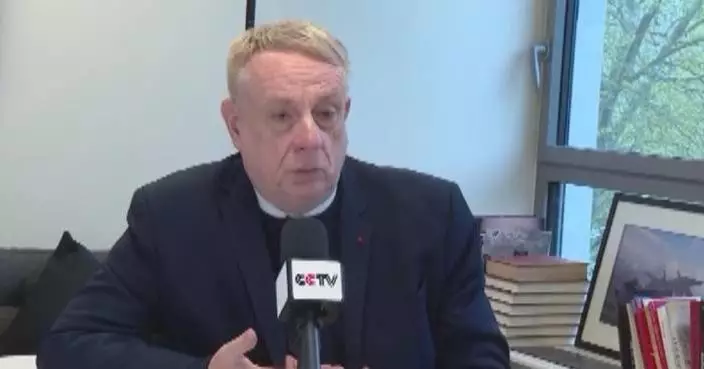
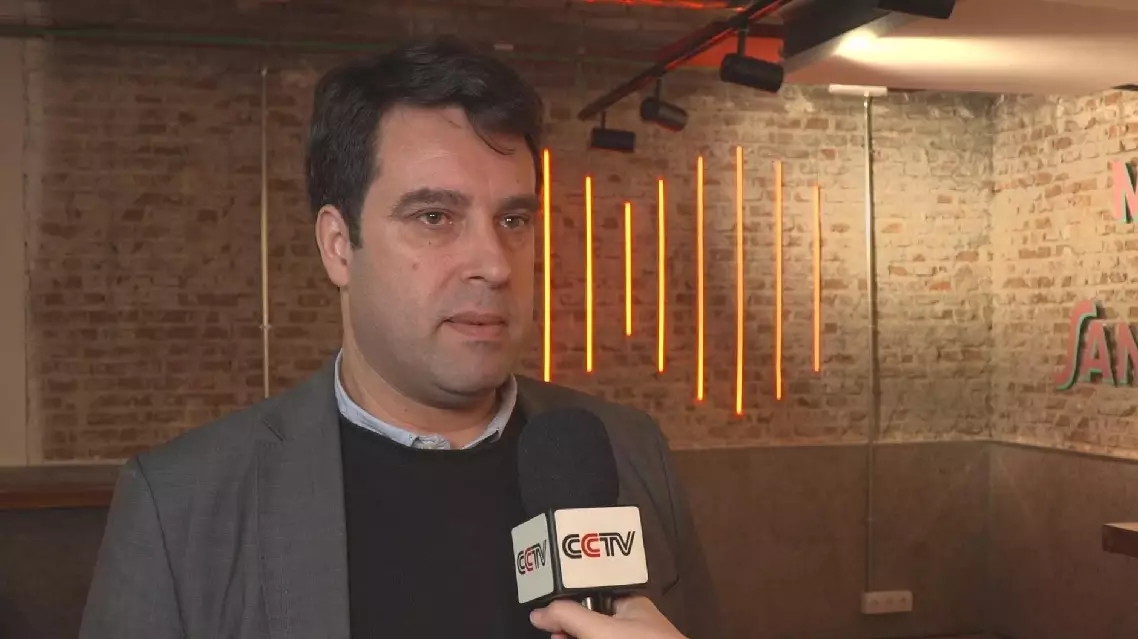
"Portugal, like the rest of Europe, is facing a dilemma: whether military investment will truly strengthen defense and whether such investment is secure. The core issue lies in how individual countries and the EU will respond to this challenge. Will they build or rebuild their own military-industrial complex, or will they continue purchasing military equipment and weapons from the United States? In other words, will they maintain their dependence on the U.S., or will they pursue a broader path toward achieving autonomy? " said Bruno Caldeira, director of Raia Diplomatica, a diplomacy and business magazine of the Iberian Peninsula.
"That's the real dilemma: will they become military vassals of the United States? As we know, the U.S. wants NATO countries to allocate 5 percent of their GDP to defense. So, the question is - will Europe ultimately create its own expansive defense industry?" said Caldeira.
Similar calls for greater strategic autonomy can be heard across political and academic communities in France, Germany, Poland, and the Nordic countries, where a growing consensus is forming that Europe needs more control over its future security agenda.
Caldeira noted that for decades, the U.S. and NATO were the cornerstones of Europe's security architecture, but as the international landscape shifts, many European countries are realizing that long-term dependence on external powers can introduce uncertainty at critical moments.
"The fact is, transatlantic relations have changed significantly. We know that President Trump is a unique figure, but it's also true that problems existed before, not necessarily on military matters, but rather on trade, such as disputes between the U.S. and Europe. I believe this will lead to a very interesting debate in the near future. But the reality is, transatlantic relations have now reached their lowest point in history," said Caldeira.
On Saturday, U.S. President Donald Trump announced that his administration would impose a 10 percent tariff starting February 1 on all goods from Denmark, Norway, Sweden, France, Germany, the UK, the Netherlands, and Finland in response to their resistance to a proposed U.S. acquisition of Greenland.
Tariffs would escalate to 25 percent on June 1 unless a deal is reached, the U.S. president said on social media.
On Sunday, the targeted countries issued a joint statement condemning Washington's actions as "damaging to transatlantic relations" and warned they could ignite a dangerous cycle of confrontation. The statement reiterated their solidarity with Denmark and Greenland and reaffirmed their readiness for dialogue grounded in respect for sovereignty and international law.
Portugal vote opens Europe's pivotal election year amid US rift