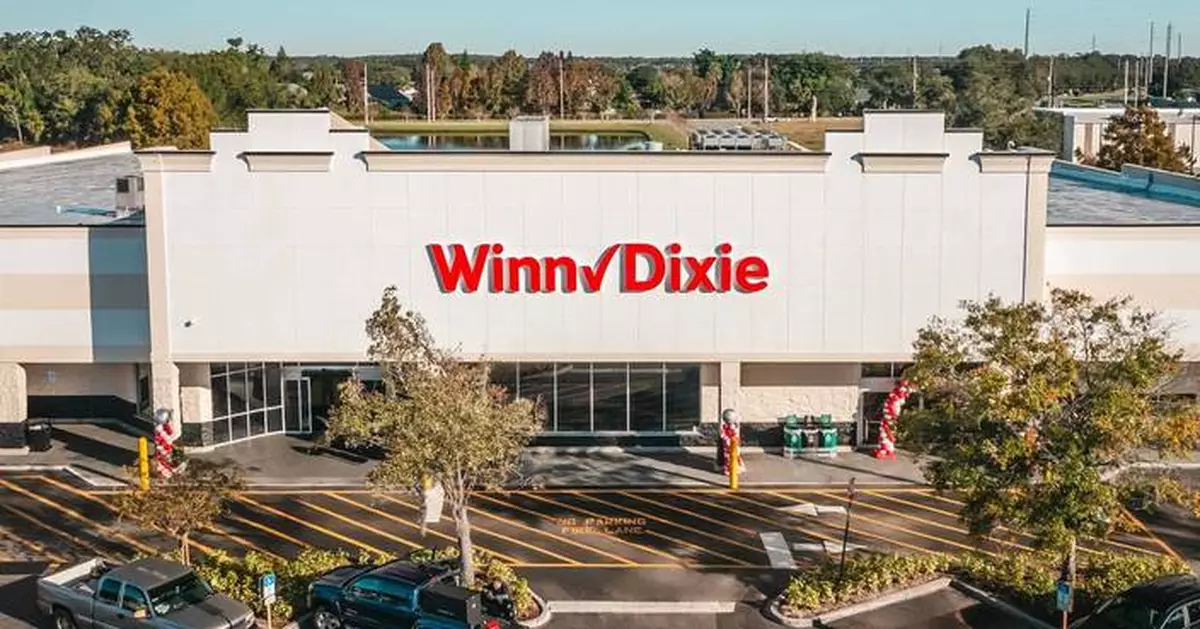
JACKSONVILLE, Fla.--(BUSINESS WIRE)--Jan 21, 2026--
Today, Southeastern Grocers officially becomes The Winn-Dixie Company, uniting the organization and its stores under the name generations of families know and trust. It’s a bold next step for a century-old brand, focused on strengthening neighborhoods, delivering standout value and service and showing up for the communities that have long called Winn-Dixie their hometown grocer. As part of this transformation, the company is also introducing a refreshed Winn-Dixie brand, designed to feel more modern, confident and connected to the way families shop today.
This press release features multimedia. View the full release here: https://www.businesswire.com/news/home/20260121168120/en/
Anthony Hucker, Chairman and CEO of The Winn-Dixie Company, said, “This is a defining moment—more than a name change, it proudly declares who we are and where we’re headed. Winn-Dixie has been part of feeding families and enriching communities for generations. Becoming The Winn-Dixie Company brings a deeply rooted company name behind our shared purpose of empowering people to feed and enrich their communities. We’re investing with intention—opening new stores, refreshing existing ones and elevating the products our customers know and love—while maintaining our commitment to value and quality.”
Winn-Dixie’s story is rooted in Florida, its historic home state. For more than a century, Winn-Dixie has earned its place as a trusted neighborhood grocer by building lasting relationships with customers and communities. That legacy, combined with a relentless commitment to helping nourish neighbors every day, sets the course for The Winn-Dixie Company as it invests in stores, value and the shopping experience customers count on.
The Winn-Dixie Company’s renewed focus is already showing up in tangible ways across Florida:
And this is only the beginning. With remodels underway and more planned, customers will continue to see The Winn-Dixie Company take shape in real time, with modern new stores, the value they expect and more of the products they know and love—all in a convenient shopping experience that earns the neighborhood trip again and again.
About The Winn-Dixie Company
The Winn-Dixie Company, based in Jacksonville, Florida, is a trusted neighborhood grocer with deep roots across Florida and southern Georgia. Building on more than a century of legacy, the company is shaping the future of neighborhood grocery through continued store investments, innovative formats and a seamless omnichannel experience that delivers exceptional value both in stores and online. Guided by its purpose to feed and enrich the communities it serves, The Winn-Dixie Company is known for exceptional service and locally authentic stores. The grocer is committed to offering fresh, high-quality products and meaningful value through its nationally recognized Winn-Dixie Rewards program.
For more information and updates, visit WinnDixie.com and follow @WinnDixie on Facebook, Instagram and LinkedIn.
About Winn-Dixie
Founded in 1925, Winn-Dixie is a trusted neighborhood grocer serving communities across Florida and southern Georgia. A subsidiary of The Winn-Dixie Company, Winn-Dixie operates locally authentic neighborhood grocery and liquor stores, complemented by convenient online grocery delivery. To learn more, visit WinnDixie.com.
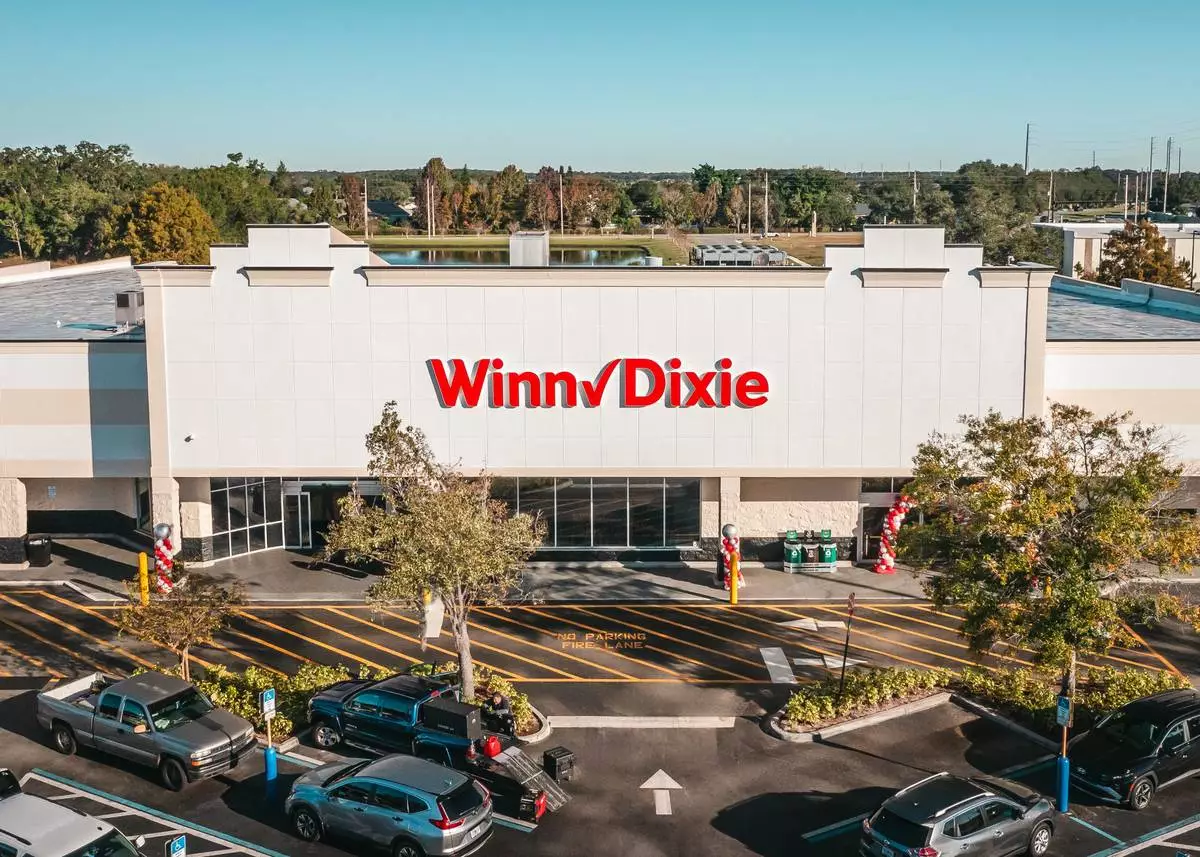
Southeastern Grocers has officially become The Winn-Dixie Company, uniting the organization and its stores under the name generations of families know and trust. As part of this transformation, the company is also introducing a refreshed Winn-Dixie brand, designed to feel more modern, confident and connected to the way families shop today.
SANTA ANA, Calif. (AP) — A crack in a damaged chemical tank in Southern California has eliminated the risk of a catastrophic explosion but it's still not safe enough for the remaining 16,000 residents living closest to the aerospace plant to go home, officials said Tuesday.
Crews were spraying water to keep cooling the tank that overheated last week, prompting the evacuation of 50,000 people in the Orange County city of Garden Grove. Most returned home after a crack formed over the Memorial Day holiday weekend, relieving pressure inside.
The evacuation zone remained the same on Tuesday morning, said Orange County Fire Capt. Brian Yau.
Crews worked overnight to ensure two other nearby tanks were neutralized and would not be affected by the compromised tank, he said, adding that material from one of these two tanks was transferred to another that has a neutralizing agent.
“They are moving material over to ensure that all threats have been eliminated,” Yau said.
Those threats include the risk of a very small explosion and potential spill, officials said.
Exposure to methyl methacrylate — a highly flammable chemical used to make plastics — can cause serious respiratory problems, neurological problems and irritation to the skin, eyes and throat, according to the federal Environmental Protection Agency. The tank at the GKN Aerospace Transparency Systems plant contains 6,000 to 7,000 gallons (22,700 to 26,500 liters) of the chemical.
The interior cooled to 93 degrees F (33.9 degrees C), the county's fire division chief Craig Covey said Monday, down from 100 degrees (37.7 degrees C) a day earlier. The company said its technical specialists and the county fire authority have removed insulation from the tank to help cool it.
Health officials sought to reassure people who are returning to homes near the plant.
“There was no contamination. There were no fumes,” Orange County Health Director Regina Chinsio-Kwong said at Monday's news conference. “There was not a leak. So it should be, you should feel comfortable going home even if you’re across the street from that new zone line.”
The South Coast Air Quality Management District will monitor the air for several months and the EPA will be checking sewer and storm drains for spills, Orange County Supervisor Janet Nguyen said.
Garden Grove Unified School District said last week it was shutting a dozen schools through what was supposed to be the last day of the school year on Wednesday but later said only three would remain closed Tuesday. It was unclear if they would reopen before the school year ends this week.
At a parking lot at a large park in Fountain Valley, just southwest of Garden Grove, people sought refuge in an ad hoc shelter there or pitched tents outside. Other people gathered in the park to enjoy Memorial Day.
Kim Yen, a retiree who was still evacuated from her home two blocks from the plant, welcomed news that the worst was not expected.
“I am happy and many of us are happy,” she said Monday.
She said she's ready to go back but wants to be sure it’s safe first. She's also been worrying about the emergency workers, who she called “our heroes.”
As the tank heated up, the chemical converted from liquid to gas, ramping up the pressure and explosion risk, said Andrew Whelton, a Purdue University engineering professor who has studied environmental contamination. Some of the methyl methacrylate may already have hardened into a stable plastic similar to plexiglass, reducing the danger, he said.
The tank could eventually cool enough for crews to safely stabilize and drain the remaining material without triggering a spark or ignition, Whelton said.
However, he said there is still a risk of an explosion while the chemical remains hot and reactive. Temperatures need to fall closer to 60 to 70 degrees Fahrenheit (15.6 to 21.1 degrees C) before conditions are considered significantly safer, he said.
GKN Aerospace Transparency Systems makes cockpit windows, canopies and windshields for military and commercial aircraft. It employs about 16,000 people across 32 manufacturing sites in 12 countries, according to the company website.
“We apologize for the ongoing disruption this incident is causing and our priority remains its safe resolution, so that residents can return to their homes as quickly as possible,” the company said.
GKN Aerospace agreed in 2025 to pay state regulators more than $900,000 to settle violations involving recordkeeping, permitting issues and nitrogen oxide emissions, according to a report on the South Coast Air Quality Management District website.
——
This story has been corrected to attribute a quote to TJ McGovern, interim fire chief of the Orange County Fire Authority, not to division chief Craig Covey.
Willingham reported from Boston. Contributing were Associated Press journalists Jamie Stengle in Dallas; Ethan Swope in Garden Grove, California; and Christopher Weber in Los Angeles.
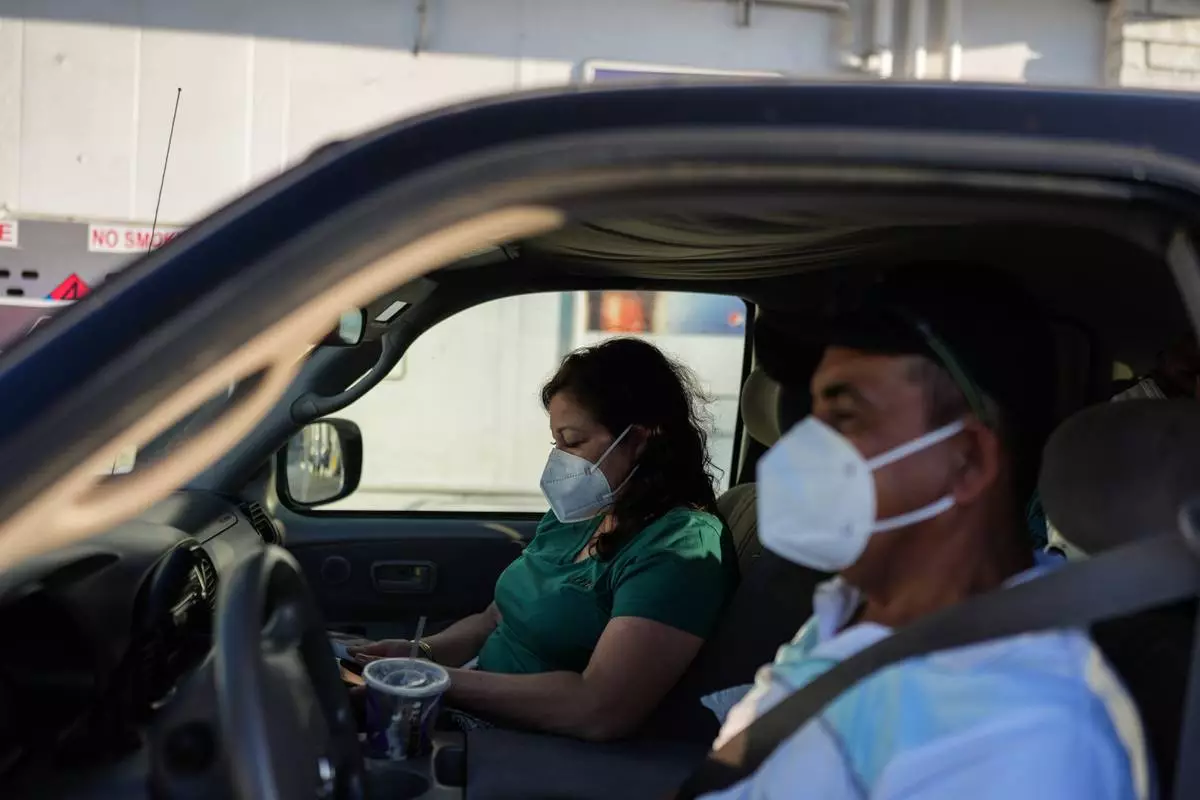
Two evacuees sit in their pickup truck at a gas station within the evacuation zone in Stanton, Calif., Monday, May 25, 2026. (AP Photo/Jae C. Hong)

An aerial view shows a police checkpoint enforcing a road closure at the evacuation zone boundary in Anaheim, Calif., Monday, May 25, 2026. (AP Photo/Jae C. Hong)
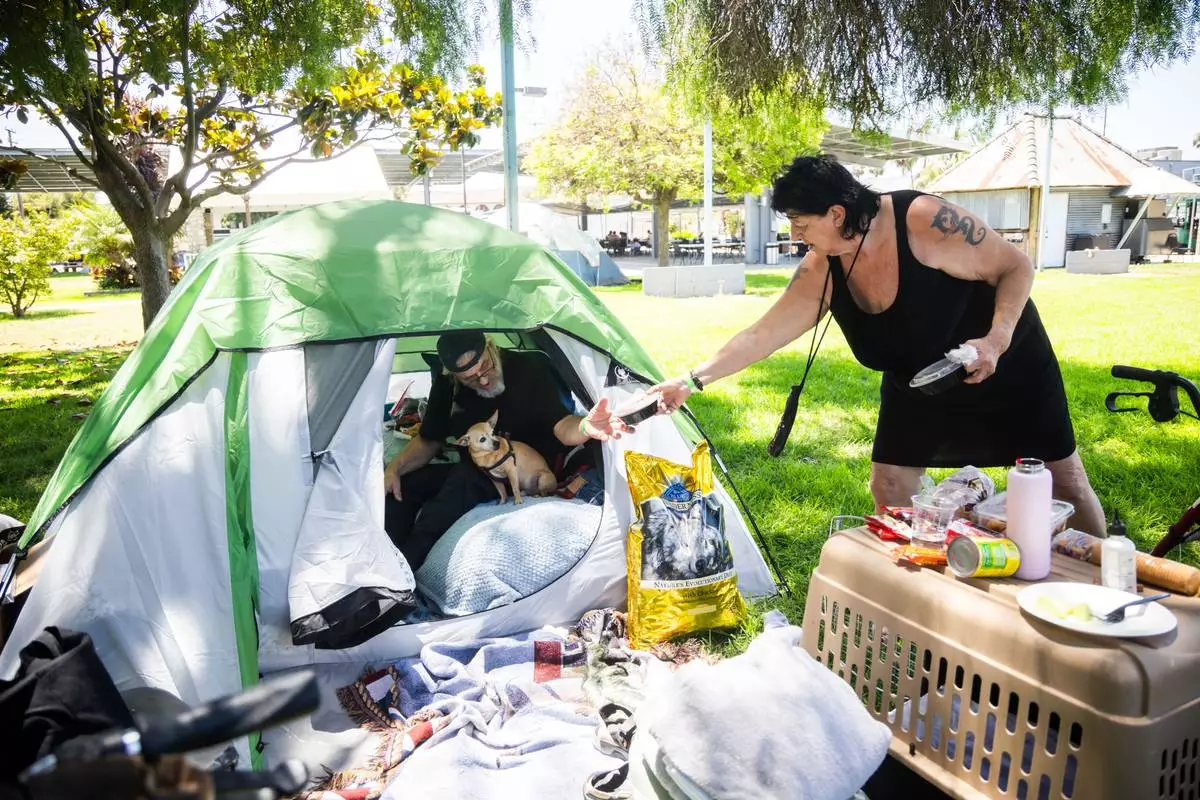
Jan De Jonge and fiancé Sher Stuckman set up a tent with their belonging and pet outside the Elks Lodge in Garden Grove, Calif., on Monday, May 25, 2026. (AP Photo/Ethan Swope)
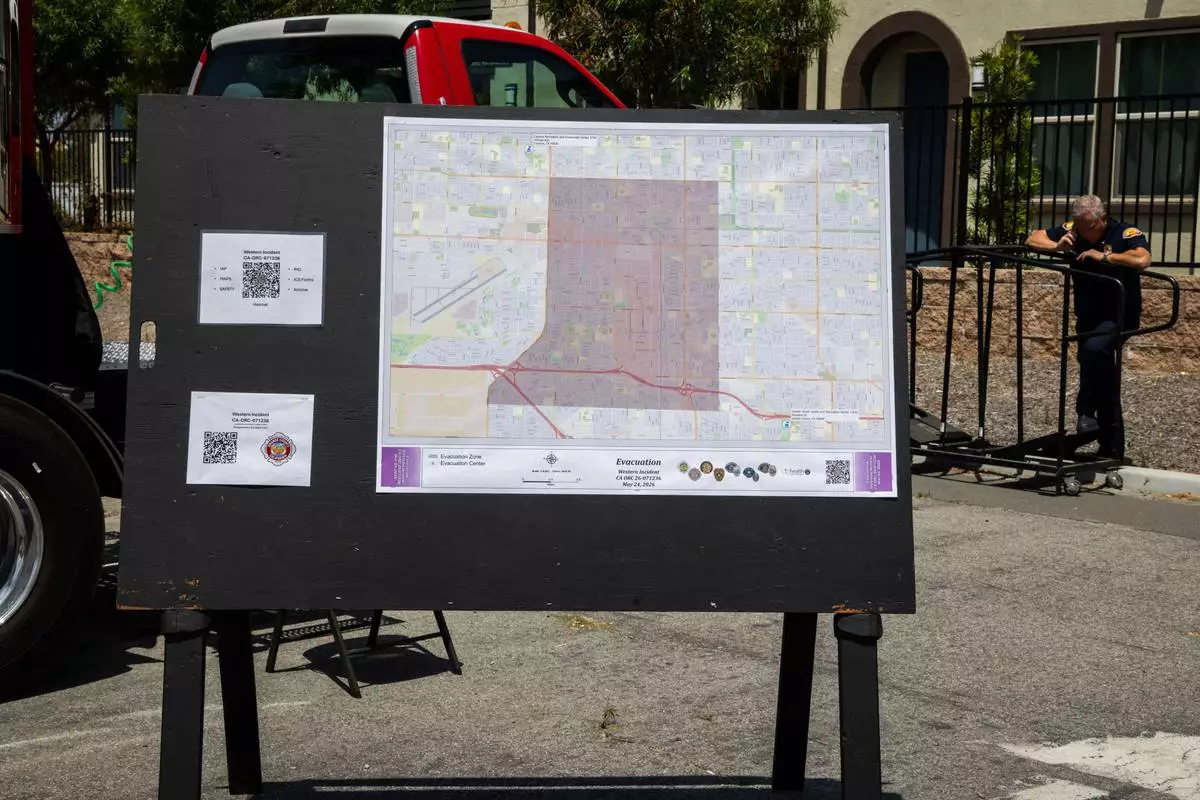
An evacuation map is displayed at the incident command post at the Los Alamitos Race Course in Cypress, Calif., on Sunday, May 24, 2026. (AP Photo/Ethan Swope)
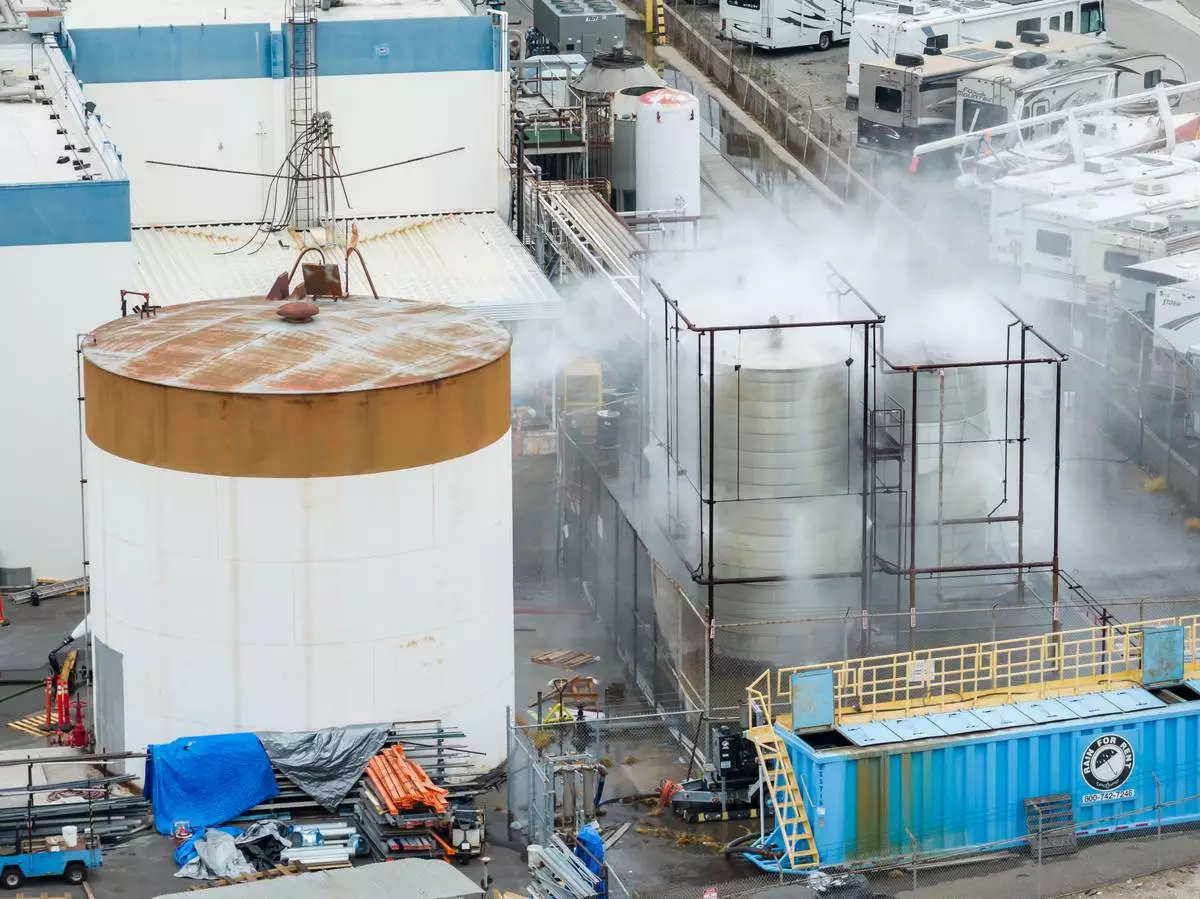
Water is sprayed on a damaged tank at GKN Aerospace in Garden Grove, Calif., on Sunday, May 24, 2026, after the tank containing a chemical used to make plastic parts overheated Thursday. (AP Photo/Ethan Swope)
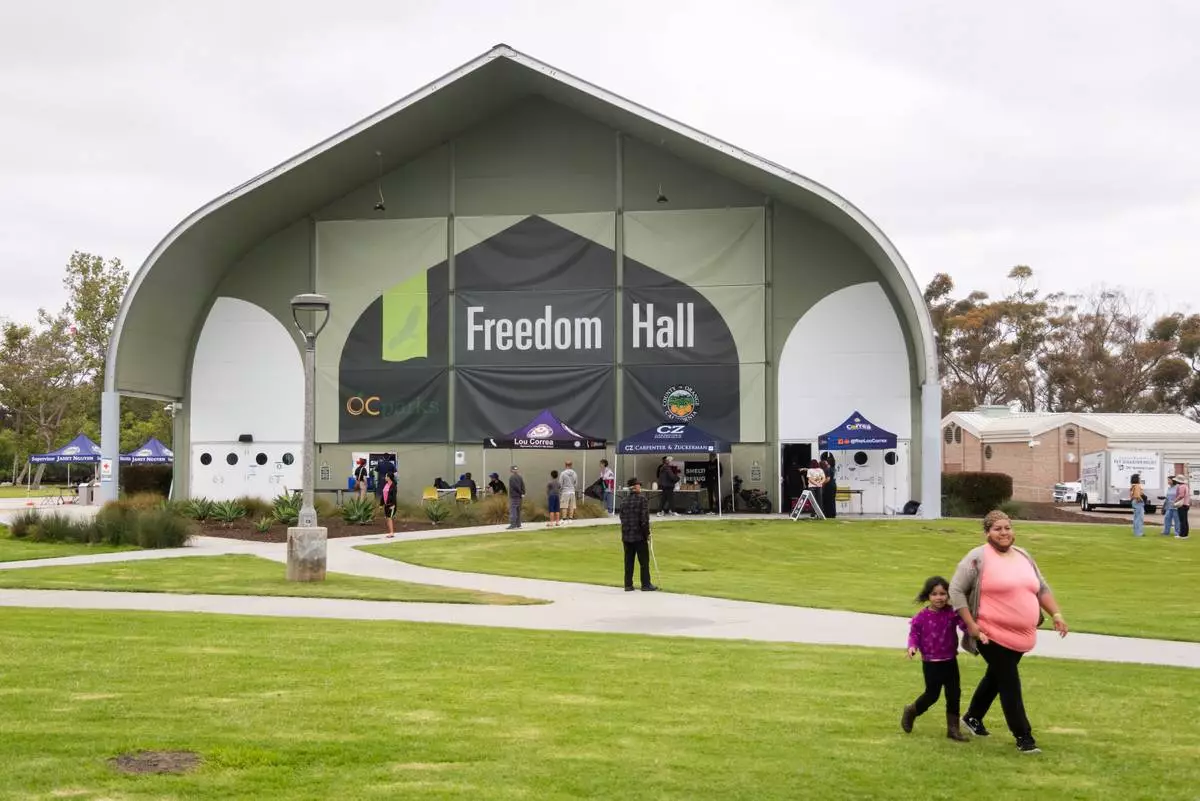
People walk outside Freedom Hall, an evacuation center in Fountain Valley, Calif., on Monday, May 25, 2026. (AP Photo/Ethan Swope)

An American Red Cross volunteer walks outside Freedom Hall, an evacuation center in Fountain Valley, Calif.,on Monday, May 25, 2026. (AP Photo/Ethan Swope)
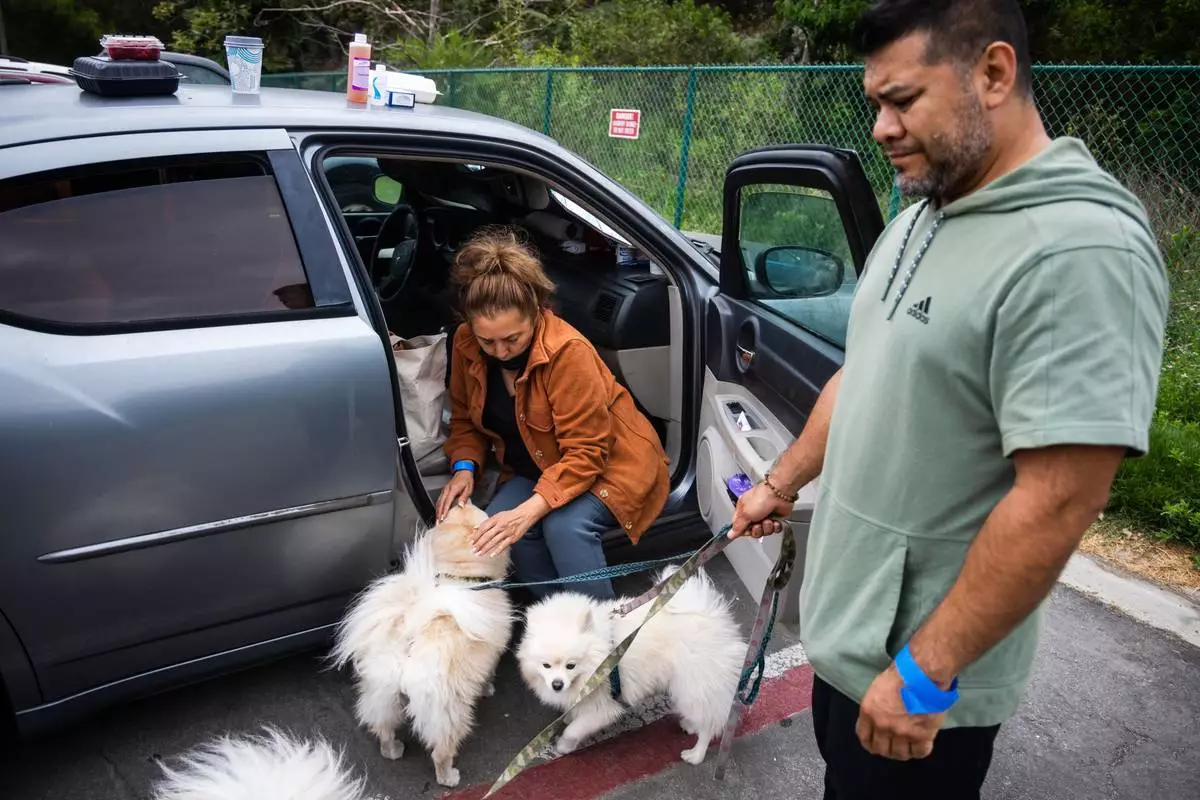
People tend to their pets outside Freedom Hall, an evacuation center in Fountain Valley, Calif., on Monday, May 25, 2026. (AP Photo/Ethan Swope)