WASHINGTON (AP) — Warm Arctic waters and cold continental land are combining to stretch the dreaded polar vortex in a way that will send much of the United States a devastating dose of winter weather later this week with swaths of painful subzero temperatures, heavy snow and powerline-toppling ice.
Meteorologists said the eastern two-thirds of the nation is threatened with a winter storm that could rival the damage of a major hurricane and has some origins in an Arctic that is warming from climate change. They warn that the frigid weather is likely to stick around through the rest of January and into early February, meaning the snow and ice that accumulates will take a long time to melt.
Click to Gallery
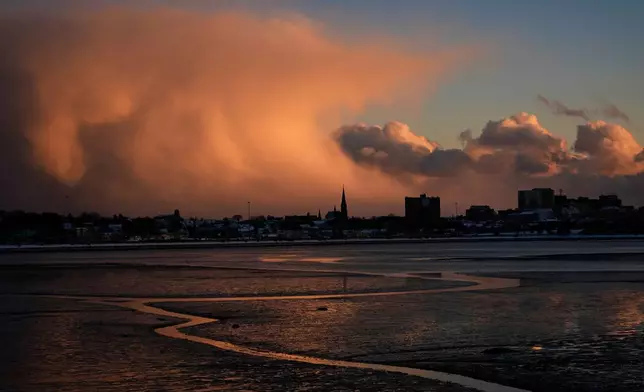
Storm clouds that had brought brief snow flurries begin to clear, Tuesday, Jan. 20, 2026, over Portland, Maine. (AP Photo/Robert F. Bukaty)
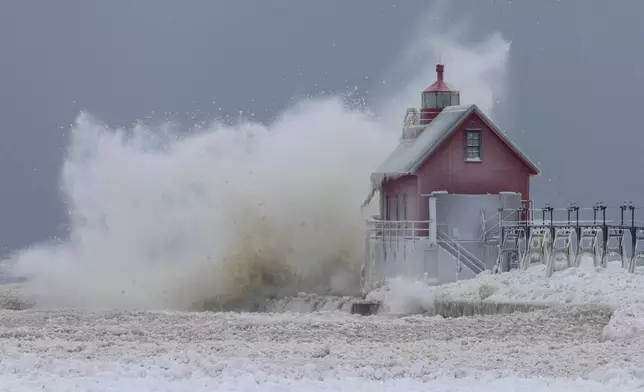
A large wave from Lake Michigan sends ice balls into the air as it crashes into the South Pierhead Outer Light at Grand Haven State Park in Grand Haven, Mich., Monday, Jan. 19, 2026. (Joel Bissell/Kalamazoo Gazette via AP)
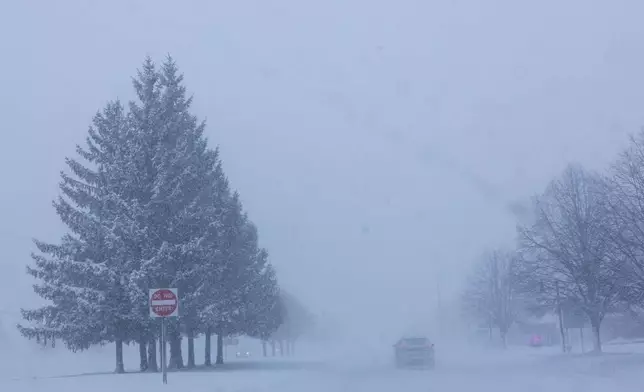
Vehicles are driven through whiteout conditions along Lake Michigan Drive during a winter storm warning in Ottawa County, Mich. on Monday, Jan. 19, 2026. (Joel Bissell/Kalamazoo Gazette via AP)
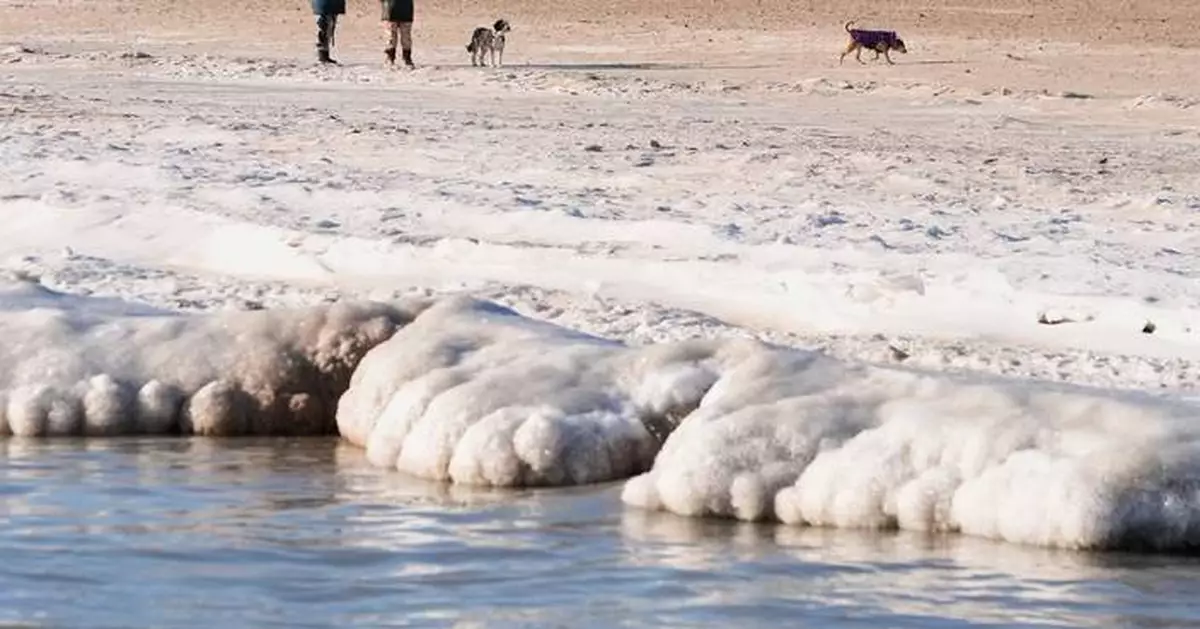
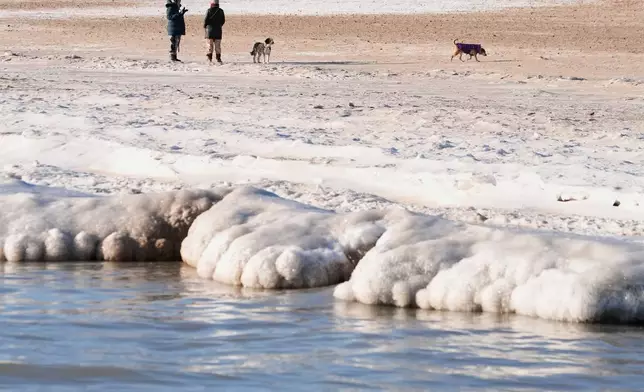
Ice forms along the Lake Michigan shore as People walk their dogs on a beach, Tuesday, Jan. 20, 2026, in Chicago. (AP Photo/Kiichiro Sato)
Forecasts have the storm, expected to hit starting Friday, stretching from New Mexico to New England and across the Deep South. About 230 million people face temperatures of 20 degrees (-7 degrees Celsius) or colder and around 150 million are likely to be hit by snow and ice, with many Americans getting both, according to the National Weather Service.
“I think people are underestimating just how bad it’s going to be,” said former National Oceanic and Atmospheric Administration chief scientist Ryan Maue, now a private meteorologist.
The polar vortex, a patch of bitterly cold air that often stays penned up in northern Canada and Alaska, is being elongated by a wave in the upper atmosphere that goes back to a relatively ice-free part of the Arctic and snow-buried Siberia. As the bone-chilling temperatures sweep through the U.S., they'll meet with moisture from off California and the Gulf of Mexico to set up crippling ice and snow in many areas.
The origins of the system begin in the Arctic, where relatively warmer temperatures add energy to the polar vortex and help push its cold air south.
“The atmosphere is aligned perfectly that the pattern is locked into this warm Arctic, cold continent," Maue said. "And it’s not just here for us in North America, but the landmass of Eastern Europe to Siberia is also exceptionally cold. The whole hemisphere has gone into the deep freeze.”
As far back as October 2025, changes in the Arctic and low sea ice were setting up conditions for the kind of stretched polar vortex that brings severe winter weather to the U.S., said winter weather expert Judah Cohen, an MIT research scientist. Heavy Siberian snowfall added to the push-and-pull of weather that warps the shape of the normally mostly circular air pattern. Those conditions “kind of loaded the dice a bit'' for a stretching of the polar vortex, he said.
Cohen co-authored a July 2025 study that found more stretched polar vortex events linked to severe winter weather bursts in the central and eastern U.S. over the past decade. Cohen said part of the reason is that dramatically low sea ice in the Barents and Kara seas in the Arctic helps set up a pattern of waves that end up causing U.S. cold bursts. A warmer Arctic is causing sea ice in that region to shrink faster than other places, studies have found.
Arctic sea ice is at a record low extent for this time of year, according to the National Snow and Ice Data Center.
The center of the stretched polar vortex will be somewhere above Duluth, Minnesota, by Friday morning, ushering in “long-lasting brutal cold,” Maue said. Temperatures in the North and Midwest will get about as cold as possible, even down to minus 25 or 30 degrees Fahrenheit (minus 32 to minus 34 degrees Celsius), Maue said. The average low temperature for the Lower 48 states will dance around 11 or 12 degrees (minus 12 to minus 11 degrees Celsius) on Saturday, Sunday and Monday, Maue said.
Two Great Lakes — Erie and Ontario — may freeze up, which would at least reduce the famed lake-effect snow a bit, Maue said.
National Weather Service meteorologist Zack Taylor of the national Weather Prediction Center said most areas east of the Rockies will be impacted by the bitter cold, snow or ice. Treacherous freezing rain could stretch from the southern plains through the mid-South and into the Carolinas, he said.
“We’re looking at the potential for impactful ice accumulation. So the kind of ice accumulation that could cause significant or widespread power outages or potentially significant tree damage,” he said.
And if you don't get ice, you could get “another significant swath of heavy snow,” Taylor said. He said it was too early to predict how many inches will fall, but “significant snowfall accumulations” could hit "the Ozarks region, Tennessee and Ohio valleys, the central Appalachians, and then into the mid-Atlantic, and perhaps into the portions of the northeast.”
Maue said in the mid-Atlantic around the nation's capital, there's a possibility that “you can get two blizzards on top of each other in the next 14 days.”
The Associated Press’ climate and environmental coverage receives financial support from multiple private foundations. AP is solely responsible for all content. Find AP’s standards for working with philanthropies, a list of supporters and funded coverage areas at AP.org.
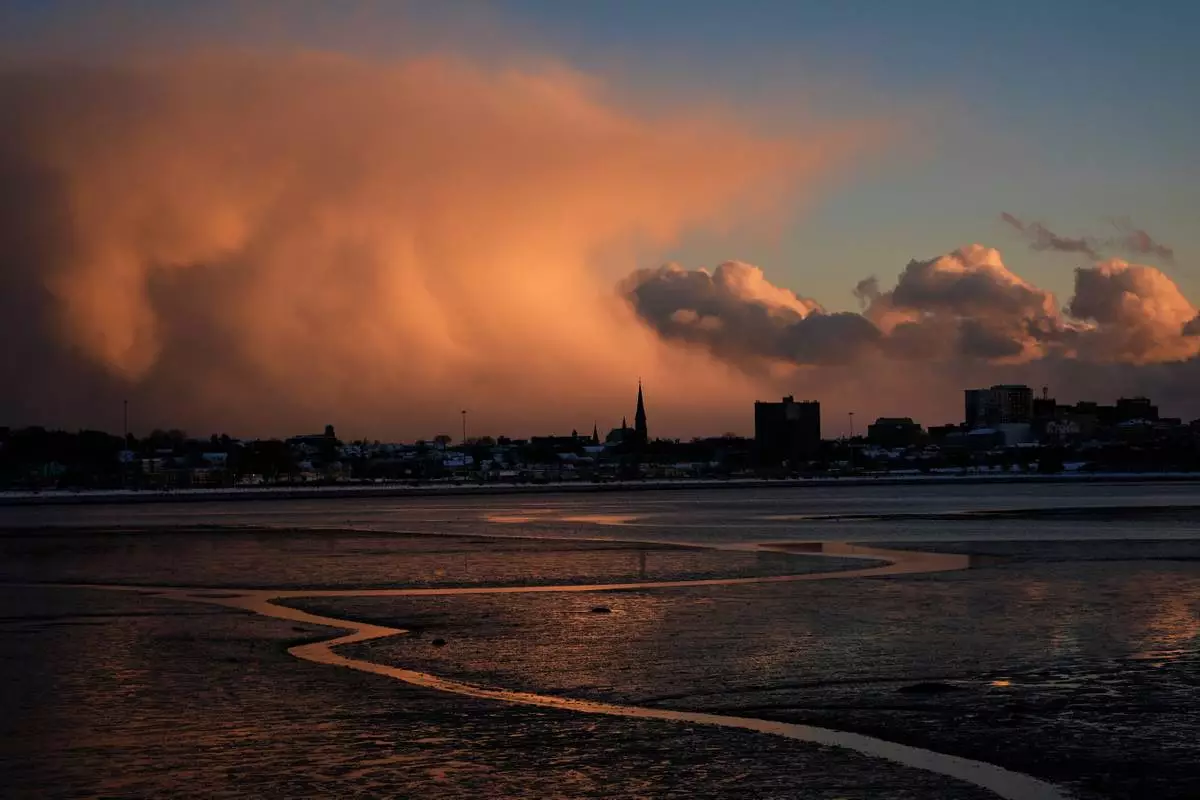
Storm clouds that had brought brief snow flurries begin to clear, Tuesday, Jan. 20, 2026, over Portland, Maine. (AP Photo/Robert F. Bukaty)
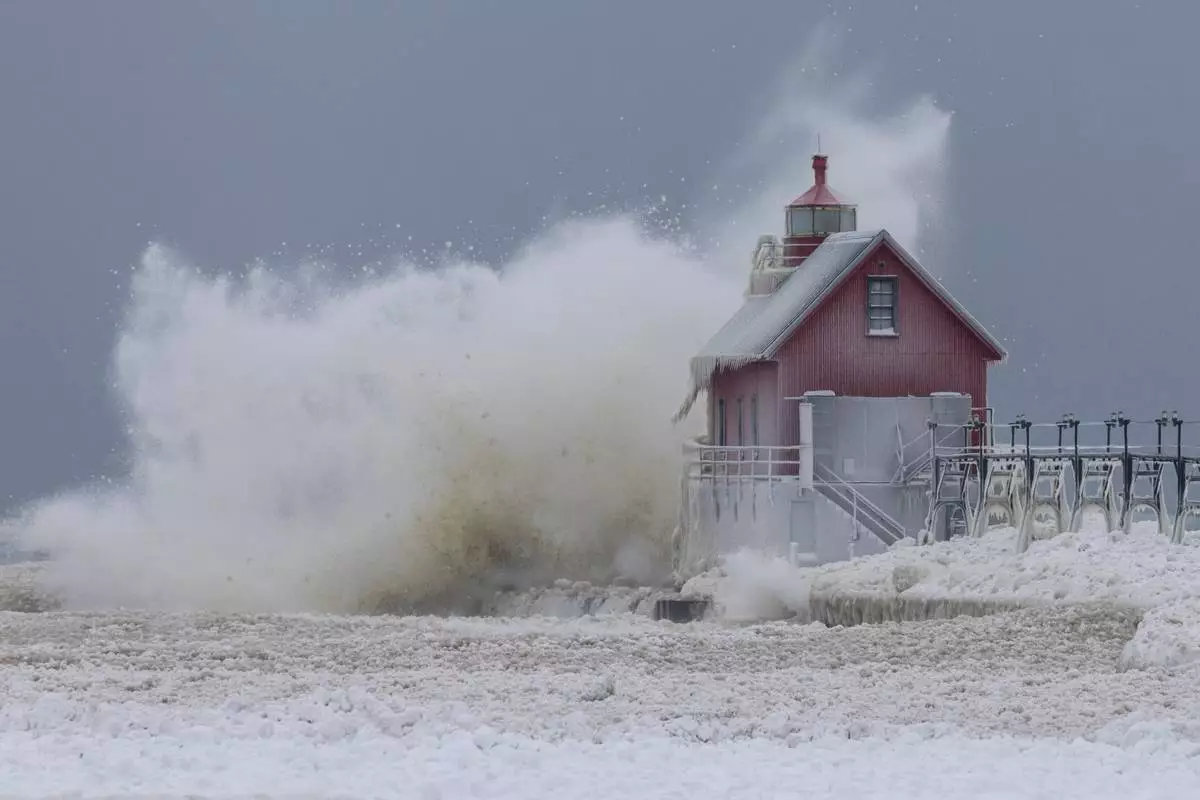
A large wave from Lake Michigan sends ice balls into the air as it crashes into the South Pierhead Outer Light at Grand Haven State Park in Grand Haven, Mich., Monday, Jan. 19, 2026. (Joel Bissell/Kalamazoo Gazette via AP)
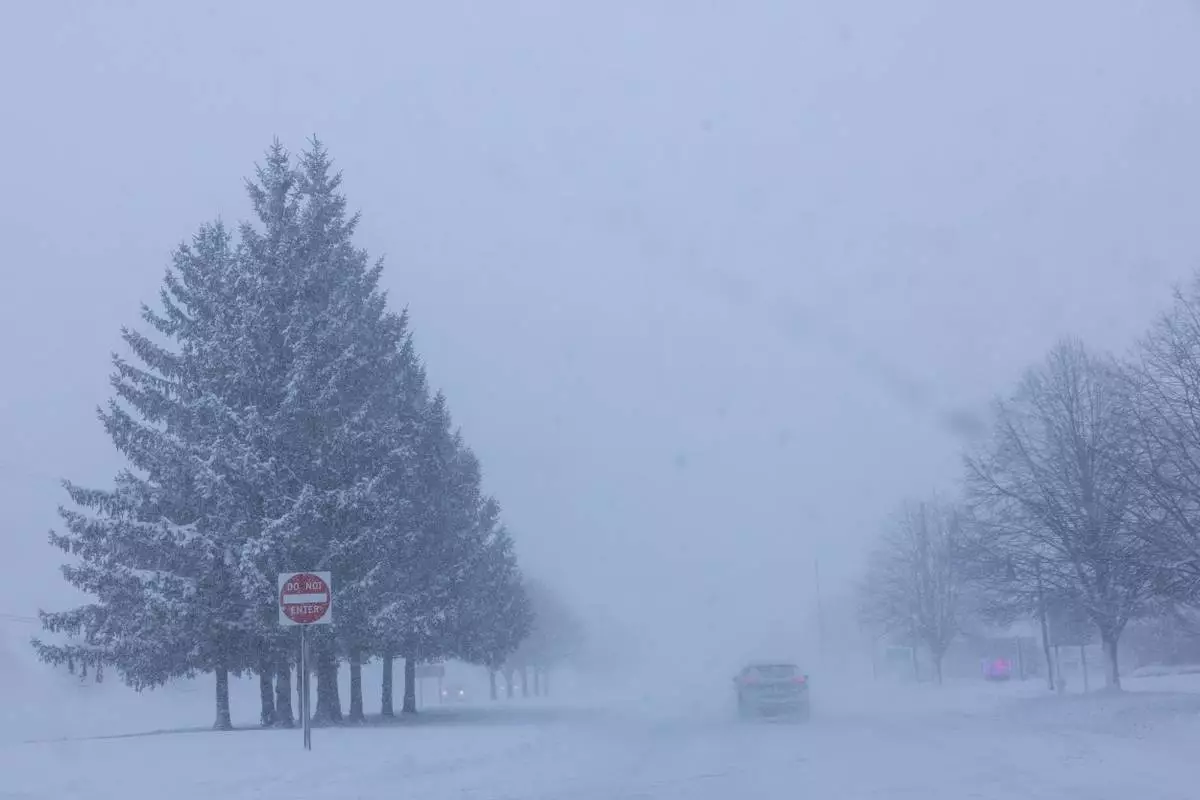
Vehicles are driven through whiteout conditions along Lake Michigan Drive during a winter storm warning in Ottawa County, Mich. on Monday, Jan. 19, 2026. (Joel Bissell/Kalamazoo Gazette via AP)
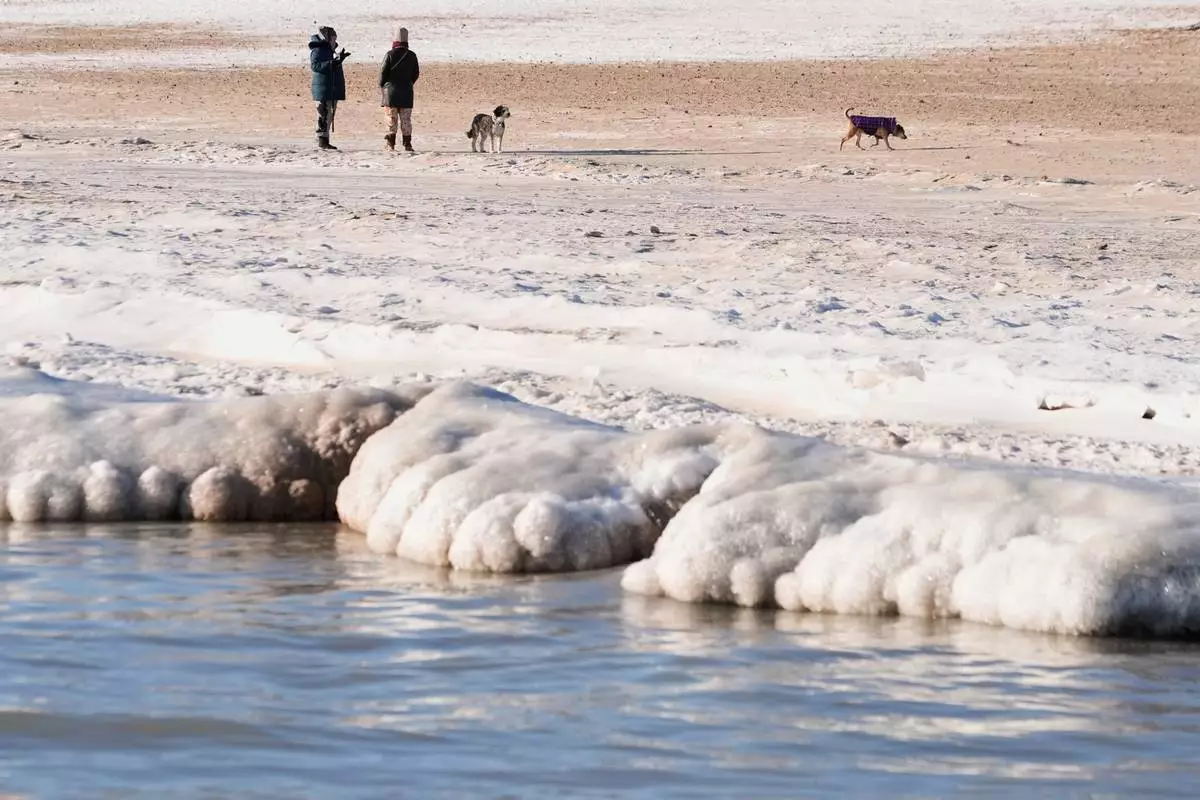
Ice forms along the Lake Michigan shore as People walk their dogs on a beach, Tuesday, Jan. 20, 2026, in Chicago. (AP Photo/Kiichiro Sato)
DUBAI, United Arab Emirates (AP) — Israel and Iran exchanged fire early Wednesday as Tehran kept up pressure on the region's oil industry and targeted infrastructure as global energy concerns mounted and the war in the Middle East showed no signs of abating.
Iran has effectively stopped cargo traffic in the narrow strait through which about a fifth of all oil is shipped from the Persian Gulf toward the Indian Ocean. It has also targeted oil fields and refineries in Gulf Arab nations as part of a strategy apparently aimed at generating enough global economic pain to pressure the United States and Israel to end their strikes.
Early Wednesday, a projectile hit a container ship off the coast of Oman in the Strait of Hormuz, setting it ablaze and forcing the crew to abandon the vessel. Kuwait said its defenses downed eight Iranian drones and Saudi Arabia said it intercepted five drones heading toward the kingdom's Shaybah oil field.
The U.N. Security Council was to vote later in the day on a resolution sponsored by the Gulf Cooperation Council demanding Iran stop attacking its Arab neighbors.
Israel, which launched the war with the United States on Feb. 28, said it had renewed attacks on Tehran, following multiple strikes the day before that residents described as some of the heaviest during the war. Explosions were also heard in Beirut and in southern Lebanon after Israel said it had started a new assault on targets related to the Iran-linked militia Hezbollah.
The attacks set a building ablaze in central Beirut in the densely populated Aicha Bakkar area, engulfing the top two floors of the multistory structure. There were no immediate reports of casualties from the strike, which came without warning.
An earlier Israeli strike killed five people in the Nabatieh district in southern Lebanon, while two more were killed in strikes in the Tyre and Bint Jbeil districts, Lebanon's Health Ministry said. A Red Cross worker also died Wednesday of wounds sustained Monday, when his team was hit by an Israeli strike while they were rescuing people from an earlier attack.
Nearly 500 people have been killed so far in Lebanon since Hezbollah triggered the latest round of fighting with Israel when it fired rockets into the country’s north after the American and Israeli attacks on Iran started.
Israel warned of three Iranian attacks early Wednesday, with sirens heard in Tel Aviv and elsewhere but no immediate reports of casualties.
In addition to Iranian attacks targeting Saudi Arabia's oil fields, the kingdom's defense ministry said it had destroyed six ballistic missiles launched toward Prince Sultan Air Base, a major U.S.- and Saudi-operated air facility in eastern Saudi Arabia. The ministry also said it intercepted and destroyed two drones over the eastern city of Hafar al-Batin.
In the Strait of Hormuz north of Oman, a cargo ship was hit with a projectile and set on fire, according to the United Kingdom Maritime Trade Operations center, run by the British military.
Iran did not immediately claim the attack though it has been targeting ships in and around the strait.
The UKMTO earlier reported on another attack targeting a container ship off Ras al-Khaimah in the United Arab Emirates. In that case, it said the “extent of the damage is currently unknown but under investigation by the crew.”
The United Arab Emirates said early Wednesday that its air defenses were working to intercept incoming Iranian fire. The wealthy nation — home to the business and travel hub of Dubai — said Iranian attacks have killed six people and wounded 122 others there.
Bahrain sounded sirens early Wednesday, warning of an incoming Iranian attack. The warnings came a day after an Iranian attack hit a residential building in the capital, Manama, and killed a 29-year-old woman and wounding eight people.
At the United Nations, the Security Council was to vote Wednesday afternoon on the Gulf Cooperation Council resolution, according to three diplomats speaking on condition of anonymity ahead of an official announcement.
The council, a six-nation regional bloc, said its own facilities were targeted in an Iranian attack last week on Bahrain.
The draft resolution, obtained by The Associated Press, condemns Iran’s attacks on Bahrain, Kuwait, Oman, Qatar, Saudi Arabia, the United Arab Emirates and Jordan. The measure calls for an immediate end to all strikes and threats against neighboring states, including through proxies.
It would be the first Security Council resolution considered since the start of the war.
Oil prices remained well below the peaks Monday but the price of Brent crude, the international standard, was still up some 20% Wednesday from when the war began, and consumers around the world are already feeling the pain at the pump.
The spike in oil prices has been rocking financial markets worldwide because of worries that the war could block the global flow of oil and natural gas for a long time.
The U.S. military said Tuesday it had destroyed 16 Iranian minelayers near the Strait of Hormuz, though U.S. President Donald Trump said in social media posts that there were no reports yet of Iran mining the passage, a prospect that experts warned of preceding the war.
If the strait is mined, it could take at least weeks to clean it up once the conflict is over.
Some tankers, believed linked to Iran, are continuing to get through the strait making so-called “dark” transits -- meaning they aren’t turning on their Automatic Identification System tracks, which show where vessels are. Vessels carrying sanctioned Iranian crude often turn off their AIS trackers.
The security firm Neptune P2P Group said Wednesday there had been seven ships pass through the strait since March 8. Of them, five were linked to Iranian-associated shipping, it said. In ordinary times the strait typically sees 100 ships or more transit daily from the Persian Gulf into the Gulf of Oman.
Meanwhile, the commodity-tracking firm Kpler said Iran has restarted crude exports through its Jask oil terminal on the Gulf of Oman. A tanker loaded roughly 2 million barrels at Jask on March 7, it said.
Meanwhile, concerns grew over the health of Iran’s new Supreme Leader Ayatollah Mojtaba Khamenei after comments about him “being injured.”
The 56-year-old Khamenei — the son of the late Supreme Leader Ayatollah Ali Khamenei — has not been seen since since becoming supreme leader on Monday. His father and wife both were killed in an Israeli airstrike Feb. 28 that started the war.
In addition to the nearly 500 people killed in Lebanon, Iran has said more than 1,300 people have been killed there and Israel has reported 12 people dead.
The U.S. has lost seven soldiers while another eight have suffered severe injuries.
Many foreign nationals have been getting out of the Persian Gulf region since the war began, including over 45,000 U.K. citizens, the British Foreign Office said. Some 40,000 people returned to the United States, according to the State Department.
Magdy reported from Cairo, and Rising from Bangkok. Associated Press writers Sally Abou AIJoud in Beirut, Giovanna Dell’Orto in Miami, Julie Watson in San Diego, and Edith M. Lederer at the United Nations contributed to this story.
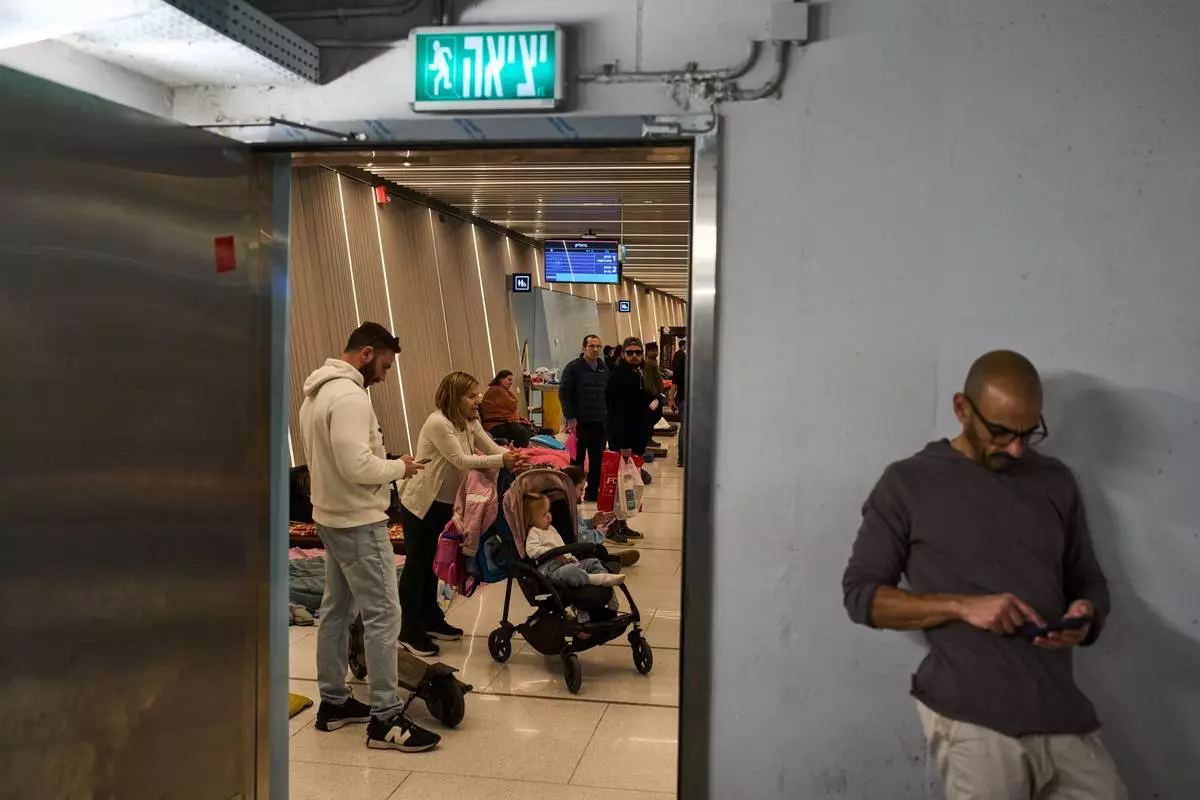
People take shelter in an underground metro station as air raid sirens warn of incoming Iranian missile strike, in Ramat Gan, Israel, Tuesday, March 10, 2026. (AP Photo/Oded Balilty)
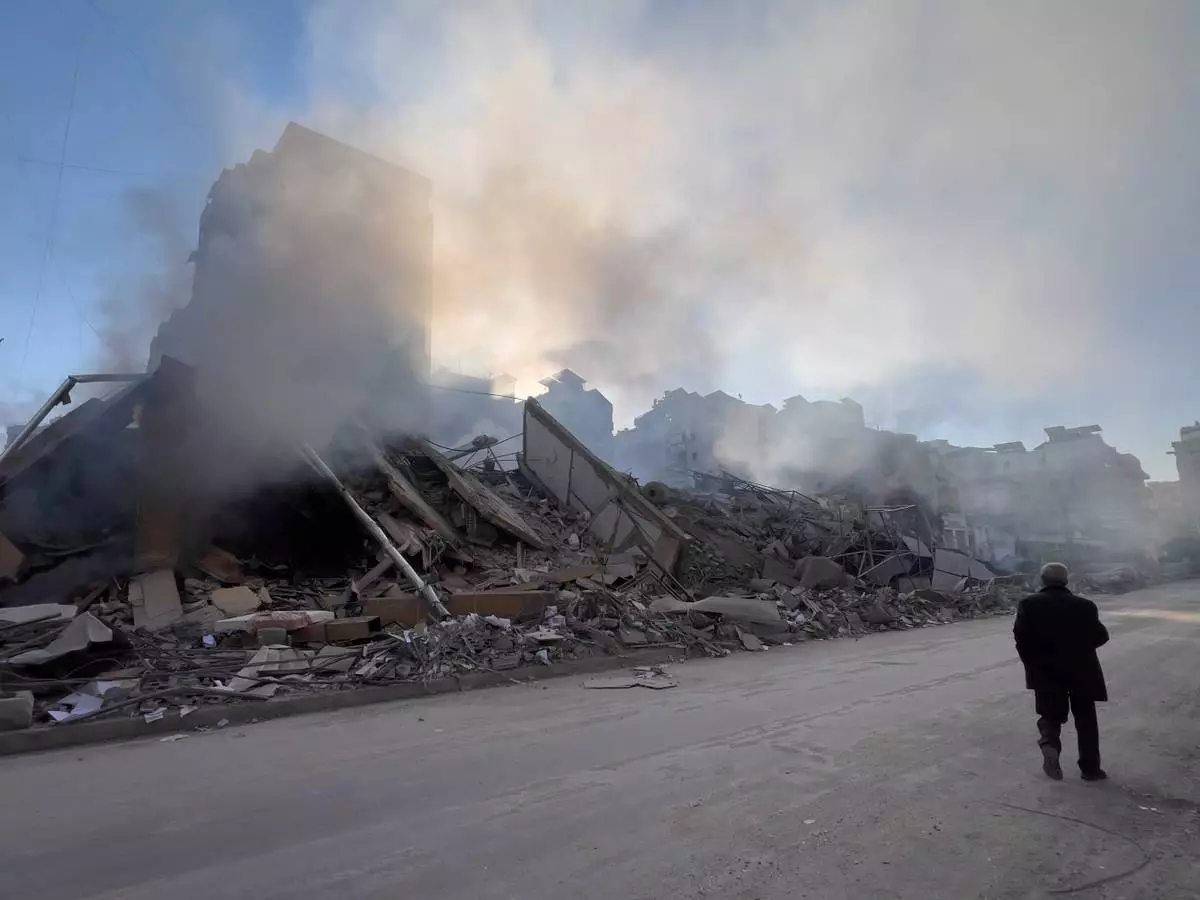
A man passes in front of a destroyed building that housed a branch of Al-Qard Al-Hassan, a non-bank financial institution run by Hezbollah, which was hit by an Israeli airstrike in Dahiyeh, Beirut's southern suburbs, Lebanon, Tuesday, March 10, 2026. (AP Photo/Hussein Malla)
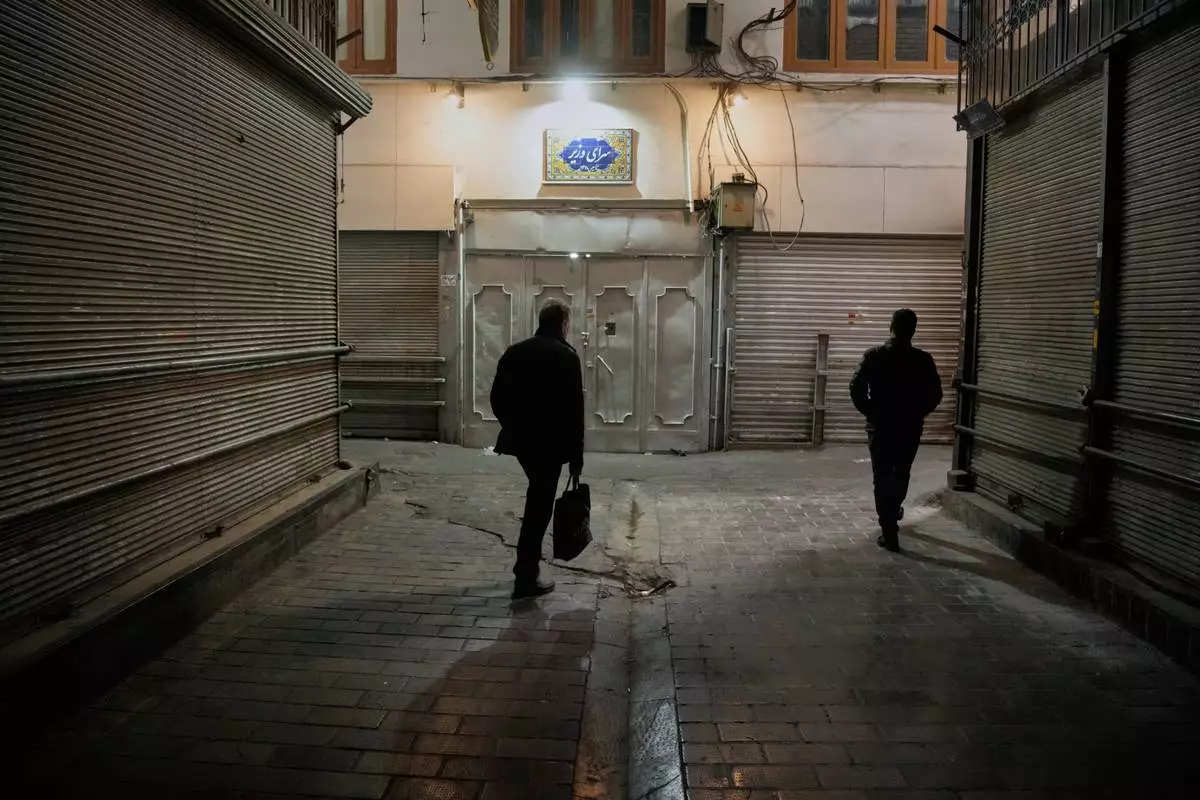
People walk past closed shops at the nearly empty traditional main bazaar in Tehran, Iran, Tuesday, March 10, 2026. (AP Photo/Vahid Salemi)
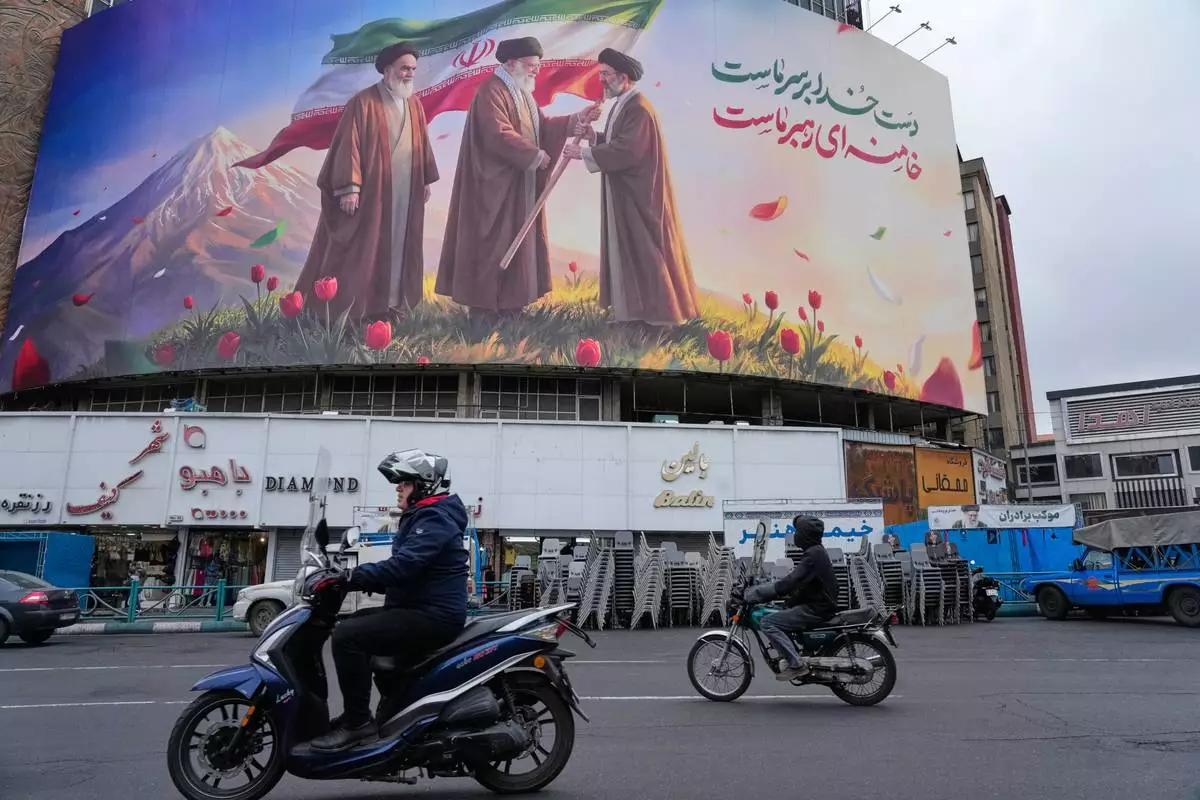
Motorbikes drive past a billboard depicting Iran’s late Supreme Leader Ayatollah Ali Khamenei, center, handing the country’s flag to his son and successor Ayatollah Mojtaba Khamenei, right, as the late revolutionary founder Ayatollah Ruhollah Khomeini stands at left, in a square in downtown Tehran, Iran, Tuesday, March 10, 2026. (AP Photo/Vahid Salemi)

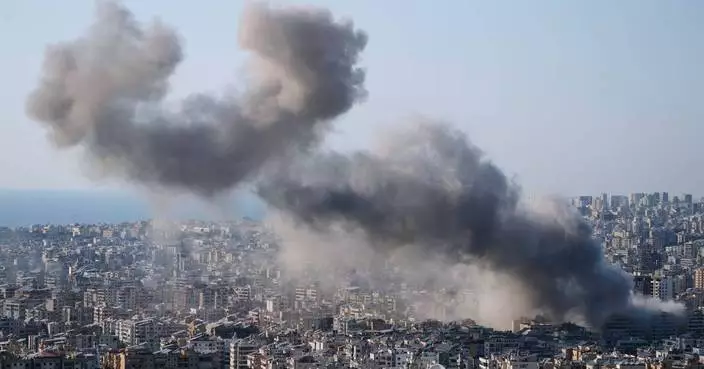
Smoke rises from an Israeli airstrike in Dahiyeh, Beirut's southern suburbs, Lebanon, Tuesday, March 10, 2026. (AP Photo/Bilal Hussein)