The international president of multinational bank Standard Chartered has identified robust domestic consumption and the accelerated global adoption of the yuan as dual catalysts which can drive China's economic expansion in the years ahead.
Benjamin Hung, an experienced executive who was appointed to his current role in April 2024, gave his assessment of the current economic outlook in an exclusive interview with the China Global Television Network (CGTN) on the sidelines of the ongoing annual meeting of the World Economic Forum (WEF) in Davos, Switzerland.
Hung emphasized his belief that despite current headwinds in the global order, China's intrinsic strengths do provide a resilient foundation for sustainable growth. He noted the country's continuing transition from more traditional export and investment-led models toward a more balanced, innovation-driven and consumption-focused economy is one of the "bright spots".
"If you look back at 2025, we have seen a year which we saw an accelerated transition from what was a rule-based to become more of a transaction-based, negotiation-based world order. And that itself brings about huge amount of volatility, unpredictability. But not with understanding that, there are also bright spots. You have AI, AI investment remains strong, and some of the promised productivity hopefully will come through. You have seen the kind of diversified trade providing a more resilient trade pattern globally, and that's a good thing," he said.
This year sees China begin its 15th Five-Year Plan (2026-2030) period -- a key blueprint which will map out the country's development priorities following the conclusion of the previous five-year cycle --and Hung noted the fundamental evolution of China's overall development philosophy in recent years.
"It's very important to understand over the last, I would say five to six years, China has increasingly been focusing on quality rather than quantity growth. It's about what sort of quality, what sort of innovation, value addedness, new technology, that is very, very important. Now if you look at the 14th Five-Year Plan into the 15th Five-Year Plan, there is a significant change in policy direction. The 14th Five-Year Plan primarily relied on two things, one was around export-led growth, the other one is investment-led. That will transition in the 15th Five-Year Plan towards more of an innovation-led and consumption-led. But I think China's biggest, I would say, latent potential is around consumption. It's not on fire yet, but when you get that consumption engine growing that could be extremely potent," he said.
Hung also assessed the financial market reforms that have occurred over the last decade or so, and believes the upward trajectory of the Chinese yuan, which is being more widely adopted as a reserve currency worldwide, is another cause for optimism in terms of growth.
"I do think over the last 10-15 years we have seen a huge, exponential change in the way China has been opening up its capital markets. I remember just 15 years ago, none of China's trade was done in RMB. So China has gone through a huge amount of, I would say, opening up in that journey and that has been very, very beneficial. I fundamentally still remain of the view that the world remains very underweight China and China is also very underweight the world and RMB is currently on the rise in terms of usage, whether through trade, investment and reserve currencies. All these provide a very, very solid foundation for the next chapter of growth," he said.
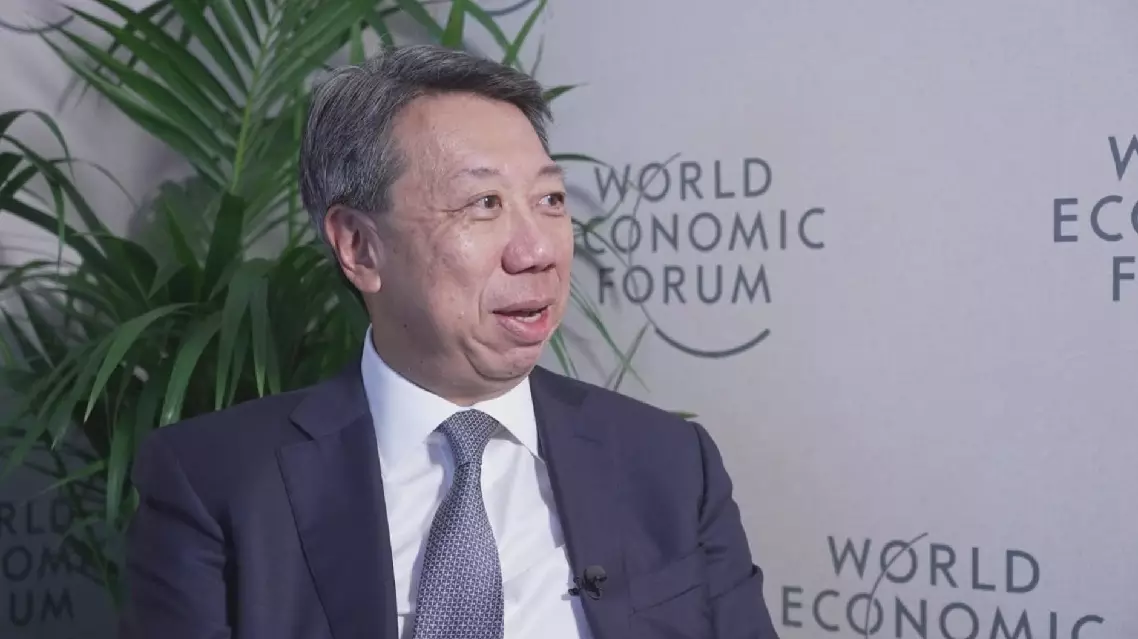
Standard Chartered int'l president highlights China's strategic shift, growth potential