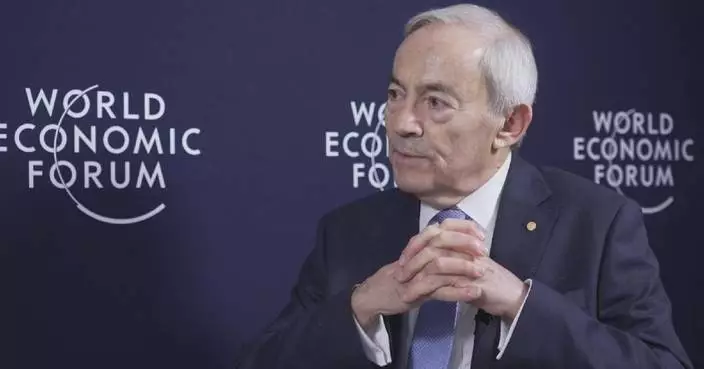
China's long-standing commitment to opening up plays a crucial role in rebuilding trust and expanding international cooperation at a time of growing global challenges, World Economic Forum (WEF) President Borge Brende said on Monday.
In an exclusive interview with the China Media Group (CMG) at the ongoing WEF annual meeting in the Swiss Alpine town of Davos, Brende said that China has consistently upheld its policy of opening up and promoted global cooperation, noting that such an approach carries special significance in today's world which is fraught with a series of geopolitical challenges.
Brende recalled the "inspiring" speech made by Chinese President Xi Jinping at the Davos event back in 2017, during which Xi called for joint efforts to chart the course of economic globalization while stressing the importance of multilateralism and global cooperation.
Against a rising tide of protectionism in some quarters, the WEF President said China has demonstrated leadership in supporting multilateralism and working with other countries rather than pursuing unilateral actions.
"I think it was very inspiring when President Xi Jinping was in Davos in 2017 and he made a very important speech there about the importance of multilateralism and global cooperation. So I think China has shown leadership in underlining the importance of the United Nations. It's easy for a big country to go alone. But China has underlined the importance of also going together," he said.
Brende also hailed China's rapid rate of development in recent years and believes the country's openness has driven its innovation and sci-tech progress, which has, in turn, greatly promoted economic growth.
He pointed to the prevalence in the uptake of new energy vehicles in China, its highly interconnected high-speed rail network, and the emergence of artificial intelligence start-ups in the country as a further example of how its commitment to an open economy has fostered fruitful outcomes.
"We also know that China now is making huge progress on electric vehicles, EVs. If you look at the fast (high-speed) trains in the world, China is so well connected. So if I compare when I was in China for the first time in the late 1980s to today, it is a society that has changed a lot, but the society has changed because the economy has opened up. I think China now is also using most of its resources to then invest in research and development, also letting new companies in the new technology fields like [AI start-up] DeepSeek and others succeed. So, I'm not surprised because, the proof is in the pudding, as the English say, and it has been a success to open up the economy. So that's why I think China is also continuing to do so," he said.
The five-day WEF meeting will run through Friday and is being held under the theme "A Spirit of Dialogue". The forum has gathered around 3,000 leaders and experts worldwide to discuss five pressing global challenges, including enhancing cooperation, unlocking new sources of growth and deploying innovation at scale and responsibly.
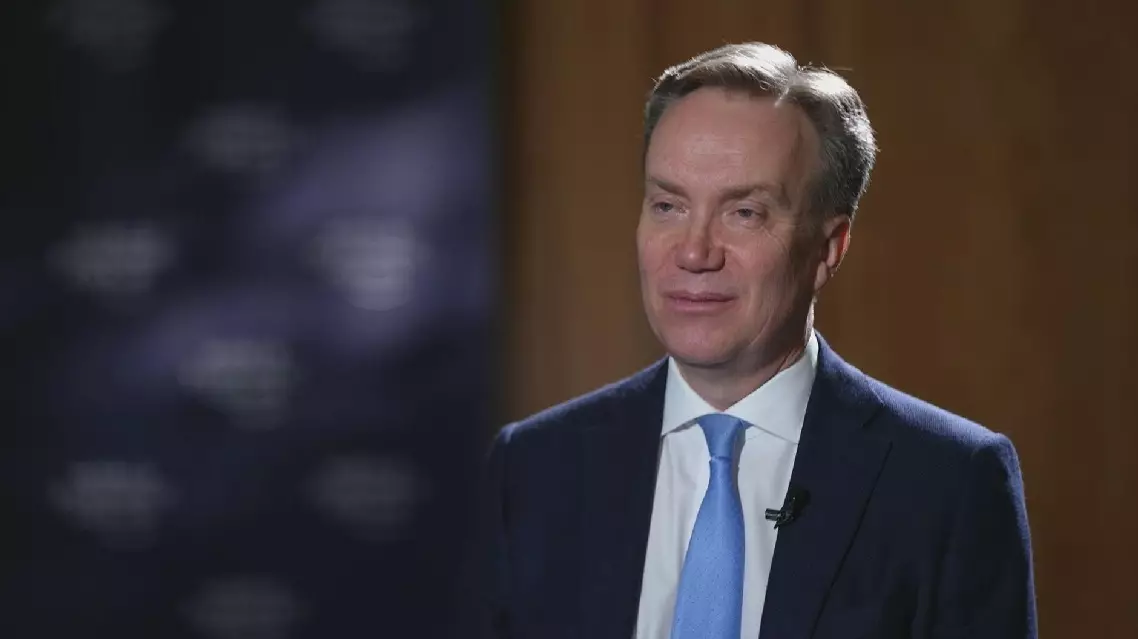
WEF president hails China's commitment to promoting global cooperation, economic openness
WEF president hails China's commitment to promoting global cooperation, economic openness