Skip to Content Facebook Feature Image

Nobel economist says AI could help bridge labor gaps in aging populations

China

China

China

Nobel economist says AI could help bridge labor gaps in aging populations

2026-01-23 03:04 Last Updated At:05:17

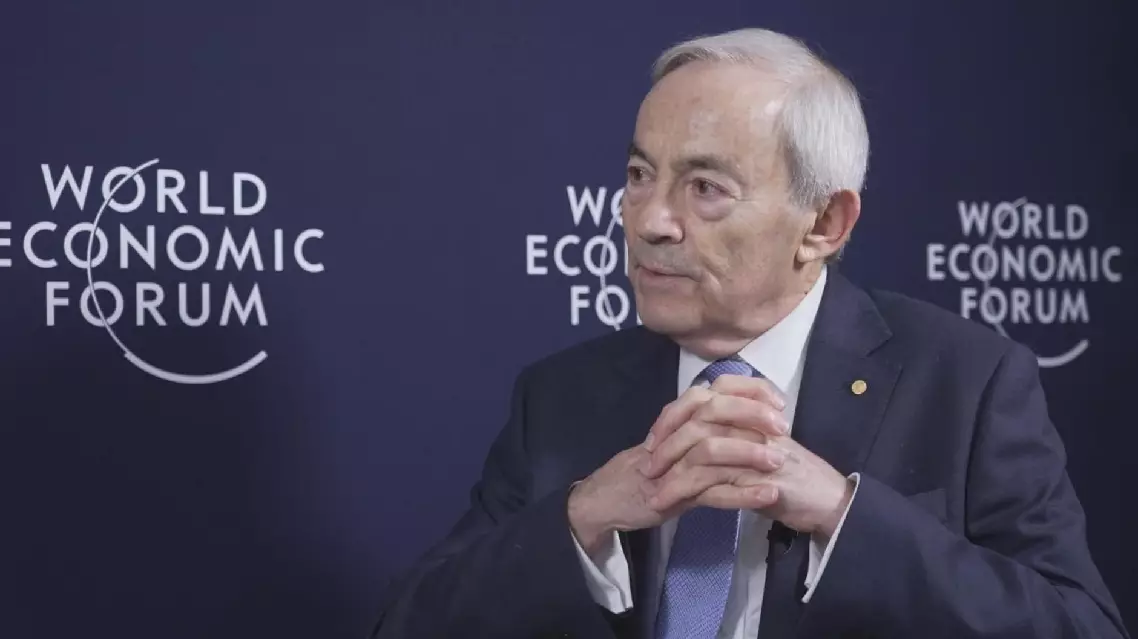
Nobel laureate economist Christopher Pissarides said that new technologies, especially artificial intelligence (AI), could be a solution for labor gaps, highlighting areas like elderly care where AI could bring real benefits.

In an exclusive interview with China Global Television Network (CGTN) at the 2026 World Economic Forum, Pissarides, who is also Regius Professor of Economics at the London School of Economics, said countries with aging populations could help solve the "silver challenge" by developing new technologies.

"You are resilient in China, more than some European countries. Now China has what you call 'the silver challenge', so there's a gap in the middle. It's not a big concern actually in my view, because the new technologies could be developed in a way that you don't need so much labor. You could develop new technologies in a way to work together with people, but not requiring as many people to do it, you could manage the demographic transition that way," he said.

This year sees China begin its 15th Five-Year Plan (2026-2030) period and Pissarides said China was well positioned to maximize the opportunities that AI and new technology will bring in the years ahead.

"The key to success actually is to apply AI in a way that is more conducive to economic development, and collaboration between the AI technologies and human labor, human capital. That will enhance the capabilities of human capital. It will become more productive, it will improve the well-being of the workforce, and it would generally give you a high-income country with a high level of life and job satisfaction," he said.

Pissarides said the green transformation is ever more crucial for long-term sustainability, and he applauded China for its keen focus on developing smart, green technology.

Under the theme "A Spirit of Dialogue," the 2026 WEF meeting opened on Monday in Davos and will run through Friday. About 3,000 leaders and experts from around the world are gathering to discuss five pressing global challenges, including enhancing cooperation, unlocking new sources of growth and deploying innovation at scale and responsibly.
Nobel economist says AI could help bridge labor gaps in aging populations


Nobel economist says AI could help bridge labor gaps in aging populations
While its biomedical innovation has demonstrated vigorous momentum in recent years, China is providing better and more affordable therapeutic solutions to meet global needs, Eric Tse, CEO of Sino Biopharm, said in a recent interview with China Global Television Network (CGTN) on the sidelines of the ongoing annual meeting of the World Economic Forum (WEF) in Davos, Switzerland.

He emphasized that China is emerging as a key player in global biopharmaceutical innovation.

"I think China has definitely taken a much bigger part of the role in terms of global innovation development. We can see that China's data really rise from 5 percent of having innovative [products] into past 50 percent. Last year, I think the deals right now are rising from the top 10 out-licensing deals raised from in the past, maybe zero number right now, it's like half of them around Chinese companies. I think this really came out from how our talent dividends really drove our innovation going forward. And then, I think in the future, in the coming years, there will be more and more China-developed assets -- or not only fast-follower drugs but innovative drugs and products, that will be going forward. We're anticipating a very good 2026 or even 2027," said Eric Tse.

He further underscored that China's world-class biopharma clusters are driving medical innovations that benefit patients across the globe.

"China assets can really benefit the world. It's not only in the drug or the asset itself, but also on the infrastructure and ecosystem that it's building. Right now, it's like Shanghai, Beijing, Guangzhou, and let's say Jiangsu has a lot of cluster in terms of biotech pharmaceuticals. And, it is a, I think, given more and more attention in comparison in a decade ago -- a decade ago again, maybe you only have 5 percent of innovation globally. Right now, it's like that number went up by, let's say, at least four or five times. So, I think this is how we contribute to global med-needs and therapies, and having patients to access faster and better and more affordable therapies," he said.

Under the theme "A Spirit of Dialogue," the five-day 2026 WEF annual meeting is running in Davos through Friday. About 3,000 leaders and experts from around the world are gathering to discuss five pressing global challenges, including enhancing cooperation, unlocking new sources of growth and deploying innovation at scale and responsibly.

China's biotech clusters fuel better, affordable therapies for worldwide needs: insider

China's biotech clusters fuel better, affordable therapies for worldwide needs: insider

Recommended Articles