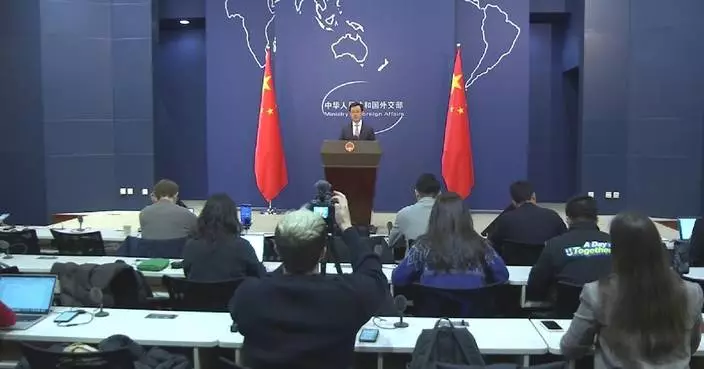
A group of Japanese rallied in Tokyo on Thursday evening, protesting against the cabinet's decision to dissolve the House of Representatives, the lower house.
Japanese Prime Minister Sanae Takaichi, who took office in October, announced on Monday that she will dissolve the 465-seat lower house on Friday, with a general election scheduled for Feb. 8, aiming to capitalize on her cabinet's current high approval ratings.
The official campaign will start next Tuesday, creating a mere 16-day campaign period, the shortest in Japan's postwar history.
With more than two years left in the current lower house term, Takaichi has justified her decision to call a snap election by arguing she has yet to receive public backing for her premiership that began in October and the new ruling coalition of her Liberal Democratic Party and the Japan Innovation Party formed the same month.
Takaichi's decision has been criticized for leaving voters little time to assess competing policy proposals and wasting taxpayers' money against the backdrop of the continuously rising prices and the mounting pressure on people's livelihood.
"The parliamentary session will start from tomorrow (Friday), but Takaichi had planned to dissolve the House of Representatives directly. Isn't it strange to do that without an opening ceremony, without a policy address, without convening the budget committee, or even without conducting any review at all? What else did she do besides her remarks that trampled on the constitution and the laws on the so-called 'survival-threatening situation'? If she gains a majority, she will say 'reappointment completed' and then push for amending Constitution's Article 9. It might even be pushed all the way to the use of force under the so-called 'survival-threatening situation'," said Fukushima Mizuho, leader of Japan's Social Democratic Party.
"In a situation where prices are soaring and everyone is having such a hard time, economy is deteriorating due to Takaichi' erroneous remarks on Taiwan. We must seriously consider whether it is really necessary for Takaichi to use a huge amount of tax revenue to hold an election during such an extremely bad period," said an organizer of the rally.
Opposition parties have also slammed Takaichi's plan, saying she is putting political considerations ahead of parliament's enactment of an initial budget for fiscal 2026 starting in April, despite her pledge to prioritize policy implementation.
At present, issues such as the continuous soaring of Japan's defense budget and the increasing pressure on people's livelihood have led to a rise in dissatisfaction in Japanese society. Many protesters expressed their strong dissatisfaction with and concern over the Takaichi administration.
"Recently, it's become quite obvious to see Takaichi administration's political stance and its danger. She keeps talking about implementing an 'active fiscal policy', but in reality, she keeps issuing national debt and doesn't spend the money on people's livelihood. Instead, she invests it in defense spending. Instead of doing something to improve people's livelihood, she has kept increasing defense spending, pushing the country into war. The same is true on diplomatic issues. Relations with China has deteriorated due to her erroneous remarks on Taiwan, and up to now, she didn't even withdraw her remarks," said Kira Yoshiko, a member of the House of Councilors.
"I really can't understand why she made such remarks. Was it made by accident or on purpose? Judging from the outcomes, this is inciting the public sense of crisis and encouraging them to support Japan's continuous military expansion necessary for war. I can't help but suspect that this is her real purpose, which I think is an extremely despicable practice. In this sense, such politics is extremely dangerous to Japan's democratic system and to peace in East Asia," said a participant of the rally.
This will be the first general election for Takaichi as prime minister. Her ruling coalition currently holds only a slim majority in the powerful House of Representatives and remains a minority in the House of Councillors.
Meanwhile, the Centrist Reform Alliance, formally launched on Thursday, has become Japan's main opposition party with 165 lower house lawmakers. The new alliance between the Constitutional Democratic Party of Japan and the Komeito party aims to defeat the conservative ruling bloc in the upcoming contest.
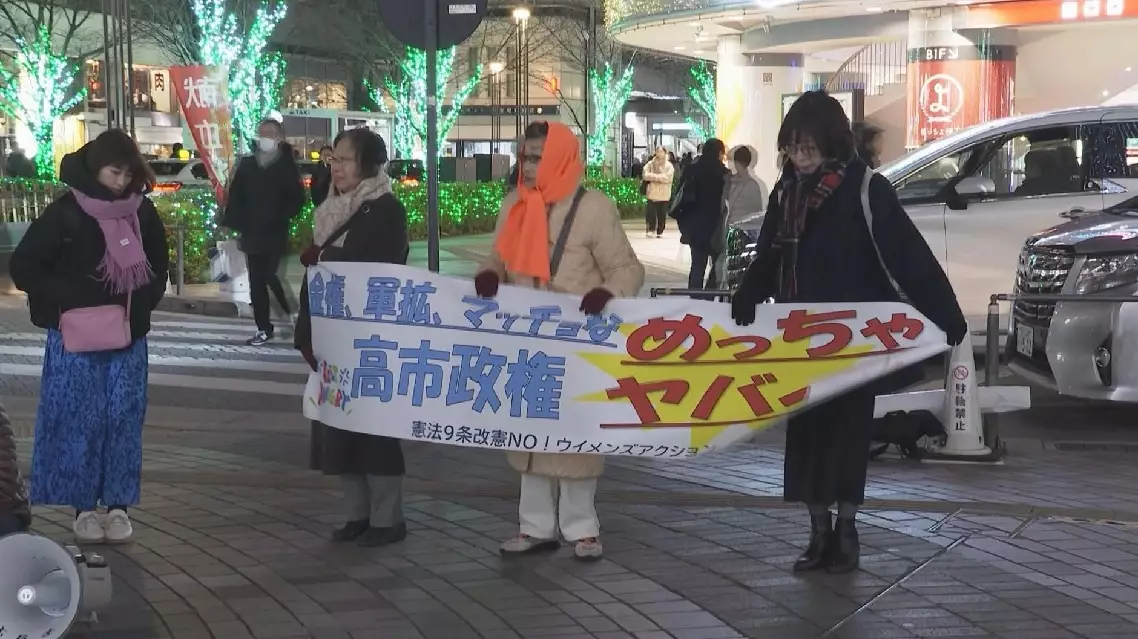
Japanese people rally to protest against PM's decision to dissolve lower house