Skip to Content Facebook Feature Image

China's high-value patents exceed 2.29 mln in 2025

China

China

China

China's high-value patents exceed 2.29 mln in 2025

2026-01-23 16:52 Last Updated At:18:07

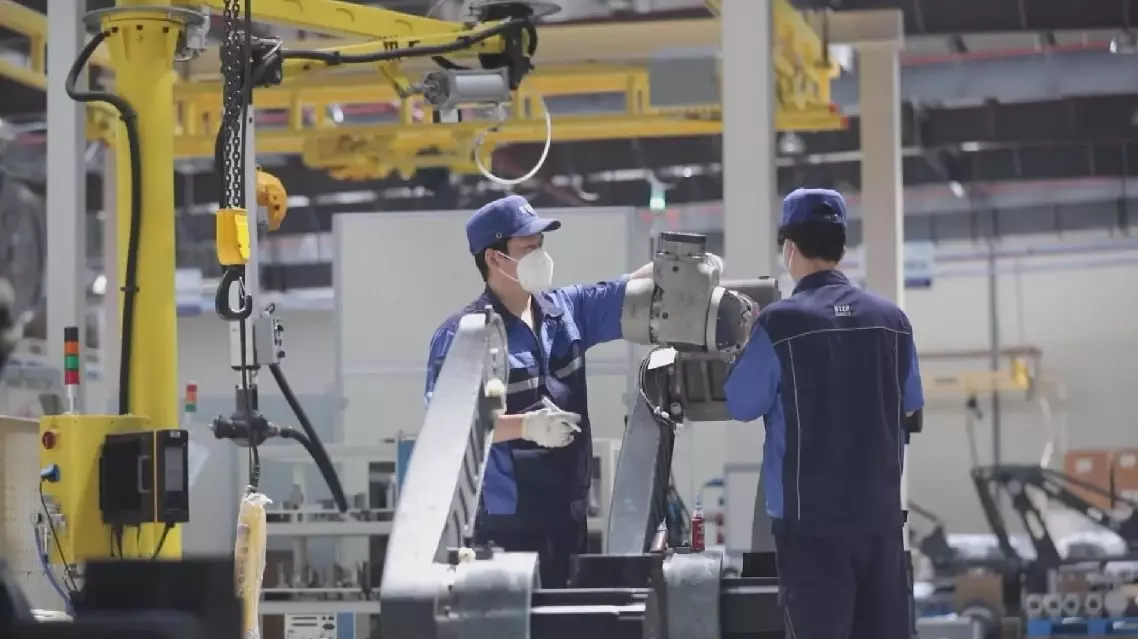
The number of high-value invention patents on the Chinese mainland reached 2.29 million by the end of 2025, marking stronger growth than total invention patents, said the country's intellectual property regulator on Friday.

According to the China National Intellectual Property Administration (CNIPA), the year-on-year growth rate of high-value invention patents was 2.2 percentage points higher than that of the country's total invention patents last year.

About 70 percent of these high-value invention patents are concentrated in strategic emerging industries. The fastest growth was seen in fields such as information technology management, computer technology and medical technology, with AI-related patents ranking among the top globally.

Meanwhile, China has also built a portfolio of patents in key future-oriented industries, including quantum technology, biomanufacturing, brain-computer interfaces, and sixth-generation (6G) mobile communications technology.

Notably, innovation is highly concentrated in China's major regional hubs. By the end of 2025, the valid invention patents held in the Yangtze River Delta in east China, the Beijing-Tianjin-Hebei region in north China, and south China's Guangdong Province reached 1.734 million, 916,000, and 899,000 respectively.

Together, these regions account for approximately two-thirds of the national total. They also held a combined 28.058 million valid registered trademarks, representing over half of the national total.

These innovative achievements have translated into tangible economic and market benefits.

"Throughout the year 2025, patent transfer and licensing filings nationwide reached 697,000, marking a year-on-year increase of 13.7 percent. The industrialization rate of enterprise invention patents reached 54 percent, marking steady growth for multiple consecutive years. From January to November 2025, the total import and export volume of intellectual property royalties nationwide reached 382.87 billion yuan (about 54.9 billion U.S. dollars), a rise of 7.4 percent year-on-year. Notably, exports in this category grew by 23.1 percent, providing a significant boost to the expansion and upgrading of China's service trade exports," said Rui Wenbiao, deputy head of the CNIPA.

Latest data showed that value-added output of China's patent-intensive industries has surpassed 18 trillion yuan (about 2.58 trillion U.S. dollars). Its share of GDP has risen from 11.97 percent in 2020 to 13.38 percent in 2024, underscoring the accelerating economic impact of intellectual property.
China's high-value patents exceed 2.29 mln in 2025

China's high-value patents exceed 2.29 mln in 2025
While its biomedical innovation has demonstrated vigorous momentum in recent years, China is providing better and more affordable therapeutic solutions to meet global needs, Eric Tse, CEO of Sino Biopharm, said in a recent interview with China Global Television Network (CGTN) on the sidelines of the ongoing annual meeting of the World Economic Forum (WEF) in Davos, Switzerland.

He emphasized that China is emerging as a key player in global biopharmaceutical innovation.

"I think China has definitely taken a much bigger part of the role in terms of global innovation development. We can see that China's data really rise from 5 percent of having innovative [products] into past 50 percent. Last year, I think the deals right now are rising from the top 10 out-licensing deals raised from in the past, maybe zero number right now, it's like half of them around Chinese companies. I think this really came out from how our talent dividends really drove our innovation going forward. And then, I think in the future, in the coming years, there will be more and more China-developed assets -- or not only fast-follower drugs but innovative drugs and products, that will be going forward. We're anticipating a very good 2026 or even 2027," said Eric Tse.

He further underscored that China's world-class biopharma clusters are driving medical innovations that benefit patients across the globe.

"China assets can really benefit the world. It's not only in the drug or the asset itself, but also on the infrastructure and ecosystem that it's building. Right now, it's like Shanghai, Beijing, Guangzhou, and let's say Jiangsu has a lot of cluster in terms of biotech pharmaceuticals. And, it is a, I think, given more and more attention in comparison in a decade ago -- a decade ago again, maybe you only have 5 percent of innovation globally. Right now, it's like that number went up by, let's say, at least four or five times. So, I think this is how we contribute to global med-needs and therapies, and having patients to access faster and better and more affordable therapies," he said.

Under the theme "A Spirit of Dialogue," the five-day 2026 WEF annual meeting is running in Davos through Friday. About 3,000 leaders and experts from around the world are gathering to discuss five pressing global challenges, including enhancing cooperation, unlocking new sources of growth and deploying innovation at scale and responsibly.

China's biotech clusters fuel better, affordable therapies for worldwide needs: insider

China's biotech clusters fuel better, affordable therapies for worldwide needs: insider

Recommended Articles