NEW YORK (AP) — President Donald Trump sued banking giant JPMorgan Chase and its CEO Jamie Dimon for $5 billion on Thursday over allegations that JPMorgan stopped providing banking services to him and his businesses for political reasons after he left office in January 2021.
The lawsuit, filed in Miami-Dade County court in Florida, alleges that JPMorgan abruptly closed multiple accounts in February 2021 with just 60 days notice and no explanation. By doing so, Trump claims JPMorgan and Dimon cut the president and his businesses off from millions of dollars, disrupted their operations and forced Trump and the businesses to urgently open bank accounts elsewhere.
“JPMC debanked (Trump and his businesses) because it believed that the political tide at the moment favored doing so,” the lawsuit alleges.
In the lawsuit, Trump alleges he tried to raise the issue personally with Dimon after the bank started to close his accounts, and that Dimon assured Trump he would figure out what was happening. The lawsuit alleges Dimon failed to follow up with Trump. Further, Trump’s lawyers allege that JPMorgan placed the president and his companies on a reputational “blacklist” that both JPMorgan and other banks use to keep clients from opening accounts with them in the future.
In a statement, JPMorgan said it believes the suit has no merit.
Trump threatened to sue JPMorgan Chase last week at a time of heightened tensions between the White House and Wall Street. The president said he wanted to cap interest rates on credit cards at 10% to help lower costs for consumers. Chase is one of the largest issuers of credit cards in the country and a bank official told reporters that it would fight any effort by the White House or Congress to implement a rate cap on credit cards. Bank industry executives have also bristled at Trump's attacks on the independence of the Federal Reserve.
Debanking occurs when a bank closes the accounts of a customer or refuses to do business with a customer in the form of loans or other services. Once a relatively obscure issue in finance, debanking has become a politically charged issue in recent years, with conservative politicians arguing that banks have discriminated against them and their affiliated interests.
Debanking first became a national issue when conservatives accused the Obama administration of pressuring banks to stop extending services to gun stores and payday lenders under “Operation Choke Point.”
Trump and other conservative figures have alleged that banks cut them off from their accounts under the umbrella term of “reputational risk” after the Jan. 6, 2021, attack on the U.S. Capitol. Since Trump came back into office, the president's banking regulators have moved to stop any banks from using “reputational risk” as a reason for denying service to customers.
“JPMC’s conduct ... is a key indicator of a systemic, subversive industry practice that aims to coerce the public to shift and re-align their political views,” Trumps lawyers wrote in the lawsuit.
Trump accuses the bank of trade libel and accuses Dimon himself of violating Florida’s Unfair and Deceptive Trade Practices Act.
In its statement, JPMorgan said that it “regrets” that Trump sued the bank but insisted it did not close the accounts for political reasons.
“JPMC does not close accounts for political or religious reasons,” a bank spokesperson said. "We do close accounts because they create legal or regulatory risk for the company.”

President Donald Trump reacts during a signing ceremony on his Board of Peace initiative at the Annual Meeting of the World Economic Forum in Davos, Switzerland, Thursday, Jan. 22, 2026. (AP Photo/Markus Schreiber)
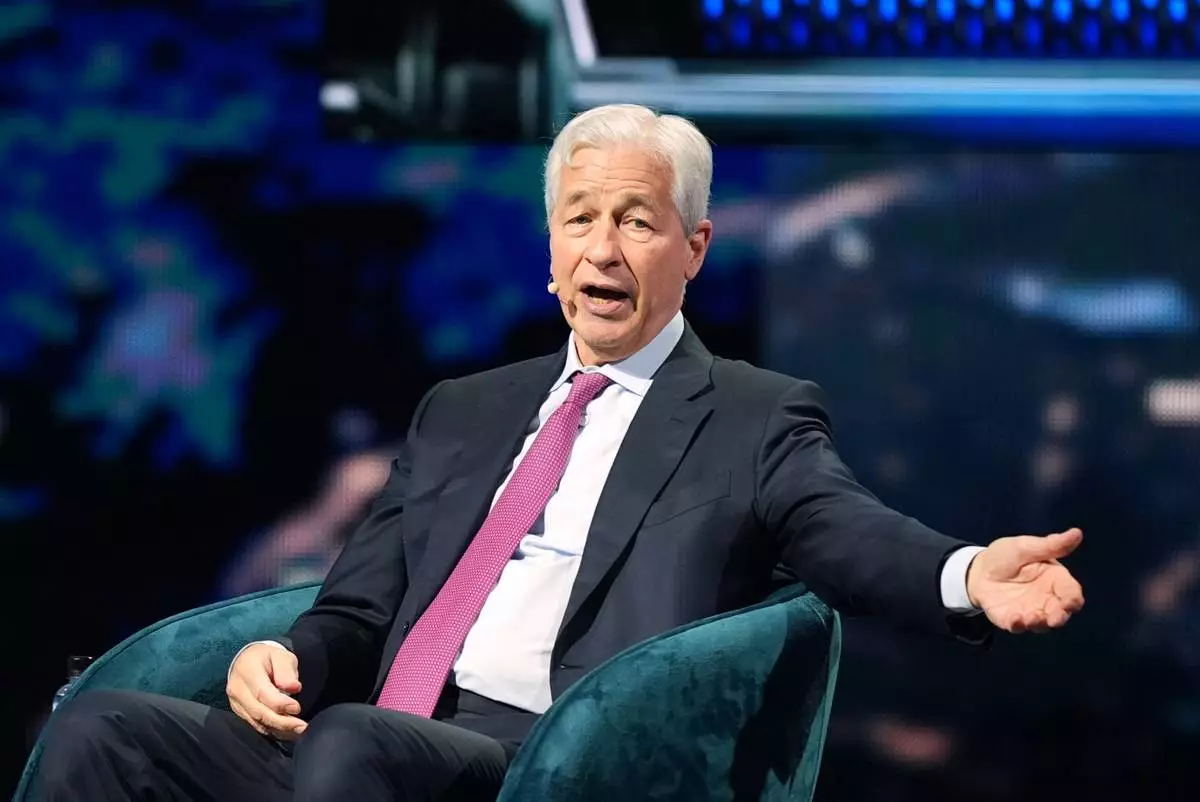
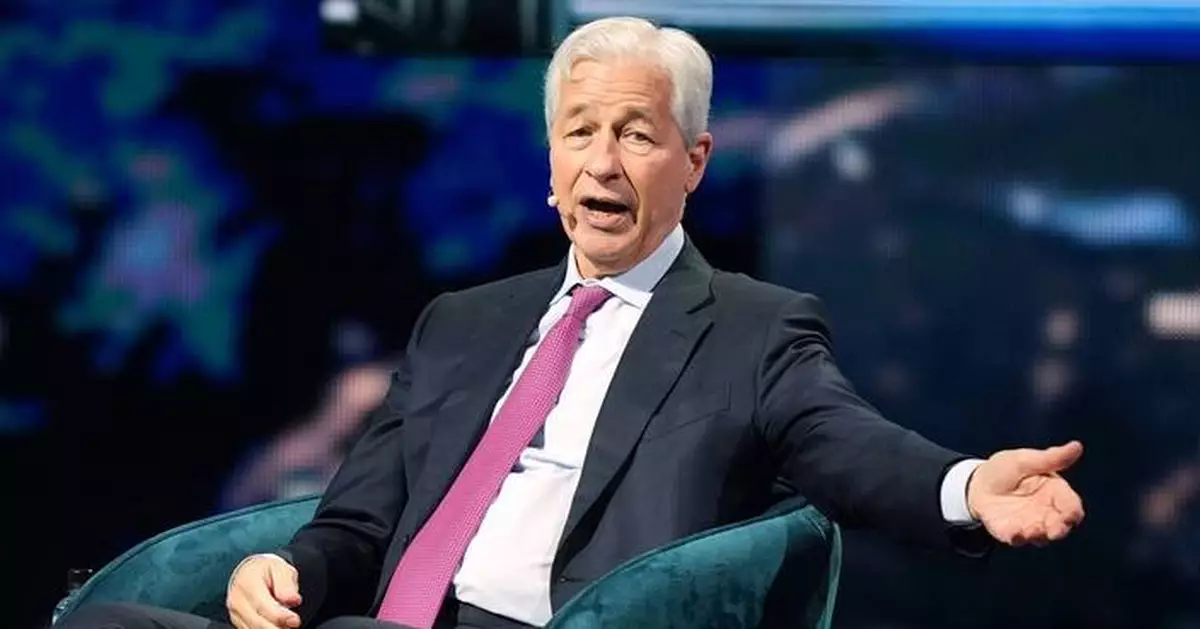
FILE - Jamie Dimon, CEO of JPMorgan Chase, speaks at the America Business Forum, Thursday, Nov. 6, 2025, in Miami. (AP Photo/Rebecca Blackwell, file)
WASHINGTON (AP) — Former Justice Department special counsel Jack Smith on Thursday defended his investigations of Donald Trump at a public congressional hearing in which he insisted that he had acted without regard to politics and had no second thoughts about the criminal charges he brought.
“No one should be above the law in our country, and the law required that he be held to account. So that is what I did,” Smith said of Trump.
Smith testified behind closed doors last month but returned to the House Judiciary Committee for a public hearing that provided the prosecutor with a forum to address Congress and the country more generally about the breadth of evidence he collected during investigations that shadowed Trump during the 2024 presidential campaign and resulted in indictments. The hourslong hearing immediately split along partisan lines as Republican lawmakers sought to undermine the former Justice Department official while Democrats tried to elicit damaging testimony about Trump's conduct and accused their GOP counterparts of attempting to rewrite history.
“It was always about politics,” said Rep. Jim Jordan of Ohio, the committee's Republican chairman.
“Maybe for them,” retorted Rep. Jamie Raskin, the panel’s top Democrat, during his own opening statement. “But, for us, it’s all about the rule of law.”
The hearing was on the mind of Trump himself as he traveled back from the World Economic Forum in Davos, Switzerland, with the president posting on his Truth Social account that Smith was being “DECIMATED before Congress" — presumably reference to the Republican attacks he faced. Trump said Smith had “destroyed many lives under the guise of legitimacy.”
Smith told lawmakers that he stood behind his decisions as special counsel to bring charges against Trump in separate cases that accused the Republican of conspiring to overturn the 2020 presidential election after he lost to Democrat Joe Biden and hoarding classified documents at his Mar-a-Lago estate in Palm Beach, Florida, after he left the White House.
“Our investigation developed proof beyond a reasonable doubt that President Trump engaged in criminal activity,” Smith said. “If asked whether to prosecute a former president based on the same facts today, I would do so regardless of whether that president was a Republican or a Democrat."
Republicans from the outset sought to portray Smith as an overly aggressive, hard-charging prosecutor who had to be “reined in” by higher-ups and the courts as he investigated Trump. They also seized on revelations that the Smith team had collected and analyzed phone records of more than a half-dozen Republican lawmakers who were in contact with Trump on Jan. 6, 2021, as his supporters stormed the Capitol in a bid to halt the certification of his 2020 election loss.
The records revealed the length and time of the calls but not the content of the communications, but Rep. Brandon Gill, a Texas Republican, said the episode showed how Smith had “walked all over the Constitution.”
“My office didn’t spy on anyone,” Smith said, explaining that collecting phone records is a common prosecutorial tactic and necessary in this instance to help prosecutors understand the scope of the conspiracy.
Under questioning, Smith described what he said was a wide-ranging conspiracy to overturn the results of the election that Trump lost to Democrat Joe Biden and alleged how the Republican refused to listen to advisers who told him that the contest had in fact not been stolen. After he was charged, Smith said, Trump tried to silence and intimidate witnesses.
Smith said one reason he felt confident in the strength of the case that prosecutors had prepared to take to trial was the extent to which it relied on Republican supporters of Trump.
"Some of the most powerful witnesses were witnesses who, in fact, were fellow Republicans who had voted for Donald Trump, who had campaigned for him and who wanted him to win the election,” Smith said.
The hearing unfolded against the backdrop of an ongoing Trump administration retribution campaign targeting the investigators who scrutinized the Republican president and amid mounting alarm that the Justice Department's institutional independence is eroding under the sway of the president.
In a nod to those concerns, Smith said: "I believe that if we don’t call people to account when they commit crimes in this context, it can endanger our election process, it can endanger election workers and, ultimately, our democracy.”
Smith was appointed in 2022 by Biden's Justice Department to oversee investigations into Trump, who has denied any wrongdoing. Both investigations produced indictments against Trump, but the cases were abandoned by Smith and his team after Trump won back the White House because of longstanding Justice Department legal opinions that say sitting presidents cannot be indicted.
Republicans for their part repeatedly denounced Smith, with Rep. Kevin Kiley of California accusing him of seeking “maximum litigation advantage at every turn” and “circumventing constitutional limitations to the point that you had to be reined in again and again throughout the process.”
Another Republican lawmaker, Rep. Ben Cline of Virginia, challenged Smith on his efforts to bar Trump from making incendiary comments about witnesses. Smith said the order was necessary because of Trump's efforts to intimidate witness, but Cline asserted that it was meant to silence Trump in the heat of the presidential campaign.
And Jordan, the committee chairman, advanced a frequent Trump talking point that the investigation was driven by a desire to derail Trump's candidacy.
“We should never forget what took place, what they did to the guy we the people elected twice," Jordan said.
Smith vigorously rejected those suggestions and said the evidence placed Trump’s actions squarely at the heart of a criminal conspiracy to undo the 2020 election.
“The evidence here made clear that President Trump was by a large measure the most culpable and most responsible person in this conspiracy,” Smith said. “These crimes were committed for his benefit. The attack that happened at the Capitol, part of this case, does not happen without him. The other co-conspirators were doing this for his benefit.”
Associated Press writer Joey Cappelletti in Washington contributed to this report.
Follow the AP's coverage for former special counsel Jack Smith at https://apnews.com/hub/jack-smith.
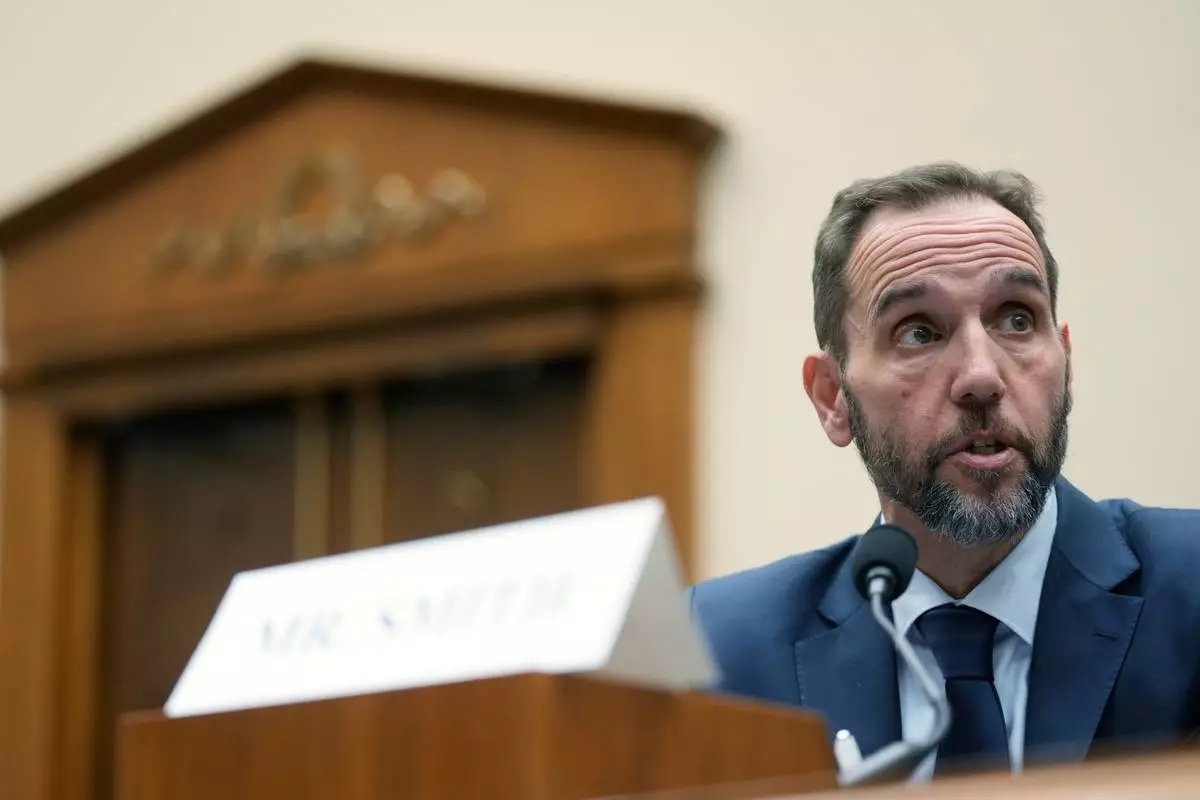
Former Justice Department special counsel Jack Smith testifies before the House Judiciary Committee at the Capitol in Washington, Thursday, Jan. 22, 2026. (AP Photo/Mark Schiefelbein)
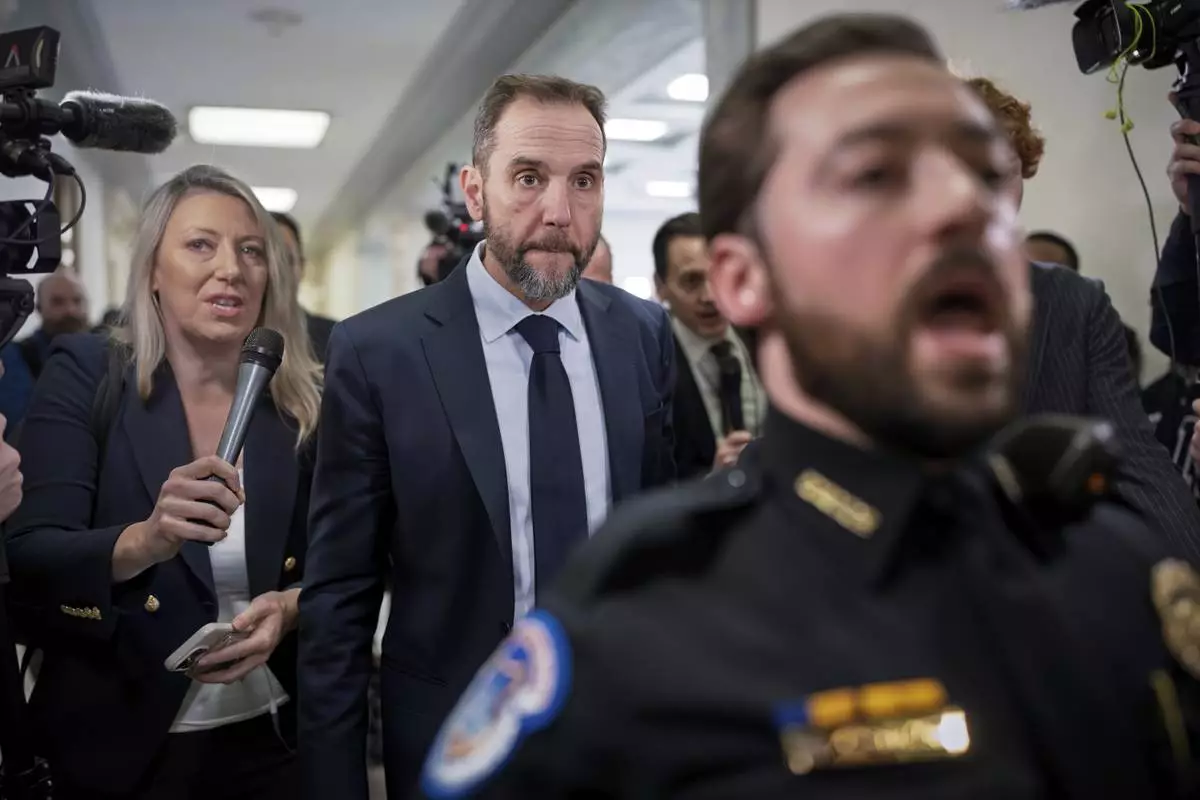
Former Justice Department special counsel Jack Smith, center, is escorted by Capitol Police through a crush of reporters as he arrives to testify before the House Judiciary Committee about his investigations into President Donald Trump, Thursday, Jan. 22, 2026 at the Capitol in Washington. (AP Photo/J. Scott Applewhite)
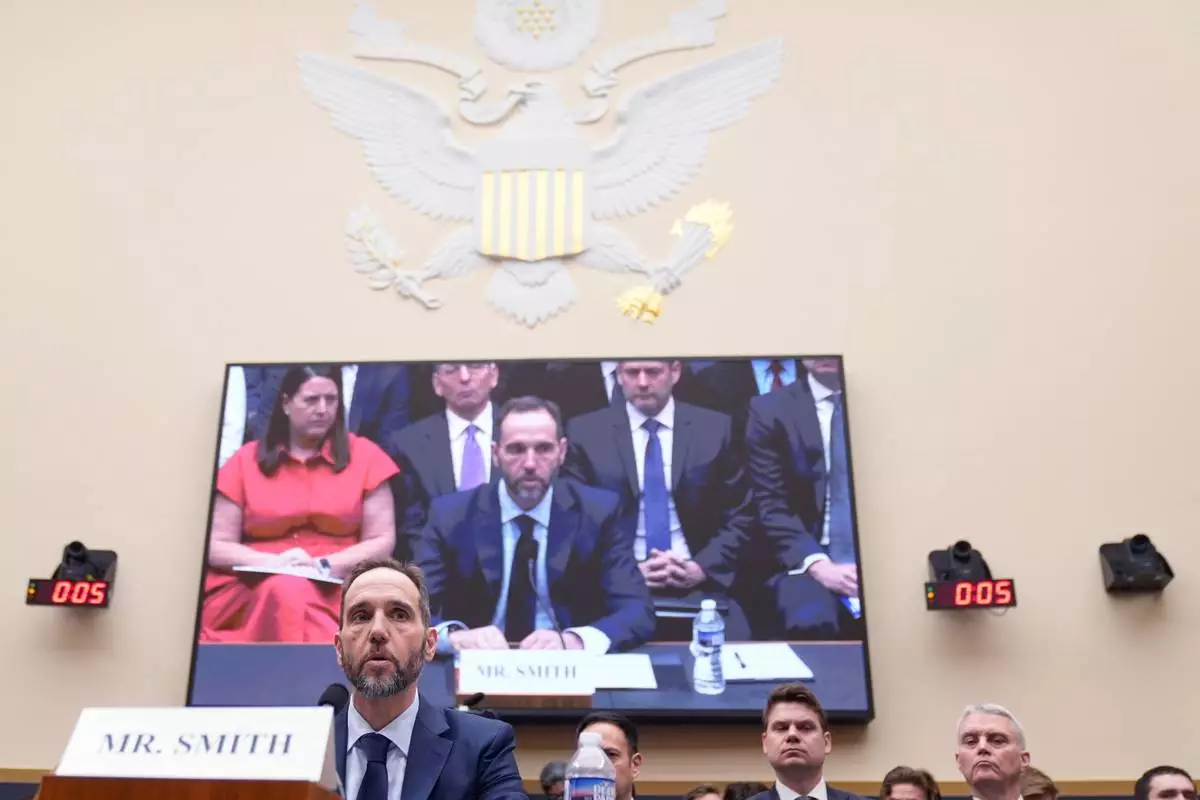
Former Justice Department special counsel Jack Smith testifies before the House Judiciary Committee about his investigations into President Donald Trump at the Capitol in Washington, Thursday, Jan. 22, 2026. (AP Photo/Mark Schiefelbein)
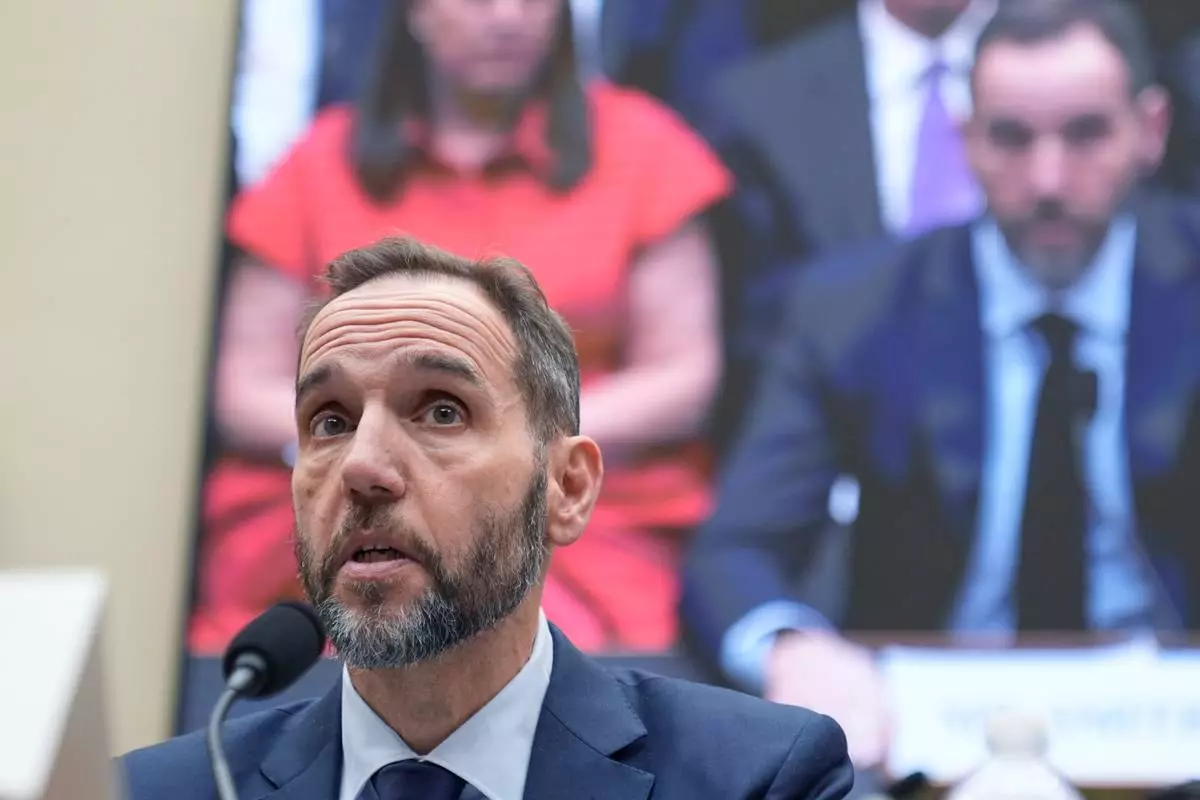
Former Justice Department special counsel Jack Smith testifies before the House Judiciary Committee about his investigations into President Donald Trump at the Capitol in Washington, Thursday, Jan. 22, 2026. (AP Photo/Mark Schiefelbein)
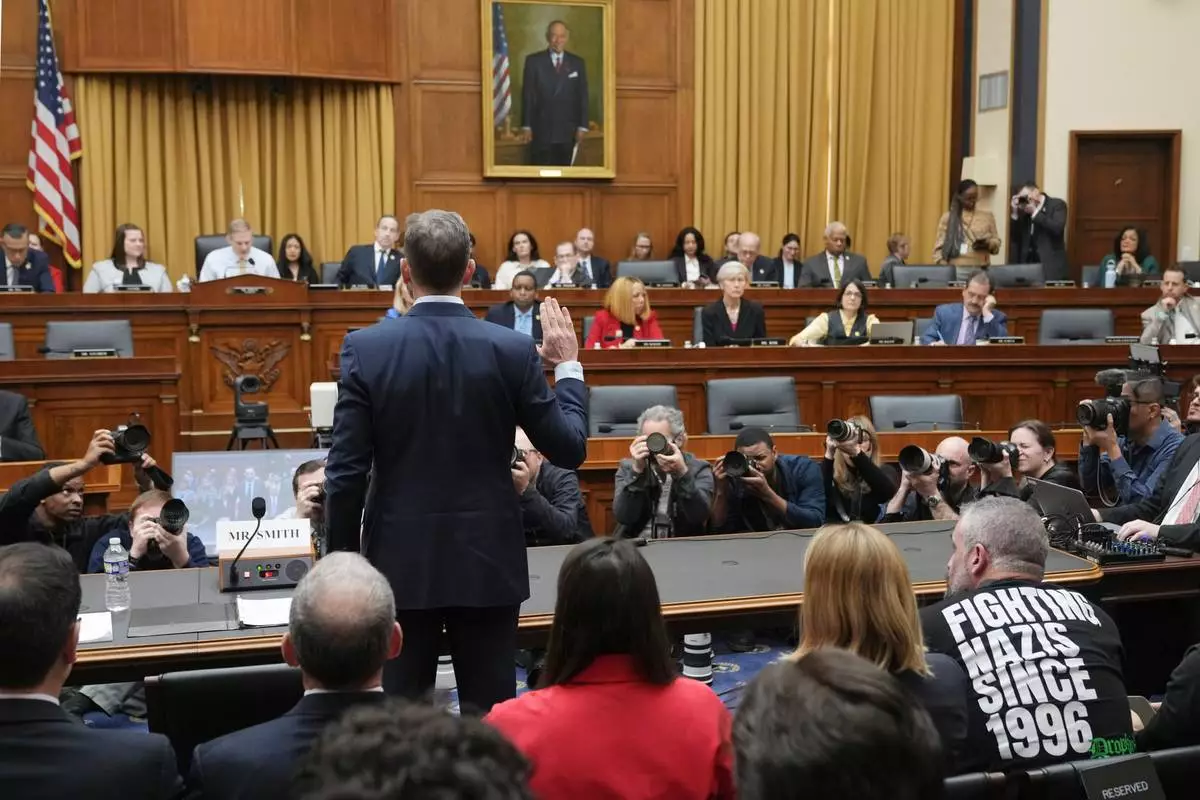
Former Justice Department special counsel Jack Smith, left standing, takes an oath before the House Judiciary Committee, as former Washington Metropolitan Police Department officer Michael Fanone, right seated, looks on, Thursday, Jan. 22, 2026 at the Capitol in Washington. (AP Photo/Jacquelyn Martin)
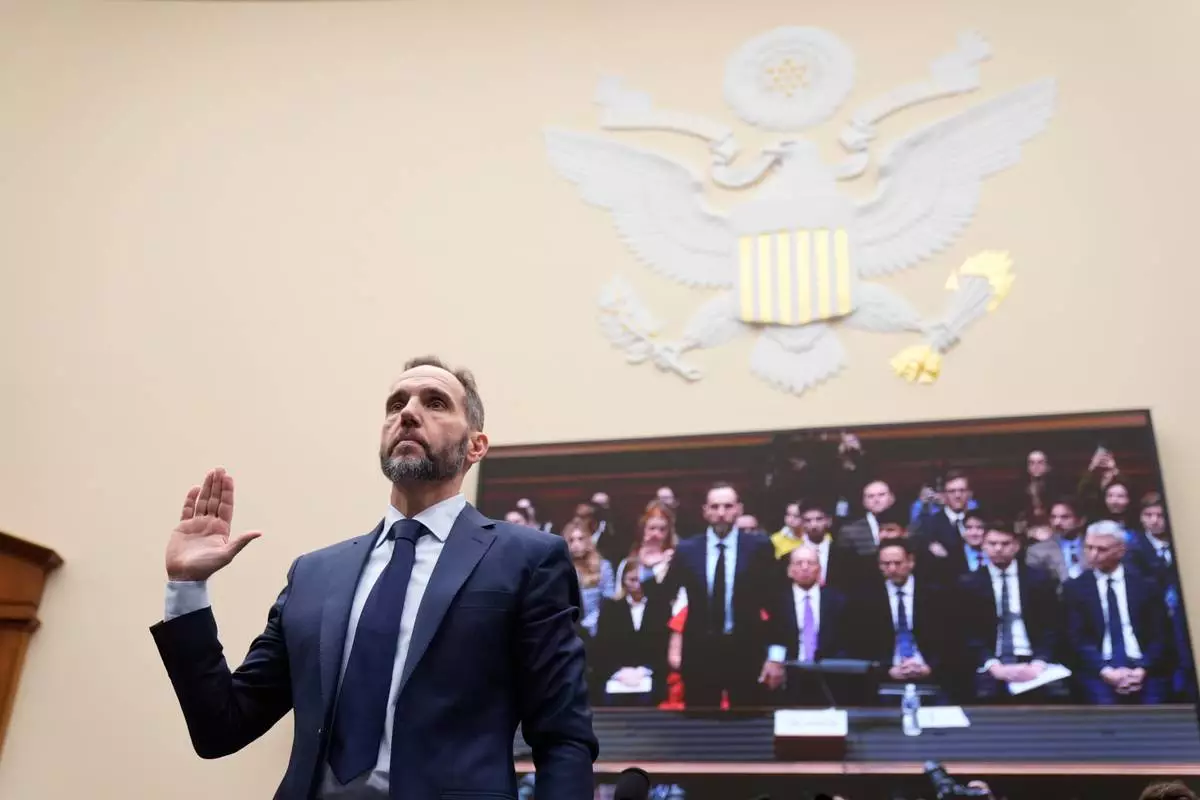
Former Justice Department special counsel Jack Smith takes an oath before the House Judiciary Committee at the Capitol in Washington, Thursday, Jan. 22, 2026. (AP Photo/Mark Schiefelbein)