NEW YORK (AP) — An appeal for bankruptcy protection filing of the operator of Saks Fifth Avenue, Bergdorf Goodman and Neiman Marcus has left the luxury department stores' suppliers with unpaid bills and caused a rift with Amazon, one of Saks Global's minority investors.
Saks Global said last week it had secured roughly $1.75 billion to help finance the company toward hoped-for profitability. The company said it would honor all customer loyalty programs, compensate vendors and pay employees while seeking approval for its plan to pay off outstanding liabilities, which range from $1 billion to $10 billion, according to court documents.
Click to Gallery
FILE - Saks Fifth Avenue holiday light show and window reveal on Monday, Nov. 24, 2025, in New York. (Photo by Evan Agostini/Invision/AP, File)
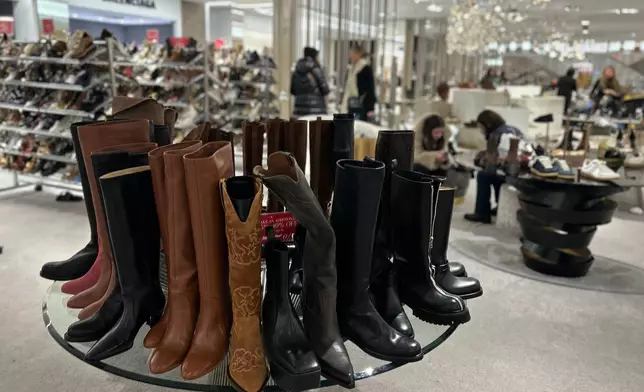
Merchandise is on display at Saks Fifth Avenue on Friday, Jan. 16, 2026 in New York. (AP Photo/Anne D'Innocenzio)
Shoppers walk through Saks Fifth Avenue on Friday, Jan. 16, 2026 in New York. (AP Photo/Anne D'Innocenzio)
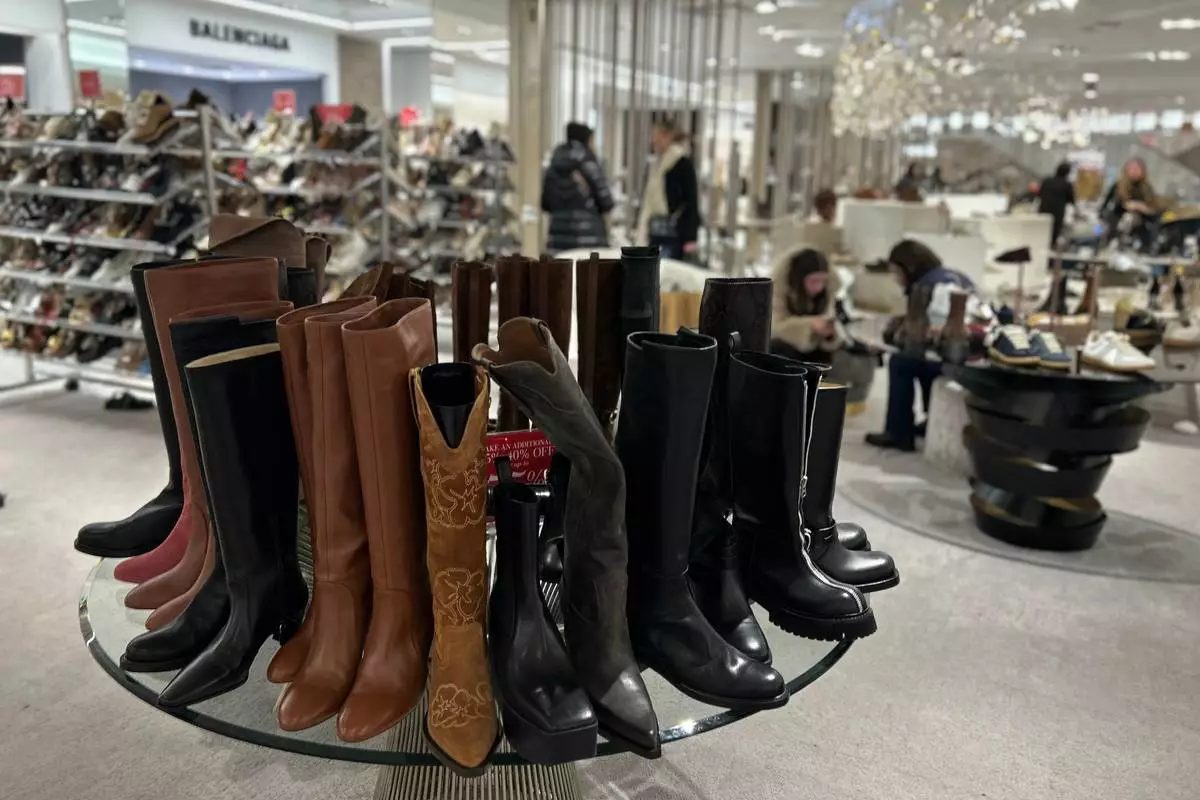
Shoppers look at merchandise at Saks Fifth Avenue on Friday, Jan. 16, 2026 in New York. (AP Photo/Anne D'Innocenzio)
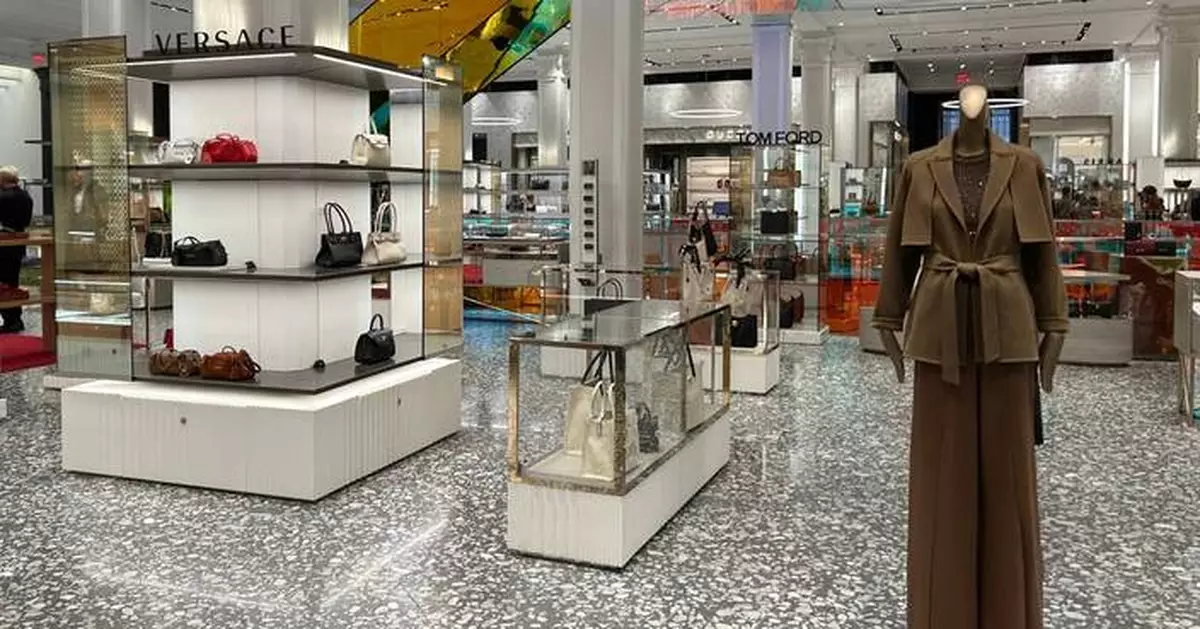
Versace merchandise is on display at Saks Fifth Avenue on Friday, Jan. 16, 2026 in New York. (AP Photo/Anne D'Innocenzio)
While the retailer's stores remain open for now, the bankruptcy and restructuring could likely impact the assortment of designer brands customers find online or in their local Neiman Marcus or Saks, according to industry experts.
Many brands stopped shipping their goods weeks ago as Saks Global's financial distress became more evident and bankruptcy appeared inevitable, experts said. A visit to Saks Fifth Avenue's flagship store in Manhattan last week revealed noticeable merchandise gaps, including handbags and shoes spread out along shelves.
Neil Saunders of GlobalData Retail, a research firm, noted it's critical for Saks to have a good assortment including trendy items from small niche brands.
“If Saks or Neiman Marcus are not offering that, those customers will find somewhere else to shop," he said.
The bankruptcy occurred a little over a year after the parent company of Saks Fifth Avenue agreed to buy the Neiman Marcus Group, its upscale rival, for $2.65 billion. Amazon took a minority stake in the deal, which saddled the new holding company with significant debt at a time of rising competition and a slowdown in luxury spending.
Here's a look at some ripple effects from the bankruptcy filing, including the retailers who potentially could stand to benefit:
Major brands like Chanel and Kering — the parent of Gucci and Saint Laurent, among others— top the list of creditors owed the most money. But bankruptcy lawyers and industry executives expect that luxury conglomerates will be fine.
The big worry: the small and medium-size brands that have already been squeezed financially by Saks. Some could shutter their businesses if bills are left unpaid.
“This is very painful," said Joseph Sarachek, a lawyer who represents roughly 30 brands owed money by Saks. ”A lot of these guys are going to go out of business.”
Sarachek declined to name his clients for fear of retribution by Saks but said that they're owed anywhere from $600,000 to $10 million. He said his clients don't operate their own stores, and for some, Saks had been their only big retail account.
He said he has recommended to his clients not to ship to Saks unless they get more clarity on payment terms.
Even before the merger with Neiman Marcus, suppliers were grappling with skipped payments from Saks, creating anger and mistrust.
Over the past year, that relationship only worsened, with management changing the payment terms for brands that supplied the stores, according to Gary Wassner, CEO of Hildun Corp. which provides credit guarantees to roughly 120 brands that sell to Saks.
For some, Saks Global accounted for 40% to 50% of their business, he said.
Wassner advised his clients not to ship to Saks starting in Dec. 19. He said Wednesday he's hoping to approve shipping next week once agreeable payment terms are negotiated.
Amazon invested $475 million as part of Saks’ purchase of Neiman Marcus in December 2024, in exchange for selling Saks products on the online behemoth's website under the “Saks at Amazon” shop.
The partnership was supposed to further Amazon's goal of attracting more luxury brands on its site.
But, as Amazon argued in a court filing to block the financing plan hours after Saks filed for Chapter 11 bankruptcy, “That equity investment is now presumptively worthless."
“Saks continuously failed to meet its budgets, burned through hundreds of millions of dollars in less than a year, and ran up additional hundreds of millions of dollars in unpaid invoices owed to its retail partners," the court filing said.
Amazon had argued Saks' financing plan hurts the retailer, and other creditors, because it loads down Saks with additional debt. It also argued the financing plan could unfairly favor other creditors at the expense of Amazon.
Amazon threatened more “drastic remedies” in the court filing if Saks doesn’t resolve the matter, including the appointment of an examiner or a trustee.
A week ago, Saks Global prevailed in court, securing an initial tranche of $500 million from the broader $1.75 billion financial package.
Amazon declined to comment further.
Saks had already revealed plans back in November to close nine Saks Off 5th stores starting this month. That brings the total of Saks Off 5th locations to 70. There are also 33 Saks stores and 36 Neiman Marcus locations, as well as two Bergdorf Goodman stores.
But shoppers can expect more store closures.
Saks said this week it was evaluating its “operational footprint" to ensure it was well positioned to invest in areas with the best opportunities for growth.
Experts think it will close a bulk of Saks Off 5th stores as well as several Saks and Neiman Marcus stores.
David Tawil, president of ProChain Capital, a cryptocurrency hedge fund and a former bankruptcy lawyer and distressed investor, believes the most vulnerable will be Saks Off 5th locations, which haven't fared well and have faced stiff competition from the likes of T.J. Maxx.
Among rivals that could benefit are luxury department store chains Nordstrom and Macy’s upscale sister Bloomingdale’s, according to Tawil and Saunders. Other beneficiaries could be luxury brands’ own stores as well as online luxury players like the RealReal, which sells gently used luxury items, the experts said.
Shoppers are seeing generous discounts at Saks, Neiman Marcus and Saks Off 5th.
Saks' website shows up to 70% on select designer clothing, while Neiman Marcus is marking down select styles at up to 75% off, according to its website. Saks Off 5th website is promoting up to 85% off items.
Saunders noted the retailer is hoping to generate buzz and sales, but once the court approves a plan for store closures and vendor payments, it will likely scale back the discounts — unless that particular store liquidates.
Still, don't expect to grab a Chanel or Louis Vuitton handbag at 75%, Tawil said. Many of the major iconic brands have clauses triggered by a bankruptcy filing that limit discounts.

FILE - Saks Fifth Avenue holiday light show and window reveal on Monday, Nov. 24, 2025, in New York. (Photo by Evan Agostini/Invision/AP, File)
Merchandise is on display at Saks Fifth Avenue on Friday, Jan. 16, 2026 in New York. (AP Photo/Anne D'Innocenzio)
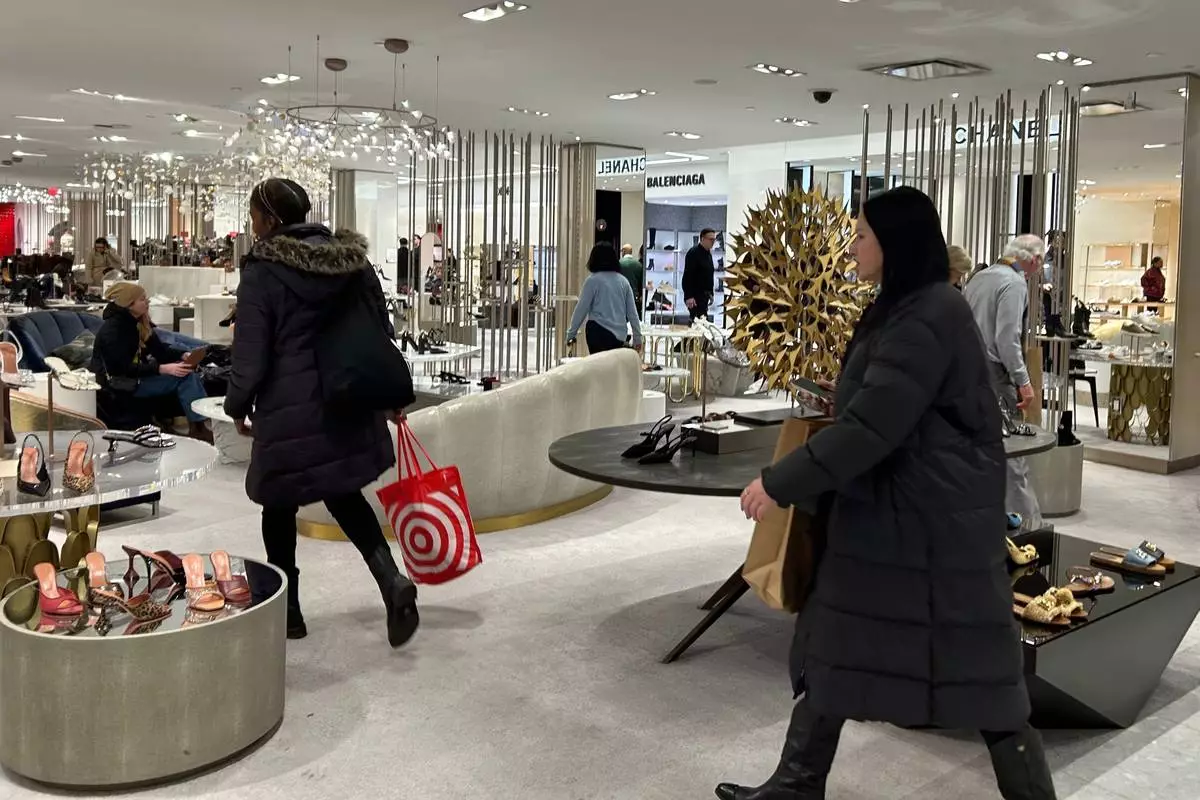
Shoppers walk through Saks Fifth Avenue on Friday, Jan. 16, 2026 in New York. (AP Photo/Anne D'Innocenzio)

Shoppers look at merchandise at Saks Fifth Avenue on Friday, Jan. 16, 2026 in New York. (AP Photo/Anne D'Innocenzio)

Versace merchandise is on display at Saks Fifth Avenue on Friday, Jan. 16, 2026 in New York. (AP Photo/Anne D'Innocenzio)
BEIRUT (AP) — When the Israel- Hezbollah war broke out in early March, Hussein Shuman fled the heavy bombardment of the southern suburbs of Beirut, but he didn’t bother trying to rent an apartment elsewhere.
In areas deemed “safe” because the Lebanese militant group has no presence, he feels that Shiite Muslims like him are not welcome. Residents regard them with suspicion as potential Hezbollah members, and landlords charge exorbitant prices to rent to displaced families.
Instead, the 35-year-old, who works at a perfume company, headed to central Beirut where he set up a small tent where he has been staying, along with his wife, 7-year-old son and 5-year-old daughter.
Shuman even rejected an offer from a friend who invited him to bring his family to the Christian mountain town of Zgharta. He preferred to remain in his tent, even though it has flooded twice in the past two weeks.
“By staying here I have my dignity and respect,” Shuman said, sitting on a chair near his tent as a barber gave him an open-air hair cut. “We will not stay in a place where we are going to be humiliated.”
In a country full of suspicion, the more than 1 million people — most of them Shiite — displaced as a result of Israel’s evacuation orders and airstrikes have limited options.
Some landlords in Christian areas refuse to rent to Shiites. Others demand inflated rents and deposits that few can afford. Fatima Zahra, 42, from Beirut’s southern suburbs, said she and her sister sold their finest jewelry to pay the $5,000 the landlord charged up front for two months’ rent.
In some Beirut neighborhoods, displaced people who can afford to pay high rents are only allowed to take the apartment after landlords inform the security agencies to check on whether the family has any links to Hezbollah.
Sectarian tensions are a sensitive issue in Lebanon because the country fought a 15-year civil war ending in 1990 that largely broke down along sectarian lines.
Social frictions have worsened since Israel’s targeted airstrikes killed Hezbollah officials or members of Iran’s paramilitary Revolutionary Guard in predominantly Christian, Sunni and Druze areas, raising fears among the hosts that Hezbollah members are mingling within the civilian population.
The Lebanese are deeply divided over Hezbollah’s wars with Israel, with many in the small nation blaming the Iran-backed group for dragging the country into a deadly conflict that has so far left more than 1,300 people dead and over 4,000 wounded. Hezbollah fired missiles into Israel two days after the U.S. and Israel attacked Iran on Feb. 28, triggering the ongoing Middle East war.
The renewed war has caused widespread destruction and paralyzed the economy at a time when Lebanon is still in the throes of a historic economic crisis that broke out in late 2019. The country has not yet recovered from the last Israel-Hezbollah war in 2024.
In mid-March, an Israeli airstrike on an apartment in the town of Aramoun killed three people, prompting some local residents to call for the displaced to leave the area.
Days later, an airstrike on the nearby town of Bchamoun also killed three people, including a four-year-old girl, who were displaced from Beirut’s southern suburbs, where Hezbollah has a strong presence.
In neither case did Israel announce the intended target of the strikes, but neighbors assumed that someone in the targeted apartments was a Hezbollah member.
“Had we known that they were linked to Hezbollah, we would have kicked them out,” an angry man who owns an apartment in the building in Bchamoun said at the scene.
In late March, a missile exploded over the predominantly Christian Keserwan region north of Beirut, with debris falling on different areas. Although the Lebanese army later said that it was an Iranian missile passing over Lebanon that fell, many initially assumed that it was an Israeli airstrike targeting displaced people.
No one was was hurt by the missile debris, but a group of young men attacked displaced Shiites in the district of Haret Sakher near the coastal city of Jounieh, calling for their eviction, before local officials intervened.
“We don’t want them here,” shouted a Haret Sakher resident shortly after the strike. He said that some of the displaced refer to their hosts as “Zionists,” accusing them of being aligned with Israel because they criticize Hezbollah for dragging the country into the conflict. He added: “We don’t want national coexistence.”
George Saadeh, a member of Jounieh’s municipal council, told The Associated Press that he had called on Haret Sakher residents to avoid any reaction “so that we can preserve civil peace.”
In a predominantly Christian area just north of Beirut, plans to house displaced people in an abandoned warehouse near the port were suspended last week after drawing backlash from lawmakers and residents.
“The Israeli targeting campaign has created a lot of paranoia,” said Maha Yahya, director of the Beirut-based Carnegie Middle East Center. “If you see a displaced person, maybe you wonder, ‘What if this person is a target?’”
Fearing the tension could slip out of control, the army has beefed up its presence on the streets.
Last week, army commander Gen. Rudolphe Haikal toured Beirut and the southern city of Sidon and told troops that they should be “firm in the face of any attempt to undermine internal stability,” the army said in a statement.
Police forces, including a SWAT unit, were deployed at major intersections in the capital to preserve peace and prevent any friction between the displaced and locals. Police patrols pass through the tent city by Beirut’s coast where Shuman and his family are staying.
An official at the municipality of the predominantly Sunni town of Naameh, just south of Beirut, said that they have received thousands of people displaced from southern Lebanon.
The official said that in order to avoid tensions, they opened a school in one district for displaced Shiites and another in a different neighborhood for people displaced from Sunni border villages.
“There are concerns among people,” that conflict could break out said the official who spoke on condition of anonymity because he was not authorized to speak to the media.
With the Israeli airstrikes and ground invasion mainly targeting Shiite areas, U.S. ambassador to Lebanon Michel Issa, a Lebanese-American, was criticized for stoking sectarianism. He told reporters in late March that the U.S. had asked Israel for a commitment that Christian villages in southern Lebanon will not be attacked.
“We have asked the Israelis to leave Christian villages in the south alone and they told us that they will not touch Christian villages,” Issa said. However, he added, “They (Israelis) said that they cannot guarantee” that the villages would be left alone “if there is infiltration into these villages” by Hezbollah members.
Several Christian villages in southern Lebanon have asked displaced Shiites who were sheltering there to leave, fearing that their presence might trigger Israeli attacks.
Legislator Taymour Joumblatt who is the leader of the Progressive Socialist Party, the largest Druze-led political group in the country, said that the biggest concern in the country now is “strife.”
“The most important thing is to reduce sectarian pressures on the ground,” Joumblatt said. “Our Shiites brothers are part of this country and our humanitarian duty is to help them.”
———
Associated Press writer Isabel DeBre contributed to this report from Beirut.
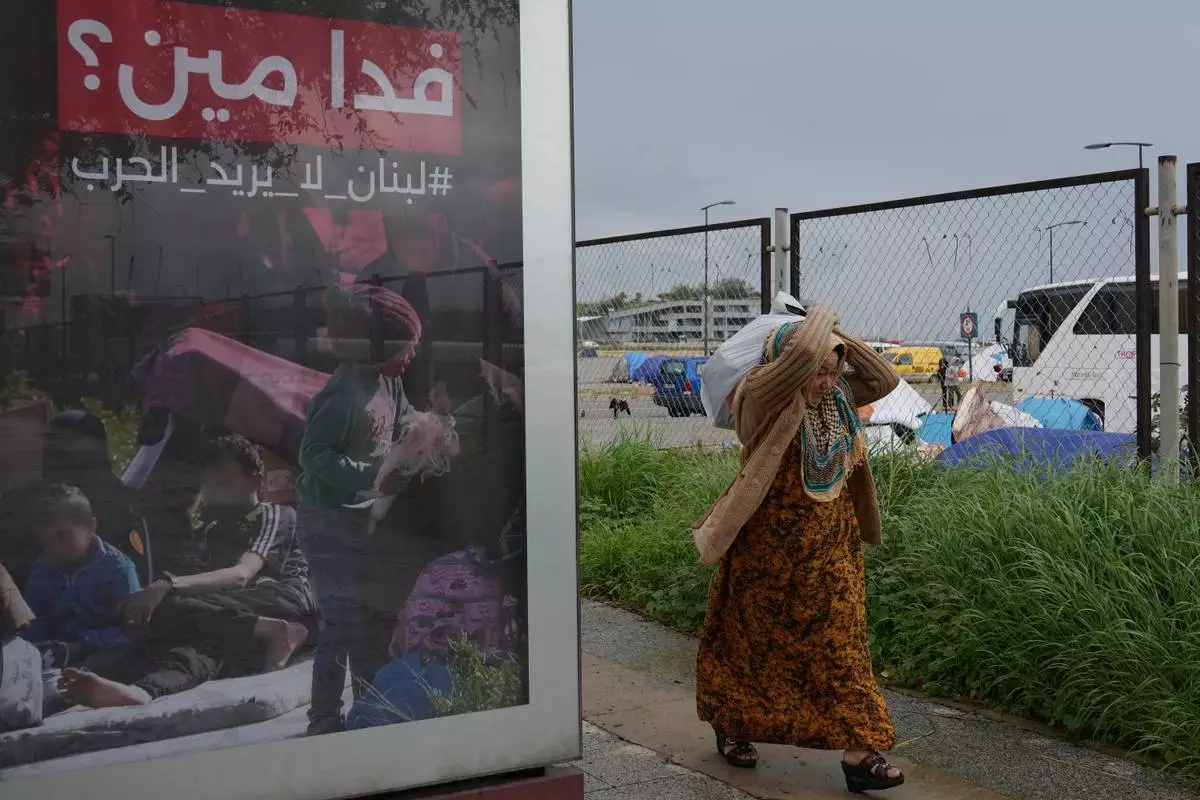
FILE — A displaced woman who fled Israeli airstrikes in southern Lebanon, carries her belonging as she moves to a better spot to shelter from the rain, past an Arabic anti-war poster that reads, "Sacrificing for whom? Lebanon does not need war," in Beirut, Saturday, March 21, 2026. (AP Photo/Hussein Malla, File)

Special forces police officers deployed amid tensions between people displaced by Israeli strikes and local residents in Beirut neighborhoods, Lebanon, Wednesday, April 1, 2026. (AP Photo/Hussein Malla)

FILE — A child walks past tents sheltering people displaced by Israeli airstrikes in southern Lebanon and Dahiyeh, Beirut's southern suburbs, along the Beirut waterfront in Beirut, Lebanon, Saturday, March 14, 2026. (AP Photo/Hassan Ammar, File)

Special forces police officers deployed amid tensions between people displaced by Israeli strikes and local residents in Beirut neighborhoods, Lebanon, Wednesday, April 1, 2026. (AP Photo/Hussein Malla)

File — Smoke rises from Israeli airstrikes in Dahiyeh, a southern suburb of Beirut, Lebanon, Tuesday, March 3, 2026. (AP Photo/Hussein Malla, File)