SEOUL, South Korea (AP) — South Korea placed overseas travel bans on three people as part of an investigation into alleged drone flights over North Korea that have deepened animosities between the rivals, authorities said Friday.
North Korea threatened retaliation earlier this month after accusing South Korea of launching a surveillance drone flight in September and again in January. The South Korean government denied operating any drones during the times specified by North Korea and began probing if civilians sent them.
The development threatens to further dampen prospects for a push by South Korea's liberal government to resume long-stalled talks with North Korea.
The three civilians put under travel bans include a man with the surname Oh who told South Korean media that he flew drones to check radiation levels at a North Korean uranium facility, according to a joint military and police investigation team.
The investigation team refused to give details about two other civilians except to say one was summoned for questioning in the past week.
South Korea media reported the trio has worked together for a drone manufacturer and that Oh and the person who was summoned worked as contract employees for the office of then conservative President Yoon Suk Yeol in 2022. The investigation team declined to confirm the reports.
President Lee Jae Myung has called for a thorough probe, saying unnecessary tensions with North Korea would cause negative impacts on the economy. Lee took office last June via a snap election arranged after the early departure of Yoon, who was dismissed as president over his ill-fated martial law imposition in late 2024.
Analysts say North Korea's drone accusations were likely driven by its efforts to dial up anti-South Korea sentiments ahead of the ruling Workers’ Party congress expected in late January or February. North Korea could add leader Kim Jong Un's declaration of a hostile “two-state” system on the Korean Peninsula in the party constitution during the congress, the first of its kind in five years.
There have been no public talks between the two Koreas since 2019 and drone flights are a source of animosity between the rivals.
North Korea accused South Korea in October 2024 of flying drones over its capital, Pyongyang, to drop propaganda leaflets. South Korea has accused North Korea of occasional drone flights over the border in the past decade.
In December 2022, South Korea fired warning shots, scrambled fighter jets and flew surveillance drones over North Korea in response to North Korea’s first alleged drone flights across the border in five years.
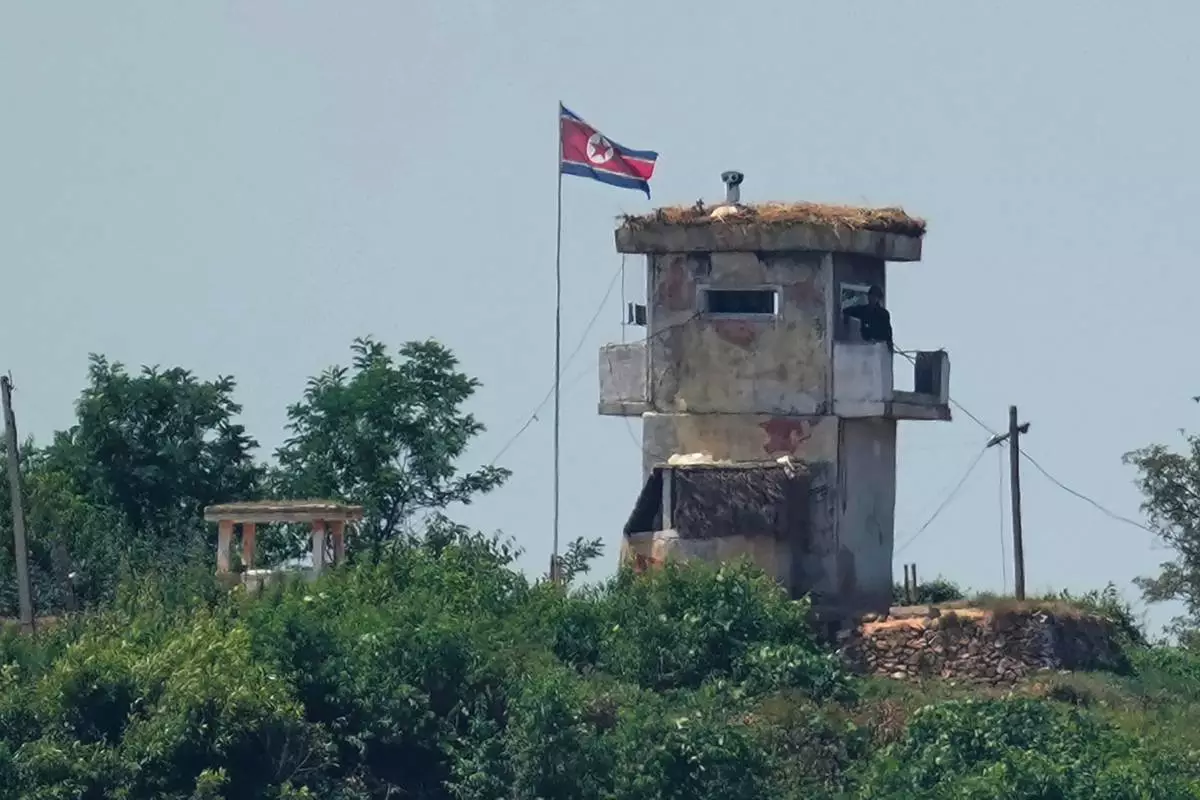
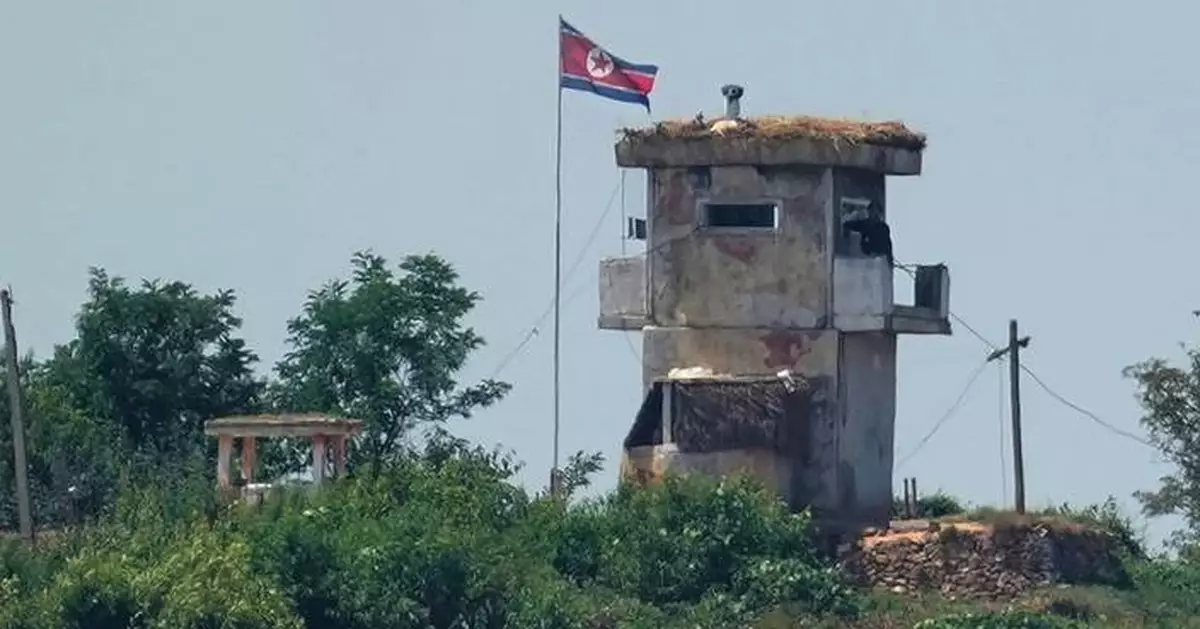
FILE - A soldier stands at a North Korean military guard post with the country's national flag, seen from Paju, South Korea, June 26, 2024. (AP Photo/Lee Jin-man, File)
SEOUL, South Korea (AP) — French President Emmanuel Macron and South Korean President Lee Jae Myung agreed Friday to work together to help reopen the Strait of Hormuz and ease global economic uncertainties caused by the war in the Middle East.
Their summit in Seoul came as U.S. President Donald Trump slammed allies for not supporting the U.S. and Israeli war against Iran. Macron was making his first visit to South Korea since taking office in 2017, as part of an Asian tour that already has taken him to Japan.
Macron told Lee at the start of the meeting that the two countries can play a role in helping to stabilize the situation in the Middle East, including Iran’s chokehold on the Strait of Hormuz, which has unleashed shock on global energy markets.
At a joint televised briefing afterward, Macron underscored the need for France and South Korea to cooperate to help reopen the strait and deescalate Middle East animosities, while Lee said the two affirmed “their resolves to cooperate to secure the safe shipping route in the Strait of Hormuz.”
The two leaders did not take questions and did not elaborate on how they would help reopen the strait — the narrow waterway between Iran and Oman through which about one-fifth of the world’s oil usually passes.
“We need to clearly define, at the international level, the conditions for a process to ease the crisis and conflict in the Middle East,” Macron said. “We need to ensure that the Strait of Hormuz is reopened.”
Lee said he and Macron agreed to expand cooperation in technology, energy and other areas. South Korean and French officials also signed agreements to cooperate on nuclear fuel supply chains, jointly invest in an offshore wind project in southern South Korea and to collaborate on critical minerals. South Korea has moved to increase output at its nuclear reactors to mitigate the energy crunch and Lee has also called for a faster transition to renewable energy, saying the war has exposed the country’s heavy reliance on fossil fuel imports.
Macron’s Asia trip comes as Trump has ramped up his frustration with allies. In a speech Wednesday, Trump said Americans “don’t need” the strait but the countries who do “must grab it and cherish it.”
In an earlier Easter event at the White House, Trump called for his allies in Asia and China to get involved in reopening the waterway.
“Let South Korea, you know, we only have 45,000 soldiers in harm’s way over there, right next to a nuclear force — let South Korea do it,” Trump said. “Let Japan do it. They get 90% of their oil from the strait. Let China do it.”
The United States stations about 28,000 troops in South Korea, not the 45,000 stated by Trump. The U.S. troops’ deployment in South Korea is meant to deter potential aggressions from North Korea.
Macron has said reopening the Strait of Hormuz through a military operation is unrealistic.
South Korean officials have said they are in contact with Washington on the issue and that Seoul isn’t considering paying Iran transit fees to secure fuel shipments through the strait.
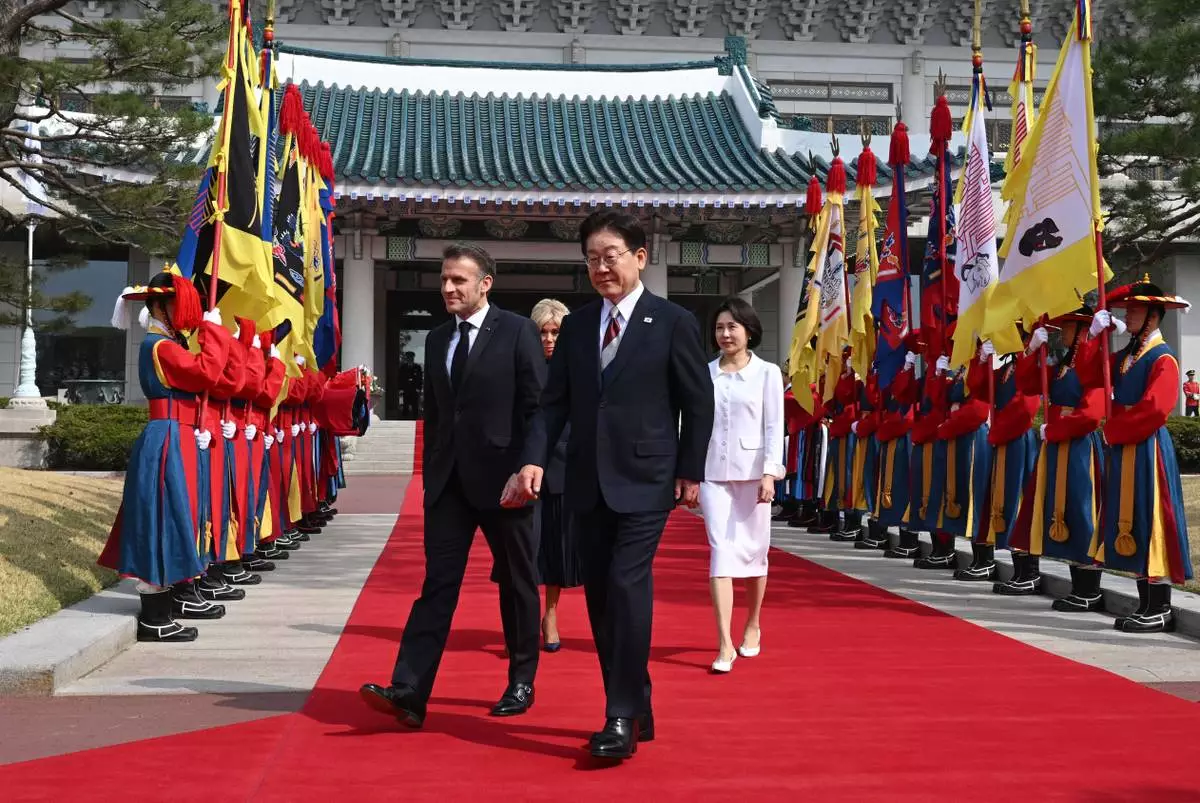
French President Emmanuel Macron, front left, his wife Brigitte Macron, back center, and South Korean President Lee Jae Myung, front right, and his wife Kim Hea Kyung, right, attend the welcome ceremony at the presidential Blue House in Seoul Friday, April 3, 2026. (Jung Yeon-je /Pool Photo via AP)
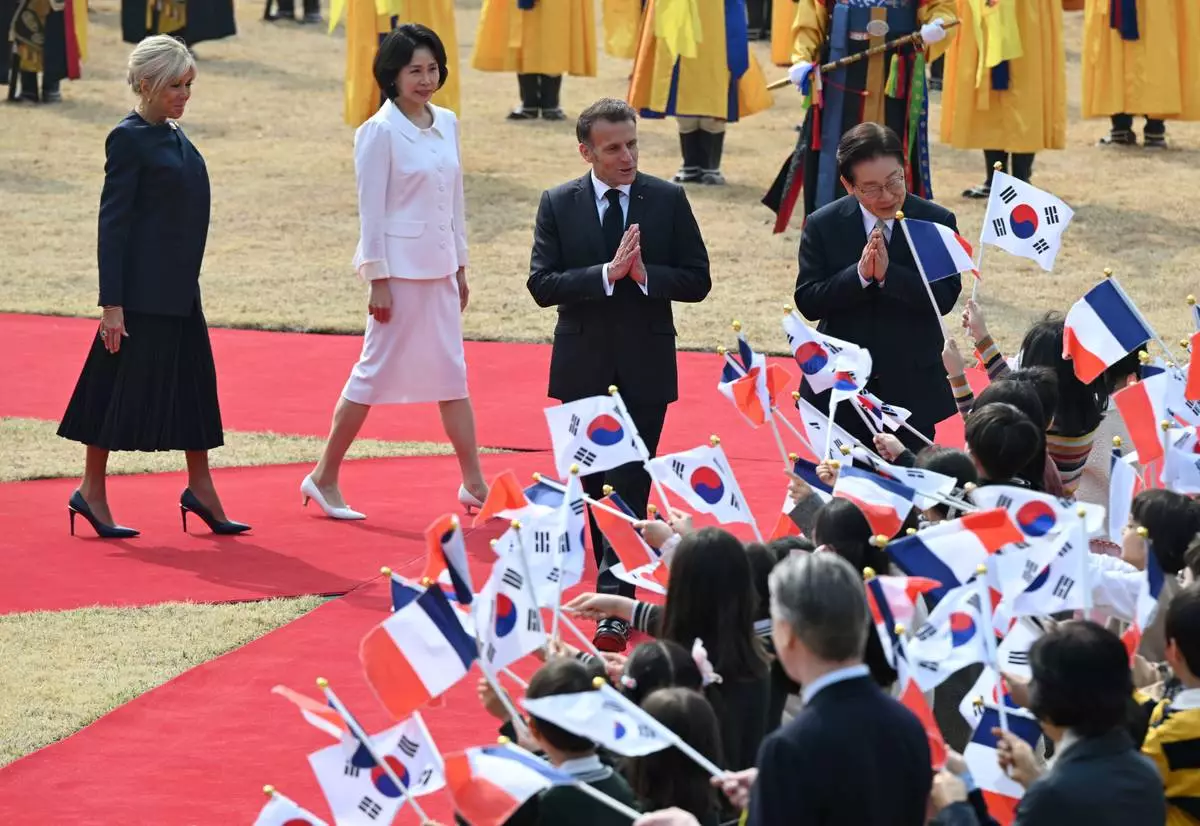
French President Emmanuel Macron, center, his wife Brigitte Macron, left, and South Korean President Lee Jae Myung, right, and his wife Kim Hea Kyung, second left, attend the welcome ceremony at the presidential Blue House in Seoul Friday, April 3, 2026. (Jung Yeon-je /Pool Photo via AP)
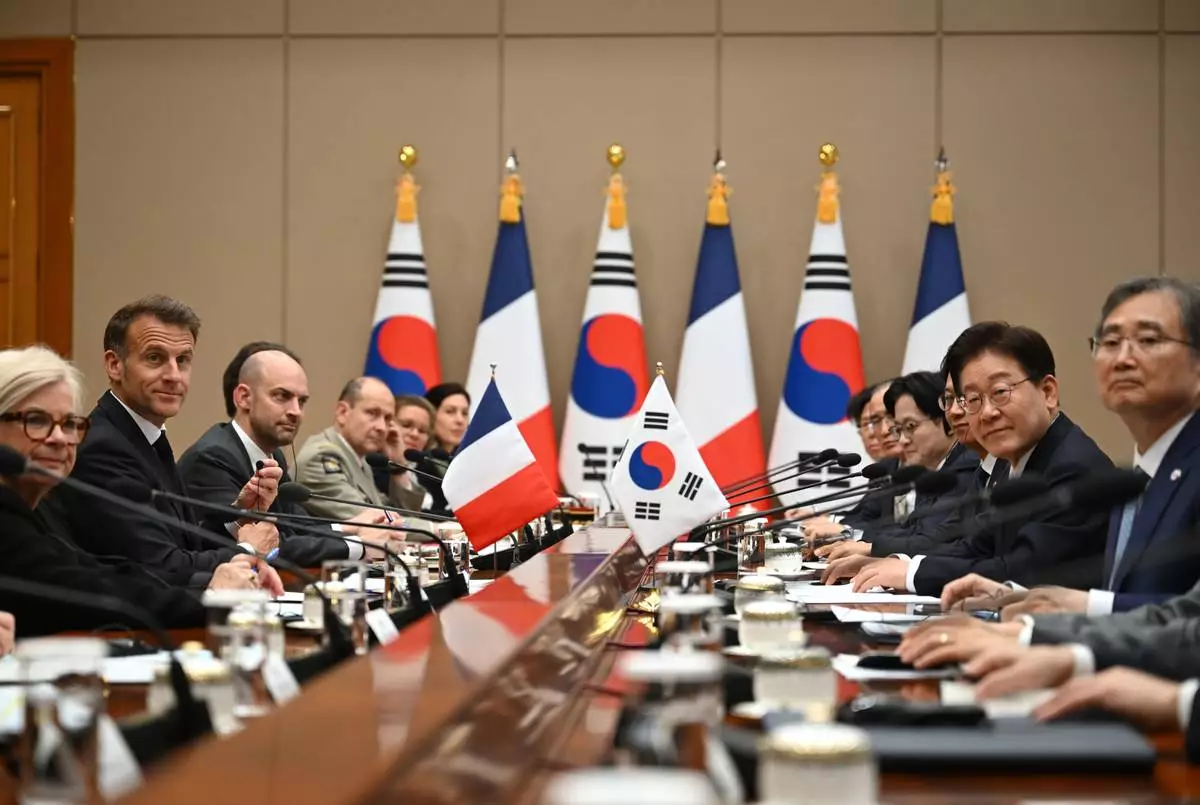
French President Emmanuel Macron, second left, talks with South Korean President Lee Jae Myung, second right, during their meeting at the Blue House in Seoul, South Korea, Friday, April 3, 2026. (Jung Yeon-je/Pool Photo via AP)
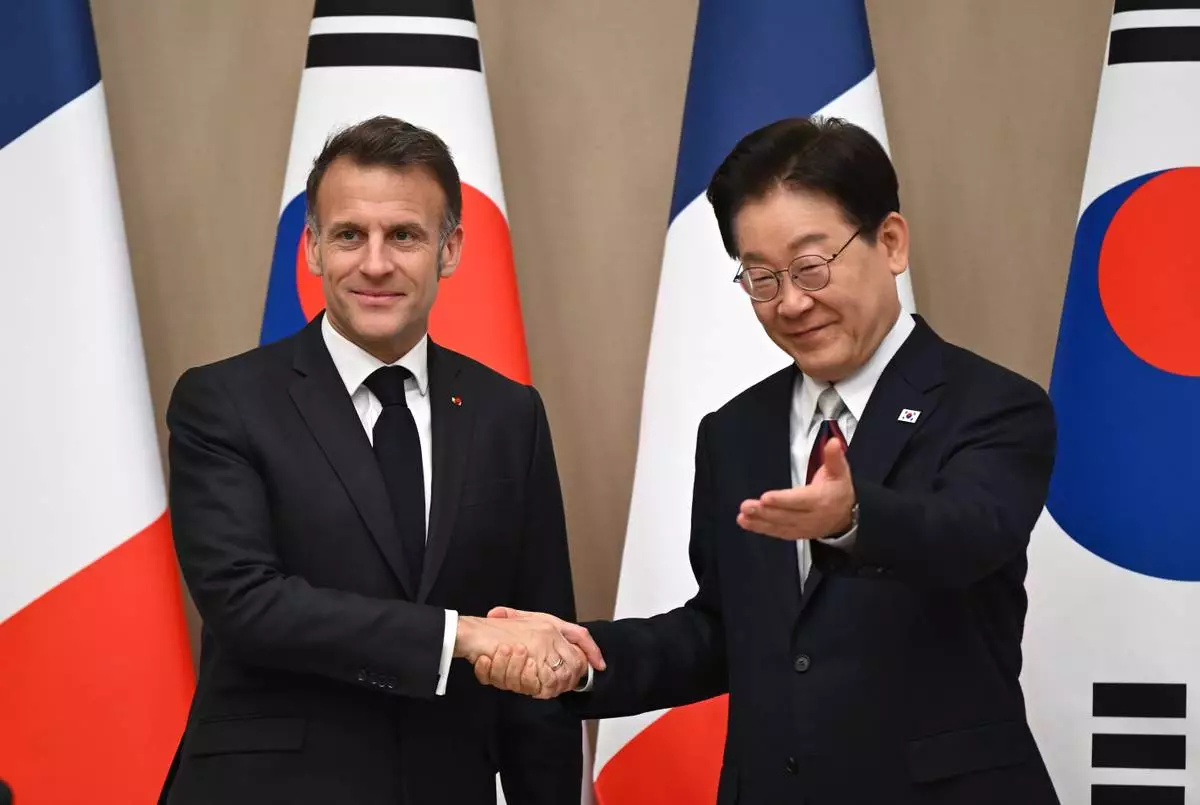
French President Emmanuel Macron shakes hands with South Korean President Lee Jae Myung during their meeting at the Blue House in Seoul, South Korea, Friday, April 3, 2026. (Jung Yeon-je/Pool Photo via AP)