The competition is fierce. Kendrick Lamar's dominance continues at the 2026 Grammy Awards, where he leads the nominations with nine. He's followed closely by Lady Gaga, Jack Antonoff and Canadian record producer/songwriter Cirkut, who boast seven each. Then it's Sabrina Carpenter, Bad Bunny, Leon Thomas and Serban Ghenea with six.
But who will win? Who will make history at the 68th Grammy Awards on Feb. 1?
Click to Gallery
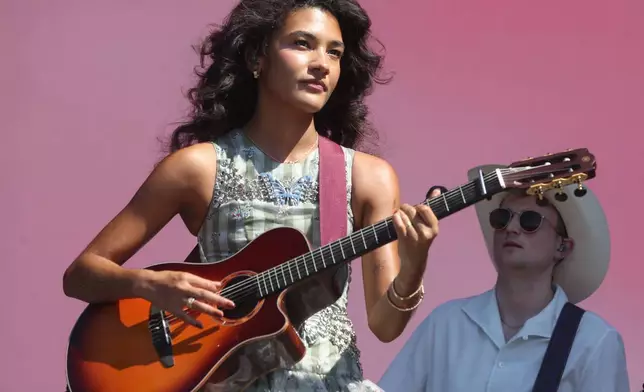
FILE - Olivia Dean performs during weekend two of the Austin City Limits Music Festival on Oct. 11, 2025, in Austin, Texas. (Photo by Jack Plunkett/Invision/AP, File)
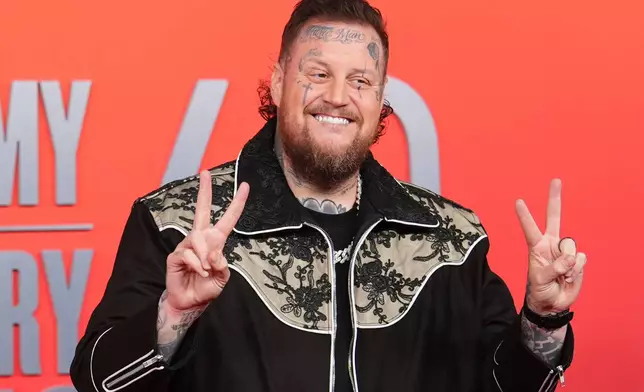
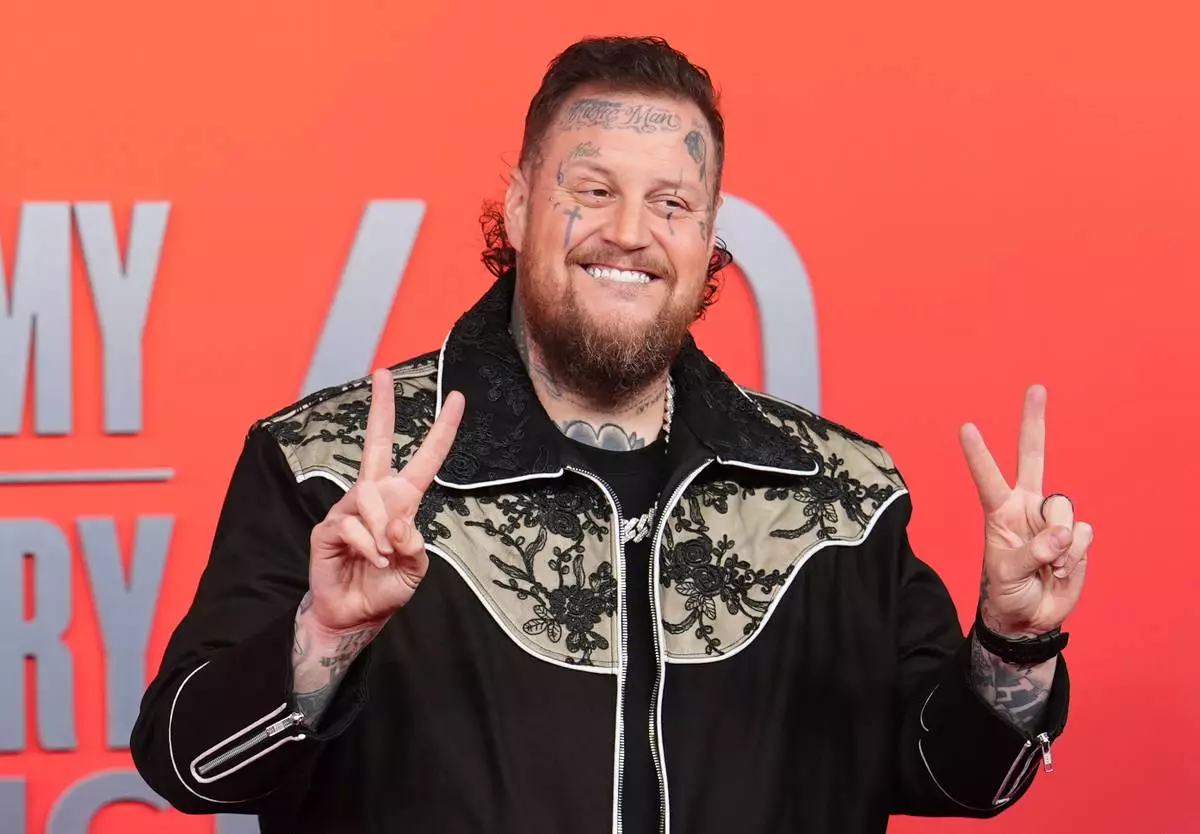
FILE.- Jelly Roll arrives at the 60th annual Academy of Country Music Awards in Frisco, Texas, on May 8, 2025. (AP Photo/LM Otero, File)
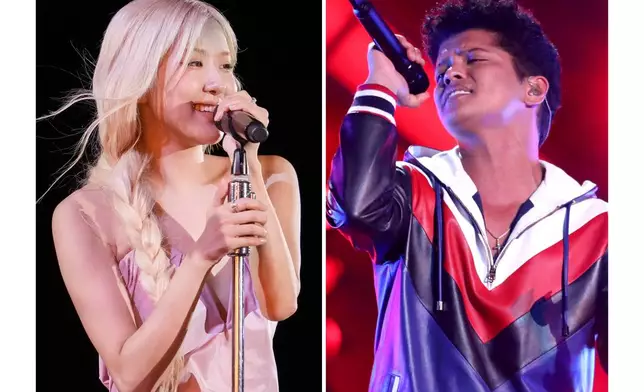
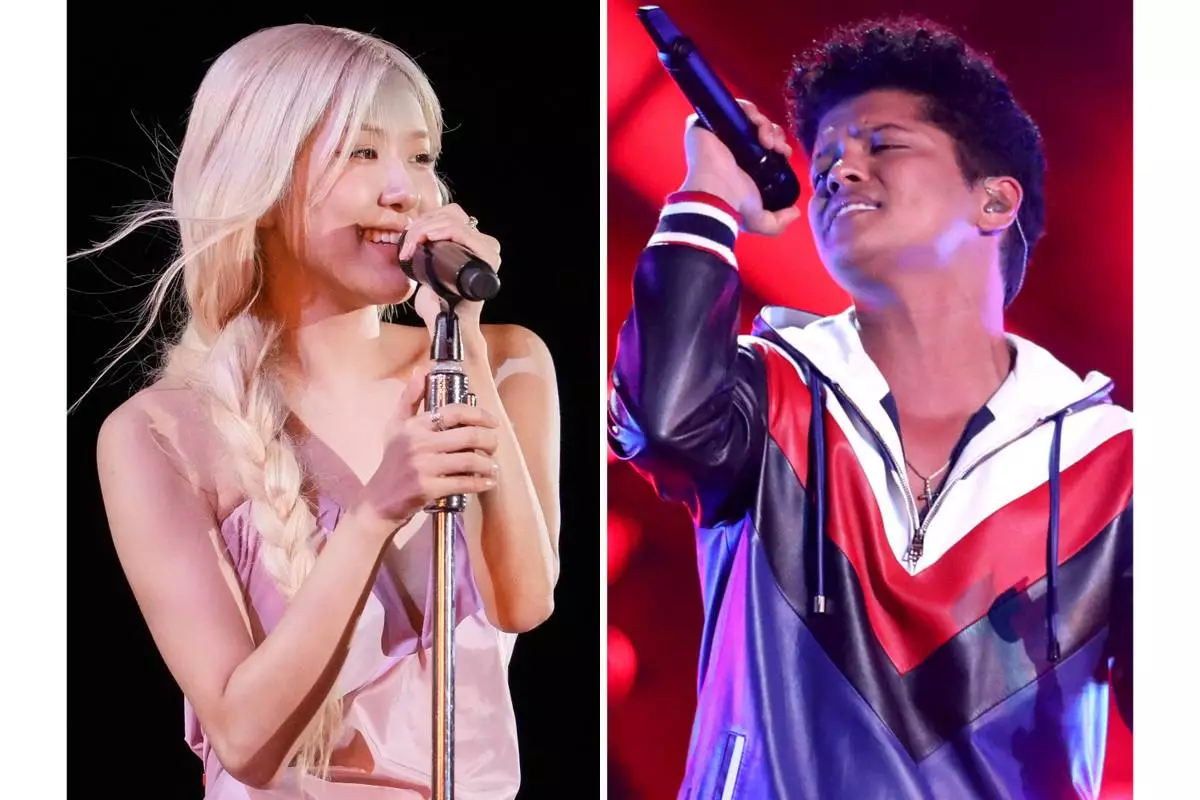
Rose performs during the Global Citizen Festival in New York on Sept. 27, 2025, left, and Bruno Mars performs at the 59th annual Grammy Awards in Los Angeles on Feb. 12, 2017. (AP Photo)
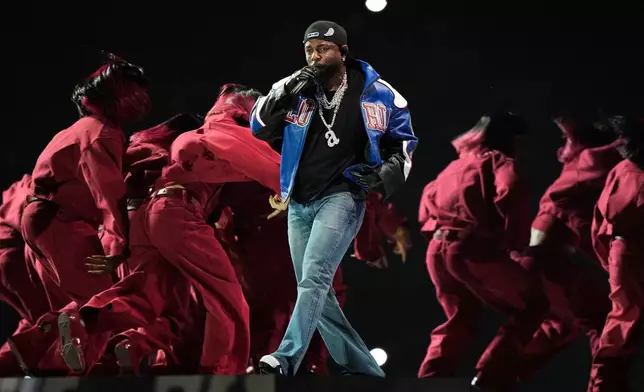
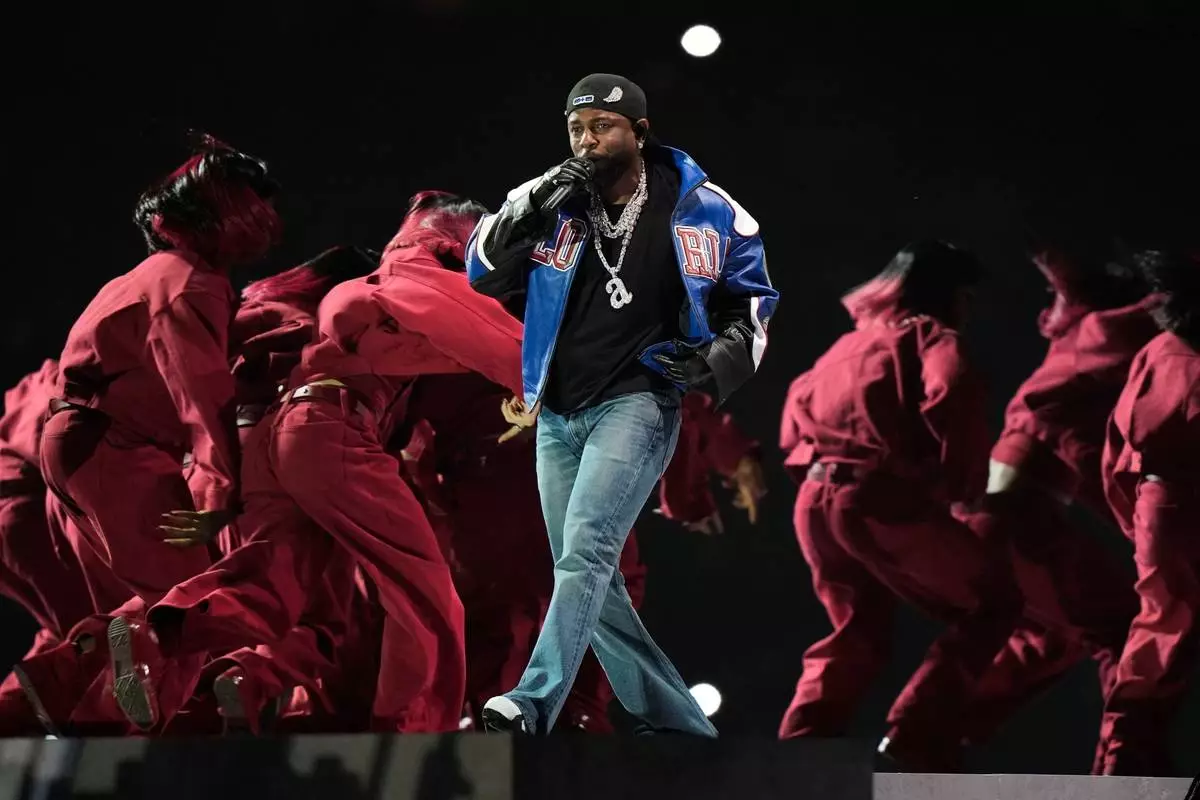
FILE - Kendrick Lamar performs during halftime of the NFL Super Bowl 59 football game between the Kansas City Chiefs and the Philadelphia Eagles, Sunday, Feb. 9, 2025, in New Orleans. (AP Photo/Frank Franklin II, File)
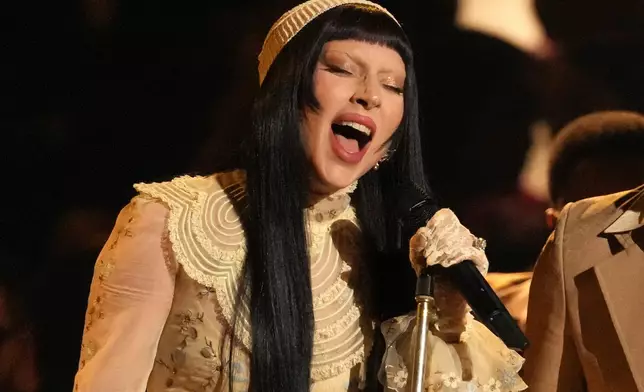
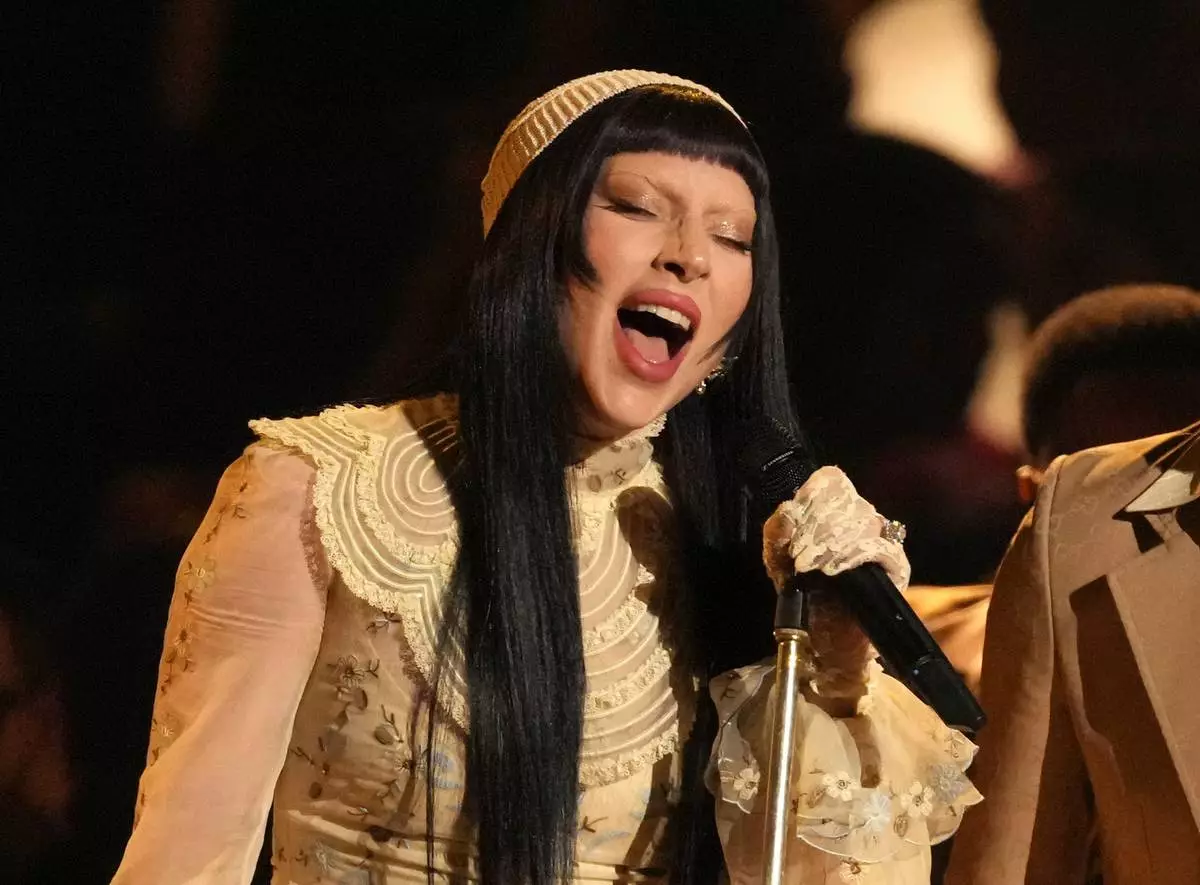
FILE - Lady Gaga performs during the 67th annual Grammy Awards in Los Angeles on Feb. 2, 2025. (AP Photo/Chris Pizzello, File)
The Associated Press’ Maria Sherman and Jonathan Landrum Jr. break down the close races for Grammy glory.
“Debí Tirar Más Fotos,” Bad Bunny; “Swag,” Justin Bieber; “Man’s Best Friend,” Sabrina Carpenter; “Let God Sort Em Out,” Clipse, Pusha T and Malice; “Mayhem,” Lady Gaga; “GNX,” Kendrick Lamar; “Mutt,” Leon Thomas; “Chromakopia,” Tyler, the Creator.
SHERMAN: Starting off with the big guns. Last year’s “Cowboy Carter” victory was long overdue for Beyoncé. That, and an evolving Recording Academy electorate, is enough to inspire hope that winners may soon be in sync with the current cultural zeitgeist. But change is slow, and it is most likely Lady Gaga will be awarded. “Mayhem” is a great album, but her victory will be more about narrative — recognizing a game-changing artist with her return-to-form record — instead of who should really win this year. That's Bad Bunny’s “Debí Tirar Más Fotos.” (Let’s not forget all Latin Recording Academy members were invited to join the Recording Academy in 2025, but it is not clear how many can actually vote.) The world would love to see a Spanish-language album win for the very first time — Bad Bunny was once again the most streamed artist, globally, on Spotify last year.
There's also “GNX,” which deserves the victory, as well. But the 2025 ceremony felt like Kendrick Lamar's victory lap, and even with three rap albums nominated in the top spot, it's not clear whether voters will give him the recognition he deserves.
LANDRUM: I understand the appeal of a breakthrough narrative here, especially with such a globally representative field. But this category tends to land with the project that moved most cleanly across multiple spaces without explanation. “GNX” stayed active across music, sports and everyday culture throughout the year. Let’s not forget that songs “luther” and “Squabble Up” sustained long-term engagement; “TV Off” entered everyday language with the “Mustard” catchphrase; and “Dodger Blue” extended the project into sports culture during the Los Angeles Dodgers’ championship run. Much respect to the other nominees here, but Lamar delivered a tightly structured album that circulated naturally. That kind of sustained presence usually carries more weight than momentum built around a single lane.
“DtMF,” Bad Bunny; “Manchild,” Sabrina Carpenter; “Anxiety,” Doechii; “Wildflower,” Billie Eilish; “Abracadabra,” Lady Gaga; “luther,” Kendrick Lamar with SZA; “The Subway,” Chappell Roan; “APT.,” Rosé and Bruno Mars.
LANDRUM: If one song feels both inescapable and effortless, it’s “APT.” I look at what songs listeners — especially younger ones including my soon-to-be 6-year-old — still keep in rotation. The song easily translates across age groups, platforms and borders. Bruno Mars brought a proven sense of structure that voters respond to, while Rosé’s presence reflects the academy’s growing comfort with global pop influence. If this wins, which I believe will happen, Rosé would become the first K-pop artist to take the record of the year milestone. I think it’s time to make history.
SHERMAN: For all of the reasons you've listed above — as well as its total ubiquity and cultural meshing — “APT.” is the most likely candidate. But because record of the year is meant to highlight performance and production (as opposed to song of the year, which focuses on songwriting and composition), “luther” should win.
“Abracadabra,” Henry Walter, Lady Gaga and Andrew Watt; “Anxiety,” Jaylah Hickmon; “APT.,” Amy Allen, Christopher Brody Brown, Rogét Chahayed, Henry Walter, Omer Fedi, Philip Lawrence, Bruno Mars, Chae Young Park and Theron Thomas; “DtMF,” Benito Antonio Martínez Ocasio, Scott Dittrich, Benjamin Falik, Hugo René Sención and Tyler Thomas Spry; “Golden,” EJAI and Mark Sonnenblick; “luther,” Jack Antonoff, Roshwita Larisha Bacha, Matthew Bernard, Ink, Scott Bridgeway, Sam Dew, Kendrick Lamar, Mark Anthony Spears, Solána Rowe and Kamasi Washington; “Manchild,” Amy Allen, Jack Antonoff and Sabrina Carpenter; “Wildflower,” Billie Eilish O’Connell and Finneas O’Connell.
SHERMAN: There’s no “Not Like Us” this year, but there is a lot of competition. Billie Eilish and Bruno Mars are back — two established favorites of Grammy voters — it would be a third win for both in this category, the most of any artist. And it wouldn’t be wise to count out the gargantuan “Golden,” though it may be awarded elsewhere. Signs point to Lady Gaga for this one. She has been nominated in this category four times with no victories. “Abracadabra” could take it home — and it will feel more justified than an album of the year win for many.
LANDRUM: I agree. The competition is strong here. But this category often comes down to precision. And “Abracadabra” is tightly constructed and intentional, shaped by Lady Gaga’s renewed focus on lyric construction and melodic intent. That was something we spoke about ahead of her album. You hear that discipline in the writing itself with every line pulling its weight.
Olivia Dean; Katseye; The Marias; Addison Rae; sombr; Leon Thomas; Alex Warren; Lola Young.
LANDRUM: This category increasingly rewards artists who arrive with a fully formed identity. Leon Thomas separated himself by presenting a cohesive body of work rather than a moment driven by visibility alone. “Mutt” reflects songwriting discipline, genre fluency and a clear point of view shaped by years of experience. That foundation tends to resonate when voters are thinking long term.
SHERMAN: Points have been made! Thomas is an exemplar candidate. But there are other factors. If streaming was the ultimate metric, this would go to “Ordinary” singer Alex Warren. But it rarely is. In this category, Olivia Dean's name has been uttered the most.
“Defying Gravity,” Cynthia Erivo and Ariana Grande; “Golden,” HUNTR/X: EJAE, Audrey Nuna, REI AMI; “Gabriela,” Katseye; “APT.,” Rosé and Bruno Mars, “30 for 30,” SZA with Kendrick Lamar.
SHERMAN: Three of these nominees could be considered K-pop, or at the very least, K-pop-adjacent: “Golden,” “APT.,” and “Gabriela.” If any of them win, it will mark the first time any K-pop act has won any Grammy — and who wouldn’t want to see that? “Golden” feels most likely. If the Lamar and SZA song here was “Luther” instead of “30 for 30,” this would be a different conversation.
LANDRUM: For me, this is a toss-up between “Golden” and “APT.” But I’m going to give a slight nod to “APT.” What sets the song apart is balance. It also features a voter favorite: Bruno Mars. The collaboration with him and Rosé feels settled, with neither artist competing for space. Mars understands how to shape performances that voters consistently recognize, and Rosé fits seamlessly into that structure. In this category, cohesion often matters more than ambition.
“Let God Sort Em Out,” Clipse, Pusha T and Malice; “Glorious,” GloRilla; “God Does Like Ugly,” JID, “GNX,” Kendrick Lamar, “Chromakopia,” Tyler, the Creator.
LANDRUM: If I believe “GNX” deserves album of the year, then this category shouldn’t even be a debate. Same logic would apply to Tyler, the Creator: You shouldn’t crown the album at the top and ignore it in its home genre. “GNX” is cohesive, quotable and culturally dominant without chasing the algorithm. That’s rap at its highest level.
SHERMAN: It's a no contest pick. “GNX” is more than an album, but a paragon — and should be awarded as such.
“Patterns,” Kelsea Ballerini; “Snipe Hunter,” Tyler Childers; “Evangeline vs the Machine,” Eric Church; “Beautifully Broken,” Jelly Roll; “Postcards from Texas,” Miranda Lambert.
SHERMAN: This year, the Grammys renamed country album to contemporary country album and added a traditional country album category, a distinction that exists in other genres. But the news arrived right after “Cowboy Carter” won best country album, inspiring backlash online. In this inaugural edition, “contemporary” seems to mean “country that includes elements of other genres and/or left-of-center narratives.” In the case of the former, Eric Church’s inventive country-rock may sway voters over Kelsea Ballerini’s pop affectations, Jelly Roll’s hip-hop-informed phrasing or Tyler Childers’ eclecticism.
LANDRUM: Like Jelly Roll said in an interview with Maria, it’s his time. And I sure do believe him. This album fits the newly defined category almost too perfectly: emotional, honest, genre-fluid production and storytelling that connects beyond traditional country audiences. He expanded this genre, and I believe voters love a moment that feels both timely and redemptive. This checks both boxes.
“Beloved,” Giveon; “Why Not More?,” Coco Jones; “The Crown,” Ledisi; “Escape Room,” Teyana Taylor; “Mutt,” Leon Thomas.
LANDRUM: There’s only one album in this category that’s also up for album of the year, and that matters. “Mutt” distinguished itself through restraint, allowing songwriting and performance to lead rather than production excess. This should be a lock … which is exactly why I’m bracing for voters to surprise me.
SHERMAN: “Mutt” is a clear standout here. As Ty Dolla $ign told AP in October, “There’s definitely going to be a comeback in R&B very soon.” And who did he name as its leader? “We’re talking Leon specifically.”
“EUSEXUA,” FKA twigs; “Ten Days,” Fred again …; “Fancy That,” PinkPantheress; “Inhale/Exhale,” Rüfüs du Sol; “F--- U Skrillex You Think Ur Andy Warhol but UR Not! 3,” Skrillex
SHERMAN: There are a lot of heavyweights in this category: Fred again …, Rüfüs du Sol, PinkPantheress and more. FKA twigs’ “EUSEXUA” made a big splash in 2025. But all signs point to Skrillex, one of the most Grammy-awarded dance/electronic artists, with nine career wins.
LANDRUM: This field is rich with compelling artistic statements. What gives Skrillex’s “F--- U Skrillex You Think Ur Andy Warhol but UR Not! 3" an edge is direction. It pushes sound forward while maintaining structure. That balance between experimentation and clarity has historically resonated with voters in this category.
“Cosa Nuestra,” Rauw Alejandro; “Bogotá (Deluxe),” Andrés Cepeda; “Tropicoqueta,” Karol G; “Cancionera,” Natalia Lafourcade; “¿Y ahora qué?,” Alejandro Sanz.
SHERMAN: This trophy is likely headed to Natalia Lafourcade or Alejandro Sanz, who took home record of the year at the 2025 Latin Grammys a few months ago. Even though this is a pop category, I sense voters will go traditional. The Latin categories at the Grammys often reflect the top winners at the Latin Grammys, too.
LANDRUM: There’s a strong case for tradition in this field, but “Tropicoqueta” reflects forward movement. Karol G operates with clear creative authority here, balancing accessibility with cultural specificity. When voters meet the moment rather than default to familiarity, this type of project tends to stand out.
The 68th Grammy Awards will be held Feb. 1 at Crypto.com Arena in Los Angeles. The show will air on CBS and stream on Paramount+. For more coverage of this year’s Grammy Awards, visit: www.apnews.com/hub/grammy-awards
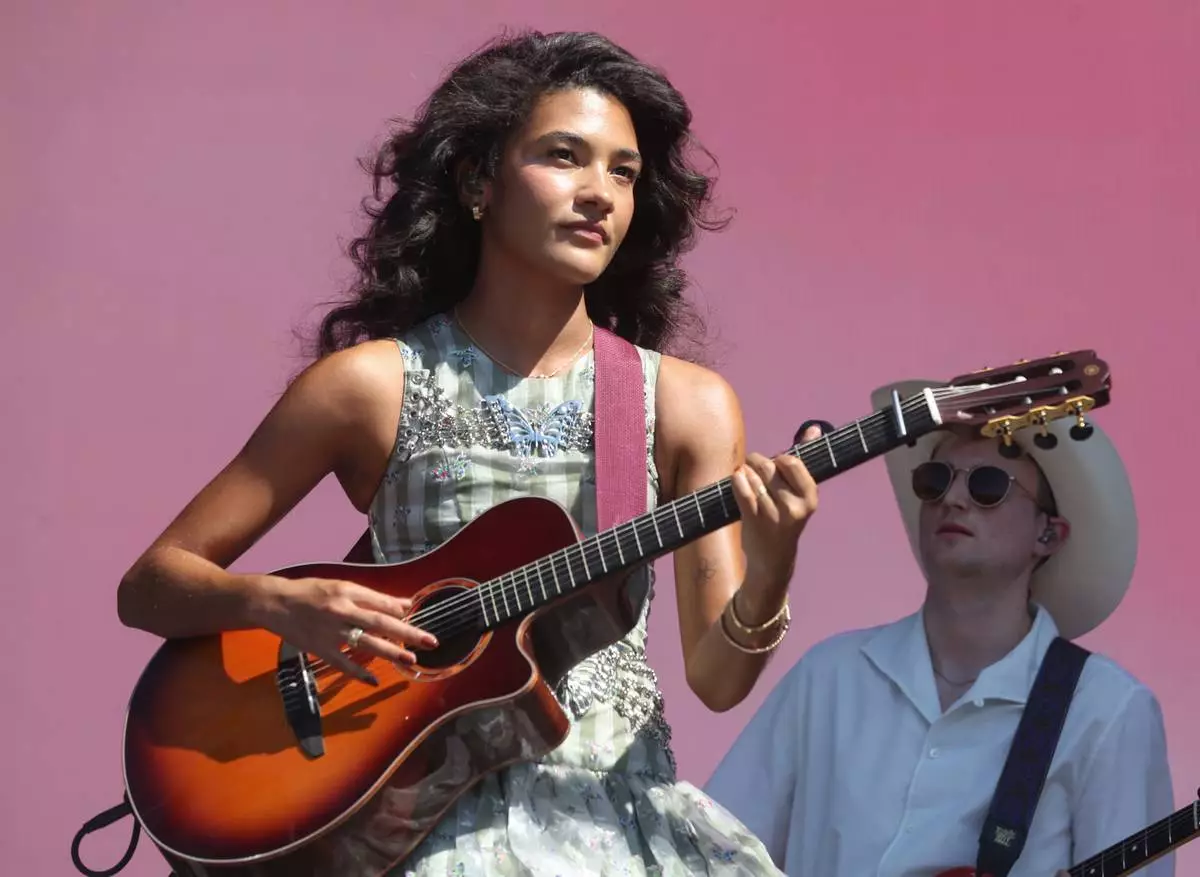
FILE - Olivia Dean performs during weekend two of the Austin City Limits Music Festival on Oct. 11, 2025, in Austin, Texas. (Photo by Jack Plunkett/Invision/AP, File)
FILE.- Jelly Roll arrives at the 60th annual Academy of Country Music Awards in Frisco, Texas, on May 8, 2025. (AP Photo/LM Otero, File)
Rose performs during the Global Citizen Festival in New York on Sept. 27, 2025, left, and Bruno Mars performs at the 59th annual Grammy Awards in Los Angeles on Feb. 12, 2017. (AP Photo)
FILE - Kendrick Lamar performs during halftime of the NFL Super Bowl 59 football game between the Kansas City Chiefs and the Philadelphia Eagles, Sunday, Feb. 9, 2025, in New Orleans. (AP Photo/Frank Franklin II, File)
FILE - Lady Gaga performs during the 67th annual Grammy Awards in Los Angeles on Feb. 2, 2025. (AP Photo/Chris Pizzello, File)