WASHINGTON (AP) — Democrats and the White House struck a deal to avert a partial government shutdown and temporarily fund the Department of Homeland Security as they consider new restrictions for President Donald Trump’s surge of immigration enforcement. But passage was delayed late Thursday as leaders scrambled to win enough support for the agreement before the midnight Friday deadline.
As the country reels from the deaths of two protesters at the hands of federal agents in Minneapolis, the White House agreed to separate homeland security funding from a larger spending bill and fund the department for two weeks while they debate Democratic demands for curbs on the U.S. Immigration and Customs Enforcement agency.
Click to Gallery
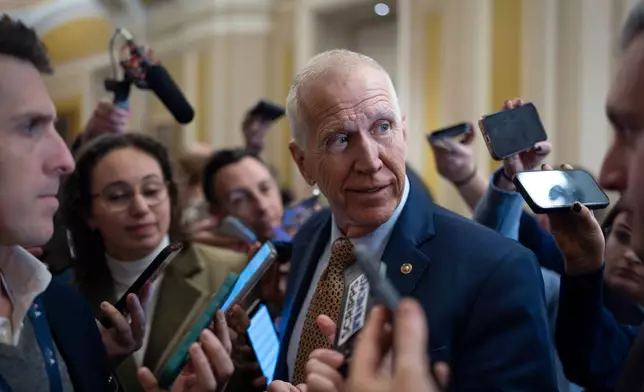
Sen. Thom Tillis, R-N.C., speaks with reporters following a closed-door meeting with fellow Republicans on spending legislation that funds the Department of Homeland Security and a swath of other government agencies, at the Capitol in Washington, Wednesday, Jan. 28, 2026. (AP Photo/J. Scott Applewhite)
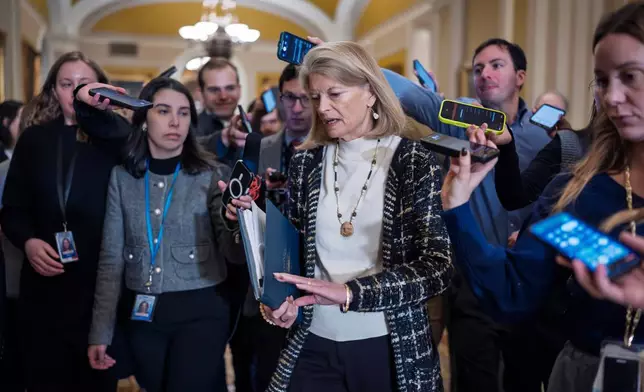
With a partial government shutdown looming by week's end, Sen. Lisa Murkowski, R-Alaska, a member of the Senate Appropriations Committee, is surrounded by reporters following a closed-door Republican meeting on spending legislation that funds the Department of Homeland Security and a swath of other government agencies as the country reels from the deaths of two people at the hands of federal agents in Minneapolis, at the Capitol in Washington, Wednesday, Jan. 28, 2026. (AP Photo/J. Scott Applewhite)
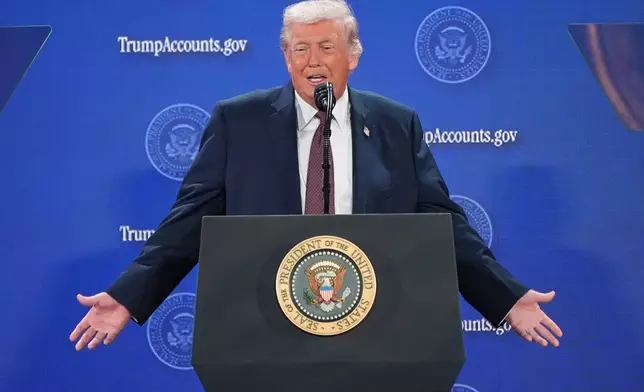
President Donald Trump speaks during the launch of a program known as Trump Accounts at the Andrew W. Mellon Auditorium, Wednesday, Jan. 28, 2026, in Washington. (AP Photo/Jacquelyn Martin)
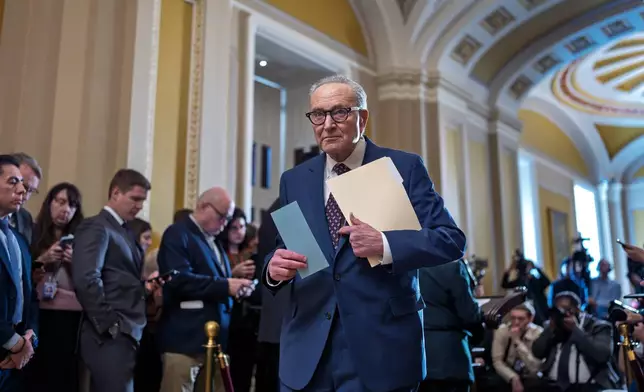
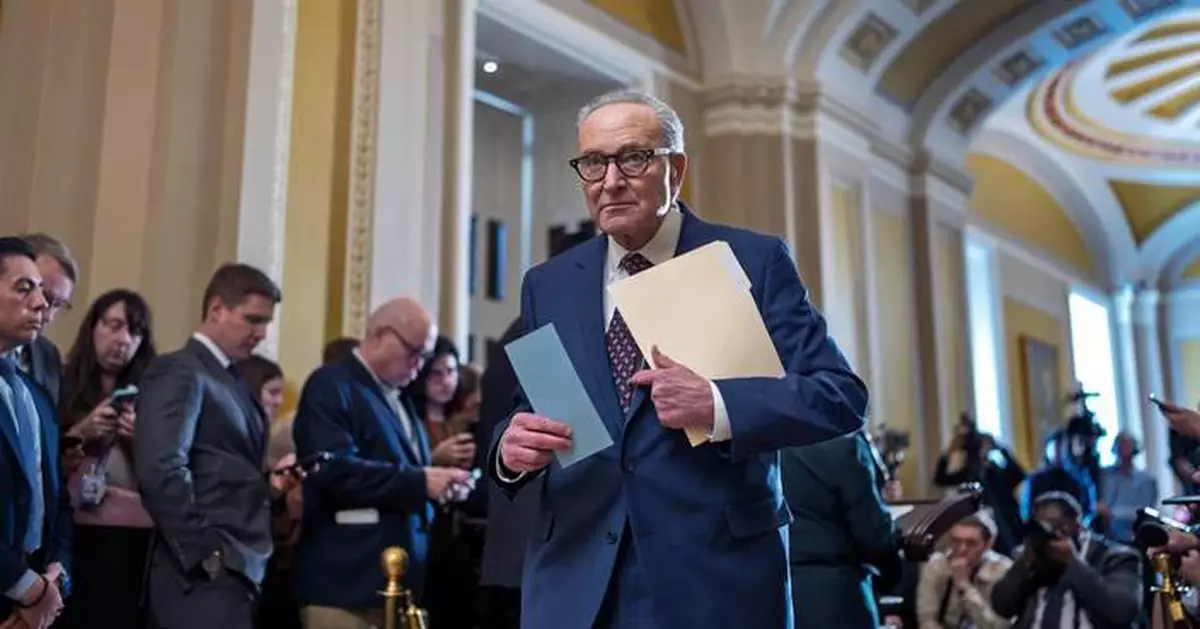
Senate Minority Leader Chuck Schumer, D-N.Y., waits to speak to reporters following a closed-door meeting with fellow Democrats at the Capitol in Washington, Wednesday, Jan. 28, 2026. (AP Photo/J. Scott Applewhite)
“Republicans and Democrats have come together to get the vast majority of the government funded until September” while extending current funding for Homeland Security, Trump said in a social media post Thursday evening. He encouraged members of both parties to cast a “much needed Bipartisan ‘YES’ vote.”
Still, all senators weren't yet on board. Leaving the Capitol just before midnight Thursday after hours of negotiations, Senate Majority Leader John Thune said there were “snags on both sides” as he and Democratic leader Chuck Schumer tried to rally support.
“Hopefully people will be of the spirit to try and get this done tomorrow,” Thune said.
Sen. Lindsey Graham, R-S.C., said late Thursday that he was one of the senators objecting. He said Immigration and Customs Enforcement agents were being treated unfairly. He has also opposed House language that would repeal a new law that gives senators the ability to sue the government for millions of dollars if their personal or office data is accessed without their knowledge.
Democrats had requested the two-week extension and say they are prepared to block the wide-ranging spending bill if their demands aren’t met, denying Republicans the votes they need to pass it and potentially triggering a shutdown.
The rare bipartisan talks between Trump and his frequent adversary, Senate Democratic leader Chuck Schumer, came after the fatal shooting of 37-year-old Alex Pretti in Minnesota over the weekend and calls by senators in both parties for a full investigation. Schumer called it “a moment of truth.”
“The American people support law enforcement. They support border security. They do not support ICE terrorizing our streets and killing American citizens,” Schumer said.
The standoff has threatened to plunge the country into another shutdown, just two months after Democrats blocked a spending bill over expiring federal health care subsidies. That dispute closed the government for 43 days as Republicans refused to negotiate.
That shutdown ended when a small group of moderate Democrats broke away to strike a deal with Republicans, but Democrats are more unified this time after the fatal shootings of Pretti and Renee Good by federal agents.
Democrats have laid out several demands, asking the White House to “end roving patrols” in cities and coordinate with local law enforcement on immigration arrests, including requiring tighter rules for warrants.
They also want an enforceable code of conduct so agents are held accountable when they violate rules. Schumer said agents should be required to have “masks off, body cameras on” and carry proper identification, as is common practice in most law enforcement agencies.
The Democratic caucus is united in those “common sense reforms,” and the burden is on Republicans to accept them, Schumer said.
“Boil it all down, what we are talking about is that these lawless ICE agents should be following the same rules that your local police department does,” said Democratic Sen. Tina Smith of Minnesota. “There has to be accountability.”
Earlier on Thursday, Tom Homan, the president’s border czar, stated during a press conference in Minneapolis that federal immigration officials are developing a plan to reduce the number of agents in Minnesota, but this would depend on cooperation from state authorities.
Negotiations down the road on a final agreement on the Homeland Security bill are likely to be difficult.
Democrats want Trump’s aggressive immigration crackdown to end. “If the Trump administration resists reforms, we shut down the agency,” said Connecticut Sen. Richard Blumenthal.
“We need to take a stand,” he said.
But Republicans are unlikely to agree to all of the Democrats' demands.
North Carolina Sen. Thom Tillis said he is opposed to requiring immigration enforcement officers to show their faces, even as he blamed Homeland Security Secretary Kristi Noem for decisions that he said are “tarnishing” the agency’s reputation.
“You know, there’s a lot of vicious people out there, and they’ll take a picture of your face, and the next thing you know, your children or your wife or your husband are being threatened at home,” Tillis said.
South Carolina Sen. Graham said some of the Democratic proposals “make sense,” such as better training and body cameras. Still, he said he was putting his Senate colleagues “on notice” that if Democrats try to make changes to the funding bill, he would insist on new language preventing local governments from resisting the Trump administration’s immigration policies.
“I think the best legislative solution for our country would be to adopt some of these reforms to ICE and Border Patrol,” Graham posted on X. But he said that the bill should also end so-called “sanctuary city” policies.
Across the Capitol, Speaker Mike Johnson, R-La., told The Associated Press on Thursday that he had been “vehemently opposed” to breaking up the funding package, but “if it is broken up, we will have to move it as quickly as possible. We can’t have the government shut down.”
On Thursday evening, at a premiere of a movie about first lady Melania Trump at the Kennedy Center, Johnson said he might have some “tough decisions” to make about when to bring the House back to Washington to approve the bills separated by the Senate, if they pass.
“We’ll see what they do,” Johnson said.
House Republicans have said they do not want any changes to the bill they passed last week. In a letter to Trump on Tuesday, the conservative House Freedom Caucus wrote that its members stand with the Republican president and ICE.
“The package will not come back through the House without funding for the Department of Homeland Security,” they wrote.
Associated Press writers Lisa Mascaro, Stephen Groves, Joey Cappelletti, Michelle L. Price and Darlene Superville contributed to this report.
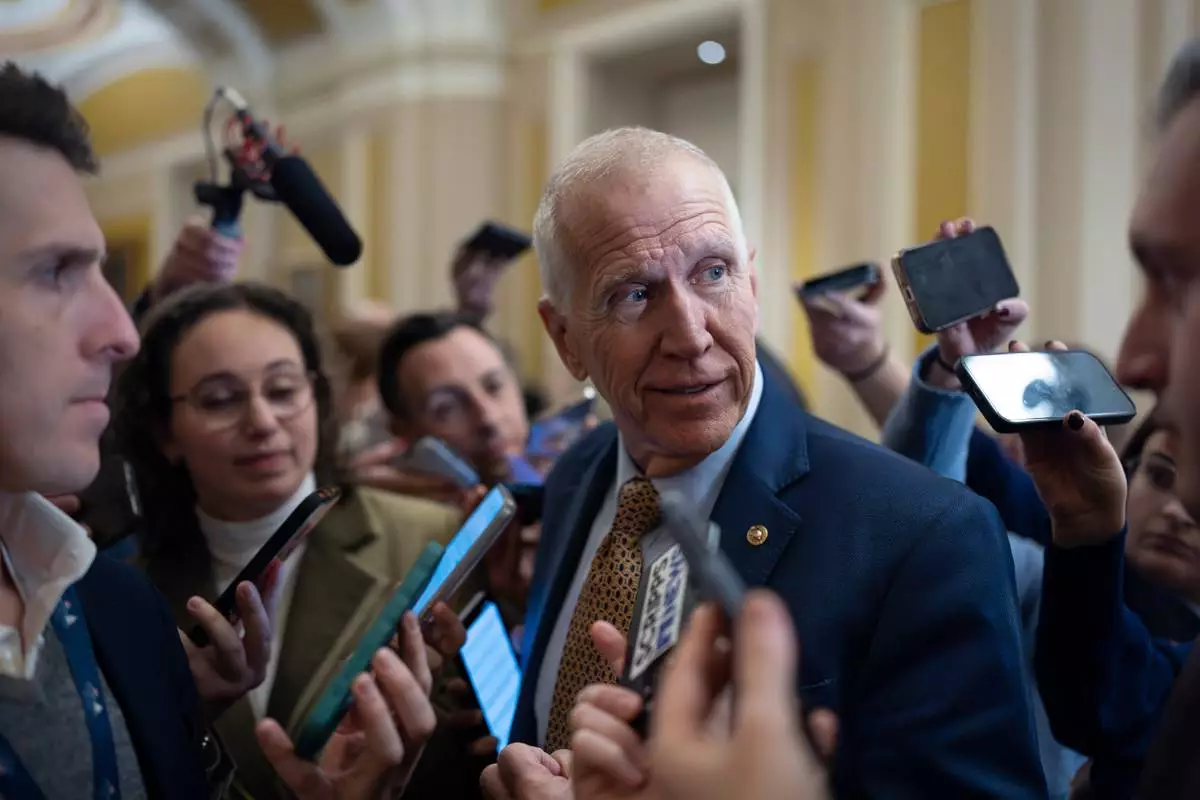
Sen. Thom Tillis, R-N.C., speaks with reporters following a closed-door meeting with fellow Republicans on spending legislation that funds the Department of Homeland Security and a swath of other government agencies, at the Capitol in Washington, Wednesday, Jan. 28, 2026. (AP Photo/J. Scott Applewhite)
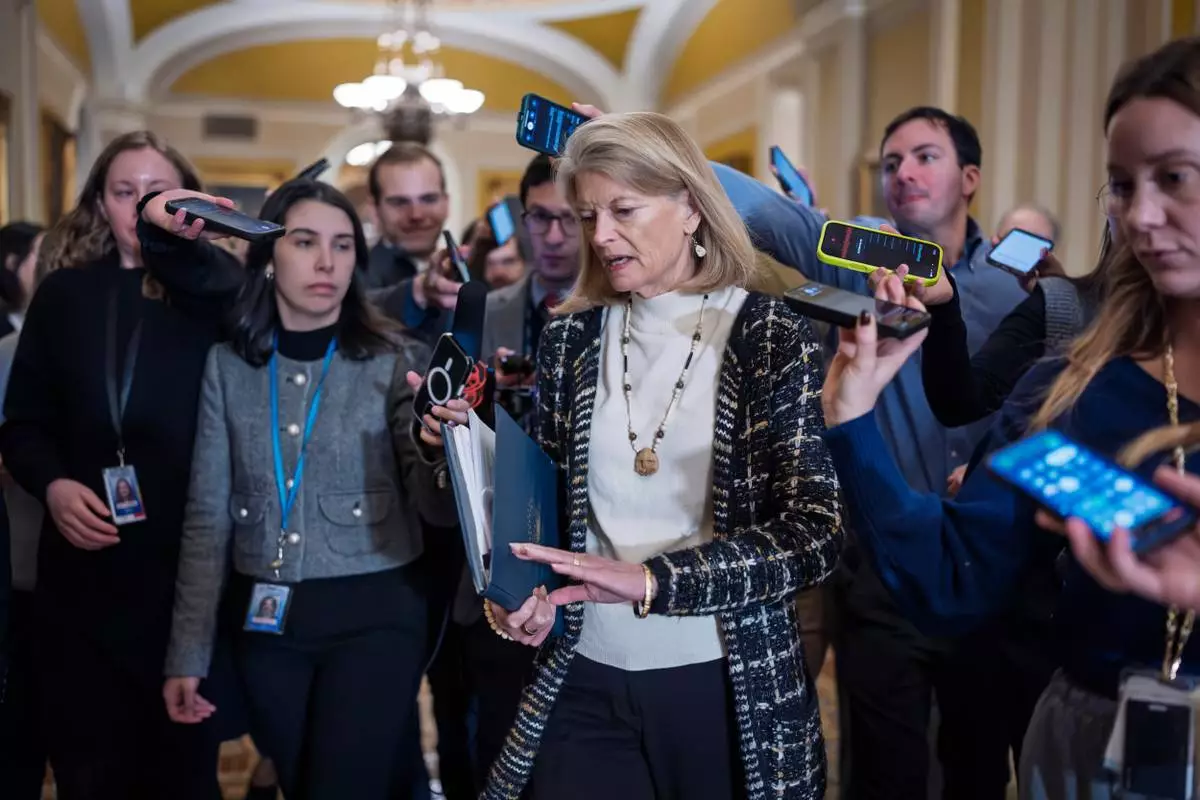
With a partial government shutdown looming by week's end, Sen. Lisa Murkowski, R-Alaska, a member of the Senate Appropriations Committee, is surrounded by reporters following a closed-door Republican meeting on spending legislation that funds the Department of Homeland Security and a swath of other government agencies as the country reels from the deaths of two people at the hands of federal agents in Minneapolis, at the Capitol in Washington, Wednesday, Jan. 28, 2026. (AP Photo/J. Scott Applewhite)
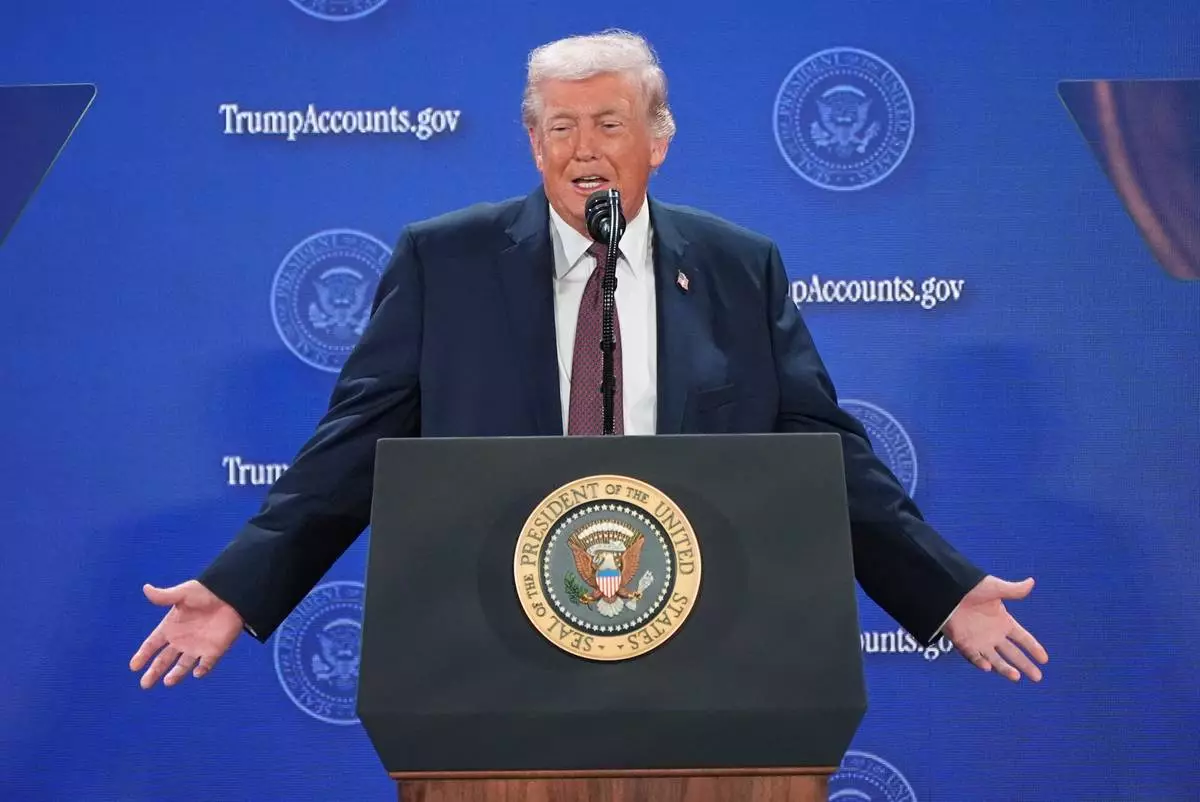
President Donald Trump speaks during the launch of a program known as Trump Accounts at the Andrew W. Mellon Auditorium, Wednesday, Jan. 28, 2026, in Washington. (AP Photo/Jacquelyn Martin)
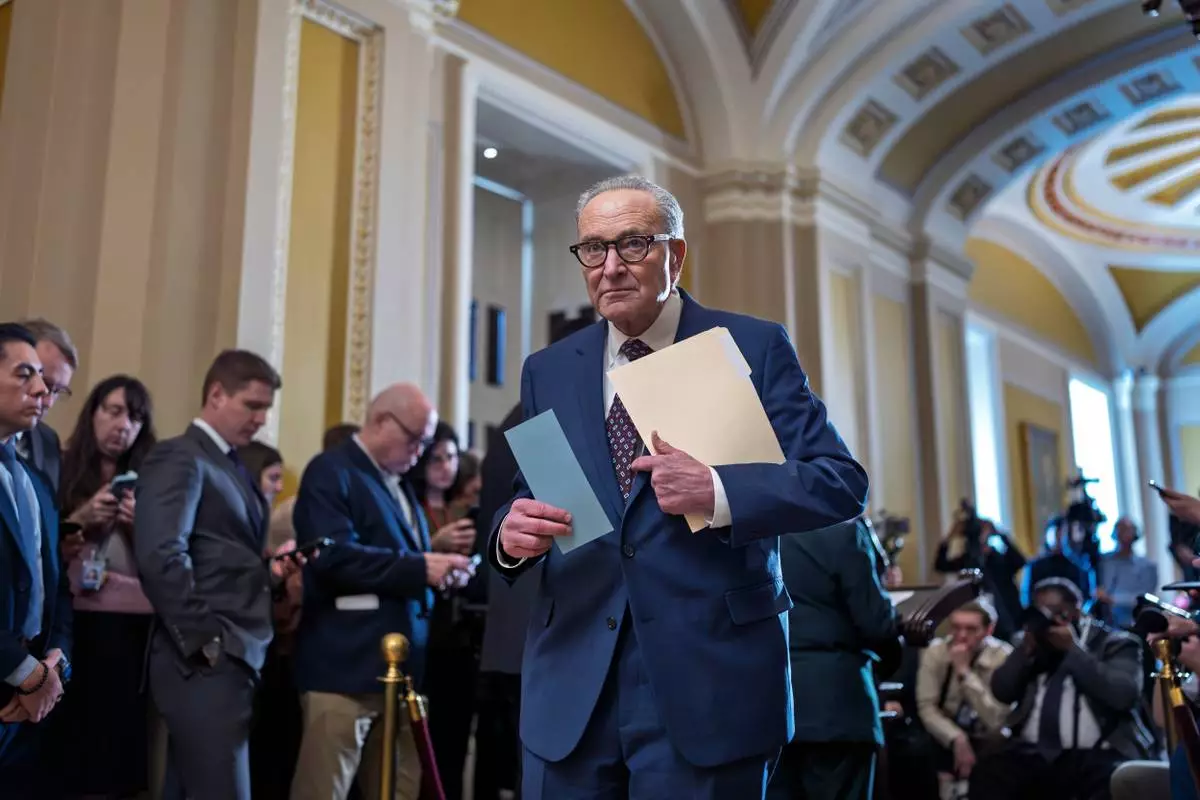
Senate Minority Leader Chuck Schumer, D-N.Y., waits to speak to reporters following a closed-door meeting with fellow Democrats at the Capitol in Washington, Wednesday, Jan. 28, 2026. (AP Photo/J. Scott Applewhite)