Skip to Content Facebook Feature Image

EU sanctions 15 Iranian officials, including top Revolutionary Guard leaders, over brutal crackdown

News

EU sanctions 15 Iranian officials, including top Revolutionary Guard leaders, over brutal crackdown
News

News

EU sanctions 15 Iranian officials, including top Revolutionary Guard leaders, over brutal crackdown

2026-01-29 21:31 Last Updated At:21:40

BRUSSELS (AP) — The European Union on Thursday announced sanctions on 15 Iranian officials, including top commanders and officials of the paramilitary Revolutionary Guard, over Tehran's deadly crackdown on nationwide protests.

Six Iranian organizations, including bodies responsible for monitoring online content in Iran, were also included in the sanctions list.

More Images
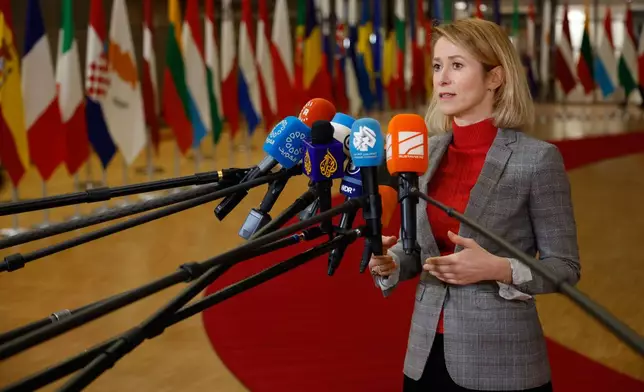
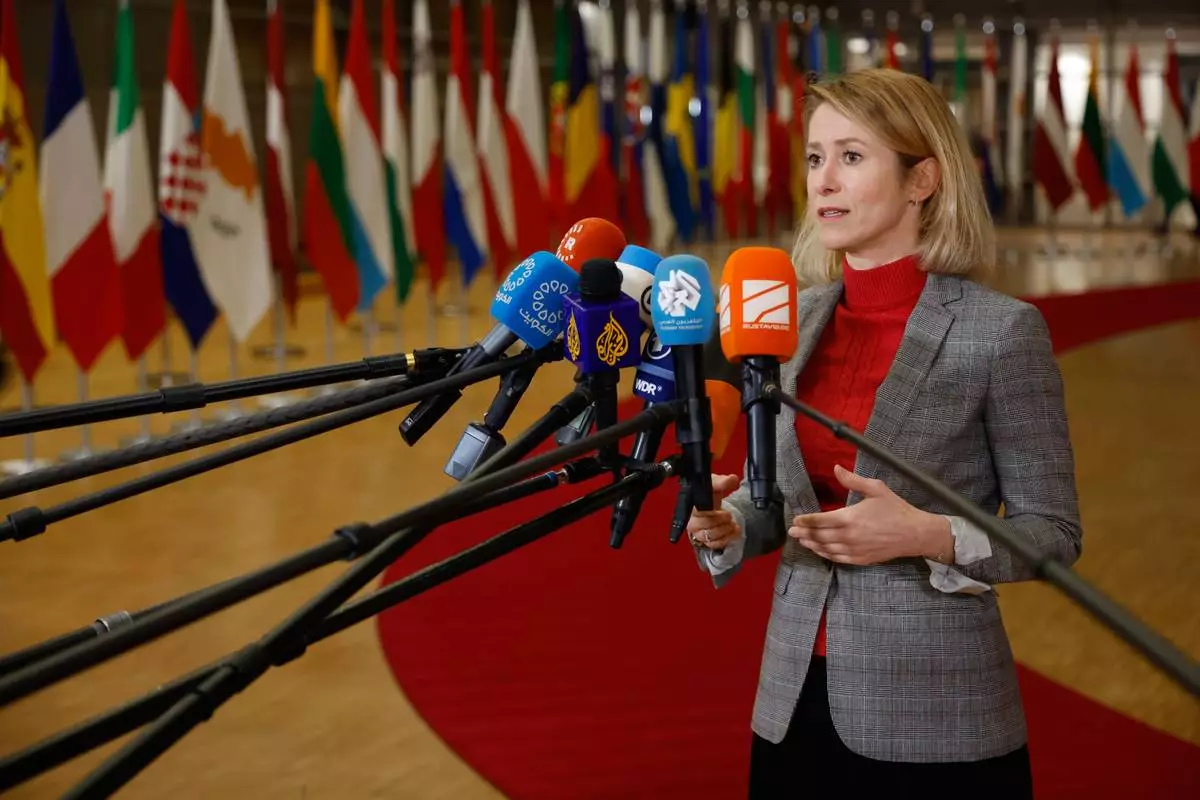
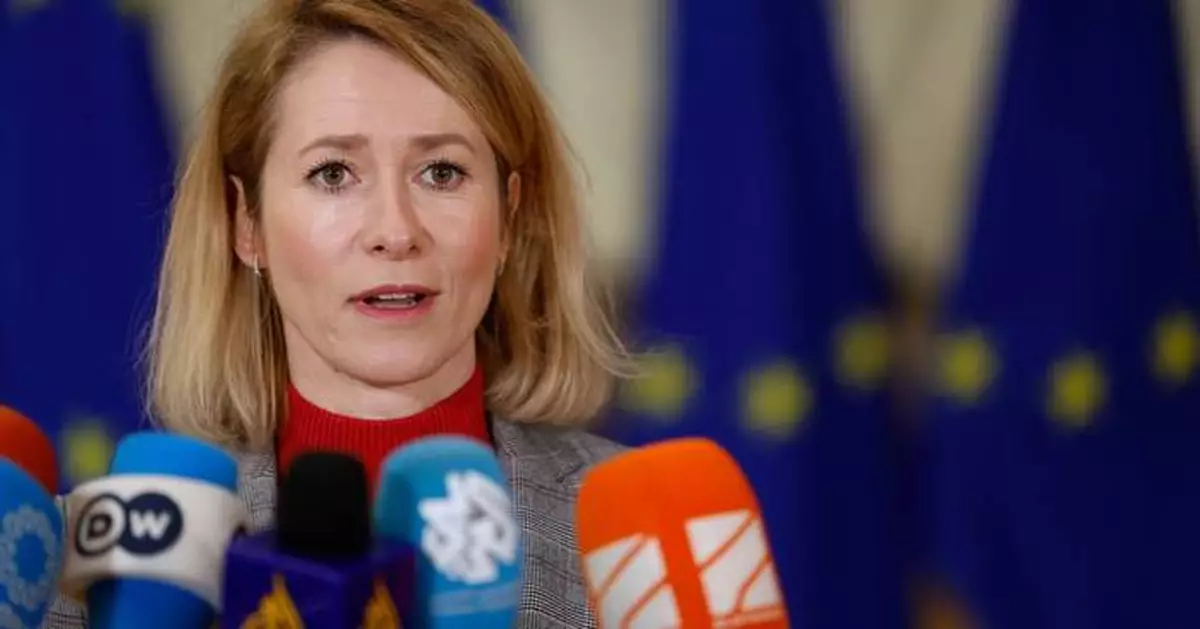
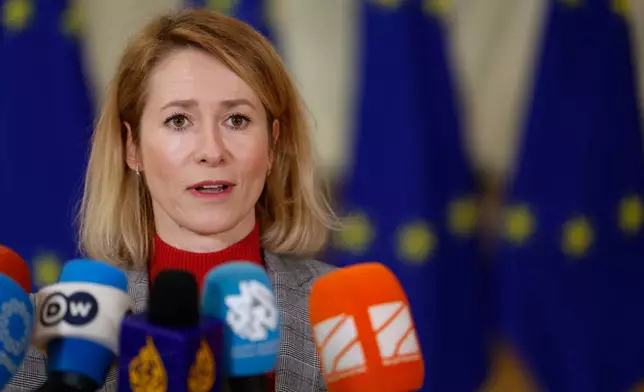
European Union foreign policy chief Kaja Kallas speaks with the media as she arrives for a meeting of EU foreign ministers at the European Council building in Brussels, Thursday, Jan. 29, 2026. (AP Photo/Geert Vanden Wijngaert)
European Union foreign policy chief Kaja Kallas speaks with the media as she arrives for a meeting of EU foreign ministers at the European Council building in Brussels, Thursday, Jan. 29, 2026. (AP Photo/Geert Vanden Wijngaert)

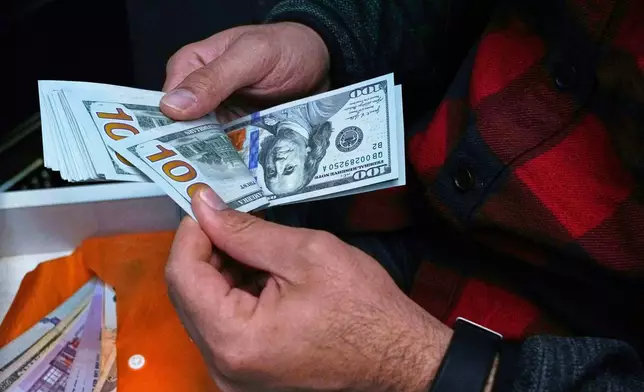
FILE- A currency exchange bureau worker counts U.S. dollars at Ferdowsi square, Tehran's go-to venue for foreign currency exchange, in downtown Tehran, Iran, April 5, 2025. (AP Photo/Vahid Salemi, File)
FILE- A currency exchange bureau worker counts U.S. dollars at Ferdowsi square, Tehran's go-to venue for foreign currency exchange, in downtown Tehran, Iran, April 5, 2025. (AP Photo/Vahid Salemi, File)

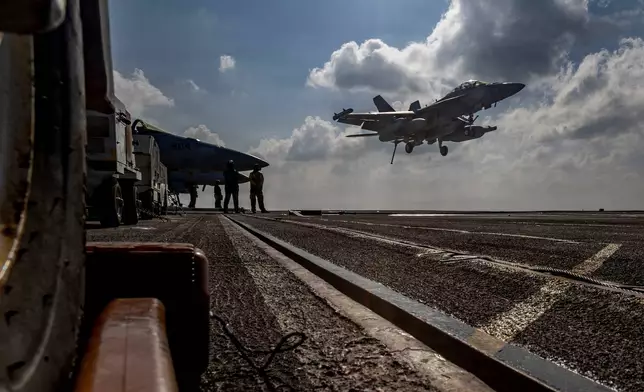
This handout image from the U.S. Navy shows an EA-18G Growler landing on the flight deck of the Nimitz-class aircraft carrier USS Abraham Lincoln in the Indian Ocean on Jan. 23, 2026. (Mass Communication Specialist Seaman Daniel Kimmelman/U.S. Navy via AP)
This handout image from the U.S. Navy shows an EA-18G Growler landing on the flight deck of the Nimitz-class aircraft carrier USS Abraham Lincoln in the Indian Ocean on Jan. 23, 2026. (Mass Communication Specialist Seaman Daniel Kimmelman/U.S. Navy via AP)

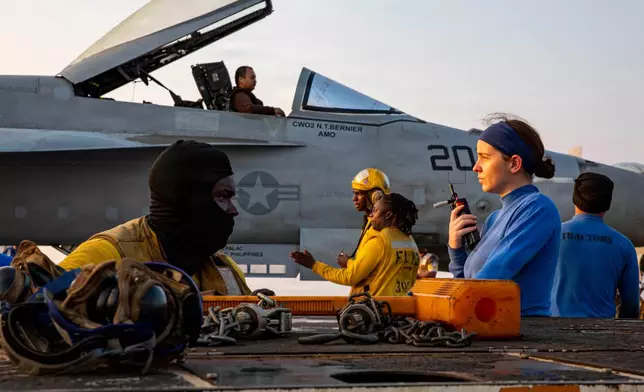
This handout photograph from the U.S. Navy shows sailors taxiing an F/A-18E Super Hornet on the flight deck of the Nimitz-class aircraft carrier USS Abraham Lincoln in the Indian Ocean on Jan. 25, 2026. (Mass Communication Specialist 3rd Class Shepard Fosdyke-Jackson/U.S. Navy via AP)
This handout photograph from the U.S. Navy shows sailors taxiing an F/A-18E Super Hornet on the flight deck of the Nimitz-class aircraft carrier USS Abraham Lincoln in the Indian Ocean on Jan. 25, 2026. (Mass Communication Specialist 3rd Class Shepard Fosdyke-Jackson/U.S. Navy via AP)

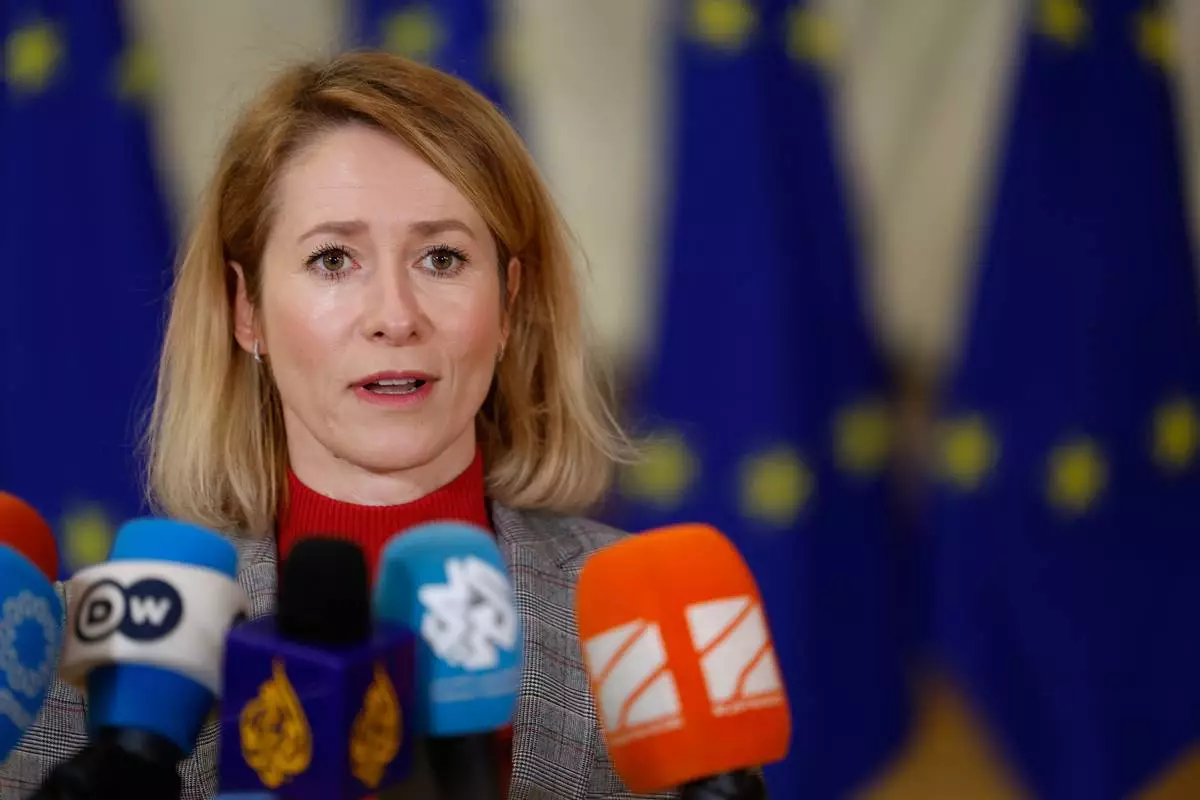
European Union foreign policy chief Kaja Kallas speaks with the media as she arrives for a meeting of EU foreign ministers at the European Council building in Brussels, Thursday, Jan. 29, 2026. (AP Photo/Geert Vanden Wijngaert)
European Union foreign policy chief Kaja Kallas speaks with the media as she arrives for a meeting of EU foreign ministers at the European Council building in Brussels, Thursday, Jan. 29, 2026. (AP Photo/Geert Vanden Wijngaert)

The decision by the 27-nation bloc marks the latest Western response over the violence, which activists say has killed over 6,300 people.

The measures add to international pressure on the Islamic Republic as it faced U.S. threats to potentially launch a military strike against it.

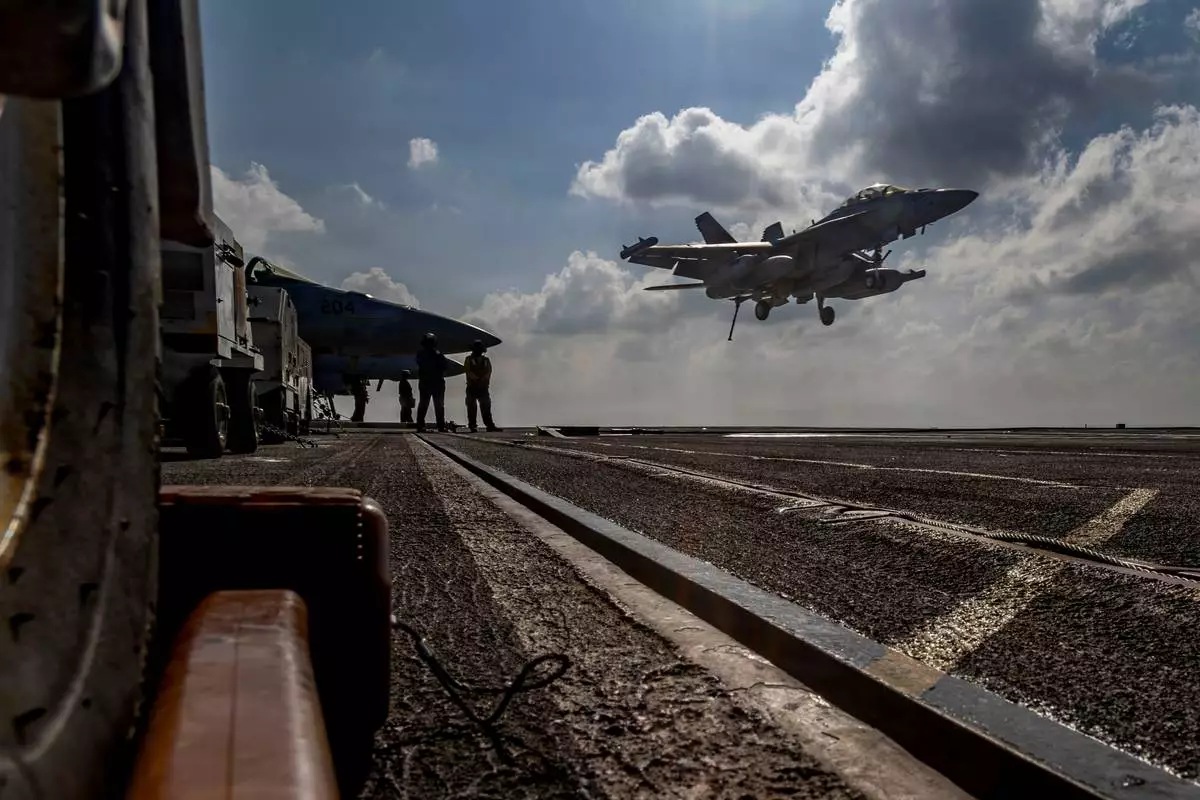
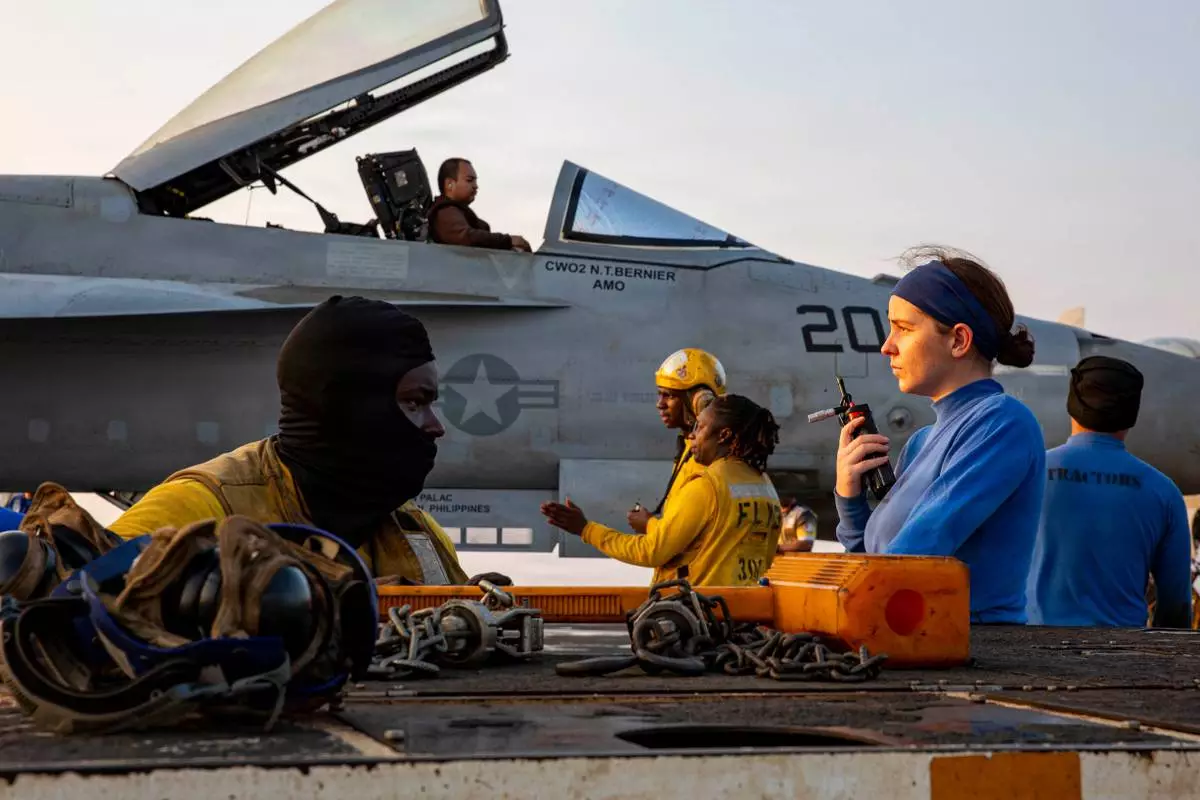
U.S. forces have moved the USS Abraham Lincoln and several guided-missile destroyers into the Mideast that can be used to launch attacks from the sea. It remains unclear whether President Donald Trump will use force against Iran, after he threatened military action in response to the killing of peaceful demonstrators and over possible mass executions. At least 6,373 people have been killed in Iran's protests, activists said.

For its part, Iran has said it could launch a pre-emptive strike or broadly target the Mideast, including American military bases in the region and Israel. Iran issued a warning to ships at sea Thursday that it planned to run a drill next week that would include live firing in the Strait of Hormuz, potentially disrupting traffic through a waterway that sees 20% of all the world's oil pass through it.

The EU’s top diplomat, Kaja Kallas, said earlier Thursday that Iran's Revolutionary Guard, which has played a key role in suppressing the demonstrations, would also be added to the EU's list of terrorist organizations.

“This will put them on the same footing with al-Qaida, Hamas, Daesh,” Kallas said, using an Arabic acronym for the Islamic State group. “If you act as a terrorist, you should also be treated as a terrorist.”

Iran had no immediate comment, but it has been criticizing Europe in recent days as it considered the move, which follows the U.S. sanctioning the Guard in 2019.

France had objected to listing the Revolutionary Guard as a terrorist organization over fears it would endanger French citizens detained in Iran, as well as diplomatic missions, which provide some of the few communication channels between the Islamic Republic and Europe and its allies. However, the office of President Emmanuel Macron on Wednesday signaled Paris backed the decision.

French Foreign Minister Jean-Noël Barrot said Thursday before the Foreign Affairs Council in Brussels that France supports more sanctions in Iran and the listing “because there can be no impunity for the crimes committed.”

“In Iran, the unbearable repression that has engulfed the peaceful revolt of the Iranian people cannot go unanswered,” he said.

Kristina Kausch, a deputy director at the German Marshall Fund, said the listing would be “a symbolic act” showing that for the EU “the dialogue path hasn’t led anywhere and now it’s about isolation and containment as a priority.”

“The designation of a state military arm, of an official pillar of the Iranian state as a terrorist organization is one step short of cutting diplomatic ties," she said. "But they haven’t cut diplomatic times and they won’t.”

The Guard was born from Iran’s 1979 Islamic Revolution as a force meant to protect its Shiite cleric-overseen government and later enshrined in its constitution. It operated in parallel to the country’s regular armed forces, growing in prominence and power during a long and ruinous war with Iraq in the 1980s. Though it faced possible disbandment after the war, Supreme Leader Ayatollah Ali Khamenei granted it powers to expand into private enterprise, allowing it to thrive.

The Guard's Basij force likely was key in putting down the demonstrations, starting in earnest from Jan. 8, when authorities cut off the internet and international telephone calls for the nation of 85 million people. Videos that have emerged from Iran via Starlink satellite dishes and other means show men likely belonging to its forces shooting and beating protesters.

Sanctioning the Guard, however, would be complicated. Iranian men once reaching the age of 18 are required to do up to two years of military service, and many find themselves conscripted into the Guard despite their own politics.

A notice to mariners sent by VHF radio from Iran on Thursday warned that it planned to conduct “naval shooting” in the Strait of Hormuz on Sunday and Monday. The Associated Press saw a copy of the message, which was initially reported by the firm EOS Risk Group. Two Pakistani security officials, speaking on condition of anonymity as they weren't authorized to talk to journalists, also confirmed the warning had been sent.

Iran did not immediately acknowledge the drill. The hard-line Keyhan newspaper earlier Thursday raised the specter of Tehran attempting to militarily close the strait.

“Today, Iran and its allies have their finger on a trigger that, at the first enemy mistake, will sever the world’s energy artery in the Strait of Hormuz and bury the hollow prestige of billion-dollar Yankee warships in the depths of the Persian Gulf,” the newspaper said.

Such a move likely would see U.S. military intervention. American military officials did not immediately respond to a request for comment over the warning.

On Wednesday, the U.S.-based Human Rights Activists News Agency said the violence in Iran has killed at least 6,373 people in recent weeks, with many more feared dead. Its count included at least 5,993 protesters, 214 government-affiliated forces, 113 children and 53 civilians who weren’t demonstrating. More than 42,450 have been arrested, it added.

The group verifies each death and arrest with a network of activists on the ground, and has been accurate in multiple rounds of previous unrest in Iran. The communication cutoff imposed by Iranian authorities have slowed the full scale of the crackdown from being revealed, and The Associated Press has been unable to independently assess the death toll.

Iran’s government as of Jan. 21 put the death toll at a far lower 3,117, saying 2,427 were civilians and security forces and labeled the rest “terrorists.” In the past, Iran’s theocracy has undercounted or not reported fatalities from unrest.

That death toll exceeds that of any other round of protest or unrest in Iran in decades, and recalls the chaos surrounding the 1979 Islamic Revolution.

Gambrell reported from Dubai, United Arab Emirates. Associated Press writer Munir Ahmed in Islamabad contributed to this report.

European Union foreign policy chief Kaja Kallas speaks with the media as she arrives for a meeting of EU foreign ministers at the European Council building in Brussels, Thursday, Jan. 29, 2026. (AP Photo/Geert Vanden Wijngaert)

European Union foreign policy chief Kaja Kallas speaks with the media as she arrives for a meeting of EU foreign ministers at the European Council building in Brussels, Thursday, Jan. 29, 2026. (AP Photo/Geert Vanden Wijngaert)

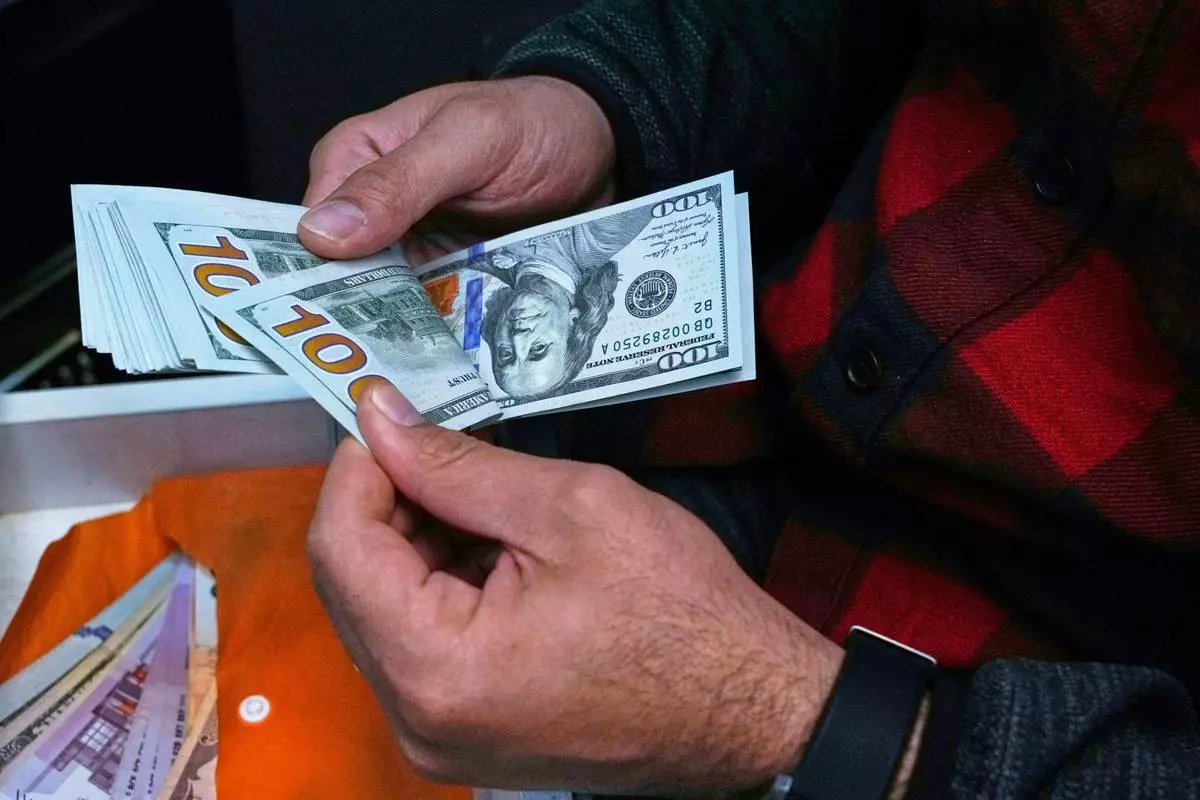
FILE- A currency exchange bureau worker counts U.S. dollars at Ferdowsi square, Tehran's go-to venue for foreign currency exchange, in downtown Tehran, Iran, April 5, 2025. (AP Photo/Vahid Salemi, File)
FILE- A currency exchange bureau worker counts U.S. dollars at Ferdowsi square, Tehran's go-to venue for foreign currency exchange, in downtown Tehran, Iran, April 5, 2025. (AP Photo/Vahid Salemi, File)

This handout image from the U.S. Navy shows an EA-18G Growler landing on the flight deck of the Nimitz-class aircraft carrier USS Abraham Lincoln in the Indian Ocean on Jan. 23, 2026. (Mass Communication Specialist Seaman Daniel Kimmelman/U.S. Navy via AP)
This handout image from the U.S. Navy shows an EA-18G Growler landing on the flight deck of the Nimitz-class aircraft carrier USS Abraham Lincoln in the Indian Ocean on Jan. 23, 2026. (Mass Communication Specialist Seaman Daniel Kimmelman/U.S. Navy via AP)

This handout photograph from the U.S. Navy shows sailors taxiing an F/A-18E Super Hornet on the flight deck of the Nimitz-class aircraft carrier USS Abraham Lincoln in the Indian Ocean on Jan. 25, 2026. (Mass Communication Specialist 3rd Class Shepard Fosdyke-Jackson/U.S. Navy via AP)
This handout photograph from the U.S. Navy shows sailors taxiing an F/A-18E Super Hornet on the flight deck of the Nimitz-class aircraft carrier USS Abraham Lincoln in the Indian Ocean on Jan. 25, 2026. (Mass Communication Specialist 3rd Class Shepard Fosdyke-Jackson/U.S. Navy via AP)

European Union foreign policy chief Kaja Kallas speaks with the media as she arrives for a meeting of EU foreign ministers at the European Council building in Brussels, Thursday, Jan. 29, 2026. (AP Photo/Geert Vanden Wijngaert)

European Union foreign policy chief Kaja Kallas speaks with the media as she arrives for a meeting of EU foreign ministers at the European Council building in Brussels, Thursday, Jan. 29, 2026. (AP Photo/Geert Vanden Wijngaert)
MINNEAPOLIS (AP) — If there’s been a soundtrack to life in Minneapolis in recent weeks, it’s the shrieking whistles and honking horns of thousands of people following immigration agents across the city.

They are the ever-moving shadow of the Trump administration's Operation Metro Surge.

They are teachers, scientists and stay-at-home parents. They own small businesses and wait tables. Their network is sprawling, often anonymous and with few overall objectives beyond helping immigrants, warning of approaching agents or filming videos to show the world what is happening.

And it's clear they will continue despite the White House striking a more conciliatory tone after the weekend killing of Alex Pretti, including the transfer of Gregory Bovino, the senior Border Patrol official who was the public face of the immigration crackdown.

“I think that everyone slept a little better knowing that Bovino had been kicked out of Minneapolis,” said Andrew Fahlstrom, who helps run Defend the 612, a hub for volunteer networks. “But I don’t think the threat that we’re under will change because they change out the local puppets.”

What started with scattered arrests in December ramped up dramatically in early January, when a top ICE official announced the “largest immigration operation ever.”

Masked, heavily armed agents traveling in convoys of unmarked SUVs became commonplace in some neighborhoods. By this week, more than 3,400 people had been arrested, according to Immigration and Customs Enforcement. At least 2,000 ICE officers and 1,000 Border Patrol officers were on the ground.

Administration officials insist they are focusing on criminals in the U.S. illegally, but the reality in the streets has been far more aggressive. Agents have stopped people, seemingly randomly, to demand citizenship papers, including off-duty Latino and Black police officers and city workers, area officials say.

They smashed through the front door of a Liberian man and detained him without a proper warrant, even though he'd been checking in regularly with immigration officials. They have detained children along with their parents and used tear gas outside a high school in an altercation with protesters after detaining someone.

To be sure, federal agents are barely a presence in many areas, and most people have never smelled a whiff of tear gas. But the crackdown rippled quickly through immigrant-heavy neighborhoods. Patients are avoiding life-saving medical care, doctors said. Thousands of immigrant children are staying home. Immigrant businesses shut down, cut their hours or kept their doors locked to everyone but regular customers.

Activist groups rapidly organized across deeply liberal Minneapolis-St. Paul and some suburbs. Small armies of volunteers began making food deliveries to immigrants afraid to leave their homes. They drove people to work and stood watch outside schools.

They also created interlocking webs of dozens, perhaps hundreds, of rapid response networks — sophisticated systems involving thousands of volunteers who track immigration agents, communicating with encrypted apps like Signal.

Tracking often means little more than quietly reporting the movement of convoys to dispatchers and recording the license plates of possible federal vehicles.

But it's not always quiet. Protester caravans regularly form behind immigration convoys, creating mobile protests of anger and warning that weave through city streets.

When agents stop to arrest or question someone, the networks signal the location, summoning more people who sound warnings with whistles and honking, film what’s happening and call out legal advice to people being detained.

Sometimes it all can feel performative, whether it’s Bovino in body armor tossing a smoke grenade, or young activists who rarely take off their helmets and gas masks, even when law enforcement is nowhere to be seen.

But crowds often lead to real confrontations, with protesters screaming at immigration agents. Agents respond only sometimes, but when they do it’s often with punches, pepper spray, tear gas and arrests.

Those confrontations worry some in the activist world.

Take the recent afternoon in south Minneapolis, where dozens of protesters, some in gas masks, clashed with immigration agents in south Minneapolis. Protesters screamed at agents, threw snowballs and tried to block their vehicles. Agents responded by shoving protesters who got too close, firing pepper balls and finally throwing tear gas grenades and driving away. Demonstrators without masks wretched in the streets as volunteers handed out bottles of water to flush their eyes.

By then, even many of the people in the protest weren’t sure what started it, including the city council member who soon arrived.

Minneapolis has a long tradition of progressivism, and Jason Chavez is a proud part of that.

He bristled when asked about the confrontation.

“I didn’t see anybody ‘confronting,’” said Chavez. “I saw people alerting neighbors that ICE was in their neighborhood. And that’s what neighbors should continue to do.”

To understand this world, talk to a woman known in the rapid response networks only by her nickname, Sunshine. She asked that her real name not be used, fearing retaliation.

A friendly woman who works in health care, she has spent hundreds of hours in her slightly beat-up Subaru patrolling an immigrant St. Paul enclave of taquerias and Asian grocery stores, watching for signs of federal agents. She can spot an idling SUV from the tiniest hint of exhaust, an out-of-state license plate from a block away, and quickly distinguish an undercover St. Paul police car from an unmarked immigration vehicle.

On the messaging apps, she's simply Sunshine. She knows the real names of few other people, even after working with some for weeks on end.

She hates what is happening, and feels deeply for people living in fear. She worries the Trump administration wants to push the nation into civil war, and believes she has no choice except to patrol — “commuting” it's often called, half-jokingly — every day.

“Sometimes people just want to pick up their kid and walk their dog and go to work. And I get that. I get that desire,” she said while driving through the neighborhood last week. “I just don’t know if that’s the world we live in anymore.”

She runs constant equations in her head: Should she report an immigration vehicle to the network's dispatcher, or honk her horn as a warning? Would honking unnecessarily scare residents who are already afraid? Are agents leading her around? Are federal vehicles moving to launch a raid, or are they distracting observers while other agents make arrests elsewhere?

She is careful and avoids confrontation. She also finds hope in the community that has been created, and how offers to volunteer exploded after the Jan. 7 killing of Renee Good by an ICE agent. And she understands the anger of the people who face off against agents.

“My strategy, my approach, my risk calculation is different than other peoples'. And at the same time, the vitriol, the frustration, I get it,” she said. “And sometimes it feels good to see someone unleash that.”

Not everyone agrees. Even nationally, some activist groups have pushed back against protest strategies that could lead to clashes.

“Loud does not equal effective,” a group in a heavily immigrant Maryland county said in a recent social media post, explaining why their volunteers don't use whistles. Among other things, the Montgomery County Immigrant Rights Collective warned that whistling can “escalate already volatile ICE agents who don't respect our rights” and “increase the likelihood of aggression toward bystanders or the detained person.”

“This is not an action movie,” the post says. “You are not in a one-on-one fight with ICE.”

A demonstrator makes noise during a protest outside a SpringHill Suites and Residence Inn by Marriott hotels on Monday, Jan. 26, 2026, in Maple Grove, Minn. (AP Photo/Adam Gray)

A demonstrator makes noise during a protest outside a SpringHill Suites and Residence Inn by Marriott hotels on Monday, Jan. 26, 2026, in Maple Grove, Minn. (AP Photo/Adam Gray)

People record and react to federal agents arresting people, Wednesday, Jan. 21, 2026, in Minneapolis. (AP Photo/Angelina Katsanis)

People record and react to federal agents arresting people, Wednesday, Jan. 21, 2026, in Minneapolis. (AP Photo/Angelina Katsanis)

A woman uses a whistle as a convoy of Federal agents drive by on Friday, Jan. 23, 2026, in Minneapolis. (AP Photo/Angelina Katsanis)

A woman uses a whistle as a convoy of Federal agents drive by on Friday, Jan. 23, 2026, in Minneapolis. (AP Photo/Angelina Katsanis)

Protesters chant and bang on trash cans as they stand behind a makeshift barricade during a protest in response to the death of 37-year-old Alex Pretti, who was fatally shot by a U.S. Border Patrol officer earlier in the day, Saturday, Jan. 24, 2026, in Minneapolis. (AP Photo/Adam Gray)

Protesters chant and bang on trash cans as they stand behind a makeshift barricade during a protest in response to the death of 37-year-old Alex Pretti, who was fatally shot by a U.S. Border Patrol officer earlier in the day, Saturday, Jan. 24, 2026, in Minneapolis. (AP Photo/Adam Gray)

Recommended Articles