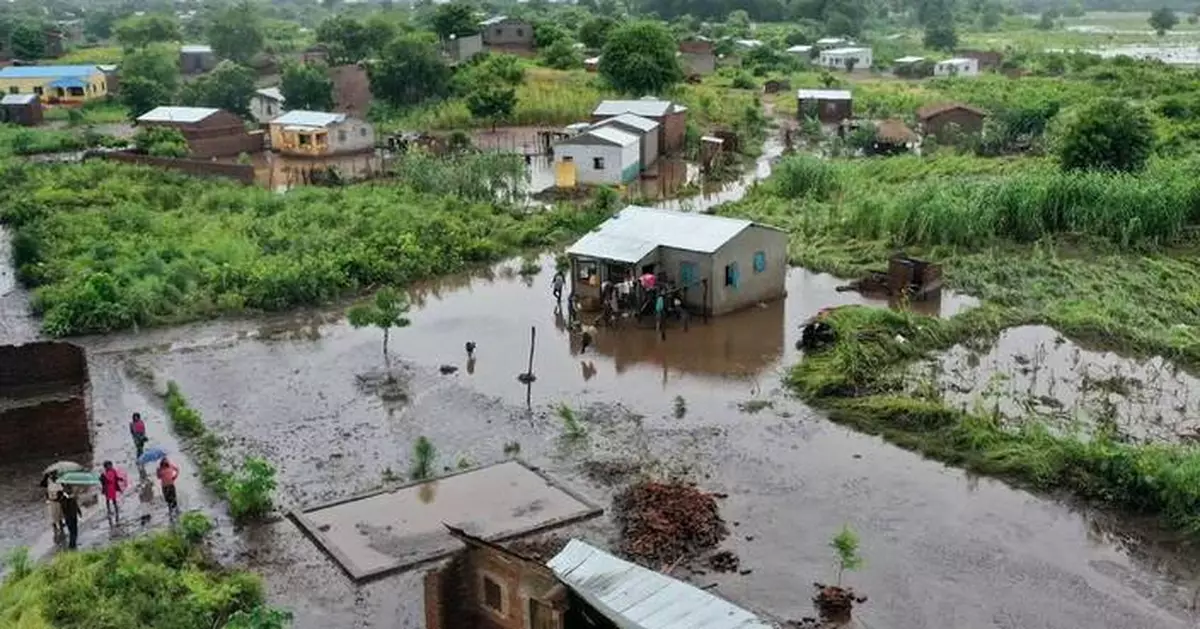
HARARE, Zimbabwe (AP) — As floods ravage Mozambique, crocodiles are appearing in submerged towns and responsible for at least three deaths.
In the town of Xai-Xai, the provincial capital of Gaza province and one of the worst-affected areas in the country’s south, authorities have warned residents of heightened crocodile risks as floodwaters spread and evacuations to higher ground continue.
Torrential rains and severe flooding across parts of southern Africa over the past month have killed more than 100 people in Mozambique, South Africa and Zimbabwe, destroying thousands of homes and damaging infrastructure such as roads, bridges, schools and health facilities.
Of the 13 people reported dead from the floods in Mozambique, three were killed by crocodiles, authorities said.
“The river levels are rising and are reaching urban areas or heavily populated areas,” Paola Emerson, head of the U.N. Office for the Coordination of Humanitarian Affairs in Mozambique, said this week after visiting the town.
“So the crocodiles that are in the Limpopo river in this case are able to get into populated areas that are now submerged under water and that is the concern.”
The Limpopo river flows from South Africa through Mozambique on its way into the Indian Ocean.
Two people were killed in an attack that left three others injured in the Gaza region earlier this month. A man was “swallowed” by a crocodile in Moamba, a small town in Maputo province, local media quoted Henriques Bongece, the province’s secretary, as saying this week. Maputo is the impoverished country’s capital.
Authorities said in Maputo that the crocodiles appeared to have been driven into the area by floodwaters from a park in neighboring South Africa.
“We want to urge everyone not to approach still waters because crocodiles are drifting in these waters. The rivers have connected with all areas where there is water,” local media quoted Bongece as saying this week.
Beyond the immediate danger posed by wildlife, the floods have triggered a deepening humanitarian crisis.
Weeks of heavy rainfall, compounded by dam releases to prevent structural failure, have affected more than 700,000 people, more than half of them children, leaving a trail of destruction across vast farmland, according to humanitarians bodies such as the World Food Program and UNICEF.
On Friday, the World Health Organization warned of severe disruptions to health services in Gaza and Maputo provinces following the destruction of at least 44 health facilities, leaving tens of thousands without access to care.
The U.N. agency said that damage to critical infrastructure has interrupted service delivery, while more than 50,000 people who have been forced to relocate to temporary shelters face limited or nonexistent basic health services.
It warned that displaced people on long-term medication face life-threatening interruptions, and said that urgent action is needed to restore essential services, deploy mobile health teams and ensure continuity of care for people with chronic conditions.
Across the three countries, humanitarian agencies say hunger and disease risks are rising, with extreme weather wiping out crops that millions of small-scale farmers rely on to feed themselves, while the threat of water-borne diseases such as cholera looms large.
For more on Africa and development: https://apnews.com/hub/africa-pulse
The Associated Press receives financial support for global health and development coverage in Africa from the Gates Foundation. The AP is solely responsible for all content. Find AP’s standards for working with philanthropies, a list of supporters and funded coverage areas at AP.org.
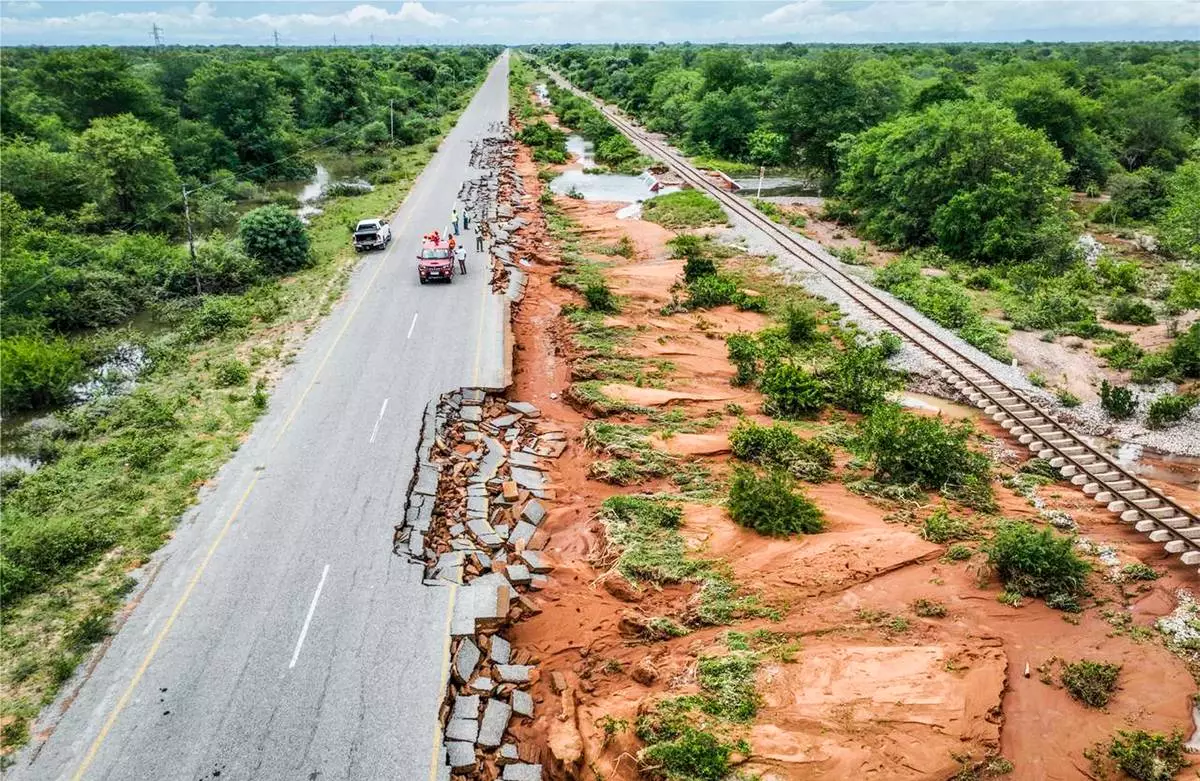
Travelers inspect the flood-damaged Combomune-Mapai road in Gaza province, Mozambique, Saturday, Jan. 17, 2026. (AP Photo)
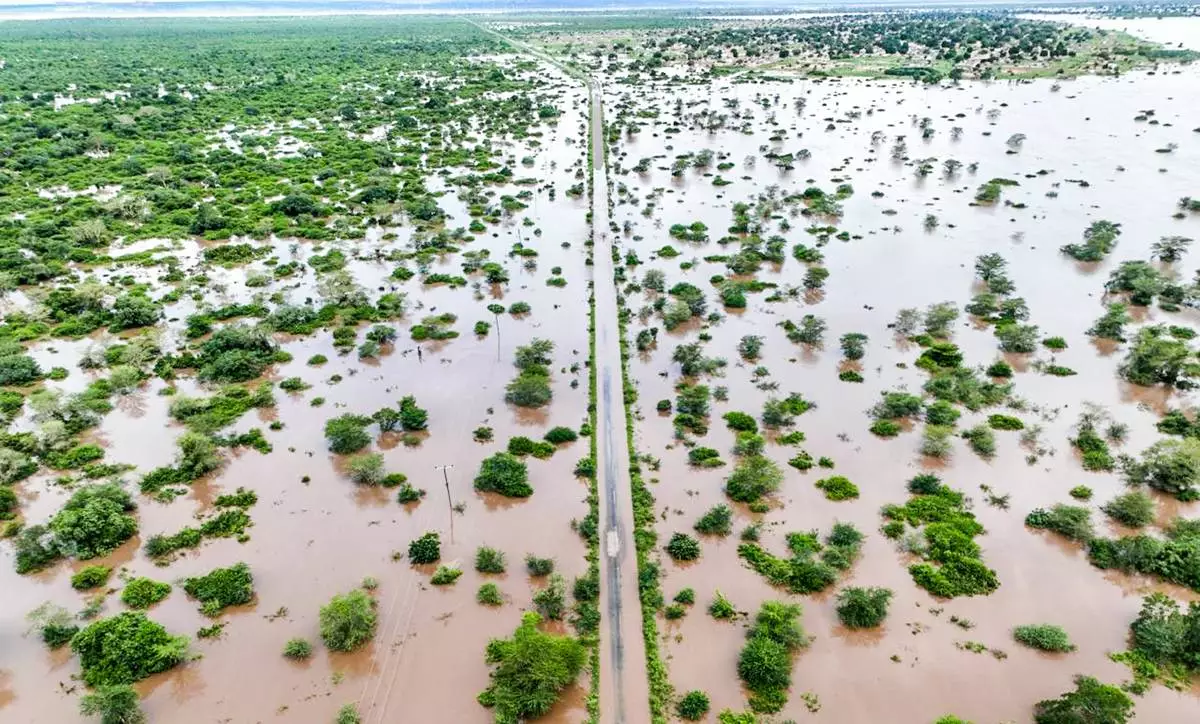
Flood waters cover the Chibuto-Chaimite road in Gaza province, Mozambique, Saturday, Jan. 17, 2026. (AP Photo)
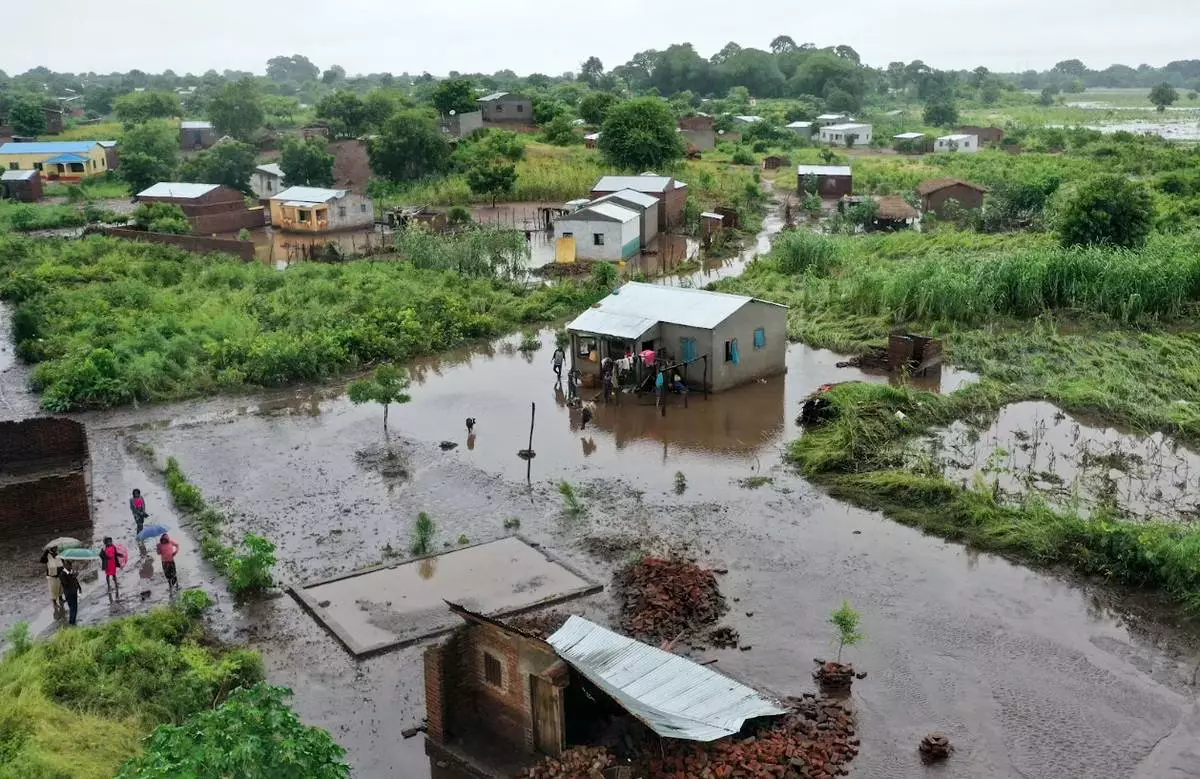
This image made from video shows the scene after flooding in Tete Province, Mozambique, Thursday, Jan. 15, 2026. (AP Photo)
France, Scotland or Ireland will clinch the most fun Six Nations in years on Saturday.
Predictions have been torn up and one last twist in the final round of a gripping championship would not surprise.
France is in pole position to win successive titles for the first time since 2006-07. France leads Scotland in the table only on points difference. Its massive though. Ireland is two points behind.
The French have the advantage of closing the championship at a packed Stade de France against an underwhelming England, knowing what they will need to do four hours after Ireland hosts Scotland in Dublin.
Scotland blew open the title race after destroying France's Grand Slam hopes 50-40 in Edinburgh last Saturday.
Scotland's most basic route to a first title since the 1999 Five Nations is beating Ireland and France losing to England. But Scotland hasn't beaten Ireland since 2017 and not in Dublin since 2010. Ireland has been the graveyard of Scotland dreams in their last 11 contests.
Ireland's simplest path to a third title in four years is beating Scotland and also hoping England beats France.
A draw and/or bonus points spin out the scenarios.
Ireland and Scotland are also in the first showdown since 2009 for the Triple Crown, awarded to the home nation which beats the other three home nations. Ireland won it in 2022, 2023 and 2025. Scotland last won it in 1990.
The championship goes into the last round with a first three-way title shootout since 2020, when the COVID-19 pandemic forced an October finish. England won on points difference after Ireland and France couldn't meet scoring requirements.
The other Six Nations match on Saturday is also tasty: Wales hosts Italy in Cardiff. Wales is trying to end a 15-match losing streak in the tournament; Italy is trying for three wins in a single championship for the first time.
Fabien Galthié, France: “We don’t dwell on what just happened (against Scotland), we focus on what's coming next. What matters to us is that we've earned the right to play for the win on Saturday. We'll assess the tournament with its highs and lows later. In this Six Nations championship everything can change from one day to the next. All six teams have experienced positive periods and more challenging times. But the most important thing is that we have the opportunity to play for the win on Saturday night. And that's what motivates us.”
Gregor Townsend, Scotland: “No (I haven't thought of winning the title). It's out of our hands, really. We can only do a certain amount. It's a game against an opponent that's had the upper hand on us for years. It's a challenge but a real opportunity for us to go and deliver an even better performance than we did last week. If we win the game we know there's something at stake. That performance (against France) was close to the best that we've seen from this group and from probably any Scotland team. I think the belief is there that when we get our game right it can put pressure on any defense, and when we get our defense in place we can frustrate opposition. But this is a different challenge. Ireland seem to play very well against us so that's what we’re expecting.”
Andy Farrell, Ireland: “Of course you would like to dream (of the title) but the rest is out of our hands. But something is in our hands and we will focus on our performance, first and foremost. It would be nice to win something that is pretty special for us and that's the Triple Crown. It's been hard to come by over the years when playing for Ireland so we're desperate to get across that. (Scotland) were outstanding against France and we have been preparing for another Scottish performance like that. We'll have to be at our best to beat them as they are a side we have always respected.”
Super Saturday
Ireland vs. Scotland, Dublin, 1410 GMT
Wales vs. Italy, Cardiff, 1640 GMT
France vs. England, Paris, 2010 GMT
AP rugby: https://apnews.com/hub/rugby

Ireland's players celebrate after their teammate Jamie Osborne scored a try during a Six Nations rugby union match between Ireland and Wales in Dublin, Ireland, Friday, March 6, 2026. (AP Photo/Peter Morrison)

Scotland's Kyle Steyn celebrates scoring a try during the Six Nations rugby match between Scotland and France in Edinburgh, Scotland, Saturday March 7, 2026. (Andrew Milligan/PA via AP)

France's Antoine Dupont and Scotland's Sione Tuipulotu, left, in action during the Six Nations rugby match between Scotland and France in Edinburgh, Scotland, Saturday March 7, 2026. (Jane Barlow/PA via AP)