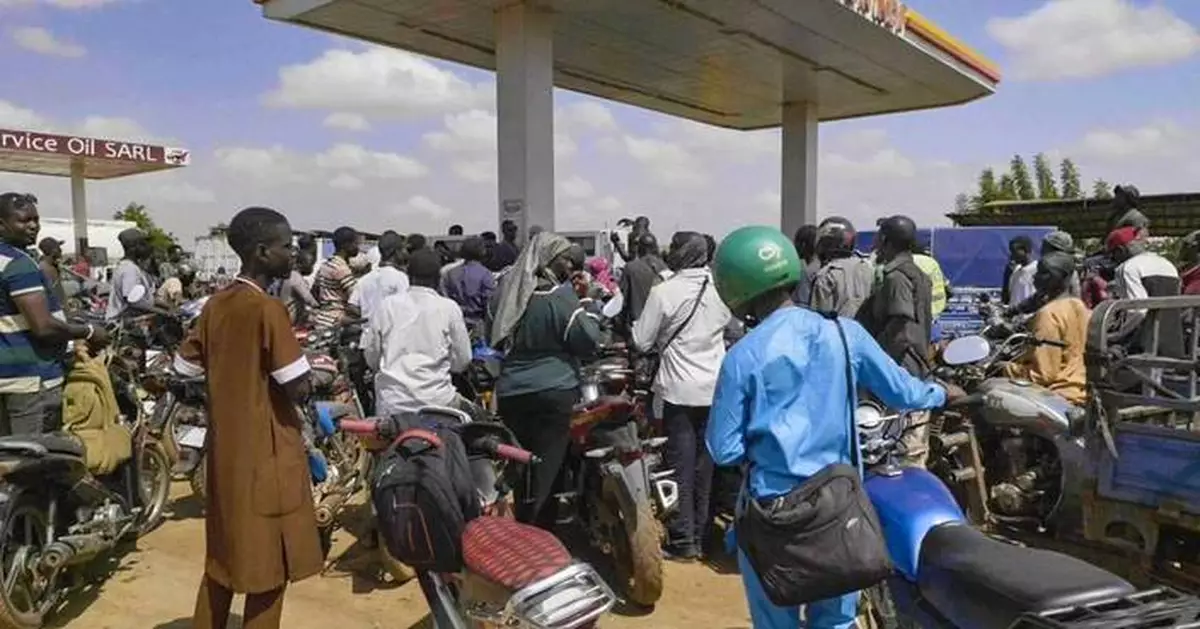
BAMAKO, Mali (AP) — Mali’s government has moved to impose fuel rationing to counter widespread shortages caused by al-Qaida-linked groups operating in the border regions that have in recent months cut off fuel supplies to the landlocked African country.
In announcing the rationing on Thursday, officials did not say when it would start. The measure was cast as an effort to reduce long lines at gas stations, especially with the Muslim holy month of Ramadan only a few weeks away.
Russian troops with the Africa Corps — Moscow's state-controlled paramilitary force involved in operations in West Africa — have lately begun escorting tanker convoys distributing gasoline across the country.
Since the junta took over in May 2021, Mali's military government — as well as those in Burkina Faso and Niger — have turned from Western allies to Russia for help combating militants affiliated with al-Qaida and the Islamic State group.
Since September, al-Qaida-linked militants and other jihadis in Mali have increasingly attacked fuel trucks — more than a hundred trucks have been burned in the violence, which has crippled fuel imports and distribution.
Mali’s fuel importers union said that over 2,000 tanker trucks have entered the country since the start of the year — significantly less than the up to 6,000 per month that came prior to the attacks.
Officials say the rationing system will ensure a more equitable fuel distribution among consumers. The new measures will include registering vehicle plates and wait periods for cars and vehicles to refuel. Cars will be allowed to tank up every 72 hours and motorcycles every 48 hours.
A Malian fuel importer told The Associated Press that Russian soldiers from the Africa Corps are already escorting fuel convoys to protect them from the militant attacks. He spoke on condition of anonymity to discuss the Russian presence in Mali.
Moussa Alassane Diallo, Mali’s trade and industry minister, told a union of petroleum product importers on Thursday that the rationing will “give us complete control” over gas stations, and allow authorities to “monitor the quantities of fuel sold.”
"We are committed to ending the fuel crisis as long as the military continues to escort our tanker trucks”, said Ibrahim Touré, head of the petroleum importers union.
But many residents — especially taxi drivers — expressed concerns that the fuel limits would impact their daily lives.
“These measures may work for private cars, but for us taxi drivers, it’s going to be difficult because we don’t earn enough money to fill up our taxis every time we go," said Oumar Coulibaly, a taxi driver in the capital, Bamako.
“We do a lot of trips, and we need fuel," he said.
Experts say the junta's move was likely spurred by concerns about popular discontent over prolonged fuel shortage.
Beverly Ochieng, a senior analyst with the consultancy Control Risks’ Global Risk Analysis team, said the “insecurity on supply routes due to militant presence and activity will remain a challenge to the transportation of fuel in the coming weeks, and the stability of supplies will vary.”
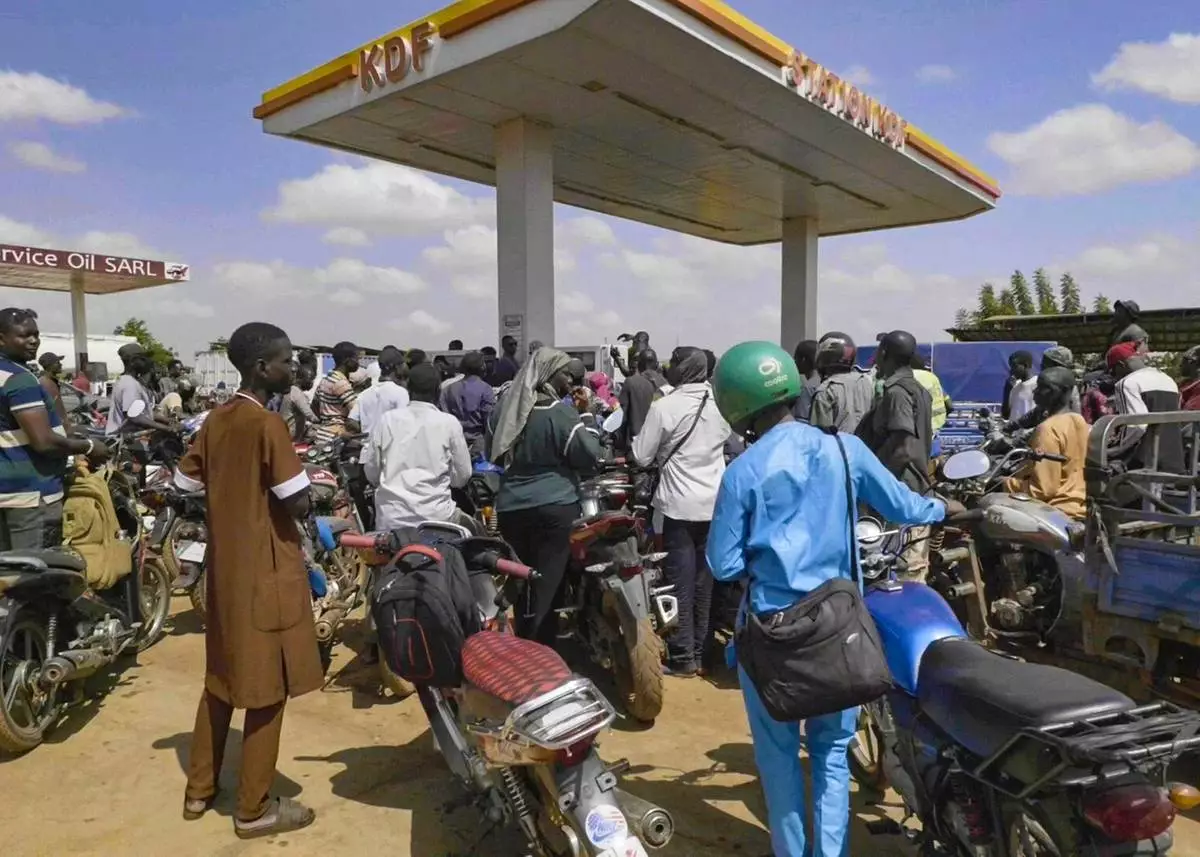
FILE - People queue with their motorcycles at a gas station amid a fuel shortage in Bamako, Mali, Tuesday, Oct 7, 2025 (AP Photo, File)
HAVANA (AP) — Several dozen people stood in circle in a room at a Havana psychiatric hospital, their hands held together as they chanted in unison, vowing to rid their bodies from “the toxins that enslave.” The collective plea to reclaim their freedom for just the next 24 hours was the first step of a 90-day detoxification before beginning rehabilitation.
Drug use was an almost-unknown phenomenon in Cuba until the beginning of this decade. However, a deepening economic crisis, shortages of basic goods and the emergence of low-cost synthetic drugs have combined to transform the landscape.
In Havana and other cities across the island, it is no longer unusual to see young people in public parks sleeping, walking with difficulty or lying unconscious.
According to authorities, the primary threat is the “químico,” (chemical) — a potent cocktail of synthetic cannabinoids and hazardous additives. Also known on the streets as “papelitos,” or "little papers,” the drug is absorbed into sheets of paper that are sliced into tiny doses and smoked. At roughly 250 Cuban pesos per hit (50 cents), it costs less than a basic loaf of bread or a can of soda.
“It’s very cheap...and it’s everywhere,” said David Morales, 25, who is in recovery after receiving help at government-funded health centers and is now in rehabilitation therapy at the Alcance Victoria Cuba evangelical Baptist church.
Acknowledging the rise in consumption, Cuba's Ministry of Health and several state agencies in July established a National Drug Observatory, an initiative to research, monitor and mitigate the impact of illegal drugs on the island.
Although the government does not track the number of drug users, Dr. Tania Adriana Peón, head of mental health and addictions at the General Directorate of Health, pointed to emergency room data as a barometer for the trend. In 2024, 467 people sought help or were registered in emergency rooms in Havana. By 2025, that figure nearly doubled to 886.
Cuba has a zero-tolerance policy on drugs, and drug trafficking is punishable by up to life imprisonment. And while it's not a drug-producing or stockpiling country, authorities acknowledge it is not immune to drug use.
Sporadically, seizures of packages of cocaine abandoned by traffickers during chases and washed ashore are reported; these are known as “recalos” or washups. Drugs are also smuggled into the country among imported goods, and, to a lesser extent, domestic marijuana plantations have been detected.
“The primary challenge Cuba faces today is related to new psychoactive drugs or synthetic cannabinoids, which originate mainly from the United States,” said Col. Juan Carlos Poey Guerra of Cuba's Interior Ministry.
He added that police laboratories detected 46 new synthetic formulations in the last year. Among the substances mixed with cannabinoids were the anticonvulsant carbamazepine, formaldehyde and fentanyl, among others. Between 2024 and 2025, he said, authorities thwarted 72 attempts to smuggle drugs into the country from 11 different origins.
The United States is the primary source of the precursor substances that constitute químico, said Poey Guerra.
Health care in Cuba is state-run and free, so neighborhood family clinics are typically the first to detect signs of drug use. Patients with more severe or complex conditions are referred by health authorities for longer, more intensive hospital stays.
The Associated Press recently toured a 40-bed men’s ward at the Havana Psychiatric Hospital, where patients aged 20 to 30 are undergoing a 90-day detox before beginning rehabilitation.
The space was divided into two-bed cubicles adorned with family photos. It featured a small reading area, a dining room and a recreation space. Each day, the patients — wearing white T-shirts emblazoned with the slogan “We win against drugs” — take responsibility for cleaning their surroundings.
“I was incredibly depressed...living on the streets; I just couldn’t take it anymore,” said 23-year-old Daniel Fulleda, who was admitted in January. His tone was enthusiastic as he shared his plans of getting married before the year end and start a family. ”Next year, I'll start my own business."
For decades, the highly centralized state was responsible for treating drug and alcohol users — especially alcohol users — but the magnitude of the challenge in recent times has opened the door for other actors.
“There are neighborhoods that are infested… I’ve seen young people using drugs right in front of me," said Pastor Abel Pérez of the Alcance Victoria Cuba church. “As a pastor, I’m not called to sit idly by.”
Last year, the church provided therapy to approximately 50 young people and their families and today more than a dozen individuals attend sessions regularly.
“In my youth, talking about drugs was extraordinary… The problem has grown so rapidly and in such a short time that, to some extent, it has overwhelmed the country’s capacity to address it,” said Alejandro Morales, a 57-year-old oceanographic engineer who accompanies his son David to meetings at the Alcance Victoria Cuba church.
In the same room, 64-year-old Vilma Arias sought help alongside her 36-year-old daughter. Her other son, 26, is also struggling with drug use but refuses to seek treatment.
“We have to pray a lot,” she said. “My daughter is a wonderful teacher and my son is a graduate in automotive mechanics. I don’t even know how they fell into this,” she added.
Follow AP’s coverage of Latin America and the Caribbean at https://apnews.com/hub/latin-america
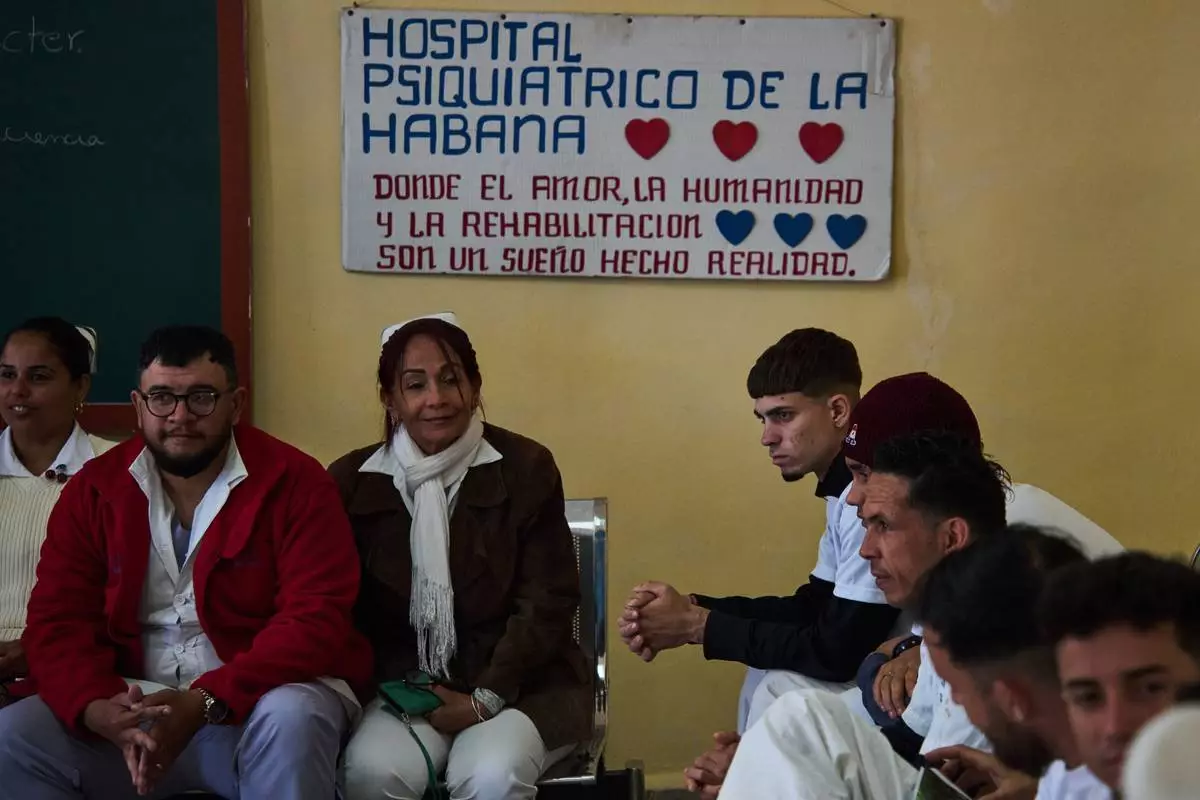
Medical staff, left, and people in rehabilitation, right, sit at a psychiatric hospital in Havana, Cuba, Wednesday, Feb. 25, 2026. (AP Photo/Ramon Espinosa)
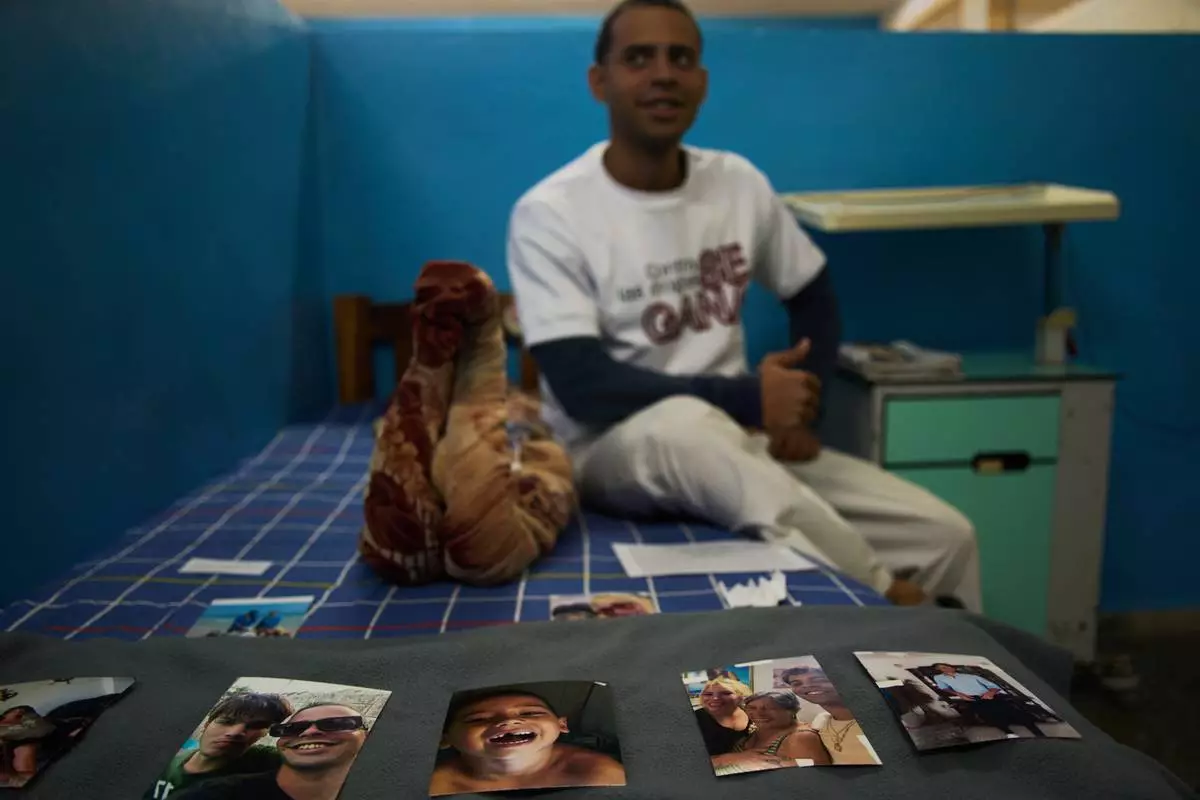
A youth in rehabilitation sits on his bed next to photos of his family that he uses as support for his recovery at a psychiatric hospital in Havana, Cuba, Wednesday, Feb. 25, 2026. (AP Photo/Ramon Espinosa)
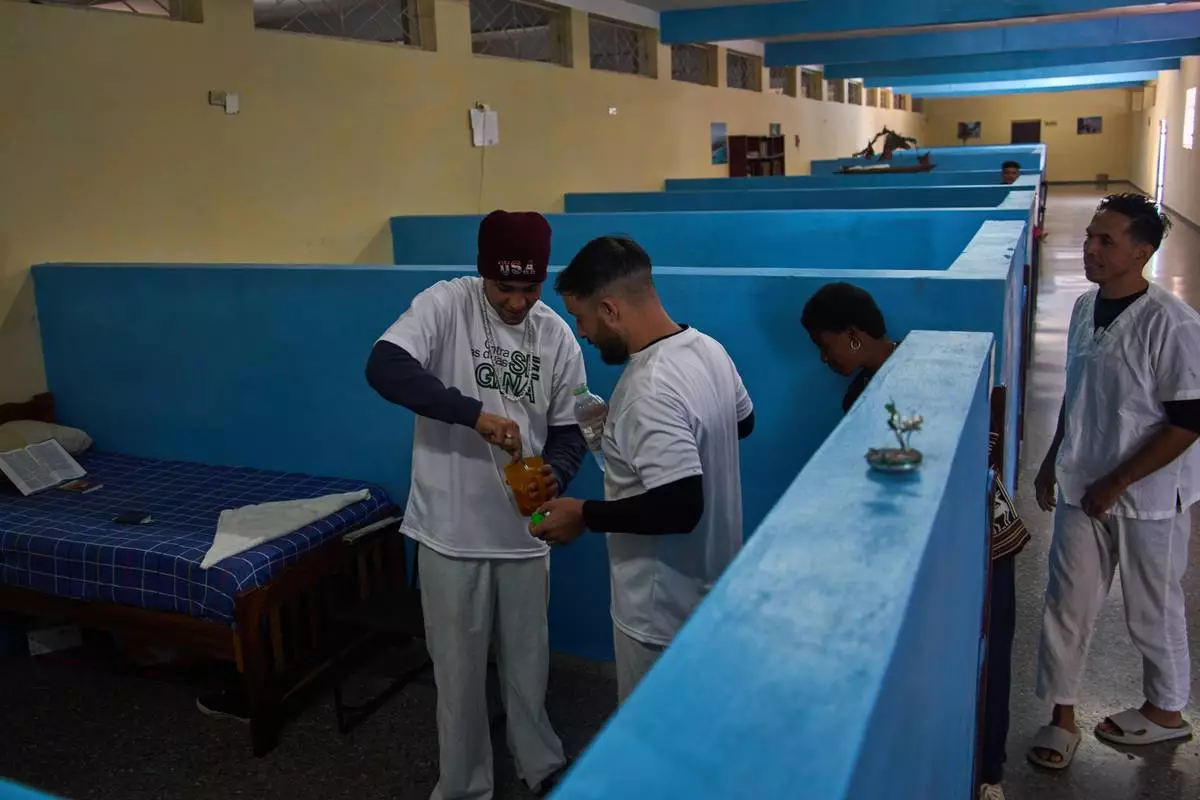
People in rehabilitation at a psychiatric hospital prepare a homemade cocoa cream candy to share in Havana, Cuba, Wednesday, Feb. 25, 2026. (AP Photo/Ramon Espinosa)
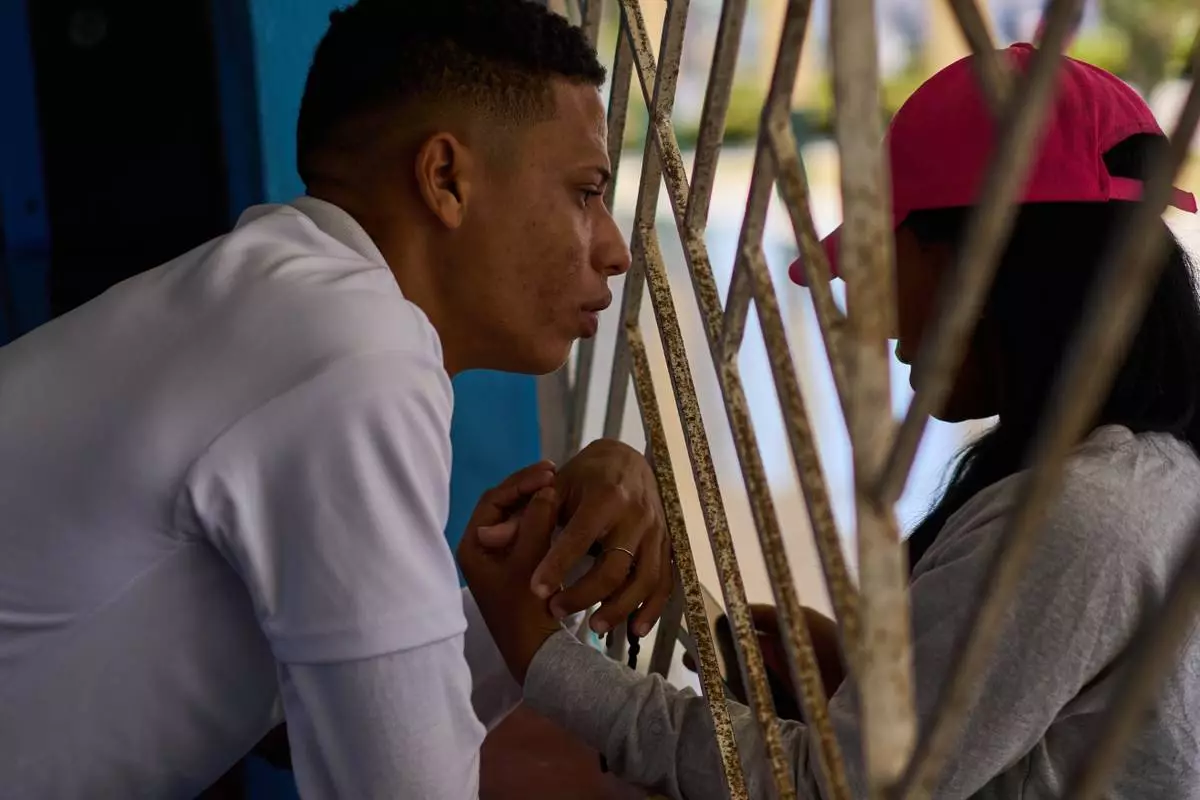
A youth in rehabilitation speaks with his visitor during a break at a psychiatric hospital in Havana, Cuba, Wednesday, Feb. 25, 2026. (AP Photo/Ramon Espinosa)
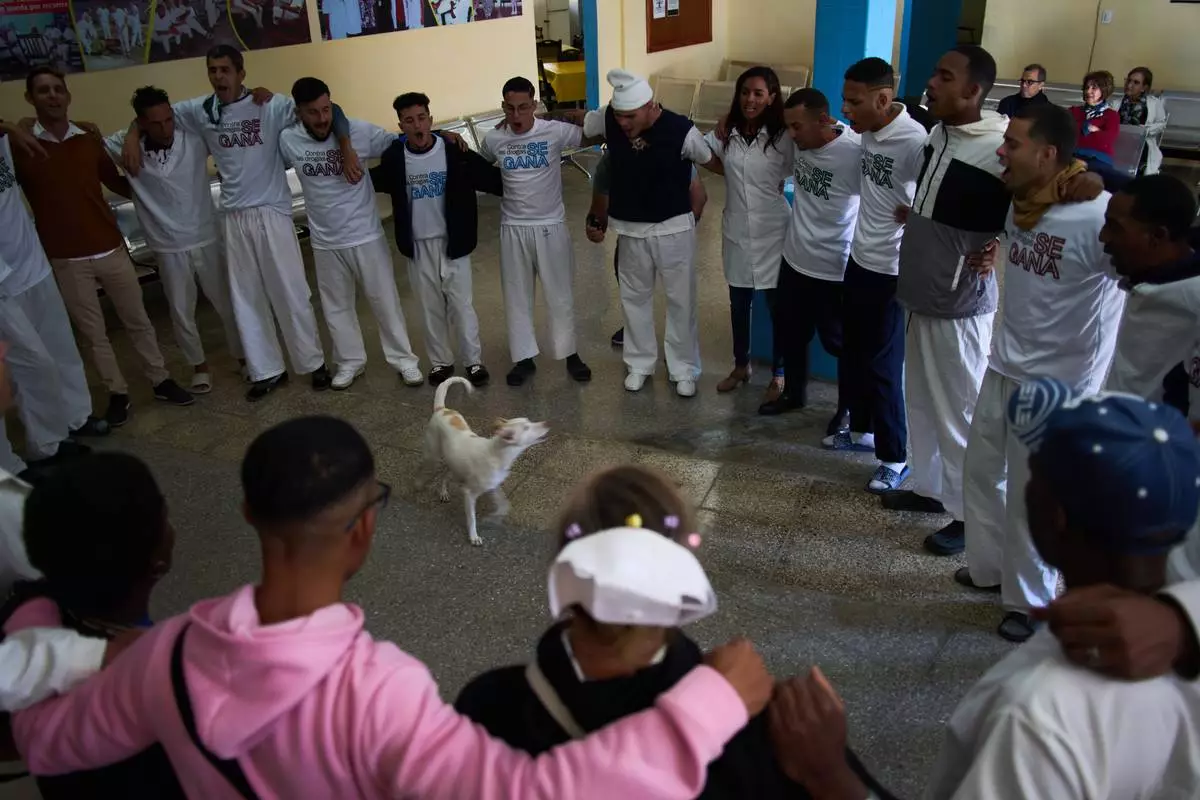
People undergoing rehabilitation hug in a circle at a psychiatric hospital in Havana, Cuba, Wednesday, Feb. 25, 2026. (AP Photo/Ramon Espinosa)