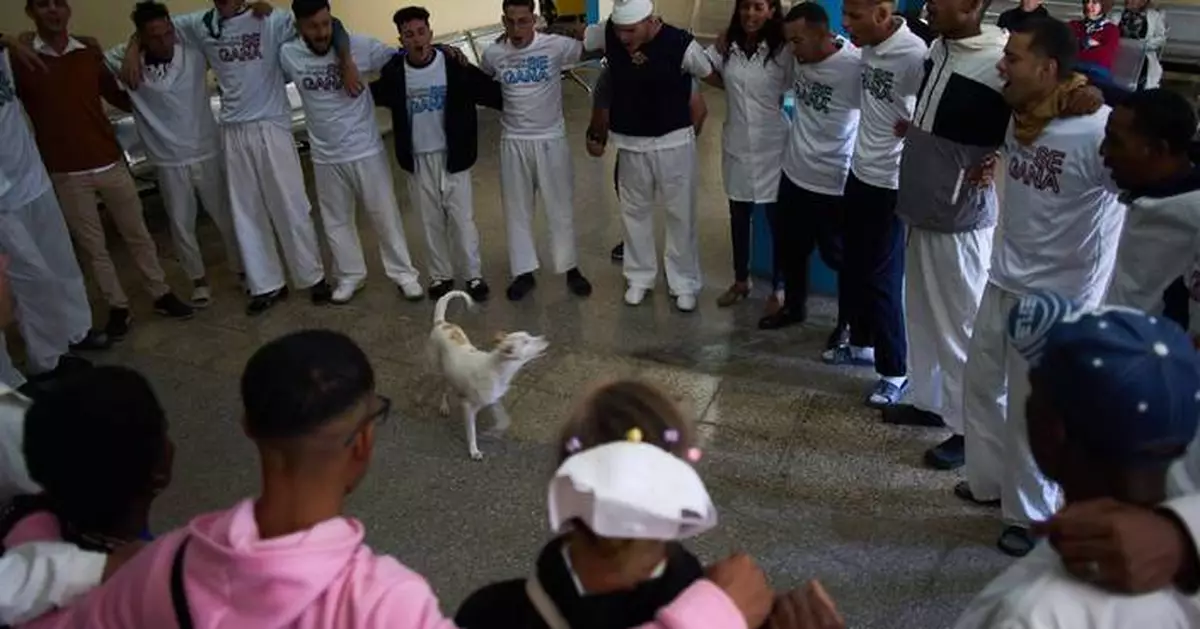
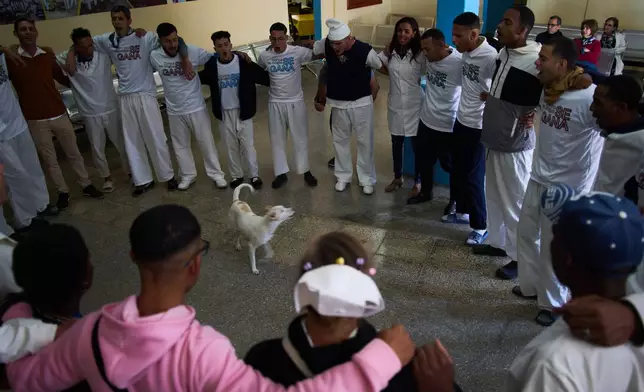
HAVANA (AP) — Several dozen people stood in circle in a room at a Havana psychiatric hospital, their hands held together as they chanted in unison, vowing to rid their bodies from “the toxins that enslave.” The collective plea to reclaim their freedom for just the next 24 hours was the first step of a 90-day detoxification before beginning rehabilitation.
Drug use was an almost-unknown phenomenon in Cuba until the beginning of this decade. However, a deepening economic crisis, shortages of basic goods and the emergence of low-cost synthetic drugs have combined to transform the landscape.
Click to Gallery
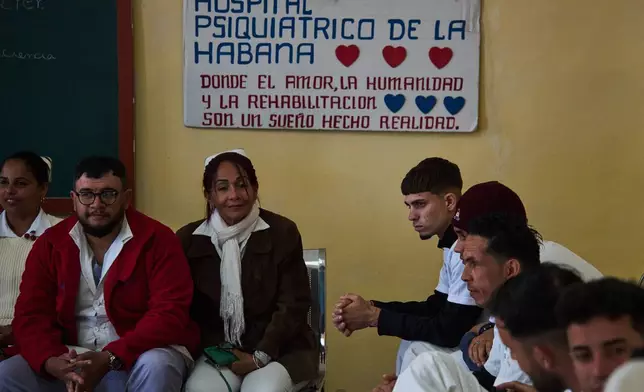
Medical staff, left, and people in rehabilitation, right, sit at a psychiatric hospital in Havana, Cuba, Wednesday, Feb. 25, 2026. (AP Photo/Ramon Espinosa)
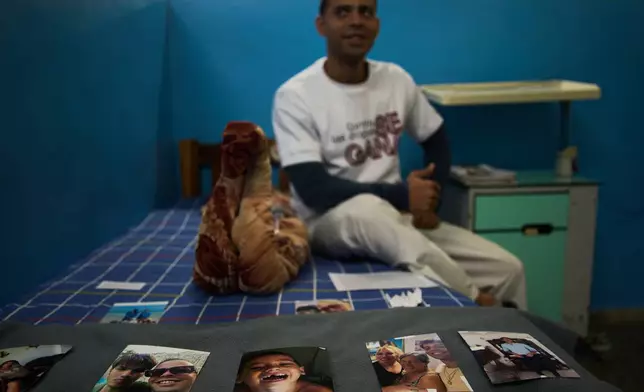
A youth in rehabilitation sits on his bed next to photos of his family that he uses as support for his recovery at a psychiatric hospital in Havana, Cuba, Wednesday, Feb. 25, 2026. (AP Photo/Ramon Espinosa)
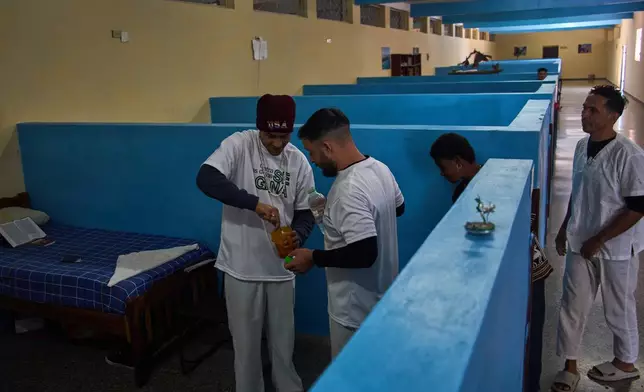
People in rehabilitation at a psychiatric hospital prepare a homemade cocoa cream candy to share in Havana, Cuba, Wednesday, Feb. 25, 2026. (AP Photo/Ramon Espinosa)
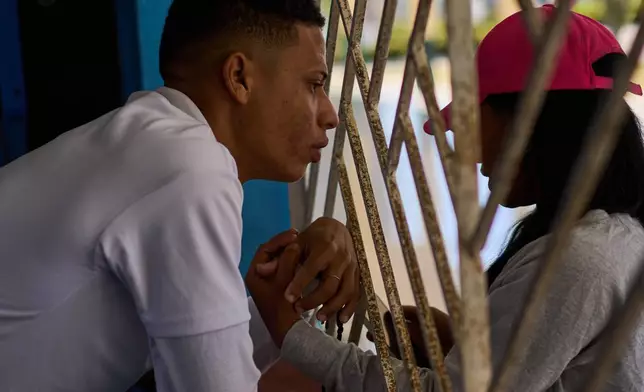
A youth in rehabilitation speaks with his visitor during a break at a psychiatric hospital in Havana, Cuba, Wednesday, Feb. 25, 2026. (AP Photo/Ramon Espinosa)
People undergoing rehabilitation hug in a circle at a psychiatric hospital in Havana, Cuba, Wednesday, Feb. 25, 2026. (AP Photo/Ramon Espinosa)
In Havana and other cities across the island, it is no longer unusual to see young people in public parks sleeping, walking with difficulty or lying unconscious.
According to authorities, the primary threat is the “químico,” (chemical) — a potent cocktail of synthetic cannabinoids and hazardous additives. Also known on the streets as “papelitos,” or "little papers,” the drug is absorbed into sheets of paper that are sliced into tiny doses and smoked. At roughly 250 Cuban pesos per hit (50 cents), it costs less than a basic loaf of bread or a can of soda.
“It’s very cheap...and it’s everywhere,” said David Morales, 25, who is in recovery after receiving help at government-funded health centers and is now in rehabilitation therapy at the Alcance Victoria Cuba evangelical Baptist church.
Acknowledging the rise in consumption, Cuba's Ministry of Health and several state agencies in July established a National Drug Observatory, an initiative to research, monitor and mitigate the impact of illegal drugs on the island.
Although the government does not track the number of drug users, Dr. Tania Adriana Peón, head of mental health and addictions at the General Directorate of Health, pointed to emergency room data as a barometer for the trend. In 2024, 467 people sought help or were registered in emergency rooms in Havana. By 2025, that figure nearly doubled to 886.
Cuba has a zero-tolerance policy on drugs, and drug trafficking is punishable by up to life imprisonment. And while it's not a drug-producing or stockpiling country, authorities acknowledge it is not immune to drug use.
Sporadically, seizures of packages of cocaine abandoned by traffickers during chases and washed ashore are reported; these are known as “recalos” or washups. Drugs are also smuggled into the country among imported goods, and, to a lesser extent, domestic marijuana plantations have been detected.
“The primary challenge Cuba faces today is related to new psychoactive drugs or synthetic cannabinoids, which originate mainly from the United States,” said Col. Juan Carlos Poey Guerra of Cuba's Interior Ministry.
He added that police laboratories detected 46 new synthetic formulations in the last year. Among the substances mixed with cannabinoids were the anticonvulsant carbamazepine, formaldehyde and fentanyl, among others. Between 2024 and 2025, he said, authorities thwarted 72 attempts to smuggle drugs into the country from 11 different origins.
The United States is the primary source of the precursor substances that constitute químico, said Poey Guerra.
Health care in Cuba is state-run and free, so neighborhood family clinics are typically the first to detect signs of drug use. Patients with more severe or complex conditions are referred by health authorities for longer, more intensive hospital stays.
The Associated Press recently toured a 40-bed men’s ward at the Havana Psychiatric Hospital, where patients aged 20 to 30 are undergoing a 90-day detox before beginning rehabilitation.
The space was divided into two-bed cubicles adorned with family photos. It featured a small reading area, a dining room and a recreation space. Each day, the patients — wearing white T-shirts emblazoned with the slogan “We win against drugs” — take responsibility for cleaning their surroundings.
“I was incredibly depressed...living on the streets; I just couldn’t take it anymore,” said 23-year-old Daniel Fulleda, who was admitted in January. His tone was enthusiastic as he shared his plans of getting married before the year end and start a family. ”Next year, I'll start my own business."
For decades, the highly centralized state was responsible for treating drug and alcohol users — especially alcohol users — but the magnitude of the challenge in recent times has opened the door for other actors.
“There are neighborhoods that are infested… I’ve seen young people using drugs right in front of me," said Pastor Abel Pérez of the Alcance Victoria Cuba church. “As a pastor, I’m not called to sit idly by.”
Last year, the church provided therapy to approximately 50 young people and their families and today more than a dozen individuals attend sessions regularly.
“In my youth, talking about drugs was extraordinary… The problem has grown so rapidly and in such a short time that, to some extent, it has overwhelmed the country’s capacity to address it,” said Alejandro Morales, a 57-year-old oceanographic engineer who accompanies his son David to meetings at the Alcance Victoria Cuba church.
In the same room, 64-year-old Vilma Arias sought help alongside her 36-year-old daughter. Her other son, 26, is also struggling with drug use but refuses to seek treatment.
“We have to pray a lot,” she said. “My daughter is a wonderful teacher and my son is a graduate in automotive mechanics. I don’t even know how they fell into this,” she added.
Follow AP’s coverage of Latin America and the Caribbean at https://apnews.com/hub/latin-america
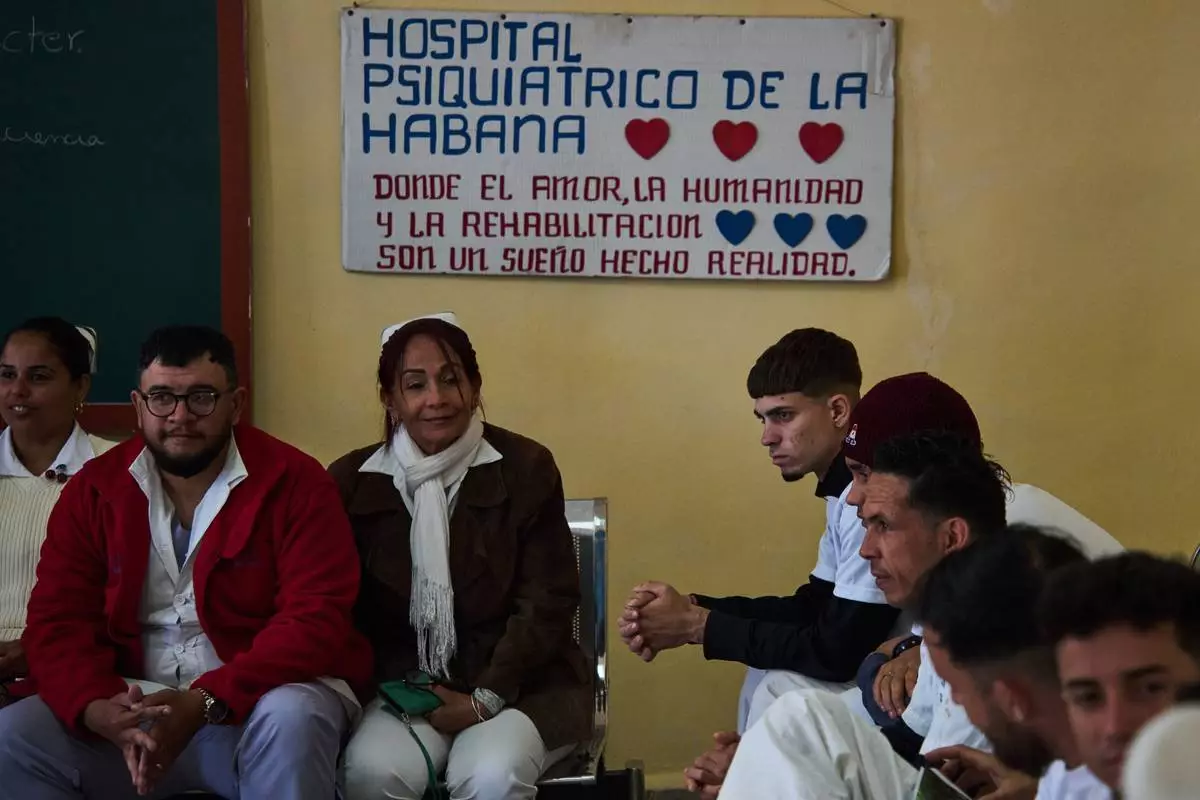
Medical staff, left, and people in rehabilitation, right, sit at a psychiatric hospital in Havana, Cuba, Wednesday, Feb. 25, 2026. (AP Photo/Ramon Espinosa)
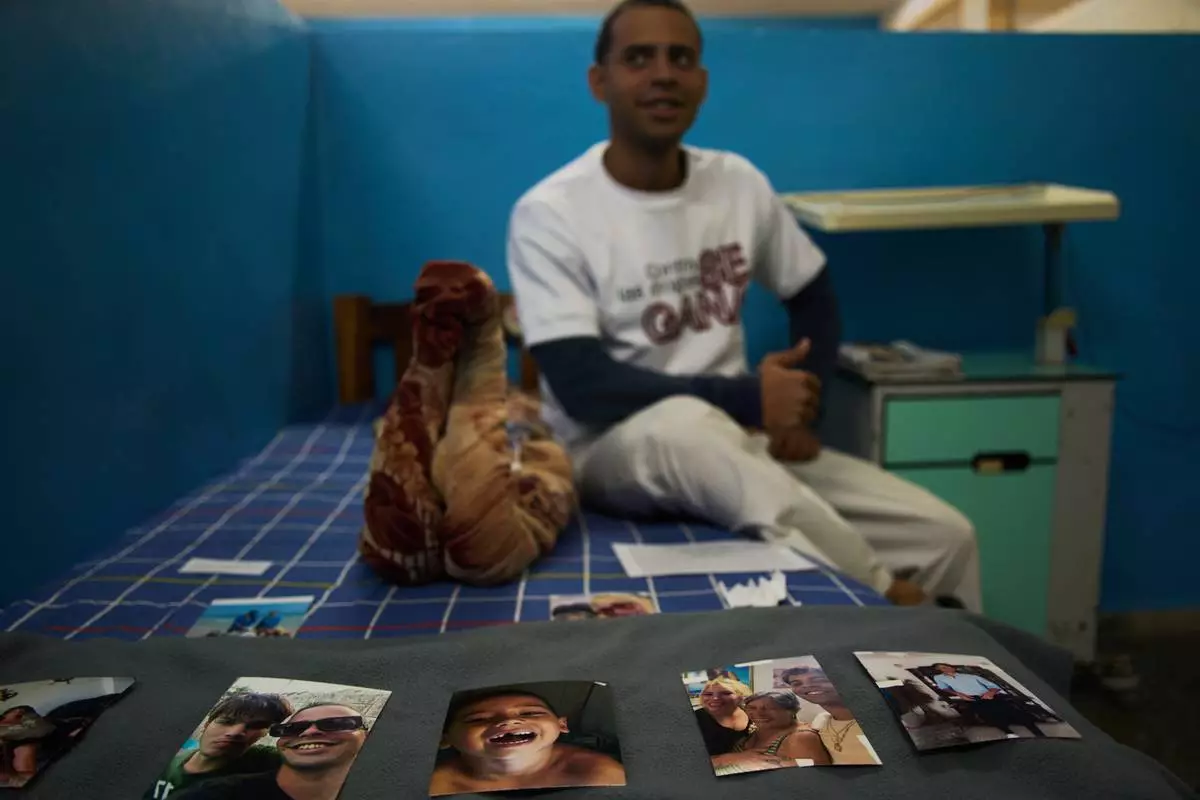
A youth in rehabilitation sits on his bed next to photos of his family that he uses as support for his recovery at a psychiatric hospital in Havana, Cuba, Wednesday, Feb. 25, 2026. (AP Photo/Ramon Espinosa)
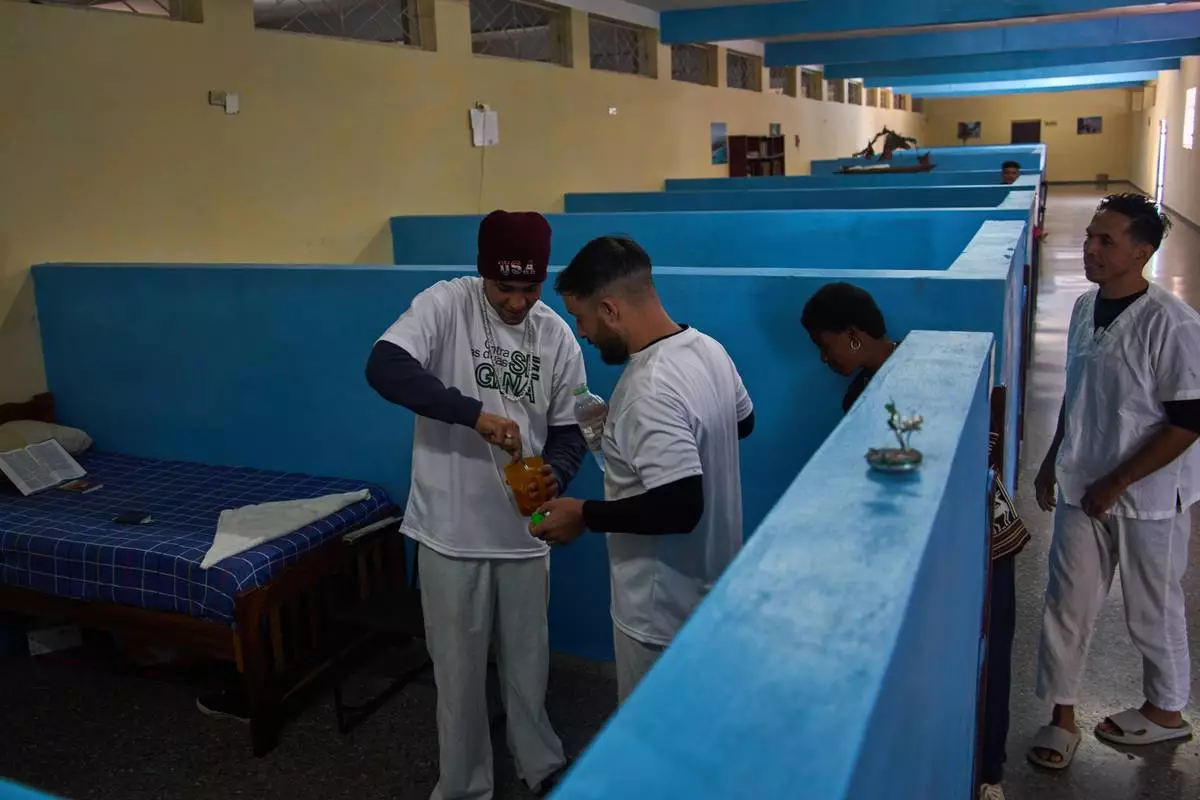
People in rehabilitation at a psychiatric hospital prepare a homemade cocoa cream candy to share in Havana, Cuba, Wednesday, Feb. 25, 2026. (AP Photo/Ramon Espinosa)
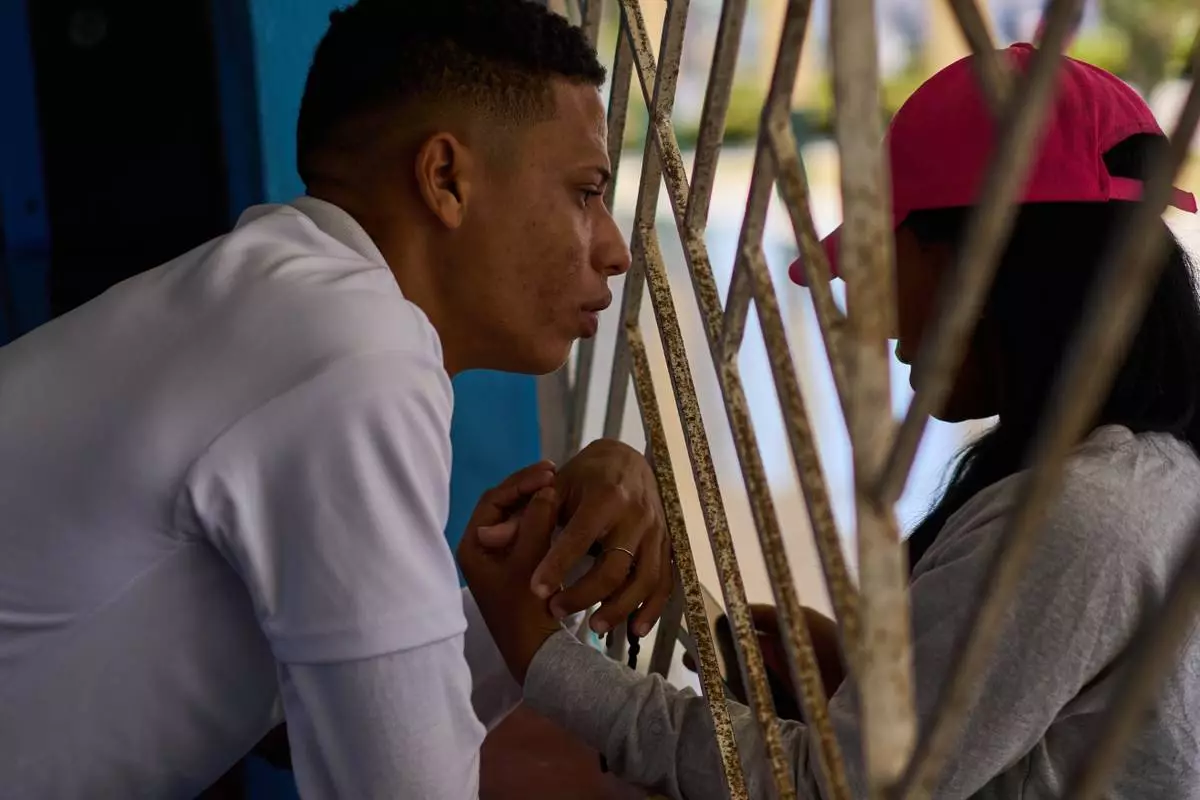
A youth in rehabilitation speaks with his visitor during a break at a psychiatric hospital in Havana, Cuba, Wednesday, Feb. 25, 2026. (AP Photo/Ramon Espinosa)
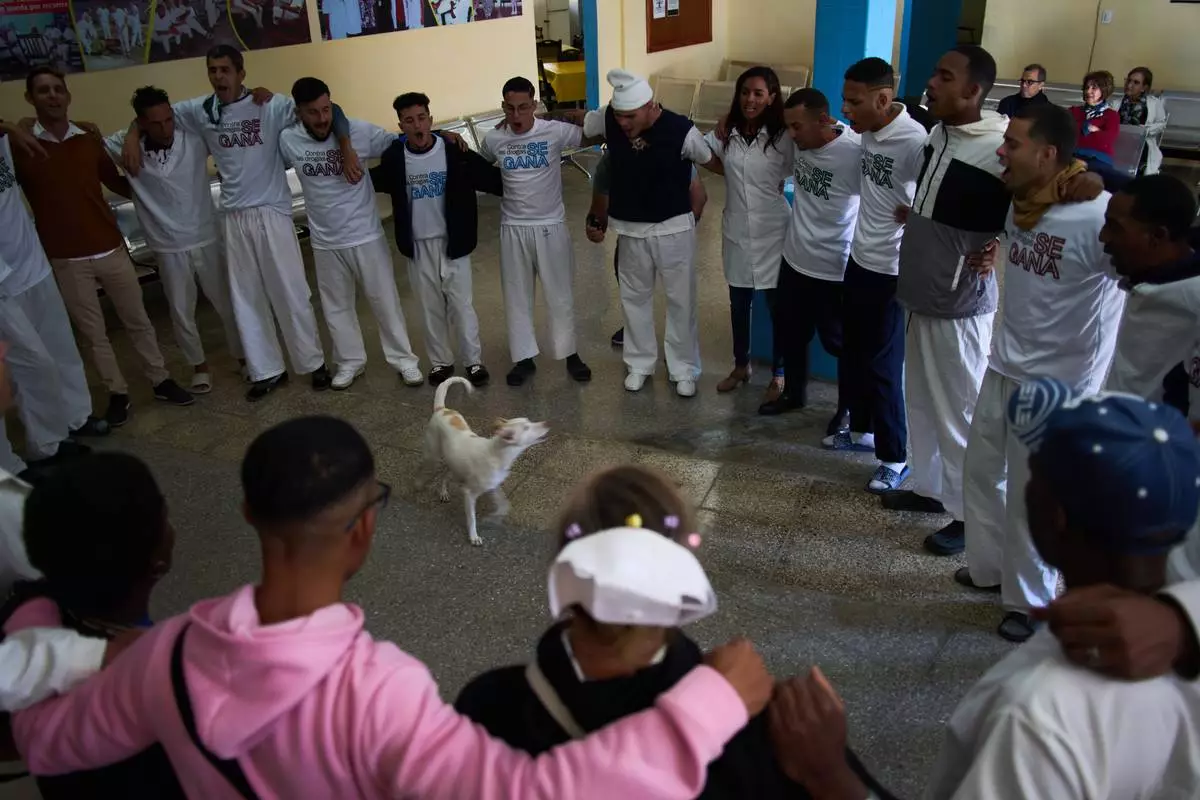
People undergoing rehabilitation hug in a circle at a psychiatric hospital in Havana, Cuba, Wednesday, Feb. 25, 2026. (AP Photo/Ramon Espinosa)
CORTINA D'AMPEZZO, Italy (AP) — At this month's Milan Cortina Paralympics, some athletes competed in shorts, T-shirts and tank tops. One skier lamented “tropical” conditions and a snowboarder complained that soft, slow snow put him at a disadvantage. And some worried about their safety.
“I’m here to represent the disability community on a snowboard, and I want to give the best show that I can,” three-time Paralympic gold medalist Brenna Huckaby of the U.S. said. “But I’m not going to kill myself in the process ... I've got two kids at home, and I'm already disabled. I'm not trying to disable myself more."
The warm weather at the Paralympics that run through Sunday has some athletes asking: Should these Games be held earlier in the year when cold weather is more reliable?
“If it were my decision, I would absolutely move the Olympics and Paralympics,” American Para snowboarder Zach Miller said.
Miller got into the sport because he saw the U.S. team sweep the debut of men’s Para snowboard cross at the 2014 Sochi Paralympics. At these Games, he wants to show kids how they can compete in sports and do cool things.
“And then it’s way less cool, because I’m dealing with, like, really terrible conditions and racing on a course that doesn’t actually show what the sport is,” he said. “It’s frustrating.”
Miller finished sixth in the snowboard cross finals, and said lighter riders like him can be at a disadvantage in maintaining momentum in softer snow.
German Para biathlete Marco Maier pushed through mushy snow wearing shorts and a short-sleeved shirt so he wouldn't overheat.
“We have the Summer Games now,” cracked Maier, who stayed cool enough to capture a bronze medal in last weekend's sprint race. “It is a challenge.”
The early March warmth would be “almost impossible” without the influence of climate change, said Shel Winkley, a Climate Central meteorologist.
Researchers say the places that can reliably host a Winter Games will shrink because of climate change. The Paralympics are typically held two weeks after the Winter Olympics. The International Olympic Committee has said it's considering rotating the Games among a permanent pool of suitable locations and holding them earlier because March is getting too warm for the Paralympics.
The International Paralympic Committee is working with the IOC to consider the dates. Moving them isn't easy because of other major winter sporting competitions, but it may be necessary to ensure the best conditions, said Craig Spence, the IPC's chief brand and communications officer.
Spence dismissed complaints about conditions this year, saying courses had been excellent. But he acknowledged a future problem.
“Clearly climate change is not going to go away. We’re very conscious of its impact on not just winter sports, but also summer sports,” he told the AP Wednesday. “We’ve seen temperatures rising at Paralympic Winter Games for the last few editions now.”
Changing weather conditions challenge all athletes. But medical professionals say they can be even tougher for Para athletes.
Dr. Jaap Stomphorst, a sports physician at the Isala hospital in the Netherlands, said poor snow quality has a “big influence” on the rate of injuries and accidents among Paralympians. For example, sit-ski racers need very good snow to come down the course safely because they can’t adjust for ruts by moving their weight off the ski, and bumps can be particularly problematic for visually impaired skiers, he said. Stomphorst studied injuries at past Paralympic Games.
Dr. Sarah Eby, head team physician for the U.S. Para Alpine Ski Team, noted that athletes without a disability have “two knees, they've got all their muscles working right when they need them to work ... Thinking of our Para athletes, maybe they have only one leg, they're relying more on equipment that they can't adjust.”
Miller, the snowboarder, said warming conditions lead athletes to try to “minimize mistakes and ride conservative, because everything you're going to do is going to be punished out there on the snow.” He added: “You're worried about your own safety on course, you don't feel like you can be the athlete that you know you are."
Organizers canceled practice sessions for skiing and snowboarding to preserve the course for both performance and safety. Some race starts were moved earlier or rescheduled to another day to minimize weather's effects, including forecast rain this Saturday.
The organizing committee said it works to ensure excellent, consistent snow conditions by using advanced snowmaking systems to complement natural snowfall, monitoring the weather and temperatures, and planning for a range of weather scenarios. The committee also said competition schedules are reviewed regularly to ensure safety and fair competition.
Austrian Markus Salcher blamed himself for a fall in the super-G race, but said the softer snow also played a role. American Patrick Halgren, who won silver in the standing division, called conditions “tropical.” He said the skiing felt like surfing.
Some athletes praised organizers for keeping the courses in decent shape despite the warmth. That included American Para Alpine skier Andrew Haraghey, who couldn’t finish his super-G standing race on a course he said was far from perfect.
“We’re making it work, but it’s not ideal,” Haraghey said. “I think it’s as safe as it’s going to be. I think it’s more so that people are pushing the limits.”
Canadian Para snowboarder Sandrine Hamel said that women's events are held first in the cooler morning conditions, and it's warmer when the men compete later.
“I get the best and it’s already hot, warm, slower and bumpier,” she said. “So they get even worse than that.”
Canadian Para snowboarder Tyler Turner tries to keep the fluctuating conditions in stride.
“We’re a bunch of amputees and injured people up there. We can adapt on the fly. We’re good at this," Turner said. "For me, I’ve just got to ride and keep my eyes open and stay aware of what’s happening out there on the track.”
Graham and Peterson reported from Denver, Colorado. McDermott reported from Providence, Rhode Island.
The Associated Press’ climate and environmental coverage receives financial support from multiple private foundations. AP is solely responsible for all content. Find AP’s standards for working with philanthropies, a list of supporters and funded coverage areas at AP.org.

Norway's Vilde Nilsen, gold, is followed by Germany's Kathrin Marchand, 4th, in the cross country skiing women’s sprint classic standing at the 2026 Winter Paralympics, in Tesero, Italy, Tuesday, March 10, 2026. (AP Photo/Emilio Morenatti)

Brenna Huckaby, of the United States, reacts after finishing 6th in the women's snowboard cross SB-LL2 at the 2026 Winter Paralympics, in Cortina d'Ampezzo, Italy, Sunday, March 8, 2026. (AP Photo/Emilio Morenatti)

Christina Picton, of Canada, right, competes in the cross country skiing women's 10Km interval start sitting final at the 2026 Winter Paralympics, in Tesero, Italy, Wednesday, March 11, 2026. (AP Photo/Evgeniy Maloletka)

Zach Miller, of the United States, from left, Keith Gabel, of the United States, and Alex Massie, of Canada, compete in a men's snowboard cross SB-LL2 semifinal at the 2026 Winter Paralympics, in Cortina d'Ampezzo, Italy, Sunday, March 8, 2026. (AP Photo/Evgeniy Maloletka

Brittany Hudak, of Canada, competes in the cross country skiing women's 10Km interval start classic standing final at the 2026 Winter Paralympics, in Tesero, Italy, Wednesday, March 11, 2026. (AP Photo/Evgeniy Maloletka)