U.S. equities delivered a mixed performance on Friday, as a significant sell-off in a major chipmaker tempered broader gains driven by a resilient technology sector and stabilizing geopolitical sentiment.
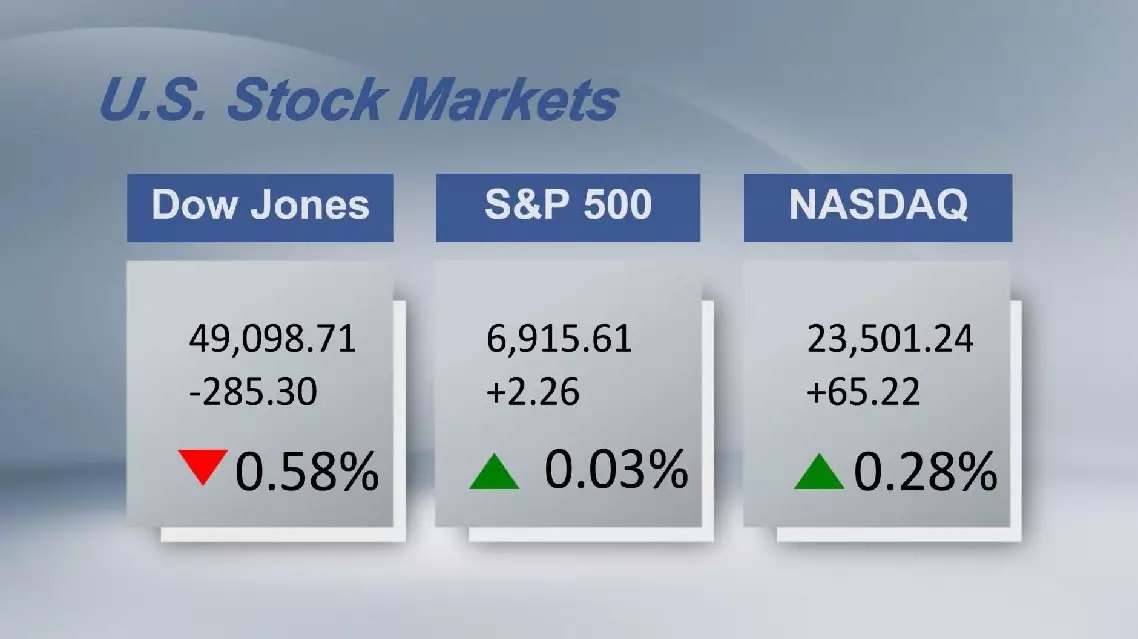
The Dow Jones Industrial Average fell 0.58 percent to 49,098.71. The S and P 500 added 0.03 percent to 6,915.61, while the Nasdaq Composite Index rose 0.28 percent to 23,501.24.
Sector performance was largely positive, with seven of the 11 primary S and P 500 sectors finishing in the green. Materials and consumer discretionary led the gainers, advancing 0.86 percent and 0.73 percent, respectively. However, the financial and industrial sectors faced headwinds, declining 1.38 percent and 0.80 percent.
The technology sector saw a sharp divergence in performance. Industry leaders such as Advanced Micro Devices and Nvidia supported the Nasdaq's rise, gaining more than 2 percent and 1 percent, respectively, alongside a boost for Microsoft.
In contrast, Intel shares plummeted 17.03 percent, marking their worst session since August 2024, after the company issued a weak first-quarter outlook. Intel CEO Lip-Bu Tan informed analysts that the firm is struggling to meet product demand and that production efficiency remains below targets, describing the turnaround as a "multiyear journey."
Meanwhile, Goldman Sachs warned that the massive Arctic storm approaching the United States could severely disrupt natural gas supplies. This potential supply shock comes at a time when domestic heating demand is projected to surge.
In the bond market, the yield on the 10-year U.S. Treasury note continued its slight downward trend, slipping below 4.24 percent. Market participants are now bracing for a pivotal week ahead, featuring a high concentration of corporate earnings reports alongside the Federal Reserve's interest rate decision.
Political attention is also focused on the central bank's leadership, as U.S. President Donald Trump announced Thursday that he has concluded interviews for the next Federal Reserve chair and intends to name a successor to Jerome Powell "soon."
U.S. stocks finish mixed as Intel plunge offsets tech gains
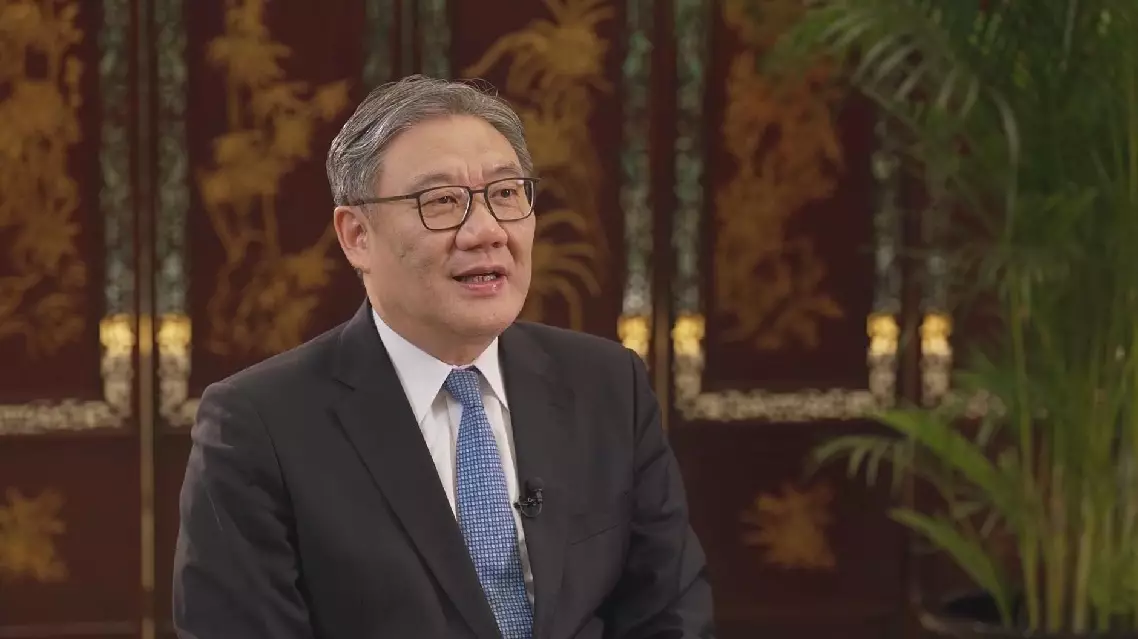
China's Minister of Commerce Wang Wentao outlined the key priorities of the 32nd Asia-Pacific Economic Cooperation (APEC) Ministers Responsible for Trade Meeting, which opened on Friday in Suzhou, East China's Jiangsu province.
In an interview with CGTN ahead of the two-day meeting, Wang said free trade, digital cooperation and green economy are high on the agenda of the meeting.
"The key areas include advancing regional economic integration and the Free Trade Area of the Asia-Pacific, supporting the World Trade Organization (WTO) in strengthening digital cooperation and developing green economy. At present, the international situation is marked by intertwined turbulence and chaos, with intensified geopolitical instability. The rise of unilateralism and protectionism poses serious challenges to the international economic and trade order, disrupting global and Asia-Pacific development. Against this backdrop, all parties have higher expectations for this trade ministers' meeting, hoping that it can build consensus and deliver outcomes," Wang said.
This year marks China's third time hosting the APEC meetings and the 35th anniversary of its membership.
By 2025, China had become the largest trading partner of 13 APEC economies. Trade between China and APEC economies reached 3.7 trillion U.S. dollars, accounting for 57.8 percent of China's total foreign trade.
China has signed 24 free trade agreements or economic and trade arrangements with 31 countries and regions, including 15 APEC economies. In recent years, China has also completed upgrades of free trade agreements with APEC economies such as Singapore and Peru.
The minister said that China has always been a firm supporter and an important contributor to APEC.
"We have actively shared our vast market and development opportunities with all parties. China's door to the world will only open wider and wider. Facing the common challenges, China will continue to fulfill its responsibilities as a major country, further deepen reform, expand high-standard opening-up, and continue to provide new opportunities for the Asia-Pacific region and the world with its new achievements in Chinese modernization," the minister said.
China's Commerce Minister outlines priorities for 32nd APEC trade ministers' meeting