PORTLAND, Maine (AP) — Immigration and Customs Enforcement has highlighted the detention of people whom it called some of Maine’s most dangerous criminals during operations this past week, but court records paint a more complicated picture.
Federal officials say more than 100 people have been detained statewide in what ICE dubbed “Operation Catch of the Day,” a reference to the fishing industry. ICE said in a statement that it was arresting the “worst of the worst,” including “child abusers and hostage takers.”
Click to Gallery
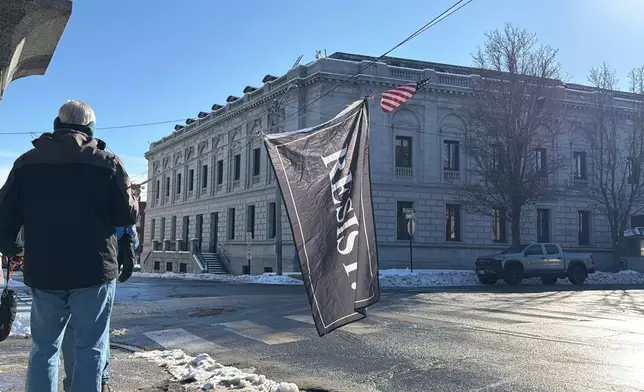
A protester holds a "Resist" flag in front of federal court in Portland, Maine as Immigration and Customs Enforcement conduct operations in the state, Thursday, Jan. 22, 2026. (AP Photo/Rodrique Ngowi)
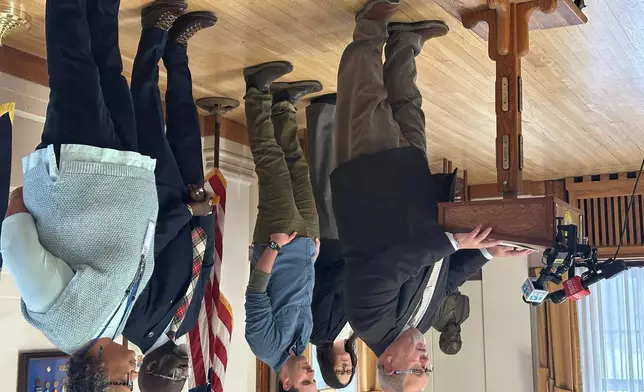
Mayor Mark Dion speaks at a news conference about ICE activity Wednesday, Jan. 21, 2026, in Portland, Maine. (AP Photo/Patrick Whittle)
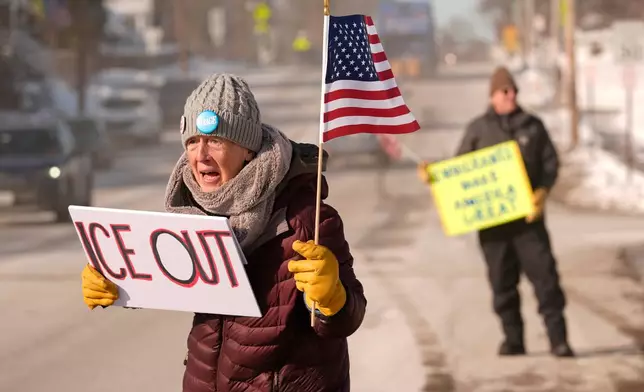
Rosie Grutze protests the presence of the U.S. Immigration and Customs Enforcement, Wednesday, Jan. 21, 2026, in Portland, Maine. (AP Photo/Robert F. Bukaty)
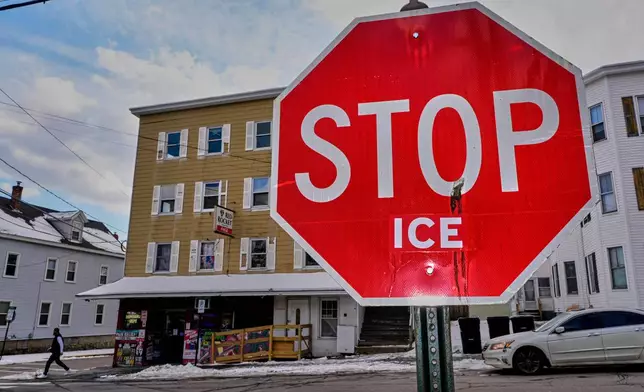
Anti-ICE sentiment is expressed on a traffic sign, Friday, Jan. 23, 2026, in Biddeford, Maine.(AP Photo/Robert F. Bukaty)
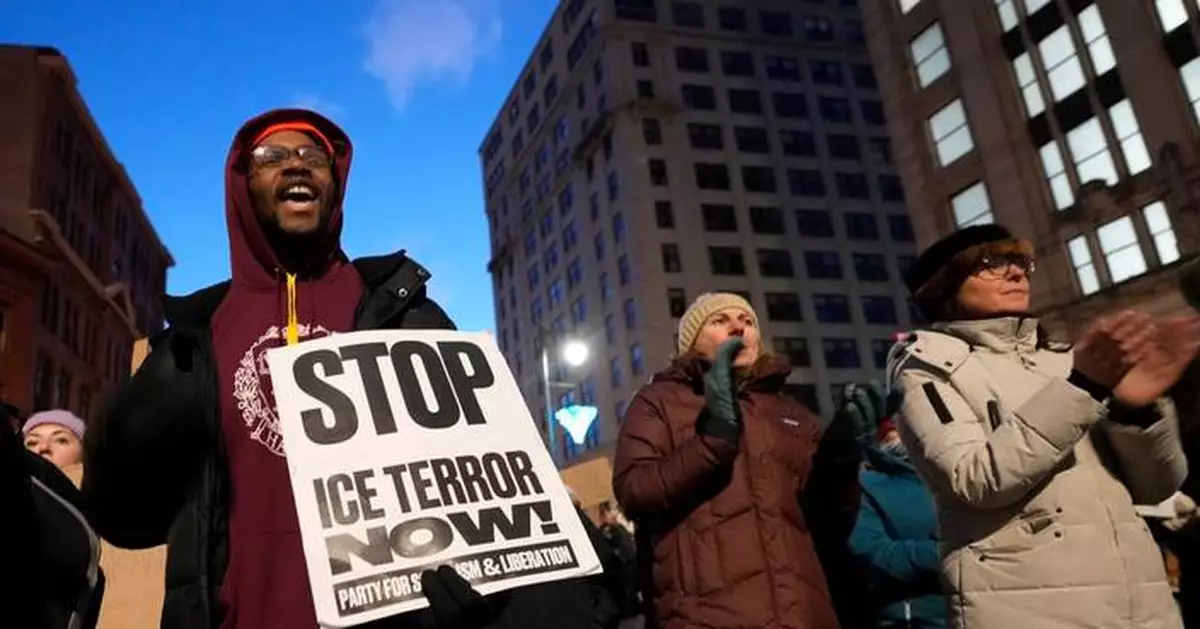
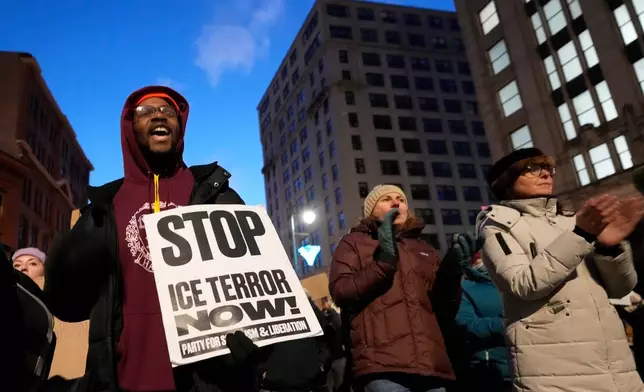
Protesters rally against the presence of U.S. Immigration Customs Enforcement in Maine, Friday, Jan. 23, 2026, in Portland, Maine. (AP Photo/Robert F. Bukaty)
Court records show some were violent felons. But they also show other detainees with unresolved immigration proceedings or who were arrested but never convicted of a crime.
Immigration attorneys and local officials say similar concerns have surfaced in other cities where ICE has conducted enforcement surges and many of those targeted lacked criminal records.
One case highlighted by ICE that involves serious felony offenses and criminal convictions is that of Sudan native Dominic Ali. ICE said Ali was convicted of false imprisonment, aggravated assault, assault, obstructing justice and violating a protective order.
Court records show Ali was convicted in 2004 of violating a protective order and in 2008 of second-degree assault, false imprisonment and obstructing the reporting of a crime. In the latter case, prosecutors said he threw his girlfriend to the floor of her New Hampshire apartment, kicked her and broke her collarbone.
“His conduct amounted to nothing less than torture,” Judge James Barry said in 2009 before sentencing Ali to five to 10 years in prison.
Ali was later paroled to ICE custody, and in 2013 an immigration judge ordered his removal. No further information was available from the Executive Office for Immigration Review, and it remains unclear what happened after that order.
Other cases were more nuanced, like that of Elmara Correia, an Angola native whom ICE highlighted in its public promotion of the operation, saying she was “arrested previously for endangering the welfare of a child.”
Maine court records show someone with that name was charged in 2023 with violating a law related to learner’s permits for new drivers, a case that was later dismissed.
Correia filed a petition Wednesday challenging her detention, and a judge issued a temporary emergency order barring authorities from transferring her from Massachusetts, where she is being held. Her attorney said she entered the United States legally on a student visa about eight years ago and has never been subject to expedited removal proceedings.
“Was she found not guilty, or are we just going to be satisfied that she was arrested?” Portland Mayor Mark Dion said during a news conference in which he raised concerns that ICE failed to distinguish between arrests and convictions or explain whether sentences were served.
Dion also pointed to another person named in the release: Dany Lopez-Cortez, whom ICE said is a “criminal illegal alien” from Guatemala who was convicted of operating under the influence.
ICE highlighted Lopez-Cortez’s case among a small group of examples it said reflected the types of arrests made during the operation. Dion questioned whether an operating-under-the-influence conviction, a serious offense but one commonly seen in Maine, should rise to the level of ICE’s “worst of the worst” public narrative.
Boston immigration attorney Caitlyn Burgess said her office filed habeas petitions Thursday on behalf of four clients who were detained in Maine and transferred to Massachusetts.
The most serious charge any of them faced was driving without a license, Burgess said, and all had pending immigration court cases or applications.
“Habeas petitions are often the only tool available to stop rapid transfers that sever access to counsel and disrupt pending immigration proceedings,” she said.
Attorney Samantha McHugh said she filed five habeas petitions on behalf of Maine detainees Thursday and expected to file three more soon.
“None of these individuals have any criminal record,” said McHugh, who is representing a total of eight detainees. “They were simply at work, eating lunch, when unmarked vehicles arrived and immigration agents trespassed on private property to detain them.”
Federal court records show that immigration cases involving criminal convictions can remain unresolved or be revisited years later.
Another whose mug shot was included in materials on “the worst of the worst” of those detained in Maine is Ambessa Berhe.
Berhe was convicted of cocaine possession and assaulting a police officer in 1996 and cocaine possession in 2003.
In 2006 a federal appeals court in Boston vacated a removal order for him and sent the case back to the Board of Immigration Appeals for further consideration.
According to the ruling, Berhe was born in Ethiopia and later taken to Sudan by his adoptive parents. The family was admitted to the United States as refugees in 1987, when he was about 9.
ICE has said the operation is targeting about 1,400 immigrants in a state of about 1.4 million people, roughly 4% of whom are foreign-born.
Associated Press journalist Rodrique Ngowi contributed.
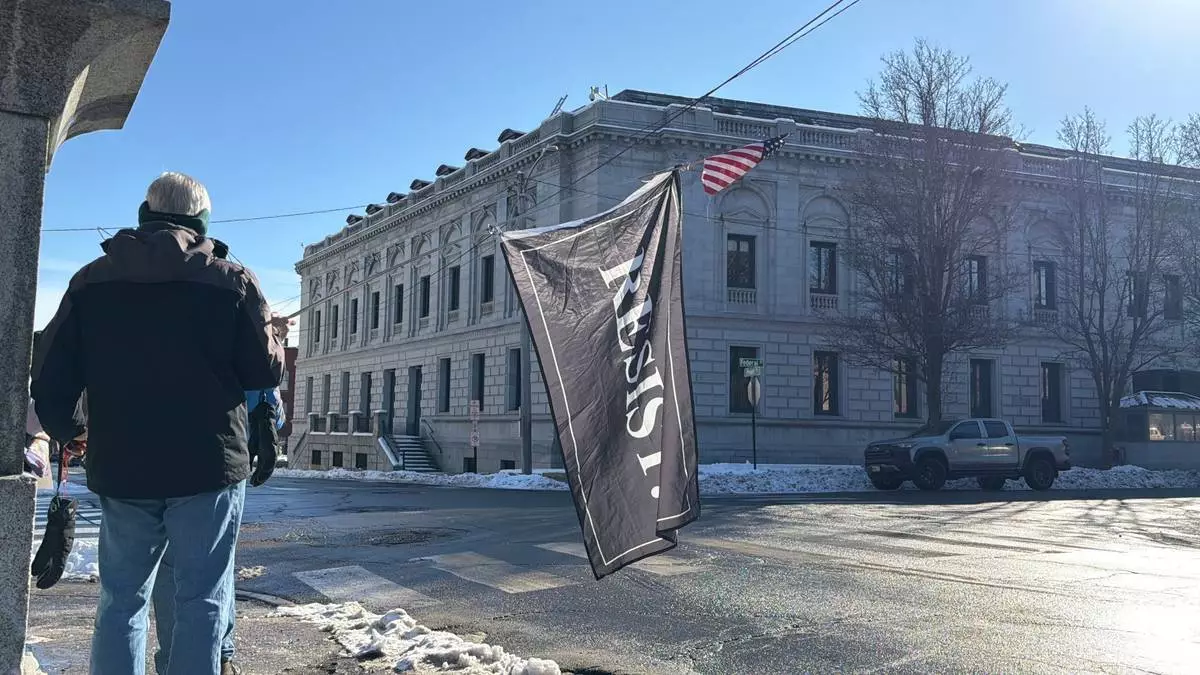
A protester holds a "Resist" flag in front of federal court in Portland, Maine as Immigration and Customs Enforcement conduct operations in the state, Thursday, Jan. 22, 2026. (AP Photo/Rodrique Ngowi)
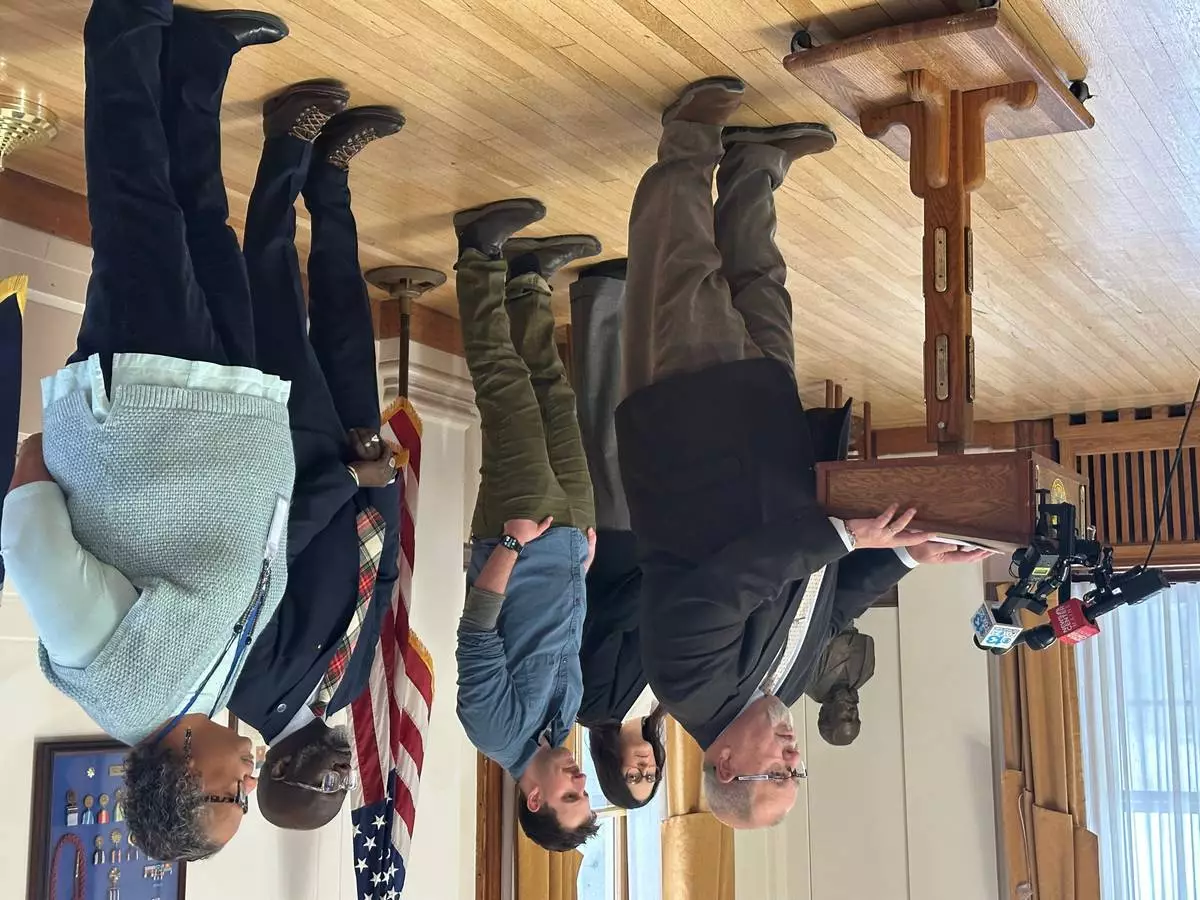
Mayor Mark Dion speaks at a news conference about ICE activity Wednesday, Jan. 21, 2026, in Portland, Maine. (AP Photo/Patrick Whittle)
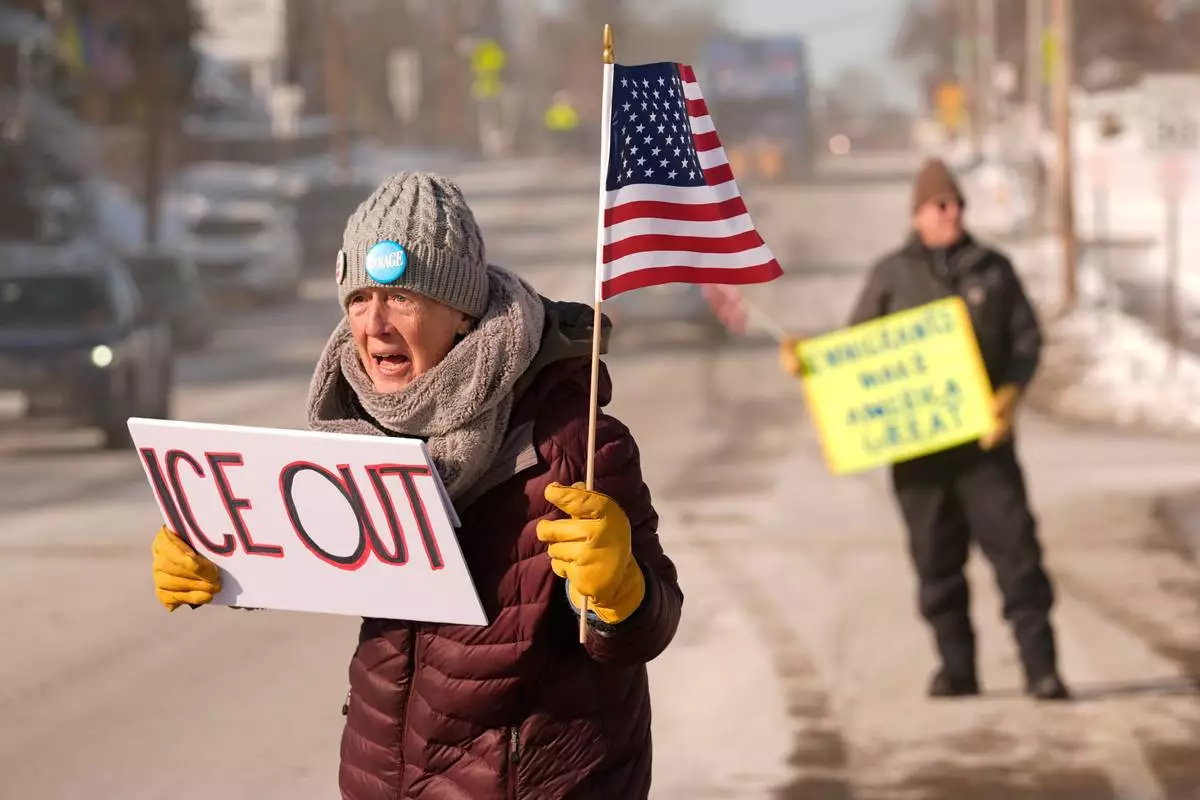
Rosie Grutze protests the presence of the U.S. Immigration and Customs Enforcement, Wednesday, Jan. 21, 2026, in Portland, Maine. (AP Photo/Robert F. Bukaty)
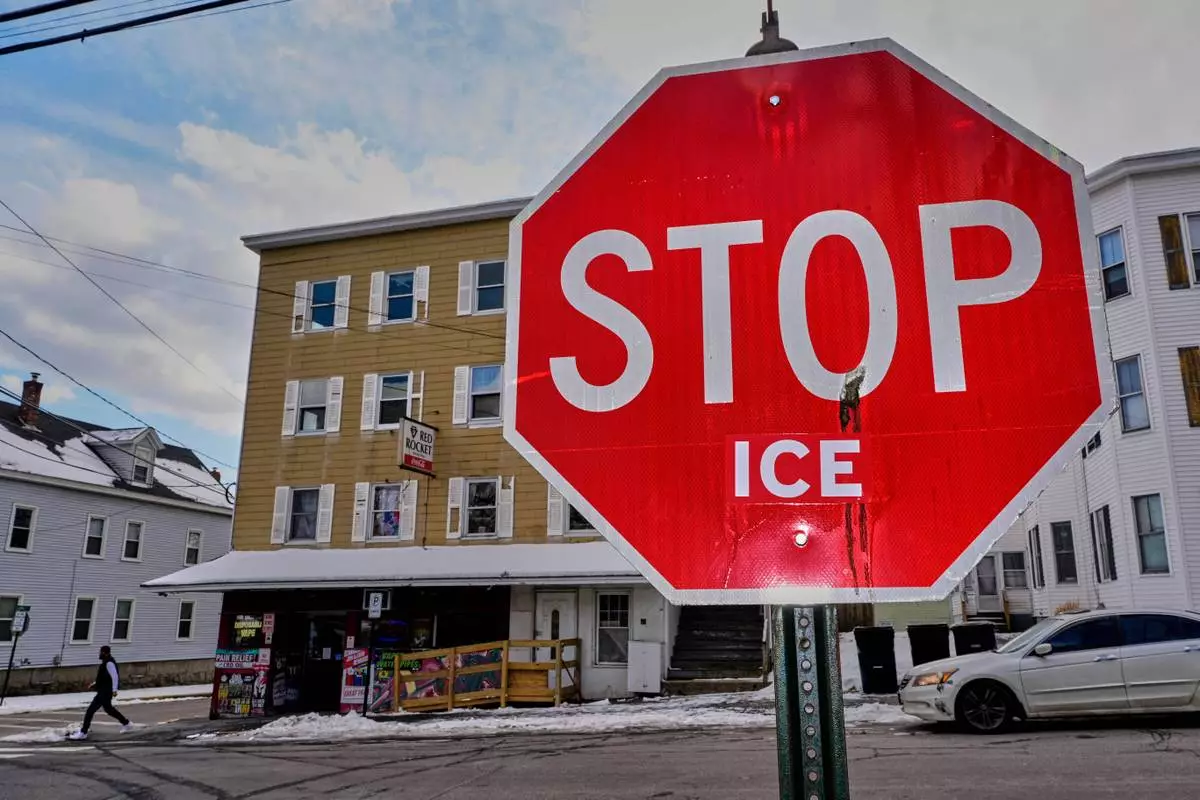
Anti-ICE sentiment is expressed on a traffic sign, Friday, Jan. 23, 2026, in Biddeford, Maine.(AP Photo/Robert F. Bukaty)
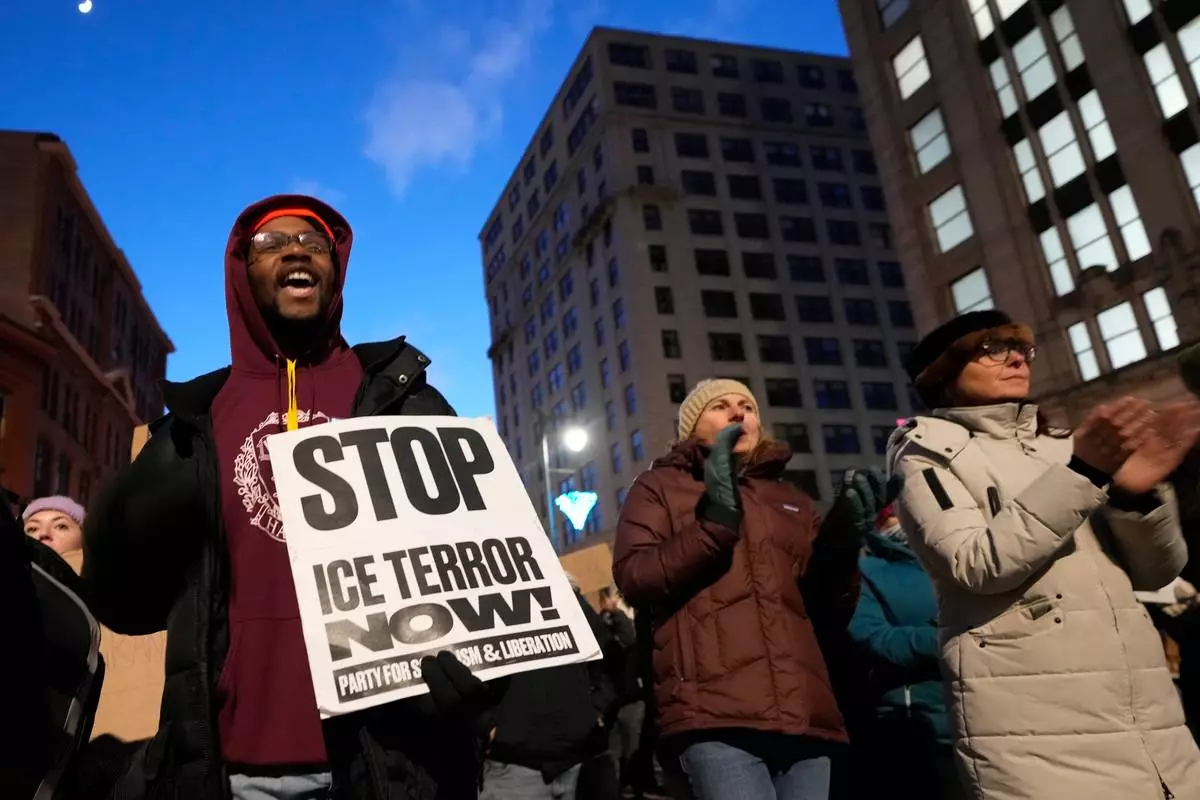
Protesters rally against the presence of U.S. Immigration Customs Enforcement in Maine, Friday, Jan. 23, 2026, in Portland, Maine. (AP Photo/Robert F. Bukaty)
LOS ANGELES (AP) — Until quite recently, the prevailing image to outsiders of The Church of Jesus Christ of Latter-day Saints has been male missionaries wearing white shirts and name tags, evoked by the hit Broadway show “The Book of Mormon.”
But another unofficial face of the male-led church has emerged in American pop culture: digitally savvy, female influencers, often seen sporting athleisure, a giant soda in hand — and varying degrees of adherence to church teachings.
These influencers have found an enthusiastic audience across the country, curious about their faith and families. Some explain the tenets of what's widely known as the Mormon church, but others bring attention to the rules they often break — drinking alcohol, having premarital sex and in one high-profile instance, a “soft-swinging” scandal that birthed the hugely popular Hulu reality series, “The Secret Lives of Mormon Wives.”
ABC sought to capitalize on that interest by casting “Mormon Wives” star Taylor Frankie Paul in “The Bachelorette,” but recently had to scuttle the already filmed season after a video of a domestic violence incident surfaced.
These viral moments and “Mormon Wives” project a version of the faith that appears more progressive and lenient than church leadership and other Latter-day Saint influencers might like. “The internet really challenged the church’s ability to maintain its own narratives about itself,” said Nancy Ross, an associate professor at Utah Tech University who studies Mormon feminism.
The church has worked to distance itself from “Mormon Wives,” issuing a statement ahead of the first season’s premiere in 2024 without naming the show specifically. It said that some media portrayals of Latter-day Saint women resort to “stereotypes or gross misrepresentations that are in poor taste and have real-life consequences for people of faith.”
Camille N. Johnson, the president of the church’s Relief Society organization for women, said in an emailed statement that it’s important to seek out trusted sources of information about the church and its members in light of recent media attention.
“Millions of Latter-day Saint women around the world strive to live faith-filled lives grounded in a love for God and all of His children,” she said.
It would be impossible for the “Mormon Wives” cast to fully represent millions of women in the church. But they are not the only Latter-day Saint influencers online — nor are they the only ones with large followings.
Many are women in their early twenties who are married with young children. They post about young motherhood and experiences like buying a house before they turn 25. Lauren Yarro, a Latter-day Saint content creator and podcast host, said she can see this being a foreign image to some.
“Our culture is fascinating to an outsider, and I can understand why it would pull people in,” she said. “That Mormon timeline is intriguing to the rest of the world. I think most people innately have a desire for a happy marriage and a happy family life and we tend to create those in The Church of Jesus Christ of Latter-day Saints.”
The beliefs and practices of church members have often been the subject of intense interest and scrutiny because of how they differ from other religions. Some of these include the belief that church leadership can receive revelations from God, or the practice of wearing garments under clothing that have deep religious significance.
Latter-day Saint influencers are not a new phenomenon, but they have found staying power by driving pop culture discourse and documenting their lifestyles. Many of them use content creation as a way to be stay-at-home parents while also generating income for their families. Several prominent creators live in Utah, the home of the church’s administrative and cultural hub, but there is a broad spectrum in terms of how much they bring their faith into their content.
While “Mormon Wives” and its controversial star, Paul, have been the recent high-profile drivers of public interest, the cast talks about the church only sparingly. Rosemary Avance, an assistant professor at Oklahoma State University whose research includes religious identity and digital media, said “there’s so little reference” to the cast's faith once people are hooked on the show from its title. Many cast members have left the church or are no longer active in it.
“It was clearly a marketing strategy on behalf of the people putting these shows together. They think that’ll draw people in, and it does,” she said. “It’s not like you have these women sitting down talking about their secret temple practices that they’re not supposed to speak about, or challenging the authority of the church in some way. They’re just not talking about it.”
Avance sees parallels between now and about 15 years ago, when Republican Mitt Romney was running for president and “The Book of Mormon” debuted on Broadway. At the time, people wanted to know “what’s going on behind the scenes in Mormonism,” she said.
“People think they know a lot about it (Mormonism), and they’ve heard a lot about it because there’s prominent stories and prominent people who are well-known and those narratives are circulated, but it’s almost always second-, third-hand,” she said. “A lot of people don’t know any Mormons and may never meet a Mormon, or if they have, they don’t know it, and so it’s what you’ve heard and the preconceptions you think you have about Mormonism.”
Creators like Yarro, who speak about their faith openly online and closely follow the church's teachings, said “Mormon Wives” does not feel representative of their experiences in the church or their lives in Utah. The Latter-day Saint content creators who spoke with The Associated Press emphasized they don't place fault on the individual cast members, but rather the production of the show and the way it Hollywoodizes their faith. Representatives for Hulu did not respond to a request for comment.
“The only thing I don’t like about what they do is sometimes they will play on things, twist things, use what is sacred to us as members of the church, and they’ll put it out and it feels like mockery to us,” said Shayla Egan, another Latter-day Saint content creator.
Some of the more devout members use their online platforms to respond to and course-correct more salacious social media content or “Mormon Wives” storylines they believe don't align with their understanding of church teachings or experiences.
Mimi Bascom, a Latter-day Saint content creator who says the mission behind her social media presence is to “show that members of the church are real people,” often makes videos responding to “Mormon Wives” clips. She finds the show to be a “net positive for our church” since it gives everyday members the opportunity to “share what we actually believe and get that more out there into the world,” she said.
Bascom, for one, had always prepared to serve on a mission but no longer could after getting married. Making content about the church has felt like a way she's “able to still live that out,” she said.
“We want to be missionaries and spread the good word of the Gospel,” she continued, “and so this is just another way we can do it.”
Associated Press religion coverage receives support through the AP’s collaboration with The Conversation US, with funding from Lilly Endowment Inc. The AP is solely responsible for this content.
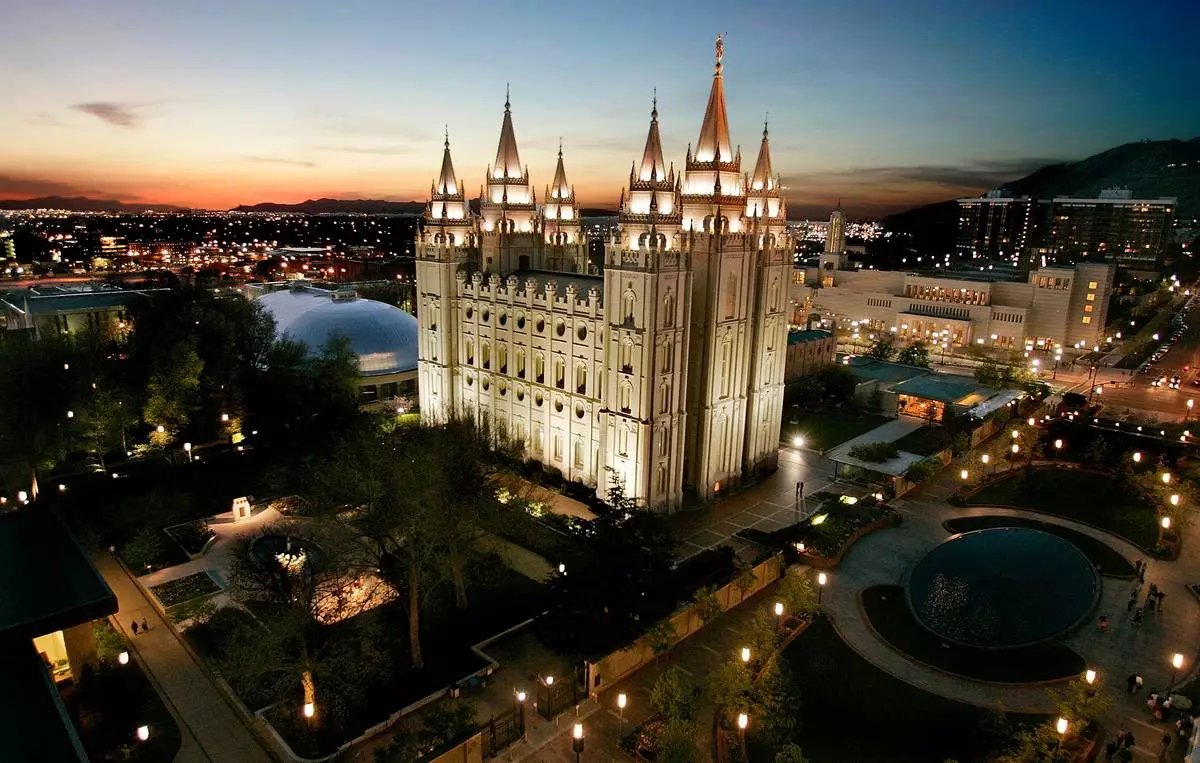
FILE - The sun sets behind the Mormon Temple, the centerpiece of Temple Square, in Salt Lake City, April 27, 2006. (AP Photo/Douglas C. Pizac, File)

FILE - Jen Affleck, from left, Layla Taylor, Miranda McWhorter, and Jessi Draper Ngatikaura participate in Hulu's "The Secret Lives of Mormon Wives" photo call at The Rink at Rockefeller Plaza, Tuesday, Nov. 11, 2025, in New York. (Photo by CJ Rivera/Invision/AP, File)