Skip to Content Facebook Feature Image

Scale of Iran's nationwide protests and bloody crackdown come into focus even as internet is out

News

Scale of Iran's nationwide protests and bloody crackdown come into focus even as internet is out
News

News

Scale of Iran's nationwide protests and bloody crackdown come into focus even as internet is out

2026-01-24 15:09 Last Updated At:01-25 13:07

DUBAI, United Arab Emirates (AP) — The bloodiest crackdown on dissent since Iran's 1979 Islamic Revolution is slowly coming into focus, despite authorities cutting off the Islamic Republic from the internet and much of the wider world.

Cities and towns smell of smoke as fire-damaged mosques and government offices line streets. Banks have been torched, their ATMs smashed. Officials estimate the damage to be at least $125 million, according to an Associated Press tally of reports by the state-run IRNA news agency from over 20 cities.

More Images
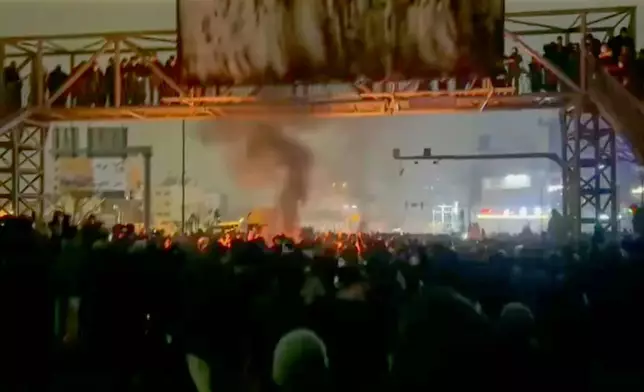
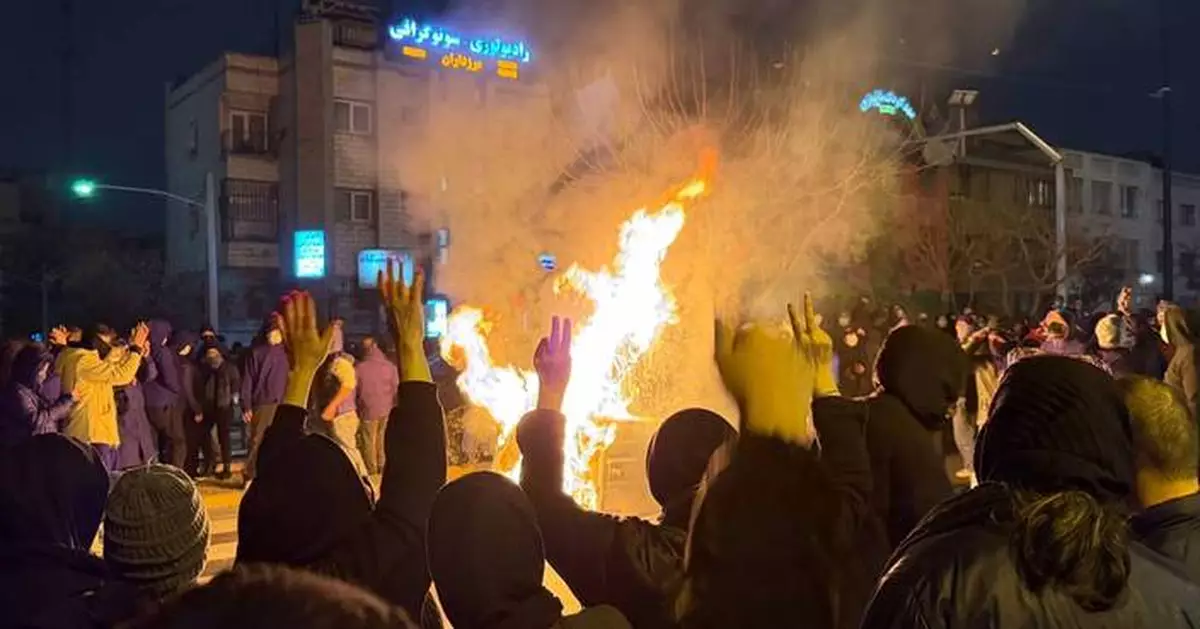
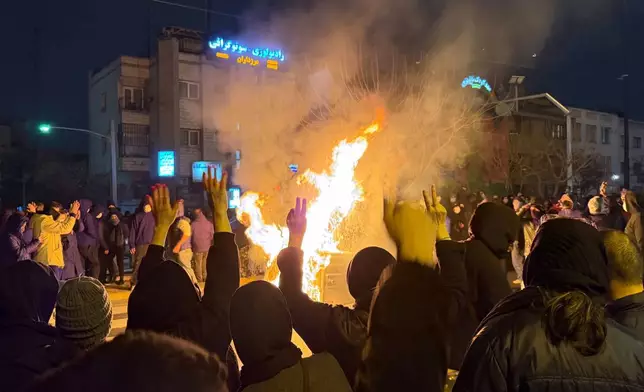
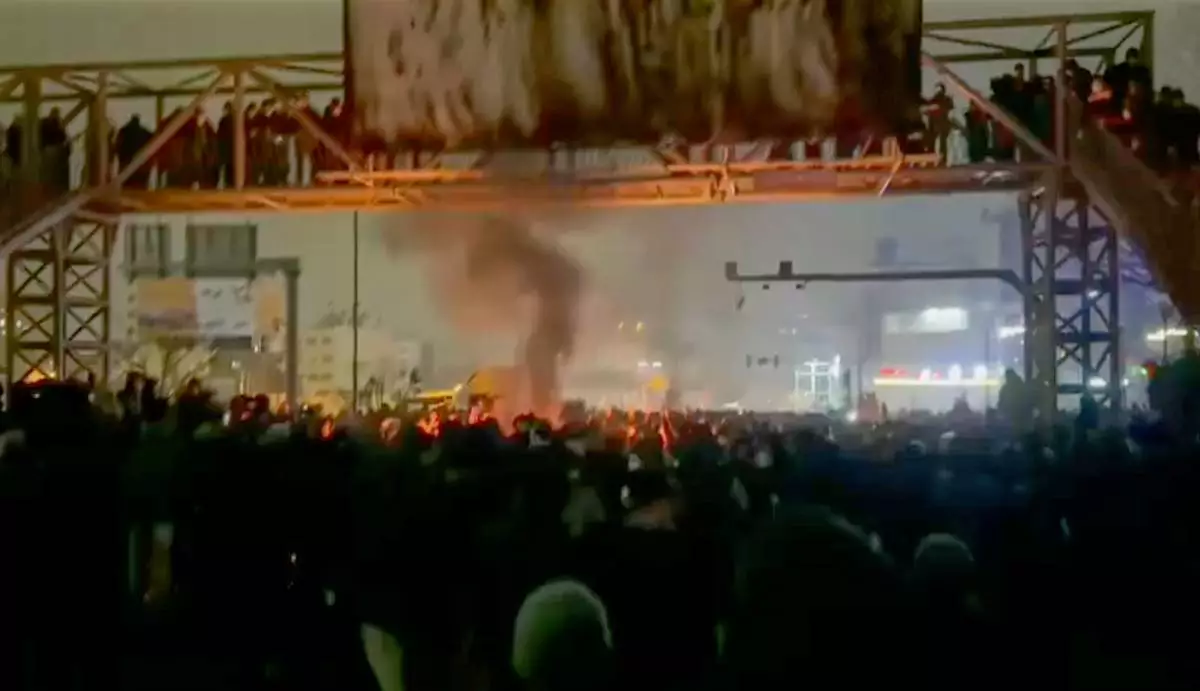
In this frame grab from footage circulating on social media from Iran shows protesters taking to the streets despite an intensifying crackdown as the Islamic Republic remains cut off from the rest of the world in Tehran, Iran, Friday, Jan. 9, 2026.(UGC via AP)
In this frame grab from footage circulating on social media from Iran shows protesters taking to the streets despite an intensifying crackdown as the Islamic Republic remains cut off from the rest of the world in Tehran, Iran, Friday, Jan. 9, 2026.(UGC via AP)

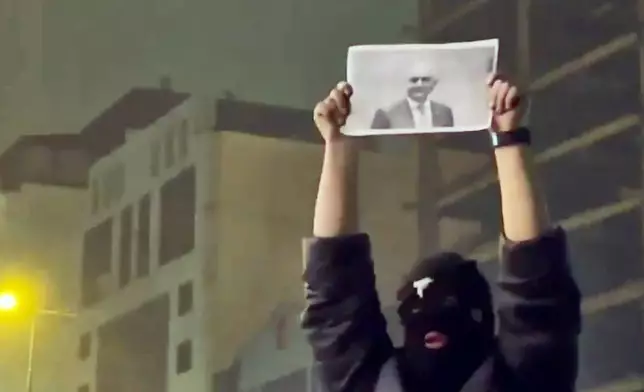
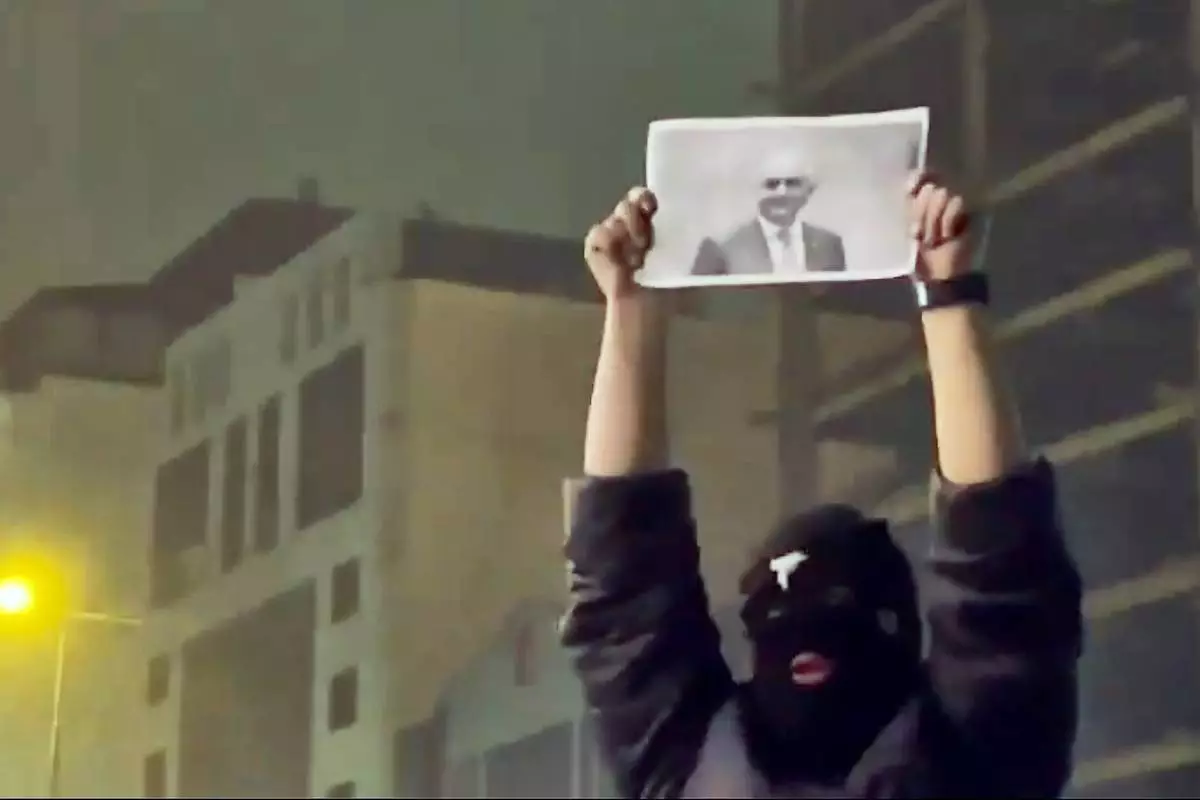
In this frame grab from video obtained by the AP outside Iran, a masked demonstrator holds a picture of Iran's Crown Prince Reza Pahlavi during a protest in Tehran, Iran, Friday, January. 9, 2026. (UGC via AP)
In this frame grab from video obtained by the AP outside Iran, a masked demonstrator holds a picture of Iran's Crown Prince Reza Pahlavi during a protest in Tehran, Iran, Friday, January. 9, 2026. (UGC via AP)

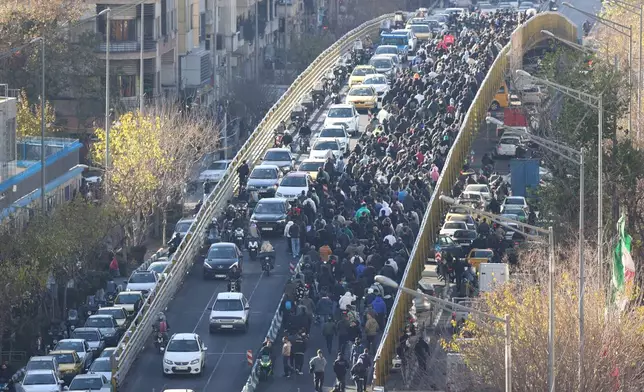
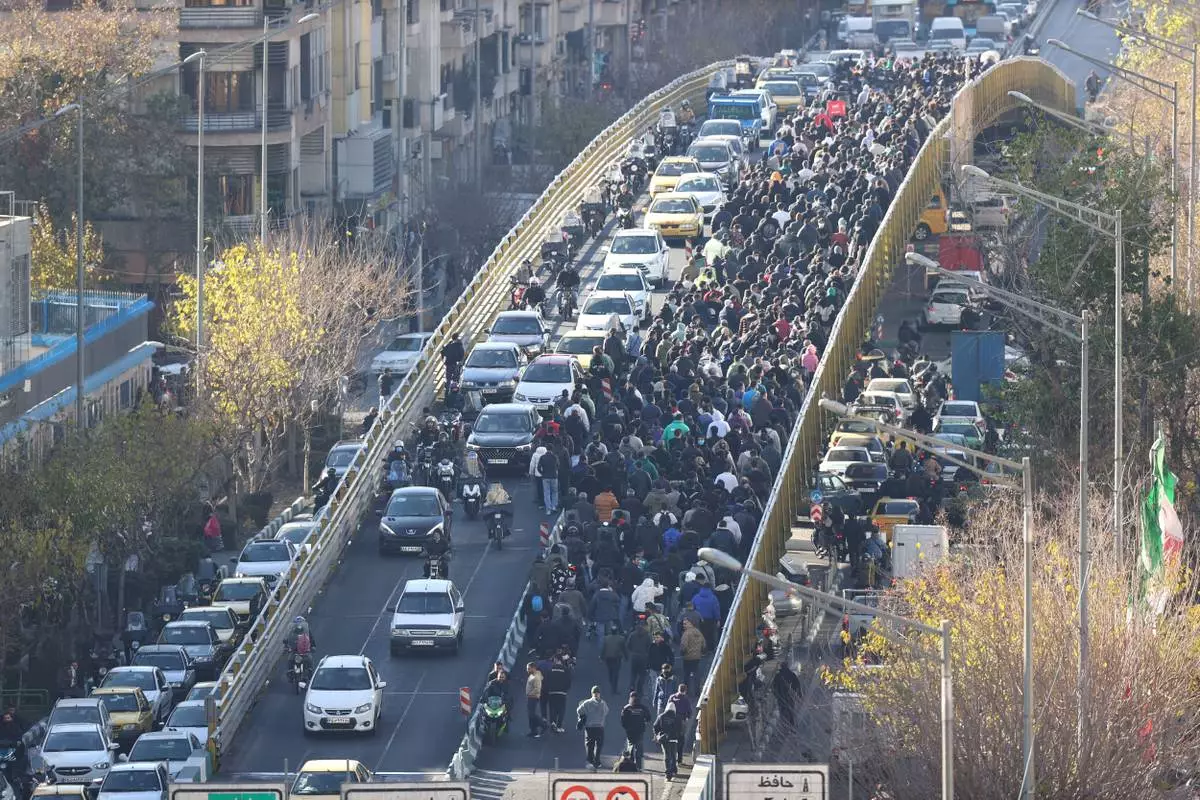
FILE - Protesters march on a bridge in Tehran, Iran, on Dec. 29, 2025. (Fars News Agency via AP, File)
FILE - Protesters march on a bridge in Tehran, Iran, on Dec. 29, 2025. (Fars News Agency via AP, File)

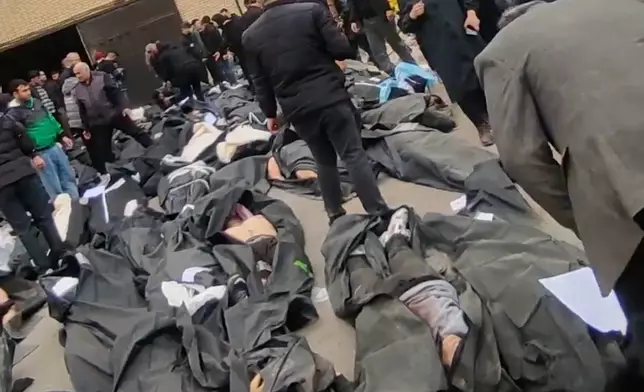
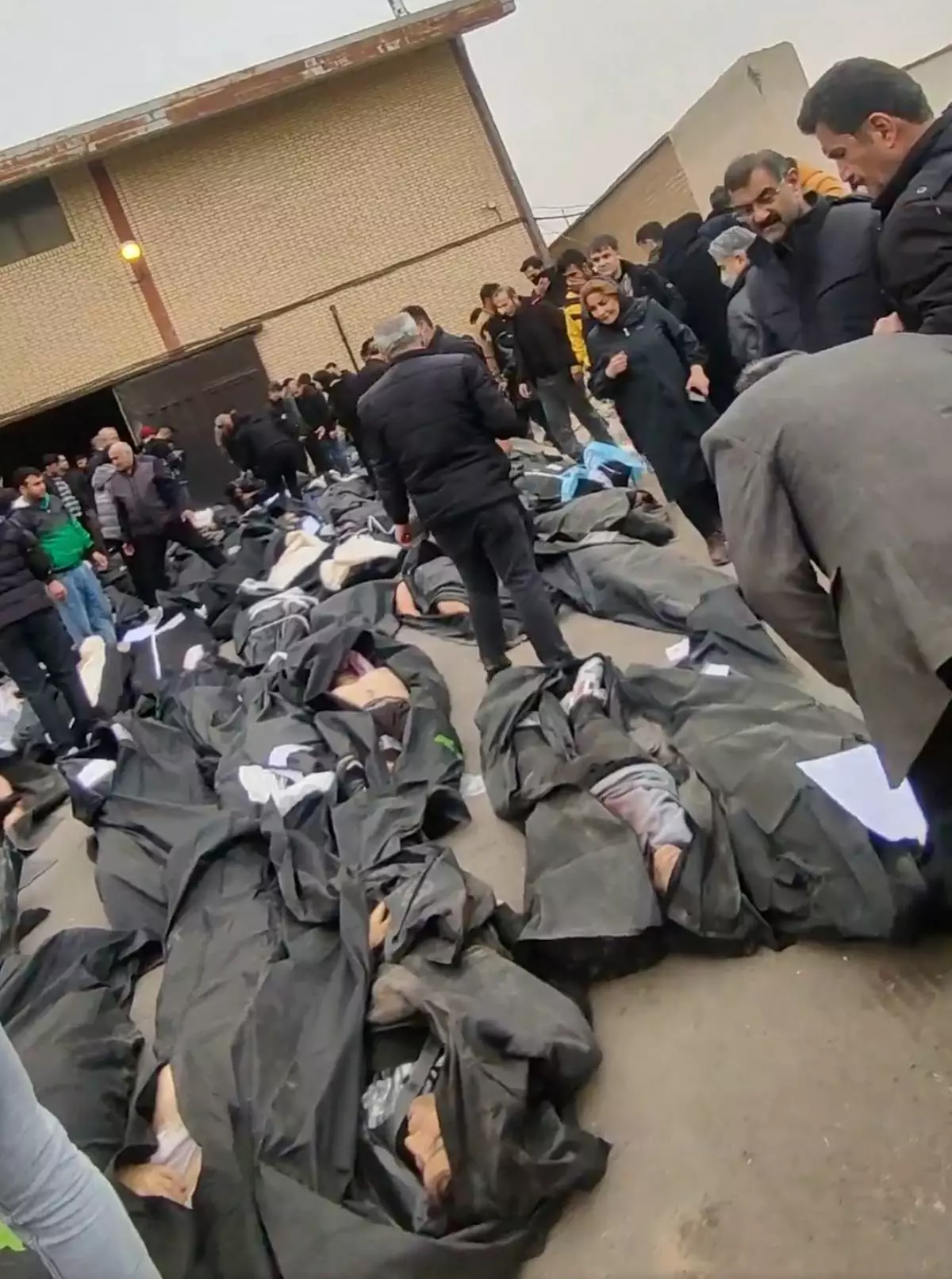
This frame grab from videos taken between Jan. 9 and Jan. 11, 2026, and circulating on social media purportedly shows images from a morgue with dozens of bodies and mourners after crackdown on the outskirts of Iran's capital, in Kahrizak, Tehran Province. (UGC via AP)
This frame grab from videos taken between Jan. 9 and Jan. 11, 2026, and circulating on social media purportedly shows images from a morgue with dozens of bodies and mourners after crackdown on the outskirts of Iran's capital, in Kahrizak, Tehran Province. (UGC via AP)

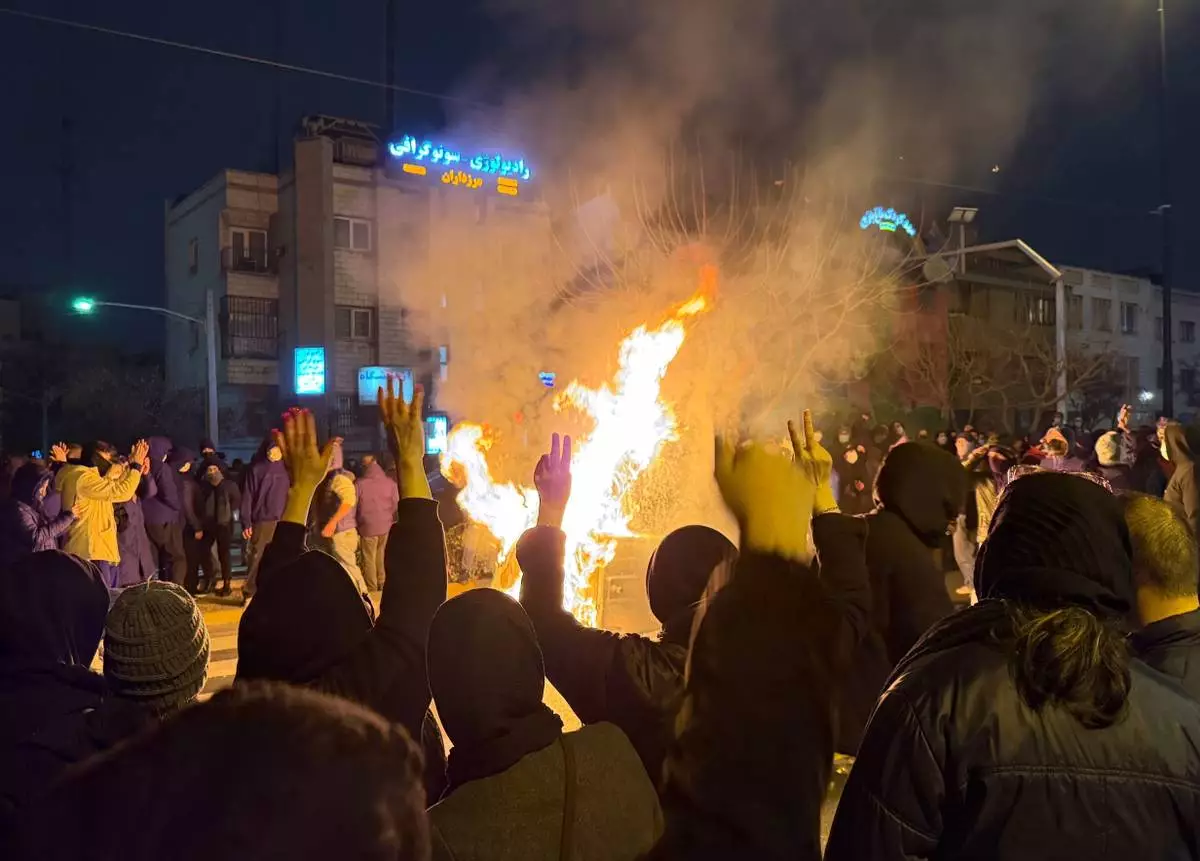
FILE - In this photo obtained by The Associated Press, Iranians attend an anti-government protest in Tehran, Iran, Jan. 9, 2026. (UGC via AP, File)

FILE - In this photo obtained by The Associated Press, Iranians attend an anti-government protest in Tehran, Iran, Jan. 9, 2026. (UGC via AP, File)

The number of dead demonstrators reported by activists continues to swell. Activists warn it shows Iran engaging in the same tactics it has used for decades, but at an unprecedented scale — firing from rooftops on demonstrators, shooting birdshot into crowds and sending motorcycle-riding paramilitary Revolutionary Guard volunteers in to beat and detain those who can’t escape.

“The vast majority of protesters were peaceful. The video footage shows crowds of people — including children and families — chanting, dancing around bonfires, marching on their streets,” said Raha Bahreini, of Amnesty International. "The authorities have opened fire unlawfully.”

The killing of peaceful protesters — as well as the threat of mass executions — have been a red line for military action for U.S. President Donald Trump. An American aircraft carrier and warships are approaching the Mideast, possibly allowing Trump to launch another attack on Iran after bombing its nuclear enrichment sites last year. That risks igniting a new Mideast war.

Iran's mission to the United Nations did not respond to detailed questions from the AP regarding the suppression of the demonstrations.

The demonstrations began Dec. 28 at Tehran’s historic Grand Bazaar, initially over the collapse of Iran's currency, the rial, then spread across the country.

Tensions exploded on Jan. 8, with demonstrations called for by Iran's exiled crown prince, Reza Pahlavi. Witnesses in Tehran told the AP before authorities cut internet and phone communication that they saw tens of thousands of demonstrators on the streets.

As communications failed, gunfire echoed through Tehran.

“Many witnesses said they had never seen such a large number of protesters on the streets,” said Bahar Saba of Human Rights Watch. “Iranian authorities have repeatedly shown they have no answers other than bullets and brutal repression to people taking to the streets.”

Ali Akbar Pourjamshidian, a deputy interior minister speaking on state TV Wednesday, acknowledged the violence began in earnest on Jan. 8.

“More than 400 cities were involved," he said.

By Jan. 9, Revolutionary Guard Gen. Hossein Yekta, previously identified as leading plainclothes units of the force, went on Iranian state TV and warned “mothers and fathers” to keep their children home.

“Tonight you all must be vigilant. Tonight is the night for keeping mosques, all bases everywhere filled with ‘Hezbollahi,’” Yekta said, using a word for “followers of God” that carries the connotation of fervent supporters of Iran's theocracy.

Already weakened by the 12-day war Israel launched against Iran in June, the authorities decided to fully employ violence to end the demonstrations, experts said.

“I think the regime viewed it as this was a moment of existential threat and that they could either allow it to play out and allow the protests to build and allow foreign powers to increase their rhetoric and increase their demands on Iran,” said Afshon Ostovar, an expert on the Revolutionary Guard and professor at the Naval Postgraduate School in Monterrey, California.

"Or they could turn out the lights, kill as many people as necessary ... and hope they could get away with it. And I think that’s what they ultimately did.”

In Iran, one of the main ways its theocracy can squash demonstrations is through the Basij, the Guard's volunteer arm.

Mosques in Iran include facilities for the Basij. Guard Gen. Heydar Baba Ahmadi was quoted by the semiofficial Mehr news agency in 2024 as estimating “79% of Basij resistance bases are located in mosques and 5% in other holy places.”

Iranian state media repeatedly has aired images of mosques damaged in the protests without exploring their links to the Basij.

“Most neighborhood Basij bases are co-located with mosques and most neighborhood Basij leaders are associated with the mosque leadership," Ostovar said, adding that demonstrators “going after regime targets” associated with repression would have considered them “a legitimate part of it.”

Videos show Basij holding long guns, batons and pellet guns. Anti-riot police can be seen wearing helmets and body armor, carrying assault rifles and submachine guns.

The videos show police firing shotguns into crowds, something authorities deny despite corpses showing wounds consistent with metal birdshot. Scores have reportedly suffered blinding eye wounds from birdshot — something seen in the protests around the 2022 death of Mahsa Amini.

Iran's semiofficial ILNA news agency reported that Tehran's Farabi Eye Hospital, the premiere clinic for eye injuries, called in “all current and retired doctors” to help those injured.

We “received accounts that the security forces were just firing relentlessly at protesters,” said Bahreini of Amnesty International.

"They’re not just targeting one or two people to create a climate of terror for people to disperse ... but just relentlessly firing at thousands of protesters and chasing after them, even as they were fleeing so that more people were just collapsing to the ground with severe gunshot wounds.”

For two weeks, Iran offered no overall casualty figures. Then on Wednesday, the government said 3,117 people were killed, including 2,427 civilians and security forces. That left another 690 dead that Pourjamshidian identified as “terrorists.”

That conflicts with figures from the U.S.-based Human Rights Activists News Agency, which put the death toll on Saturday at 5,137, based on activists inside Iran verifying fatalities against public records and witness statements. It said 4,834 were demonstrators, 208 were government-affiliated personnel, 54 were children and 41 were civilians not participating in protests.

Death tolls in Iran have long been inflated or deflated for political reasons. But the fact that Iran's theocracy offered any death toll — and gave a number beyond any other political unrest to strike the country in the modern era — underlines the scale of what happened.

It also provides a justification for the ongoing mass arrest campaign and internet shutdown. State media report dozens to hundreds of people detained daily.

Pourjamshidian also gave an extensive list of vandalism from the protests and crackdown, including 750 banks, 414 government buildings, 600 ATMs and hundreds of vehicles that sustained damage.

Meanwhile, uncertainty looms for Iran's theocracy over what Trump may or may not do.

Traditionally, Iranians hold memorial services for their late loved ones 40 days after their deaths — meaning the country could see renewed demonstrations around Feb. 17. Online videos from Behesht-e Zahra, the massive cemetery on the outskirts of Tehran, show mourners chanting: “Death to Khamenei!”

Satellite photos from Planet Labs PBC analyzed by the AP show large numbers of cars daily at Behesht-e Zahra’s southern reaches, where those killed in the demonstrations are being buried.

Elaheh Mohammadi, a journalist at Tehran's pro-reform newspaper Ham Mihan, recently noted it had been shut by authorities. She said journalists were working on stories about Behesht-e Zahra they weren't able to publish.

“We send out a message to let people know we’re still alive,” Mohammadi wrote online. “The city smells of death.”

“Hard days have passed and everyone is stunned; a whole country is in mourning, a whole country is holding back tears, a whole country has a lump in its throat."
In this frame grab from footage circulating on social media from Iran shows protesters taking to the streets despite an intensifying crackdown as the Islamic Republic remains cut off from the rest of the world in Tehran, Iran, Friday, Jan. 9, 2026.(UGC via AP)
In this frame grab from footage circulating on social media from Iran shows protesters taking to the streets despite an intensifying crackdown as the Islamic Republic remains cut off from the rest of the world in Tehran, Iran, Friday, Jan. 9, 2026.(UGC via AP)

In this frame grab from video obtained by the AP outside Iran, a masked demonstrator holds a picture of Iran's Crown Prince Reza Pahlavi during a protest in Tehran, Iran, Friday, January. 9, 2026. (UGC via AP)
In this frame grab from video obtained by the AP outside Iran, a masked demonstrator holds a picture of Iran's Crown Prince Reza Pahlavi during a protest in Tehran, Iran, Friday, January. 9, 2026. (UGC via AP)

FILE - Protesters march on a bridge in Tehran, Iran, on Dec. 29, 2025. (Fars News Agency via AP, File)
FILE - Protesters march on a bridge in Tehran, Iran, on Dec. 29, 2025. (Fars News Agency via AP, File)

This frame grab from videos taken between Jan. 9 and Jan. 11, 2026, and circulating on social media purportedly shows images from a morgue with dozens of bodies and mourners after crackdown on the outskirts of Iran's capital, in Kahrizak, Tehran Province. (UGC via AP)
This frame grab from videos taken between Jan. 9 and Jan. 11, 2026, and circulating on social media purportedly shows images from a morgue with dozens of bodies and mourners after crackdown on the outskirts of Iran's capital, in Kahrizak, Tehran Province. (UGC via AP)

FILE - In this photo obtained by The Associated Press, Iranians attend an anti-government protest in Tehran, Iran, Jan. 9, 2026. (UGC via AP, File)
FILE - In this photo obtained by The Associated Press, Iranians attend an anti-government protest in Tehran, Iran, Jan. 9, 2026. (UGC via AP, File)
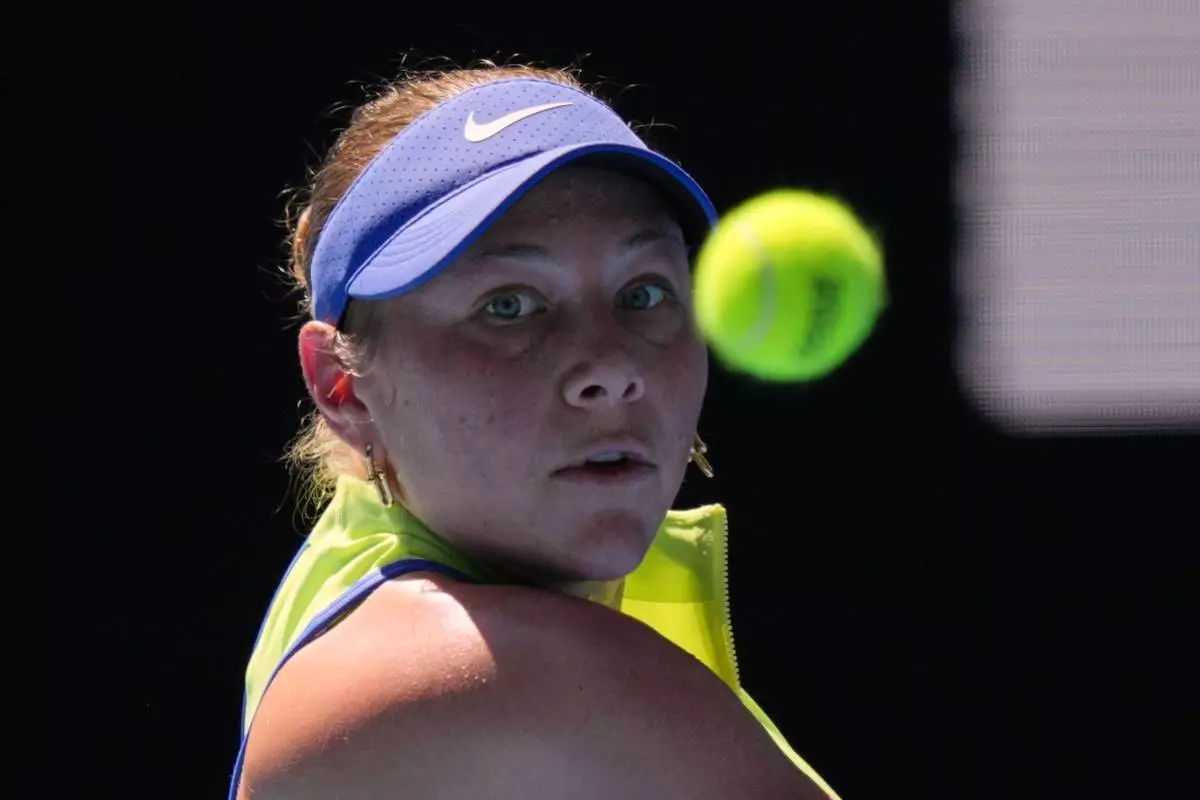
MELBOURNE, Australia (AP) — Jessica Pegula knocked podcast pal and defending champion Madison Keys out of the Australian Open on Monday and moved into a quarterfinal against Amanda Anisimova, another all-American match.

Their fourth-round wins on Day 9 meant four Americans reached the women's singles quarterfinals in Australia for the first time since 2001, when Serena and Venus Williams, Jennifer Capriati, Monica Seles and Lindsay Davenport made it to the last 8.

“Sucks that one American has to go out in the quarterfinals,” Anisimova said.

Pegula had a slightly different view: “At least one of us will get through, and I think that’s great for American tennis.” “Yeah, it’s been pretty crazy how well the women have been doing and how many top-ranked girls there are," she added. "I’m just happy to be a part of that conversation.”

Pegula and Anisimova advanced a day after No. 3 Coco Gauff and 18-year-old Iva Jovic earned their places on the other side of the draw.

Pegula's 6-3, 6-4 win at Rod Laver Arena ended Keys' first Grand Slam title defense in a tough section of the draw.

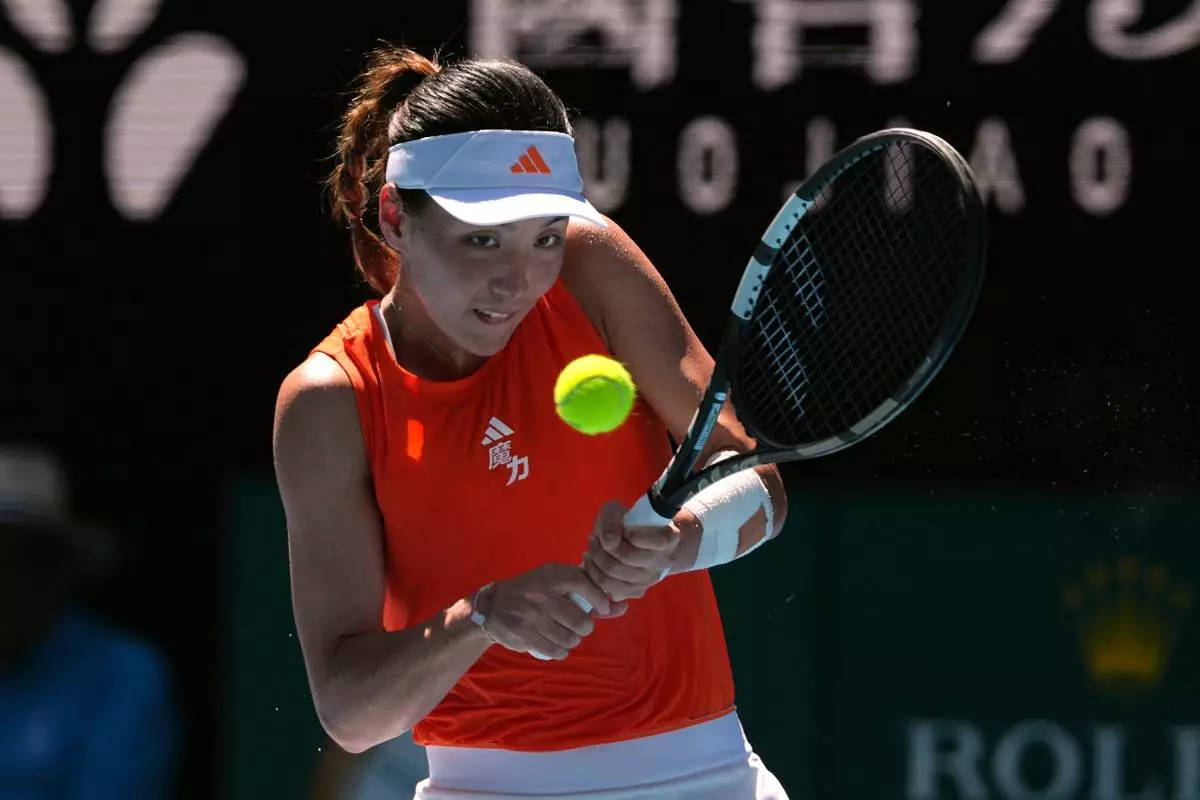
Anisimova, runner-up at the last two majors in Wimbledon and the U.S. Open, advanced 7-6 (4), 6-4 over Wang Xinyu as the temperature started rising at Melbourne Park, and organizers triggered the heat stress policy which allowed for extra cooling breaks.

Pegula is into the quarterfinals for the fourth time in Australia but has never previously gone beyond that round at the season-opening major.

“I have been seeing, hitting, moving, I feel like very well this whole tournament, and to be able to keep that up against such a great player as Maddie and defending champion was going to be a lot tougher of a task today,” Pegula said, “I was still able to do that really well.”

Pegula and Keys had played three times previously, and Keys had won the last two. But on Monday it was Pegula who dominated, racing to 4-1 leads in both sets.

“I felt like if I didn’t hit a really good ball immediately, she was in charge of the points," Keys said. “I was kind of struggling to kind of get that dominance back.”

Pegula's best performance in a major was making the U.S. Open final in 2024, where she lost to Aryna Sabalenka. The top-ranked Sabalenka is aiming for a third title in four years.

No. 5 Elena Rybakina, the runner-up to Sabalenka here in 2023, advanced over Elise Mertens 6-1, 6-3.

Anisimova was getting frustrated toward the end of the second set, hitting herself with her racket when she missed a service return. She also damaged a shoe.

Just as the No. 4 seed was about to serve for the match, the tournament's heat stress index scale hit 4, which means extra cooling breaks are allowed after the second set in women's singles and third set in men's singles matches.

It didn't become a factor, with Anisimova closing with an ace to reach the Australian Open quarterfinals for the first time.

“What a battle out there. Tough conditions against a really good opponent,” she said. “There were a lot of fans from China today but, honestly, it made the atmosphere great.”

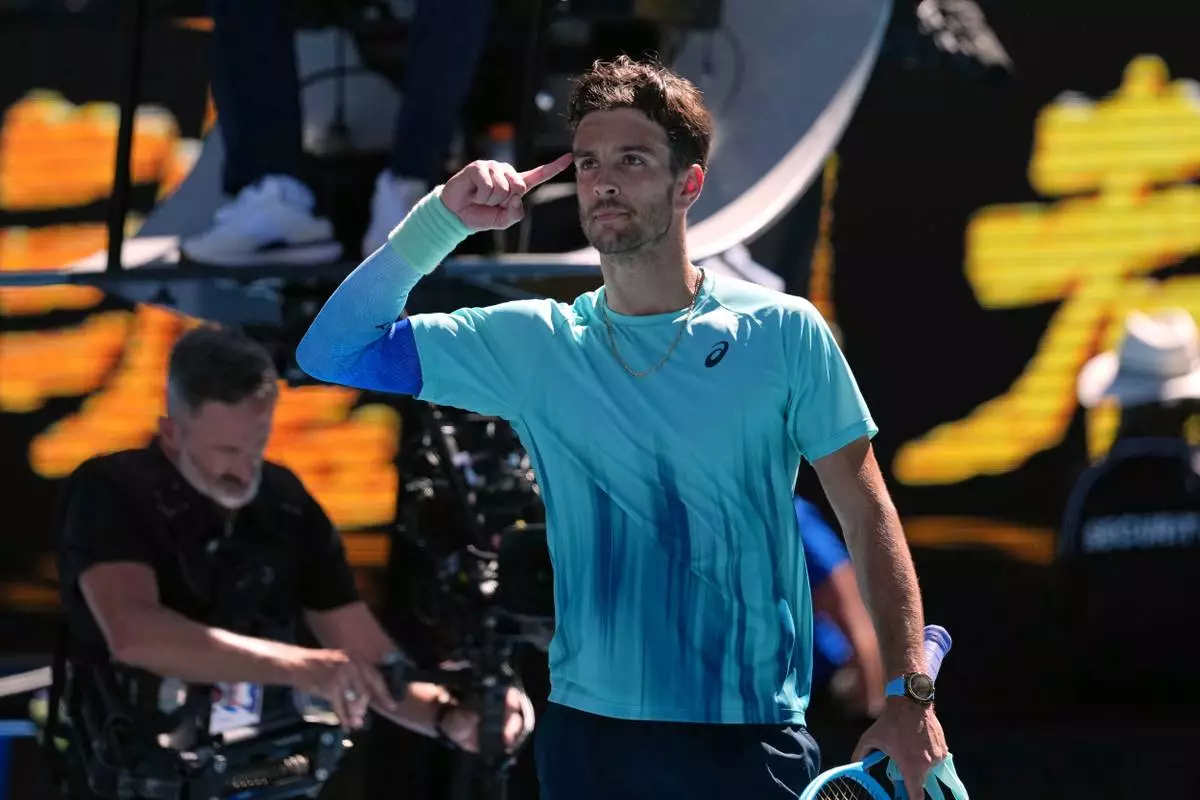
Lorenzo Musetti reached the quarterfinals for the first time in Australia with a 6-2, 7-5, 6-4 win over an ailing Taylor Fritz.

It completed a Grand Slam set of quarterfinals for the 23-year-old Italian.

The fifth-seeded Musetti has had a disrupted run, with members of his support team having to return home for personal reasons. He also had to leave his family behind after the birth in November of his second son.

“I feel more mature on the court. I’m playing better for that, and for them,” he said.

His next mission is against a rested Novak Djokovic. The 24-time major winner had been scheduled to be the feature night match at Rod Laver Arena on Monday but had a walkover into the quarterfinals after his opponent Jakub Mensik withdrew from their scheduled fourth-round match with an abdominal injury.

In night matches, second-ranked Iga Świątek was up against Australian Maddison Inglis, and the eighth-seeded man Ben Shelton faced Casper Ruud.

Lorenzo Musetti of Italy celebrates after defeating Taylor Fritz of the U.S. in their fourth round match at the Australian Open tennis championship in Melbourne, Australia, Monday, Jan. 26, 2026. (AP Photo/Asanka Brendon Ratnayake)

Lorenzo Musetti of Italy celebrates after defeating Taylor Fritz of the U.S. in their fourth round match at the Australian Open tennis championship in Melbourne, Australia, Monday, Jan. 26, 2026. (AP Photo/Asanka Brendon Ratnayake)

Wang Xinyu of China plays a backhand return to Amanda Anisimova of the U.S. during their fourth round match at the Australian Open tennis championship in Melbourne, Australia, Monday, Jan. 26, 2026. (AP Photo/Dar Yasin)

Wang Xinyu of China plays a backhand return to Amanda Anisimova of the U.S. during their fourth round match at the Australian Open tennis championship in Melbourne, Australia, Monday, Jan. 26, 2026. (AP Photo/Dar Yasin)

Amanda Anisimova of the U.S. plays a backhand return to Wang Xinyu of China during their fourth round match at the Australian Open tennis championship in Melbourne, Australia, Monday, Jan. 26, 2026. (AP Photo/Aaron Favila)

Amanda Anisimova of the U.S. plays a backhand return to Wang Xinyu of China during their fourth round match at the Australian Open tennis championship in Melbourne, Australia, Monday, Jan. 26, 2026. (AP Photo/Aaron Favila)

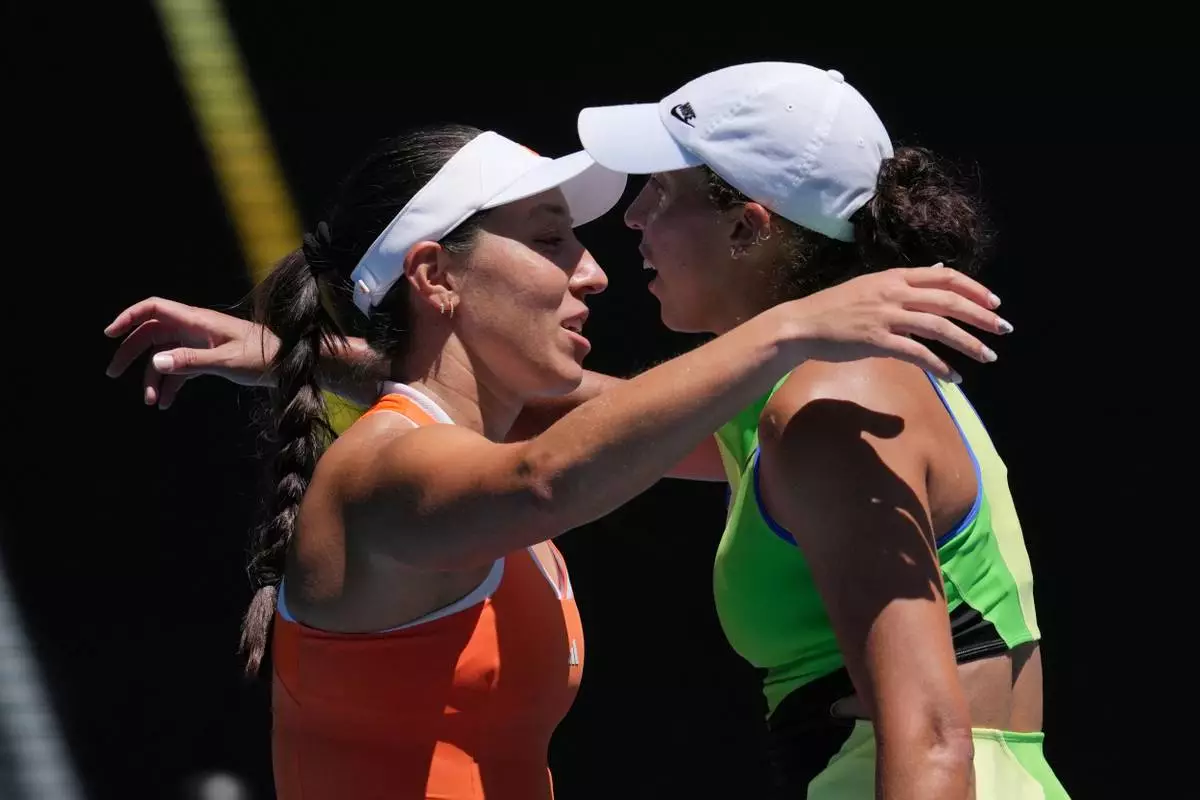
Jessica Pegula, left, of the U.S., is congratulated by her compatriot Madison Keys after winning their fourth round match at the Australian Open tennis championship in Melbourne, Australia, Monday, Jan. 26, 2026. (AP Photo/Mark Baker)

Jessica Pegula, left, of the U.S., is congratulated by her compatriot Madison Keys after winning their fourth round match at the Australian Open tennis championship in Melbourne, Australia, Monday, Jan. 26, 2026. (AP Photo/Mark Baker)

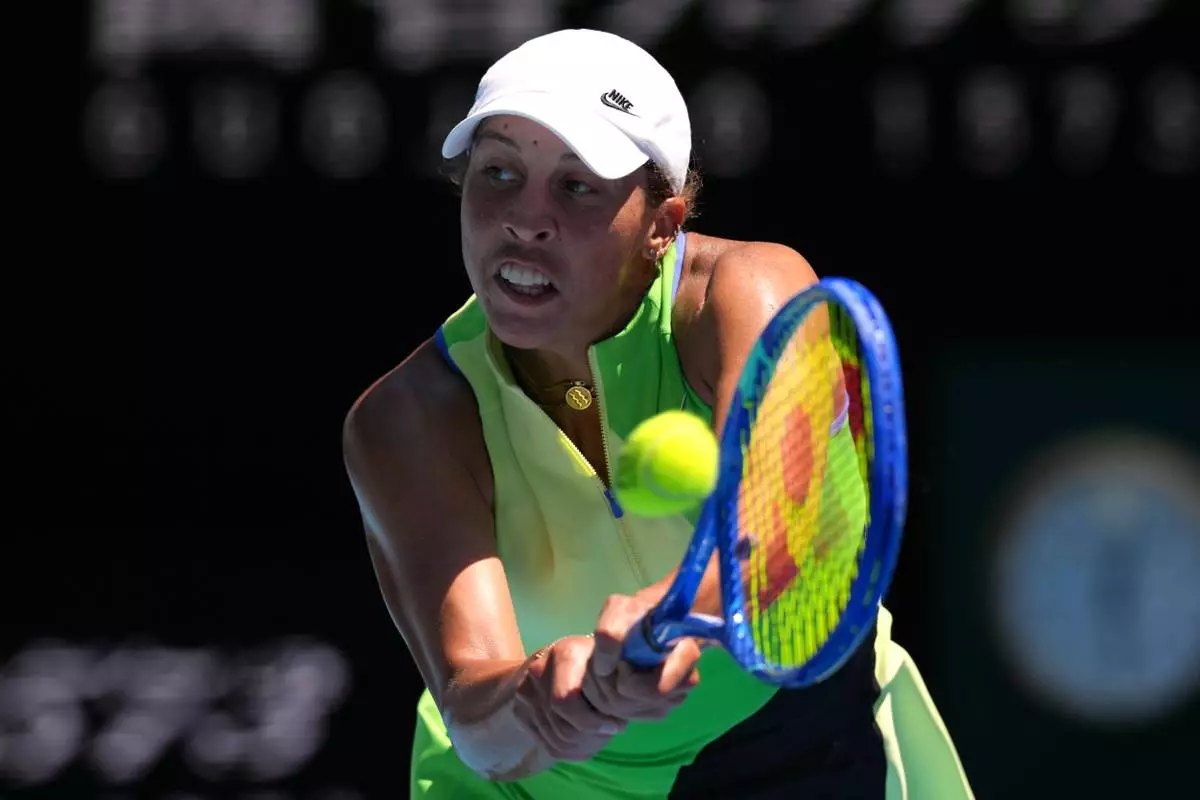
Madison Keys of the U.S. plays a backhand return to her compatriot Jessica Pegula during their fourth round match at the Australian Open tennis championship in Melbourne, Australia, Monday, Jan. 26, 2026. (AP Photo/Mark Baker)

Madison Keys of the U.S. plays a backhand return to her compatriot Jessica Pegula during their fourth round match at the Australian Open tennis championship in Melbourne, Australia, Monday, Jan. 26, 2026. (AP Photo/Mark Baker)

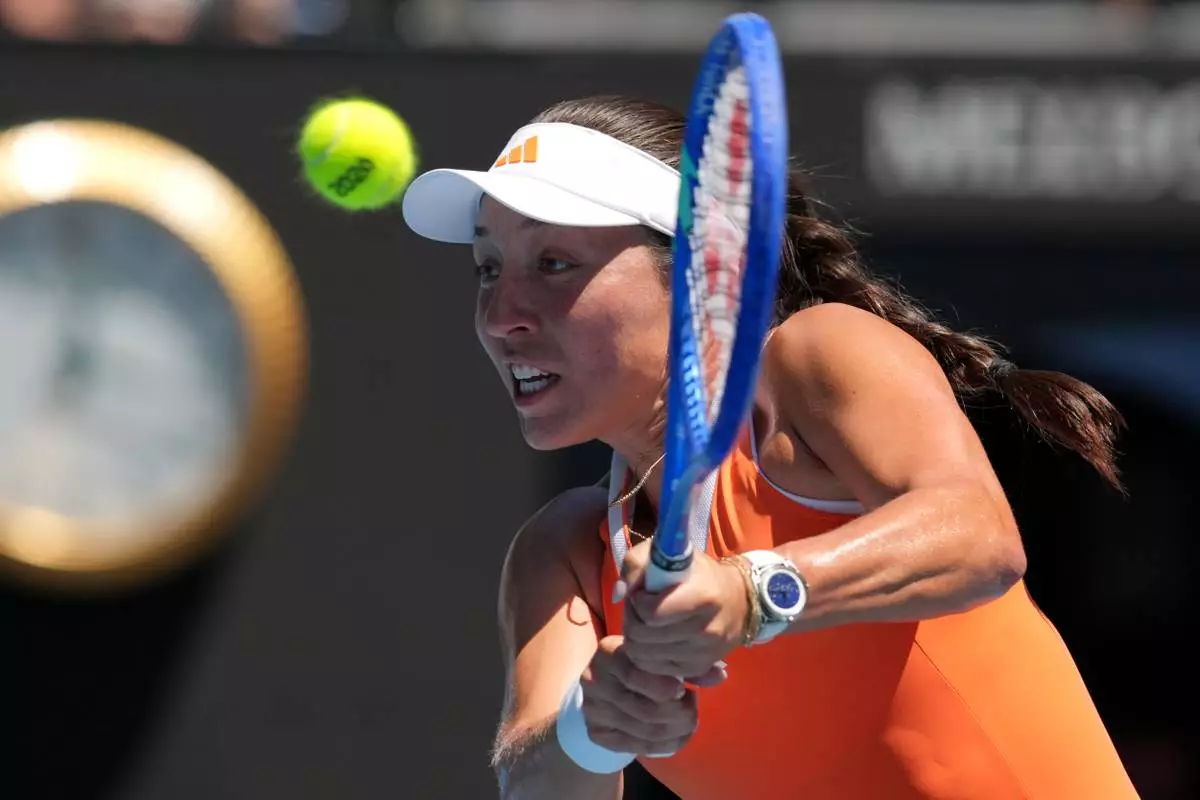
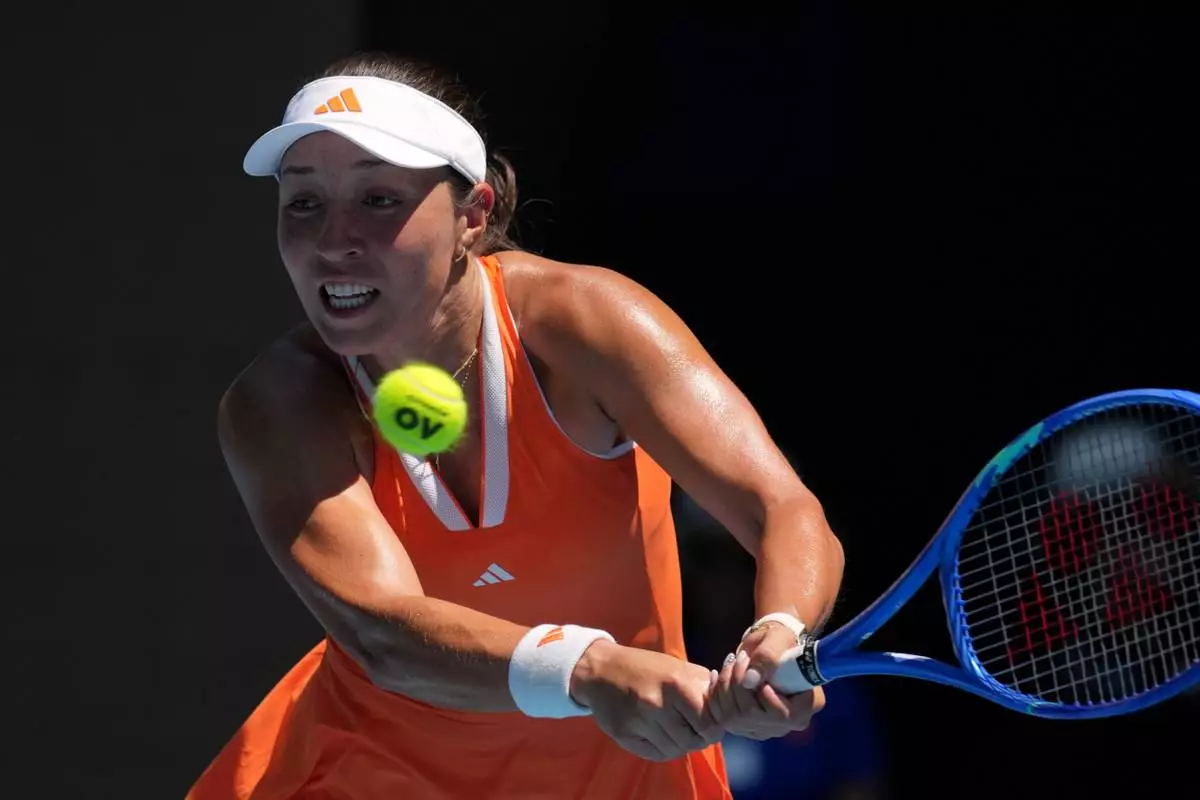
Jessica Pegula of the U.S. plays a backhand return to her compatriot Madison Keys during their fourth round match at the Australian Open tennis championship in Melbourne, Australia, Monday, Jan. 26, 2026. (AP Photo/Mark Baker)

Jessica Pegula of the U.S. plays a backhand return to her compatriot Madison Keys during their fourth round match at the Australian Open tennis championship in Melbourne, Australia, Monday, Jan. 26, 2026. (AP Photo/Mark Baker)

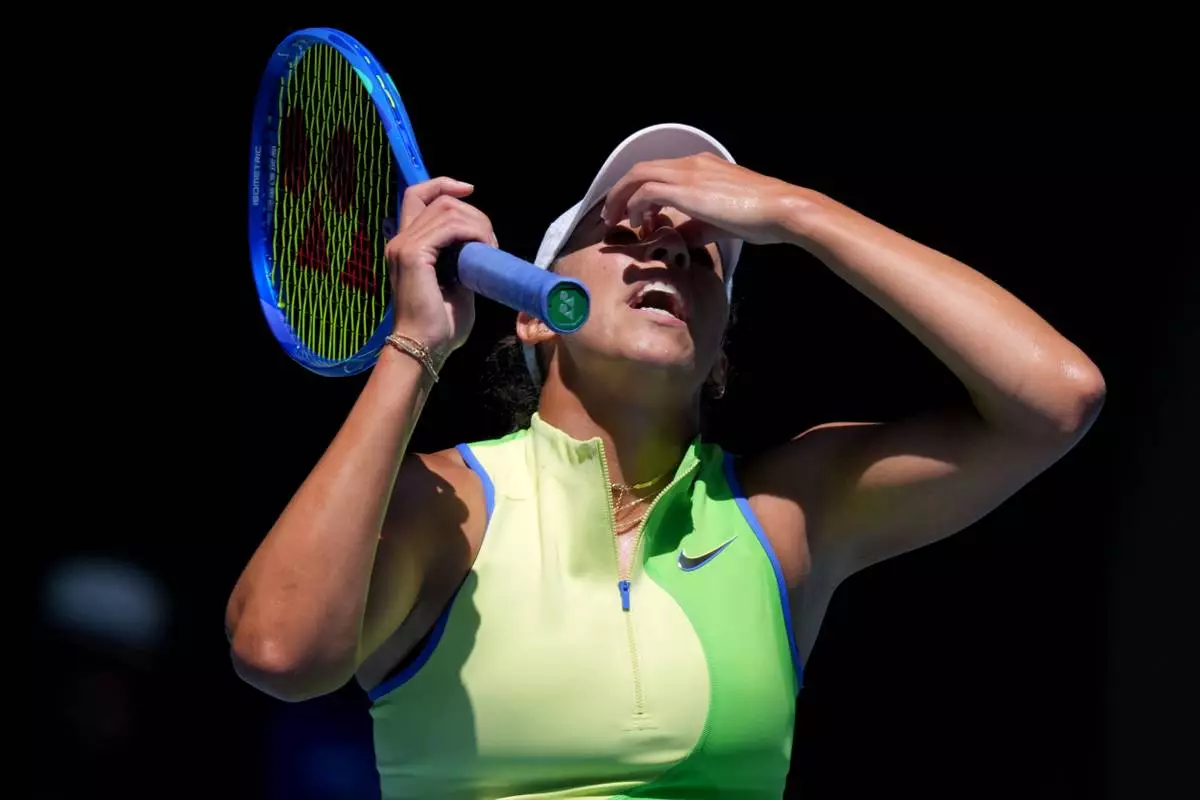
Madison Keys of the U.S. reacts during her fourth round match against her compatriot Jessica Pegula at the Australian Open tennis championship in Melbourne, Australia, Monday, Jan. 26, 2026. (AP Photo/Mark Baker)

Madison Keys of the U.S. reacts during her fourth round match against her compatriot Jessica Pegula at the Australian Open tennis championship in Melbourne, Australia, Monday, Jan. 26, 2026. (AP Photo/Mark Baker)

Jessica Pegula of the U.S. plays a backhand return to her compatriot Madison Keys during their fourth round match at the Australian Open tennis championship in Melbourne, Australia, Monday, Jan. 26, 2026. (AP Photo/Mark Baker)

Jessica Pegula of the U.S. plays a backhand return to her compatriot Madison Keys during their fourth round match at the Australian Open tennis championship in Melbourne, Australia, Monday, Jan. 26, 2026. (AP Photo/Mark Baker)

Recommended Articles