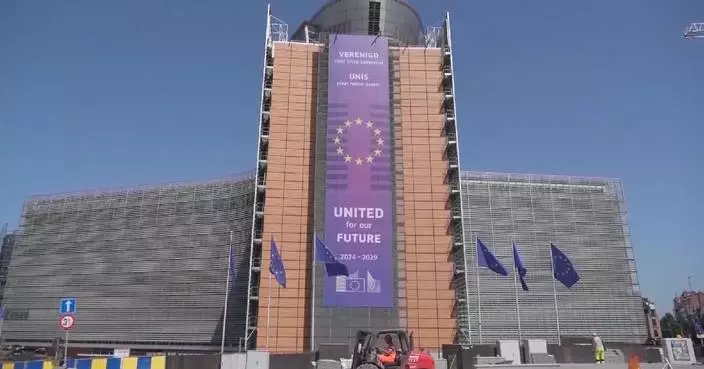
Some attendees to the just concluded World Economic Forum (WEF) annual meeting in Davos, Switzerland believe that selling out U.S. Treasury bonds is becoming a global trend due to the tensions between the United States and Greenland.
U.S. President Donald Trump on Wednesday renewed his push for U.S. acquisition of Greenland and sharpened criticism of Europe and the North Atlantic Treaty Organization (NATO) in a special address at the WEF annual meeting, adding fresh strain to transatlantic ties.
Trump said Europe was "not heading in the right direction", arguing that parts of the continent had become "not even recognizable" in what he described a "very negative" way.
On Thursday, Trump threatened in an interview at the WEF that the United States will retaliate if European countries sell off U.S. Treasury bonds due to U.S. stance on Greenland.
When U.S. Treasury Secretary Scott Bessent was asked how concerned he is about European investors pulling out of U.S. treasury bonds at the WEF, he stated that Denmark's investment in U.S. treasury bonds is "irrelevant" and he is not concerned at all. However, selling off U.S. Treasury bonds has been in full swing among many countries.
"Definitely. I mean the challenges are there, and we need to all focus on, trying to collaborate on how are we going to tackle together," said Juan Carlos Mora Uribe, president of Bancolombia, in an interview at WEF annual meeting when asked about his opinions on selling off U.S. Treasury bonds.
"I mean, we are part of that and we will definitely be involved. I think it's the way to go and I am confident that will happen," he continued.
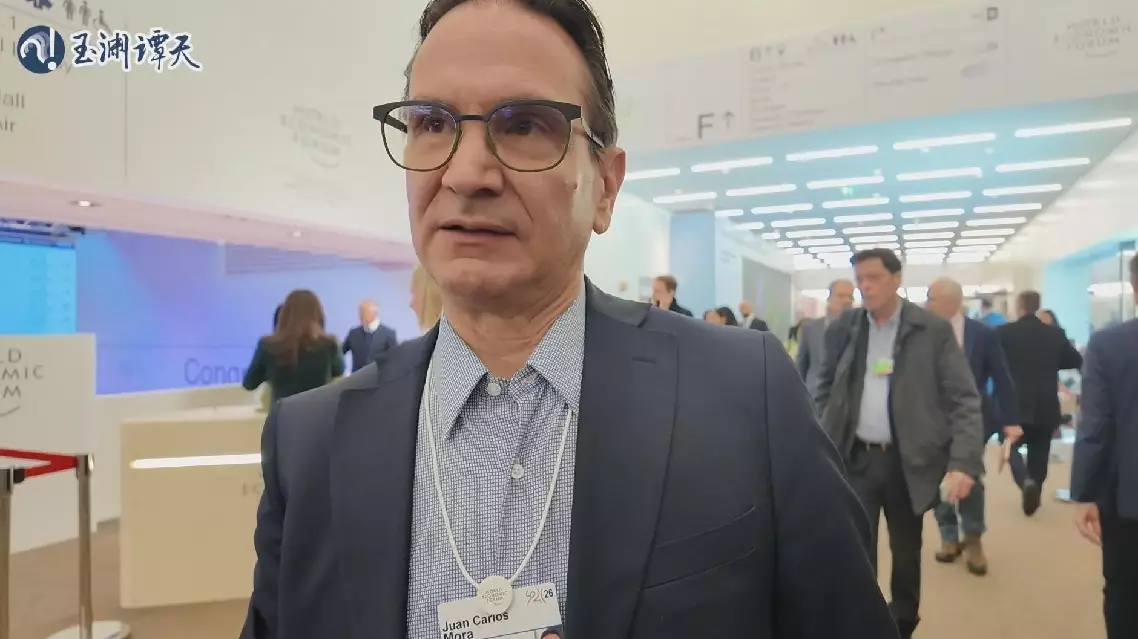
Selling off US Treasury bonds becoming global trend: WEF attendee
Selling off US Treasury bonds becoming global trend: WEF attendee
Selling off US Treasury bonds becoming global trend: WEF attendee
Serbia's Agriculture Minister Dragan Glamocic hailed the surge in exports to China following the launch of a landmark free trade agreement (FTA) in recent years, calling the pact a strategic relationship of mutual vision and voicing optimism for deeper bilateral cooperation.
The FTA between China and Serbia, signed in October 2023 and implemented on July 1, 2024, eliminates tariffs on roughly 90 percent of bilateral trade. More than 60 percent of goods became duty-free immediately upon its entry into force, marking a decisive step in deepening economic ties.
He said the agreement has reshaped Serbia’s trade profile, fueling a 69-percent jump in agricultural exports while accelerating imports of Chinese technologies and farm mechanization.
"The relationship between the People's Republic of China and the Republic of Serbia, I would describe as a long-term, strategic relationship of mutual political and clear economic vision.The Free Trade Agreement between our countries was signed in 2023. It was introduced in 2024. As a result, our trade exchange has greatly improved, especially in the field of agriculture. We can say from that moment our exports to China grew for 69 percent. We have also made easier the import of certain things, such as mechanization and digital technologies, from the People's Republic of China to Serbia," said Glamocic.
"Our traditional products, such as wine, our domestic brandy, our honey, dried plums, frozen raspberries, similarly, imports of modern technologies from China are increasing, mechanization also, which really improves our agriculture business in Serbia. So I am an optimist that it will get better and better every day," he added.
The minister spoke highly of Serbia's partnership with China and voiced hope for broader cooperation in the future.
"What I would expect from China is that we sometimes try to speed up these procedures as much as possible. It is especially an honor for us when such a small country has such a status in the People's Republic of China. We were the first country to sign this type of strategic document in Europe, and we have reached the highest possible level among the two countries," he said.
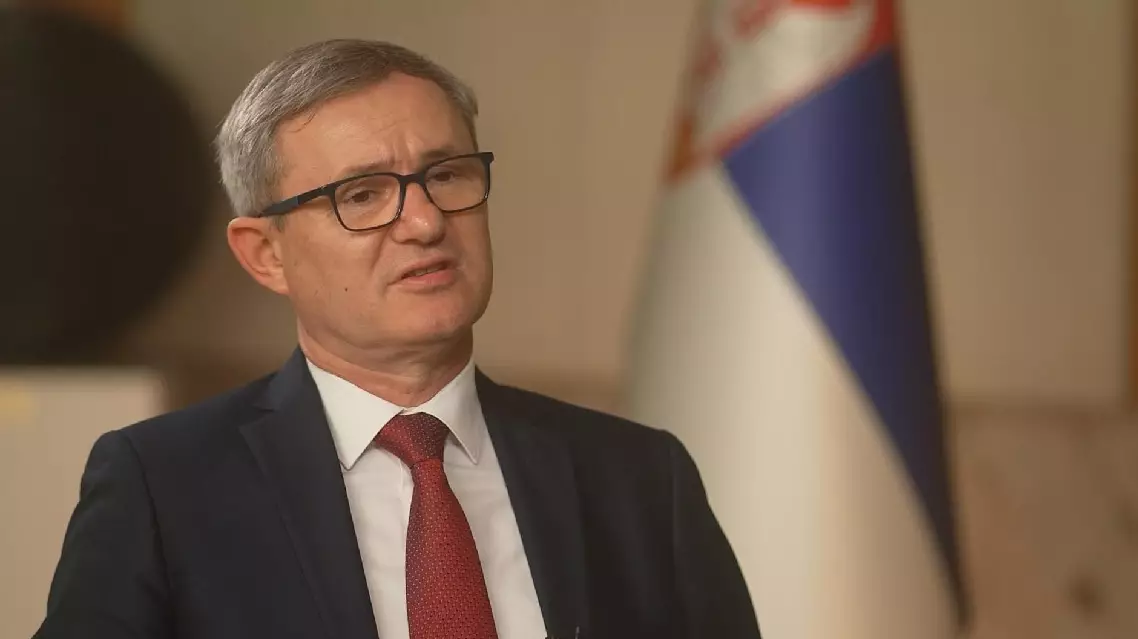
Serbian agriculture minister reports record export growth to China