Skip to Content Facebook Feature Image

A star-studded generation of hockey's best players is finally going to the Olympics

Sport

A star-studded generation of hockey's best players is finally going to the Olympics
Sport

Sport

A star-studded generation of hockey's best players is finally going to the Olympics

2026-01-24 18:10 Last Updated At:18:20

Jack Eichel in the fall of 2021 still did not believe he and the rest of the world's best hockey players would be going to the Olympics in Beijing a few months later, even after the NHL reached an agreement to do so.

“Don't hold your breath,” Eichel said at the time.

His skepticism proved to be prescient, as pandemic scheduling issues led the league to withdraw.

Eichel is part of a generation of NHL stars who have never gotten the chance to play in the Olympics. Unlike players of the past — before the league allowed its stars to take part — Eichel, fellow American Auston Matthews, Canadians Connor McDavid and Nathan MacKinnon and many others of their vintage grew up expecting to go to the Games. The NHL, after all, played in five consecutive Olympics from 1998 2014.

Owners opted against sending players in 2018, and missing out in 2022 became a sad result of circumstances largely out of stakeholders' control. The 12-team tournament in Milan is a moment many have been waiting their entire careers for.

“It's awesome,” Eichel said before this season, perhaps willing to exhale. “It's something that we’ve wanted for a while.”

Not so fast, Jack.

Out of his control are construction delays at the main hockey arena, a longstanding worry. NHL Commissioner Gary Bettman began raising concerns all the way back in 2023, before the deal was reached to send players in 2026 and '30.

“We have been given assurances that the building will be ready,” Bettman said in February 2024. “We’re relying on those assurances. There’s a lot of construction that remains to be done on that building. I think they only recently started. But we’re being told by everybody not to worry. But I like to worry, so we’ll see.”

Those worries have persisted, and work continues on locker rooms and other facilities at Santagiulia Ice Hockey Arena, which is set to host the majority of the men's games beginning Feb. 11. The women's tournament begins there Feb. 5.

Test games in January left league and players' union officials pleased about the condition of the ice, though even that has been a matter of consternation after rinks were made more than 3 feet shorter than NHL players are used to. That will change aspects of play but won't keep the NHL out of the Olympics as long as everyone involved agrees the surface is safe.

Connor Bedard, the 2023 No. 1 pick who just missed out on making Canada's roster for Milan, is so young at 20 that he does not even have a favorite Olympic memory. He was 4 when idol and fellow countryman Sidney Crosby scored the “golden goal” to win on home ice in Vancouver in 2010 and 9 when T.J. Oshie gave the U.S. a shootout victory over host Russia in Sochi in 2014.

Canada's Macklin Celebrini, drafted first in 2024 and at 19 the second-youngest men's hockey player at the Olympics, has only gotten to dream about the possibility of representing his country on this stage.

“That’s the pinnacle, just the best on best, all the special moments that have happened at the Olympics, the history,” Celebrini said. “There's just a little bit more energy around it. It's bigger than yourself.”

In all, 12 NHL players are back at the Olympics after participating in the 2014 Games, the last time the league went and it was a true best-vs.-best tournament. The group includes Crosby and Drew Doughty for Canada; Gabriel Landeskog, Erik Karlsson and Oliver Ekman-Larsson for Sweden; Mikael Granlund and Olli Maatta for Finland; Radko Gudas and Ondrej Palat for Czechia. There are no Americans on that list.

"It’s a cherry on top of athletic life," Gudas said. “Twelve years ago when we went to Sochi was such a great experience that I wish I can do that again. I was that much more sad that we couldn’t go the last two times, so for me I think it’s a great feeling to be able to do that.”

American defenseman Zach Werenski at 28 is old enough to remember Crosby's goal in 2010, and four years later he was watching Oshie's heroics with other members of the U.S. National Team Development Program. Four of his teammates from back then are also set to go to Milan — Matthews, Matthew Tkachuk, Charlie McAvoy and Noah Hanifin — to finally have their Olympic moment.

“The significance of that, the build-up, we've waited a long time for this,” McAvoy said, “so it’s going to be incredible.”

AP Olympics: https://apnews.com/hub/milan-cortina-2026-winter-olympics

Toronto Maple Leafs center Auston Matthews celebrates after scoring a goal against the Colorado Avalanche in the third period of an NHL hockey game Monday, Jan. 12, 2026, in Denver. (AP Photo/David Zalubowski)

Toronto Maple Leafs center Auston Matthews celebrates after scoring a goal against the Colorado Avalanche in the third period of an NHL hockey game Monday, Jan. 12, 2026, in Denver. (AP Photo/David Zalubowski)

Edmonton Oilers center Connor McDavid (97) moves the puck against the Chicago Blackhawks during the first period of an NHL hockey game, Monday, Jan. 12, 2026, in Chicago. (AP Photo/Matt Marton)
Edmonton Oilers center Connor McDavid (97) moves the puck against the Chicago Blackhawks during the first period of an NHL hockey game, Monday, Jan. 12, 2026, in Chicago. (AP Photo/Matt Marton)
SEOUL, South Korea (AP) — South Korean lawmakers on Thursday passed a law to implement a pledge of $350 billion in U.S. investments Seoul made last year to avoid the Trump administration’s highest tariffs.

Government officials had urged lawmakers to quickly pass the contested bill, submitted in November, as uncertainty mounts for the country’s trade-dependent economy, already rattled by President Donald Trump’s protectionist swing and now fearing the fallout from his war on Iran.

The bill’s passage came hours after the Trump administration increased pressure on trade partners by opening a new investigation into manufacturing in foreign countries, including China and U.S. allies South Korea and Japan, which could result in new import taxes if U.S. officials see their practices as unfair.

Trump and his team have made clear they’re seeking to use new tariffs to recoup lost revenue after the U.S. Supreme Court invalidated his sweeping tariffs issued with emergency powers.

China expressed opposition to the move and called for negotiations to resolve any differences. “China opposes any form of unilateral tariff measures,” Foreign Ministry spokesperson Guo Jiakun said in Beijing. “Tariff wars and trade wars serve no one’s interests.”

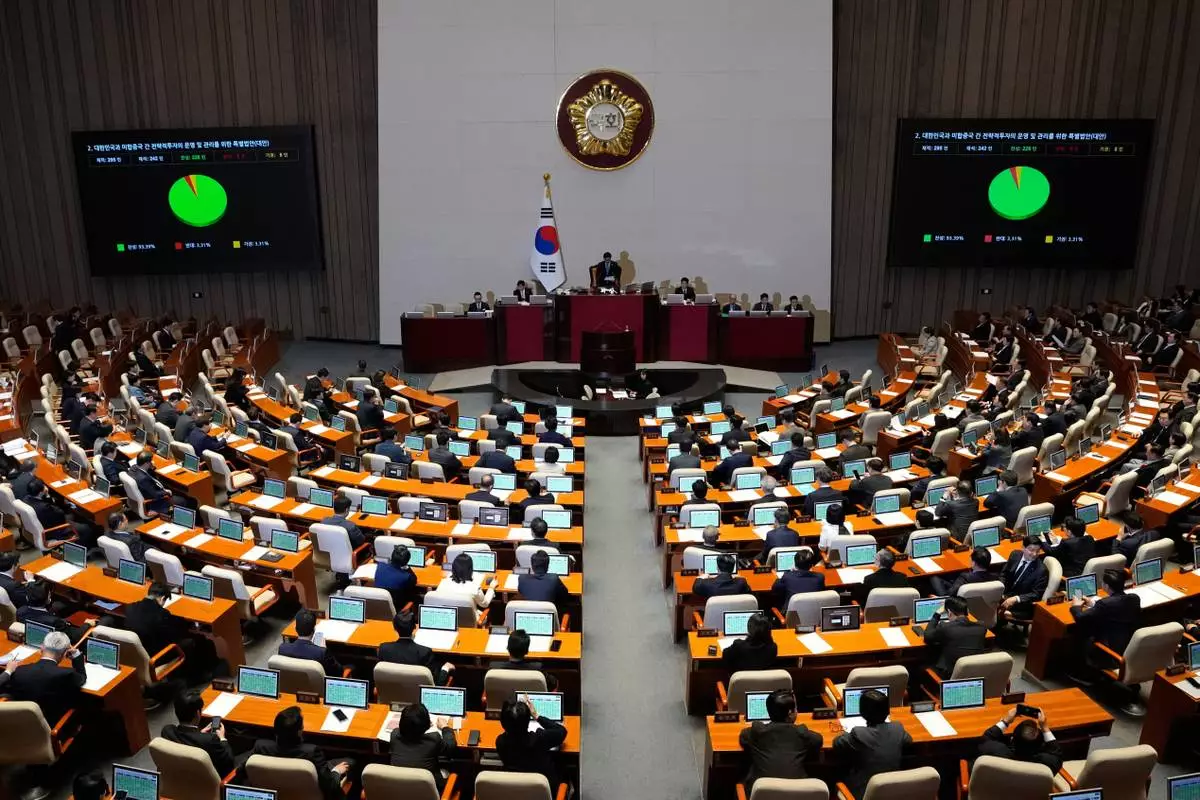
The South Korean law, which passed 226 to 8, calls for establishing a public corporation to manage the promised U.S. investments, including reviewing and selecting projects based on input from South Korean and U.S. trade authorities.

Some lawmakers spoke against the bill ahead of the vote, expressing frustration over Trump’s new trade investigations and the potential impact of the war in the Middle East, which has exposed the vulnerability of South Korea’s export-dependent economy and reliance on imported fuel.

“We cannot be the money machine Trump wants us to be,” said Son Sol, a member of the minor opposition Progressive Party. She said the bill does not give the legislature sufficient power to review and reject investments that could go against South Korean business or public interests.

Following months of tense negotiations, South Korea finalized an agreement with the United States in November to invest $200 billion in U.S. semiconductor and other high-tech industries and another $150 billion in shipbuilding in exchange for Washington lowering reciprocal tariffs on Seoul from 25% to 15%.

The agreement, which followed a breakthrough at an October summit between Trump and South Korean President Lee Jae Myung, also caps South Korean investments at $20 billion a year to protect the country’s foreign currency reserves.

Lee’s liberal Democratic Party introduced the legislation in November but faced resistance from opposition lawmakers worried about the economic impact. The legislative holdup frustrated Trump, who in January threatened to raise tariffs on South Korean autos, pharmaceuticals and other goods back to 25%, increasing pressure on the opposition to move the bill forward.

Associated Press writer Ken Moritsugu in Beijing contributed.

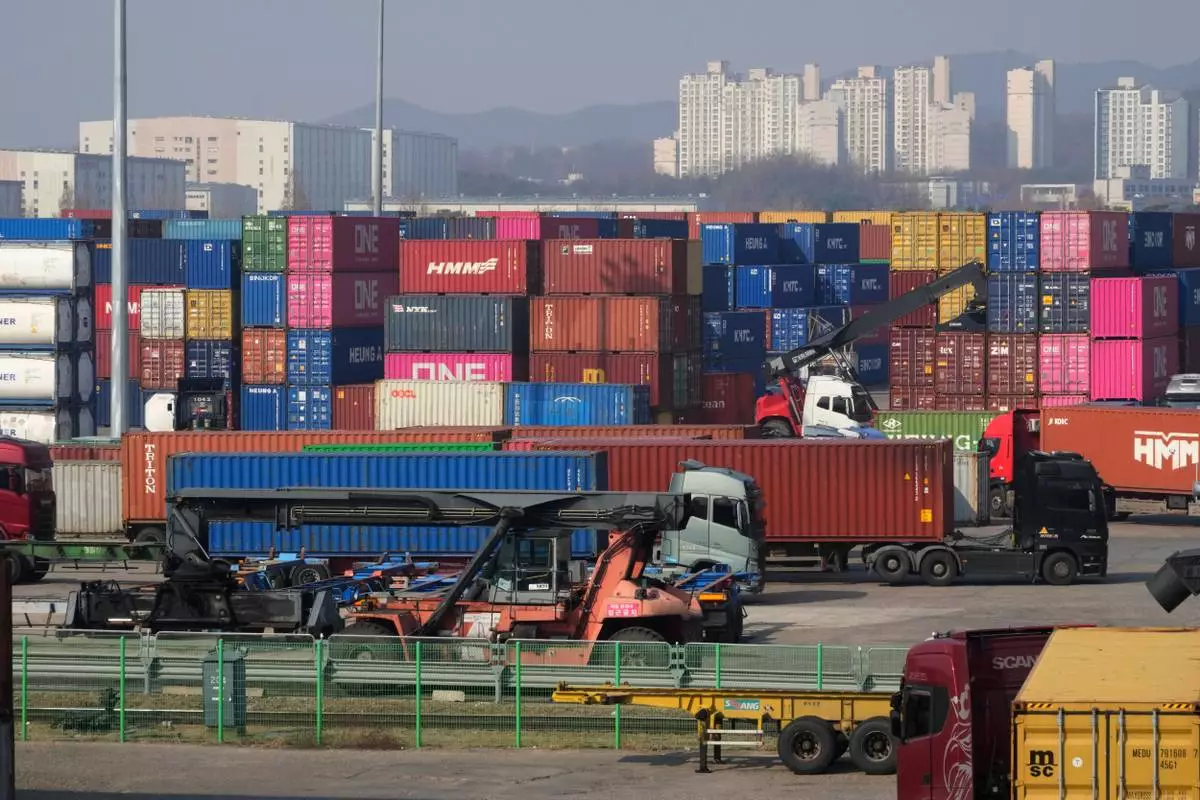
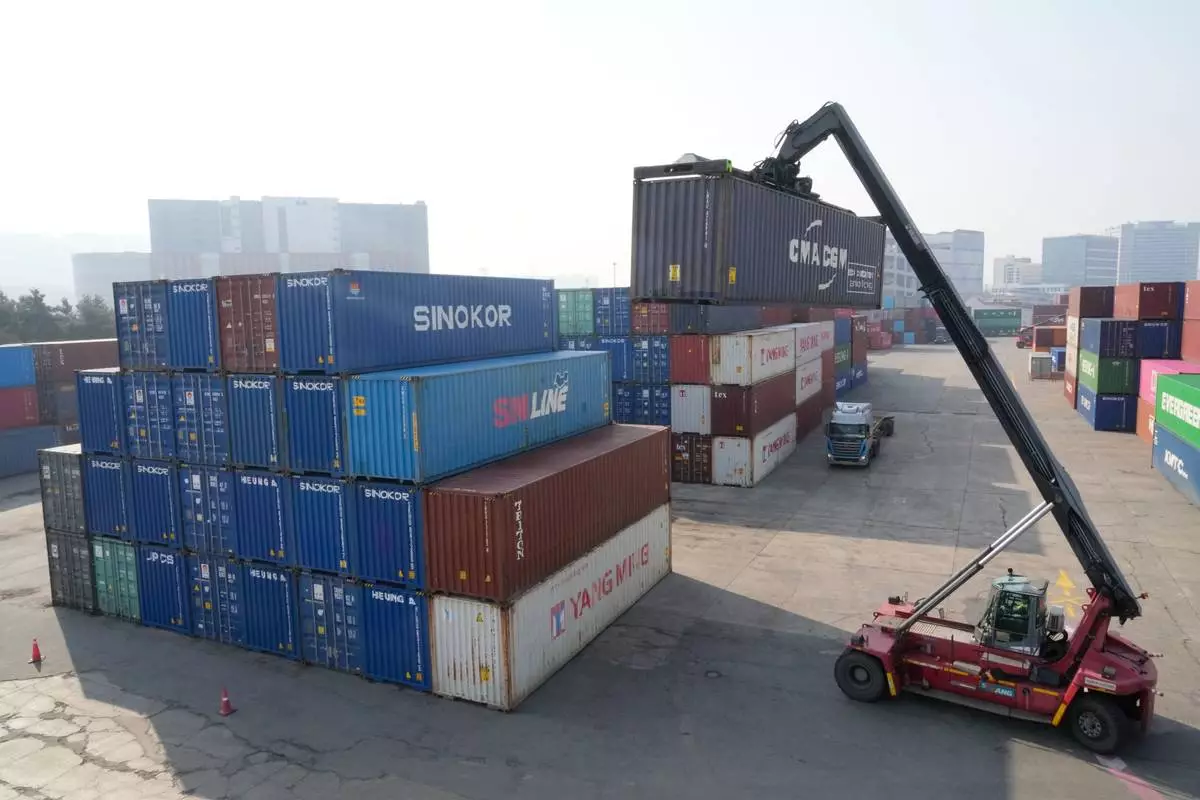
A crane unloads a container from a truck at the Uiwang ICD Terminal in Uiwang, South Korea, Thursday, March 12, 2026. (AP Photo/Ahn Young-joon)

A crane unloads a container from a truck at the Uiwang ICD Terminal in Uiwang, South Korea, Thursday, March 12, 2026. (AP Photo/Ahn Young-joon)

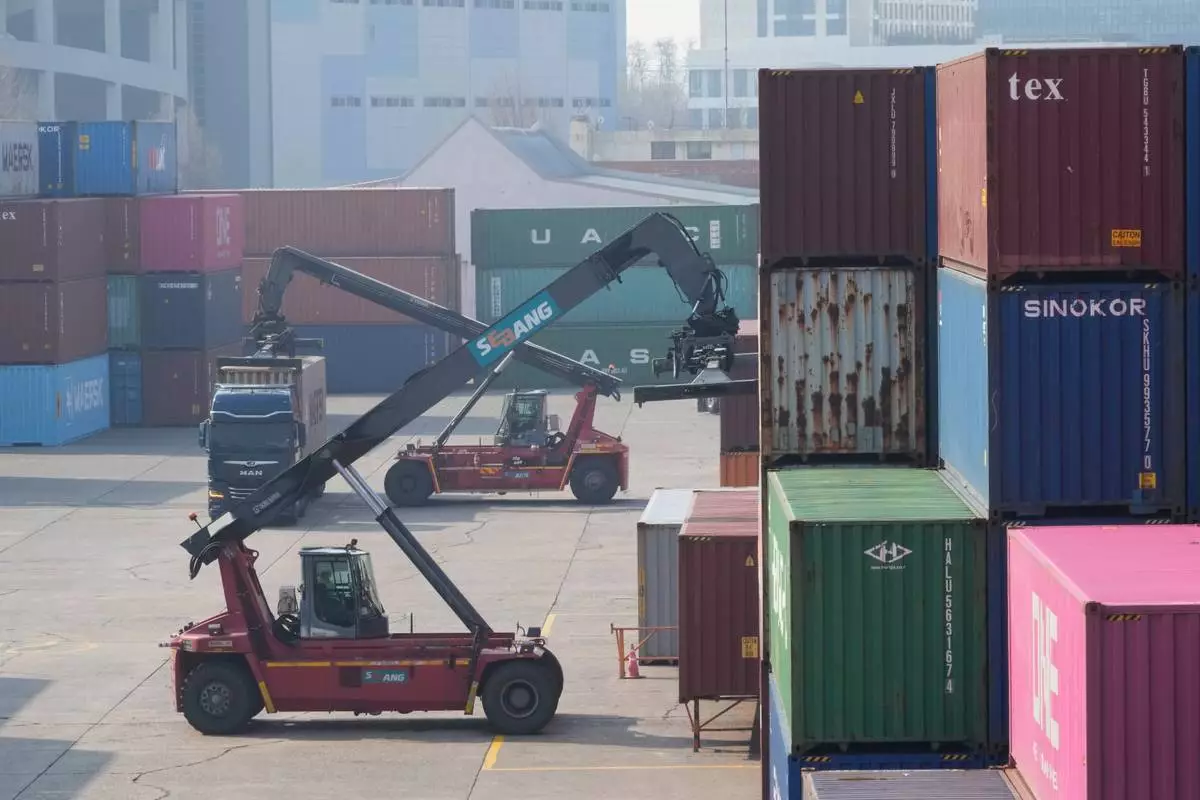
A crane unloads a container at the Uiwang ICD Terminal in Uiwang, South Korea, Thursday, March 12, 2026. (AP Photo/Ahn Young-joon)

A crane unloads a container at the Uiwang ICD Terminal in Uiwang, South Korea, Thursday, March 12, 2026. (AP Photo/Ahn Young-joon)

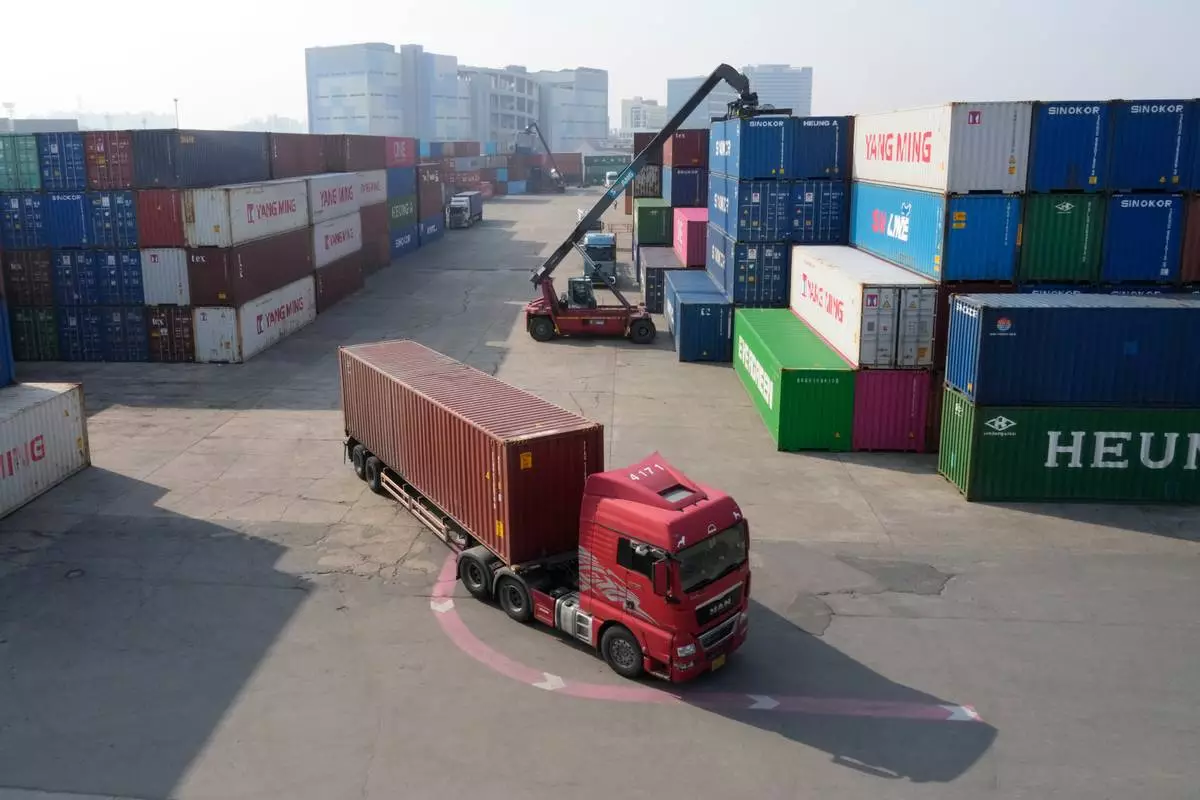
A truck runs by containers at the Uiwang ICD Terminal in Uiwang, South Korea, Thursday, March 12, 2026. (AP Photo/Ahn Young-joon)

A truck runs by containers at the Uiwang ICD Terminal in Uiwang, South Korea, Thursday, March 12, 2026. (AP Photo/Ahn Young-joon)

Turcks run by containers at the Uiwang ICD Terminal in Uiwang, South Korea, Thursday, March 12, 2026. (AP Photo/Ahn Young-joon)

Turcks run by containers at the Uiwang ICD Terminal in Uiwang, South Korea, Thursday, March 12, 2026. (AP Photo/Ahn Young-joon)

The National Assembly passes a law to implement hundreds of billions of dollars in U.S. investments at the National Assembly in Seoul, South Korea, Thursday, March 12 2026. (AP Photo/Ahn Young-joon)

The National Assembly passes a law to implement hundreds of billions of dollars in U.S. investments at the National Assembly in Seoul, South Korea, Thursday, March 12 2026. (AP Photo/Ahn Young-joon)

Recommended Articles