Maintaining currency stability and financial stability will be the dual goals of the People's Bank of China (PBOC) during the 15th Five-Year Plan period (2026-2030), said central bank governor Pan Gongsheng,in a recent interview with China Media Group (CMG),
Pan stated that the monetary policy framework and the macro-prudential management system serve as the central bank's twin pillars for macro management. They are fundamental to achieving its dual goals and jointly bolstering China's financial strength.
"We will establish a well-conceived, prudent monetary policy system. Its core tasks are to balance the relationship between short-term and long-term concerns, reconcile growth stabilization with risk prevention, and harmonize internal and external concerns. The ultimate goal is to dynamically achieve an optimal equilibrium among currency stability, economic growth, full employment, and balance of payments," said Pan.
During the 15th Five-Year Plan period, the central bank will optimize the target system of monetary policy, especially the intermediate variables, downplay the attention to the quantitative target, and take the financial aggregate as an observation, reference and expectation indicator, so as to create conditions for giving more play to the role of interest rate regulation.
"We will improve the formation, regulation and transmission mechanism of market-based interest rates, and further smooth the transmission from the central bank's policy interest rate to the market benchmark interest rate and then to various financial market interest rates. We will improve the RMB exchange rate formation mechanism, adhere to the decisive role of the market in exchange rate formation, maintain exchange rate flexibility, and guard against the risk of exchange rate overshooting," Pan said.
In terms of building a comprehensive macro-prudential management system, Pan said that financial risks should be grasped macroscopically and as a whole, and a standardized, systematic, quantitative and qualitative monitoring and evaluation framework should be established.
"We will gradually expand macro-prudential coverage areas and management objects. On the basis of macro-prudential management in traditional fields, we will expand to cover new fields such as financial markets, non-bank financial institutions, financial infrastructure and internet finance," he said.
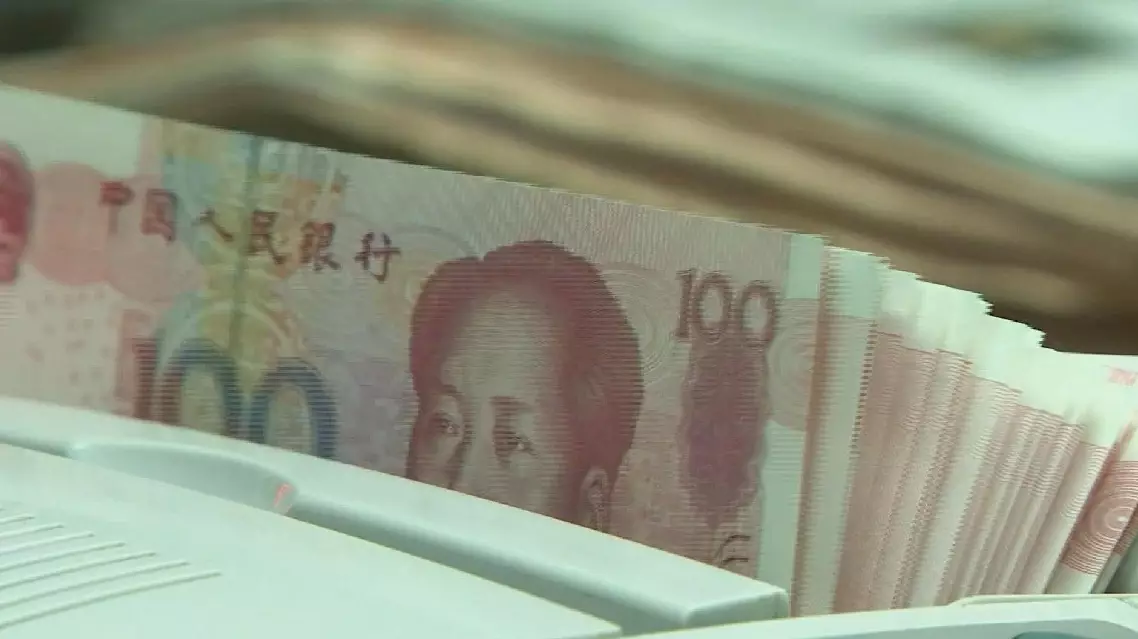
China’s central bank vows to pursue dual goals of currency, financial stability: governor
The 2026 World Ice Art Championship was held in Sesto San Giovanni, near Milan, on January 23-25, as a part of the cultural program for the upcoming Milano-Cortina 2026 Winter Olympics.
Twenty-four sculptors from 16 countries competed in the finals, carving more than 20 tons of crystalline ice into authentic ephemeral works of art that showcase their style, technique, and creative vision.
"It's my honor and I feel very happy to be a part of this competition, because I think it's the best in the world," said Ji Huailong, a Chinese ice sculptor.
Ice sculptures would be evaluated by an international panel over the last two days, with winners announced at Sunday's awards ceremony.
According to Amelio Mazzella, president of the World Ice Carving Association, the championship was judged on far more than technical skill alone.
"The judges first of all will see the artistic impression, the proportions of the sculptures, and the use of the ice," said Mazzella.
One of Ji Huailong's sculptures, featuring two fish, carries a deeper symbolic meaning.
"The sculpture of the two fish represents both Italy and China, like old friends meeting in a river," Ji said.
That message of cultural exchange is a key theme of the event. Roberto Di Stefano, mayor of Sesto San Giovanni, said the championship reflects growing ties between Italy and China at a local level.
"We organized an agreement with the Wenzhou region, because there are a lot of investors that come from China and live here in Sesto San Giovanni," said Di Stefano.
The international dimension was highlighted by Liu Kan, Consulate-General of China in Milan, who sees ice art as a bridge between cultures.
"I sincerely hope that China and Italy can foster cooperation in the fields of the ice industry, science and technology," Liu sai.
The World Ice Art Championship follows in the tradition of China's famous Harbin Ice Festival, which attracts millions of viewers and visitors each winter.
Some of the artists competing in Italy have previously taken part in the Harbin event, and the top three competitors from the event in Sesto San Giovanni will be invited to Harbin next year.
"The festival in Harbin is very, very popular. Millions of people know it and see it on TV, in Italy too. That's why we have asked them to be partners of this project," said Mazzella.
As Italy makes preparations for the Winter Olympics, the championship offers a preview of how the winter games will celebrate sport, culture and international collaboration.
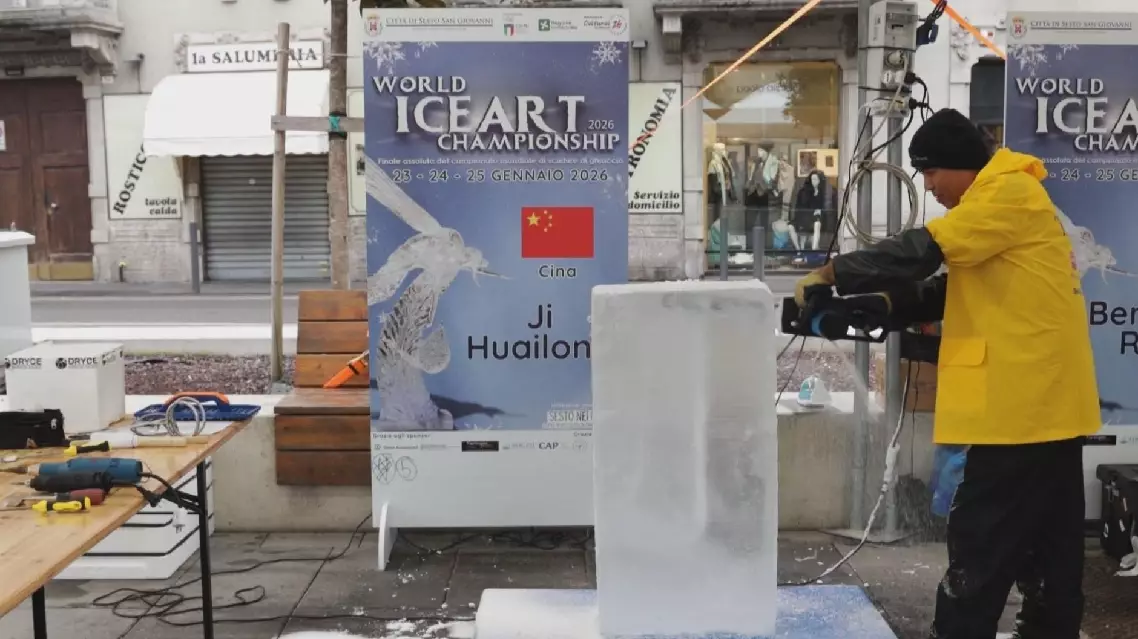
World Ice Art Championship held ahead of upcoming Winter Olympics in Milan