Skip to Content Facebook Feature Image

No New Chikungunya Cases Reported in Hong Kong, 82 Total Confirmed Last Year

HK

No New Chikungunya Cases Reported in Hong Kong, 82 Total Confirmed Last Year
HK

HK

No New Chikungunya Cases Reported in Hong Kong, 82 Total Confirmed Last Year

2026-01-25 17:30 Last Updated At:17:50

Update on chikungunya fever

The Centre for Health Protection (CHP) of the Department of Health announced that, as of 5pm today (January 25), no new cases of chikungunya fever (CF) had been recorded.

Latest surveillance data

---------------------------

Hong Kong has recorded a total of 82 confirmed CF cases last year. Among them, 11 were local cases, and the rest were imported cases.

Since the beginning of 2025, and as of December 10, 2025, a total of 502 264 CF cases and 186 CF-related deaths have been reported in over 40 countries/territories. Cases have been reported in the Americas, Africa, Asia, and Europe. Although the northern hemisphere has entered the winter season, temperatures in subtropical and some temperate regions remain elevated due to climate change, creating favourable conditions for mosquito breeding. In addition, CF outbreaks continue to occur in many countries worldwide. The risk of imported cases persists. Members of the public should check the situation of the destinations before travelling abroad, especially when travelling to Southeast Asian countries.

Continuously strengthening prevention and control

---------------------------------------------------------

Given that some local cases of CF have visited the Tsing Yi Nature Trails or the surrounding area in November last year, the trails are currently closed until further notice. Relevant government departments (including the Food and Environmental Hygiene Department (FEHD), Kwai Tsing District Office, Lands Department, Drainage Services Department, and Civil Engineering and Development Department) have been continuously conducting comprehensive mosquito control and environmental remediation work along the trails. Since the confirmation on December 10, 2025, of a case involving a person who had visited the Tsing Yi Nature Trails on November 30, 2025, no further local cases have been recorded to date.

The FEHD and relevant departments have comprehensively enhanced the mosquito control operations in Hong Kong since July last year, and this has continued. Among these, the FEHD has conducted vector investigations and targeted mosquito control operations against the imported and local cases. In light of the local cases, the FEHD has immediately conducted follow-up actions, including:

  • carrying out intensive fogging in scrubby areas within a 250-metre radius of the relevant locations to kill adult mosquitoes;

  • carrying out inspections of the locations, removing stagnant water, applying insecticides and disposing of abandoned water containers every week with a view to preventing mosquito breeding; and

  • enhancing public education efforts through organising health talks, setting up mobile education stations, and distributing publicity leaflets.

The abovementioned measures will be continued. Furthermore, the Government will further enhance the mosquito control efforts in addition to the existing measures.

Preventive measures to be taken by the public

----------------------------------------------------

Members of the public should use DEET-containing insect repellents or other effective active ingredients properly to prevent mosquito bites, but the following precautions should be taken when using them:

  • read the label instructions carefully first;

  • apply right before entering an area with a risk of mosquito bites;

  • apply on exposed skin and clothing;

  • use DEET of up to 30 per cent for pregnant women and up to 10 per cent for children (for children who travel to countries or areas where mosquito-borne diseases are endemic or epidemic and where exposure is likely, those aged 2 months or above can use DEET-containing insect repellents with a DEET concentration of up to 30 per cent);

  • apply sunscreen first, then insect repellent;

  • reapply only when needed and follow the instructions; and

  • in addition to DEET, there are other insect repellents available on the market containing different active ingredients, such as IR3535 and picaridin. When using any insect repellent, the public should follow the usage instructions and precautions on the product label.

The FEHD also appeals to members of the public to continue to stay alert and work together to carry out mosquito prevention and control measures early, including inspecting their homes and surroundings to remove potential breeding grounds, changing water in vases and scrubbing their inner surfaces, removing water in saucers under potted plants at least once a week, and properly disposing of containers such as empty cans and lunch boxes. The FEHD also advises members of the public and property management agencies to keep drains free of blockage and level all defective ground surfaces to prevent the accumulation of water. They should also scrub all drains and surface sewers with an alkaline detergent at least once a week to remove any mosquito eggs.

The public should call 1823 in case of mosquito problems, and may visit the following pages for more information: the CF page of the CHP and the Travel Health Service, the latest Travel Health Newstips for using insect repellents, and the CHP Facebook PageInstagram Account and YouTube Channel, and also the Mosquito Prevention and Control dedicated page of the FEHD.
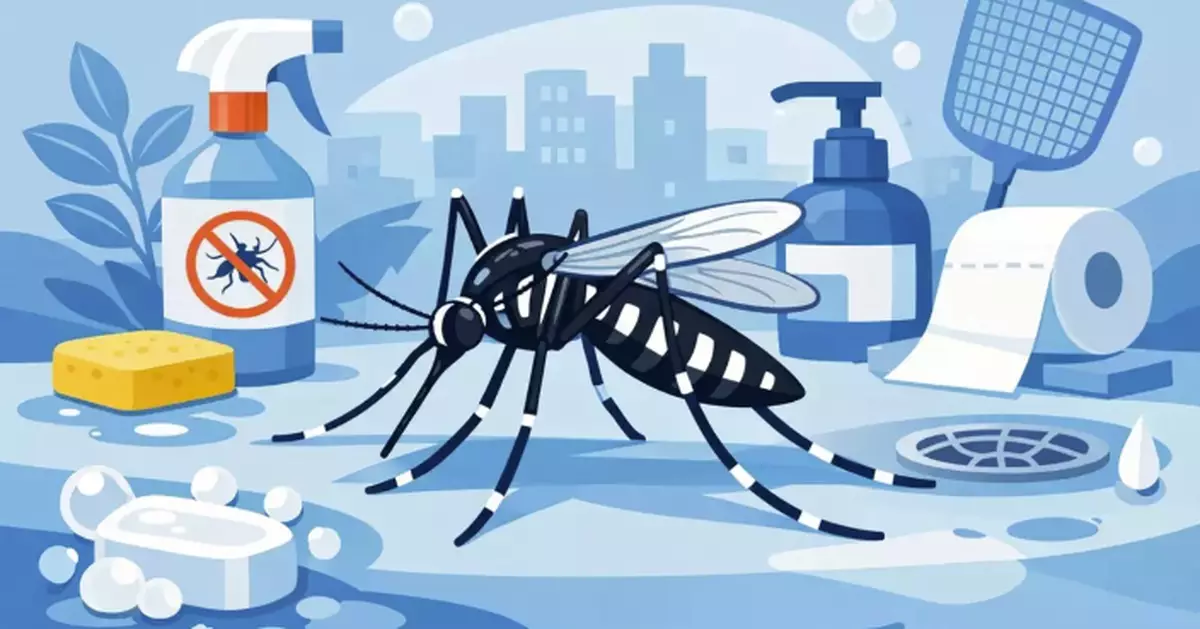
Source: AI-created image
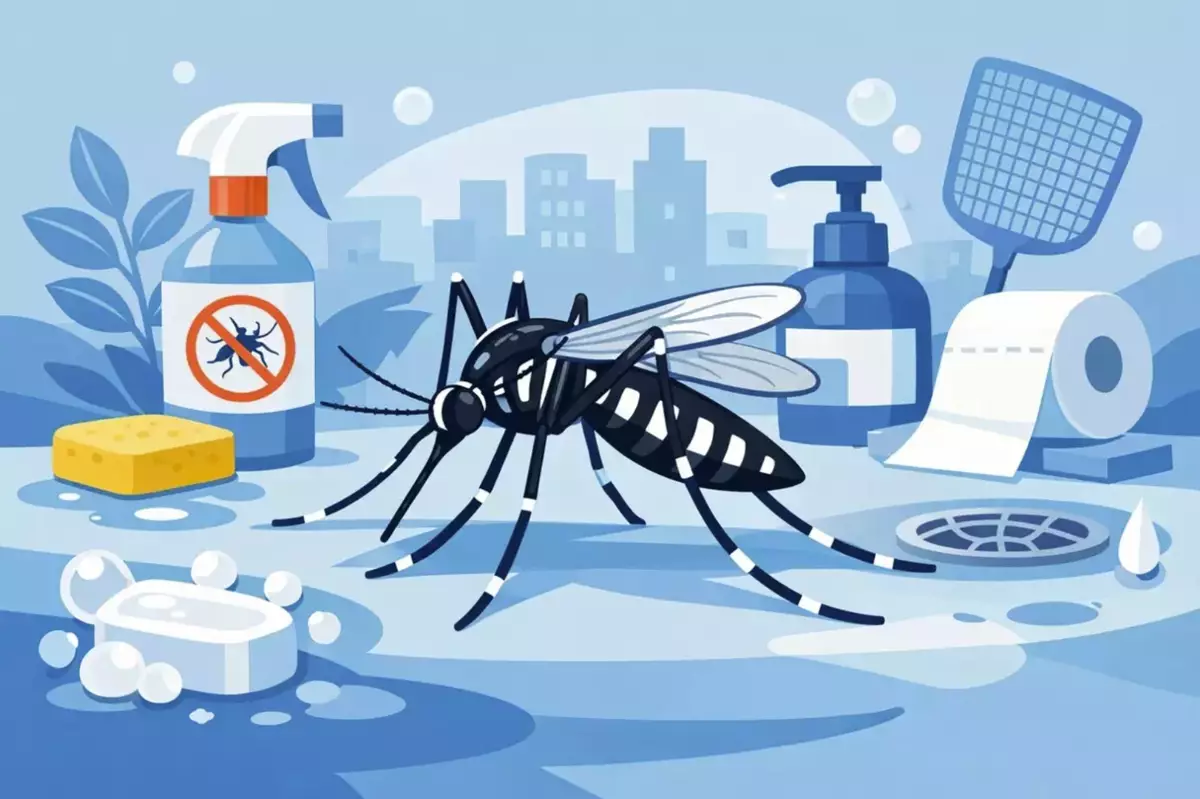
Source: AI-created image

CHP urges public to promptly receive seasonal influenza vaccination as severe paediatric influenza infection case reported

The Centre for Health Protection (CHP) of the Department of Health (DH) today (February 15) recorded a severe paediatric influenza infection case, the fifth case this year. The CHP reiterated its reminder to parents to arrange for their children to receive a free seasonal influenza vaccination (SIV) promptly. The SIV remains one of the most effective methods of preventing influenza and its complications and can reduce the risk of serious complications or death from infection.

The case involves a 15-year-old boy with underlying diseases. On February 12, he developed a fever. He was sent to theAccident and Emergency Department of Caritas Medical Centre the following day (February 13) due to persistent fever and was admitted on the same day. He subsequently developed desaturation and shock, and was transferred to the paediatric intensive care unit of Princess Margaret Hospital for further treatment today because of worsening conditions. His respiratory specimen tested positive for influenza A virus upon laboratory testing. The clinical diagnosis is influenza A infection complicated with pneumonia and heart failure. He is currently in serious condition.

A preliminary investigation revealed that the boy has not yet received the 2025/26 SIV. He is a resident of a special school. A recent influenza outbreak was recorded in his school dormitory. The CHP staff has conducted site visit and advised the school to strengthen a series of infection control measures. Chemoprophylaxis against influenza was given to unaffected students and staff. The boy's family members are asymptomatic. The CHP's investigation is ongoing.

So far this year, five severe paediatric influenza cases have been recorded, involving children aged between 6 months and 15 years old. Three of the affected children had not received an SIV, including one case who received the 2025/26 SIV only three days before the onset of illness. As the patient was not protected by the vaccine, the case is not counted as being vaccinated. During the summer influenza season ending in early January, 25 severe paediatric influenza cases were recorded, including three fatal cases and involving children aged between 6 months to 17 years old. Among them, 20 cases (80 per cent) had not received an SIV (including one case who received the 2025/26 SIV only four days before the onset of illness).

"Although the influenza activity in Hong Kong is currently at a low, influenza activity still remains at a relatively high level in many popular travel destinations for Hong Kong citizens, such as some areas in North America and Europe. Moreover, the overall influenza activity has increased again in Korea and Japan recently, with the major circulating virus strain having changed from the earlier influenza A (H3) to influenza B. With the increase in cross-border travel and the number of incoming visitors in the Chinese New Year, the risk of influenza transmission will also increase. Moreover, based on past experience, Hong Kong's winter influenza season typically occurs in the first quarter. With the persistent cold weather and the possibility of a change in circulating virus strains, it cannot be ruled out that the influenza activity will increase again later. Receiving SIV is still one of the most effective ways to prevent seasonal influenza and its complications. Vaccination also reduces the risk of hospitalisation and death from infection. The public should receive vaccination as soon as possible regardless of staying locally or planning to travel abroad, as it takes about two weeks after vaccination for antibodies to develop in the body for sufficient protection against the influenza virus. All individuals aged 6 months or older, except those with known contraindications, should act promptly if they have not yet received an SIV, including those who contracted influenza in the past few months, in order to safeguard personal health," the Controller of the CHP, Dr Edwin Tsui, said.

"Recently, outbreaks of influenza continue to occur in schools. For children who did not join the SIV School Outreach Programme, parents should promptly bring their children toprivate doctorsenrolled in the Vaccination Subsidy Scheme to receive an SIV. In addition, the SIV coverage rate for children aged 6 months to under 2 years is only about 25 per cent. Although this represents an approximate 2 percentage point increase compared to the same period last year, it is still much lower than that of other age groups. Through the Primary Healthcare Commission, the CHP has urged family doctors to assist in encouraging parents to allow their children to receive an SIV," Dr Tsui added.

He also reminded members of the public that, especially for children, the elderly and those with underlying illnesses, they should seek medical advice promptly for early treatment if they present with fever and respiratory symptoms. As children with influenza can deteriorate rapidly, parents must pay close attention to their children's condition. They should go to an Accident and Emergency Department immediately if the child's condition deteriorates, for example, if they develop symptoms such as shortness of breath, wheezing, blue lips, chest pain, confusion, a persistent fever or convulsions.

Separately, high-risk individuals should wear surgical masks when staying in crowded places. People with respiratory symptoms, even if mild, should wear a surgical mask and seek medical advice promptly. They should also consider whether to attend work or school.

Members of the public may refer to the CHP'sCOVID-19 & Flu Express,Seasonal Influenza Webpage,COVID-19 Vaccination Programme Webpage, andVaccination Schemes Webpage, for the latest information.

Source: AI-found images

Source: AI-found images

Recommended Articles