SEATTLE (AP) — Sean McVay had zero interest in discussing whether Matthew Stafford, his soon-to-be 38-year-old quarterback, will be back for the Los Angeles Rams next year.
McVay had a bit more to say about how his team came up short against the Seattle Seahawks yet again on Sunday, losing 31-27 in the NFC championship game. The Rams lost twice in a two-month span at Seattle, falling 38-37 in December when the Seahawks converted two 2-point conversions in regulation and a third in overtime.
Click to Gallery
Los Angeles Rams head coach Sean McVay smiles after a touchdown by Kyren Williams during the first half of the NFC Championship NFL football game against the Seattle Seahawks, Sunday, Jan. 25, 2026, in Seattle. (AP Photo/Stephen Brashear)
Los Angeles Rams head coach Sean McVay speaks during a news conference after the NFC Championship NFL football game against the Seattle Seahawks, Sunday, Jan. 25, 2026, in Seattle. (AP Photo/John Froschauer)
Los Angeles Rams quarterback Matthew Stafford (9) runs over Seattle Seahawks linebacker DeMarcus Lawrence (0) during the second half of the NFC Championship NFL football game Sunday, Jan. 25, 2026, in Seattle. (AP Photo/Godofredo A. Vásquez)
Los Angeles Rams head coach Sean McVay watches from the sideline during the second half of the NFC Championship NFL football game against the Seattle Seahawks, Sunday, Jan. 25, 2026, in Seattle. (AP Photo/Godofredo A. Vásquez)
This loss denied the Rams a chance of winning the franchise's third Super Bowl and the second and five years for McVay and Stafford.
“I’m never really short on words, and I am right now,” McVay said. “It’s tough, but this is sports, and you got to be able to deal with it.”
Aside from one questionable decision — the Rams going for it on fourth-and-4 at the Seattle 6 with 4:59 remaining while trailing by four — McVay had his team humming as usual.
The Rams totaled 479 yards of offense to 396 for the Seahawks. Stafford, an MVP finalist, completed 22 of 35 passes for 374 yards and three touchdowns.
Before that critical fourth-down play, McVay raced down the sideline, looking like he might call timeout. But he didn't, and Devon Witherspoon broke up Stafford pass in the end zone.
“I thought about it, and didn’t decide to do it,” McVay said. “Obviously it didn’t work out for us. But I thought our guys played well. There were a lot of things that we got a lot of what we wanted today. Felt really good about the way that our guys executed, specifically on the offensive side. And you know, that was a situation where we just kind of came up short.”
In the third quarter, the Rams had their latest of several special-teams miscues this season when Xavier Smith muffed a punt and Seattle recovered. On the next play, Sam Darnold connected with Jake Bobo for a 17-yard touchdown and a 24-13 lead.
Smith also juggled a punt earlier in the game.
“That one, it was costly,” McVay said. “I love him. He’s done a great job. ... But that was a tough one.”
The Rams countered each time Seattle took a double-digit lead. The NFL's top-scoring offense put together consecutive touchdown drives after Smith's gaffe.
Stafford found Davante Adams for a 2-yard touchdown and then connected with Puka Nacua for a 34-yard score.
“It was a battle,” Stafford said. “The whole game wasn’t like we were all just waiting for one play here or there. There’s a million plays in a football game that can turn the tide, and we had our opportunity and didn’t make it.”
Had Stafford completed that fourth-down pass, it could have been the sixth game-winning drive of his playoff career, and third this postseason.
Stafford guided Los Angeles past the Carolina Panthers in the wild-card round with a late TD pass to Colby Parkinson, and then set up Harrison Mevis for a game-winning field goal against the Chicago Bears in the divisional round.
For much of Sunday, he got the better of the NFL's top-ranked scoring defense. But the Seahawks made a few more plays at the end.
“Great football team we just played,” Stafford said. “Feel like it’s a great effort, really good football game, obviously we didn’t come out on top. Tough pill to swallow at the moment.”
AP NFL: https://apnews.com/hub/nfl

Los Angeles Rams head coach Sean McVay smiles after a touchdown by Kyren Williams during the first half of the NFC Championship NFL football game against the Seattle Seahawks, Sunday, Jan. 25, 2026, in Seattle. (AP Photo/Stephen Brashear)

Los Angeles Rams head coach Sean McVay speaks during a news conference after the NFC Championship NFL football game against the Seattle Seahawks, Sunday, Jan. 25, 2026, in Seattle. (AP Photo/John Froschauer)

Los Angeles Rams quarterback Matthew Stafford (9) runs over Seattle Seahawks linebacker DeMarcus Lawrence (0) during the second half of the NFC Championship NFL football game Sunday, Jan. 25, 2026, in Seattle. (AP Photo/Godofredo A. Vásquez)

Los Angeles Rams head coach Sean McVay watches from the sideline during the second half of the NFC Championship NFL football game against the Seattle Seahawks, Sunday, Jan. 25, 2026, in Seattle. (AP Photo/Godofredo A. Vásquez)
LAKSHMIPUR, Bangladesh (AP) — A labor recruiter persuaded Maksudur Rahman to leave the tropical warmth of his hometown in Bangladesh and travel thousands of miles to frigid Russia for a job as a janitor.
Within weeks, he found himself on the front lines of Russia’s war in Ukraine.
An Associated Press investigation found that Bangladeshi workers were lured to Russia under the false promise of civilian work, only to be thrust into the chaos of combat in Ukraine. Many were threatened with violence, imprisonment or death.
AP spoke with three Bangladeshi men who escaped from the Russian military, including Rahman, who said that after arriving in Moscow, he and a group of fellow Bangladeshi workers were told to sign Russian documents that turned out to be military contracts. They were taken to an army camp for training in drone warfare techniques, medical evacuation procedures and basic combat skills using heavy weapons.
Rahman protested, complaining that this was not the work he agreed to do. A Russian commander offered a stark reply through a translation app: “Your agent sent you here. We bought you."
The three Bangladeshi men shared harrowing accounts of being coerced into front-line tasks against their will, including advancing ahead of Russian forces, transporting supplies, evacuating wounded soldiers and recovering the dead. The families of three other Bangladeshi men who are missing said their loved ones shared similar accounts with relatives.
Neither the Russian Defense Ministry, the Russian Foreign Ministry nor the South Asian country’s government responded to a list of questions from AP.
Rahman said the workers in his group were threatened with 10-year jail terms and beaten.
“They’d say, ‘Why don’t you work? Why are you crying?’ and kick us,” said Rahman, who escaped and returned home after seven months.
The workers’ accounts were corroborated by documents, including travel papers, Russian military contracts, medical and police reports, and photos. The documents show the visas granted to Bangladeshi workers, their injuries sustained during battles and evidence of their participation in the war.
How many Bangladeshis were deceived into fighting is unclear. The Bangladeshi men told AP they saw hundreds of Bangladeshis alongside Russian forces in Ukraine.
Officials and activists say Russia has also targeted men from other African and South Asian countries, including India and Nepal.
In the lush greenery of the Lakshmipur district in southeast Bangladesh, nearly every family has at least one member employed as a migrant worker overseas. Job scarcity and poverty have made such work essential.
Fathers embark on yearslong journeys for migrant work, returning home only for fleeting visits, just long enough to conceive another child, whom they will likely not see again for years. Sons and daughters support entire families with income earned abroad.
In 2024, Rahman was back in Lakshmipur after completing a contract in Malaysia and seeking new work. A labor recruiter advertised an opportunity to work as a cleaner in a military camp in Russia. He promised $1,000 to $1,500 a month and the possibility of permanent residency.
Rahman took out a loan to pay the fee of 1.2 million Bangladeshi taka, about $9,800, to the broker as a fee. He arrived in Moscow in December 2024.
Once in Russia, Rahman and three other Bangladeshi workers were presented with a document in Russian. Believing it was a contract for cleaning services, Rahman signed.
Then they went to a military facility far from Moscow, where they were issued weapons and underwent three days of training, learning to fire, advance and administer first aid. The group went to a barrack near the Russia-Ukraine border and continued training.
Rahman and two others were then sent to front-line positions and ordered to dig pits inside a bunker.
“The Russians would take a group of say, five Bangladeshis. They would send us in front and stay at the back themselves,” he said.
The men stayed in a leaky bunker in the rain as bombs fell a few kilometers away. Missiles flew overhead.
One person was serving food. "The next moment, he was shot from a drone and fell to the ground right there. And then he was replaced,” Rahman said.
Some Bangladeshi workers were lured into the army with promises of positions far from the front line.
Mohan Miajee enlisted in the Russian army after the job that initially brought him to Russia — serving as an electrician for a gas-processing plant in the remote far east — was plagued by harsh working conditions and relentless cold.
While searching for employment online, Miajee was contacted by a Russian army recruiter. When he expressed his reluctance to kill, the recruiter said his skills as an electrician made him an ideal candidate for an electronic warfare or drone unit that would be nowhere near combat.
With his military papers in order, Miajee was taken in January 2025 to a military camp in the captured city of Avdiivka. He showed the camp commander documents describing his experience and explained that his recruiter had instructed him to ask for “electrical work.”
“The commander told me, ‘You have been made to sign a contract to join the battalion. You cannot do any other work here. You have been deceived,’” he said after returning to his village of Munshiganj.
Miajee said he was beaten with shovels, handcuffed and tortured in a cramped basement cell, and held there every time he refused to carry out an order or made a small mistake.
Because of language barriers, for example, "if they told us to go to the right and we went to the left, they would beat us severely,” he said.
He was made to carry supplies to the front and collect dead bodies.
Meanwhile in Rahman's unit, some weeks later, they were instructed to evacuate a Russian soldier with a wounded leg. The men carried him, but no sooner had they left the position than they saw a Ukrainian drone buzzing above. It fired at them. Then more drones came in a swarm.
Rahman could not advance or return to the bunker. A Russian soldier guiding them said land mines were everywhere.
He was stuck, and the Russian commander fled.
Rahman eventually suffered a leg wound that sent him to a hospital near Moscow. He escaped from the medical center and went directly to the Bangladeshi embassy in Moscow, which prepared a travel pass for him to leave the country.
Some months later, Rahman helped his brother-in-law Jehangir Alam, who also spoke with AP, run away using the same method — leaving the hospital after being wounded and appealing to the embassy.
Families in Lakshmipur hold tightly to the documents of their missing loved ones, believing that one day, when presented to the right person, the papers might unlock the path to their return.
The documents included photos of Russian business visas, military contracts and army dog tags. The papers were sent by the missing men, who urged relatives to complain to recruiting agents.
The contracts were verified by two Russian groups helping men evade or get out of military service. Maj. Vladimir Yaltsev, head of the Kostroma regional recruitment center for contract military service, is listed as signing the contracts on behalf of the Russian military.
In their final messages, these husbands, sons and fathers conveyed to relatives that they were being forcibly taken to the front lines in Ukraine. After that, all communication ceased.
The families filed a complaint with police in Dhaka and traveled on three occasions to the capital to pressure the government to investigate.
Salma Akdar has not heard from her husband since March 26. In their last conversation, Ajgar Hussein, 40, told her he had been sold to the Russian army. The couple has two sons, ages 7 and 11.
Hussein left in mid-December 2024, believing he was being offered a job as a laundry attendant in Russia, his wife said. He had recently returned from Saudi Arabia and planned to stop working overseas for a spell, she explained. But believing Russia offered opportunities to make money, he left again. He sold some of his land to pay the agent's fees.
For two weeks, he was in regular touch. Then he told his wife he was being taken to an army camp where they were trained to use weapons and carry heavy loads up to 80 kilograms (176 pounds). “Seeing all this, he cried a lot and told them, ‘We cannot do these things. We have never done this before,'” his wife said.
For two months after that, he was offline. He reappeared briefly to explain they were being forced to fight in the war.
Russian commanders "told him that if he did not go, they would detain him, shoot him, stop providing food,” she said.
Families in the village confronted the recruiting agent, demanding to know why their loved ones were being trained for war. The agent replied dismissively, saying that it was standard procedure in Russia, insisting that even launderers had to undergo similar training.
Hussein left a final audio note for this wife: “Please pray for me."
Mohammed Siraj’s 20-year-old son, Sajjad, departed believing he would be working as a chef in Russia. He needed to support his unemployed father and chronically ill mother.
Siraj wept as he described his son begging him to ask the agent why he was being made to undergo military training. Sajjad fought with his Russian commanders, insisting he had come to be a chef, not to fight. They threatened him with jail if he did not comply. Then someone else threatened to shoot him, his father recalled.
Sajjad called the family and said he was being taken to battle. “That is the last message from my son,” he said.
In February, Siraj learned through a Bangladeshi man serving with Sajjad that his son had been killed in a drone attack. Unable to bear telling his wife the truth, Siraj assured her that their son was doing well. But word spread through the village.
“You lied to me,” Siraj recalled her saying as she confronted him. Soon after, she died, calling out for her son in her final moments.
In late 2024, families approached BRAC, an organization that advocates for Bangladeshi workers, and said they could no longer reach their relatives in Russia. That prompted the organization to investigate. It uncovered at least 10 Bangladeshi men who are still missing after they were were lured to fight.
“There are two or three layers of people who are profiting,” said Shariful Islam, the head of BRAC's migration program.
Bangladesh police investigators uncovered a trafficking ring in Russia after a Bangladeshi man returned in January 2025, alleging he had been deceived into fighting. The police believe that similar networks, operated by Bangladeshi intermediaries with connections to the Russian government, are responsible for facilitating the entry of Bangladeshis into Russia.
Another nine people were discovered to have been lured into fighting based on that police investigation, according to investigator Mostafizur Rahman. The Associated Press reviewed the police report filed by one victim's wife, who said he went to Russia expecting to work in a chocolate factory. A middleman, a Bangladeshi with Russian citizenship who was residing in Moscow, has been charged.
It's not clear how many Bangladeshis were lured to Russia. A Bangladeshi police investigator told AP that about 40 Bangladeshis may have lost their lives in the war.
Some go willingly, knowing they will end up on the front lines because the money is too good, according to Rahman, the investigator.
In Lakshmipur, investigators learned that the local agent has been funneling recruits to a central agent associated with a company called SP Global. The company did not respond to AP’s calls and emails. Investigators found it ceased operations in 2025.
Families of the missing individuals said they have not received any money earned by their loved ones. Miajee too said he was never paid.
“I don’t want money or anything else,” Akdar said. “I just want my my children’s father back.”
Associated Press writer Julhas Alam in Dhaka, Bangladesh, contributed to this report.
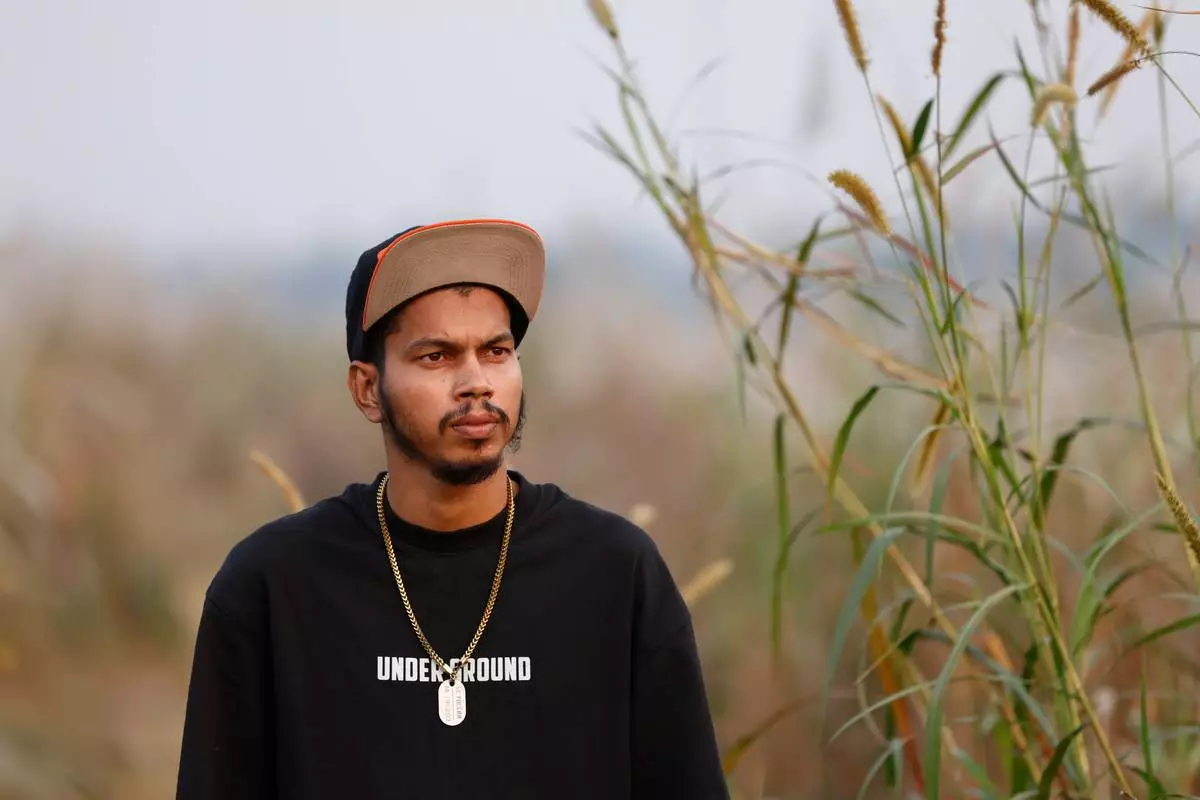
Mohan Miajee, 29, who escaped after fighting for the Russian army, poses for a portrait in Munshiganj, Bangladesh, Dec. 9, 2025. (AP Photo/Rajib Dhar)
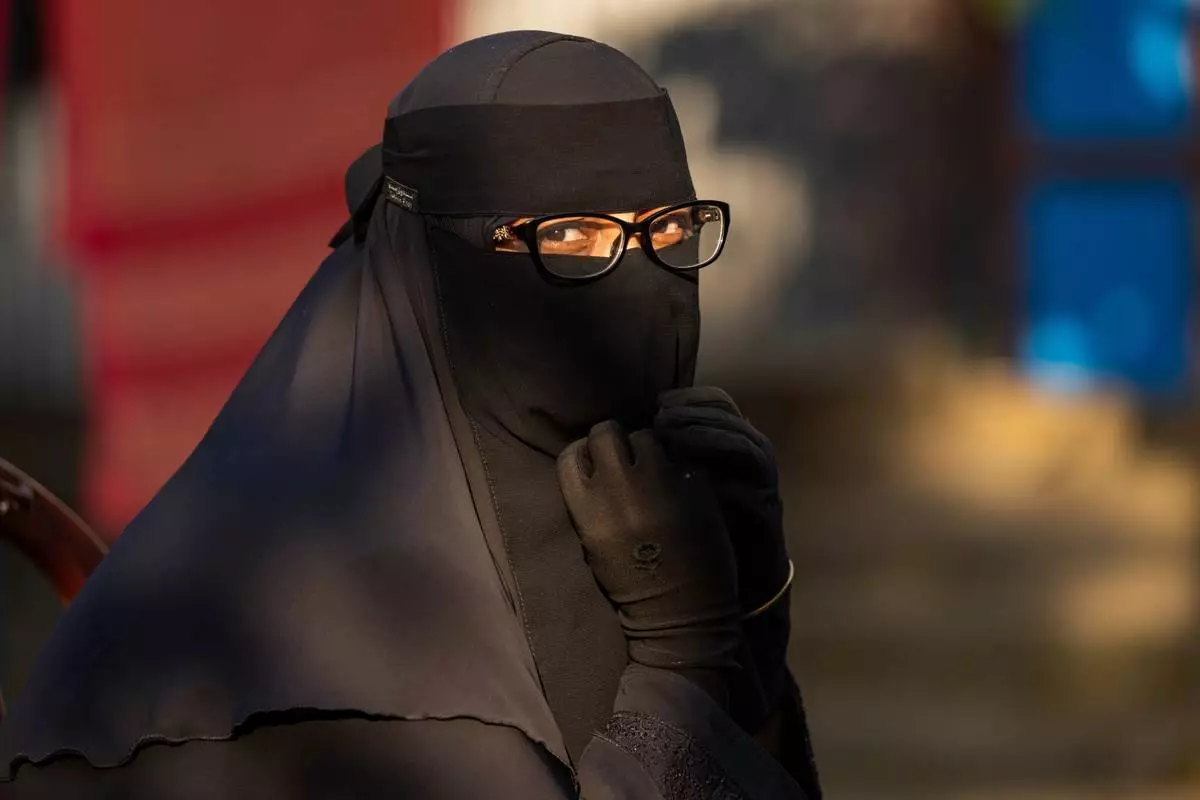
Salma Akdar, 28, who has not heard from her husband Ajgar Hussein, 40, for months, sits after speaking to the Associated Press, in Lakshmipur, Bangladesh, Dec. 10, 2025. (AP Photo/Rajib Dhar)
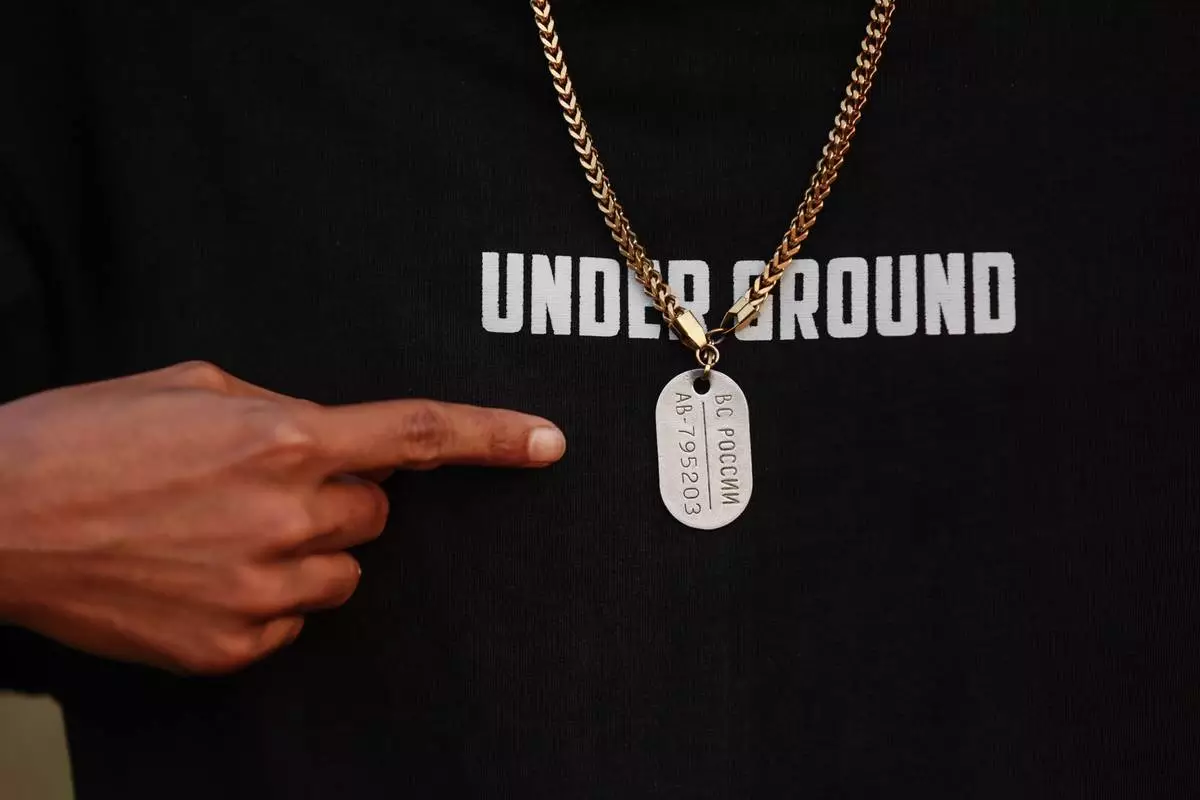
Mohan Miajee, 29, who escaped after fighting for the Russian army, shows his Russian military dog tag in Munshiganj, Bangladesh, Dec. 9, 2025. (AP Photo/Rajib Dhar)
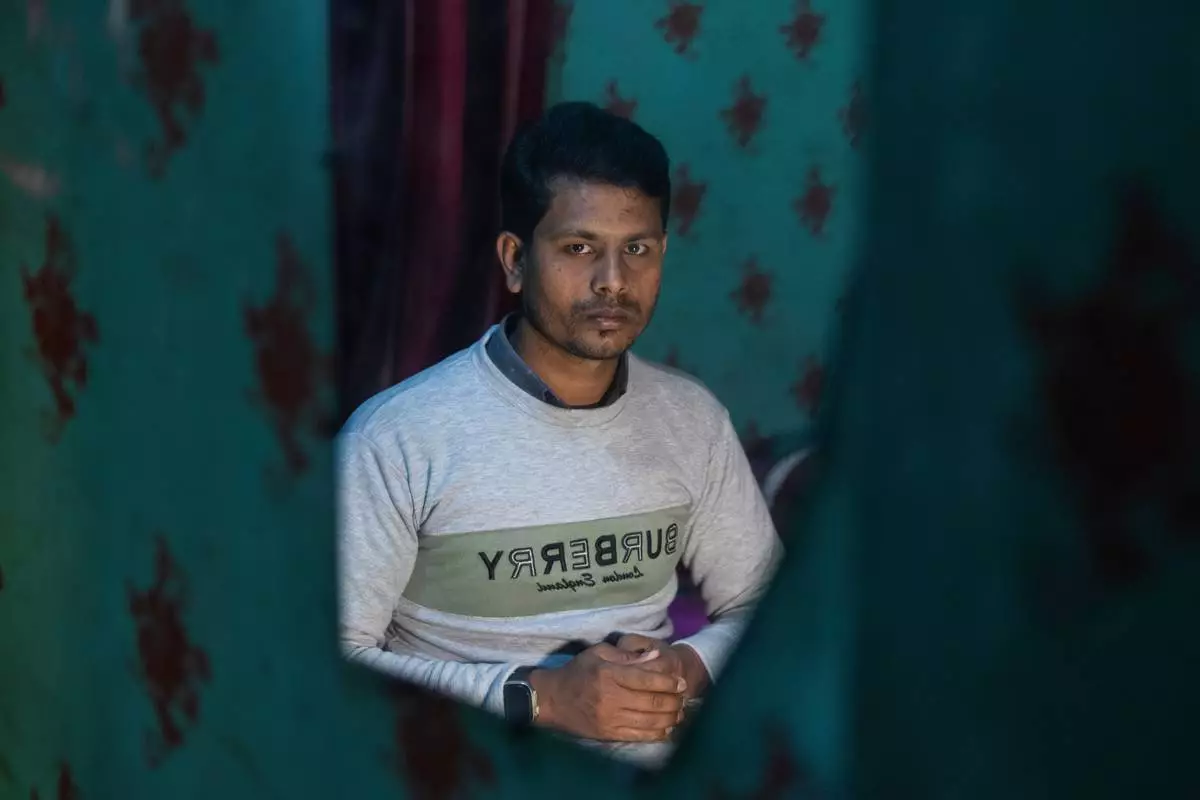
Maksudur Rahman, 31, who escaped after fighting for the Russian army, poses during an interview with the Associated Press in Lakshmipur, Bangladesh, Dec. 10, 2025. (AP Photo/Rajib Dhar)
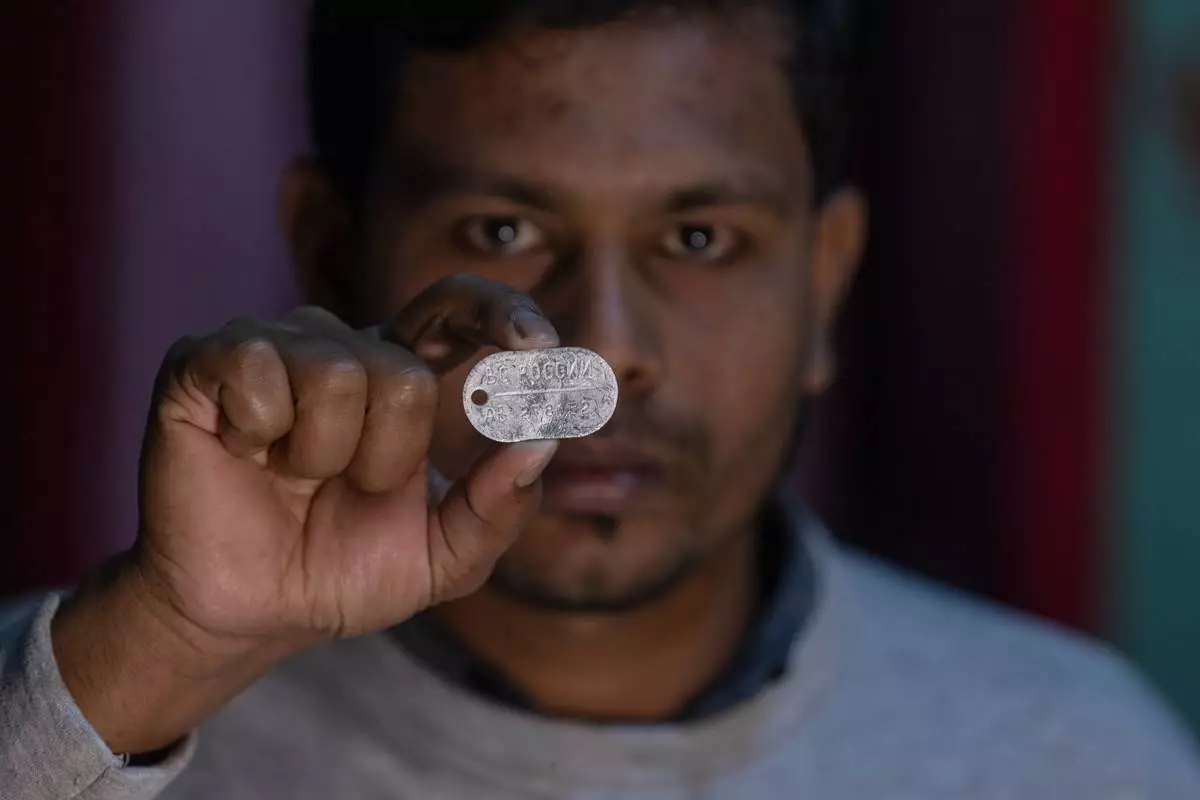
Maksudur Rahman, 31, who escaped after fighting for the Russian army, shows a Russian military dog tag during an interview with The Associated Press in Lakshmipur, Bangladesh, Dec. 10, 2025. (AP Photo/Rajib Dhar)