Skip to Content Facebook Feature Image

Yemen rebels threaten new Red Sea attack as US aircraft carrier heads toward Iran

News

Yemen rebels threaten new Red Sea attack as US aircraft carrier heads toward Iran
News

News

Yemen rebels threaten new Red Sea attack as US aircraft carrier heads toward Iran

2026-01-26 16:51 Last Updated At:18:37

DUBAI, United Arab Emirates (AP) — Yemen’s Iranian-backed Houthi rebels threatened new attacks on ships traveling through the Red Sea corridor, likely trying to back Iran as it worried Monday about an approaching U.S. aircraft carrier after President Donald Trump threatened military action over its crackdown on nationwide protests.

A short video by the Houthis included previously published images of a ship on fire, with the caption: “Soon.” The rebels did not elaborate, but their campaign in the Red Sea saw over 100 ships attacked as part of a campaign the Houthis said pressured Israel over its war against Hamas in the Gaza Strip. The Houthis halted their fire after a ceasefire in the conflict, though they've repeatedly warned they could resume fire if needed.

More Images
Two girls, not wearing the legally required headscarves, walk past a billboard depicting a damaged U.S. aircraft carrier with disabled fighter jets on its deck and a sign reading in Farsi and English, "If you sow the wind, you'll reap the whirlwind," at Enqelab-e-Eslami (Islamic Revolution) Square in Tehran, Iran, Sunday, Jan. 25, 2026. (AP Photo/Vahid Salemi)
Two girls, not wearing the legally required headscarves, walk past a billboard depicting a damaged U.S. aircraft carrier with disabled fighter jets on its deck and a sign reading in Farsi and English, "If you sow the wind, you'll reap the whirlwind," at Enqelab-e-Eslami (Islamic Revolution) Square in Tehran, Iran, Sunday, Jan. 25, 2026. (AP Photo/Vahid Salemi)

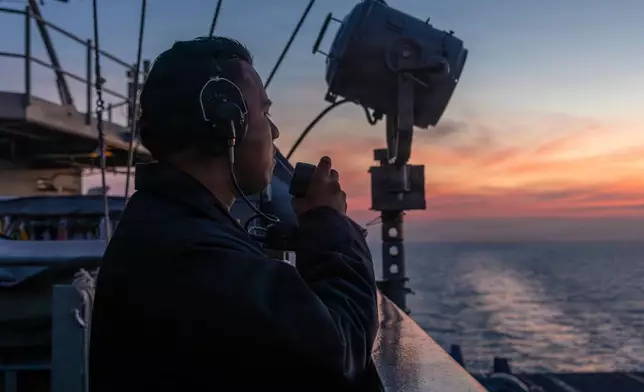
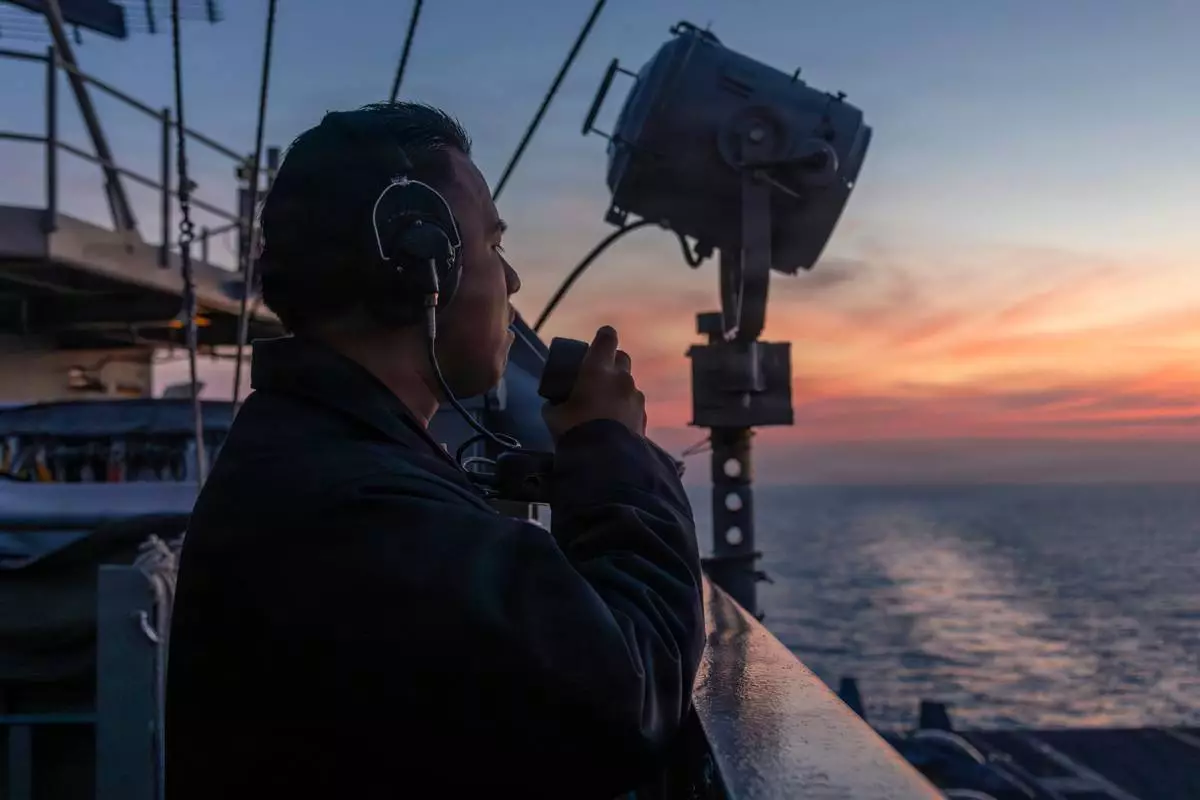
This photo provided by the U.S. Navy shows Seaman Rafael Brito standing watch aboard the Nimitz-class aircraft carrier USS Abraham Lincoln in the Indian Ocean on Jan. 22, 2026. (Mass Communication Specialist Seaman Angel Campbell/U.S. Navy via AP)
This photo provided by the U.S. Navy shows Seaman Rafael Brito standing watch aboard the Nimitz-class aircraft carrier USS Abraham Lincoln in the Indian Ocean on Jan. 22, 2026. (Mass Communication Specialist Seaman Angel Campbell/U.S. Navy via AP)

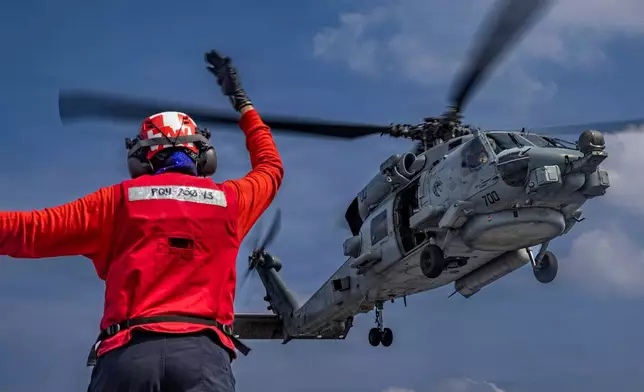
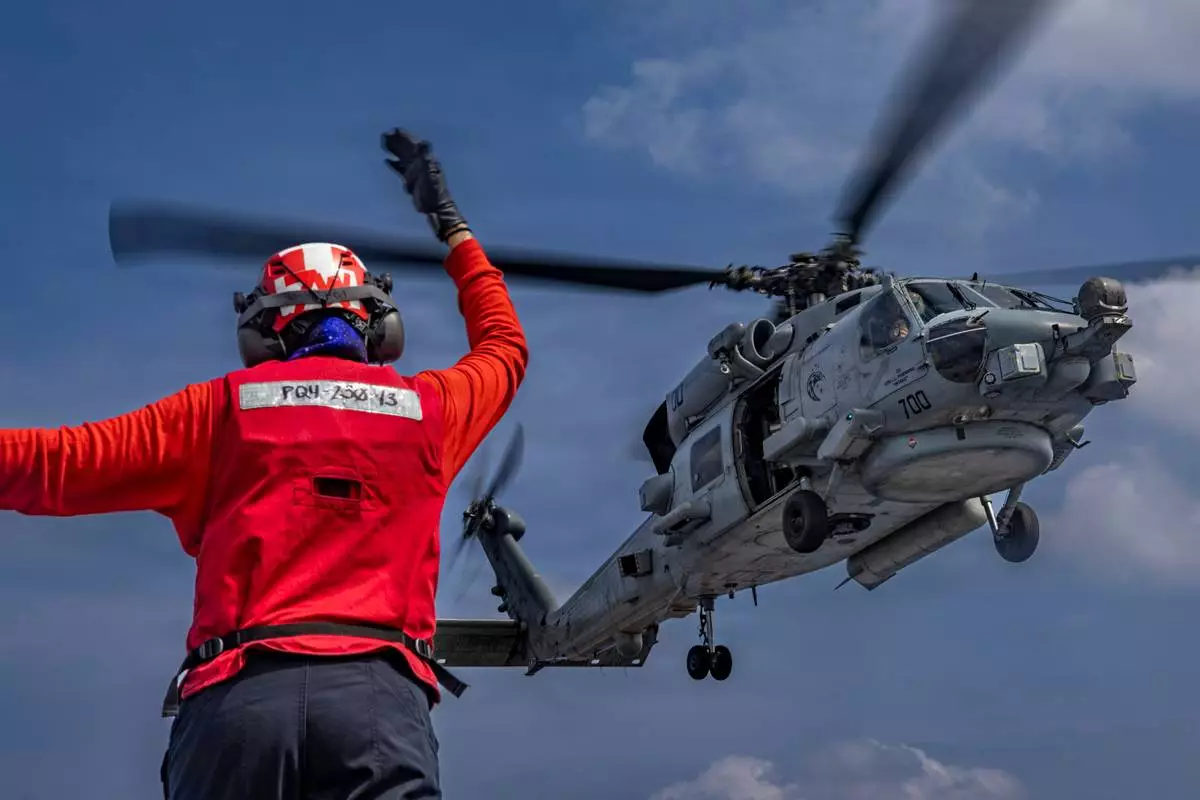
This photo provided by the U.S. Navy shows Aviation Ordnanceman 3rd Class Dianna Hernandez directs an MH-60R Sea Hawk helicopter on the flight deck of the Nimitz-class aircraft carrier USS Abraham Lincoln in the Indian Ocean on Jan. 21, 2026. (Mass Communication Specialist Seaman Daniel Kimmelman/U.S. Navy via AP)
This photo provided by the U.S. Navy shows Aviation Ordnanceman 3rd Class Dianna Hernandez directs an MH-60R Sea Hawk helicopter on the flight deck of the Nimitz-class aircraft carrier USS Abraham Lincoln in the Indian Ocean on Jan. 21, 2026. (Mass Communication Specialist Seaman Daniel Kimmelman/U.S. Navy via AP)

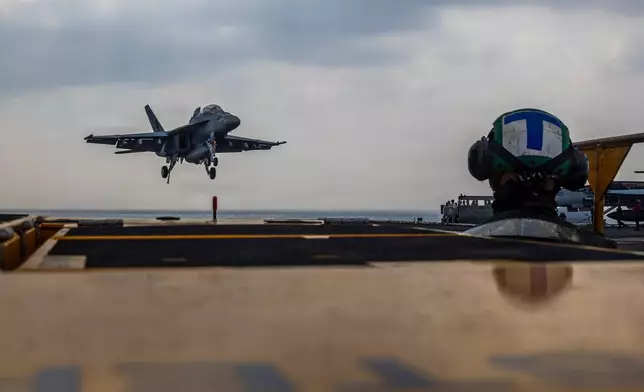
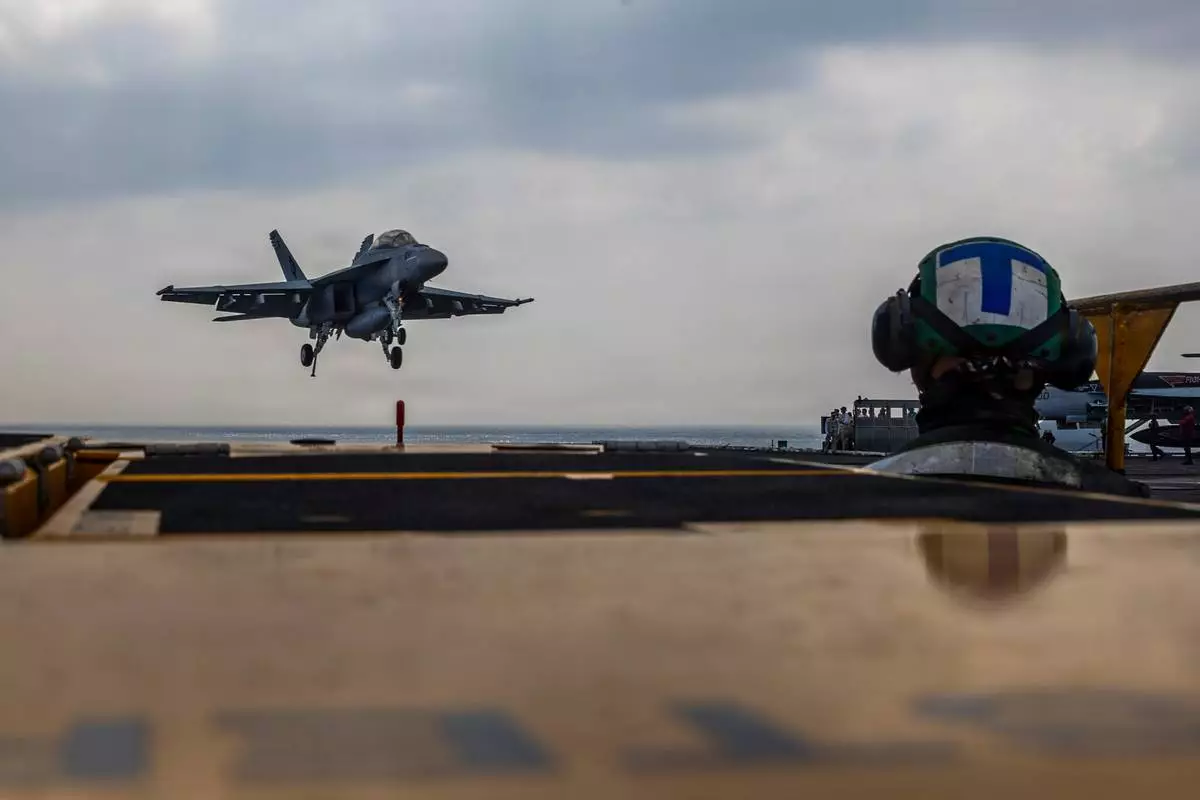
This photo provided by the U.S. Navy shows a Boeing F/A-18E Super Hornet landing on the Nimitz-class aircraft carrier USS Abraham Lincoln in the Indian Ocean on Jan. 22, 2026. (Mass Communication Specialist Seaman Daniel Kimmelman/U.S. Navy via AP)
This photo provided by the U.S. Navy shows a Boeing F/A-18E Super Hornet landing on the Nimitz-class aircraft carrier USS Abraham Lincoln in the Indian Ocean on Jan. 22, 2026. (Mass Communication Specialist Seaman Daniel Kimmelman/U.S. Navy via AP)

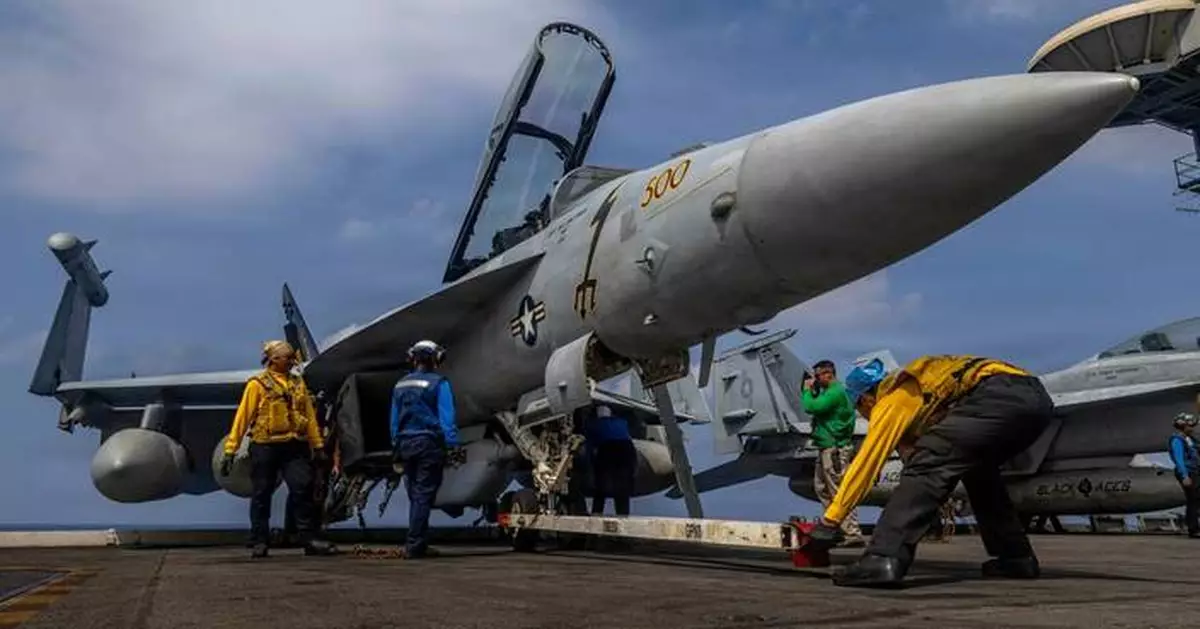
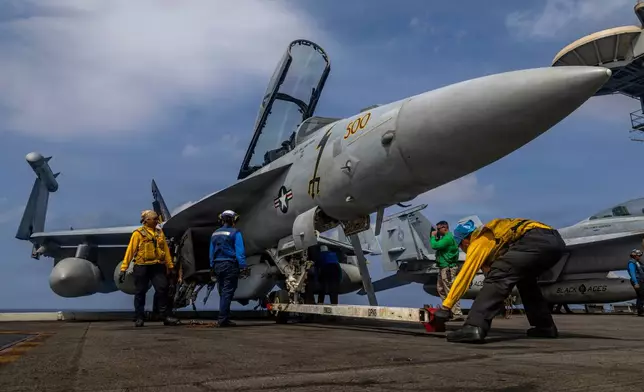
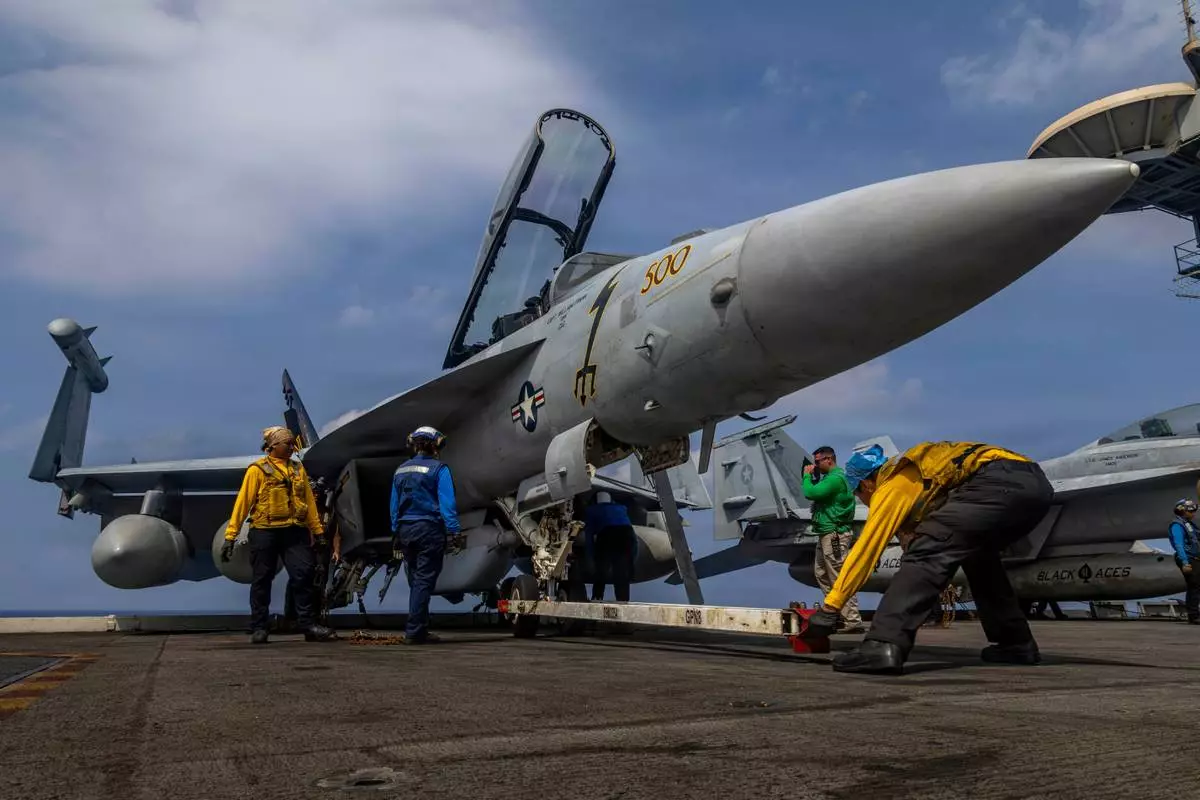
This photo provided by the U.S. Navy shows sailors preparing a Boeing EA-18G Growler on the flight deck of the Nimitz-class aircraft carrier USS Abraham Lincoln in the Indian Ocean on Jan. 21, 2026. (Mass Communication Specialist Seaman Daniel Kimmelman/U.S. Navy via AP)

This photo provided by the U.S. Navy shows sailors preparing a Boeing EA-18G Growler on the flight deck of the Nimitz-class aircraft carrier USS Abraham Lincoln in the Indian Ocean on Jan. 21, 2026. (Mass Communication Specialist Seaman Daniel Kimmelman/U.S. Navy via AP)

The Houthi threat come as the aircraft carrier USS Abraham Lincoln and other guided missile destroyers with it move toward the region. Trump has said the ships are being moved “just in case” he decides to take action against Iran. Trump already has laid out two red lines for attack — the killing of peaceful protesters and Tehran conducting mass executions of those it has arrested in a massive crackdown over the demonstrations.

Iranian Defense Ministry spokesperson Gen. Reza Talaei-Nik renewed warnings Monday to both Israel and the U.S. over any possible attack, saying it would "be met with a response that is more painful and more decisive than in the past.” Iranian state television quoted Talaei-Nik as adding that threats from the two countries required Iran “to maintain full and comprehensive preparedness.”

Iran over the weekend unveiled a new banner in Enghelab Square threatening the Lincoln, showing an aircraft carrier strewn with bodies and streaked with blood with the warning: “If you sow the wind, you will reap the whirlwind.” However, Iran is still reeling from a 12-day war launched by Israel in June that saw its air defense systems broadly destroyed and top military leaders killed, as well as its nuclear enrichment sites bombed by the U.S.

As a sign of concern over its airspace, Iran issued a notice to pilots Sunday that banned small private aircraft from flying in the country, with carveouts for the oil industry and emergency medical flights.

Many Western airlines have started to avoid Iranian airspace entirely due to the tensions, though Gulf Arab carriers flying to Moscow still rely on the route. Iranian air defense troops in 2020 shot down a Ukrainian commercial airliner, killing 176 people on board.

The protests in Iran began on Dec. 28, sparked by the fall of the Iranian currency, the rial, and quickly spread across the country. They were met by a violent crackdown by Iran’s theocracy, the scale of which is only starting to become clear as the country has faced more than two-week internet blackout — the most comprehensive in the nation's history.

The U.S.-based Human Rights Activists News Agency on Sunday put the death toll at 5,848, with the number expected to increase. It says more than 41,280 people have been arrested.

The group’s figures have been accurate in previous unrest and rely on a network of activists in Iran to verify deaths. That death toll exceeds that of any other round of protest or unrest there in decades, and recalls the chaos surrounding Iran’s 1979 Islamic Revolution. The Associated Press has not been able to independently verify the toll.

Iran’s government has put the death toll at a far lower 3,117, saying 2,427 were civilians and security forces, and labeled the rest “terrorists.” In the past, Iran’s theocracy has undercounted or not reported fatalities from unrest.

Two girls, not wearing the legally required headscarves, walk past a billboard depicting a damaged U.S. aircraft carrier with disabled fighter jets on its deck and a sign reading in Farsi and English, "If you sow the wind, you'll reap the whirlwind," at Enqelab-e-Eslami (Islamic Revolution) Square in Tehran, Iran, Sunday, Jan. 25, 2026. (AP Photo/Vahid Salemi)
Two girls, not wearing the legally required headscarves, walk past a billboard depicting a damaged U.S. aircraft carrier with disabled fighter jets on its deck and a sign reading in Farsi and English, "If you sow the wind, you'll reap the whirlwind," at Enqelab-e-Eslami (Islamic Revolution) Square in Tehran, Iran, Sunday, Jan. 25, 2026. (AP Photo/Vahid Salemi)

This photo provided by the U.S. Navy shows Seaman Rafael Brito standing watch aboard the Nimitz-class aircraft carrier USS Abraham Lincoln in the Indian Ocean on Jan. 22, 2026. (Mass Communication Specialist Seaman Angel Campbell/U.S. Navy via AP)
This photo provided by the U.S. Navy shows Seaman Rafael Brito standing watch aboard the Nimitz-class aircraft carrier USS Abraham Lincoln in the Indian Ocean on Jan. 22, 2026. (Mass Communication Specialist Seaman Angel Campbell/U.S. Navy via AP)

This photo provided by the U.S. Navy shows Aviation Ordnanceman 3rd Class Dianna Hernandez directs an MH-60R Sea Hawk helicopter on the flight deck of the Nimitz-class aircraft carrier USS Abraham Lincoln in the Indian Ocean on Jan. 21, 2026. (Mass Communication Specialist Seaman Daniel Kimmelman/U.S. Navy via AP)
This photo provided by the U.S. Navy shows Aviation Ordnanceman 3rd Class Dianna Hernandez directs an MH-60R Sea Hawk helicopter on the flight deck of the Nimitz-class aircraft carrier USS Abraham Lincoln in the Indian Ocean on Jan. 21, 2026. (Mass Communication Specialist Seaman Daniel Kimmelman/U.S. Navy via AP)

This photo provided by the U.S. Navy shows a Boeing F/A-18E Super Hornet landing on the Nimitz-class aircraft carrier USS Abraham Lincoln in the Indian Ocean on Jan. 22, 2026. (Mass Communication Specialist Seaman Daniel Kimmelman/U.S. Navy via AP)
This photo provided by the U.S. Navy shows a Boeing F/A-18E Super Hornet landing on the Nimitz-class aircraft carrier USS Abraham Lincoln in the Indian Ocean on Jan. 22, 2026. (Mass Communication Specialist Seaman Daniel Kimmelman/U.S. Navy via AP)

This photo provided by the U.S. Navy shows sailors preparing a Boeing EA-18G Growler on the flight deck of the Nimitz-class aircraft carrier USS Abraham Lincoln in the Indian Ocean on Jan. 21, 2026. (Mass Communication Specialist Seaman Daniel Kimmelman/U.S. Navy via AP)

This photo provided by the U.S. Navy shows sailors preparing a Boeing EA-18G Growler on the flight deck of the Nimitz-class aircraft carrier USS Abraham Lincoln in the Indian Ocean on Jan. 21, 2026. (Mass Communication Specialist Seaman Daniel Kimmelman/U.S. Navy via AP)
PORTLAND, Maine (AP) — Six people died when a business jet crashed during takeoff as a snowstorm moved in and visibility diminished in Maine Sunday night.

The Bombardier Challenger 600 flipped over and burned on takeoff at Bangor International Airport around 7:45 p.m. Sunday night as the nation’s massive winter storm was beginning to reach the area.

An audio recording of air traffic controllers posted by www.LiveATC.net includes someone saying “Aircraft upside down. We have a passenger aircraft upside down,” about 45 seconds after a plane was cleared for takeoff. First responders arrived less than a minute later, airport director Jose Saavedra said.

Experts say the weather and questions about whether ice accumulating on the wings kept the plane from getting airborne — as has happened at least twice before on that plane model — will likely be an initial focus by the National Transportation Safety Board. However, the agency will consider all possible factors.

“You can count on the fact that NTSB is going to look very closely at this,” said John Cox, who is CEO of Safety Operating Systems.

The airport said Monday afternoon there were six people aboard, according to the flight manifest, and all died. Earlier in the day, the Federal Aviation Administration had said seven died and one was injured but warned the numbers were subject to change, and the agency defers to local authorities.

Snowfall was heavy elsewhere at the time of the crash, but accumulation had just started in Bangor. Other planes had been taking off safely. But about half an hour before the crash, the pilot of a Florida-bound Allegiant plane radioed the tower to abort his takeoff.

“One, our deice fluid has failed and two, I don’t think the visibility is good enough for us to go, so we’re going to have to taxi back to the gate here,” the Allegiant pilot radioed. The controller responded by saying he was just getting ready to warn the pilot that visibility had dropped to about three-quarters of a mile.

At about the same time, the pilot of the Bombardier had taxied over to the deicing pad and was radioing in a request to get his plane's wings and tail treated, according to audio posted by www.LiveATC.net. The plane remained at the deicing pad for about 20 minutes before taxiing to the runway.

The Bombardier Challenger 600 model “has a history of problems with icing on takeoff” that caused previous deadly crashes in Birmingham, England; and Montrose, Colorado, more than 20 years ago, aviation safety consultant Jeff Guzzetti said. Even a little bit of ice on the wings can cause serious problems, so careful inspections and de-icing are a crucial step before takeoff, the former federal crash investigator said. And there is a time limit on how long de-icing remains effective. It could last only about 20 minutes.

The National Weather Service in Caribou, Maine, said the airport eventually received nearly 10 inches of snow, but it was just beginning to fall at the time of the crash. Wind speeds were about 10 mph, which is not out of the ordinary. Temperatures dropped below 3 degrees (minus 16 Celsius) while the jet was in Bangor.

Cox said those conditions wouldn't keep planes from flying.

The plane that crashed had just landed at Bangor from Houston at 6:09 p.m., according to FlightRadar24.com, so it would have likely been sitting outside in the snow for more than an hour before it tried to takeoff again. And it wouldn’t have taken long for ice to start building up on the wings — particularly if the plane was refueled with cold jet fuel that’s stored in wing tanks, a factor the NTSB has cited in previous crashes.

“Given the weather conditions at the time, and the history of wind contamination with this particular aircraft, I’m sure that’s something the NTSB is going to look into immediately,” Guzzetti said. “If there was any kind of precipitation at all, freezing precipitation, they would have needed to clean off those wings before they took off.”

The Bombardier Challenger 600 is a wide-bodied business jet configured for nine to 11 passengers. It was launched in 1980 as the first private jet with a “walk-about cabin” and remains a popular charter option, according to aircharterservice.com.

Crash investigators in England recommended improved procedures for ice detection after a 2002 crash, but significant changes weren't made until after the NTSB finished its investigation in 2006 of the Colorado crash that killed the son of NBC television executive Richard Ebersol.

The FAA published new rules afterward to make clear to pilots and airports that even a small amount of frost on the wings can be a problem. The agency also clarified the standards for de-icing to make certain that all frozen particles are removed from the wings, and it required a combination of tactile and visual inspections.

The identities of those onboard won’t be released publicly until they can be confirmed, officials said.

The jet was registered to a corporation that shares the same address in Houston as the personal injury law firm Arnold and Itkin Trial Lawyers, and one of the law firm’s founding partners is listed as the registered agent for the company that owns the plane.

The international airport in Bangor, about 200 miles (320 kilometers) north of Boston, is one of the closest in the U.S. to Europe and is often used to refuel private jets flying overseas. The Bombardier was headed for France when it crashed.

The airport shut down after the crash and will remain closed at least until Wednesday so the FAA and National Transportation Safety Board investigators can examine and remove the wreckage.

A preliminary report outlining the facts of the crash should be released in about a month, but the final version likely won't be published for more than a year.

Ramer contributed to this report from Concord, New Hampshire; and Funk contributed from Omaha, Nebraska.

This image taken from video provided by WABI television, emergency services work on a scene of the Bombardier Challenger 600 crash at the Bangor Airport in Maine, late Sunday, Jan. 25, 2026. (WABI via AP)

This image taken from video provided by WABI television, emergency services work on a scene of the Bombardier Challenger 600 crash at the Bangor Airport in Maine, late Sunday, Jan. 25, 2026. (WABI via AP)

Recommended Articles