China's consumption market remained a key engine of economic growth in 2025, marked by robust gains in durable goods sales, rapid expansion of new consumption models, emerging scenarios of rural spending, and inbound consumption, according to an official.
At a press conference held by the State Council Information Office on China's commercial operations in 2025 in Beijing on Monday, Yang Mu, head of the Department of Market Operation and Consumption Promotion under the Ministry of Commerce, outlined features of China's consumption market in 2025.
"Sales of major durable goods grew at a brisk pace. In 2025, driven by the consumer goods trade-in program, retail sales of home appliances, telecommunications equipment, and furniture at enterprises above the designated size rose by 11 percent, 20.9 percent, and 14.6 percent, respectively, while retail sales of passenger vehicles increased by 3.8 percent," said Yang.
For retail industry, enterprises above the designated size refers to retail businesses with an annual main business revenue of 5 million yuan (about 720,000 U.S. dollars) or more.
"New forms of consumption flourished. New types of consumption, such as digital, green, and health-related consumption, continued to gain momentum, with new business forms, models, and scenarios constantly emerging. Online retail sales of physical goods grew by 5.2 percent, and the market penetration rate of new energy passenger vehicles reached 53.9 percent," she said.
"Rural consumption was vibrant. With steady improvements in county-level commercial systems, consumption potential in rural areas was further unleashed. Retail sales of consumer goods in rural areas reached 6.8 trillion yuan (about 980 billion U.S. dollars), up 4.1 percent year on year, 0.5 percentage points faster than that in urban areas," she said.
"Inbound consumption gained strong momentum. As China expanded its visa-free policy coverage and further optimized departure tax refund policies, 'Travel in China' and 'Shopping in China' continued to gain popularity. Sales of tax-refunded goods nearly doubled. Over the past year since the 240-hour visa-free transit policy was carried out, the number of visa-free inbound foreign visitors has increased by nearly 30 percent," she said.
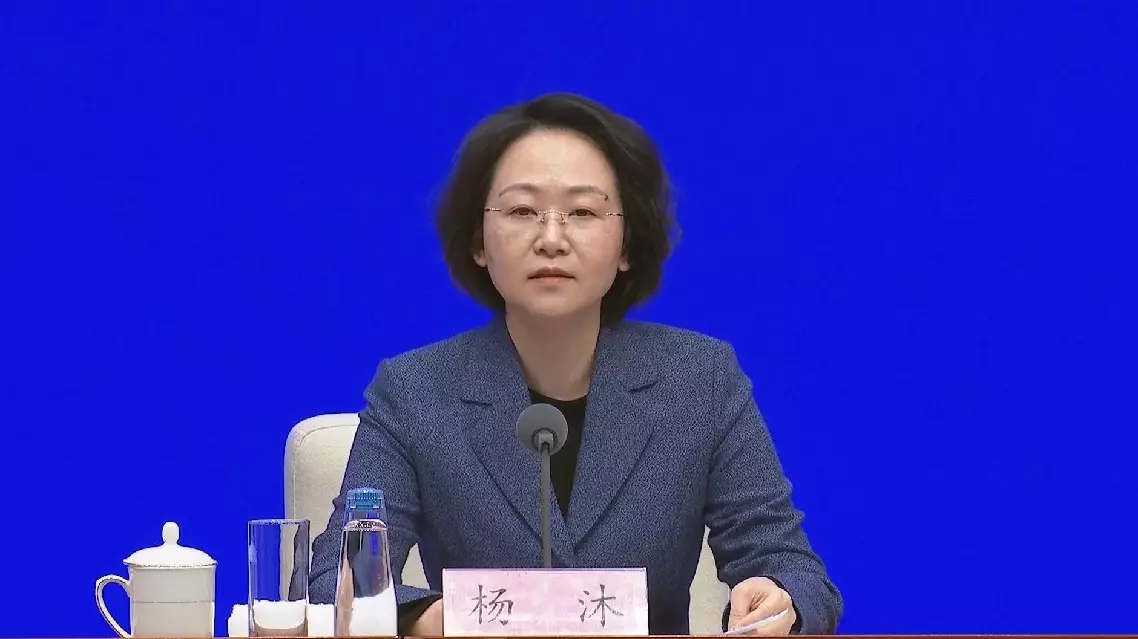
China's consumption market features new modes, scenarios in 2025
Conveying Iran's conditions for ending the war to Pakistan, as a mediating country, is among the key purposes of Iranian Foreign Minister Seyed Abbas Araghchi's return to Islamabad, Iran's semi-official Tasnim News Agency reported on Sunday.
According to Tasnim, Araghchi's return to Pakistan is not related to nuclear negotiations with the United States. Instead, the foreign minister is expected to discuss bilateral relations with Pakistan, along with other issues such as Iran's enforcement of a new legal system on the Strait of Hormuz, seeking war compensation, guarantees against repeated "aggression by the warmongers," and lifting the U.S. naval blockade.
Araghchi arrived in Islamabad on Sunday afternoon for his second visit since Friday, following a stop in Oman. His brief visit to Pakistan aims to continue consultations with Pakistani officials, it added.
Araghchi is scheduled to visit Russia after Pakistan on the final leg of his regional tour. During his first trip to Islamabad, he met Pakistan's Prime Minister Shehbaz Sharif and Arm Chief Asim Munir.
On Feb. 28, Israel and the United States launched joint attacks on Tehran and other Iranian cities, killing Iran's then-Supreme Leader Ali Khamenei, senior commanders, and civilians. Iran responded with waves of missile and drone strikes targeting Israel and U.S. assets in the Middle East, and tightened control over the Strait of Hormuz, blocking passage by vessels belonging to or affiliated with Israel and the United States.
An April 8 ceasefire was followed by Iran-US talks in Islamabad on April 11 and 12. After the negotiations collapsed, the United States imposed a blockade on the Strait of Hormuz, preventing ships to and from Iranian ports from transiting.
A new round of negotiations had been expected in Pakistan this week, but Iran declined to attend, citing continued U.S. naval pressure and "excessive demands."
U.S. President Donald Trump told Fox News Sunday that he will no longer send delegations to talk with Iran. "If they (the Iranians) want to talk, they can come to us, or they can call us," he said.
Trump said that he has great respect for Pakistan, which had been hosting U.S.-Iranian talks in Islamabad, and that Pakistan will stay involved.
He repeated that Iran cannot have nuclear weapons. "So if they want, they can call us. But again, they know what has to be in the agreement. Very simple: they cannot have a nuclear weapon. Otherwise, there's no reason to meet," said Trump.
Iranian President Masoud Pezeshkian said U.S. pressure and hostile actions are undermining trust and making progress toward renewed talks more difficult, according to a statement from his office early Sunday.
He added that Washington cannot pursue negotiations while increasing pressure on Iran, saying such actions "disrupt the necessary atmosphere" for diplomacy.
Iran's FM conveys conditions for ending war to Pakistan