Skip to Content Facebook Feature Image

Hospital for Special Surgery Names Dr. Austin Fragomen as Chief of the Limb Lengthening and Complex Reconstruction Service

Business

Hospital for Special Surgery Names Dr. Austin Fragomen as Chief of the Limb Lengthening and Complex Reconstruction Service
Business

Business

Hospital for Special Surgery Names Dr. Austin Fragomen as Chief of the Limb Lengthening and Complex Reconstruction Service

2026-01-26 23:00 Last Updated At:01-28 15:05

NEW YORK--(BUSINESS WIRE)--Jan 26, 2026--

Hospital for Special Surgery (HSS) has named Austin T. Fragomen, MD, as Chief of the Limb Lengthening and Complex Reconstruction Service. Dr. Fragomen, who has devoted his entire medical career to HSS, began practicing in 2005 after completing a one-year fellowship in Limb Lengthening and Complex Reconstruction at HSS.

This press release features multimedia. View the full release here: https://www.businesswire.com/news/home/20260126749131/en/

Dr. Fragomen succeeds S. Robert Rozbruch, MD, who founded the service in 2005 and has led it with distinction over the past 20 years. Dr. Rozbruch will continue practicing at HSS, focusing on his clinical work and research.

In his new role, Dr. Fragomen will oversee one of the foremost centers dedicated to limb lengthening and reconstruction worldwide—a highly specialized service providing treatment for a broad spectrum of conditions affecting the limbs. Patients from across the United States and around the world have come to HSS for the special expertise that the team offers.

“We are immensely grateful and thank Dr. Rozbruch for his many years of leadership as a clinician, researcher, and educator,” said Douglas E. Padgett, MD, HSS Surgeon-in-Chief and Medical Director. “Over the years, Dr. Fragomen has demonstrated his deep commitment to advancing the field of limb lengthening and complex reconstruction. He has played a key role at HSS and in the broader orthopedic community, often finding solutions for patients with the most complex conditions.”

Dr. Fragomen and colleagues provide expert care for patients with leg length discrepancies or deformities; limb malalignment and pain caused by bowlegs or knock knees; foot and ankle deformities; and complications related to bone healing, alignment or infection after trauma. Specialized practitioners also perform upper extremity lengthening and deformity correction; bone reconstruction or transport after tumor excision; limb salvage procedures; and osseointegration limb replacement for patients with an amputation.

“In addition to the skill and expertise of our highly specialized surgeons, our close collaboration with other services at HSS ensures coordinated and comprehensive care for patients with these complex medical problems,” Dr. Fragomen explains.

As Director of the Limb Lengthening and Complex Reconstruction Fellowship Program at HSS and a professor of clinical orthopedic surgery at Weill Cornell Medical College, Dr. Fragomen has a longstanding commitment to education and training. Over the years, he has served as a valued mentor to countless medical school students, orthopedic surgery residents and fellows.

He has also welcomed surgeons from across the United States and around the world who come to HSS for monthlong observerships to learn advanced techniques and approaches to complex orthopedic challenges.

Dr. Fragomen is also deeply engaged in research and has published nearly 200 scientific papers and book chapters. He has presented his work at medical meetings across the United States and abroad and has lectured extensively on topics related to residency training programs. He is an active member of numerous professional organizations, including the Limb Lengthening and Reconstruction Society-ASAMI North America, serving as the group’s president from 2019 to 2021.

In his new role, Dr. Fragomen includes among his goals maintaining and enhancing HSS’s reputation as a world leader in patient care, research and education in limb deformity, limb lengthening, limb reconstruction and replacement. “We will continue to train the next generation of highly specialized orthopedic surgeons so they can bring safe and effective treatments to populations around the globe,” Dr. Fragomen said. “At the same time, we remain committed to ensuring that patients here at home have access to the services and expertise they need.”

About HSS

HSS is the world’s leading academic medical center focused on musculoskeletal health. At its core is Hospital for Special Surgery, nationally ranked No. 1 in orthopedics (for the 16th consecutive year), No. 3 in rheumatology by U.S. News & World Report (2025-2026), and the best pediatric orthopedic hospital in NY, NJ and CT by U.S. News & World Report “Best Children’s Hospitals” list (2025-2026). In a survey of medical professionals in more than 20 countries by Newsweek, HSS is ranked world #1 in orthopedics for a fifth consecutive year (2025). Founded in 1863, the Hospital has the lowest readmission rates in the nation for orthopedics, and among the lowest infection and complication rates. HSS was the first in New York State to receive Magnet Recognition for Excellence in Nursing Service from the American Nurses Credentialing Center five consecutive times. An affiliate of Weill Cornell Medical College, HSS has a main campus in New York City and facilities in New Jersey, Connecticut and in the Long Island and Westchester County regions of New York State, as well as in Florida. In addition to patient care, HSS leads the field in research, innovation and education. The HSS Research Institute comprises 20 laboratories and 300 staff members focused on leading the advancement of musculoskeletal health through prevention of degeneration, tissue repair and tissue regeneration. In addition, more than 200 HSS clinical investigators are working to improve patient outcomes through better ways to prevent, diagnose, and treat orthopedic, rheumatic and musculoskeletal diseases. The HSS Innovation Institute works to realize the potential of new drugs, therapeutics and devices. The HSS Education Institute is a trusted leader in advancing musculoskeletal knowledge and research for physicians, nurses, allied health professionals, academic trainees, and consumers in more than 165 countries. The institution is collaborating with medical centers and other organizations to advance the quality and value of musculoskeletal care and to make world-class HSS care more widely accessible nationally and internationally. www.hss.edu.
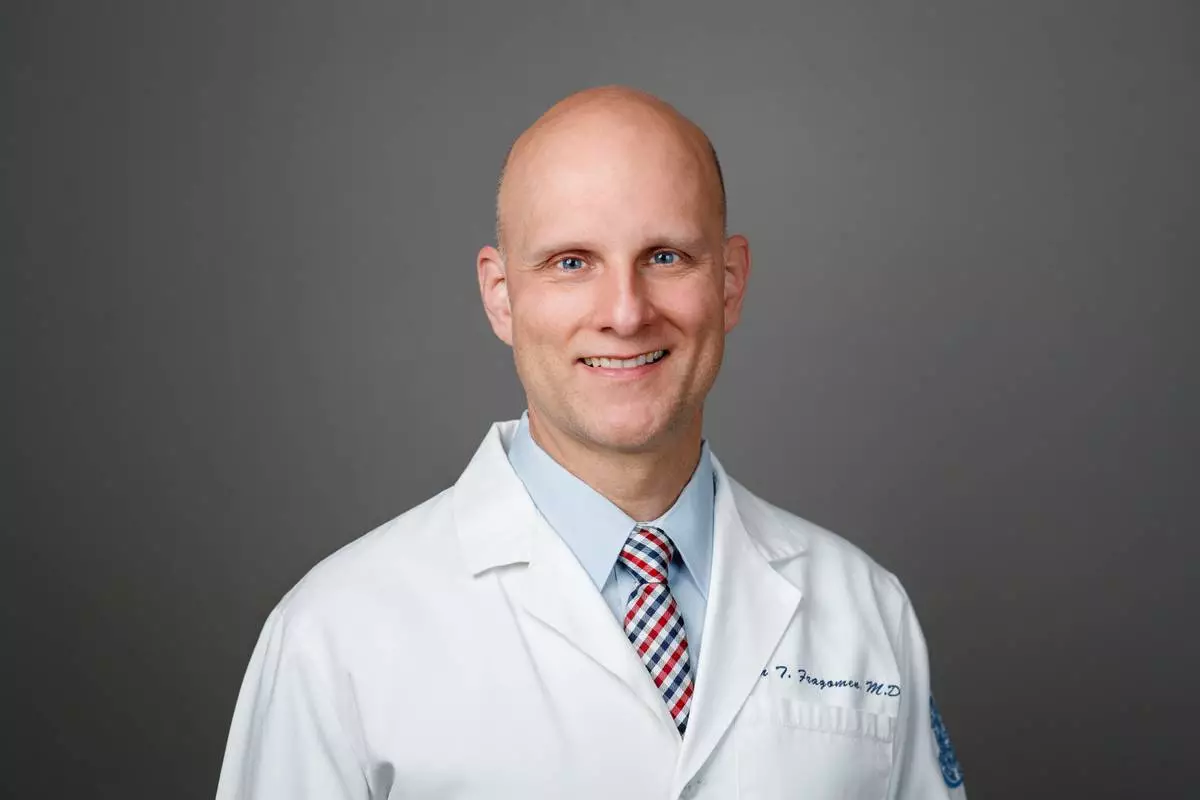
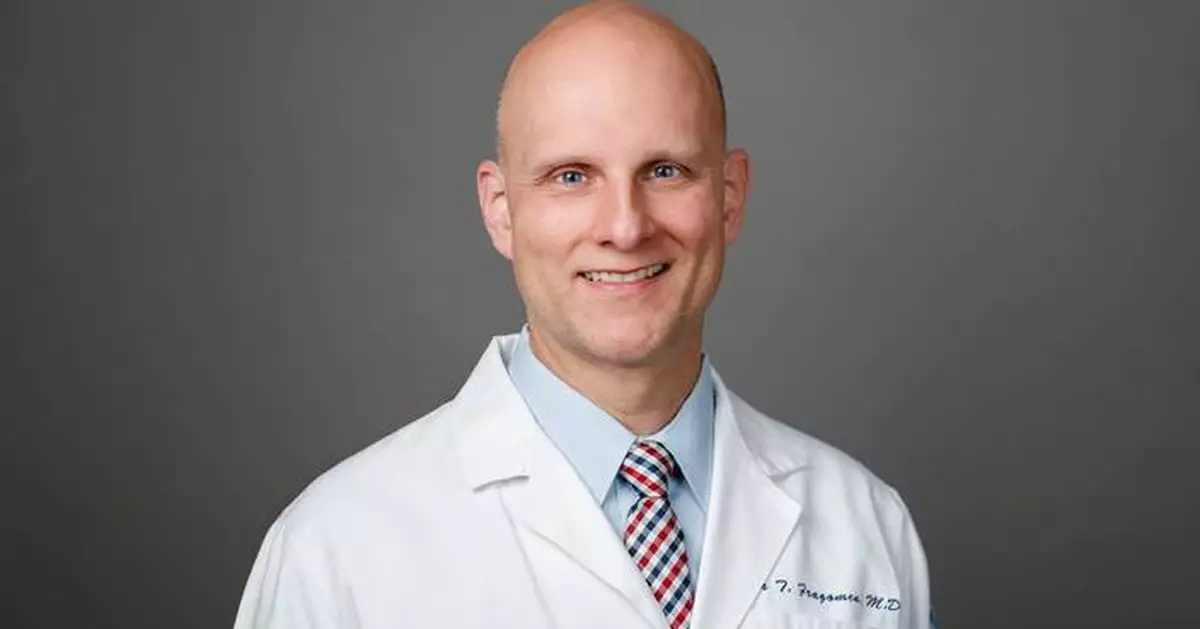
Austin T. Fragomen, MD, Chief of the Limb Lengthening and Complex Reconstruction Service at Hospital for Special Surgery (HSS).


Austin T. Fragomen, MD, Chief of the Limb Lengthening and Complex Reconstruction Service at Hospital for Special Surgery (HSS).

DUBAI, United Arab Emirates (AP) — Iran fired on targets across the Middle East while American and Israeli airstrikes hit the Islamic Republic early Friday as the war neared the end of its fifth week unabated and the U.N. Security Council prepared to meet over Tehran’s stranglehold on the Strait of Hormuz.

Despite claims from the U.S. and Israel that Iran’s military capabilities have been all but destroyed, Tehran has continued to keep the pressure on Israel and its Gulf Arab neighbors. Bahrain and Kuwait both reported early morning barrages from Iran, while Israel warned of incoming missiles.

Activists reported strikes around Tehran and the central city of Isfahan, but it wasn’t immediately clear what was hit.

Iran’s attacks on Gulf region energy infrastructure and its tight grip on the Strait of Hormuz, through which a fifth of the world’s oil and natural gas transits in peacetime, have sent oil prices skyrocketing and is impacting global economies.

Spot prices of Brent crude, the international standard, were around $109 early Friday, up more than 50% from Feb. 28 when Israel and the U.S. started the war with their attacks on Iran.

Shipping had flowed freely through the strait before the war, but U.S. President Donald Trump has said it’s not now Washington’s responsibility to get the waterway reopened, instead putting the onus on others, saying this week that the countries that depend more on fuel shipped through Hormuz should “build some delayed courage” and go “take it.”

The U.N. Security Council was expected to vote Saturday on a proposal from Bahrain that would authorize defensive action to ensure vessels can safely transit the strait. Bahrain’s initial draft would have allowed countries to “use all necessary means” to secure the strait, but Russia, China and France — who have veto power on the Council — expressed opposition to approving the use of force.

Speaking Thursday in South Korea, French President Emmanuel Macron said the American expectation that the Strait of Hormuz could be reopened by force was unrealistic.

Macron said a military operation “would take an infinite amount of time and would expose anyone passing through the strait to coastal threats from (Iran’s) Revolutionary Guard." He added that reopening of the strait “can only be done in coordination with Iran,” through negotiations that would follow a potential ceasefire.

Talks organized by Britain and involving more than 40 countries focused on political rather than military means to secure the strait. The nations, which didn't include the U.S., urged increased diplomatic pressure on Iran and possible sanctions.

More than 1,900 people have been killed in Iran during the war, while 19 have been reported dead in Israel. More than two dozen people have died in Gulf states and the occupied West Bank, while 13 U.S. service members have been killed.

More than 1,300 people have been killed and more than 1 million displaced in Lebanon, where Israel has launched a ground invasion in its fight with the pro-Iranian Hezbollah militant group. Ten Israeli soldiers have also died there.

Rising reported from Bangkok. AP journalists Sylvie Corbet in Paris and Edith M. Lederer at the United Nations contributed to this report.

Iraqi women hold a portrait of Iran's late Supreme Leader Ayatollah Ali Khamenei and his son Ayatollah Mojtaba Khamenei, during a protest against U.S. and Israeli attacks on multiple cities across Iran, in the Shi'ite district of Kazimiyah in Baghdad, Iraq, Friday, April 3, 2026. (AP Photo/Hadi Mizban)

Iraqi women hold a portrait of Iran's late Supreme Leader Ayatollah Ali Khamenei and his son Ayatollah Mojtaba Khamenei, during a protest against U.S. and Israeli attacks on multiple cities across Iran, in the Shi'ite district of Kazimiyah in Baghdad, Iraq, Friday, April 3, 2026. (AP Photo/Hadi Mizban)

A woman checks a destroyed house that was hit in an Israeli airstrike in Saksakiyeh village, south Lebanon, Friday, April 3, 2026. (AP Photo/Hussein Malla)

A woman checks a destroyed house that was hit in an Israeli airstrike in Saksakiyeh village, south Lebanon, Friday, April 3, 2026. (AP Photo/Hussein Malla)

A bridge struck by U.S. airstrikes on Thursday is seen in the town of Karaj, west of Tehran, Iran, Friday, April 3, 2026. (AP Photo/Vahid Salemi)

A bridge struck by U.S. airstrikes on Thursday is seen in the town of Karaj, west of Tehran, Iran, Friday, April 3, 2026. (AP Photo/Vahid Salemi)

FILE - This image released by Bahrain's Interior Ministry shows firefighters extinguishing flames after an Iranian projectile struck an industrial area in Ma'ameer, Bahrain, March 9, 2026. (Bahrain Interior Ministry via AP, File)

FILE - This image released by Bahrain's Interior Ministry shows firefighters extinguishing flames after an Iranian projectile struck an industrial area in Ma'ameer, Bahrain, March 9, 2026. (Bahrain Interior Ministry via AP, File)

Israeli security forces and rescue teams inspect a site struck by an Iranian missile in Petah Tikva, Israel,Thursday, April 2, 2026. (AP Photo/Ohad Zwigenberg)

Israeli security forces and rescue teams inspect a site struck by an Iranian missile in Petah Tikva, Israel,Thursday, April 2, 2026. (AP Photo/Ohad Zwigenberg)

A boy who fled with his family following Israeli strikes in southern Lebanon sits inside the van they are using as shelter in Sidon, Lebanon, Thursday, April 2, 2026. (AP Photo/Emilio Morenatti)

A boy who fled with his family following Israeli strikes in southern Lebanon sits inside the van they are using as shelter in Sidon, Lebanon, Thursday, April 2, 2026. (AP Photo/Emilio Morenatti)

Israeli security forces and rescue teams inspect a site struck by an Iranian missile in Petah Tikva, Israel,Thursday, April 2, 2026. (AP Photo/Ohad Zwigenberg)

Israeli security forces and rescue teams inspect a site struck by an Iranian missile in Petah Tikva, Israel,Thursday, April 2, 2026. (AP Photo/Ohad Zwigenberg)

Recommended Articles