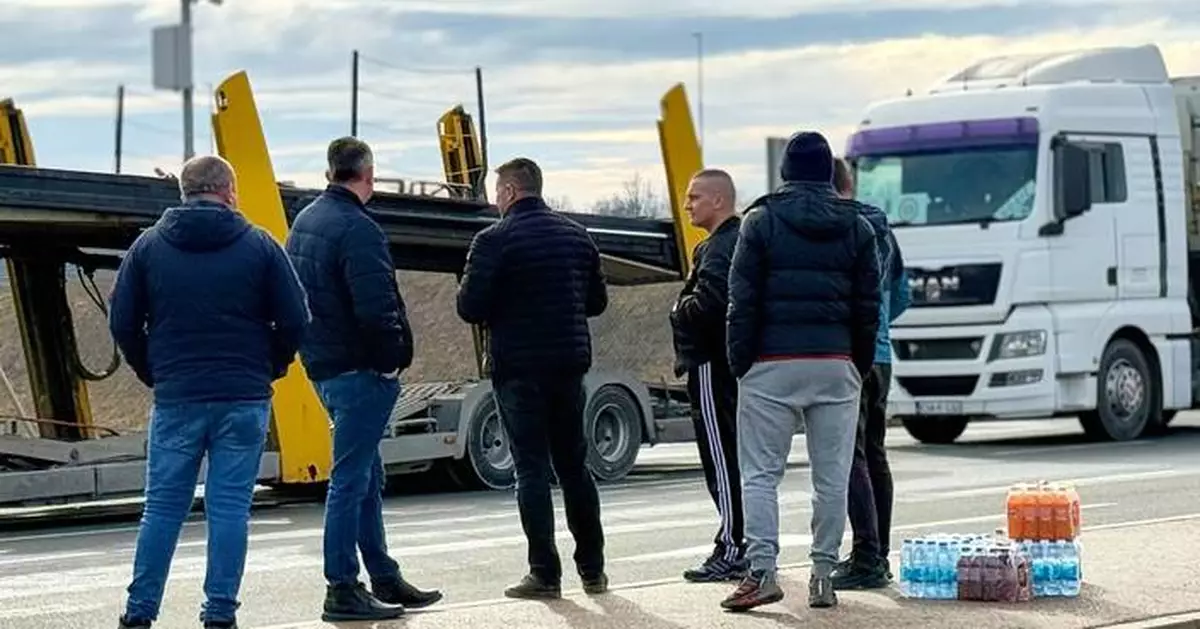
ODZAK, Bosnia-Herzegovina (AP) — Truck drivers from Balkan countries outside the European Union blocked cargo border crossings in the region Monday to protest the recent enforcement of EU entry regulations that they say seriously undermine their work.
Long columns of trucks formed at freight border crossings in Bosnia, Serbia, North Macedonia and Montenegro in a coordinated action in the four countries. The blockade also included the Adriatic Sea port of Bar in southern Montenegro.
Click to Gallery
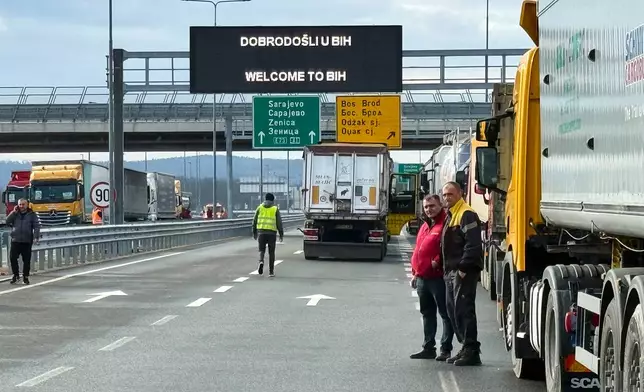
Men stand next to a line of trucks and buses on the Bosnian side of the border with Croatia, in Svilaj, Bosnia, Monday, Jan. 26, 2026, as drivers across the Balkans blocked dozens of border crossings in the region in protest over newly introduced European Union entry regulations.(AP Photo/Eldar Emric)
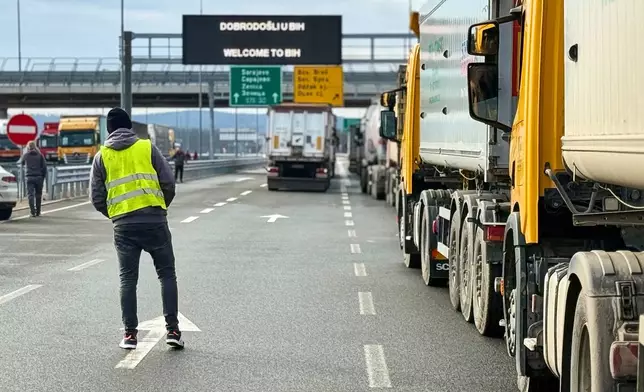
A man stands next to a line of trucks and buses on the Bosnian side of the border with Croatia, in Svilaj, Bosnia, Monday, Jan. 26, 2026, as drivers across the Balkans blocked dozens of border crossings in the region in protest over newly introduced European Union entry regulations.(AP Photo/Eldar Emric)
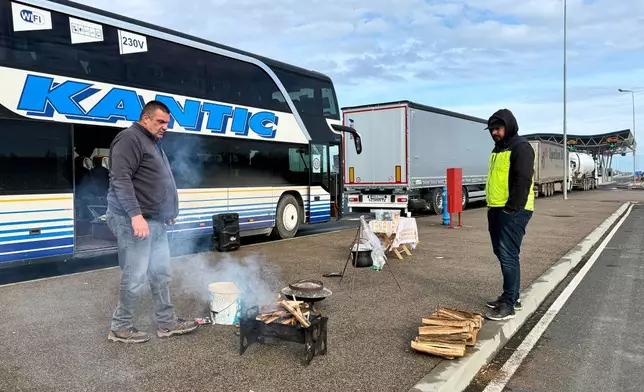
A man prepares to cook on a portable grill next to a line of trucks and buses on the Bosnian side of the border with Croatia, in Svilaj, Bosnia, Monday, Jan. 26, 2026, as drivers across the Balkans blocked dozens of border crossings in the region in protest over newly introduced European Union entry regulations.(AP Photo/Eldar Emric)
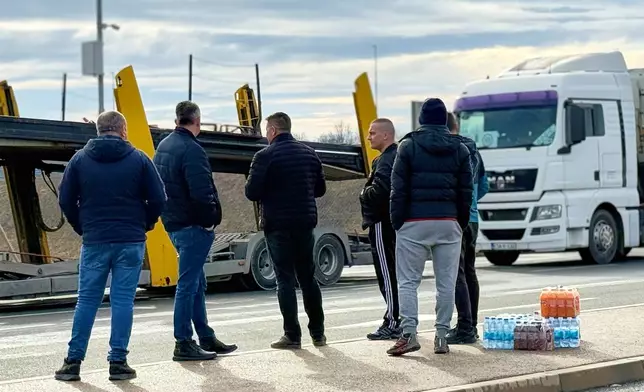
Men stand next to a line of trucks and buses on the Bosnian side of the border with Croatia, in Svilaj, Bosnia, Monday, Jan. 26, 2026, as drivers across the Balkans blocked dozens of border crossings in the region in protest over newly introduced European Union entry regulations.(AP Photo/Eldar Emric)
A new, electronic entry and exit check system, or EES, was launched in October to modernize the management of EU's external borders. Full implementation is expected by April to help prevent illegal migration and monitor permitted stays in the EU countries.
That means that the EU's previously existing rules are being more strictly enforced, including that non-EU citizens are permitted to stay inside Europe's free-travel Schengen Area for only 90 days out of any 180-day period.
Truck drivers who regularly cross the border for deliveries say they use up their 90 days too quickly, meaning they are barred from driving their usual routes for long periods at a time. They are demanding an exemption for professional drivers, saying that dozens already have been detained and deported from the EU's free-travel zone for overstaying.
“We are sorry it has come to this but we didn’t have a choice,” truck driver Amir Hadzidedic said during protest at the Svilaj border crossing between Bosnia and EU member state Croatia. “The only thing we are demanding with this protest is to be allowed to work, nothing else. We are asking for patience, because we have no other choice.”
In Brussels, European Commission spokesman Markus Lammert said that “we are following the situation closely and we are in contact with our partners in the region.” While noting that the 90-day rule is not new, Lammert said the EU is “aware” that a number of non-EU professionals, including athletes, drivers and touring artists, might need to stay longer.
“This is an issue that has our full attention,” he said during a briefing.
Last week, Serbia's Prime Minister Djuro Macut urged a special status for the regional drivers in a meeting with the EU's representative in the country. Macut warned that the problem threatens to “fully paralyze” the transportation companies and inflict damage on the economies of all Balkan nations
Protesting truck drivers said they would allow cargos of medicine, live animals, weapons and explosives to go through their blockades, but that they would otherwise stay put.
Another driver, Muhamed Kantic, said the rules affect bus travel as well.
“When our driver is detained, passengers are left alone on the bus and sometimes they wait a few hours until we find replacement drivers,” he said. "This is not only harassment for drivers but for passengers as well.”
Six countries in the Western Balkan region are striving to become members of the EU and remain at various stages of the reform process needed to join the 27-nation bloc. They are Albania, Bosnia-Herzegovina, Serbia, Kosovo, North Macedonia and Montenegro.
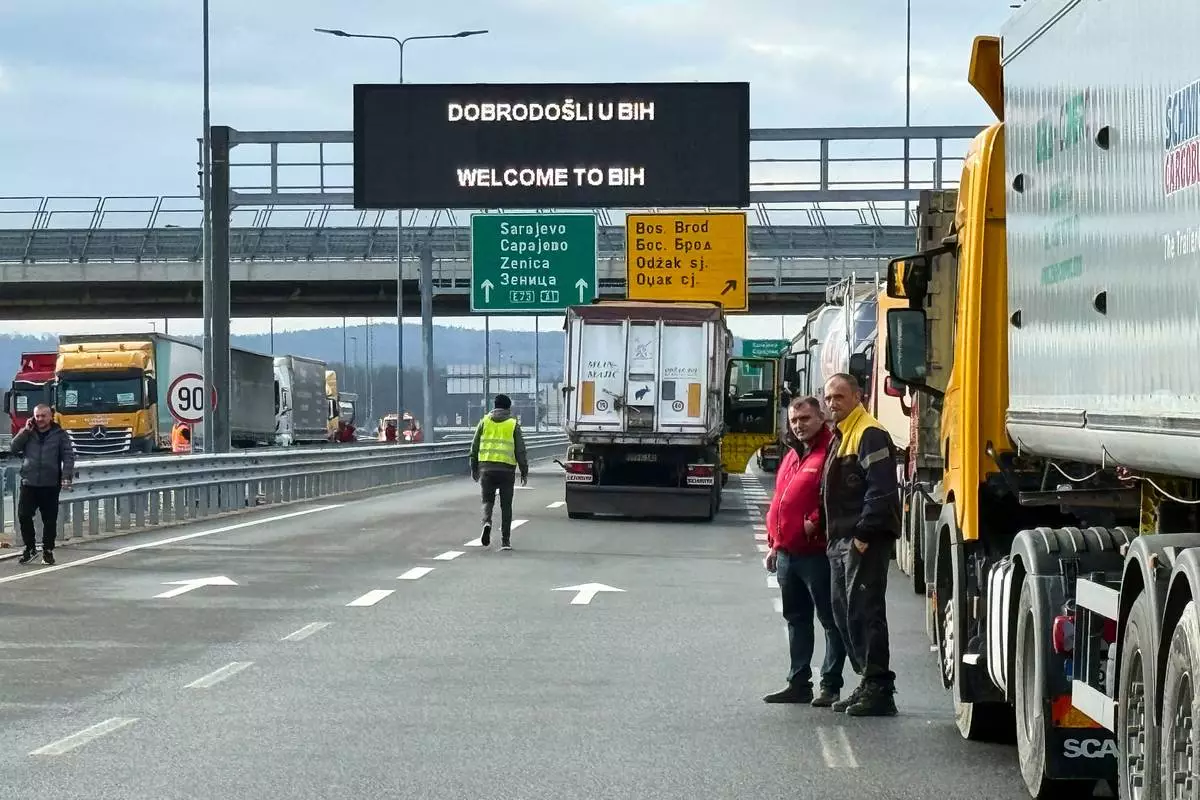
Men stand next to a line of trucks and buses on the Bosnian side of the border with Croatia, in Svilaj, Bosnia, Monday, Jan. 26, 2026, as drivers across the Balkans blocked dozens of border crossings in the region in protest over newly introduced European Union entry regulations.(AP Photo/Eldar Emric)
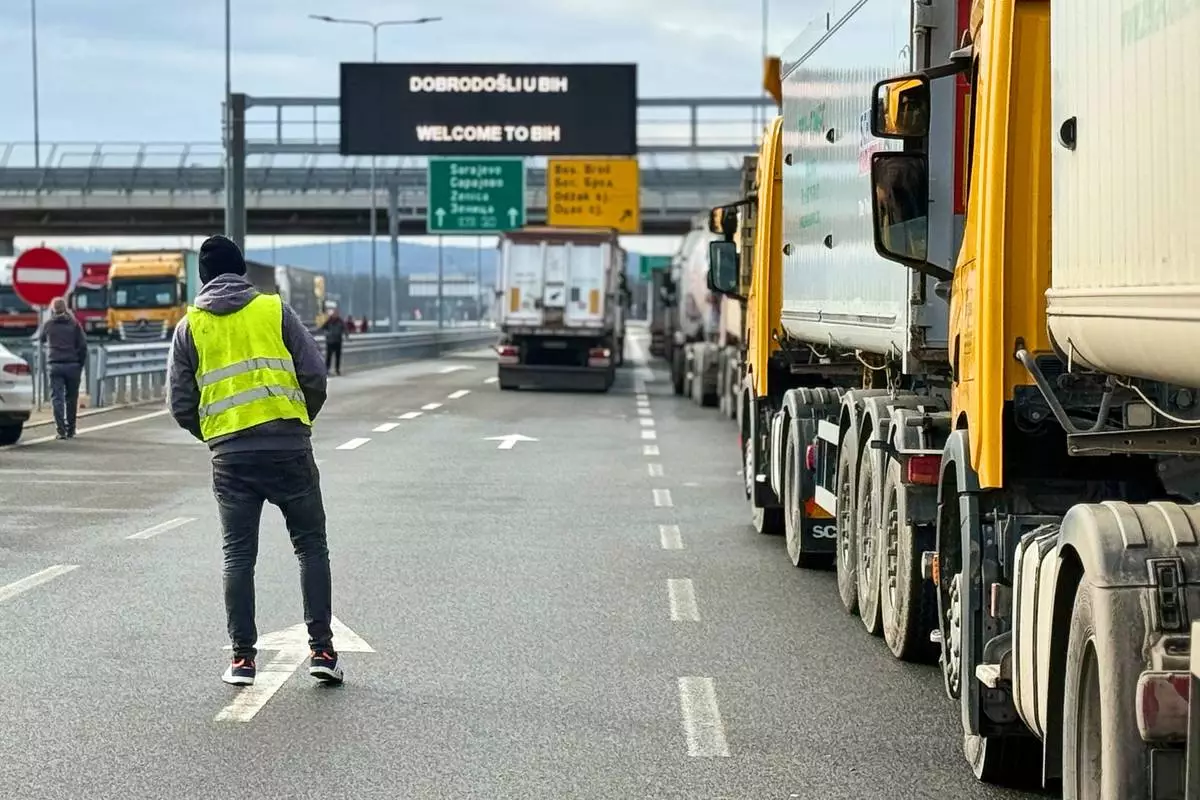
A man stands next to a line of trucks and buses on the Bosnian side of the border with Croatia, in Svilaj, Bosnia, Monday, Jan. 26, 2026, as drivers across the Balkans blocked dozens of border crossings in the region in protest over newly introduced European Union entry regulations.(AP Photo/Eldar Emric)
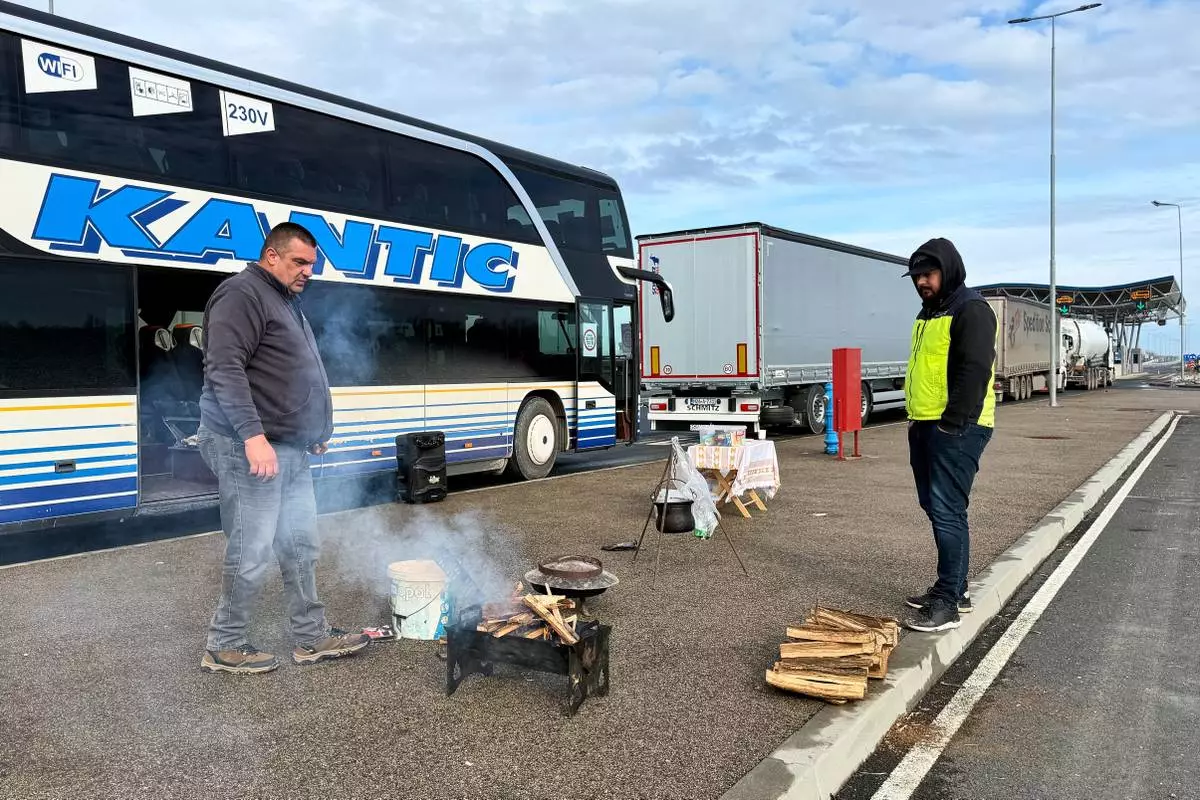
A man prepares to cook on a portable grill next to a line of trucks and buses on the Bosnian side of the border with Croatia, in Svilaj, Bosnia, Monday, Jan. 26, 2026, as drivers across the Balkans blocked dozens of border crossings in the region in protest over newly introduced European Union entry regulations.(AP Photo/Eldar Emric)
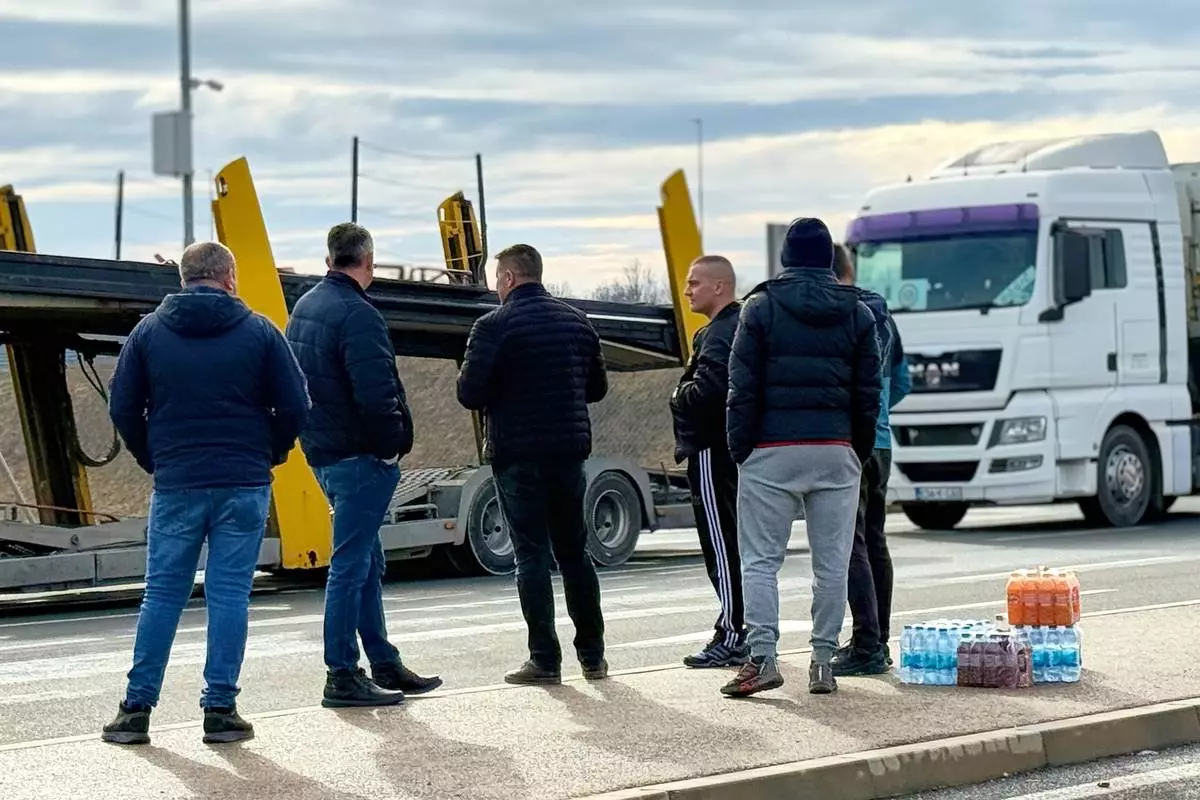
Men stand next to a line of trucks and buses on the Bosnian side of the border with Croatia, in Svilaj, Bosnia, Monday, Jan. 26, 2026, as drivers across the Balkans blocked dozens of border crossings in the region in protest over newly introduced European Union entry regulations.(AP Photo/Eldar Emric)