PARK CITY, Utah (AP) — Antoine Fuqua always knew Nelson Mandela as an icon. But he had no idea he was such a rebel too, and a literal fighter. He remembered walking into a restaurant and seeing a picture of a man in a boxing stance and asked why they had a poster of Muhammad Ali on the wall. They didn’t, he was told: It was Mandela.
It was just part of what would be an enlightening journey in making the new documentary, “Troublemaker,” which has its world premiere Tuesday at the Sundance Film Festival.
“He evolved into the Mandela that we all know and love,” Fuqua said. “The troublemaker allows you to sort of see him not just a mythical character or as a global icon, but as a fallible human being, someone who became a great leader, who in the beginning was a rebel, if you will, and who was willing to engage in violence at some point, if necessary, for the greater good.”
The film uses Mandela’s own voice, drawn from over 70 hours of recordings to tell the story of the struggle against apartheid. Fuqua collaborated closely with Mac Maharaj, an anti-apartheid activist, who was imprisoned on Robben Island with Mandela and who played a key part in smuggling Mandela’s writings, which would become “Long Walk to Freedom,” out of the prison
Fuqua, Maharaj and the filmmaking team traveled all around South Africa, visiting important locations in Mandela’s story, from the University of Fort Hare, where Mandela was a student before being expelled for protest activities, and Robben Island, where he was imprisoned from 1964 to 1982, to Qunu, his final resting place.
He even slept a few nights on Robben Island, which he said was “very uncomfortable.” While there they got a feeling for where Mandela spent 18 of his 27 imprisoned years and bonded at night over dinners. That’s where Maharaj told him Mandela was a Tracy Chapman fan.
They met many people along the way, including some who were part of the resistance against apartheid, taking to heart their continued optimism and hope despite past and present grievances and racism.
“One gentleman came in and he had no arm, his eye was missing. He looked like a character out of James Bond. He had a Tommy Bahama shirt on, he had the hat on,” Fuqua said. “And he was so full of life and so funny and so matter of fact about what happened to him, fighting for justice. I started to learn so much more about the people there.”
The film, which Fuqua has been working on for over three years, blends archival footage and photographs, interviews with Maharaj and animation by South African artist Thabang Lehobye to fill in the gaps where footage didn’t exist, like on Robben Island.
Fuqua hopes the lessons audiences take are on a global scale.
“The lesson I learned was meaningful change is never easy or comfortable,” Fuqua said. “The people in the moment were willing to do what’s necessary, the difficult job to make change.”
He added: “I hope people take the lessons of great leaders like Mandela and Mac Maharaj … People who stood up for the right reasons.”
For more coverage of the 2026 Sundance Film Festival, visit: https://apnews.com/hub/sundance-film-festival
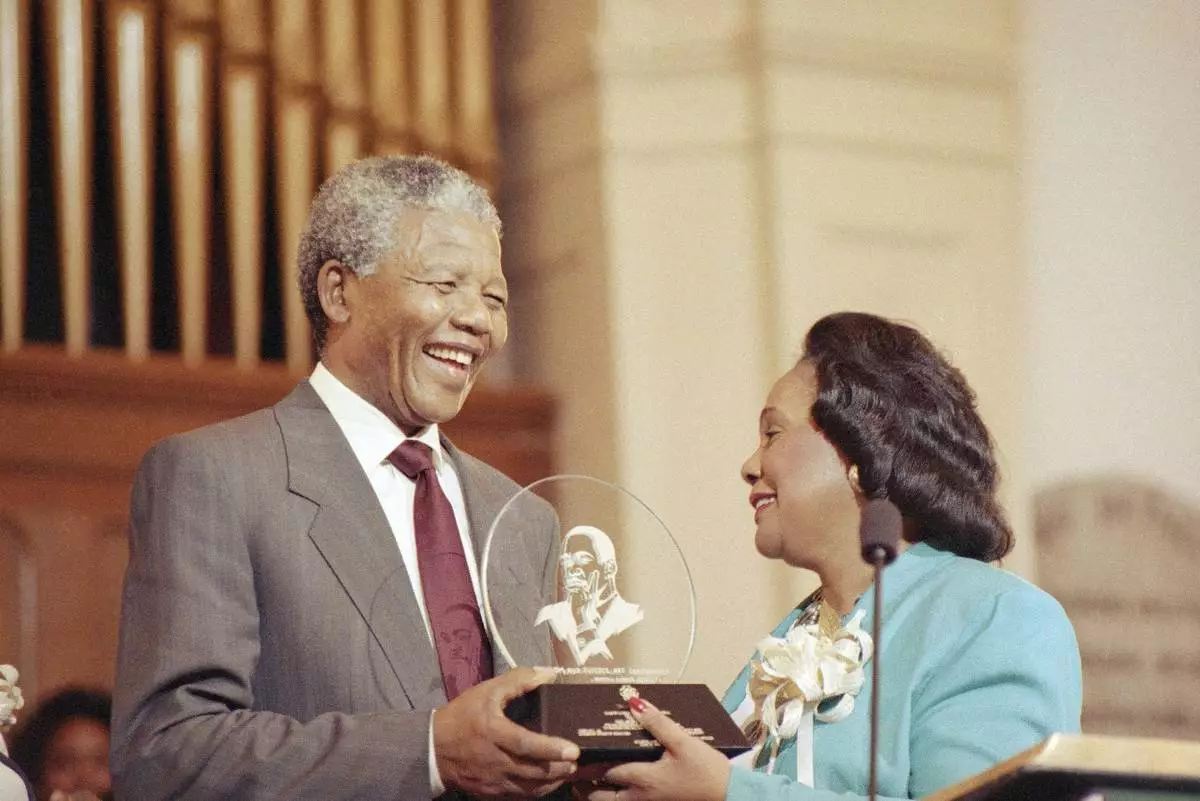
FILE - Nelson Mandela receives the Martin Luther King Jr. International Freedom Award from King's widow Coretta Scott King during a ceremony at the Big Bethel AME church in Atlanta ,June 27, 1990. (AP Photo/David Longstreath, File)
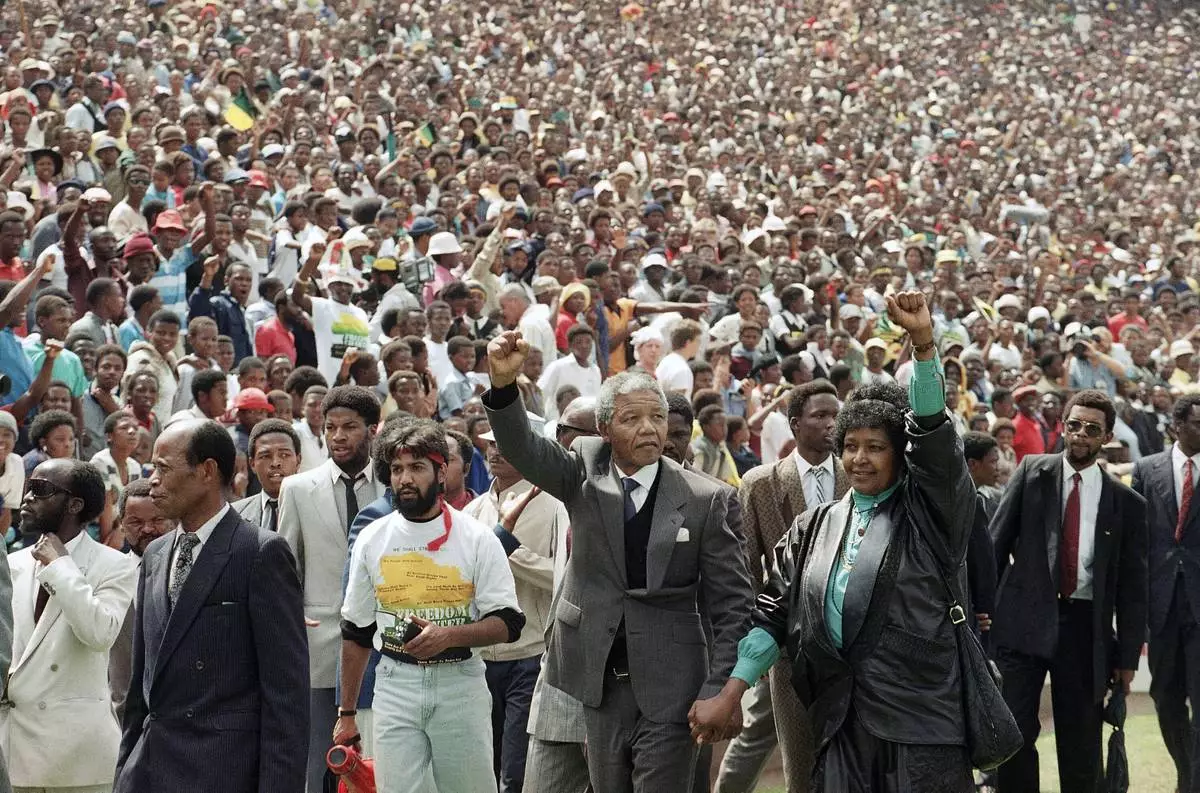
FILE - Nelson Mandela and Winnie Mandela give black power salutes as they enter Soccer City stadium Feb. 13, 1990, in the Soweto township of Johannesburg, South Africa, shortly after his release from 27 years in prison. (AP Photo/Udo Weitz, File)
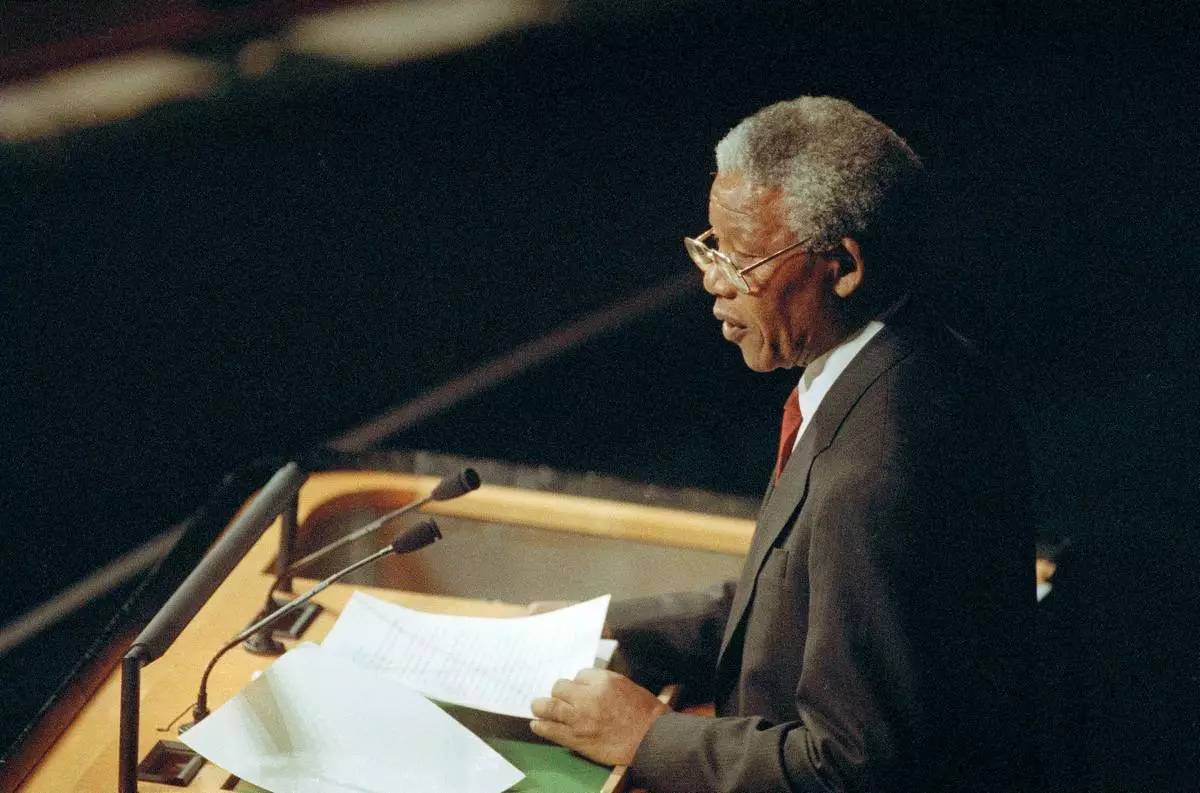
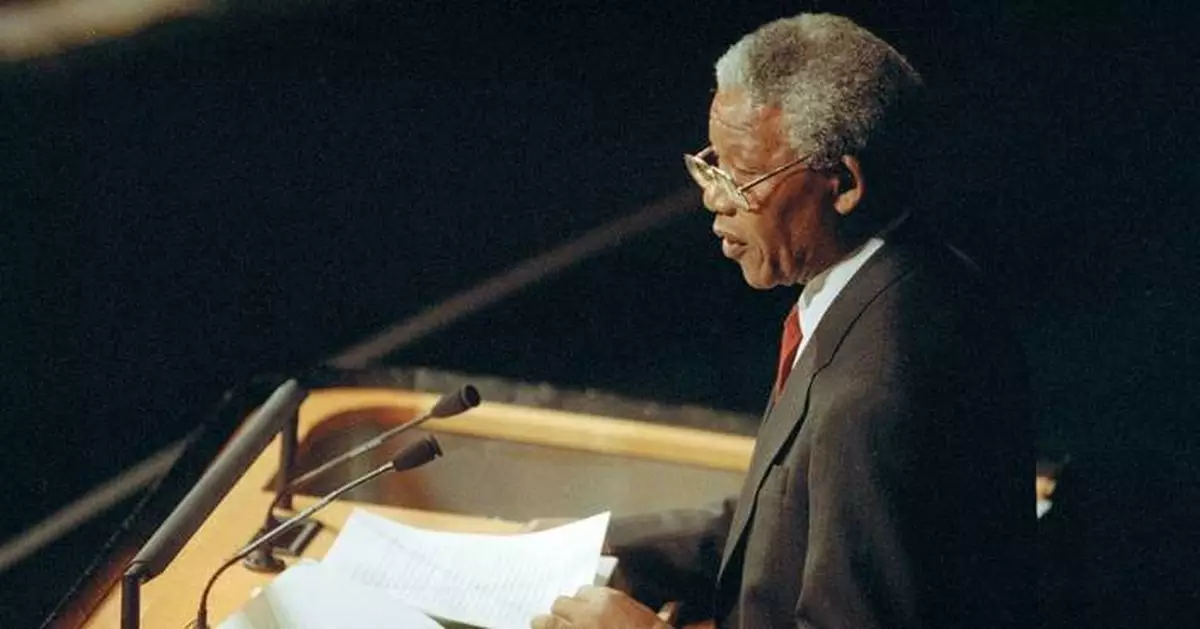
FILE - Nelson Mandela, anti-apartheid leader and president of the African National Congress, addresses the United Nations General Assembly in New York, Dec. 3, 1991. (AP Photo/Ed Bailey, File)
MELBOURNE, Australia (AP) — The Australian Open put its Extreme Heat Protocol into play for the second time this tournament because of searing heat on Tuesday.
The policy uses a ‘Heat Stress Scale’ ranging from 1 to 5 and taking into account the air temperature, radiant heat, humidity and wind speed.
When the index hits 5, play is suspended on outside courts and the roof is closed on the three arenas at Melbourne Park which have retractable covers.
That happened on Saturday during Jannik Sinner’s match on the center court.
The roof was open to start Day 10 but the measures were imposed again after Aryna Sabalenka beat Iva Jovic 6-3, 6-0. The roof was closed for the next match, a men’s quarterfinal between No. 3 Alexander Zverev and American Learner Tien.
“At the end of the match, it was really hot out there,” Sabalenka said. “I’m glad they kind of closed the roof kind of, like, almost halfway so we had a lot of shade in the back so we could go back and stay in the shade.
“I guess, yeah, as a woman,” she added, laughing, “we are stronger than the guys, so they had to close the roof for the guys so they don’t suffer!”
The protocol aims to ensure player safety and consistency during extreme conditions. With temperatures forecast to reach 45 degrees Celsius (113 Fahrenheit) late Tuesday, organizers were prepared.
Here’s what to know about the Australian Open’s Extreme Heat Protocol:
The Australian Open introduced the Heat Stress Scale in 2019, a measure from 1 to 5 that takes into account four climate factors: air temperature, radiant heat, humidity and wind speed.
It was developed to provide consistency for all players and minimize the risk of heat-related illness.
It sets thresholds for cooling interventions. In the event of extreme heat, the tournament referee has the authority to suspend play or order extra cooling breaks.
Play is automatically suspended when the index hits 5 in women’s and men’s singles.
The referee may suspend the calling of any upcoming matches on outdoor courts. And if matches on the outdoor courts have been suspended, the referee may make the decision to close the roof — or to keep the roof closed — for any upcoming matches on the arena courts.
The referee will make the decision as to when to call for the resumption of play, and each player must be given at least a half-hour of notice prior to the resumption of play.
When the index reaches 4, organizers can impose an extra 10-minute break between the second and third sets in women’s singles matches and between the third and fourth sets in men’s singles.
In an arena stadium, if the roof is closed before the end of the first set in a women’s singles match or before the end of the second set in a men’s singles match, there will be no extra cooling breaks.
Sabalenka said she knew going into the match that some precautions would be taken when the scale hit 4 and then the full policy implemented when it hit 5.
“I knew . . . that they won’t let us play on crazy heat. If it would reach the 5, they would definitely close the roof, so I knew that they were protecting us, our health,” she said. “Yeah, anyway, when we’re finished .. it was 4.4, so it was quite hot.”
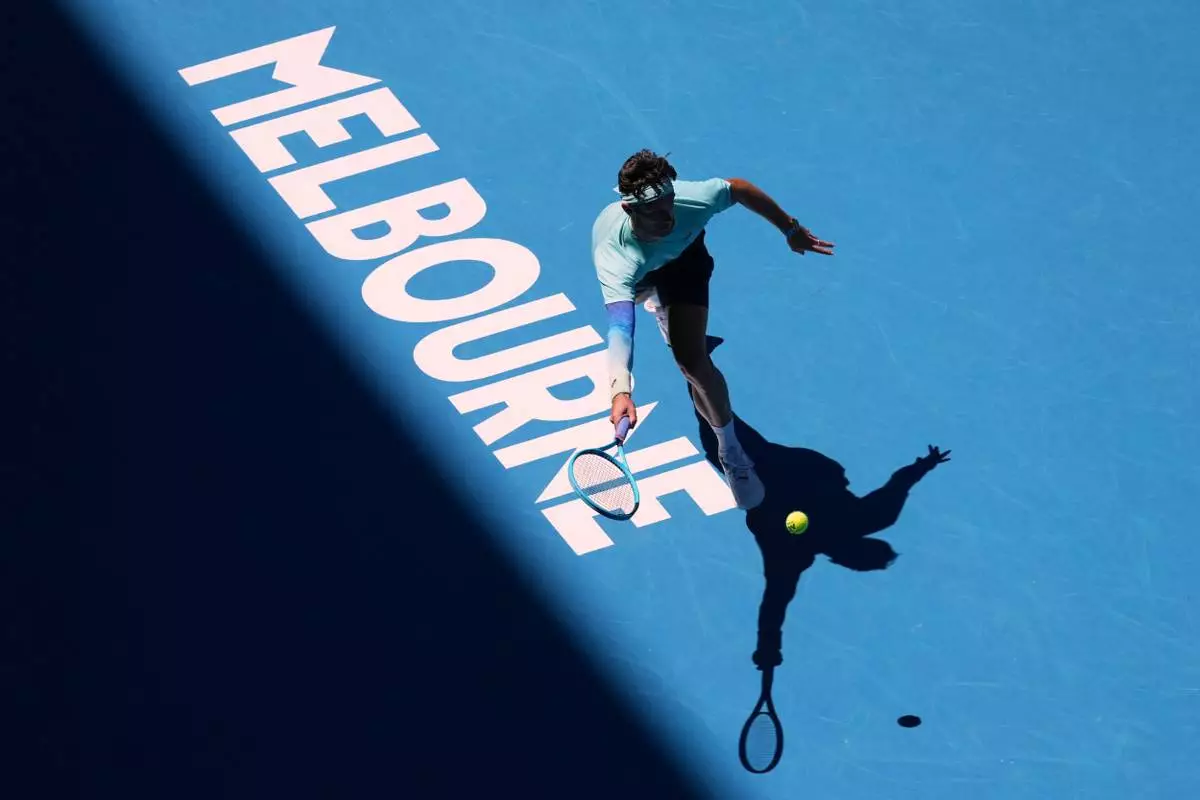
Lorenzo Musetti of Italy plays a forehand return to Tomas Machac of the Czech Republic during their third round match at the Australian Open tennis championship in Melbourne, Australia, Saturday, Jan. 24, 2026. (AP Photo/Asanka Brendon Ratnayake)
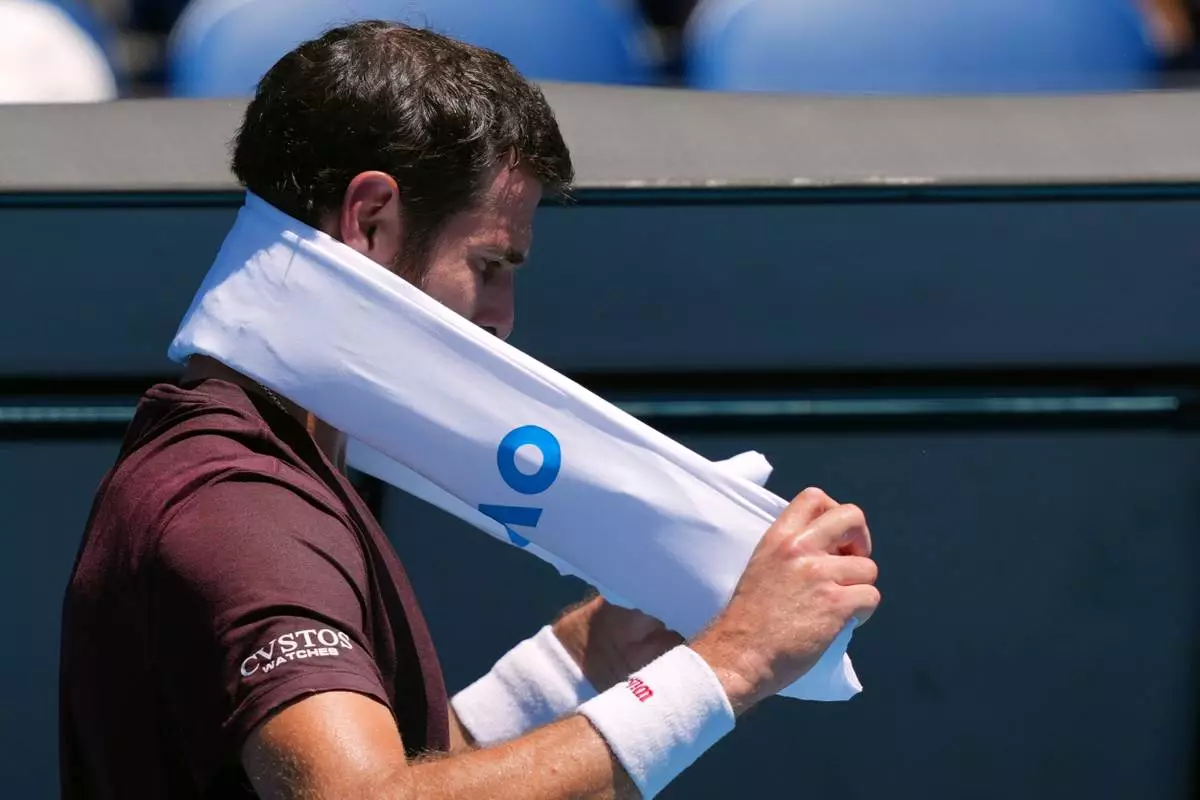
Karen Khachanov of Russia wraps an ice towel around his neck during a break in his third round match against Luciano Darderi of Italy at the Australian Open tennis championship in Melbourne, Australia, Saturday, Jan. 24, 2026. (AP Photo/Dar Yasin)
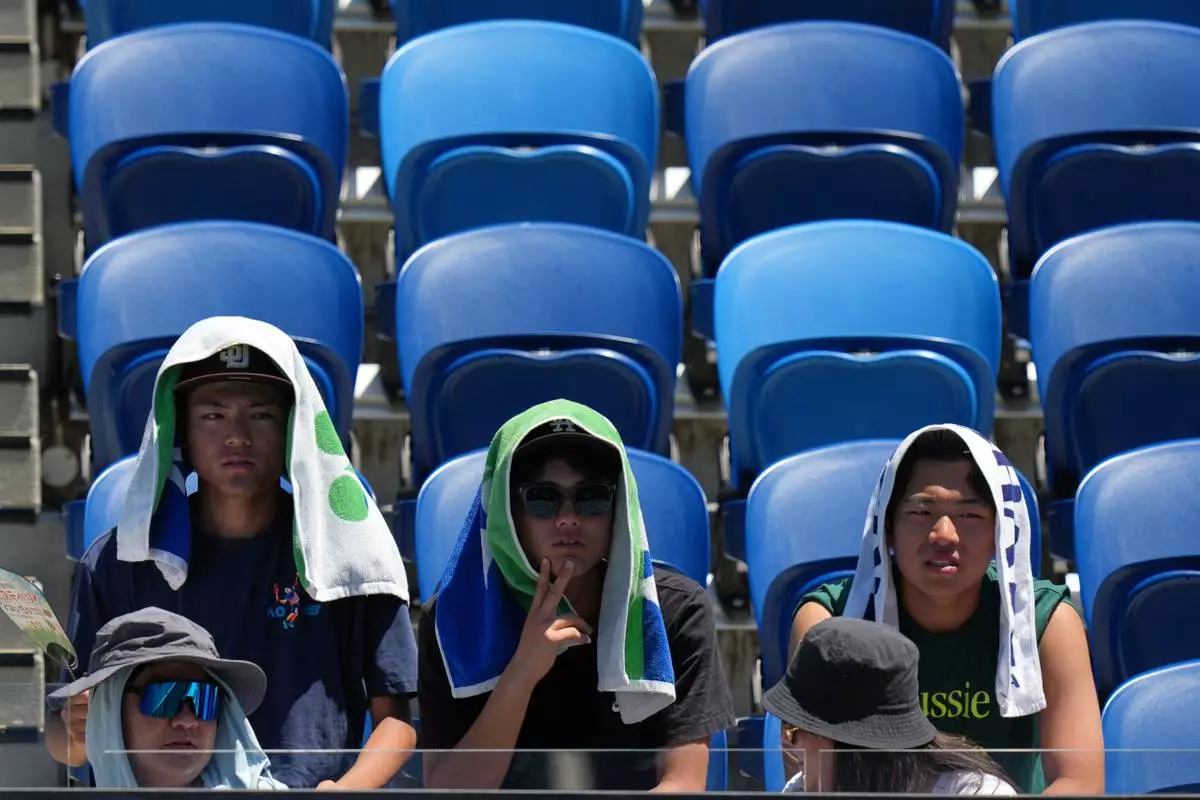
Spectators watch third round matches at the Australian Open tennis championship in Melbourne, Australia, Saturday, Jan. 24, 2026. (AP Photo/Dar Yasin)
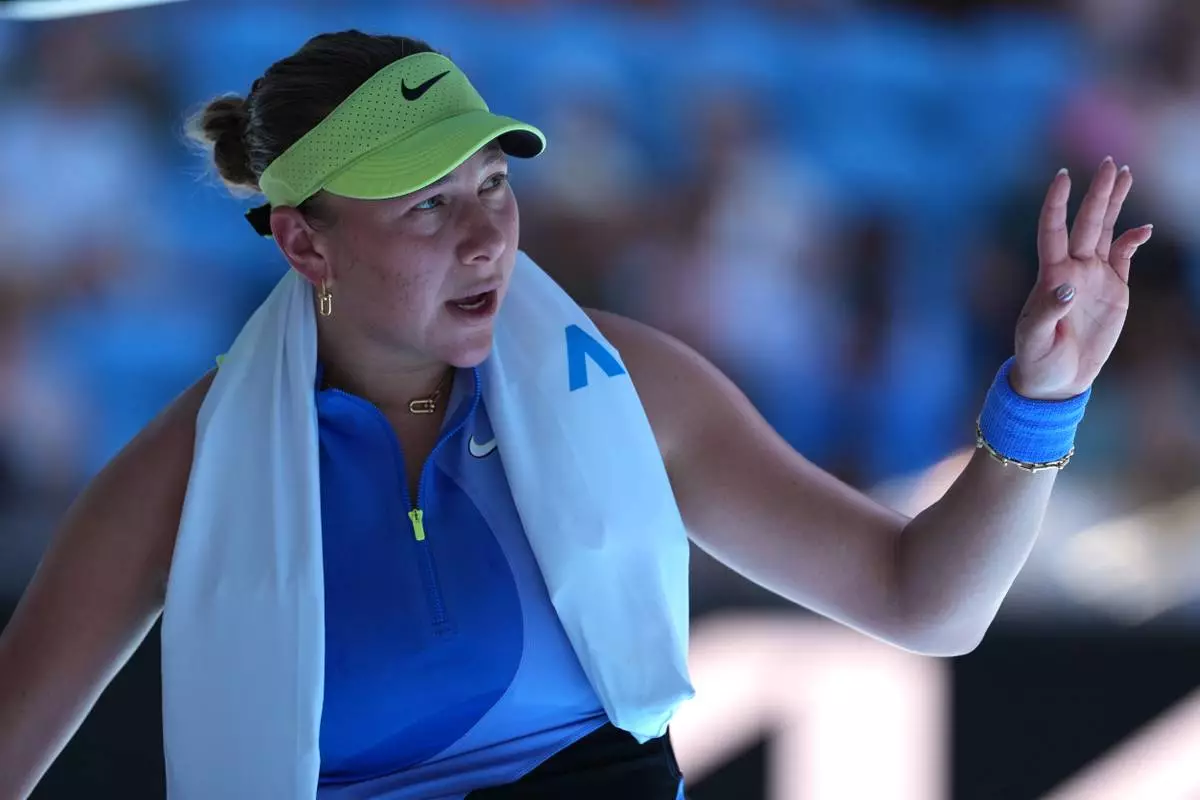
Amanda Anisimova of the U.S. gestures during her third round match against compatriot Peyton Stearns at the Australian Open tennis championship in Melbourne, Australia, Saturday, Jan. 24, 2026. (AP Photo/Aaron Favila)
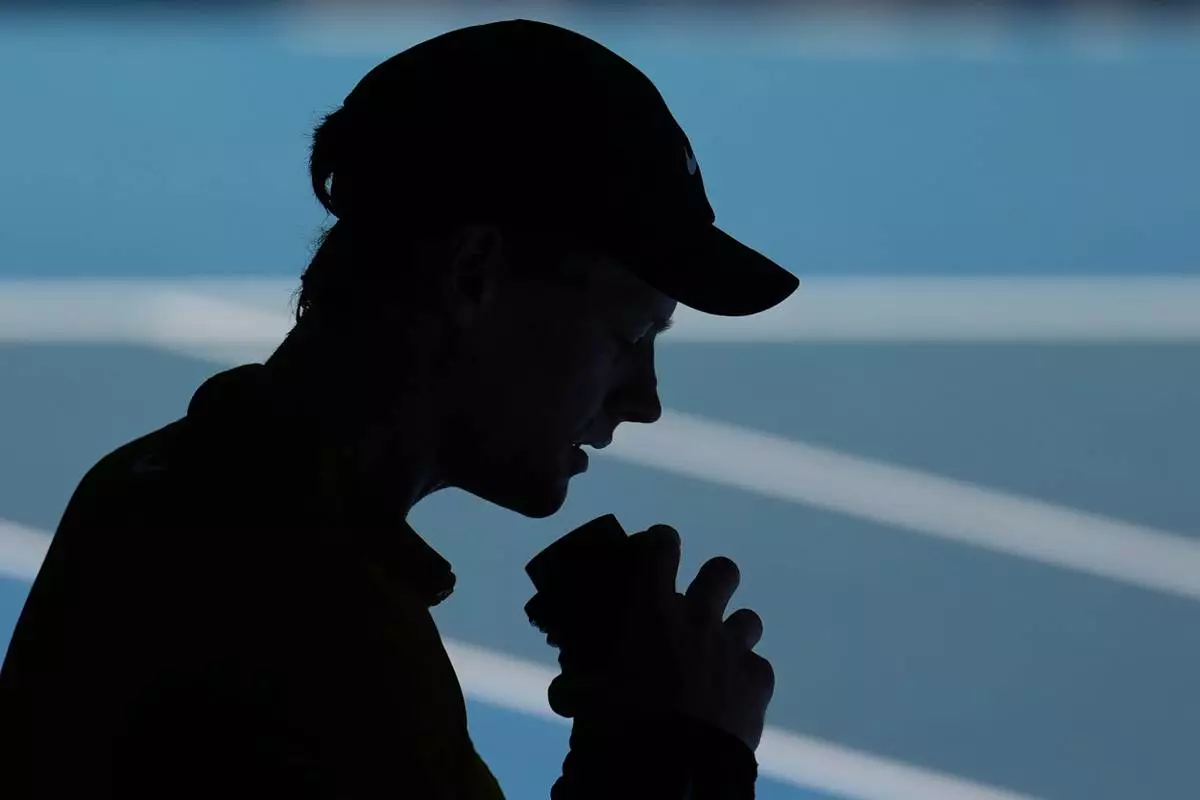
Jannik Sinner of Italy takes a drink during his third round match against Eliot Spizzirri of the U.S. at the Australian Open tennis championship in Melbourne, Australia, Saturday, Jan. 24, 2026. (AP Photo/Dita Alangkara)